长安

Search documents
宁德时代发布10款巧克力换电新车型
news flash· 2025-04-23 07:36
4月23日,宁德时代(300750)于第21届上海国际汽车工业展览会,举办巧克力换电新车型发布仪式, 并与广汽集团(601238)签署全面战略合作协议。活动现场,宁德时代巧克力换电与一汽、长安、北 汽、奇瑞、广汽五大车企共同发布10款巧克力换电新车型。截至目前,宁德时代巧克力换电网络建设已 落地16个城市,年内将完成30城1000站计划。(人民财讯) ...

阿维塔06正式上市,华为乾崑智驾下探20万级市场
Feng Huang Wang· 2025-04-21 12:38
Core Viewpoint - Avita Technology launched the Avita 06, positioned as a "smart luxury sports sedan," targeting the 200,000 RMB market segment with advanced technology and features [1][2]. Group 1: Product Overview - The Avita 06 offers both pure electric and range-extended power systems, with a price range of 209,900 to 279,900 RMB, and a promotional starting price of 191,900 RMB [1]. - It is equipped with Huawei's QianKun ADS full-scene intelligent driving system and features 27 sensors, including a 192-line lidar, making it one of the first in its class to achieve urban intelligent driving mass production [1]. - The pure electric version utilizes an 800V high-voltage architecture with CATL's ultra-fast charging battery, achieving a 30% to 80% charge in just 10 minutes and a CLTC range of 650 kilometers [1]. Group 2: Performance and Specifications - The dual-motor version of the Avita 06 boasts a maximum power of 440 kW and can accelerate from 0 to 100 km/h in just 3.9 seconds [1]. - The range-extended version features a dedicated 1.5T range extender, with a pure electric range of up to 230 kilometers and a combined range exceeding 1,190 kilometers, while maintaining a low fuel consumption of 5.36 L/100 km [1]. Group 3: Design and Comfort - The exterior design follows the "Cheetah Condensation" aesthetic, with dimensions of 4,855 mm in length and a wheelbase of 2,940 mm, standard 20-inch wheels, and a self-healing paint finish [2]. - The interior includes front-row zero-gravity seats with multi-zone massage and four-way leg support, a 25-speaker British audio system, and advanced safety features [2]. Group 4: Safety Features - The Avita 06 incorporates a "Xuanjia Safety Architecture" with a high-strength cage structure, achieving a 34% share of hot-formed steel, and comes standard with 9 airbags [2]. - It has passed the E-NCAP 2026 standard crash test, demonstrating structural integrity with no deformation of the A-pillar and operable doors post-collision [2]. Group 5: Market Positioning - The launch of the Avita 06 aims to meet modern consumer demands for intelligence, design, and luxury, providing a non-compromising product experience in the 200,000 RMB segment [2]. - With the introduction of the Avita 06 alongside the previously launched Avita 12, the brand now covers the 200,000 to 400,000 RMB electric sedan market [2].
中国汽研联合多家车企发布智驾五项行业倡议
Zhong Guo Xin Wen Wang· 2025-04-14 14:13
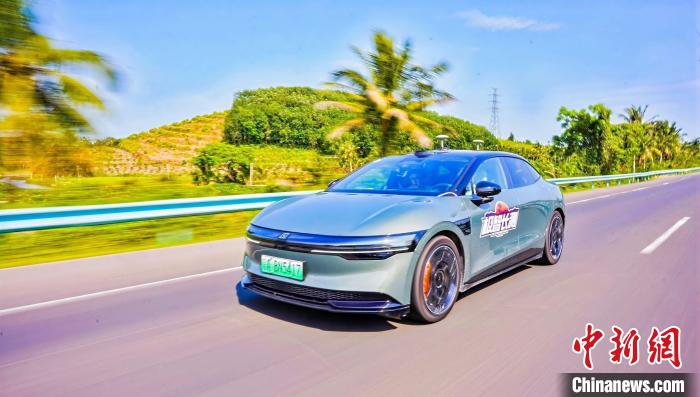
Core Viewpoint - The rapid development of intelligent driving technology has exposed various issues related to standards, safety, and marketing, prompting the China Automotive Engineering Research Institute (China Automotive Research) to launch five industry initiatives aimed at enhancing the safety of L2-level intelligent driving assistance systems [1][6]. Group 1: Industry Challenges - The penetration rate of L2-level passenger vehicles in China is projected to increase from 23.5% in 2021 to 55.7% in 2024, with an expected 65% in the current year [4]. - Analysis of 49 L2-level intelligent driving accidents revealed that 55% occurred on highways, 53% involved vehicle-to-vehicle collisions, and 76% happened under normal road conditions [4]. - Key causes of accidents include limitations in system functionality to handle complex road conditions and misuse or over-reliance on the system by drivers [4]. Group 2: Industry Initiatives - The five industry initiatives include establishing unified minimum safety requirements for L2 intelligent driving systems, enhancing driver monitoring and intervention mechanisms, creating transparent evaluation standards, regulating market promotion and user training, and promoting data sharing and iterative mechanisms [6][7]. - The initiatives align with the recent guidelines from the Ministry of Industry and Information Technology and the State Administration for Market Regulation, which emphasize the need for accurate marketing of intelligent driving systems [7]. Group 3: Testing and Evaluation - China Automotive Research has developed the "Extreme Intelligent Long Test" system, which includes a standardized evaluation framework for high-level intelligent driving assistance, with a testing route covering various complex terrains and traffic conditions across China [9]. - The first test of the "Extreme Intelligent Long Test" was conducted on April 12-13, 2023, in Hainan, evaluating over 20 mass-produced intelligent vehicle models across more than 20 different driving scenarios [9]. - The goal is to transition intelligent driving from experimental parameters to user value through rigorous testing in real-world conditions [9].


电池行业月报:1季度电池供需两旺,受关税影响储能电池对美出口短期存波动-20250414
BOCOM International· 2025-04-14 12:13
Investment Rating - The report assigns a "Buy" rating to several companies in the battery industry, including Ningde Times, Yiwei Lithium Energy, Guoxuan High-Tech, and others, with target prices indicating significant potential upside [1][18]. Core Insights - The battery industry is experiencing robust supply and demand, with a notable increase in the production and installation of power batteries. In Q1 2025, the total production and sales of power and other batteries in China reached 326.3 GWh and 285.8 GWh, respectively, marking year-on-year growth of 74.9% and 73.7% [2][18]. - The cumulative installation of power batteries in Q1 2025 was 130.2 GWh, reflecting a year-on-year increase of 52.8%. In March alone, the installation volume reached 56.6 GWh, with significant month-on-month growth [2][18]. - The report highlights the impact of tariffs on the export of energy storage batteries to the U.S., indicating potential short-term fluctuations. In 2024, China's lithium-ion battery exports to the U.S. amounted to $15.315 billion, with energy storage batteries being a major product [2][18]. Summary by Sections Production and Sales - In Q1 2025, China's total battery production and sales reached 326.3 GWh and 285.8 GWh, respectively, with year-on-year growth rates of 74.9% and 73.7% [2][18]. - The power battery installation volume in March 2025 was 56.6 GWh, showing a month-on-month increase of 62.3% [2][18]. Market Dynamics - The market concentration for power battery installations slightly decreased, with the top three and five companies holding 71.7% and 80.6% market shares, respectively [2][18]. - Ningde Times' market share in power battery installations decreased by 2.1 percentage points to 42.4% in March 2025 [2][18]. New Product Developments - Several companies, including BYD and Yiwei Lithium Energy, have launched new battery products aimed at electric two-wheelers and power tools, showcasing advancements in power density and charging capabilities [2][18]. Strategic Collaborations - Ningde Times has entered into a strategic cooperation agreement with NIO to support the development of NIO's battery swap network, indicating a proactive approach to market expansion [2][18]. Export Trends - The report notes that energy storage batteries are significantly affected by recent tariff increases, with expectations of shared burdens between Chinese storage companies and U.S. end-users in the short term [2][18].



【商用车】2025年3月轻型商用车市场预测研究报告
乘联分会· 2025-04-07 08:33
Core Viewpoint - The article discusses the rapid growth and transformation of the new energy VAN market in China, highlighting key developments, market segmentation, and sales forecasts for the coming years [2][4][12]. Product Analysis - Jiangling Motors launched the "Blue Flame Power Platform," a new energy brand focusing on advanced technologies for diesel engines [2]. - The new energy small VAN market is projected to grow significantly, with sales expected to reach 245,000 units in 2024, representing a year-on-year increase of 47.2% and a compound annual growth rate of 50.2% from 2019 to 2024 [4]. - In the first two months of 2025, sales reached 31,000 units, showing a remarkable year-on-year growth of 92.3% [4]. Market Segmentation - The new energy VAN market can be divided into three categories based on penetration rates: - A-class: 100% penetration, focusing solely on new energy products (e.g., Yuan Cheng, Rui Chi, Kai Rui) [6]. - B-class: 30%-60% penetration, balancing traditional fuel and new energy (e.g., Wuling, Changan, Foton, Dongfeng) [6]. - C-class: below 25% penetration, primarily traditional fuel vehicles (e.g., Jiangling, SAIC Maxus) [6]. A-Class Company Research - Yuan Cheng is developing small and medium VANs based on a pure electric platform, with rapid sales growth for its models [8]. B-Class Company Research - SAIC-GM-Wuling has historically focused on traditional fuel vehicles but is expanding its new energy offerings, with the Wuling Yangguang model expected to outperform competitors in pricing and space [10]. Policy Impact - The "trade-in" policy for old vehicles is expected to stimulate demand for new energy vehicles, with significant potential for upgrading traditional fuel microbuses, as there are over 1.3 million units eligible for replacement [12]. Sales Forecast - The light commercial vehicle market is expected to see stable growth in 2025, with total sales projected at 2.82 million units, reflecting a year-on-year increase of 3.5% [16].
希荻微接受机构调研:模拟芯片国产化替代趋势不可逆转 将与诚芯微整合研发资源
Zheng Quan Shi Bao Wang· 2025-04-02 11:10
Group 1 - The core focus of the news is on the acquisition of Chengxin Micro by Xidiwei, which is set to be completed by the end of 2024, involving both cash and stock issuance [1][2] - Chengxin Micro specializes in high-performance power management chips and has established partnerships with notable companies such as BYD and Lenovo [2][3] - The financial performance of Chengxin Micro shows a steady increase in revenue and gross margin from 2022 to 2024, indicating strong growth potential [2][3] Group 2 - Xidiwei's own product offerings in the automotive electronics sector include various power management chips, which complement Chengxin Micro's products [4] - The consumer electronics market is experiencing a mild recovery, with Xidiwei reporting a 38.56% increase in total revenue for 2024 compared to the previous year [5] - The company has successfully integrated Zinitix into its financials, contributing to revenue growth, and anticipates further demand growth in the consumer electronics sector due to government subsidies [5][6] Group 3 - Chengxin Micro's business model primarily focuses on direct sales, which allows for higher profit retention and significant revenue growth potential [3] - The performance commitment for the acquisition includes net profit targets for 2025 to 2027, with a total minimum net profit of 7.5 million [3] - The company is also focusing on the growing demand for chips in AI server applications, indicating a strategic alignment with industry trends [6]

博俊科技(300926):业绩符合预期 绑定核心客户带动业绩增长
Xin Lang Cai Jing· 2025-04-01 02:46
Core Viewpoint - The company reported strong financial performance for 2024, with significant revenue and profit growth driven by core customer vehicle launches and an expanding market for new energy vehicles [1][2]. Financial Performance - In 2024, the company achieved revenue of 4.2 billion, a year-on-year increase of 63%, and a net profit attributable to shareholders of 610 million, up 99% year-on-year [1]. - In Q4 2024, revenue reached 1.37 billion, reflecting a 52% year-on-year increase and a 20% quarter-on-quarter increase, while net profit was 250 million, up 93% year-on-year and 81% quarter-on-quarter [1]. - The company’s gross profit margin for 2024 was 28%, an increase of 2 percentage points year-on-year, and the net profit margin was 15%, up 3 percentage points year-on-year [2]. Customer and Market Dynamics - Key customers include Li Auto, Seres, and Xpeng Motors, with expectations of continued revenue growth as these customers launch new models [1]. - Domestic new energy vehicle sales reached 12.87 million in 2024, a 36% year-on-year increase, with significant sales growth from Xpeng (190,000 units, +34%), Li Auto (500,000 units, +33%), and Seres (430,000 units, +183%) [1]. Production and Capacity Expansion - The company is expanding its production capacity with new projects and has a robust order book, which is expected to support long-term growth [2]. - The company is enhancing its manufacturing capabilities across various processes, including stamping, injection molding, and integrated die-casting, which will facilitate entry into the white body sector [2]. Profitability Outlook - The company is projected to see continued profit growth due to existing core customer demand and the introduction of new products, with net profits forecasted at 860 million, 1.12 billion, and 1.34 billion for 2025-2027, corresponding to PE ratios of 14, 11, and 9 [3].




信测标准(300938):汽车检测经营稳健 关注机器人业务增长点
Xin Lang Cai Jing· 2025-04-01 00:37
Core Viewpoint - The company reported a revenue of 725 million yuan for 2024, reflecting a year-on-year increase of 6.7%, and a net profit attributable to shareholders of 176 million yuan, up 7.7% year-on-year [1] Group 1: Financial Performance - The company's revenue for Q4 2024 was 174 million yuan, showing a year-on-year growth of 3.0%, while the net profit for the same period was 33 million yuan, an increase of 8.7% year-on-year [1] - The non-recurring net profit attributable to shareholders for 2024 was 165 million yuan, representing a year-on-year increase of 10.8% [1] - The gross profit margin for 2024 was 58.0%, a decrease of 1.11 percentage points year-on-year, with specific margins for automotive testing, electronic products testing, and testing equipment at 67.71%, 60.98%, and 39.10% respectively [3] Group 2: Business Segments - Automotive testing revenue reached 306 million yuan, growing 12.4% year-on-year, although the growth rate has slowed compared to previous years [2] - Revenue from electronic and electrical product testing was 171 million yuan, reflecting a steady growth of 9.1% year-on-year [2] - Revenue from testing equipment declined by 5.9% year-on-year to 154 million yuan, attributed to price competition in the manufacturing sector [2] - Daily consumer goods testing revenue increased by 22.2% year-on-year to 50 million yuan, while health and environmental testing revenue grew by 7.0% year-on-year to 45 million yuan [2] Group 3: Future Outlook - The company established a joint venture for robotics technology, aiming to create new growth avenues, with a focus on the development and sales of various types of robots [4] - Revenue projections for 2025-2027 are estimated at 849 million yuan, 971 million yuan, and 1.103 billion yuan, with corresponding year-on-year growth rates of 17.1%, 14.4%, and 13.6% [4] - The forecasted net profit attributable to shareholders for the same period is 208 million yuan, 248 million yuan, and 287 million yuan, with growth rates of 17.9%, 19.4%, and 15.9% respectively [4]
装机铂智3X 中创新航赋能广汽丰田全球电动化转型
高工锂电· 2025-03-27 12:23
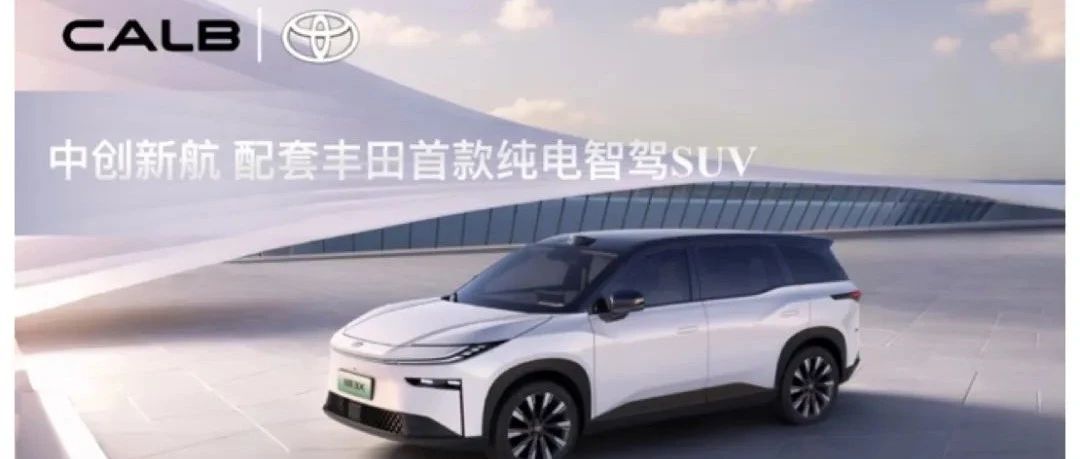
Core Viewpoint - Toyota is adapting to the electrification pace in China, launching the GAC Toyota Platinum 3X, its first fully electric SUV, with a high localization rate in its supply chain [2][4]. Group 1: Product Launch and Market Response - The GAC Toyota Platinum 3X received over 10,000 orders within the first hour of its launch, indicating strong market demand [3]. - The vehicle features a supply chain composed of top global and domestic companies, including Qualcomm, NVIDIA, and leading Chinese firms in autonomous driving and lidar technology [3][4]. Group 2: Battery Technology and Partnerships - The Platinum 3X utilizes battery technology from CATL, which is recognized for its scale and cost-effectiveness, crucial for meeting the demands of the Chinese market [4][5]. - CATL has previously collaborated with other Japanese automakers, showcasing its established reputation in battery technology [6]. Group 3: Global Expansion and Market Strategy - CATL's battery shipments are projected to reach 20 GWh in Q1 2025, with a year-on-year increase of nearly 150%, indicating significant growth in both domestic and international markets [7]. - The partnership with GAC Toyota allows CATL to enhance its international brand image and penetrate other global markets, moving beyond merely selling products to deeper brand collaborations [9]. Group 4: Supply Chain Integration and Competitive Advantage - The collaboration between GAC Toyota and CATL is expected to provide both companies with technological and cost advantages, facilitating Toyota's electrification transition [8]. - The integration of global supply chains is becoming increasingly important for companies to enhance their competitive edge in the market [9].
人口争夺战!合肥、长沙、南昌,虹吸全省!
城市财经· 2025-03-25 03:36
Core Viewpoint - The article discusses the population growth trends in key cities in China, particularly focusing on the strong provincial capitals of Changsha, Nanchang, and Hefei, which are attracting population from their respective provinces due to various economic and policy factors [3][80]. Group 1: Population Data of Key Cities - Twelve key cities have released their permanent population data, with Shenzhen leading in growth with an increase of 199,400 people, followed by Hefei, Changsha, and Nanchang, all exceeding 100,000 in growth [4][7]. - Beijing and Tianjin experienced zero growth, with Beijing losing 26,000 residents [5][6]. - The overall trend shows that after the seventh national census, cities like Shenzhen regained their population competitiveness post-pandemic [8][10]. Group 2: Factors Contributing to Population Growth - Hefei's population growth is attributed to its strong industrial base, particularly in the display and semiconductor industries, which have attracted significant investment and talent [14][31]. - Changsha benefits from relatively low housing prices, which have kept the cost of living manageable, leading to a population increase that topped the nation in 2022 [34][39]. - Nanchang's population growth has been more volatile, closely tied to its economic performance, with a notable rebound in 2024 linked to rising prices in the non-ferrous metals sector [44][56]. Group 3: Strong Provincial Capital Strategy - The article emphasizes the "strong provincial capital" strategy, where provincial capitals like Hefei, Changsha, and Nanchang are absorbing population from surrounding areas, leading to a decline in overall provincial populations [80][91]. - This strategy is seen as a necessary response to the economic dynamics between coastal and inland regions, where strong capitals can attract resources and talent [86][100]. - The phenomenon of population siphoning is evident, with cities like Hefei and Changsha showing significant growth while their respective provinces experience overall population declines [96][99].