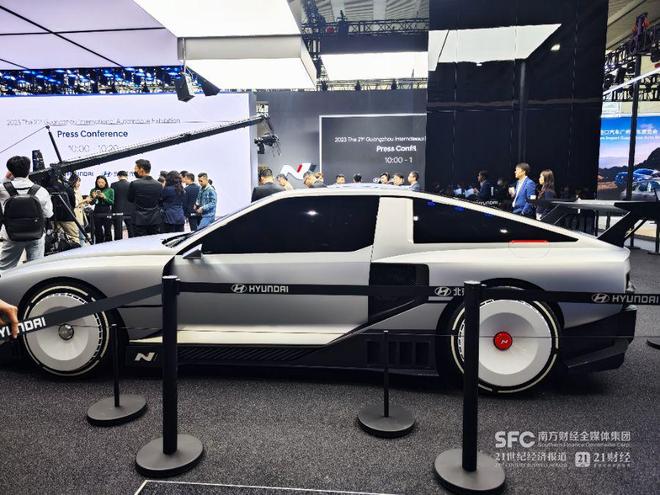
福田汽车

Search documents
商用车板块9月19日跌0.92%,福田汽车领跌,主力资金净流出8.13亿元
Zheng Xing Xing Ye Ri Bao· 2025-09-19 08:41
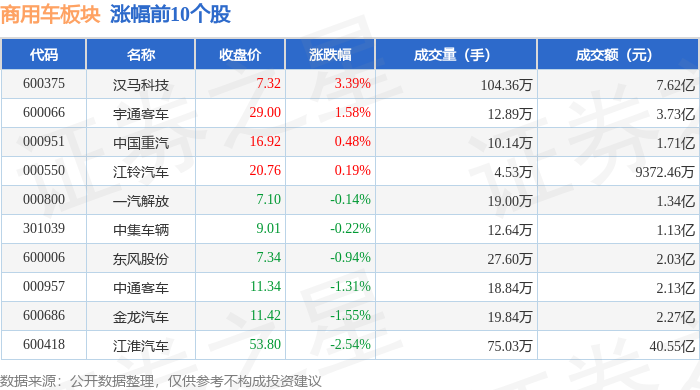
Market Overview - The commercial vehicle sector experienced a decline of 0.92% on September 19, with Foton Motor leading the drop [1] - The Shanghai Composite Index closed at 3820.09, down 0.3%, while the Shenzhen Component Index closed at 13070.86, down 0.04% [1] Stock Performance - Hanma Technology saw a price increase of 3.39%, closing at 7.32, with a trading volume of 1.0436 million shares and a turnover of 762 million yuan [1] - Yutong Bus increased by 1.58%, closing at 29.00, with a trading volume of 128,900 shares and a turnover of 373 million yuan [1] - Other notable performances include: - China National Heavy Duty Truck: +0.48%, closing at 16.92 [1] - JMC: +0.19%, closing at 20.76 [1] - FAW Jiefang: -0.14%, closing at 7.10 [1] - Dongfeng Motor: -0.94%, closing at 7.34 [1] - Jianghuai Automobile: -2.54%, closing at 53.80 [1] Capital Flow - The commercial vehicle sector saw a net outflow of 813 million yuan from institutional investors, while retail investors contributed a net inflow of 477 million yuan [2] - Notable capital flows include: - Hanma Technology: Net inflow of 26.67 million yuan from institutional investors [2] - Yutong Bus: Net inflow of 17.68 million yuan from institutional investors [2] - China National Heavy Duty Truck: Net inflow of 7.32 million yuan from institutional investors [2] - FAW Jiefang: Net outflow of 19.33 million yuan from institutional investors [2] - Foton Motor: Net outflow of 22.64 million yuan from institutional investors [2]


8月微卡销3.1万辆增15%!五菱独食超5成份额 奇瑞/长安“激战”拼前二
第一商用车网· 2025-09-19 07:14
Core Viewpoint - The micro truck market in China has shown a fluctuating trend in sales, with a cumulative decline of 18% by the end of July 2025, despite a 15% year-on-year growth in August 2025, indicating a mixed performance in the industry [1][3][14]. Sales Performance - In August 2025, the overall truck market sold 271,600 units, a 17% year-on-year increase, while the micro truck market sold 30,800 units, reflecting a 15% year-on-year growth but a 6% month-on-month decline [3][6]. - The cumulative sales for micro trucks from January to August 2025 reached 285,900 units, marking a 15% decrease compared to the same period last year, which is the lowest in the past five years [5][10]. Market Trends - Over the past five years, the micro truck market has exhibited a pattern of alternating growth and decline in August, with three years of growth including the current year [5]. - The sales volume of 30,800 units in August 2025 ranks third in the last five years, indicating a moderate performance compared to previous years [5]. Company Rankings - In August 2025, SAIC-GM-Wuling led the micro truck market with sales of 15,900 units, capturing 51.74% of the market share, followed by Chery and Changan with 16.85% and 14.55% market shares respectively [6][9]. - A total of seven companies sold micro trucks in August, with four companies experiencing year-on-year growth and three facing declines [6][10]. Cumulative Market Share - For the cumulative sales from January to August 2025, three companies exceeded a 10% market share: Wuling (50.42%), Changan (18.34%), and Chery (13.53%) [12]. - The cumulative market share for the top six companies reached 99.74%, indicating a highly concentrated market [10]. Future Outlook - The micro truck market faces challenges in achieving growth by the end of 2025, with a cumulative decline of 18% and a net decrease of nearly 50,000 units compared to the previous year [14].



重卡市场又爆出一个超600辆大单!
第一商用车网· 2025-09-19 06:48
Core Viewpoint - The Ouman Galaxy National Tour Carnival successfully concluded its western tour, highlighting the company's commitment to understanding and meeting the needs of the western logistics industry, resulting in 657 vehicle orders [1][3][5]. Group 1: Event Overview - The Ouman Galaxy National Tour Carnival, themed "Galaxy Shining the World, Intelligent Creation of the Future," spanned nearly two months, covering key logistics cities in the western region of China [1]. - The tour included stops in 26 core logistics cities, showcasing various models of Ouman Galaxy trucks, including the Ouman Galaxy 9, 7, 5, and 3, as well as the entire series of new energy heavy trucks [3]. Group 2: Solutions and Services - Ouman Galaxy developed targeted solutions for the unique challenges of western transportation, such as steep terrain and long-distance travel, enhancing driving safety and comfort [5][7]. - The company introduced a "mobile resting cabin" design in its wide-body cockpit to improve rest quality during long hauls, addressing the needs of truck drivers [5]. - Ouman's service engineers provided free vehicle inspections at various stops, reinforcing the company's customer-centric approach [7]. Group 3: Customer Feedback and Engagement - The tour facilitated deep engagement with truck drivers, gathering valuable feedback on Ouman's products, such as the intelligent warning system and fuel-efficient features, which were well-received by users [7][9]. - The feedback collected will inform Ouman's future product development and service enhancements, ensuring alignment with customer needs [9]. Group 4: Future Directions - Ouman plans to increase R&D investment in core areas such as new energy, intelligence, and lightweight design to create more suitable solutions for different transportation scenarios [9]. - The company aims to strengthen its service network and improve after-sales response efficiency, ensuring comprehensive support throughout the vehicle lifecycle [9].
披上“电动化”外衣,旅行车就能支棱起来了?
3 6 Ke· 2025-09-19 06:00
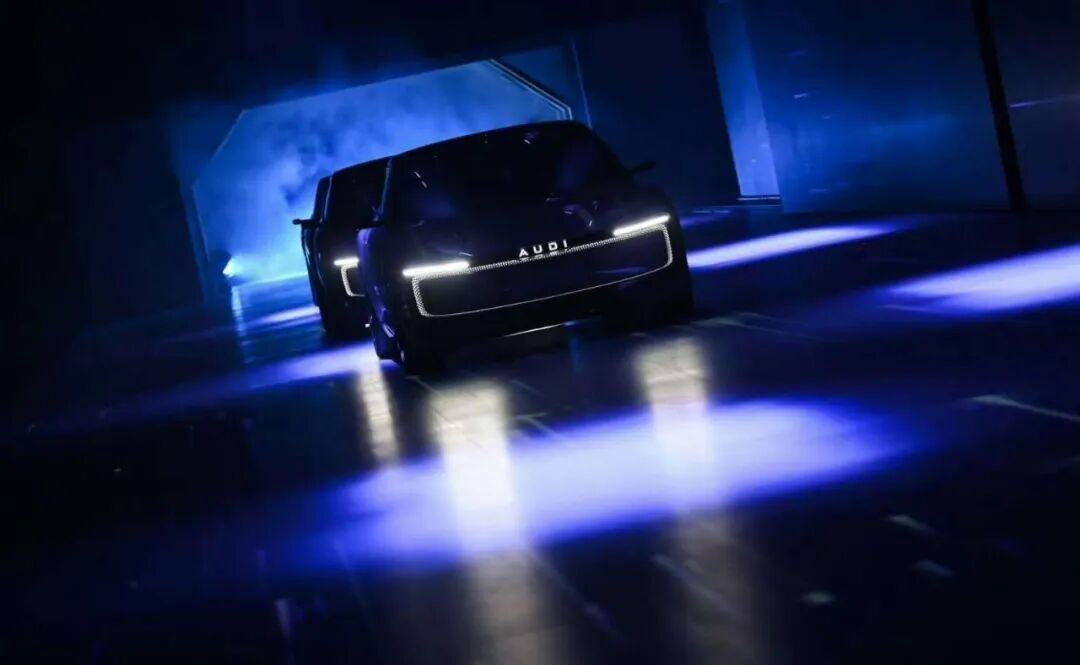
Core Insights - The Chinese automotive market has recently seen the introduction of two significant new energy travel cars: the Xiangjie S9T and the Audi E5 Sportback, indicating a growing trend in this segment [1][3]. Group 1: Product Overview - The Xiangjie S9T offers both pure electric and range-extended versions, with prices ranging from 309,800 to 369,800 yuan, while the Audi E5 Sportback focuses solely on pure electric, priced between 235,900 and 319,900 yuan [3]. - Both vehicles exhibit strong overall competitiveness, providing potential consumers with new options in the travel car category [3]. Group 2: Market Trends - The travel car market in China, traditionally dominated by fuel vehicles, is experiencing a shift as more manufacturers, including NIO and BYD, enter the segment with electric models [3][5]. - Historically, travel cars have struggled to gain traction in China due to high prices, consumer preferences for SUVs, and limited marketing efforts from major brands [5][7]. Group 3: Consumer Preferences and Product Evolution - The transition to the new energy era has revitalized the travel car segment, with domestic brands now having greater control over product definition and pricing, leading to more competitive offerings [7][9]. - The improved user experience and product capabilities of new energy travel cars are expected to attract consumers who previously favored sedans or SUVs [9][11]. Group 4: Industry Outlook - The introduction of the Xiangjie S9T and Audi E5 Sportback is seen as a strategic move to tap into the niche market of travel cars, with expectations for significant growth in this segment by 2025 [11][12]. - The success of these models could stimulate demand and encourage further investment in the travel car category, potentially reshaping consumer preferences in the Chinese automotive market [12][13].
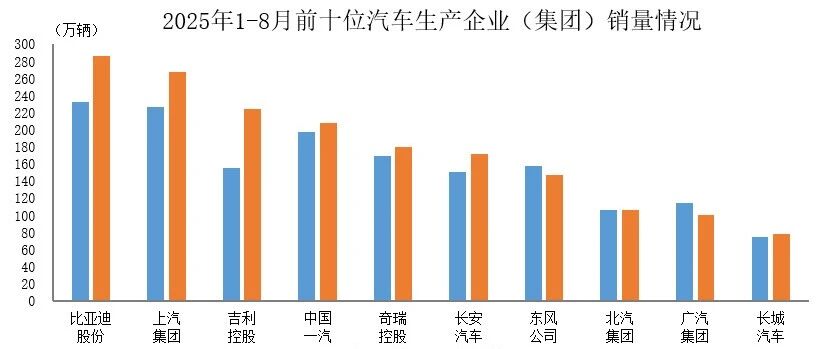
数据简报 | 2025年1-8月前十位汽车生产企业(集团)销售情况简析
中汽协会数据· 2025-09-19 04:22
Group 1 - The core viewpoint of the article highlights that among the top ten automotive companies, GAC Group, Dongfeng Motor, and BAIC Group experienced a decline in sales compared to the same period last year, while other companies showed varying degrees of growth [1] - According to the China Association of Automobile Manufacturers, the top ten automotive companies sold a total of 17.734 million vehicles from January to August 2025, accounting for 83.9% of the total automotive sales [4]
智能汽车新生态:“智行”方能“致远”
Zhong Guo Qi Che Bao Wang· 2025-09-19 01:30
Core Insights - The global smart automotive industry is experiencing intensified competition and collaboration, with countries racing in technology development and evolving market access rules [1][3] - The "2025 Smart Automotive New Ecology Forum" held in Wuhan aimed to discuss the construction of a new ecosystem for smart vehicles, highlighting the need for deep exploration of key issues such as technological bottlenecks in autonomous driving and data security regulations [1][3] Industry Trends - The integration of AI and advanced technologies is transforming vehicles into intelligent mobile spaces, shifting competition from functionality to user experience [3][4] - The automotive ecosystem in Wuhan is robust, with a significant presence of over 10 vehicle manufacturers and 1,200 parts suppliers, and a projected production capacity of 1.47 million new energy vehicles by 2024 [3][4] Technological Challenges - The industry faces critical challenges, including high-end chip shortages and the need for AI model and software ecosystem development, which compel domestic companies to innovate independently [3][5] - Current autonomous driving technology is likened to a "10-year-old child," indicating that while there are advancements, comprehensive leadership requires multi-faceted approaches in technology, concepts, and business models [5][6] AI Integration - AI tools are significantly enhancing efficiency in automotive design processes, reducing traditional timelines from weeks to days or even minutes [4][6] - Embracing AI as an auxiliary tool is seen as essential for the industry's evolution, despite potential job reductions in some areas [6] Collaborative Approaches - The integration of vehicle-road collaboration and single-vehicle intelligence is emphasized as a complementary strategy rather than opposing paths, crucial for the successful deployment of advanced autonomous driving [6] - Continuous breakthroughs in key technologies and collaboration among academia, industry, and research are necessary to ensure steady progress in automotive intelligence [6]

晨会纪要——2025年第165期-20250919
Guohai Securities· 2025-09-19 01:06
Group 1: Macro Insights - The Federal Reserve has resumed interest rate cuts, lowering the federal funds rate target range to 4.00%-4.25% from 4.25%-4.5%, marking a shift towards a more accommodative monetary policy [4][5] - The Fed's dot plot indicates a downward revision in rate expectations, predicting two more rate cuts in 2025, with the median expected federal funds rate falling to 3.6% [4][6] - The Fed's internal divisions are evident, with varying opinions on the extent of rate cuts, reflecting differing views on economic conditions [5][6] Group 2: Company Overview - Qingmu Technology - Qingmu Technology is positioned as a leading e-commerce service provider, offering comprehensive services including operational management, brand incubation, and digital marketing [8][9] - The company has evolved from a footwear e-commerce operator to a diversified e-commerce service enterprise, with a significant focus on brand incubation and operational management [9][10] - The revenue composition for H1 2025 includes e-commerce operations (45%), brand incubation management (35%), and distribution agency (14%) [9][10] Group 3: Business Growth and Strategy - The e-commerce operational management segment has shown steady growth, particularly in the apparel sector, while also expanding into the trendy toy market, contributing to new revenue streams [10][12] - Qingmu Technology has successfully partnered with brands like Pop Mart and Jellycat, which have shown significant revenue growth, enhancing the company's market position [12][13] - The brand incubation segment is rapidly growing, focusing on health consumer products and pet food, with successful entries of brands like Cumlaude Lab and Zuccari into the Chinese market [13][14] Group 4: Industry Insights - Automotive Sector - The automotive industry has seen a 12.9% year-on-year increase in passenger car wholesale sales in H1 2025, driven by policies like trade-in programs and subsidies [17][18] - Despite revenue growth, profit margins are under pressure due to intensified competition, with the automotive sector's net profit declining by 1.8% year-on-year in H1 2025 [17][18] - The truck segment is experiencing a recovery in sales and profitability, with a slight improvement in gross margins, indicating a potential upward trend in market conditions [19][20] Group 5: Investment Recommendations - The report suggests a positive outlook for the automotive sector, driven by trade-in policies and a shift towards high-end and smart vehicle offerings [21][22] - Recommended companies include those positioned for high-end market growth and those benefiting from advancements in smart driving technologies [21][22] - The report emphasizes the importance of focusing on companies with strong operational cycles and those that are well-positioned in the supply chain for future growth [21][22]
工信部拟新规:划定辅助驾驶安全红线 终结模糊营销时代
2 1 Shi Ji Jing Ji Bao Dao· 2025-09-18 15:07
Core Viewpoint - The global automotive industry is rapidly transitioning towards electrification, connectivity, and intelligence, with the increasing prevalence of driver assistance technologies. The introduction of mandatory national standards for combination driving assistance systems in China aims to enhance safety and establish a baseline for product quality and industry entry [1][3][9]. Group 1: Market Trends and Sales Data - From January to July this year, the sales of new passenger cars equipped with combination driving assistance systems in China reached 7.76 million units, representing a year-on-year growth of 21.31% and a penetration rate of 62.58%, an increase of 6.5 percentage points from the previous year [1]. Group 2: New Standards and Safety Requirements - The Ministry of Industry and Information Technology (MIIT) has proposed new mandatory standards that focus on enhancing product performance, strengthening safety requirements, and regulating system usage [1][3]. - The new standards fill a critical gap in safety baselines for combination driving assistance systems, providing essential technical support for industry entry, quality supervision, and post-event tracing [1][3]. - The standards require systems to have hand and gaze detection capabilities, issuing alerts if the driver disengages, and can deactivate the system for at least 30 minutes if the driver fails to respond [5][6]. Group 3: Marketing and Consumer Education - The proposed standards mandate that automakers provide clear usage instructions through official channels, addressing the current issue of vague marketing that prioritizes promotion over education [2][6]. - The MIIT has noted that the widespread application of combination driving assistance systems has introduced new challenges, including misleading marketing practices that blur the lines between driver assistance and autonomous driving [6][7]. Group 4: Industry Response and Future Directions - Industry leaders have emphasized the importance of safety in the development of intelligent driving systems, with calls for clear communication regarding the capabilities and limitations of these technologies [8][9]. - The MIIT plans to enhance collaboration among departments to ensure the effective implementation of safety requirements and support the high-quality development of the intelligent connected vehicle industry [9].
华为联合北汽发布享界S9T旅行车:深化全生态战略布局,锚定高端新能源细分市场
Haitong Securities International· 2025-09-18 13:45
Investment Rating - The report does not explicitly state an investment rating for the industry or specific companies involved in the launch of the Xiangjie S9T Tourer Core Insights - Huawei and BAIC have launched the Xiangjie S9T, a luxury touring vehicle, marking a significant upgrade in their partnership with a planned investment of RMB 20 billion over three years to establish a dedicated team and supply chain [10][11][18] - The S9T features both pure electric and extended-range versions, with impressive specifications including a 0-100 km/h acceleration in 3.95 seconds and a maximum range of 801 km for the electric version [11][12] - The vehicle is designed for long-distance travel and camping, combining sedan-like handling with SUV-level cargo capacity, and is competitively priced between RMB 300,000 and 370,000 [15][13] Summary by Sections Product and Pricing - The S9T adopts a differentiated strategy by positioning itself as a touring vehicle, emphasizing high specifications from base trims, which enhances its competitive edge in the mid-to-high-end NEV market [15][2] - Compared to the sedan version S9, the S9T offers better space utility and a lower entry price for the electric variant, while still maintaining strong performance metrics [15][2] Technical Path - The vehicle utilizes advanced technology with a focus on hardware redundancy and chassis integration, enhancing stability and control across various driving conditions [16][3] - Key performance metrics include a low drag coefficient of 0.23 and a fast charging capability that allows for significant battery replenishment in a short time [16][3] Business and Manufacturing - The partnership between Huawei and BAIC is characterized by a full-stack integration approach, which aims to streamline operations from product development to after-sales service [18][4] - The strategic investment and exclusive framework are expected to improve operational efficiency and brand consistency, positioning the companies favorably in the premium market [18][4]
工信部拟新规:划定辅助驾驶安全红线,终结模糊营销时代
2 1 Shi Ji Jing Ji Bao Dao· 2025-09-18 12:17
Core Viewpoint - The global automotive industry is rapidly transitioning towards electrification, connectivity, and intelligence, with the increasing prevalence of driver assistance technologies. The introduction of mandatory national standards for combination driving assistance systems in China aims to enhance safety and establish a baseline for product quality and industry entry [1][8]. Group 1: Market Trends and Data - From January to July this year, the sales of passenger cars equipped with combination driving assistance systems in China reached 7.76 million units, representing a year-on-year growth of 21.31% and a penetration rate of 62.58%, an increase of 6.5 percentage points from the previous year [1]. - The current market primarily features Level 2 (L2) intelligent driving assistance functions, which allow for automated steering, acceleration, and braking under certain conditions, but require the driver to maintain control of the steering wheel [3][8]. Group 2: New Standards and Safety Measures - The Ministry of Industry and Information Technology (MIIT) has proposed a draft for mandatory national standards that focus on enhancing product capability, strengthening safety requirements, and standardizing system usage [1][4]. - The draft includes requirements for systems to detect driver hand and gaze disengagement, issuing alerts and potentially disabling the system for at least 30 minutes if the driver does not respond [7][8]. - The new standards aim to establish a safety baseline for the development, manufacturing, and usage of combination driving assistance systems, ensuring that systems can operate safely in complex traffic scenarios [3][4]. Group 3: Marketing and Consumer Education - The draft mandates that automakers must provide clear usage instructions through official channels, addressing the current issue of "heavy marketing, light education" in the industry [2][8]. - There has been a notable trend of exaggerated marketing claims regarding advanced driving capabilities, leading to consumer confusion and unsafe driving behaviors. The new standards seek to clarify the distinctions between driver assistance and automated driving [8][9]. - Industry leaders have emphasized the importance of accurate communication regarding the capabilities and limitations of intelligent driving systems, with a shift towards promoting safety and reliability over aggressive marketing language [11][12].