
大疆

Search documents
携手开创东北亚新的美好未来——写在第十五届中国—东北亚博览会举办之际
Xin Hua She· 2025-08-26 14:24
Group 1: Event Overview - The 15th China-Northeast Asia Expo will be held in Changchun, Jilin Province from August 27 to 31, marking the 20th anniversary of the event [1] - The expo aims to explore new paths and models for regional cooperation amidst increasing global economic uncertainty, focusing on supply chain cooperation, new productivity cultivation, and expanding trade and investment [1] Group 2: Trade and Investment Opportunities - In 2024, trade volume between China and the five Northeast Asian countries is projected to reach USD 901.6 billion, a year-on-year increase of 1.6%, accounting for nearly 15% of China's total foreign trade [4] - The bilateral investment amount between China and the five Northeast Asian countries is expected to exceed USD 7 billion in 2024, with investment cooperation expanding into emerging fields such as digital economy and green development [5] Group 3: Regional Cooperation and Logistics - The expo features a total exhibition area of 73,000 square meters with 3,620 international standard booths, showcasing over 10,000 enterprises from 45 countries and regions [3] - The "Changchun-Europe" train service enhances logistics efficiency and supports regional cooperation under the Belt and Road Initiative, transforming Northeast China's geographical disadvantages into advantages [6] Group 4: Industry Collaboration and Innovation - The expo emphasizes supply chain cooperation, with a focus on modern industrial collaboration, including events like the Russia Business Day and China-Korea (Jilin) Economic Exchange Conference [8] - Major companies such as FAW, Huawei, and DJI are showcasing new products in the modern industrial pavilion, highlighting advancements in various sectors including automotive and biotechnology [7] Group 5: Cultural Exchange and Human Connection - The expo serves as a platform for deepening cultural exchanges, featuring unique cultural zones that promote regional cultural integration and cooperation [12] - Events like the "China-Russia Youth Singing Festival" and the popularity of Chinese products in Korea illustrate the growing cultural ties and market opportunities in Northeast Asia [12]
国务院划重点:十年时间,全面AI
Di Yi Cai Jing· 2025-08-26 13:43
Core Insights - 2024 is anticipated as the year of AI application implementation, with AI starting to integrate into daily life and smart devices, while 2025 is seen as the year of intelligent agents transitioning from "following commands" to "proactively serving" [1] - The State Council's document outlines a vision for AI integration across six key sectors by 2027, aiming for over 70% application penetration of new intelligent terminals and agents, with a goal of entering a new stage of intelligent economy and society by 2035 [4][5] AI Integration and Development - The State Council's opinion emphasizes the need for AI to cover various industries, including quantum technology, education, and healthcare, with a focus on six key action areas: scientific technology, industrial development, quality consumption, public welfare, governance capabilities, and global cooperation [4][5] - In scientific technology, the document calls for accelerating major scientific discoveries and enhancing collaboration between AI and fields like biomanufacturing and quantum technology [5] Industrial and Agricultural Applications - The integration of AI in industrial, agricultural, and service sectors is highlighted, with a focus on enhancing intelligent perception and decision-making capabilities in industrial systems and promoting AI-driven innovations in agriculture [5][9] - The document mentions the development of intelligent agricultural machinery and drones to address labor shortages and improve agricultural management [9] Consumer Experience Enhancement - The opinion outlines the development of intelligent applications aimed at improving quality of life in areas such as entertainment, e-commerce, and elder care, expanding into new service consumption scenarios [5][6] Government and Global Cooperation - AI's role in government services is emphasized, aiming for precise demand identification and proactive service planning, as well as enhancing public safety and environmental monitoring [6][10] - The document stresses the importance of global cooperation in AI development and governance [6] Industry Perspectives - Industry leaders, such as Zhou Hongyi from 360 Group, highlight the transition to a commercialized AI application era, with domestic models achieving international competitiveness [7] - Lenovo's chairman, Yang Yuanqing, notes the shift towards human-machine collaboration, transforming enterprise operations and emphasizing the need for a holistic approach to intelligent transformation [8] Agricultural Innovations - The launch of the Fengdeng breeding model represents a significant breakthrough in China's seed technology, with over 100 breeding units globally utilizing the model [9] - The integration of AI in meteorological forecasting demonstrates AI's potential in earth sciences and environmental monitoring [9] Safety and Governance - The document addresses the importance of AI safety, with specific measures to enhance security capabilities and establish a multi-faceted governance framework [10][11] - Industry leaders stress the need for responsible AI innovation that prioritizes human safety and ethical considerations [10][11]

盈利失速现金流告负,石头科技港股IPO是突围还是续命?
Sou Hu Cai Jing· 2025-08-26 12:41
Core Viewpoint - Stone Technology has submitted its prospectus for a secondary listing on the Hong Kong Stock Exchange, but the market response has been lukewarm due to concerns over its profitability and development prospects, highlighted by a significant drop in net profit despite revenue growth [2][4]. Financial Performance - In the first half of 2025, Stone Technology reported revenue of 7.903 billion yuan, a year-on-year increase of 78.96%, but net profit attributable to shareholders fell by 39.55% to 677 million yuan [3][4]. - The company's operating cash flow turned negative for the first time since 2019, dropping to -822 million yuan, indicating a strain on its cash flow despite revenue growth [4][5]. - Sales expenses surged by 144.51% to 2.165 billion yuan, while R&D expenses increased by 67.28% to 685 million yuan, contributing to the decline in profit [3][4]. Market Position and Competition - Stone Technology's gross margin for its main business decreased to 50.36% in 2024, down 3.75 percentage points from the previous year, with the gross margin for smart vacuum cleaners at 52.07% [5][8]. - The company faces increasing competition in the smart cleaning appliance market, with new entrants like DJI launching their own products, intensifying the market pressure [18]. Quality and Consumer Complaints - The company has faced over 1,660 complaints on the Black Cat Complaint platform, primarily related to product quality and poor after-sales service, which has damaged its reputation [16][17]. - Specific complaints include frequent malfunctions of vacuum cleaners and issues with the design of washing machines, leading to allegations of false advertising [16][17]. Shareholder Actions - There has been significant shareholder reduction, with major stakeholders, including the founder, selling off shares, raising concerns about the company's stability and future prospects [10][12][14]. - The company's low dividend payout ratio, averaging only 15.49% since its IPO, has been linked to the recent sell-offs by shareholders [14]. Strategic Initiatives - Stone Technology aims to use the funds raised from its secondary listing to support international expansion and supply chain development, although there are doubts about the effectiveness of these strategies in addressing its cash flow issues [4][15]. - The company is attempting to diversify its product offerings by entering the washing machine market, but faces stiff competition from established brands [18].


深圳45岁:从华强北“一米柜”到全球“智造推手”
经济观察报· 2025-08-26 11:56
Core Viewpoint - The new generation of enterprises in Shenzhen is shifting from a focus on speed and resource integration to a deeper, more sustainable approach that emphasizes product development and innovation, while leveraging existing strengths in technology and industry [1][29]. Group 1: Shenzhen's Economic Evolution - Shenzhen's competitive edge historically stemmed from its rapid resource integration and market responsiveness, exemplified by the "one-meter counter" model in Huaqiangbei, which has produced numerous billionaires [2][3]. - Recent discussions suggest that the innovative vitality represented by the "one-meter counter" is fading, with new first-tier cities like Hangzhou and Hefei gaining momentum in emerging industries [2][3]. Group 2: New Business Models and Innovations - New enterprises are exploring innovative solutions, such as humanoid robots for production tasks, advanced automotive electronics, and AI-driven systems for collaborative work [3][4]. - Companies like Youbixun and Zhifang are developing humanoid robots for industrial applications, while Ouyue Semiconductor focuses on next-generation automotive chip development [3][4]. Group 3: Infrastructure and Support Services - Hardware innovation service providers like Jialichuang are lowering barriers for hardware startups by offering comprehensive services from PCB prototyping to assembly [4][11]. - The shift in business logic from the "one-meter counter" model to these new enterprises indicates a transformation in Shenzhen's growth dynamics [5]. Group 4: Rapid Prototyping and Talent Pool - Shenzhen's innovation process emphasizes rapid prototyping, where ideas are quickly turned into tangible products, supported by a dense network of suppliers and skilled professionals [7][8]. - The concentration of talent in specific sectors, such as the "robot valley," enhances the efficiency of product development and iteration [8][9]. Group 5: Globalization and Market Strategy - New enterprises are adopting global strategies, with companies like Daotong Technology establishing production bases in multiple countries to mitigate geopolitical risks and enhance regional collaboration [19][20]. - KuSai Intelligent focuses on empowering overseas brands by leveraging Shenzhen's R&D and supply chain capabilities, rather than pursuing a self-branded global presence [19][20]. Group 6: Focus on Real-World Applications - Companies are prioritizing practical applications over trendy concepts, with a focus on solving real-world problems in sectors like AI and robotics [15][18]. - The emphasis on addressing immediate labor shortages in manufacturing through automation reflects a pragmatic approach to innovation [18][24]. Group 7: Commitment to Product Development - The new generation of Shenzhen enterprises is characterized by a commitment to product strength, with significant investments in R&D and manufacturing capabilities [25][26]. - Jialichuang's strategy of self-built production facilities and proprietary software development exemplifies the focus on quality and efficiency in manufacturing [26][27]. Group 8: Transition to Physical Economy - The shift from digital innovation to addressing complex issues in the physical economy is evident, with a focus on robotics, smart automotive technology, and AI applications [22][24]. - The integration of AI in manufacturing processes aims to enhance productivity and address labor challenges, marking a significant evolution in Shenzhen's industrial landscape [24][28].


2025中国最具投资价值城市50强指数发布!北上广深包揽前四,杭州位居第五
Sou Hu Cai Jing· 2025-08-26 11:33
Core Insights - The article highlights the acceleration of global changes and the importance of high-level openness and technological innovation in driving China's economic growth, particularly in urban investment value and potential [2][10]. Investment Value Rankings - GYBrand's 2025 "Top 50 Most Investable Cities in China" index ranks Shenzhen, Shanghai, Beijing, and Guangzhou as the top four cities, with Hangzhou, Chengdu, Wuhan, Suzhou, Nanjing, and Chongqing following in the top ten [2][4][6]. City Characteristics - Shenzhen leads with a comprehensive index of 95.07, excelling in talent attraction, sustainable development, and future industries, supported by policies like housing subsidies [6][7]. - Shanghai ranks second with a score of 94.34, benefiting from a robust economic foundation and a favorable business environment, particularly in its free trade zone [6][7]. - Beijing, in third place with 93.70, leverages its educational resources and strong policy support to foster emerging industries like AI and biomedicine [6][7]. - Guangzhou, ranked fourth with 92.16, is noted for its quality of life and balanced economic and cultural offerings [7]. Regional Distribution - The cities exhibit a diverse distribution pattern, with strong representation from the eastern coastal cities, which dominate the top rankings due to their economic strength and infrastructure [3][10]. - Central cities like Wuhan and Changsha are emerging as investment hotspots due to their transportation and educational resources [11]. - Western cities such as Chengdu and Chongqing are gaining traction through policy support and complementary industries [11]. Trends in Urban Development - Cities are diversifying their industrial bases, focusing on strategic emerging industries and future-oriented sectors, with Shenzhen and Hangzhou leading in digital economy and AI [15]. - Regional collaboration is strengthening among city clusters like the Yangtze River Delta and the Guangdong-Hong Kong-Macau Greater Bay Area, enhancing overall investment value [15][16]. - There is a growing emphasis on talent attraction and innovation, with cities implementing policies to draw skilled professionals and increase investment in technology [15]. Future Outlook - The acceleration of digital transformation and green transition is expected to create new investment hotspots, with cities investing in new infrastructure like 5G and big data [15]. - The integration of city clusters is deepening, leading to more refined industrial divisions and enhanced resource sharing, which will further elevate investment value [16].
45年,深圳逐梦人群像
2 1 Shi Ji Jing Ji Bao Dao· 2025-08-26 11:05
Core Insights - Shenzhen has transformed from a small city with a population of 332,900 in 1980 to a bustling metropolis with 17.99 million residents in 2024, showcasing a remarkable GDP growth rate of 18.8% annually over 45 years [1][2][12] - The city has evolved into a hub for innovation and entrepreneurship, attracting diverse talents from across the globe, including engineers, scientists, and entrepreneurs [1][2][25] Population and Economic Growth - Shenzhen's population grew from 332,900 in 1980 to 17.99 million in 2024, with per capita GDP increasing from 835 yuan to 205,700 yuan [1] - The city has seen a significant increase in the educated workforce, with the number of residents holding a college degree rising from 17,644 per 100,000 in 2010 to 22,668 in 2015 [12] Entrepreneurial Success Stories - Notable companies like DJI and BYD have emerged from Shenzhen, with DJI capturing over 70% of the global drone market and BYD becoming a leader in the electric vehicle sector [14][19] - The success of companies like Lixun Precision, which is set to be one of the largest IPOs in Hong Kong, highlights the city's role as a breeding ground for high-value enterprises [4] Innovation and Technology Development - Shenzhen has become a center for high-tech innovation, with significant investments in R&D, exemplified by Huawei's investment of over 240 billion yuan (approximately 37 billion USD) from 2005 to 2015 [11] - The city hosts numerous high-tech enterprises, with over 74,000 companies in the AI and robotics sectors, contributing to a total output value exceeding 200 billion yuan [25] International Expansion - Shenzhen's companies are increasingly focusing on international markets, with brands like Transsion and Insta360 achieving significant global presence [14][15] - The city's export of high-end products, including lithium batteries and electric vehicles, has seen substantial growth, with lithium battery exports increasing by 37.9% [18] Educational and Research Institutions - The presence of top-tier universities and research institutions in Shenzhen fosters a strong innovation ecosystem, attracting talent and facilitating technology transfer [20][24] - Initiatives like the "Entrepreneur Star" competition and government support for startups have further enhanced the entrepreneurial landscape [11][18] Future Outlook - The focus on emerging fields such as artificial intelligence and robotics positions Shenzhen as a leader in the next wave of technological advancement, with a commitment to nurturing talent and innovation [19][25] - The city's unique blend of resources, talent, and supportive policies continues to attract new entrepreneurs and innovators, ensuring its status as a global innovation hub [26]





家用电器行业简评:扫地机器人:直面竞争推动创新,放眼全球拓展可期
Donghai Securities· 2025-08-26 11:05
Investment Rating - The industry investment rating is "Overweight" indicating that the industry index is expected to outperform the CSI 300 index by 10% or more in the next six months [6]. Core Insights - The domestic sales data for robotic vacuum cleaners is positive, with retail sales in the first half of 2025 showing a year-on-year increase of 41.1% and sales volume up by 40.7%. Leading companies are integrating advanced technologies to enhance user experience and reduce market homogenization [5]. - The global market for robotic vacuum cleaners is substantial, with an expected shipment of 20.6 million units in 2024, representing a year-on-year growth of 11.2%. The market revenue is projected to reach $9.31 billion, growing by 19.7% [5]. - Chinese brands are leading the global market, with the top four brands in terms of shipment volume being Chinese. Stone Technology holds the largest market share, and the company has achieved significant sales growth in various international markets [5]. Summary by Sections Investment Recommendations - Focus on domestic robotic vacuum cleaner companies such as Ecovacs and Roborock [4]. Market Trends - The average retail price of robotic vacuum cleaners has shown fluctuations, with a year-on-year decrease of 4.9% in May and June, followed by a slight increase of 4.3% in July. The high-end market's retail share has been increasing [5]. Product Innovation - Companies are launching new products to meet diverse consumer needs, with Ecovacs introducing a mini model priced under 2000 yuan aimed at younger consumers [5]. Competitive Landscape - The entry of new competitors like DJI into the robotic vacuum market is expected to drive further innovation and competition among existing brands [5].

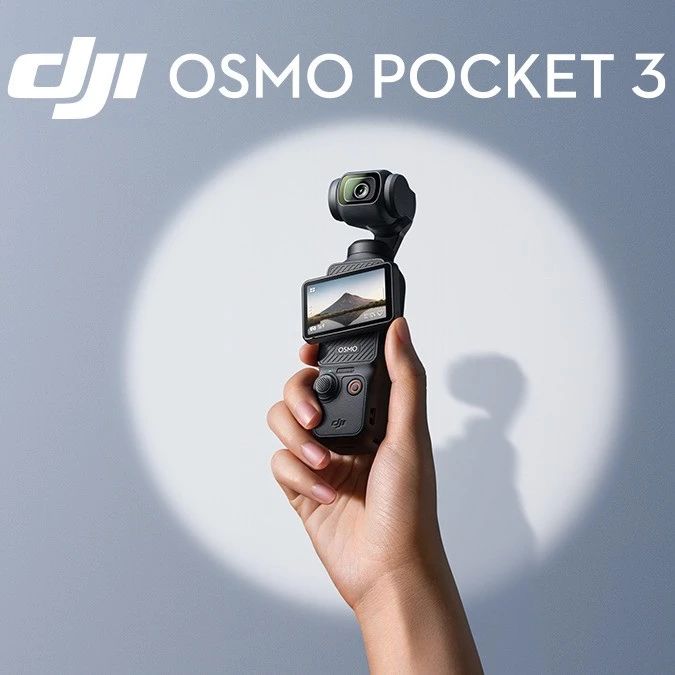
独家丨大疆 Pocket3 冲破一千万台销量,多家手机厂商悄然进军Pocket赛道
雷峰网· 2025-08-26 11:01
Core Viewpoint - The article discusses the significant success of DJI's Osmo Pocket 3, highlighting its sales performance and the competitive landscape as other companies enter the handheld camera market. Group 1: DJI's Success with Pocket 3 - DJI's Osmo Pocket 3 has sold over 10 million units since its launch in October 2023, generating revenue close to 200 billion [2] - The initial sales forecast for Pocket 3 was 30,000-40,000 units, which was later revised to 1 million and finally reached 5 million units sold [2] - The expected revenue from DJI's handheld products, including Pocket 3 and the newly launched Osmo 360 camera, is projected to exceed 500 billion this year, contributing to an overall revenue estimate of 850-900 billion for DJI [2] Group 2: Competitive Landscape - Other smartphone manufacturers, including OPPO and vivo, are actively developing their own versions of pocket cameras, with vivo reportedly assembling a team of nearly 100 people for this project [3] - Xiaomi has partnered with Haohan to create a competing gimbal camera, targeting the lower-end market and differentiating itself from DJI's offerings [4] - The competitor, Innosilicon, has also restarted its Pocket project, indicating the growing interest in this product category [5] Group 3: Challenges in Developing Pocket Cameras - The complexity of creating a pocket camera lies in miniaturizing the gimbal and body while accommodating a 1-inch image sensor and advanced image processing chips [8] - Previous attempts to create similar products faced challenges such as overheating and poor user experience due to modular designs [8] - The supply chain issues, particularly with the 1-inch CMOS sensor from Sony and motor module production, have contributed to the ongoing shortages of Pocket 3 [9][10] Group 4: Technological Barriers - The development of the camera motor module is particularly challenging due to the need for precision and the use of glass lenses, which significantly increase weight and complicate motor design [11] - The technology behind the gimbal stabilization and motor control is complex, requiring advanced algorithms and sensor integration [12] - Despite the advancements in technology, competitors struggle to differentiate their products from DJI's, making it difficult to capture market share [12][13] Group 5: Market Positioning and User Base - DJI's Pocket series has successfully expanded its user base over three generations, evolving from content creators to a broader audience, including vloggers and casual users [14][15] - The third generation, Pocket 3, has introduced features like beauty filters and color adjustments, further appealing to female users [15] - Competitors must find significant differentiation to compete effectively with DJI, as replicating the product without unique features may not yield profitable margins [15]
8.26犀牛财经晚报:7月底公募资产净值35.08万亿元 大疆扫地机器人曝“无法识别落地窗”
Xi Niu Cai Jing· 2025-08-26 10:29
Group 1 - As of July 2025, the total net asset value of public funds in China reached 35.08 trillion yuan, managed by 164 institutions, including 149 fund management companies and 15 asset management institutions with public qualifications [1] - The public fund fee reform is advancing towards a mechanism restructuring, with floating fee rate funds expected to become more common and expand to "fixed income plus" products [2] - The number of personal pension financial products has expanded to 37, with 21 commercial banks participating in distribution [2] Group 2 - The State Council has issued opinions on the deep implementation of "Artificial Intelligence +" actions, aiming for significant integration of AI in six key areas by 2027 and a core industry scale of the intelligent economy to grow rapidly [3] - The new national standard for smart toilets has been released, enhancing energy and water efficiency standards, with stricter requirements for energy consumption and water usage [3] - The humanoid robot chip market is projected to exceed $48 million by 2028, driven by advancements in AI capabilities and the adoption of new technologies by leading robotics companies [3] Group 3 - HSBC was fined 4.2 million HKD by the Hong Kong Securities and Futures Commission for failing to disclose investment banking relationships in research reports over an eight-year period [4][5] - DJI's new robot vacuum has faced issues with obstacle recognition, particularly with transparent surfaces, and a fix is expected within 1-2 months [5] - A court ruling has ordered Longli Bio to compensate 1,618 investors over 270 million yuan due to false statements, with associated liabilities for underwriting and accounting firms [5] Group 4 - Alibaba Cloud has announced a price reduction for certain model context caching, lowering the cost of cached tokens significantly [6] - ByteDance's option price has been raised to $200.41 per share, marking a new high compared to previous valuations [7] - Nongfu Spring reported a 22.1% increase in net profit for the first half of 2025, reaching approximately 7.62 billion yuan [8] - Sichuan Gold achieved a net profit of 209 million yuan in the first half of 2025, reflecting a 48.41% year-on-year growth [9] - Longban Media reported a net profit of 120 million yuan, up 13.28% year-on-year, despite a decline in revenue [10] - Qianjiang Biochemical's net profit increased by 30.24% to 107 million yuan, despite a drop in revenue [11] - Nobon Co. reported a net profit of 65.3 million yuan, up 48.33% year-on-year, with significant revenue growth [12] - Proya Cosmetics achieved a net profit growth of 13.8% in the first half of 2025, with a proposed cash dividend [13] - Chihong Zinc and Germanium reported a 3.27% increase in net profit, with a proposed cash dividend [14] - Lianchuang Optoelectronics reported a net profit of 263 million yuan, reflecting a 15.18% year-on-year increase [15] Group 5 - The Shanghai Composite Index experienced a decline of 0.39%, while consumer electronics stocks showed resilience with significant gains [16] - The market saw a total trading volume of 2.68 trillion yuan, indicating a decrease compared to the previous trading day [16] - Various sectors showed mixed performance, with consumer electronics, gaming, and beauty care stocks performing well, while rare earth and military sectors faced declines [16]

对话华为靳玉志:世界上根本没有免费的东西
Di Yi Cai Jing Zi Xun· 2025-08-26 09:48
Core Viewpoint - Huawei's automotive business is rapidly expanding, particularly in the field of assisted driving, with various collaboration models with car manufacturers being explored [1][2]. Group 1: Huawei's Automotive Business Development - Huawei's automotive business unit (BU) has seen key figures, such as CEO Jin Yuzhi and Huawei Qian Kun, publicly engaging with the media, indicating a shift from behind-the-scenes to a more prominent role [1]. - The assisted driving sector is experiencing significant growth, with Huawei's Qian Kun technology being integrated into 1 million vehicles and the upcoming large-scale deployment of Huawei ADS 4 [1]. - The collaboration models between Huawei and car manufacturers include component supply, single intelligence (either smart cockpit or assisted driving), dual intelligence (both smart cockpit and assisted driving), and full-stack solutions [1][7]. Group 2: Technical Perspectives and Strategies - Huawei Qian Kun does not align with the VLA (Vision-Language-Action) approach favored by some manufacturers, instead prioritizing WA (World and Action) for direct vehicle control through sensory inputs [2][9]. - The company emphasizes that there is no such thing as a free lunch in the automotive industry, suggesting that costs are often hidden in other areas, such as vehicle pricing [2][12]. Group 3: Collaboration and Empowerment - Huawei's strategy involves a comprehensive support system for car manufacturers, guiding them through the entire process from product definition to marketing, thereby enhancing their capabilities [7][8]. - The company aims to empower manufacturers, particularly state-owned enterprises, by sharing its successful experiences in product development and market strategies [7][8]. Group 4: Future Outlook and Market Dynamics - The number of players capable of achieving L3 and L4 autonomous driving is expected to decrease as the industry consolidates, driven by the need for data, computational power, and algorithms [10]. - The differentiation in assisted driving technology is minimal, with the primary goal being zero accidents and fatalities, which complicates pricing strategies [11].