
天地科技

Search documents
A股“五好生” 比亚迪、阳光电源、迈瑞医疗等156家公司的持续增长样本观察|寻找“受尊敬”企业系列报道
经济观察报· 2025-10-15 10:11
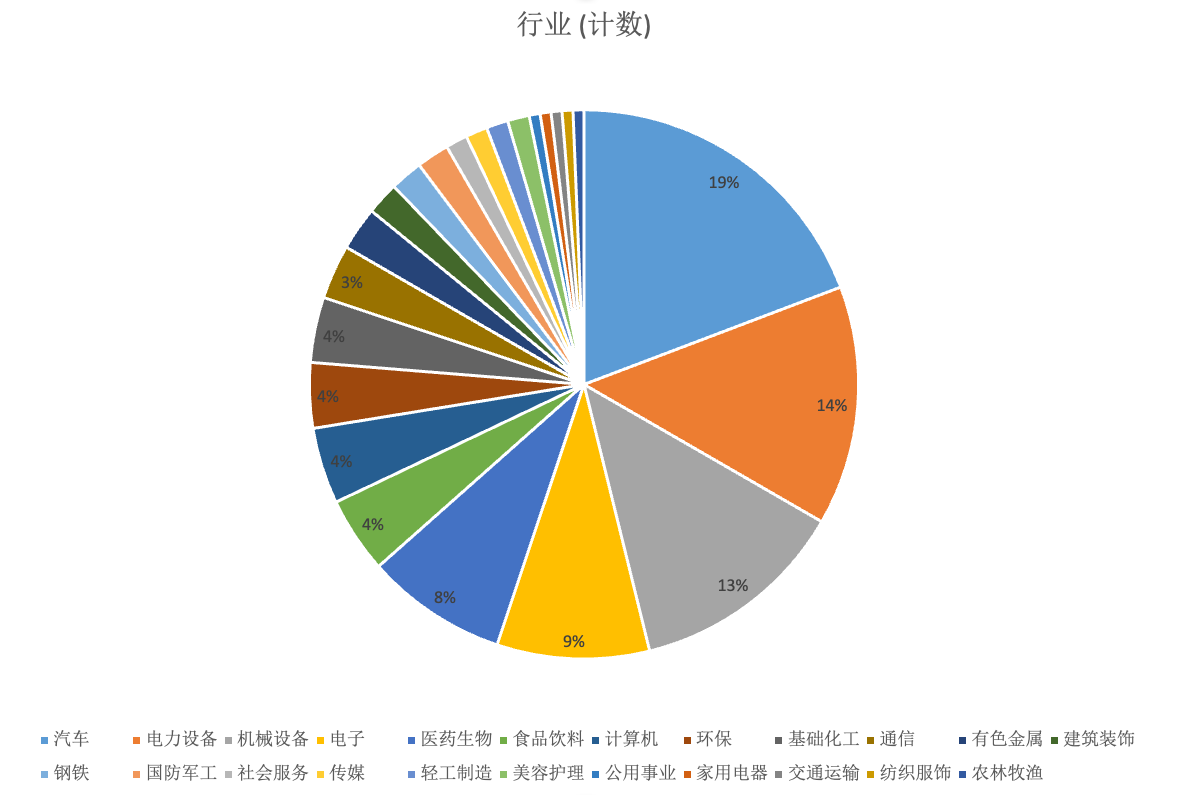
Core Viewpoint - The article emphasizes the importance of "five-dimensional positive growth" for companies, which includes continuous growth in total assets, operating income, net profit attributable to shareholders, R&D investment, and employee compensation from 2022 to 2024, as a measure of a company's internal motivation and sustainable development capability [2][3]. Summary by Sections Five-Dimensional Positive Growth - Companies with long-term competitiveness maintain steady growth not only in asset scale and revenue but also in innovation investment and human capital [3]. - A total of 156 companies in the A-share market meet the criteria of achieving three consecutive years of growth in the five key indicators, indicating a focus on solid asset foundations and strategic investments in R&D and employee compensation [3][4]. Industry Distribution - The 156 companies are concentrated in sectors such as machinery, electronics, power equipment, pharmaceuticals, and automobiles, highlighting the transformation and upgrading of China's manufacturing industry through technological accumulation and talent investment [4][6]. - The automotive sector leads with 30 companies, followed by power equipment (22), machinery (20), electronics (14), and pharmaceuticals (13), collectively accounting for over 63% of the group [6]. Key Industry Analysis - **Automotive**: The sector shows strong market vitality, particularly in new energy vehicles, with companies like BYD demonstrating significant growth through vertical supply chain integration and R&D investment [9]. - **Power Equipment**: Companies like Sungrow Power Supply benefit from global green energy demand, with continuous R&D ensuring technological leadership [12]. - **Machinery**: Companies such as Times Electric leverage their technological advantages to achieve growth in both domestic and international markets [13]. - **Electronics**: Firms like North Huachuang are capitalizing on domestic semiconductor expansion, with R&D driving rapid growth [15]. - **Pharmaceuticals**: Companies like Mindray Medical are expanding through continuous innovation in medical technology, supported by robust R&D investment [16]. Internal Logic of Growth - Achieving simultaneous growth in the five dimensions is challenging, with only 156 out of 5,383 A-share companies meeting the criteria by the end of 2024 [18]. - The interplay between R&D investment and human capital is crucial for maintaining competitive advantage in a rapidly evolving market [19][20]. Long-Termism and Employee Compensation - Employee compensation and R&D investment are identified as dual anchors of long-termism, with average employee compensation increasing by approximately 35% and R&D investment by about 42% from 2021 to 2024 among the 156 companies [25]. - This focus on human and innovation capital, despite potential short-term impacts on profit margins, enhances organizational stability and competitive barriers [25]. Conclusion - The article concludes that the concept of being a "respected" company should not solely rely on scale or profit but should also encompass the creation of economic value while promoting technological advancement, employee growth, and social welfare [26].








A股“五好生” 比亚迪、阳光电源、迈瑞医疗等156家公司的持续增长样本观察|寻找“受尊敬”企业系列报道
Jing Ji Guan Cha Wang· 2025-10-15 02:24
Core Insights - The evaluation criteria for companies in China are shifting from a focus on single profit metrics to a multidimensional assessment of capabilities, emphasizing long-term competitiveness through sustained growth in assets, revenue, net profit, R&D investment, and employee compensation [1][19] - A total of 156 companies in the A-share market have met the criteria of achieving positive growth across these five dimensions for three consecutive years, indicating a robust foundation for sustainable development [1][13] Industry Distribution - The 156 companies are primarily distributed across sectors such as machinery, electronics, power equipment, pharmaceuticals, and automotive, highlighting the transformation and upgrading of China's manufacturing industry through technological accumulation and talent investment [2][5] - The automotive sector leads with 30 companies, followed by power equipment (22), machinery (20), electronics (14), and pharmaceuticals (13), collectively accounting for over 63% of the total [3][5] Key Industries and Representative Companies - **Automotive (30 companies)**: This sector includes traditional vehicles, new energy vehicles, and smart solutions, showcasing China's leadership in the global automotive industry transformation [6] - BYD (002594.SZ) has demonstrated strong growth through vertical integration and significant R&D investment, establishing a robust competitive barrier [6] - Fuyao Glass (600660.SH) has capitalized on the trend of automotive intelligence and consumer upgrades, enhancing product value and driving revenue growth [7] - **Power Equipment (22 companies)**: This sector benefits from the dual carbon strategy, with growth driven by advancements in renewable energy technologies and smart grid construction [8] - Sungrow Power Supply (300274.SZ) has seen rapid growth due to its leadership in photovoltaic inverters and energy storage systems [8] - Guoxuan High-tech (002074.SZ) focuses on battery technology, leveraging continuous investment in R&D to build a competitive edge [8] - **Machinery (20 companies)**: This sector reflects the transformation of Chinese manufacturing, with companies benefiting from domestic industrial upgrades [9] - Times Electric (688187.SH) has sustained growth through its core competencies in rail transit equipment and expansion into new industries [9] - Tiandi Technology (600582.SH) leads in intelligent coal mining equipment, achieving steady growth through technological advancements [10] - **Electronics (14 companies)**: This sector has shown significant growth, driven by demand in semiconductors, high-end components, and consumer electronics [11] - Northern Huachuang (002371.SZ) has benefited from the expansion of domestic wafer fabrication, leading to rapid revenue growth [11] - Haiguang Information (688041.SH) has established a strong presence in the domestic CPU market, capitalizing on the demand for localized computing power [11] - **Pharmaceuticals (13 companies)**: This sector is driven by aging populations and increased health awareness, with companies focusing on R&D in innovative drugs and high-end medical devices [12] - Mindray Medical (300760.SZ) has built core competencies through continuous innovation in medical technology [12] - East China Pharmaceutical (000963.SZ) is expanding its growth through innovative drug development and aesthetic medicine [12] Five-Dimensional Growth Logic - Achieving positive growth across the five dimensions is a complex task, with only 156 out of 5,383 A-share companies meeting this standard, indicating a strong correlation between R&D investment and sustainable growth [13][18] - The combination of total assets, revenue, net profit, R&D investment, and employee compensation reflects a company's health and sustainability, with each dimension interlinked [14][15][16]


煤炭行业四季度底部明确,反弹可期 | 投研报告
Zhong Guo Neng Yuan Wang· 2025-10-15 01:45
Core Viewpoint - The coal industry is expected to experience a slight decline in production in 2025, with a projected total output of approximately 4.71 billion tons, reflecting a year-on-year decrease of 1.1% due to various supply and demand factors [1][3][4]. Supply - In July, the national raw coal output was 380 million tons, a month-on-month decrease of 40 million tons (-9.5%) and a year-on-year decrease of 9 million tons (-3.8%). In August, the output was 390 million tons, with a year-on-year decrease of about 6 million tons (-3.2%) but a month-on-month increase of 9 million tons (+2.5%) [1][3]. - The average monthly production from January to June 2025 is estimated at 401 million tons, while the average for July and August is 386 million tons. If safety inspections remain at July levels, the estimated average for September to December is also 386 million tons, leading to an annual output of about 4.71 billion tons in 2025 [1][3]. - The reduction in output is primarily from Inner Mongolia and Xinjiang, with expected year-on-year declines of 3.7% and 4.6%, respectively. Coal imports are projected to decrease by approximately 15.8% in 2025, mainly due to reduced imports from Indonesia [3]. Demand - There is an expectation of increased demand due to a cold winter, with the total electricity consumption projected to grow by 5%-6% year-on-year in 2025. The demand for chemical coal remains high, with significant year-on-year increases in coal-based PVC, ethylene glycol, and methanol production [4][5]. - The average daily pig iron production is expected to remain above 240,000 tons, with a year-on-year increase of 3.9% [5]. Inventory - Inventory pressures have eased significantly compared to the first half of the year, supporting a rebound in coal prices. Mainstream port inventories have decreased to 60.43 million tons, down from mid-May highs, and are lower than the same period last year [5]. Price - Expectations of supply contraction are raising the bottom for coal prices, with seasonal demand potentially opening up upward price movement. The central price for thermal coal is anticipated to reach 750 yuan/ton in the fourth quarter [5]. Investment Recommendations - The coal sector is currently at a cyclical low with high PE and low PB ratios, indicating potential for rebound as coal prices rise. Recommended stocks include flexible targets like Yanzhou Coal, Jin控 Coal, and Shanxi Coal International, as well as growth-oriented stocks like Electric Power Investment and Huayang Co., and stable long-term investments such as China Shenhua and Shaanxi Coal [6].
国信证券晨会纪要-20251015
Guoxin Securities· 2025-10-15 01:42
Core Insights - The report highlights the potential for performance recovery in the express delivery sector due to the "anti-involution" policies, which are expected to last until the end of the year or even until the Spring Festival next year [6][7] - The coal industry is anticipated to see a rebound in the fourth quarter of 2025, with clear bottom signals and improving profitability as coal prices are expected to rise [10][11] - The Hong Kong stock market is experiencing a risk premium, with a reevaluation of its valuation logic, particularly in light of recent economic conditions [14][15] Transportation Industry - The express delivery sector is expected to benefit from the "anti-involution" policies, which have led to price increases across approximately 90% of the delivery volume in China [6][7] - The shipping industry is facing challenges due to mutual port fees imposed by the US and China, affecting over 40% of shipping capacity, with varying impacts across different shipping segments [6] - The aviation sector is seeing a stabilization in domestic ticket prices, with a projected recovery in profitability as the economy improves [6][7] Coal Industry - The coal sector is showing signs of a bottoming out, with expectations for a price rebound in the fourth quarter of 2025, driven by supply constraints and seasonal demand increases [10][11] - Coal production has decreased due to weather conditions and regulatory measures, with a projected annual output decline of 1.1% [11][12] - Demand for coal is expected to rise in the winter months, supported by increased electricity consumption and chemical coal needs [12][13] Investment Recommendations - The report recommends investing in companies with stable operations and potential for steady returns, including SF Express, Zhongtong Express, and Southern Airlines, among others [8][21] - In the coal sector, companies like Yancoal and Shanxi Coking Coal are highlighted as potential investment targets due to their expected performance recovery [14] - The automotive glass market is projected to grow significantly, with recommendations for investing in leading companies like Fuyao Glass, which is well-positioned to capitalize on market trends [21]
国信证券:供应收缩预期抬高煤价底部 旺季需求释放或打开煤价上行空间
智通财经网· 2025-10-14 08:01
Core Viewpoint - The coal industry is expected to rebound in the fourth quarter of 2025, driven by a price recovery and improved profitability for coal companies, following a period of decline due to falling coal prices and poor profits [1] Supply - In July, China's raw coal production was 380 million tons, a decrease of 4 million tons (-9.5%) month-on-month and 9 million tons (-3.8%) year-on-year; in August, production was 390 million tons, a year-on-year decrease of about 6 million tons (-3.2%) [2] - The total coal production for 2025 is projected to be approximately 4.71 billion tons, a year-on-year decrease of 1.1% [2] - Coal imports showed a recovery in July and August, with July imports at 35.61 million tons (down 22.9% year-on-year) and August at 42.74 million tons (down 6.7% year-on-year) [2] Demand - The expectation of a cold winter is likely to increase demand in November and December, with a projected year-on-year growth in national electricity consumption of 5%-6% for 2025 [3] - Chemical coal demand remains high, with significant year-on-year increases in coal-based PVC, ethylene glycol, and methanol production [3] Inventory - Inventory pressures across various segments have eased compared to the first half of the year, supporting a rebound in coal prices [4] - Mainstream port inventories have decreased to 60.43 million tons, down from mid-May highs, and coal company sales have improved [4] Price - The tightening supply expectations have raised the bottom price for coal, with the fourth-quarter price expected to center around 750 yuan/ton [5] - The focus on production checks and stricter safety inspections has contributed to the price rebound [5] Investment Recommendations - The coal sector is currently at a cyclical low with high PE and low PB ratios, indicating potential for rebound as coal prices rise [6] - Recommended stocks include: - Elastic stocks: Yanzhou Coal Mining (600188.SH), Jincheng Anthracite Mining (601001.SH) [6] - Growth stocks: Electric Power Investment (002128.SZ), Huayang Co. (600348.SH) [6] - Long-term stable stocks: China Shenhua Energy (601088.SH), China Coal Energy (601898.SH) [6]



煤炭行业2025年四季度投资策略:底部明确,反弹可期
Guoxin Securities· 2025-10-14 06:25
Core Viewpoints - The coal industry is expected to see a rebound in the fourth quarter of 2025, driven by a potential increase in coal prices and improved profitability for coal companies as supply constraints become evident [2][11][18]. Group 1: PE and PB Analysis - The coal sector has experienced a downward trend in both PE and PB after a period of rapid growth, with significant differentiation observed during two periods: 2014-2017 and mid-2024 to present [2][11]. - The current PE is at approximately the 65th percentile since 2005, while the PB is at about the 27th percentile, indicating a cyclical low for the sector [17][18]. Group 2: Supply Dynamics - Coal production in July and August 2025 saw a year-on-year decrease due to rainfall and regulatory checks, with an expected slight decline in total production for the year [3][37]. - The total coal production for 2025 is projected to be around 4.71 billion tons, reflecting a year-on-year decrease of 1.1% [3][37]. Group 3: Demand Outlook - Anticipated cold winter conditions are expected to boost demand in the winter months, with electricity consumption projected to grow by 5-6% year-on-year in 2025 [4]. - Chemical coal demand remains robust, with significant year-on-year increases in production for coal-based PVC, ethylene glycol, and methanol [4]. Group 4: Inventory and Price Trends - Inventory pressures across various segments have eased compared to the first half of the year, supporting a rebound in coal prices [5]. - The expectation of supply contraction is likely to elevate the price floor for coal, with seasonal demand potentially opening up upward price movement [5]. Group 5: Investment Recommendations - The report recommends several stocks based on their potential for rebound and growth, including Yanzhou Coal Mining Company, Jinneng Holding, and China Shenhua Energy [5].
煤炭行业周报:港口煤价淡季反弹,Q4旺季行情可期-20251013
East Money Securities· 2025-10-13 05:09
Investment Rating - The report maintains an "Outperform" rating for the coal industry, indicating a positive outlook compared to the broader market [2][14]. Core Insights - The coal prices have shown a seasonal rebound, with expectations for a favorable market in Q4 due to increased demand and supply constraints [7]. - The report highlights the impact of "anti-involution" policies and stricter safety regulations on coal supply, which are expected to support price stability and potential increases [7][9]. - The overall sentiment is that coal prices are likely to rise in the upcoming winter season, driven by demand recovery and macroeconomic policies [7][9]. Summary by Sections Market Performance - As of October 11, the Qinhuangdao coal price was 706 RMB/ton, reflecting a year-on-year decrease of 154 RMB/ton, but a slight week-on-week increase of 0.7% [7]. - The average daily coal consumption in power plants across 25 provinces was 5.12 million tons, showing a year-on-year increase of 0.3% [7]. Supply and Demand Dynamics - The report notes that coal supply is expected to remain tight due to "anti-involution" effects and safety inspections, which may limit new supply [7]. - The inventory levels at northern ports were reported at 17.47 million tons, an increase compared to the same period last year [7]. Recommendations - The report suggests focusing on coal stocks that are likely to benefit from the current market conditions, including companies like Lu'an Huanneng, Pingmei Shenma, and Shanxi Coking Coal [9]. - It also highlights the potential for growth in companies like Shenhuo Co. and Electric Power Investment Energy, which are expected to see performance improvements [9].
东方财富证券:25Q2或为全年业绩低点 看好煤炭板块震荡向上机会
Zhi Tong Cai Jing· 2025-10-09 07:37
Core Viewpoint - The coal industry in the first half of 2025 (25H1) experienced a significant decline in profits, with total profits amounting to 149.2 billion yuan, a year-on-year decrease of 52.9% [1][3] Group 1: Profit and Revenue Trends - In 25H1, the coal industry's total profit was 149.2 billion yuan, down 52.9% year-on-year, with profits for Q1 and Q2 at 80.4 billion yuan and 68.8 billion yuan respectively, reflecting declines of 47.4% and 58.1% [1][3] - The average net profit per ton of coal in 25H1 decreased by 30%, with Q2 net profit for the sector declining by 14% quarter-on-quarter, indicating that Q2 may represent the lowest point for the year [3][4] - The number and proportion of loss-making companies in the coal industry continued to rise, reaching a loss ratio of 56% by June 2025, an increase of 13.6 percentage points compared to the end of 2024 [1] Group 2: Capital Expenditure and Debt Levels - Capital expenditure in the coal industry slowed down in 25H1, but listed companies still saw a 47% year-on-year increase, with total capital expenditure reaching 84 billion yuan [2] - The industry's total debt reached a record high of 4.8 trillion yuan, while the asset-liability ratio remained stable at around 60% [2] Group 3: Cost and Expense Management - The average cost per ton of coal decreased, with a reduction of 19.5% and 4.2% in average costs for 25H1, leading to a significant drop in net profit per ton [3][4] - The average return on equity (ROE) for sample companies in 25H1 was only 1.9%, down from 5.4% in 24H1, indicating increased profitability pressure [4] Group 4: Market Outlook and Recommendations - The coal market has shown signs of recovery since July 2025, with significant price increases for major coal companies, suggesting potential for improved performance in the second half of the year [3][4] - Investment recommendations include focusing on companies that are expected to benefit from the stabilization of coal prices and those with strong performance resilience, such as China Shenhua and China Coal Energy [5]





山东矿机回复深交所问询:业绩下滑原因剖析与应对策略
Xin Lang Cai Jing· 2025-09-23 13:32
Core Viewpoint - Shandong Mining Machinery Group Co., Ltd. has responded to the Shenzhen Stock Exchange's inquiry regarding its application for a specific stock issuance, addressing challenges and measures related to its operational performance and financial status [1] Performance Decline Reasons and Industry Comparison - During the reporting period, Shandong Mining's operating revenues were 2,285.64 million, 2,404.99 million, 2,697.57 million, and 1,708.46 million, with a non-recurring net profit of 33.44 million, 96.55 million, 137.29 million, and 93.52 million, showing a year-on-year decline of 52.80% in the most recent period. The decline is attributed to decreased demand in the coal mining equipment industry and intensified competition [2] - The coal machinery industry is expected to reach a scale of 157 billion by 2026, but is currently in a mid-cycle adjustment phase. In contrast, the demand for intelligent bulk material conveying equipment is projected to grow, with the market size for belt conveyors expected to reach 39.2 billion by 2027 [2] - Compared to peers, Shandong Mining's revenue and profit trends differ due to variations in business scale, shareholder background, and product structure. For instance, Tian Di Technology, as an industry leader, shows different performance trends due to high capital investment and large business volume [2] Financial Condition Analysis - Accounts receivable at the end of each reporting period were 988.34 million, 1,219.39 million, 1,523.42 million, and 1,458.18 million, with over one-year accounts receivable accounting for 31.39%, 29.40%, 29.62%, and 33.41% respectively. The accounts receivable turnover rates were 3.35, 2.80, 2.43, and 1.38, influenced by extended payment terms and slow customer payments [4] - The net cash flow from operating activities was 32.84 million, -203.33 million, -185.66 million, and 146.28 million, primarily due to lower-than-expected collections and the use of bill discounting [4] - Inventory values at the end of each period were 606.04 million, 718.20 million, 746.37 million, and 866.18 million, with a significant increase in dispatched goods. The rise in inventory is justified by the growth in business scale and longer project cycles [4] - Contract liabilities increased from 180.53 million to 339.91 million, reflecting pre-received customer payments and aligning with the scale of orders on hand [4] Other Business Situations - The company's online gaming business saw revenues of 239.41 million, 18.37 million, 7.27 million, and 1.76 million, with a declining gross margin. The decline is attributed to management changes, product lifecycle issues, and regulatory impacts [5] - The company will focus on its core business of coal machinery and belt conveyors, discontinuing the expansion of its gaming business [5] Future Strategies - The company plans to enhance its core competitiveness and achieve performance recovery through the implementation of a "Five Modernization Strategy," increased market development efforts, and improved employee incentives [6]

再度提示煤炭供需改善与潜在政策催化下的配置机遇
Xinda Securities· 2025-09-21 02:05
Investment Rating - The investment rating for the coal mining industry is "Positive" [2] Core Viewpoints - The report indicates that the coal economy is at the beginning of a new upward cycle, with a resonance between fundamentals and policies, making it an opportune time to invest in the coal sector [3][13] - The report highlights that coal prices have shown signs of stabilization, and there is an expectation for price increases due to seasonal demand and supply constraints [5][13] - The report emphasizes the continued investment logic of coal capacity shortages, with a short-term balance and a long-term gap in supply [13][14] Summary by Sections Coal Price Tracking - As of September 19, the market price for Qinhuangdao port thermal coal (Q5500) is 699 CNY/ton, an increase of 21 CNY/ton week-on-week [4][31] - The price for coking coal at Jingtang port is 1610 CNY/ton, up 60 CNY/ton week-on-week [4][33] - International thermal coal prices have also seen fluctuations, with Newcastle thermal coal at 69.6 USD/ton, a week-on-week increase of 0.4 USD/ton [4][31] Supply and Demand Tracking - The capacity utilization rate for sample thermal coal mines is 91.7%, an increase of 2.4 percentage points week-on-week [4][48] - Daily coal consumption in inland provinces has increased by 4.10 thousand tons/day (+1.22%) [5][13] - The report notes that the supply side is still constrained by policies, and the demand is expected to rise as winter heating needs begin [5][13] Industry Performance - The coal sector has shown a weekly increase of 3.59%, outperforming the broader market [16] - The report identifies key companies to focus on, including China Shenhua, Shaanxi Coal, and others, highlighting their stable operations and strong performance [14][16]


