
长安

Search documents
星宇股份20250321
2025-03-23 15:02
Summary of the Conference Call for Xingyu Co., Ltd. Industry Overview - The automotive lighting industry is undergoing significant upgrades due to the rise of intelligent technologies, with DLP and HD smart headlights becoming key selling points for new models [4][13][14]. Company Insights Market Position - Xingyu Co., Ltd. maintains a strong domestic market share, with Chery and Seres leading, while Ideal, SAIC Volkswagen, Hongqi, and Toyota account for approximately 50% [2][5]. - The company is actively expanding its client base to include potential customers like Geely, Dongfeng, and Xiaomi, with specific plans to increase Geely's share [2][6]. Financial Performance - In 2024, overseas revenue is projected to reach 500 million yuan, a nearly 50% increase, primarily driven by the European market [2][7]. - The company expects revenue to reach around 600 million yuan in 2025, benefiting from new projects with clients like Mercedes-Benz and BMW, although short-term profit contributions from the European market may be limited due to long R&D cycles and economic conditions [2][7]. Profitability and Margins - The gross margin improved in Q4 2024 due to revenue growth, fixed cost dilution, and favorable client payment conditions [11][12]. - The company aims to maintain or even improve gross margins by reducing costs and enhancing operational efficiency in response to price pressures from OEMs [12]. Client Structure and Growth Expectations - The top five clients for 2024 include Chery, Volkswagen, Seres, Hongqi, and Ideal, with Chery being the largest, accounting for over 20% of revenue [3][45]. - The company anticipates increased contributions from Geely, Ideal, and Xiaopeng in 2025, with a focus on high-end models [45][46]. Technological Developments - Xingyu is collaborating with Huawei to develop DLP headlights and has independently developed HD headlights, with plans to showcase these at the Shanghai Auto Show [4][15]. - The company is expanding its technology offerings to non-Huawei clients, enhancing its overall value and gross margins [4][15]. Strategic Initiatives - The company is cautious about capital expenditures in 2025, with no immediate pressure on cash investments, and is focusing on high-end products for international markets [4][29]. - Xingyu is also exploring opportunities in the North American market, where competition is less intense compared to Europe [25][27]. Challenges and Risks - The company faces challenges in the European market due to long R&D cycles and economic conditions, which may limit short-term profitability [2][7]. - Increased accounts receivable turnover days are attributed to a shift in client structure towards domestic clients with longer payment terms [28][29]. Future Outlook - By 2025, the company expects to see a continued rise in the proportion of revenue from new energy vehicles, projected to exceed 35% in 2024 and approach 40% in Q4 [20][47]. - The company aims to enhance its global presence, particularly in Europe and Latin America, as Chinese automakers expand their international footprint [36][37]. Conclusion - Xingyu Co., Ltd. is well-positioned in the automotive lighting industry, with a strong domestic market presence and strategic initiatives aimed at expanding its international footprint and enhancing profitability through technological advancements and client diversification [44][48].

比亚迪们为了这事儿杀红了眼
虎嗅APP· 2025-03-23 03:43
Core Viewpoint - The "Smart Driving Equality" trend in the Chinese automotive industry has gained momentum, with major domestic brands participating, indicating a critical juncture where over 50% of domestic car sales will be involved in this competitive landscape [1][2]. Group 1: Market Dynamics - The urgency for car manufacturers to enter the smart driving market is driven by a narrowing window for smart technology adoption, where strategic positioning will determine future market share [2]. - A price war has intensified, with 28 models, including 20 electric vehicles, experiencing price reductions averaging 30,000 yuan, representing a 13% decrease [4]. - New electric vehicle models have seen significant price cuts, with average reductions of 39,000 yuan and a 17% drop, marking the highest in their respective segments [4]. Group 2: Competitive Strategies - The price reduction strategy is influenced by ongoing promotional tactics and the need for product updates due to the "smart driving" wave, leading to increased market competition [5]. - BYD's dual strategy of promoting both smart and non-smart versions of its vehicles has resulted in sustained sales growth, particularly in lower-tier cities [5][6]. - Other brands, such as Extreme Fox, have also engaged in aggressive pricing, with significant discounts on models to remain competitive [6]. Group 3: Technological Evolution - The "Smart Driving Equality" movement is reshaping the value system of smart driving technologies, with a focus on establishing a new product hierarchy and accelerating the elimination of non-smart vehicles [8][10]. - The emergence of a structured smart driving product hierarchy, akin to a pyramid, is evident, with varying levels of capabilities from basic to advanced features [9]. - The trend indicates a shift where high-level smart driving features are becoming more accessible, with prices for advanced models dropping significantly [13]. Group 4: Challenges and Opportunities - Traditional automakers face challenges in building a sustainable technology cycle for smart driving, requiring both foundational functionality and continuous upgrades to maintain competitiveness [14]. - Collaborations with leading smart driving technology suppliers can provide traditional manufacturers with a balance of efficiency and autonomy, although long-term cost pressures remain a concern [15]. - The transition to a software-driven model poses significant challenges for traditional manufacturers, necessitating organizational restructuring and talent development to adapt to smart driving technology [16].



禾赛科技:获得海外顶级OEM多年独家定点合作,25全年预计实现GAAP盈利
Tianfeng Securities· 2025-03-21 12:48
Investment Rating - The report assigns a "Buy" rating for the stock, expecting a relative return of over 20% within the next six months [10]. Core Insights - The company is expected to achieve GAAP profitability in 2024, with a revenue of 720 million yuan in Q4 2024, representing a year-over-year increase of 28.3% [1]. - The company has established long-term exclusive partnerships with top OEMs, enhancing its market position in the ADAS laser radar segment [2]. - The company anticipates strong growth in 2025, with projected revenues between 3 billion to 3.5 billion yuan and laser radar deliveries expected to reach 1.2 to 1.5 million units [3]. Summary by Sections Financial Performance - In Q4 2024, the company reported a revenue of 720 million yuan, with a gross margin of 39.0% and an adjusted net profit of 170 million yuan, marking a return to profitability [1]. - The total shipment of laser radars in Q4 2024 reached 222,054 units, a year-over-year increase of 153.1% [1]. Business Development - As of February 2025, the company has secured production partnerships with 22 domestic and international automotive manufacturers for 120 vehicle models [2]. - The company has initiated mass production of the JT series laser radars for various robotic applications, with an initial shipment of over 20,000 units in December 2024 [2]. Future Outlook - The company expects to maintain robust growth in 2025, with revenue projected to reach 3 to 3.5 billion yuan and laser radar deliveries anticipated to be between 1.2 to 1.5 million units [3]. - The company is well-positioned to benefit from the increasing penetration of L2+/L3 autonomous driving technologies and the expansion of its robotics business [3].

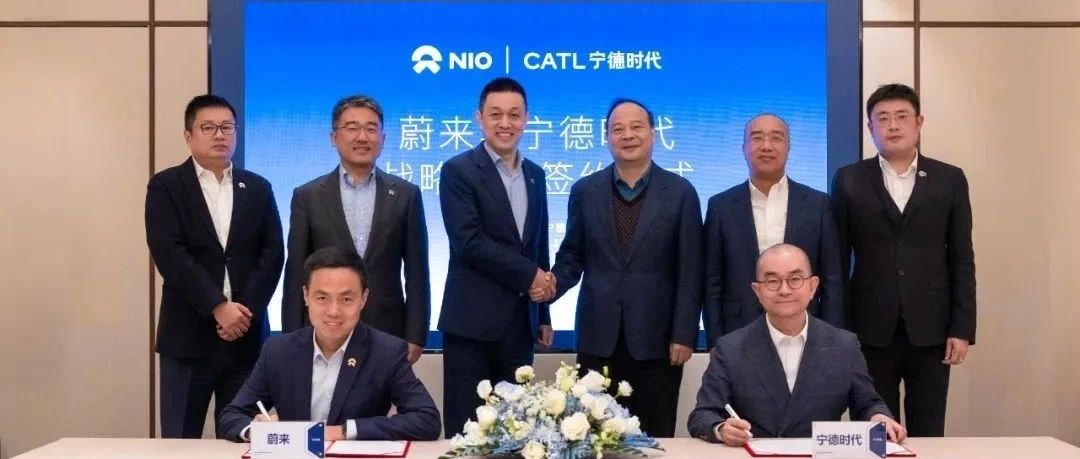
注资蔚来25亿 宁德时代的换电“野望”
高工锂电· 2025-03-20 11:59
Core Viewpoint - CATL has elevated its battery swapping business to a strategic level, indicating a strong commitment to this model and its potential in the energy market [1][9]. Group 1: Strategic Partnerships and Investments - On March 17, NIO and CATL signed a strategic cooperation agreement to build the world's largest battery swapping network and promote the unification of industry technology standards [2]. - CATL is advancing a strategic investment of no more than 2.5 billion RMB in NIO Energy, further solidifying their partnership [3]. - The agreement includes CATL's support for the development of NIO's battery swapping network, with future models under NIO's Firefly brand adopting CATL's battery swapping standards [4]. Group 2: Market Position and Industry Trends - CATL's significant investment in battery swapping demonstrates its commitment to this model amidst ongoing debates about its viability [5]. - By 2030, CATL predicts a "three-way split" in the market among battery swapping, home charging, and public charging stations [6]. - Since 2025, "battery swapping" has frequently appeared in CATL's strategic partnerships, including collaborations with SAIC Group and international logistics giant DHL [7][8]. Group 3: Business Model Transformation - The core of the battery swapping model is transforming batteries from vehicle "accessories" to "shared assets," reducing user costs and creating ongoing revenue through battery leasing and swapping services [10]. - Battery swapping networks can serve as distributed energy storage nodes, helping to alleviate battery production fluctuations and extend battery lifecycle value [10]. - CATL's battery swapping strategy marks a shift from being solely a battery manufacturer to becoming an energy service provider [12]. Group 4: Financial Performance and Challenges - The battery industry faces dual pressures from volatile raw material prices and increasing competition from automakers developing their own batteries [13]. - CATL's battery business gross margin has decreased from 28% three years ago to 19%, while its energy storage business gross margin has risen to 27% [13]. Group 5: Ecosystem Development - CATL's battery swapping strategy is part of a broader exploration of a super ecosystem in the aftermarket, collaborating with over ten automakers to develop battery swapping models targeting high-frequency energy needs [15]. - Partnerships with companies like Didi and Yuxin Second-hand Cars aim to create a comprehensive ecosystem for vehicle purchase, battery leasing, and swapping [16]. - The integration of battery swapping networks with smart grids and energy storage systems could lead to a super ecosystem spanning transportation, energy, and digital sectors [17]. Group 6: Strategic Value and Future Outlook - The strategic value of battery swapping lies not only in enhancing energy replenishment experiences but also in exploring the full value chain of battery operations [18]. - As a leading player in the new energy sector, CATL has established a first-mover advantage in technology and ecosystem layout in the battery swapping field, though it still faces challenges in scaling operations and establishing standards [18].

6万的车搭载智能驾驶,元芳你怎么看?
阿尔法工场研究院· 2025-03-19 12:12
Core Viewpoint - The article discusses the competitive landscape of intelligent driving technology among major automotive companies, highlighting the recent advancements and strategic moves by Chery, Geely, and GAC Toyota in the context of price reductions for lidar-equipped intelligent driving systems. Group 1: Chery's Intelligent Driving Strategy - Chery has launched the Falcon Intelligent Driving system with four versions (200/500/700/900), which will be equipped in over 30 models by 2025, including entry-level models priced around 60,000 yuan [2][4] - The capabilities of the Falcon Intelligent Driving system are comparable to those of competitors like BYD and Geely, focusing on features such as highway NOA and urban NOA, with plans for L3-L4 capabilities [3][4] - Chery's computing power has reached 14 EFLOPS, supported by extensive data from over 15 million global users and 2 billion kilometers of intelligent driving mileage annually [5][12] Group 2: Geely's Intelligent Driving Developments - Geely's Zeekr brand has upgraded its intelligent driving strategy with the "Thousand Miles" system, which includes a solution for parking from space to space and is set to push OTA upgrades to existing users [9][10] - The Zeekr system utilizes dual Orin-X chips and lidar, boasting a computing power of 23.5 EFLOPS, and has a significant fleet of 7.5 million vehicles equipped with L2 or higher driving assistance [12][13] - Geely's intelligent driving capabilities are positioned as industry-leading, with features like AI endpoint navigation and comprehensive parking solutions [13][11] Group 3: GAC's Intelligent Driving Initiatives - GAC has introduced the upgraded ADiGO system, now named Star Spirit Intelligent Driving, with a range of capabilities from 70 to 2000 TOPS, aiming for full coverage across its brands by 2025 [14] - GAC's strategy emphasizes its ambition to be a leading player in intelligent driving technology, with a goal to achieve L4 mass production [14][15] - The competitive pressure in the automotive industry is driving companies to integrate intelligent driving features into vehicles priced between 100,000 to 150,000 yuan, reflecting a shift towards more accessible technology [15][19] Group 4: Industry Trends and Competitive Landscape - The article notes that intelligent driving has become a critical metric for assessing automotive companies' capabilities, influencing market competitiveness [15][18] - As intelligent driving technology becomes ubiquitous, the competition may shift towards pricing strategies, with companies like GAC Toyota and Leap Motor reducing prices for lidar-equipped systems [19] - The ongoing advancements in intelligent driving technology are prompting a race among traditional and new automotive players to enhance their offerings and meet consumer expectations [18][19]


比亚迪将压力给到了蔚来
Zhong Guo Jing Ji Wang· 2025-03-19 10:04
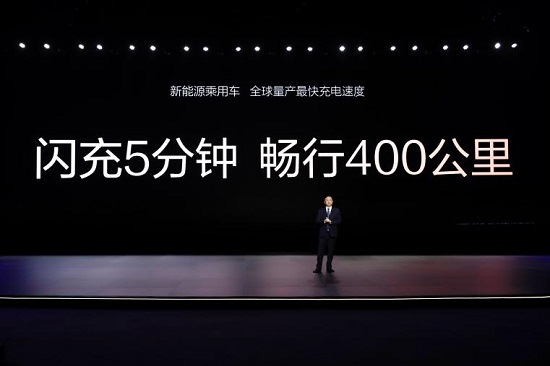
Core Viewpoint - The competition between NIO and BYD intensifies as both companies innovate in the electric vehicle charging sector, with NIO focusing on battery swapping and BYD promoting ultra-fast charging technology. Group 1: NIO's Battery Swapping Strategy - NIO has invested nearly 10 billion in building over 3,100 battery swapping stations across China, establishing a strong presence in the battery swapping market [1][22]. - The company aims to achieve battery swapping accessibility in all 27 provincial administrative regions by December 31, 2025 [7]. - NIO's CEO, Li Bin, emphasizes that the battery swapping business is not a burden but a competitive advantage, creating a comprehensive energy system [6][13]. Group 2: BYD's Ultra-Fast Charging Technology - BYD has introduced a new super e-platform that features ultra-fast charging capabilities, allowing vehicles to charge in just 5 minutes for a range of 400 kilometers [3][4]. - The super e-platform is the world's first mass-produced passenger vehicle with a 1,000V architecture, enhancing the efficiency of battery, motor, and power systems [4]. - BYD's rapid growth in the new energy vehicle market is evident, with cumulative sales exceeding 4.27 million units in 2024, marking a 41.1% year-on-year increase [4]. Group 3: Strategic Collaborations and Market Dynamics - NIO has signed a strategic cooperation agreement with CATL to enhance its battery swapping network and unify industry standards, indicating a response to BYD's advancements in ultra-fast charging [4][16]. - Both companies are addressing the "charging anxiety" of consumers, with battery swapping and ultra-fast charging serving different market needs [18][27]. - The competitive landscape is shifting, as both NIO and BYD receive positive market feedback, with NIO's stock rising by 16% and BYD's A-shares reaching a new high [27][28].

福耀玻璃(600660):汽玻量价齐升,产业链话语权强
Ping An Securities· 2025-03-19 09:13
Investment Rating - The investment rating for the company is "Recommended" [1][9]. Core Views - The report highlights that Fuyao Glass has experienced a significant increase in both volume and price of automotive glass, strengthening its bargaining power within the industry [8]. - The company reported a revenue of RMB 39.252 billion for 2024, representing a year-on-year increase of 18.37%, and a net profit of RMB 7.498 billion, up 33.20% year-on-year [4]. - The report emphasizes the ongoing growth in the automotive glass market, driven by increased vehicle glass area and higher prices, benefiting Fuyao Glass due to its global leadership and strong profitability [8]. Financial Summary - For 2024, the company achieved a revenue of RMB 39.252 billion, with a projected revenue growth of 16.8% for 2025, reaching RMB 45.844 billion [6]. - The net profit for 2024 was RMB 7.498 billion, with forecasts of RMB 8.933 billion for 2025, indicating a year-on-year growth of 19.1% [6]. - The gross margin for the company improved to over 36%, with a net margin exceeding 19% [8]. - The report projects a consistent increase in earnings per share (EPS), estimating RMB 3.42 for 2025 and RMB 4.63 for 2027 [6]. Production and Market Position - The automotive glass sales volume increased by 11.2% to 155.9 million square meters, with a 7.4% rise in average selling price to RMB 229.1 per square meter [8]. - The company is set to enhance its regional supply capabilities with the upcoming production facilities in Hefei and Fuzhou, expected to generate an annual output value of RMB 6 billion [8]. - Fuyao Glass's overseas subsidiary in the U.S. reported a revenue of RMB 6.31 billion with a net profit margin of 9.9% for 2024 [8].
充电比加油快,比亚迪要革燃油车的命
华尔街见闻· 2025-03-18 10:51
Core Viewpoint - BYD has launched the Super e-platform, aiming to achieve charging speeds comparable to refueling gasoline vehicles, thereby addressing consumer concerns about charging efficiency and range anxiety [1][9][12]. Group 1: Technological Advancements - The Super e-platform includes a high-voltage architecture, flash charging battery, megawatt flash charging system, and a high-speed electric motor, positioning BYD at the forefront of global electric vehicle technology [1][2][6]. - The megawatt flash charging system can achieve a maximum charging power of 1MW (1000kW), significantly surpassing competitors like Tesla and Xiaopeng [5][6]. - BYD's flash charging battery features advanced technologies that reduce internal resistance and heat generation, enhancing battery life and performance [7][8]. Group 2: Market Positioning - BYD's introduction of the Super e-platform is seen as a strategic move to solidify its leadership in the electric vehicle market, especially against competitors like Geely and Changan [4][10]. - The upcoming models, Han L EV and Tang L EV, are expected to disrupt the B-segment market with performance metrics that rival high-end sports cars, further challenging the relevance of traditional gasoline vehicles [8][10][11]. Group 3: Consumer Impact - The rapid charging capabilities are intended to alleviate consumer concerns regarding electric vehicle usability, potentially increasing adoption rates among hesitant buyers [12][13]. - BYD aims to create a "fast charging popularization" effect in the mid-range market, which could further diminish the market share of gasoline vehicles [13][15]. Group 4: Infrastructure and Future Outlook - BYD plans to establish 4000 megawatt charging stations, although the timeline for this rollout remains unspecified [15]. - The success of BYD's charging technology will depend on the development of supporting infrastructure and the ability to meet consumer expectations for charging speed and efficiency [15][16].

天山电子分析师会议-2025-03-18
Dong Jian Yan Bao· 2025-03-17 23:30
Investment Rating - The report does not explicitly state an investment rating for the optical optoelectronics industry or the specific company involved [1]. Core Insights - The company, Tianshan Electronics, is focusing on the automotive electronics sector, developing products such as VA modules and TFT modules, which have superior viewing angles and response times compared to traditional displays. These products are already being used by well-known automotive brands like BYD and Dongfeng [17][18]. - The "Lingshan Base" is expected to significantly contribute to the company's performance through the production of monochrome and color LCD modules, as well as touch screens. The base is currently in the capacity ramp-up phase and aims to complete its construction by the end of 2025 [18][19]. - The company has implemented a dual mechanism of "incentives + repurchase" to enhance its long-term incentive structure, which includes a restricted stock incentive plan approved in 2024 [19]. - The liquid crystal display industry is evolving towards high resolution, low power consumption, and ultra-narrow bezels, driven by advancements in 5G, IoT, and smart wearable technologies. The company aims to position itself in high-growth segments such as smart home interaction screens and automotive electronics [20]. Summary by Sections 1. Basic Research Information - The research was conducted on Tianshan Electronics in the optical optoelectronics industry on March 17, 2025, with participation from various financial institutions [13]. 2. Detailed Research Institutions - The research involved multiple institutions including Western Securities, E Fund, and others, with representatives from each participating [14]. 3. Research Institution Proportions - The report does not provide specific data on the proportions of research institutions involved [15]. 4. Main Content Information - The company is focusing on strategic development in the automotive electronics sector and has established a strong product matrix at its "Lingshan Base" to meet growing market demands in various fields [17][18]. - The company has formed long-term partnerships with major players in the industry, enhancing its competitive edge and customer loyalty through customized solutions [20]. - The establishment of an industry fund aims to promote technological upgrades and strengthen resource collaboration within the electronic information industry [21][22].
天山电子(301379) - 2025年03月17日投资者关系活动记录表
2025-03-17 10:28
Group 1: Company Overview and Strategic Direction - The company, Tianshan Electronics, is focused on the development of display products in the automotive electronics sector, including VA modules, TFT modules, and VA+TFT combination screens, which have superior viewing angles and response times compared to traditional displays [2][3]. - The "Lingshan Base" is a strategic upgrade project covering approximately 132,000 square meters, aimed at accelerating the construction of integrated optical touch modules to meet the growing market demand in smart home, financial data terminals, communication devices, and automotive electronics [4]. - The company has established a dual mechanism of "incentives + repurchase" to enhance long-term motivation and value management, with a 2024 restricted stock incentive plan involving the issuance of 1.498 million shares at a price of 9.56 CNY per share [5]. Group 2: Industry Trends and Positioning - The liquid crystal display industry is evolving towards high resolution, low power consumption, and ultra-narrow bezels, driven by advancements in 5G communication, IoT, and smart wearable technologies [6][7]. - Tianshan Electronics aims to provide customized LCD screens and modules, leveraging strategic partnerships with companies like BOE and long-term collaborations with major firms across various sectors, including smart home and industrial control [8]. - The company reported a revenue of 1.476 billion CNY for 2024, reflecting a year-on-year growth of 16.54%, and a net profit of 150 million CNY, up 39.97%, indicating a strong growth momentum [8]. Group 3: Investment and Collaboration - The company has established an industrial fund in collaboration with professional institutions to strategically invest in the semiconductor and electronic information sectors, enhancing technological upgrades and resource synergy within the electronic information industry ecosystem [9].