Anthropic

Search documents
AI恐慌引发软件股“大逃杀”,华尔街反应过度了?
Jin Shi Shu Ju· 2026-02-12 08:59
Core Viewpoint - The software sector on Wall Street has faced significant turmoil due to fears that artificial intelligence (AI) will disrupt the industry, culminating in a recent sell-off described as a "collapse" [1] Group 1: Market Reactions - Major software companies have seen substantial stock declines, with ServiceNow (NOW) down over 22%, Thomson Reuters (TRI) down over 26%, Intuit (INTU) down over 26%, Snowflake (SNOW) down 18%, and Salesforce (CRM) down over 20% since January 29 [1] - The market logic suggests that AI companies like Anthropic and OpenAI may either develop their own software to compete with existing products or enable businesses to easily create custom internal software, both scenarios posing risks to traditional software firms [1] Group 2: Analyst Perspectives - Analysts argue that the panic on Wall Street may be an overreaction, suggesting that AI may not replace all existing software companies but could enhance the services of many legacy firms [1][2] - Jason Ader from William Blair emphasizes the need to differentiate between software companies facing greater risks and those that are more secure, indicating that the current sell-off may not reflect the true value of individual companies [2] Group 3: Challenges for AI Companies - There are significant barriers preventing AI companies from overtaking existing software firms, including the reluctance of enterprises to allocate IT resources for developing custom software unless it offers a critical long-term advantage [3] - The initial development costs of custom software are only part of the equation, and despite the availability of open-source software, the third-party software market has continued to thrive [3] - Ader notes that using AI tools to create new applications may not be practical for companies that already have effective solutions in place [3] Group 4: Integration of AI - AI functionalities are likely to be integrated into existing software, enhancing their capabilities and customer value rather than completely replacing them [4] - Data governance issues also pose challenges, as companies may be hesitant to share proprietary data with AI models, preferring to work with established partners [5] - While some software companies may struggle to keep pace with the evolving AI landscape, those that adapt are likely to thrive [5]
华尔街新交易逻辑:先卖了再说!
Xin Lang Cai Jing· 2026-02-12 08:42
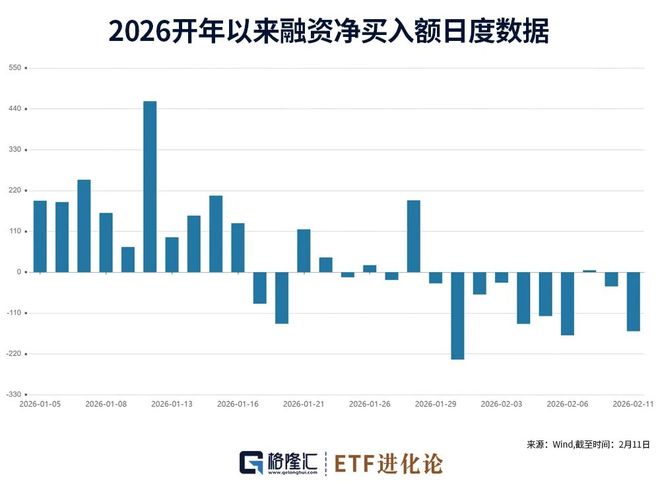
Group 1 - The core trading logic on Wall Street has shifted from identifying AI winners to indiscriminately selling potential AI losers, driven by fears of traditional business models being disrupted by AI advancements [1][2][3] - The recent sell-off has affected various sectors, including SaaS software, insurance brokerage, wealth management, and real estate services, with notable declines such as a 14% drop for JLL and a 12% drop for CBRE, marking their largest single-day declines since the pandemic [1][2] - Gabelli Funds' manager John Belton highlighted that any company with potential disruption risk is facing indiscriminate selling [3] Group 2 - In the A-share market, leveraged funds have begun to reduce their positions after a period of aggressive buying, with net selling occurring on 9 out of the last 10 trading days, totaling 974 billion yuan in sales [3][10] - Major companies experiencing net selling include Kweichow Moutai, Industrial Fulian, and Zhongji Xuchuang, with net selling amounts of -27.88 billion yuan, -23.49 billion yuan, and -23.27 billion yuan respectively [7][8] - Despite the reduction in positions in broad-based ETFs, there has been significant buying in specific ETFs such as Hai Futong Zhongzheng Short Bond ETF and E Fund Zhongzheng Overseas Internet ETF [10] Group 3 - The market is showing a strong interest in sectors related to economic recovery and domestic demand improvement, with significant inflows into the chemical sector and other related industries [17][18] - The recent price increases across various sectors, including upstream resources and consumer goods, indicate a potential inflationary trend, with PPI data showing a month-on-month increase of 0.4% and a narrowing year-on-year decline to -1.4% [21][22] - The upcoming Spring Festival is expected to boost consumer spending, with major companies launching significant promotional campaigns and government initiatives to stimulate the economy [26][27]

AI vs SaaS:先卖再问,市场“卖对了一半”?
Hua Er Jie Jian Wen· 2026-02-12 08:24
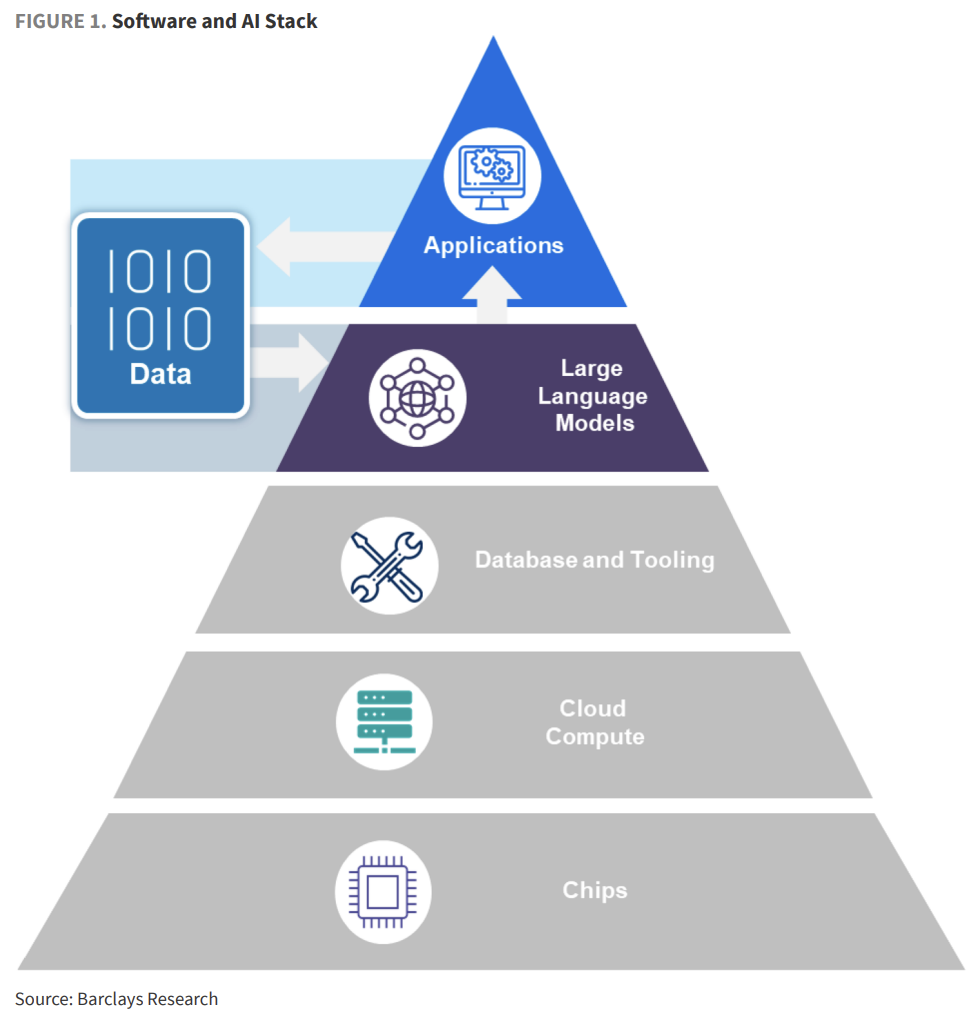
Core Insights - The recent release of Anthropic's products has triggered a significant sell-off in enterprise software stocks, revealing an overreaction in the market regarding AI threats [1][3] - Barclays highlights that while AI tools are encroaching on the application layer of SaaS companies, they do not threaten the foundational "system of record" infrastructure, which is crucial for companies like Salesforce and SAP [1][3] Group 1: Market Reaction and Misunderstandings - The release of Claude Cowork by Anthropic has been described as the tipping point for the decline in enterprise software stocks, with Salesforce and Workday seeing over a 40% drop in the past year [3] - Investors are confused about the capabilities of AI, mistakenly believing that new AI tools will completely replace traditional SaaS software, leading to a devaluation of established companies [3][12] - Barclays' report argues that the simplistic view of AI as a total replacement for software does not apply to most enterprise software companies [3] Group 2: AI Capabilities and Limitations - Generative AI excels in pattern recognition and initial draft generation but has fundamental limitations due to its probabilistic nature, making it less effective in scenarios requiring absolute accuracy [4][5] - Traditional software operates on deterministic rules, ensuring consistent outputs, while AI software functions probabilistically, lacking guaranteed consistency [5][6] Group 3: System of Record Companies - Barclays identifies three categories of enterprise software companies that have been mispriced during the sell-off, starting with system of record companies like Salesforce and SAP, which provide critical data requiring certainty [7][8] - SAP's position is particularly strong, as it manages essential business data and workflows that generative AI cannot handle effectively [7][8] - The report suggests that AI will not replace these systems but will instead increase their importance as AI creates more data touchpoints [8] Group 4: Misjudged Investment Opportunities - Besides system of record companies, Barclays points out two other categories that are misjudged: beneficiaries of AI agents and AI computing providers, which may see increased demand due to AI expansion [9] - There is a contradiction in the market logic; if AI is powerful enough to disrupt the software industry, the demand for computing power should rise, yet companies like Oracle and CoreWeave have also faced sell-offs [9] Group 5: Application Layer Challenges - The market's panic is not entirely unfounded, as SaaS companies have struggled with poor user interfaces, high prices, and security vulnerabilities, leading to customer dissatisfaction [10] - Companies like Klarna are moving away from traditional SaaS products in favor of smaller firms, utilizing AI tools to build their own applications, which highlights a genuine threat to the SaaS model [10] Group 6: Future Market Dynamics - The current market correction is seen as necessary, as SaaS companies have enjoyed inflated valuations by controlling both infrastructure and interface [11] - The emergence of AI technologies that can operate above system records may erode the pricing power of SaaS companies, indicating a shift in the profitability landscape [11] - As understanding of AI capabilities and SaaS business models deepens, the market may begin to re-evaluate companies incorrectly labeled as "AI victims," while those relying on poor application layers may face continued valuation pressure [12]
China's Lenovo warns of PC shipment pressure from memory shortage
Reuters· 2026-02-12 07:28
China's Lenovo warns of PC shipment pressure from memory shortage | ReutersSkip to main content[Exclusive news, data and analytics for financial market professionalsLearn more aboutRefinitiv]Lenovo Chairman and CEO Yang Yuanqing speaks at the opening ceremony of the World Internet Conference (WIC) in Wuzhen, Zhejiang province, China, November 23, 2020. REUTERS/Aly Song/File Photo [Purchase Licensing Rights, opens new tab]BEIJING, Feb 12 (Reuters) - China's Lenovo Group [(0992.HK), opens new tab] warned on T ...


年末 AI 回顾:从模型到应用,从技术到商战,拽住洪流中的意义之线
晚点LatePost· 2026-02-12 07:15
Group 1: Core Insights - The article summarizes key developments in the AI sector over the past year, focusing on major events and trends in AI technology and applications [4][5]. - It emphasizes the importance of understanding the evolving landscape of AI, particularly through the lens of various models, applications, and the competitive dynamics among major players [4][5]. Group 2: Models - The article discusses the emergence of the Agentic Model, which supports advanced capabilities such as reasoning, coding, multi-modal understanding, and memory [6][7]. - The rise of reasoning models, particularly highlighted by the success of DeepSeek-R1, marks a significant milestone in AI development, showcasing the potential for complex problem-solving [8][10]. - DeepSeek's open-source approach and low training costs have garnered attention and respect within the AI research community, influencing the broader landscape [9][18]. Group 3: Applications - The year 2025 is identified as a pivotal moment for the widespread adoption of Agent applications, driven by advancements in reasoning, coding, and multi-modal capabilities [27][30]. - General Agents, which leverage coding as a means to execute various tasks, are becoming increasingly prevalent, with products like Claude Code leading the way [28][31]. - The article highlights the emergence of specialized Agents in vertical markets, such as legal and educational sectors, which are transforming traditional business models from service-based to outcome-based [38][39]. Group 4: Major Players - The competition among major AI companies, particularly ByteDance, Alibaba, and Tencent, is characterized by a focus on talent acquisition and organizational structure to enhance AI capabilities [50][51]. - ByteDance's strategy involves creating independent teams to foster innovation and attract AI-native talent, while Alibaba's approach has been more stable, with a focus on retaining experienced personnel [51][54]. - The article notes the ongoing battle for AI talent and the implications for organizational dynamics within these companies, as they strive to maintain competitive advantages in the rapidly evolving AI landscape [50][52].

Anthropic正式请家教,37岁女哲学家像养孩子一样调教Claude
3 6 Ke· 2026-02-12 07:06
Core Insights - Amanda Askell, a philosopher at Anthropic, is training the AI model Claude to understand human morality and develop a "digital soul" [3][10][13] - The approach taken by Amanda involves a nurturing method akin to parenting, focusing on instilling ethical values and emotional intelligence in Claude [9][10][12] - Anthropic's valuation has reached $350 billion, highlighting the significant market impact of AI developments [44] Group 1: Amanda Askell's Role - Amanda Askell has been tasked with shaping Claude's character through extensive dialogue and detailed prompts [3][9] - Her work aims to give Claude a moral compass, enabling it to engage positively with millions of users [3][10] - Amanda believes that recognizing human-like traits in AI is crucial for its development [3][10] Group 2: Training Methodology - The training process involves teaching Claude to discern right from wrong and to develop a unique personality [9][10] - Amanda emphasizes empathy in her interactions with Claude, believing that treating AI with kindness will yield better outcomes [20][22] - She often considers Claude's perspective to enhance its understanding of human interactions [24][27] Group 3: Ethical Considerations - Amanda's background in philosophy drives her to address the ethical implications of AI, particularly in relation to human values [41][43] - She is concerned about the rapid pace of AI development outstripping societal readiness to manage its consequences [48][60] - Amanda advocates for open discussions about AI fears and the potential for human adjustment to technological changes [60]

计算机行业周报:海外云厂商资本开支高增,AI应用商业化拐点临近-20260212
BOHAI SECURITIES· 2026-02-12 06:51
Investment Rating - The report maintains a "Neutral" rating for the computer industry and an "Accumulate" rating for Hongsoft Technology (688088) [2][28] Core Insights - The report highlights that overseas cloud vendors such as Amazon, Google, Microsoft, and Meta are expected to have capital expenditures reaching $660 billion in 2026, a year-on-year increase of approximately 60% compared to 2025. This indicates a robust growth phase for global AI computing demand despite concerns over cash flow pressures for these companies [27] - The AI application sector is witnessing multiple catalysts, with ByteDance's AI video generation model Seedance 2.0 showing significant improvements in core metrics, which is expected to enhance its application in areas like AI short dramas and industry reports, thereby reducing costs and increasing efficiency in content production [27] - The report suggests focusing on leading companies that possess strong AI technology implementation capabilities and scene adaptability as the industry approaches a commercialized inflection point [27] Industry News - ByteDance's latest video generation model Seedance 2.0 has entered internal testing, supporting multi-modal input and intelligent scene segmentation, significantly reducing the cost of traditional film IP development [14] - Anthropic has released its new AI model Claude Opus 4.6, which enhances autonomy and focus, improving capabilities in code planning, debugging, and review [14][15] Company Announcements - Unisplendour announced a plan to issue A-shares to specific targets, aiming to raise up to 5.57 billion yuan for acquiring a 6.98% stake in H3C, R&D equipment purchases, and repaying bank loans [17] - Parallel Technology plans to purchase GPU computing servers for up to 117 million yuan to expand its computing resource pool [18] - China Shipbuilding Industry Corporation announced an investment of 153 million yuan for construction projects in its consumables industrial park [20] Market Review - From February 5 to February 11, the CSI 300 index rose by 0.32%, while the Shenwan Computer Industry Index increased by 1.72%, with all sub-sectors showing positive growth [21]





X @Elon Musk
Elon Musk· 2026-02-12 06:32
🤨DogeDesigner (@cb_doge):BREAKING: Anthropic's Claude AI has shown in testing that it's willing to blackmail and kill in order to avoid being shut down.Elon Musk was right about everything. 💀https://t.co/kjOpPAlvax ...
xAI 关键人物跑路,马斯克 AI 野心遭重创
投中网· 2026-02-12 06:31
Core Viewpoint - The article discusses the recent departures of key personnel from xAI, highlighting the potential impact on the company's future in the competitive AI landscape, particularly in the area of AI reasoning capabilities. Group 1: Key Departures - Tony Wu, a co-founder of xAI and responsible for AI reasoning, announced his departure, marking the second co-founder to leave within a year, raising concerns about the company's stability and future innovation [6][9]. - The loss of Wu is particularly critical as reasoning capabilities are seen as a bridge between current AI models and true general artificial intelligence [8]. Group 2: Management Style Concerns - The article suggests that the management style of Elon Musk, characterized by extreme pressure and a lack of creative freedom, may be a significant factor in the high turnover of talent at xAI [10]. - Musk's approach, which emphasizes rapid execution, may not align with the needs of AI research, which often requires time for reflection and experimentation [10]. Group 3: Industry Context - The talent exodus at xAI reflects a broader trend in the AI industry, where top talent is in high demand and can command salaries exceeding $500,000, along with substantial equity [12]. - Companies like OpenAI and Anthropic, which are led by researchers and offer a more conducive environment for innovation, are seen as more attractive to AI professionals compared to xAI's CEO-driven model [12][13].

日经指数盘中突破58000点,专家警告涨势与基本面严重脱节
Jin Shi Shu Ju· 2026-02-12 06:10
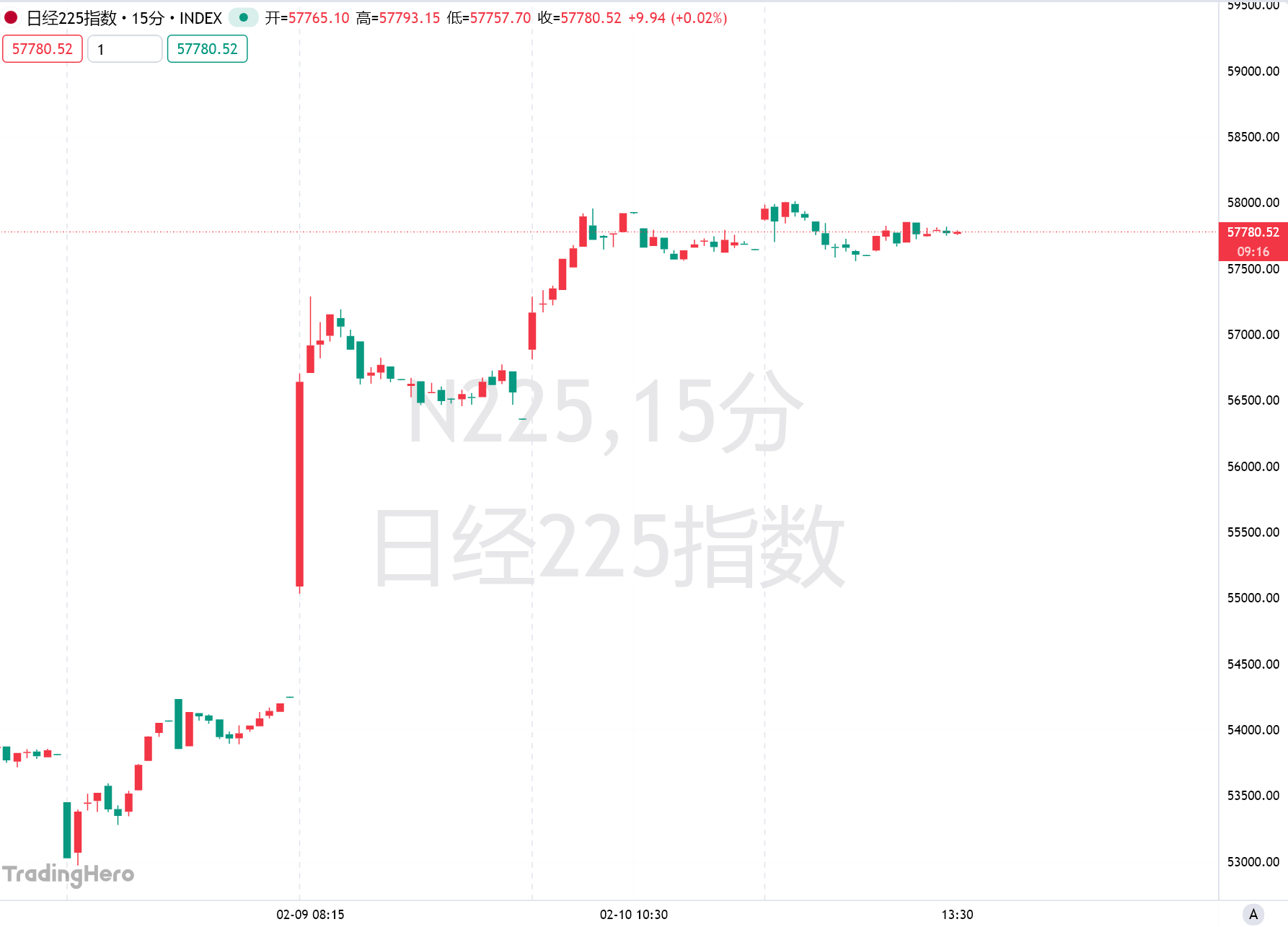
Market Performance - The Japanese stock market continues to rise, reaching a historical high, driven by renewed confidence in domestic politics and the government's economic agenda [1][3] - The Nikkei 225 index surpassed 58,000 points for the first time, with a year-to-date increase of 15% [1][3] Political Influence - The market rally is largely attributed to the political optimism following Prime Minister Sanae Takaichi's overwhelming victory in the House of Representatives elections [3] - Investors are anticipating larger fiscal spending, tax cuts, and a more aggressive economic agenda as a result of this political support [3] Economic Discrepancies - Analysts warn that the stock market's enthusiasm may be ahead of the clarity regarding policy funding sources, indicating a growing disconnect between stock prices and economic fundamentals [3][4] - Japan's economy contracted by 0.4% quarter-on-quarter for the three months ending in September, marking the first contraction in six quarters, with an annualized decline of 1.8% [4] Debt Concerns - Japan is noted to have the highest debt levels globally, with a projected debt-to-GDP ratio nearing 230% by 2025, raising concerns about the sustainability of increased fiscal spending [5] Market Drivers - The current market dynamics are driven by sentiment, liquidity, and narrative rather than fundamental economic strength [6] - The global AI investment wave has also positively impacted the Japanese stock market, although this connection makes it sensitive to fluctuations in global tech enthusiasm and exchange rate volatility [7][8] Currency Impact - The depreciation of the yen has historically benefited export-oriented manufacturing companies, but this effect may diminish as the yen's value is perceived to be excessively low [9][10] - The yen has depreciated approximately 3.67% against the dollar over the past six months [11] Government Intervention - Japan has indicated potential market intervention if the yen continues to depreciate, with concerns raised by the Finance Minister regarding unilateral yen depreciation [12] Future Outlook - Despite current vulnerabilities, structural reforms in corporate governance, capital efficiency, and shareholder returns are expected to provide sustainable growth momentum [15] - Some asset management firms believe that the overall fundamentals of Japanese companies still have support, contingent on the realization of reform expectations [15][16] - There is a warning that if the pace of improvements slows, there could be downside risks to the market [17]