洋河股份

Search documents
贵州茅台(600519):2025Q2收入同比增长9.2%,公司根据市场调整产品结构
Guoxin Securities· 2025-08-13 09:23
Investment Rating - The investment rating for the company is "Outperform the Market" [6][12][19] Core Views - The company demonstrated operational resilience with a total revenue of 91.09 billion yuan in H1 2025, reflecting a year-on-year growth of 9.2%, and a net profit of 45.4 billion yuan, up 8.9% year-on-year [1][4] - The company is adjusting its product structure in response to market changes, with a notable increase in revenue from Moutai liquor, which reached 32.03 billion yuan in Q2 2025, a year-on-year increase of 11.0% [2][3] - The company is actively investing in marketing to enhance its capabilities, resulting in a slight decline in gross margin to 90.4% in H1 2025 [3][4] Financial Performance Summary - In Q2 2025, the total revenue was 39.65 billion yuan, with a year-on-year growth of 7.3%, and a net profit of 18.56 billion yuan, up 5.2% year-on-year [1][2] - The company’s gross margin for Moutai liquor and series liquor decreased by 0.28 percentage points and 2.51 percentage points respectively, attributed to increased market investments [3][4] - The company’s revenue projections for 2025-2027 are adjusted to 189.82 billion yuan, 196.43 billion yuan, and 207.52 billion yuan, with year-on-year growth rates of 9.0%, 3.5%, and 5.6% respectively [4][11] Profitability and Valuation Metrics - The projected net profit for 2025 is 93.17 billion yuan, with a year-on-year growth of 8.0% [4][11] - The current stock price corresponds to a P/E ratio of 19.4x for 2025 and a dividend yield of 3.66% [4][12] - The company’s return on equity (ROE) is projected to be 36.3% in 2025, indicating strong profitability [5][11]

河北上半年规上白酒营收超38亿元;《黄酒酒庄》团标立项
Sou Hu Cai Jing· 2025-08-13 08:55
Group 1 - The core viewpoint of the news highlights the importance of product quality and cultural confidence in the liquor industry, especially during periods of industry adjustment, as emphasized by Zhang Yibo, Chairman of Chengde Jiulongzui Liquor Co., Ltd. [3] - Jiulongzui celebrated its 67th anniversary with a ceremony that underscores its commitment to long-termism through the dual values of quality and culture [3]. Group 2 - Songhe launched its market in Luoyang on August 10, introducing a limited edition product, Songhe Liquor·Han Tang, alongside its main series, aiming to expand its brand presence [4]. - Yanghe held a ceremony for the "Dream Education Development Fund," emphasizing its commitment to social responsibility and support for local education [5]. - The China Alcoholic Drinks Association approved the establishment of a group standard for "Huangjiu Winery," indicating a move towards standardization in the industry [6]. Group 3 - In the first half of 2025, Hebei Province's liquor manufacturing enterprises reported revenues of 3.818 billion yuan, a year-on-year decline of 3.6%, while profit increased by 78.1% to 732 million yuan [7]. - Moutai will sponsor the Singapore Golf Open, which will take place from November 6 to 9, 2025, with a total prize pool of 2 million USD [8]. - Wuliangye initiated a "100-day campaign" in Gansu to boost sales for the second half of 2025 [9]. Group 4 - JianZhuang launched a limited edition gift box in collaboration with table tennis player Wang Hao, aimed at fans and not for public sale [10]. - Gujing's Yearly Original Liquor will introduce a "light version" of its product, with a launch event scheduled in Shenyang [11]. - Chengdu Liquor was selected as part of the second batch of "Chengdu Gifts," showcasing its cultural significance [12]. Group 5 - Jiuziyuan applied for a new patent related to an automated brewing system, enhancing safety and efficiency in the production process [13]. - The Australian government has frozen the tax on draft beer, while spirits remain subject to higher taxes, leading to concerns about competitive fairness in the industry [14][15]. - Carlsberg's brewery expansion project in Vietnam is set to begin operations in September 2025, with an investment of over 3.4 trillion VND, increasing its capacity to 600,000 hectoliters [16].



白酒板块8月13日跌0.65%,*ST岩石领跌,主力资金净流出17.58亿元
Zheng Xing Xing Ye Ri Bao· 2025-08-13 08:31
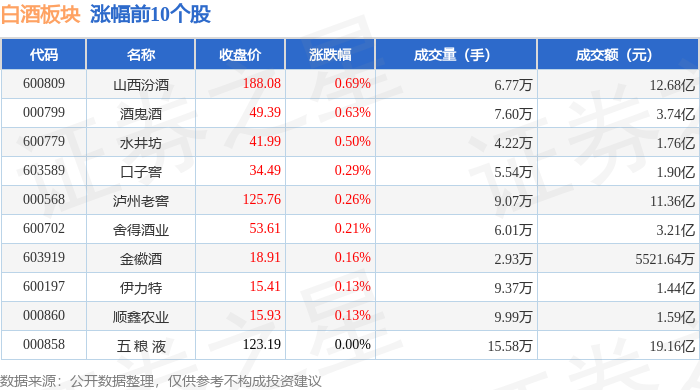
Market Overview - The liquor sector experienced a decline of 0.65% on August 13, with *ST Rock leading the drop [1] - The Shanghai Composite Index closed at 3683.46, up 0.48%, while the Shenzhen Component Index closed at 11551.36, up 1.76% [1] Liquor Sector Performance - Key liquor stocks showed mixed performance, with Shanxi Fenjiu closing at 188.08, up 0.69%, and Wuliangye remaining unchanged at 123.19 [1][2] - The trading volume and turnover for major stocks included Shanxi Fenjiu with 67,700 shares traded and a turnover of 1.268 billion yuan, and Wuliangye with 155,800 shares and a turnover of 1.916 billion yuan [1][2] Capital Flow Analysis - The liquor sector saw a net outflow of 1.758 billion yuan from institutional investors, while retail investors contributed a net inflow of 286 million yuan [2][3] - Notable individual stock capital flows included *ST Rock with a net outflow of 11.2673 million yuan from institutional investors, and a net inflow of 799.42 million yuan from retail investors [3]


即时零售“卷”向高端白酒,价格体系巨震,湾区酒价有大变化
Nan Fang Du Shi Bao· 2025-08-13 04:44
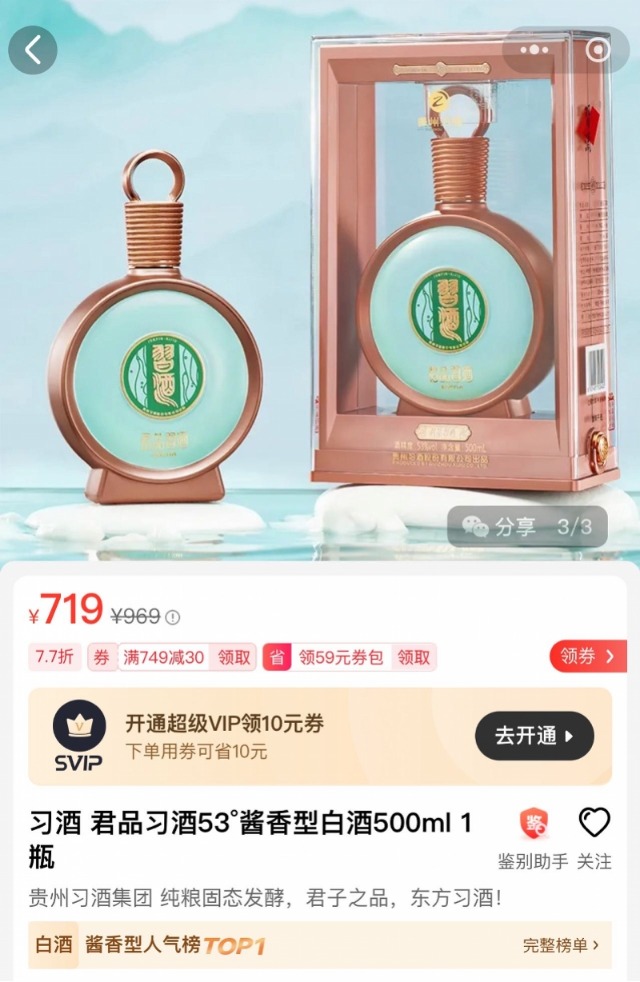
Core Insights - The white liquor sales are in a seasonal downturn, yet major brands are actively launching new products and adjusting pricing strategies to adapt to market conditions [1][19] - The introduction of instant retail platforms has significantly influenced the pricing dynamics of white liquor, leading to lower average prices across various products [2][19] Pricing Adjustments - The latest adjustments show a decline in average prices for most products compared to the previous period, with instant retail platforms offering prices significantly lower than traditional channels [2][19] - For example, the average price of Feitian Moutai online is 2110.02 yuan, while offline it is 2199.5 yuan, resulting in an overall average of 2134.43 yuan, down from 2367 yuan [3][7] Product-Specific Price Changes - Feitian Moutai's price has dropped to below 2000 yuan on some instant retail platforms, with prices as low as 1890 yuan on Meituan [3][4] - Other high-end products like Wuliangye and Guojiao 1573 have also seen significant price reductions, with Wuliangye priced at 917.12 yuan online and 998.48 yuan offline [7][11] Market Dynamics in Different Regions - The inclusion of Foshan in the pricing index reflects its status as a major consumption hub, with Feitian Moutai's average price in Foshan reaching approximately 2320 yuan [12][15] - In Shenzhen, the average price of Feitian Moutai is reported at 2137.95 yuan, closely aligning with market performance after the removal of high-priced channels [8][9] Overall Market Trends - The overall market for white liquor is experiencing a transformation due to the entry of instant retail channels, which have become significant contributors to sales during promotional periods [19] - The adjustments in pricing and the introduction of new sales channels indicate a shift towards more competitive pricing strategies among brands [19]


白酒板块午盘微涨 贵州茅台下跌0.92%
Bei Jing Shang Bao· 2025-08-13 04:20
Core Viewpoint - The liquor industry is rapidly bottoming out, with leading companies likely to seize opportunities for channel structure adjustments and market expansion as consumer demand gradually improves [1] Industry Summary - The Shanghai Composite Index rose by 0.56% to 3686.34 points on August 13, with the liquor sector closing at 2230.67 points, up 0.12% [1] - Among 14 liquor stocks, 6 experienced declines while 8 saw gains, indicating mixed performance within the sector [1] Company Summary - Kweichow Moutai closed at 1423.76 CNY per share, down 0.92% [1] - Wuliangye closed at 123.20 CNY per share, up 0.01% [1] - Shanxi Fenjiu closed at 188.26 CNY per share, up 0.78% [1] - Luzhou Laojiao closed at 125.29 CNY per share, down 0.11% [1] - Yanghe Brewery closed at 69.10 CNY per share, down 0.22% [1] - CITIC Securities recently reported that leading liquor companies are making proactive adjustments to their channels, which may lead to greater development opportunities if consumer demand improves [1]
好一个美丽的秋糖会
Qi Lu Wan Bao· 2025-08-13 02:18
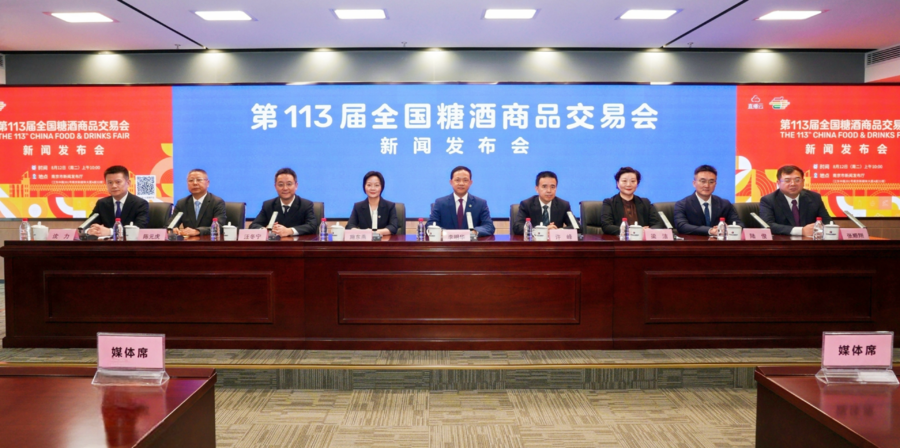
Core Viewpoint - The 113th National Sugar and Wine Fair will be held from October 16 to 18, 2025, in Nanjing, with a series of consumer promotion activities called "Autumn Sugar Season" starting from late September [1][3]. Group 1: Event Overview - The fair aims to explore the integration of the exhibition with the city, online and offline interactions, and B2B and B2C connections, enhancing both industry engagement and regional economic development [4]. - The event will feature over 40,000 professional attendees, with a "net-style" invitation approach targeting 219 key food wholesale markets and over 220,000 core buyers [4][5]. Group 2: Innovations and Activities - The fair will introduce the "Autumn Sugar Season," linking three major consumption peaks: Mid-Autumn Festival, National Day, and the fair itself, creating a month-long promotional period [5][6]. - A variety of themed activities will be organized, including music festivals, dance competitions, and food festivals, aimed at attracting diverse age groups and enhancing consumer engagement [6][9]. Group 3: Regional and International Collaboration - The fair will leverage Nanjing's geographical advantages as a key city in the Yangtze River Delta and a hub for the Belt and Road Initiative, facilitating international trade and cooperation [7][8]. - The event will feature over ten import-export matchmaking sessions, promoting domestic and international trade integration [7][10]. Group 4: Industry Development and Support - Nanjing aims to strengthen its food and beverage industry by attracting new brands and enhancing industrial clusters, focusing on food research, logistics, and processing [10][11]. - The city will implement comprehensive service measures to ensure safety and efficiency during the fair, including public safety and food safety protocols [10][11]. Group 5: Exhibition Details - The exhibition will cover an area of 200,000 square meters with 4,000 participating companies, showcasing various sectors including traditional liquor, international food, and food machinery [11][12]. - Notable exhibitors include major brands like Moutai, Yanghe, and various international participants from countries such as Italy, Russia, and Japan [12].
白酒周期如何演绎
2025-08-12 15:05
Summary of the White Liquor Industry Conference Call Industry Overview - The white liquor industry is experiencing a generalized cyclical pattern driven by diverse factors, no longer solely influenced by fixed asset investment. New growth engines include high-end manufacturing, services, consumption, and exports, with policy factors also playing a significant role [1][2] - The current cycle differs from the 2013-2015 cycle, with more rational inventory management among companies and distributors, resulting in shorter inventory cycles and reduced time lag between report bottoms and price bottoms. However, the current economic and policy environment is more severe, potentially leading to larger adjustments and longer cycles [1][4] Key Insights - Report bottoms do not necessarily indicate stock price bottoms. Price trends are crucial indicators of market supply and demand. A price bottom typically signals a stock price bottom, while relying solely on report data may not provide an accurate assessment [1][5] - In the short term, stable prices for Moutai are favorable for the stock market. However, in the medium to long term, the white liquor industry is expected to stabilize due to shifts in economic growth drivers and policy impacts, necessitating caution regarding potential volatility from economic and policy interactions [1][6] Market Dynamics - The total growth of the white liquor industry is limited, with increased competition among listed companies and a slowdown in market share expansion for leading firms. Price pressures are significant due to both asset and consumption attributes [1][8] - The current market conditions indicate that the white liquor industry is unlikely to see significant growth, as the primary consumer demographic has peaked. The market share of unlisted companies has decreased to around 40%, and further squeezing will yield diminishing returns [8][9] Future Trends - The fundamental performance of the white liquor industry is expected to bottom out between Q4 2025 and Q1 2026, coinciding with traditional peak sales seasons. Despite potential pressures on payments and prices, the likelihood of hitting a bottom is high [11][12] - The industry is projected to experience a gradual decline throughout 2025, with Q1 showing a 7% growth in sales revenue, but subsequent quarters may see a downturn due to policy impacts and delayed revenue recognition [13] Investment Considerations - Historical data suggests that even after the fundamentals bottom out, prices may continue to decline for an extended period. The stock price may remain flat during this time, but the risk to stock prices will decrease, presenting a favorable configuration opportunity for absolute return funds [14][17] - Companies with growth potential and resilience, such as Fenjiu, Zhenjiu, and Laojiao, are expected to perform well during market rebounds, similar to how Yanghe and Gujing performed in the previous cycle [15] Institutional Holdings and Valuation - Current institutional holdings in the white liquor sector have decreased from approximately 15% to 3.98%. While this is a significant drop, it is not expected to reach the lows of around 1% seen in the previous cycle [16] - Valuations are unlikely to drop to the extremely low levels seen in the last cycle, with expected profit valuation levels around 15 times. The average dividend yield has increased to 3.5%, providing a good opportunity for absolute return funds [17]
光瓶酒市场爆发:名酒扎堆背后的消费逻辑重构
Xin Lang Cai Jing· 2025-08-12 10:34
Core Insights - The "light bottle" trend in the liquor industry is gaining momentum, with companies like Yanghe and Yilite launching new products and strategies to capitalize on this shift from "face economy" to "substance demand" [1][2] Market Overview - The light bottle liquor market is projected to exceed 150 billion yuan in 2024 and reach 200 billion yuan in 2025, with the 50-100 yuan price range experiencing over 40% growth [2] - The shift towards light bottle liquor is driven by rational consumer behavior and industry adjustments, moving from low-cost competition to a quality-driven phase due to new national standards [2] Competitive Landscape - The market is becoming increasingly competitive, with brands like Guojiao, Green Neck Xifeng, and Shunpinlang emerging in the 60 yuan price range, leading to high-density competition in regional markets [3] - Companies are adopting innovative strategies, such as Yanghe's collaboration with JD.com for online and offline market penetration, and creating lifestyle associations with products [3] Challenges and Opportunities - Despite the promising outlook, the industry faces challenges such as severe homogenization, limited consumption scenarios, and distorted price ranges [4] - The dominance of low-priced light bottle liquor continues to perpetuate the stereotype of "light bottle equals low-end," which needs to be addressed through quality upgrades and brand premiumization [4] - The entry of well-known brands is accelerating industry consolidation, presenting both challenges and opportunities for small and medium-sized enterprises to differentiate themselves [4]
白酒板块8月12日跌0.51%,*ST岩石领跌,主力资金净流出4.86亿元
Zheng Xing Xing Ye Ri Bao· 2025-08-12 08:22
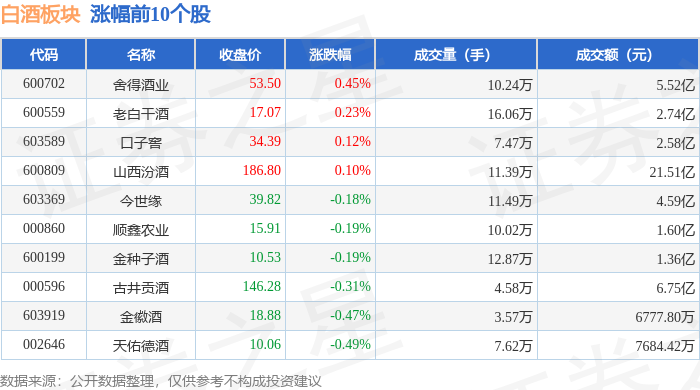
证券之星消息,8月12日白酒板块较上一交易日下跌0.51%,*ST岩石领跌。当日上证指数报收于 3665.92,上涨0.5%。深证成指报收于11351.63,上涨0.53%。白酒板块个股涨跌见下表: | 代码 | 名称 | 收盘价 | 涨跌幅 | 成交量(手) | 成交额(元) | | --- | --- | --- | --- | --- | --- | | 600702 | 舍得酒业 | 53.50 | 0.45% | 10.24万 | 5.52亿 | | 600559 | 老白干酒 | 17.07 | 0.23% | 16.06万 | 2.74亿 | | 603589 | 口子窖 | 34.39 | 0.12% | 7.47万 | 2.58亿 | | 600809 | 山西汾酒 | 186.80 | 0.10% | 11.39万 | 21.51亿 | | 603369 | 今世缘 | 39.82 | -0.18% | 11.49万 | 4.59 Z | | 000860 | 顺鑫农业 | 15.91 | -0.19% | 10.02万 | 1.60亿 | | 661009 | 金种子酒 | 10.53 ...
卖不动的白酒,占领山姆们的货架
Hu Xiu· 2025-08-12 08:13
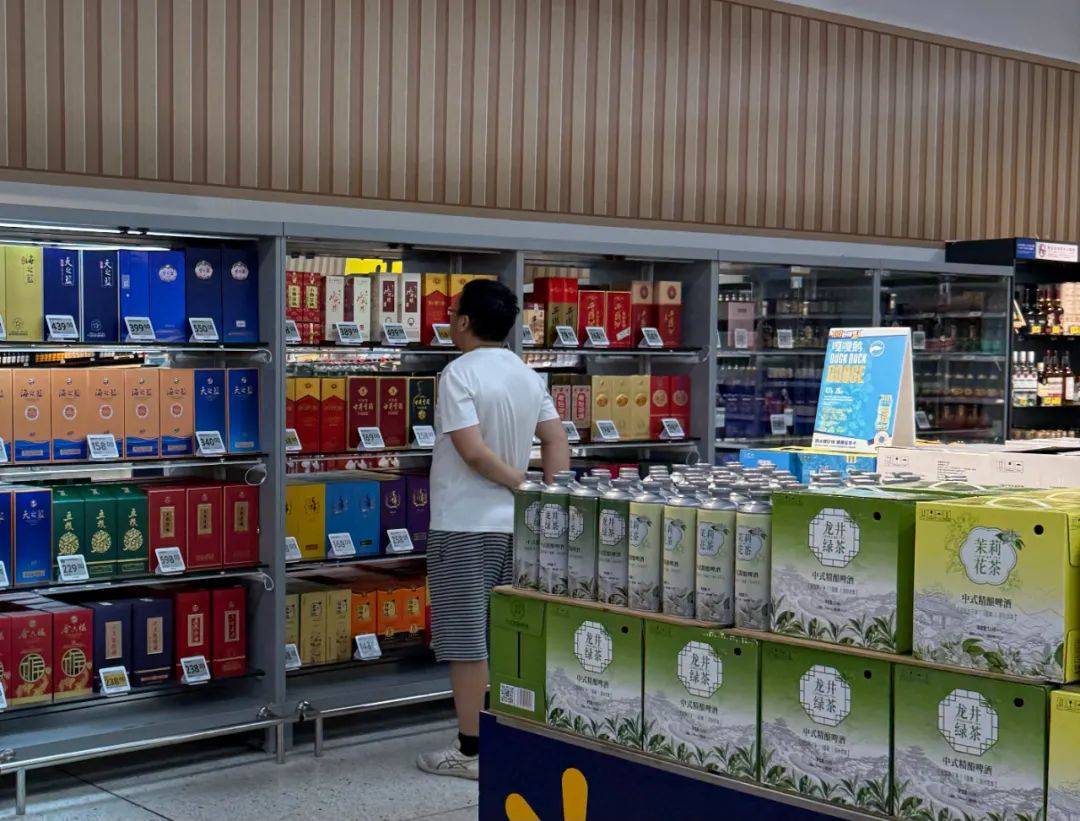
Core Insights - The traditional retail market for liquor is declining, leading to a shift towards trendy supermarkets like Sam's Club, Hema, and Pang Donglai as new battlegrounds for liquor brands [1][22][44] - High-end liquor brands are increasingly collaborating with trendy supermarkets to create exclusive products and drive sales [3][30][45] Group 1: Market Trends - Hema's collaboration with Guangli has led to their multi-grain light bottle liquor consistently topping sales charts, while Yonghui Supermarket's sales of its small-batch liquor reached 30,000 boxes in a single month [2][4] - Major liquor brands are launching special products in partnership with trendy supermarkets to attract consumers, such as the Sichuan Liquor Group's new offerings priced at 99 yuan, 29.9 yuan, and 27.9 yuan [4][29] - The trend of high-end liquor appearing in tasting events at supermarkets is a marketing strategy rather than a sign of market downscaling [9][11][14] Group 2: Consumer Behavior - The introduction of tasting events for high-end liquors at Sam's Club has attracted consumer interest, although many are deterred by transportation issues [10][11] - The popularity of certain products, like the 200 yuan bottle of Jiugui Liquor at Pang Donglai, has led to significant demand, with reports of scalpers reselling it at a premium [5][27] - Data shows that Sam's Club has over 80 SKUs of liquor, with top-selling items priced between 114.9 yuan and 999.9 yuan, indicating a strong consumer interest in both high-end and value products [16][17] Group 3: Pricing Dynamics - The price of high-end liquors, such as Moutai, has seen a significant decline, with the price dropping from nearly 2,700 yuan in January 2024 to under 2,000 yuan by August 2024 [33][37] - The market is experiencing a polarization in consumer preferences, with products priced under 300 yuan seeing the fastest sales growth [35][36] - The overall pricing structure in the liquor industry is complex, with many brands facing challenges in maintaining their price points amid changing consumer behavior [34][38] Group 4: Strategic Shifts - Liquor companies are focusing on increasing the "opening rate" of their products, encouraging consumers to actually consume rather than just purchase [39][40] - The industry is shifting from a reliance on traditional retail channels to innovative partnerships with trendy supermarkets, which are becoming crucial for brand visibility and sales [44][45] - Companies are recognizing the need to adapt to changing consumer demographics, particularly targeting younger consumers to foster brand loyalty and consumption habits [43][44]