千禾味业

Search documents
99%的创业者都搞反了:先抓细节,公司死得更快
3 6 Ke· 2025-11-19 00:36
Core Insights - The article emphasizes the importance of "systematic capability under detailed capability" as a key trait for successful entrepreneurs, highlighting that this skill can be developed over time rather than being innate [1][4][6] Group 1: Systematic Capability - Systematic capability refers to the ability of a company to avoid significant shortcomings in key areas and to build organizational-level capabilities [1][4] - Founders often lack systematic capabilities, leading them to seek partners or executives to fill their knowledge gaps, especially before Series B funding [2][4] - Building a system is an irreplaceable responsibility of the CEO, as a well-constructed system allows for the retention of talent and effective operations [4][7] Group 2: Detailed Capability - Detailed capability involves the pursuit of extreme professionalism in products and services, which must be established on top of systematic capability to ensure replication and iteration [1][5] - In industries like soy sauce production, the process involves numerous intricate steps where even minor changes can significantly affect the final product [5][6] - A mature business system translates strategic intentions into executable actions, with detailed capability focusing on the precise execution of these actions [5][6] Group 3: Continuous Improvement - Details serve as the core feedback source for system iteration and optimization, allowing the system to evolve based on insights from customer feedback and operational data [6][7] - Successful entrepreneurs maintain a habit of being present and engaged, using insights from various sources to identify potential system weaknesses or opportunities [6][7] Group 4: Case Studies - The article references Huawei's evolution from a hero-based management style to a structured system that emphasizes detail-oriented management, showcasing the value of a robust management system as a core asset [7]



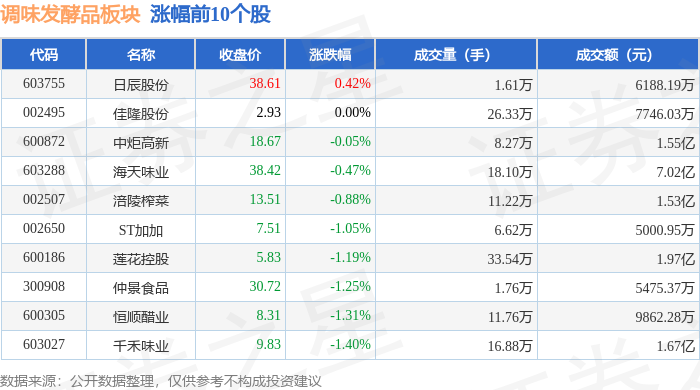
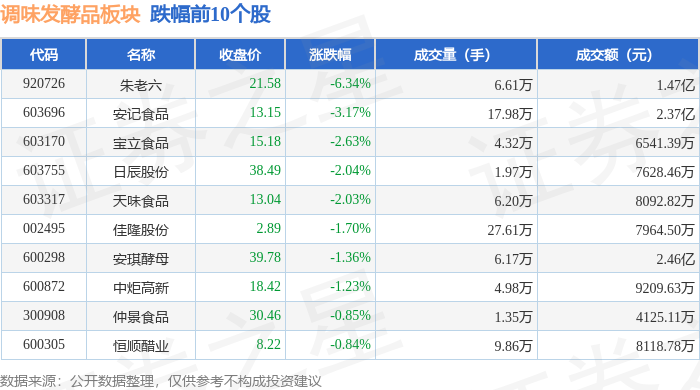
调味发酵品板块11月18日跌0.82%,朱老六领跌,主力资金净流出2.12亿元
Zheng Xing Xing Ye Ri Bao· 2025-11-18 08:04
Market Overview - The seasoning and fermentation sector experienced a decline of 0.82% on November 18, with Zhu Laoliu leading the drop [1] - The Shanghai Composite Index closed at 3939.81, down 0.81%, while the Shenzhen Component Index closed at 13080.49, down 0.92% [1] Stock Performance - The top 10 stocks with the largest declines in the seasoning and fermentation sector included: - Zhu Laoliu: Closed at 21.58, down 6.34% with a trading volume of 66,100 shares and a turnover of 147 million [1] - Anji Food: Closed at 13.15, down 3.17% with a trading volume of 179,800 shares and a turnover of 23.7 million [1] - Baoli Food: Closed at 15.18, down 2.63% with a trading volume of 43,200 shares and a turnover of 65.4 million [1] - Other notable declines included Richen Co. and Tianwei Food, with declines of 2.04% and 2.03% respectively [1] Capital Flow - The seasoning and fermentation sector saw a net outflow of 212 million from institutional investors, while retail investors had a net inflow of 223 million [1] - The capital flow for individual stocks showed: - Richen Co.: Net inflow of 570,500 from institutional investors, but a net outflow of 3.57 million from retail investors [2] - Tianwei Food: Experienced a net outflow of 8.11 million from institutional investors, with a net inflow of 4.83 million from retail investors [2] - Zhu Laoliu: Notably had a net outflow of 13.39 million from institutional investors, while retail investors contributed a net inflow of 17.20 million [2]


招商证券:需求触底改善 餐饮供应链行业重启成长价值
智通财经网· 2025-11-18 07:04
Core Viewpoint - The overall demand in the restaurant sector is weak but shows signs of recovery, with seasonal demand expected to improve and holiday performance being better than average [1] Industry Status - The restaurant sector is currently at a demand bottom, but there are indications of recovery, particularly during peak seasons and holidays, with leading chain restaurants gradually improving [1] - The chain restaurant penetration rate is a key growth driver for supply chain companies, increasing from 15% in 2020 to an expected 23% in 2024, and further to 25% in 2025, indicating structural opportunities in the sector [1] Company Changes - High industry activity has led to increased competition in the restaurant supply chain, with companies transitioning from supporters to drivers, enhancing R&D and innovation capabilities [2] - Companies are consolidating resources to strengthen their competitive position and are actively developing new channels to expand their market reach [2] - The capacity investments made by companies in the past are beginning to materialize, supporting long-term growth and enabling leading firms to continue scaling up [2] Valuation Analysis - The valuation of the seasoning and pre-processed food index has significantly declined from its peak, with current valuations at historical lows, placing the seasoning sector at a 14.9% valuation and pre-processed food at 18.6% [3] - Compared to other food and beverage segments, the current valuation of pre-processed foods is relatively low, suggesting potential for recovery as the industry rebounds [3] Investment Recommendations - The restaurant supply chain sector is gaining attention, with Q3 2025 performance generally exceeding expectations, and quality companies are expected to accelerate growth due to enhanced competitive advantages [4] - Current valuations are below the 20th percentile of the past decade, indicating potential for growth and valuation recovery as demand improves [4] - Recommended stocks include Hai Tian Wei Ye, Anqi Yeast, Anjing Food, China Resources Beer, Richen Co., Lihigh Food, Baoli Food, and Qianhe Flavor [4]

2026年食品饮料行业投资策略:黎明前夕,曙光将至
Shenwan Hongyuan Securities· 2025-11-17 10:12
Summary of Key Points Group 1: Overall Industry Analysis - The report indicates a systemic recovery opportunity for the food and beverage industry in 2026 after a five-year adjustment period from 2021 to 2025, with key external indicators being the Consumer Price Index (CPI) and a focus on cyclical attributes in the liquor and catering supply chain [4][19]. - The liquor sector is expected to see a fundamental turning point in Q3 2026, following a significant decline in sales and prices in Q3 2025, with a projected stabilization and recovery in prices as inventory clears and demand rebounds [4][7][19]. - The report emphasizes that if the fundamentals recover as anticipated, a dual boost in valuation and performance is expected by the end of 2026 and into 2027, marking a strategic allocation period for quality companies [4][7][19]. Group 2: Liquor Investment Strategy - The liquor sector has experienced a significant decline in sales, with Q3 2025 showing a 50% year-on-year drop compared to Q3 2023, and high-end liquor prices continuing to fall as the market seeks a balance between volume and price [4][7][8]. - Key recommended companies in the liquor sector include Luzhou Laojiao, Shanxi Fenjiu, Kweichow Moutai, and Wuliangye, with a focus on strategic positioning for quality firms as the market stabilizes [4][7][8]. - Historical performance analysis from 2012 to 2015 suggests that stock price turning points often precede fundamental turning points, indicating a potential recovery in Q3 2026 [4][7][23]. Group 3: Consumer Goods Investment Strategy - The report identifies systemic opportunities in the consumer goods sector, with CPI as a core observation indicator, predicting gradual improvement in food CPI due to structural demand changes and a shift from price competition to quality competition among companies [4][19]. - Recommended companies in the consumer goods sector include Yili Group, Qingdao Beer, Anjuke Food, and Tianwei Food, with a focus on firms that possess pricing power and are positioned for systematic recovery if CPI continues to improve [4][19]. - The report highlights that if CPI improves consistently, leading companies in various sub-sectors will also experience systematic recovery [4][19].



调味发酵品板块11月17日跌0.45%,ST加加领跌,主力资金净流出4511.5万元
Zheng Xing Xing Ye Ri Bao· 2025-11-17 08:49
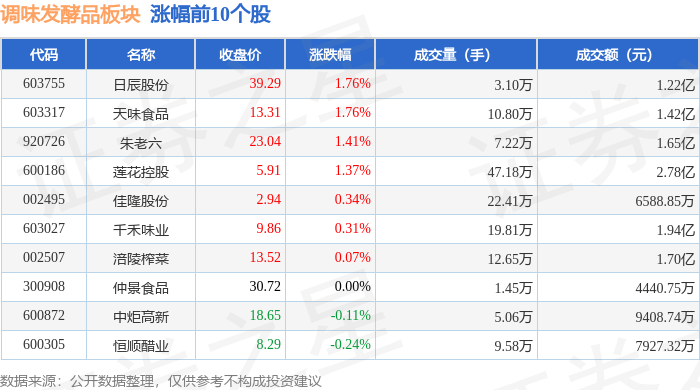
证券之星消息,11月17日调味发酵品板块较上一交易日下跌0.45%,ST加加领跌。当日上证指数报收于 3972.03,下跌0.46%。深证成指报收于13202.0,下跌0.11%。调味发酵品板块个股涨跌见下表: 从资金流向上来看,当日调味发酵品板块主力资金净流出4511.5万元,游资资金净流出8900.99万元,散 户资金净流入1.34亿元。调味发酵品板块个股资金流向见下表: | 代码 | 名称 | 收盘价 | 涨跌幅 | 成交量(手) | 成交额(元) | | | --- | --- | --- | --- | --- | --- | --- | | 603755 | 日辰股份 | 39.29 | 1.76% | 3.10万 | | 1.22亿 | | 603317 | 天味食品 | 13.31 | 1.76% | 10.80万 | | 1.42亿 | | 920726 | 朱老六 | 23.04 | 1.41% | 7.22万 | | 1.65亿 | | 600186 | 连化控股 | 5.91 | 1.37% | 47.18万 | | 2.78亿 | | 002495 | 佳隆股份 | 2.94 | 0 ...
食品饮料行业周报:CPI催化预期,底部价值凸显-20251117



Haitong Securities International· 2025-11-17 07:10
Investment Rating - Investment advice indicates a sector recovery catalyzed by recent CPI data, focusing on growth and supply-demand inflection points [5][16]. Core Views - The report emphasizes the importance of consumer goods growth, particularly in beverages, snacks, and food ingredients, while also highlighting structural opportunities in the baijiu sector [5][16]. - CPI data shows a positive trend with October CPI year-on-year at +0.2% and core CPI at +1.2%, indicating a recovery in domestic demand [6][16]. - The baijiu industry is undergoing accelerated clearing, with expectations for improved sales and inventory adjustments leading into 2026 [7][16]. - Consumer goods are expected to benefit from stabilization and recovery, with a focus on low valuation and high dividend stocks [8][16]. Summary by Sections Investment Recommendations - Recommended baijiu stocks include Shanxi Xinghuacun Fen Wine Factory, Gujing Distillery, and stable targets like Kweichow Moutai and Wuliangye [5][16]. - Beverage growth is highlighted with recommendations for Eastroc Beverage and Nongfu Spring, alongside low valuation stocks like China Foods and Tingyi [5][16]. - Snack and food ingredient stocks recommended include Bailong Chuangyuan, Yankershop Food, and Three Squirrels [5][16]. - Beer recommendations include Yanjing Brewery and Tsingtao Brewery, while condiment stocks like Haitian Flavoring & Food are also suggested [5][16]. Baijiu Sector Insights - The baijiu sector is experiencing a significant adjustment, with industry destocking still in progress and a focus on promotional sales for 2026 [7][16]. - Recent sales data from JD.com shows a +18% year-on-year increase in liquor sales during the Double 11 shopping festival, indicating a positive market response [7][16]. Consumer Goods Outlook - Consumer goods are expected to see growth as the mainline, with structural differentiation evident in beverages, snacks, and health products [8][16]. - The report notes that companies with product innovation and channel expansion will have growth advantages, particularly in the context of recent service and non-food price recoveries [8][16].
餐饮供应链专题报告:需求触底改善,重启成长价值
CMS· 2025-11-17 07:06
Investment Rating - The report maintains a positive investment rating for the restaurant supply chain sector, suggesting increased attention due to signs of demand recovery and growth potential for quality companies [2][38]. Core Insights - The restaurant supply chain sector is experiencing a shift where companies are transitioning from being mere supporters to active drivers of innovation and demand, highlighting the importance of R&D and innovation capabilities [10][22]. - The industry is witnessing a structural opportunity as the chain restaurant rate continues to rise, with expectations for further growth in the coming years [18][10]. - Current valuations in the sector are at historically low levels, indicating potential for recovery as demand improves [30][34]. - The report emphasizes the importance of mergers and acquisitions as companies seek to enhance their competitive positions and bind key customers [22][24]. Summary by Sections Industry Status - Overall demand in the restaurant sector remains weak, but signs of recovery are evident, particularly during holiday periods [10][11]. - The restaurant supply chain industry is projected to maintain a compound annual growth rate of over 15% in the next three years, outperforming the broader restaurant market [14][10]. Company Changes - Companies are increasingly focusing on R&D and innovation to meet the evolving demands of chain restaurants, which require standardized and stable supply [22][10]. - Mergers and acquisitions are being utilized to strengthen customer relationships and enhance resource capabilities [24][22]. - New retail channels are being explored to drive growth, with companies expanding into high-end and online markets [25][10]. Valuation Analysis - The current valuation of the sector is below the 20th percentile of the past decade, suggesting significant upside potential as demand recovers [34][30]. - The report notes that the valuation decline over the past five years has been primarily due to reduced demand and high initial valuations [30][34]. Investment Recommendations - The report suggests increasing focus on specific companies such as Haidilao, Angel Yeast, and others, which are expected to benefit from demand recovery and improved operational performance [38][39].




中信建投:食饮板块处市场预期低位 重点看好四大板块
智通财经网· 2025-11-17 02:10
Group 1: Core Insights - The food and beverage sector is experiencing a long-term correction, with low domestic demand and significantly reduced valuations, creating a clear bottom logic for quality assets like liquor [1][2] - The report highlights four key sectors: liquor, snacks and health products, dairy, and restaurant chains, with a focus on potential recovery in demand and investment opportunities [1] Group 2: Liquor Sector - The liquor market is facing weak demand, with consumer confidence remaining low and a negative year-on-year CPI for liquor products, leading to price declines in mainstream products [2] - High-end and mid-high-end liquor are performing relatively well, while the industry is entering a competitive era with significant internal differentiation among listed companies [2] - Companies are focusing on market order control, product iteration, and consumer engagement to improve market share, although profit margin growth is slowing [1][2] Group 3: Restaurant Chains - The overall restaurant market remains weak, but companies are showing signs of improvement due to strategic adjustments over the past two years [3] - The shift from price competition to quality-price ratio competition is expected to optimize the competitive environment [3] - Companies are embracing new retail channels and enhancing supply chain efficiency, with international expansion becoming a key growth direction [3] Group 4: Snacks - The trend towards healthier and low-calorie snacks is driving sales, particularly in the konjac product category, with brands like Salted Fish and Yanjin achieving strong sales [4] - The transformation of bulk snack retail formats and the growth of discount stores are contributing to market opportunities [4] - The sector is expected to benefit from channel growth and new product launches in 2026, with recommendations for specific brands [4] Group 5: Beverages - The beverage sector is witnessing a trend towards health and functionality, with high demand in specific subcategories [5][6] - Companies like Dongpeng Beverage are expanding nationally, with strong growth prospects and new product lines [6] Group 6: Health Products - The health product sector is being driven by new consumer trends, with brands that embrace new consumption patterns expected to benefit significantly [7] - Companies like Xianle Health are well-positioned to capitalize on high-demand channels and new product categories [7] Group 7: Dairy Products - The dairy market is expected to enter an upward price cycle, with raw milk prices stabilizing and deep processing capacity increasing [8] - Major dairy companies are improving their market share and profitability through strategic initiatives and government support [8] Group 8: Beer - The beer industry is facing rising raw material costs, which may lead to adjustments in product pricing and promotional strategies [9] - Companies like Yanjing Beer and Qingdao Beer are highlighted for their growth potential and strong dividend attributes [9]

食品饮料行业周报 20251110-20251114:板块关注度回升,重申进入战略配置期-20251115
Shenwan Hongyuan Securities· 2025-11-15 15:27
Investment Rating - The report maintains a positive investment outlook for the food and beverage industry, particularly highlighting the strategic configuration period for quality companies [3][7]. Core Insights - The food and beverage sector has shown signs of recovery, with retail sales growth of 2.9% year-on-year in October and a 3.8% increase in restaurant revenue, indicating a rebound from previous declines [3][7]. - Major liquor companies have experienced significant revenue declines, but the market is actively seeking a balance between volume and price, suggesting a potential bottoming out of the market [3][7]. - The report emphasizes the importance of patience regarding fundamental performance and notes that individual stock performance will vary during this adjustment phase [3][7]. Summary by Sections Food and Beverage Weekly Insights - The food and beverage sector rose by 2.82% last week, outperforming the Shanghai Composite Index by 2.99 percentage points [6]. - Key stocks such as Huanyujia and Sanyuan have shown significant gains, while Dongpeng Beverage and Qianwei Yangchun faced declines [6]. Liquor Sector Analysis - The report indicates that the liquor sector is entering a strategic configuration phase, with expectations of a fundamental turning point in Q3 2026 [8]. - The average price for Moutai is reported at 1655 RMB for loose bottles, with a week-on-week increase of 15 RMB, while the price for Wuliangye remains stable at approximately 830 RMB [8][26]. - The report anticipates continued pressure on sales volume in early 2026, but a stabilization and recovery in prices as inventory clears and demand rebounds [8]. Consumer Goods Sector Insights - The performance of consumer goods companies has been mixed, with leading firms like Yili and Qingdao Beer maintaining stable operations, while some companies in the snack and beverage sectors have seen a slowdown in revenue growth [9]. - The report recommends focusing on high-dividend yielding companies and those with sustainable growth potential, particularly in the snack and beverage segments [9]. Valuation Metrics - As of November 14, 2025, the food and beverage sector has a dynamic PE of 20.85x, with a premium rate of 27%, while the liquor sector has a dynamic PE of 19.51x, with a premium rate of 18% [27].

调味发酵品板块11月14日跌0.83%,朱老六领跌,主力资金净流出1.46亿元
Zheng Xing Xing Ye Ri Bao· 2025-11-14 08:51
Market Overview - The seasoning and fermentation sector experienced a decline of 0.83% on November 14, with Zhu Laoliu leading the drop [1] - The Shanghai Composite Index closed at 3990.49, down 0.97%, while the Shenzhen Component Index closed at 13216.03, down 1.93% [1] Stock Performance - Key stocks in the seasoning and fermentation sector showed varied performance, with the following notable changes: - Zhu Laoliu (code: 920726) saw a significant drop of 12.31%, closing at 22.72 [2] - Other notable declines included Tianwei Food (-3.47%), Anji Food (-2.55%), and Baoli Food (-1.96%) [2] - The trading volume and turnover for several stocks were substantial, with Hai Tian Wei Ye recording a turnover of 7.02 billion yuan [1] Capital Flow - The seasoning and fermentation sector experienced a net outflow of 146 million yuan from institutional investors, while retail investors saw a net inflow of 195 million yuan [2] - The capital flow for individual stocks indicated that: - Anqi Yeast had a net inflow of 675,200 yuan from institutional investors [3] - Zhu Laoliu faced a net outflow of 3.19 million yuan from institutional investors [3] - Retail investors showed a strong interest in stocks like Qianhe Flavor Industry, which had a net inflow of 34.86 million yuan [3]