
江淮汽车

Search documents
中国车企出海的第一大目标市场,把关税加到了50%
第一财经· 2025-09-12 15:27
Core Viewpoint - Mexico's government announced a comprehensive reform of import tariffs, raising tariffs on cars from China and other Asian countries to 50%, aimed at protecting domestic employment [3][10]. Group 1: Mexico's Automotive Market Dynamics - Mexico has become China's largest automotive export market, surpassing Russia, with 418,000 vehicles exported from China in the first seven months of 2025, a year-on-year increase of 20% [5][6]. - Chinese brands have gained a market share of 8.2% in Mexico, becoming the fifth-largest source of vehicles, with notable growth from brands like MG, JAC, Changan, Great Wall, and Chery [6][7]. - The Mexican automotive market is characterized by a diverse brand presence and competitive conditions, with a significant increase in sales for Changan, which saw over 150% growth [7]. Group 2: Impact of Tariff Changes - The proposed increase in tariffs will significantly raise the cost of exporting Chinese cars to Mexico, potentially weakening their price competitiveness and impacting sales [10]. - Chinese automakers are encouraged to diversify their markets beyond Mexico to mitigate risks associated with tariff changes, exploring regions like South America, Southeast Asia, and the Middle East [11][12]. - Localized production strategies are being considered by Chinese companies to reduce tariff costs and enhance market competitiveness, with plans for establishing manufacturing plants in Mexico [11][12]. Group 3: Future Trends and Challenges - Despite the current dominance of traditional fuel vehicles, the sales of new energy vehicles in Mexico are on the rise, with Chinese exports ranking third in the first seven months of 2025 [8]. - The overall automotive export landscape for China is uncertain, with a need for companies to adapt to changing global trade environments and localize operations to ensure sustainable growth [12].


中国车企出海的第一大目标市场 把关税加到了50%
Di Yi Cai Jing· 2025-09-12 14:39
Group 1 - Mexico announced a comprehensive reform of import tariffs, raising tariffs on cars from China and other Asian countries to 50% to protect domestic employment [1] - Previously, tariffs on Chinese light vehicles ranged from 15% to 20%, indicating a significant increase if the new tariffs are implemented [1] - The potential influence of the United States on Mexico's decision to impose these tariffs is highlighted [1] Group 2 - Mexico has become China's largest automotive export market, surpassing Russia, with 322,000 vehicles exported in the first seven months of 2025, a 20% year-on-year increase [2] - Chinese automakers are increasing exports to Mexico in anticipation of rising costs due to the proposed tariffs, leading to a surge in export volumes [2] - Major Chinese brands like BYD, Changan, and Great Wall are seeing rising export volumes to Mexico [2] Group 3 - Japanese brands dominate the Mexican market with a 42% share, followed by American (21.1%), German (11.9%), and Korean (11.1%) brands, while Chinese brands hold an 8.2% share [3] - Changan has seen over 150% growth in sales, making it the fastest-growing brand in Mexico, reflecting the competitive pricing and appealing designs of Chinese brands [3] - The Mexican light vehicle market is primarily fueled by traditional fuel vehicles, but hybrid vehicle sales are increasing, with SUVs and pickups being particularly popular [3] Group 4 - Mexico ranks third among the top ten countries for Chinese new energy vehicle exports, with 116,000 units exported in the first seven months of 2025 [4] - BYD plans to sell over 80,000 electric and hybrid vehicles in Mexico in 2025, having already established over 50 dealerships [4] Group 5 - High tariffs are expected to significantly increase the cost of exporting Chinese vehicles to Mexico, potentially reducing their price competitiveness and impacting sales [5] - The uncertainty in trade environments suggests that Chinese automakers should diversify their markets to mitigate risks associated with tariffs [6] Group 6 - The trend of localizing production in target markets is becoming essential for Chinese automakers to reduce tariff costs and enhance competitiveness [6] - Companies like BYD, SAIC MG, and Chery are reportedly planning to establish manufacturing plants in Mexico [6] Group 7 - China is the world's largest automotive exporter, with annual exports between 4 million to 5 million vehicles, accounting for about one-quarter of the industry's total [7] - The need for Chinese automakers to explore alternative markets due to instability in traditional markets like Russia is emphasized [7]
中国车企出海的第一大目标市场,把关税加到了50%
Di Yi Cai Jing· 2025-09-12 14:29
Core Insights - Mexico has replaced Russia as China's largest automotive export market in the first seven months of this year [1][2] - The Mexican government plans to increase import tariffs on cars from China and other Asian countries to 50%, up from the previous 15%-20% [1][2] - The increase in tariffs is expected to significantly impact the cost structure for Chinese automotive exports to Mexico, potentially reducing their price competitiveness [5] Group 1: Market Dynamics - In the first seven months of 2025, China exported 4.18 million vehicles, with Mexico accounting for 322,000 units, marking a 20% year-on-year growth [2] - Chinese brands have gained an 8.2% market share in Mexico, making them the fifth-largest source of automotive sales, surpassing traditional European brands [3] - The top Chinese brands in Mexico include MG (28,000 units), JAC (14,000 units), Changan (9,255 units), Great Wall (8,424 units), and Chery (5,559 units) [2] Group 2: Competitive Landscape - Japanese brands dominate the Mexican market with a 42% share, followed by American (21.1%), German (11.9%), and Korean (11.1%) brands [3] - Changan has seen over 150% growth in sales, making it the fastest-growing brand in Mexico, outperforming Subaru, Mitsubishi, and Mazda [3] - The Mexican light vehicle market is projected to exceed 1.55 million units in 2024, with a growing share of hybrid and electric vehicles [4] Group 3: Strategic Responses - Chinese automakers are encouraged to diversify their markets to mitigate risks associated with tariff increases in Mexico [6][7] - Localized production and sourcing strategies are being considered by companies like BYD, SAIC MG, and Chery to reduce tariff impacts and enhance competitiveness [6][7] - The trend towards establishing local manufacturing facilities is seen as essential for long-term growth and stability in foreign markets [7]
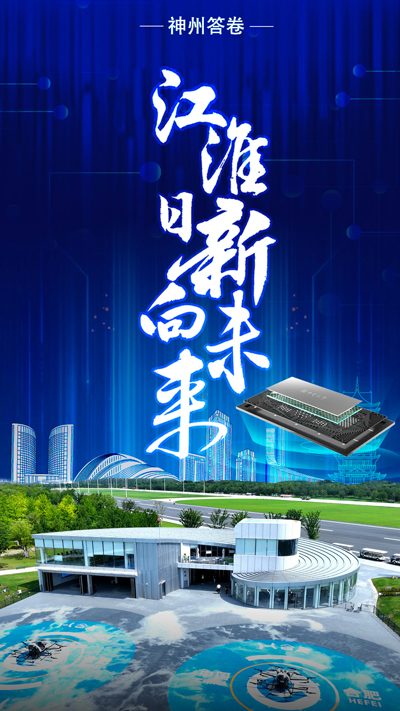
神州答卷|江淮日新向未来
Xin Hua Wang· 2025-09-12 11:46
Group 1: Innovation and Development - The core theme of the articles revolves around the importance of innovation in driving economic growth and addressing challenges in Anhui province [2][10][24] - Anhui has proposed 47 major questions related to innovation to tackle current and future development issues, aiming to establish itself as a significant hub for technological innovation and new industries [2][10] - The province's industrial revenue has increased from 3.8 trillion yuan in 2020 to 5.49 trillion yuan in 2024, with a rise in the contribution of high-tech industries to industrial value added [5][9] Group 2: Automotive Industry - Anhui's automotive production reached 1.7557 million units in the first seven months of this year, with 855,300 units being new energy vehicles, showing significant growth compared to previous years [3][5] - The Jianghuai Automobile's Zun Jie super factory in Hefei is a key player in the smart manufacturing sector, utilizing over 1,800 robots for automated production [3][5] Group 3: Challenges and Opportunities - Despite the growth, there are challenges such as a decline in fixed asset investment and profits for industrial enterprises, indicating a need for stronger internal demand [9][10] - The province is focusing on stabilizing and enhancing its automotive industry competitiveness while addressing difficulties in other sectors like photovoltaics and foreign trade [10][22] Group 4: Future Industry Development - Anhui is implementing a "7+N" future industry cultivation plan targeting fields like quantum technology, space information, and advanced materials, aiming for a future industry scale of 500 billion yuan by 2030 [18][20] - The province is also exploring innovative methods for industry cultivation, including establishing investment platforms and promoting collaboration between scientists and engineers [20][25] Group 5: Innovation Ecosystem - A comprehensive innovation ecosystem is being developed, with a focus on integrating government, industry, academia, finance, and application to enhance innovation capabilities [25][31] - The province aims to cultivate over 2 million talents for emerging industries by 2027, with a significant increase in R&D investment and output [25][28]
鸿蒙智行明年有望超17款车型在售,华为给高端市场上强度|36氪独家
3 6 Ke· 2025-09-12 11:16
Core Insights - Hongmeng Zhixing is set to launch a significant number of new models in 2026, with expectations of over 17 models available for sale next year, including new versions of existing models and entirely new projects [2][3] Product Line Expansion - The product lineup for Hongmeng Zhixing in the coming year includes the launch of new models under various brands, such as the Aito brand's M9 Extraordinary Master Edition and a rugged off-road vehicle under the Enjoy brand [2] - The Smart brand will introduce a large SUV tentatively named Smart R9 and an MPV with the internal code EHV, tentatively named Smart X9 [2] - The Respect brand plans to release an MPV and a luxury flagship SUV priced below the Respect S800 [2] - Overall, if the M9 Extraordinary Master Edition and M6 are launched next year, Hongmeng Zhixing could have 19 models available [2] Market Impact - The introduction of new models, particularly the Respect SUV, is expected to reshape the high-end vehicle market, targeting luxury brands like Range Rover and Rolls-Royce while maintaining competitive pricing [4][5] - The Respect SUV is projected to achieve annual sales exceeding 40,000 units, indicating strong market confidence [5] - The Aito M9 and M8 have already established themselves as top sellers in their respective price segments, contributing to a significant market share for Hongmeng Zhixing [6][7] Sales Goals and Performance - Hongmeng Zhixing set a goal to exceed one million vehicle deliveries this year, with over 30% of that target achieved by the end of August [3] - The company aims to come closer to its delivery target as the product matrix expands in the coming year [3] Competitive Landscape - The Respect SUV's success could further erode market share from traditional high-end brands like BMW, Benz, and Audi (BBA) [7] - Despite a general decline in high-end vehicle demand, the Aito M8 and M9 have collectively captured over 8% of the high-end market in the first seven months of this year [7] Brand Positioning Challenges - Hongmeng Zhixing faces challenges in differentiating products within its own brand portfolio, particularly between the Aito M9 Extraordinary Master Edition and the Respect SUV [8] - The Smart and Enjoy brands are tasked with finding a competitive edge in the mainstream market, which is crucial for the overall success of Hongmeng Zhixing [8] Channel and Organizational Changes - Hongmeng Zhixing is undergoing significant adjustments in its distribution channels, including the establishment of dedicated user centers for the Smart and Enjoy brands [9][10] - The company is also enhancing its organizational structure to support the launch of new products, with a strategic partnership with Chery to invest over 10 billion yuan and a dedicated R&D team [14]
墨西哥对中国商品加征关税,只是因为美国吗?
Guan Cha Zhe Wang· 2025-09-12 10:24
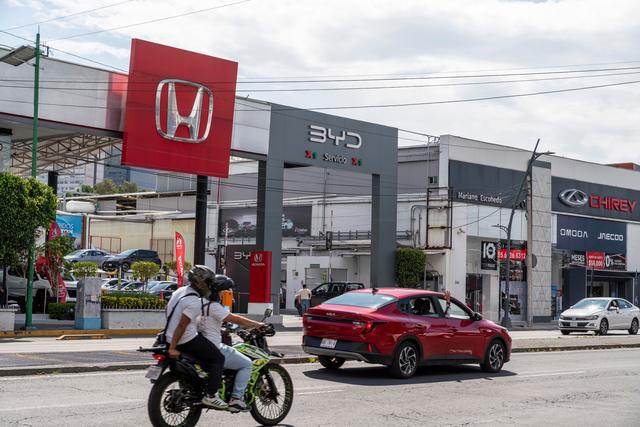
【文/观察者网 潘昱辰 编辑/高莘】据墨西哥《每日报》报道,墨西哥总统辛鲍姆于9月9日向国会下议 院提交了一项立法提案,旨在修改《一般进出口税法》,以便对来自没有与墨西哥达成自由贸易协定的 国家的各种进口商品,征收最高达50%的关税。 墨西哥经济部长埃布拉德于9月10日进一步表示,墨西哥将把中国和其他没有与墨西哥达成自由贸易协 定的其他国家(如韩国和印度)制造的汽车的关税,提高到世界贸易组织允许的最高水平(即50%)。 而目前墨西哥对来自以上国家的汽车等产品征收20%的关税。 同为全球南方重要成员,墨西哥为何突然考虑对中国产品加征关税?仅仅是因为美国施压? Banco Base经济分析总监加布里埃拉·席勒(Gabriela Siller)在X上表示,墨西哥将加征关税的进口商品 超过70%来自中国,加权平均关税估计为33.96%。在此背景下,墨西哥对中国汽车的需求将在短期内增 加,进而提高其价格。 在她看来,墨西哥提高对中国商品关税的目标有两个,其一是增加税收,其二则是安抚特朗普,从而有 利于墨西哥在明年USMCA审查期间与美国和加拿大的谈判。 位于墨西哥城的比亚迪、奇瑞与本田4S店 视觉中国 为安抚美国? 近 ...
商用车板块9月12日跌1.02%,金龙汽车领跌,主力资金净流出5.4亿元
Zheng Xing Xing Ye Ri Bao· 2025-09-12 08:31
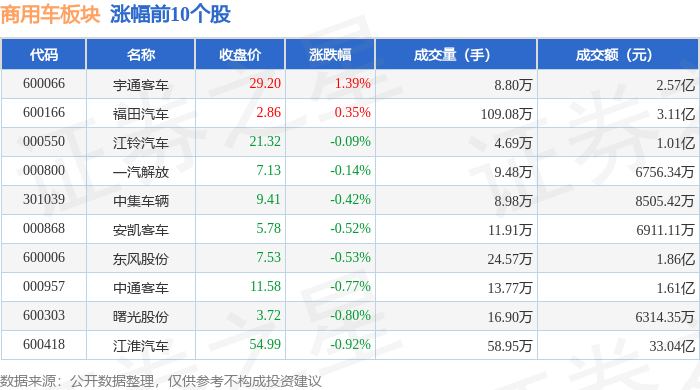
Group 1 - The commercial vehicle sector experienced a decline of 1.02% on September 12, with King Long Automobile leading the drop [1][3] - The Shanghai Composite Index closed at 3883.69, up 0.22%, while the Shenzhen Component Index closed at 12996.38, up 0.13% [1] - Major stocks in the commercial vehicle sector showed mixed performance, with Yutong Bus increasing by 1.39% and King Long Automobile decreasing by 1.49% [1][3] Group 2 - The net outflow of main funds in the commercial vehicle sector was 540 million yuan, while retail investors saw a net inflow of 315 million yuan [3][4] - The detailed fund flow indicated that King Long Automobile had a significant net outflow of 39.38 million yuan from main funds [4] - Other companies like Ankai Bus and Foton Motor also experienced varying levels of net inflow and outflow from different investor categories [4]




8月重卡销9.2万辆大增47%!TOP5均破万重汽第一 奇瑞涨2倍排第几?| 头条
第一商用车网· 2025-09-12 06:58
Core Viewpoint - The heavy truck market in China experienced significant growth in August 2025, achieving a sales volume of 91,600 units, representing a year-on-year increase of 47%, marking the fifth consecutive month of growth [5][10][20]. Sales Performance - In August 2025, the total sales of trucks (including chassis and tractors) reached 271,600 units, with a month-on-month increase of 3% and a year-on-year growth of 17% [3]. - The heavy truck segment alone sold 91,600 units in August, with a month-on-month increase of 8% and a year-on-year increase of 47%, which is an expansion of 1 percentage point compared to July's growth of 46% [10][20]. - Historically, August is typically a slow season for heavy truck sales, with the average sales over the past decade being approximately 68,400 units. The sales in August 2025 are considered a strong performance [3][6]. Cumulative Sales Data - From January to August 2025, cumulative heavy truck sales reached 715,700 units, ranking second in the last five years and sixth in the last decade, with a year-on-year increase of 14% [8][15]. - The average monthly sales for the first eight months of 2025 approached 90,000 units, significantly higher than the average monthly sales in 2024 and 2023, indicating a clear recovery in the heavy truck market [8]. Market Share and Competition - In August 2025, five companies achieved sales exceeding 10,000 units, with the top five companies accounting for 91.34% of the market share [10][12]. - The leading companies in sales for August included Heavy Truck with 25,600 units, followed by Liberation, Dongfeng, Shaanxi Automobile, and Foton [10]. - Cumulatively, the top ten companies accounted for 98.06% of the market share from January to August 2025, with the top five companies holding a combined share of 90.90%, indicating increased industry concentration [17]. Growth Trends - All top ten companies in the heavy truck market reported year-on-year growth in August, with notable increases from Foton and Chery, which saw growth rates of 172% and 237%, respectively [12][15]. - The heavy truck market is expected to continue its growth trend into the traditional peak season of "Golden September and Silver October" [20].



汽车行业新车跟踪报告:9月成都车展开启新品周期
Huachuang Securities· 2025-09-12 04:42
Investment Rating - The report maintains a "Buy" recommendation for the automotive industry [4] Core Insights - The report highlights the upcoming launch of seven significant new models in September 2025, which are expected to catalyze investment in the automotive sector [10][30] - Key models to watch include BYD's Fangcheng Baotai 7, Geely's Galaxy M9, NIO's ES8, and others, with a focus on their market performance and consumer expectations [10][30] - The report emphasizes the importance of tracking the market response to these new launches, as they could significantly impact the stock prices of related companies [10][30] Summary by Sections Industry Overview - The automotive sector consists of 225 listed companies with a total market capitalization of approximately 30,810.37 billion [4] - The circulating market value stands at about 23,623.17 billion [4] Market Performance - The absolute performance of the automotive sector has seen declines of -3.5% over the past month, -4.3% over six months, and -9.1% over the past year [5] - Relative performance shows a slight improvement of 1.3% over six months and 3.2% over the past year [5] Upcoming Models - The report details seven key new models expected to launch in September 2025, including: 1. BYD Fangcheng Baotai 7: A B-class plug-in hybrid SUV, expected to sell 0.3-0.5 million units monthly [12] 2. Geely Galaxy M9: A B-class six-seat plug-in hybrid SUV, anticipated to sell 0.8-1.0 million units monthly [22] 3. NIO ES8: A large six-seat pure electric SUV, projected to sell 0.6-0.8 million units monthly [30] 4. Other models include SAIC's Shangjie H5, Aito Wenjie M7, Li Auto i6, and Zeekr 9X, each with specific market expectations and features [10][30] Investment Recommendations - The report suggests focusing on companies like BYD, Geely, NIO, SAIC, and others due to the anticipated positive impact of new model launches on their stock performance [10][30] - It also highlights the stable demand for Jianghuai Automobile's S800 and recommends attention to SAIC Motor and Great Wall Motors based on their new platform models [10]
江淮汽车取得集成式燃料电池歧管总成及控制方法专利
Jin Rong Jie· 2025-09-12 02:22
Group 1 - The core point of the article is that Anhui Jianghuai Automobile Group Co., Ltd. has obtained a patent for an integrated fuel cell manifold assembly and control method, with the patent number CN119393674B and application date of November 2024 [1] - Anhui Jianghuai Automobile Group Co., Ltd. was established in 1999 and is located in Hefei City, primarily engaged in the automotive manufacturing industry [1] - The company has a registered capital of 21,840.09791 million RMB [1] Group 2 - The company has invested in 48 enterprises and participated in 5,000 bidding projects [1] - It holds 946 trademark information and 5,000 patent information, along with 666 administrative licenses [1]