
万华化学

Search documents
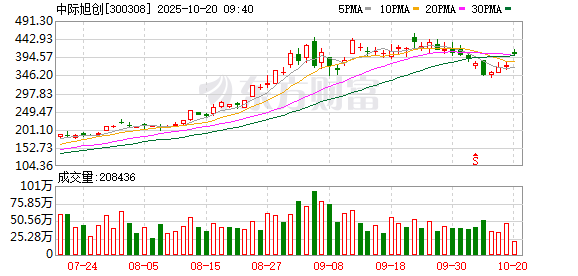
14股获融资净买入额超1亿元 中际旭创居首
Zheng Quan Shi Bao Wang· 2025-10-20 01:39
Group 1 - On October 17, among the 31 primary industries tracked by Shenwan, only the home appliance sector recorded a net inflow of financing, amounting to 36.48 million yuan [2] - A total of 1,373 stocks experienced net financing inflows on October 17, with 82 stocks having net inflows exceeding 30 million yuan [2] - 14 stocks had net financing inflows surpassing 100 million yuan, with Zhongji Xuchuang leading at 1.379 billion yuan [2] Group 2 - Other notable stocks with significant net financing inflows include Zijin Mining, Sanhua Intelligent Control, Wanhua Chemical, Beijing Junzheng, Aier Eye Hospital, Tengjing Technology, Guangku Technology, and Salt Lake Co [2]


从“苏超”到“湘超”“川超”“蒙超”……“省超”营销哪家强?
3 6 Ke· 2025-10-20 00:17
再看看9月20日揭幕的"川超"——四川省城市联赛。该赛事进一步就赞助层级进行细分。根据公众号"川超足球联赛"消息,除去赛事直转播运营商及平 台、网络媒体合作平台,"川超"的赞助商数量已经达到19家。最高赞助层级身份"全球独家冠名赞助商"为四川银行;其次,首席至尊合作伙伴青花郎,官 方合作伙伴中国移动,官方赞助商百威,这3个赞助层级都分别只有1家品牌或企业参与。而官方支持企业以及官方供应商类别则共计有15家,其中包括有 可口可乐、长虹、卡尔美体育、京东电器等长期参与体育营销的品牌。 自5月中旬开赛,苏超掀起了一股前所未有的足球狂热——线下上座人数持续创造纪录,线上自发诞生的热梗与讨论把这项城市足球联赛带进了更多人的 视野,另外在营销层面也展现强劲的商业吸引力。总之,2025年的苏超已然远超出足球赛事本身,成为了一种跨越体育、文旅、消费及公共服务的社会符 号。 "苏超"的火,也点燃了其他省级行政单位的区域性本土足球赛事的热情。"赣超""湘超""川超"等10余个省和直辖市落地举行城市联赛,"齐鲁超赛""广东省 超"也陆续开展俱乐部业余联赛。当然,还包括原有的"村超"类草根足球赛事以及各地社会足球邀请赛,这一系列足球 ...

张立群教授担任主席!第三届高分子循环再利用大会(12月11-13日 宁波)
DT新材料· 2025-10-19 16:05
Core Insights - The article emphasizes the significance of polymer recycling as a crucial method to alleviate global resource scarcity and environmental pressure, with many countries implementing mandatory policies for the use of recycled polymers [3] - The establishment of the China Resource Recycling Group marks a pivotal development in China's polymer recycling industry, highlighting its strategic importance [3] Event Overview - The 2025 Third Polymer Recycling Conference will be held from December 11-13 in Ningbo, Zhejiang, focusing on policy trends, chemical and physical recycling technologies, and high-value utilization of recycled materials [3][5] - The conference aims to gather international leading companies, experts, government representatives, and capital to explore the path of polymer recycling [3] Highlights of the Conference - Insight into global plastic recycling policies and China's 14th Five-Year Plan for plastic recycling [6] - Sharing advancements in advanced recycling technologies for mixed low-value waste plastics, rubber, and composite materials [6] - Discussion on balancing performance, compliance, and sustainability challenges in various sectors such as textiles, home appliances, and automotive [6] - Exploration of dynamic polymers and their sustainable and functional applications through molecular design [6] - Opportunities for young innovators to share technologies and collaborate [6] Agenda Overview - The conference will feature a macro forum on polymer recycling, discussing domestic and international recycling policies, the current state of recycled polymer applications in China, and market demands in Europe and Southeast Asia [8][21] - Specialized sessions will cover advanced recycling technologies and case studies on the circular utilization of PCR/PIR polymers in various industries [9][22] Special Activities - A dynamic polymer forum focusing on reversible chemical bonds for sustainable and functional polymer materials [10][23] - A youth scientist forum aimed at discovering innovative teams and technologies in the polymer recycling field [10][23]
中国化学品-航运战?美国将中国船运公司乙烷港口费上调至每吨50-140美元,华航面临额外阻力China Chemicals
2025-10-19 15:58
Summary of Key Points from the Conference Call Industry Overview - The conference call primarily discusses the **China Chemicals** industry, focusing on the implications of new U.S. port fees on ethane carriers for Chinese companies, particularly **Wanhua Chemical** [2][7]. Core Insights and Arguments 1. **New U.S. Port Fees**: Effective October 14, 2025, the U.S. Trade Representative (USTR) will impose a port service fee of **$50 per ton** on ethane carriers owned or operated by Chinese entities, escalating to **$80, $110, and $140** per ton in subsequent years [2][7]. 2. **Impact on Wanhua Chemical**: Wanhua, which imports U.S. ethane for its ethylene crackers, may face increased costs estimated at **Rmb1 billion** in 2026, rising to **Rmb2 billion** by 2028. This represents **6% to 7.6%** of the current consensus net profit for FY26/27 [2][7]. 3. **Mitigation Strategies**: Wanhua is reportedly working on strategies to mitigate these costs; however, failure to do so may lead to downward revisions in consensus earnings [2][7]. 4. **Geopolitical Tensions**: The combination of geopolitical tensions and China's anti-involution measures could lead to a significant slowdown in China's chemical capacity additions from **2026 to 2030** [2][7]. 5. **Stock Recommendations**: Preferred regional companies in light of these developments include **PetroChina, LG Chem, Hengli, PTTGC, and Reliance** [2][7]. Additional Important Points 1. **Limited Impact on Satellite Chemical**: Satellite Chemical operates a fleet of vessels that are largely unaffected by the new U.S. port fees, as most are owned by non-Chinese companies [11]. 2. **Delays in Satellite's ECC Phase 3**: Construction of Satellite Chemical's third ethylene cracker has been paused due to U.S.-China tensions, which may lead to downward revisions in consensus earnings for **2027-28** [11]. 3. **Wanhua's Ethylene Cracker Updates**: Wanhua's Yantai 2 ethylene cracker is fully operational, while the Yantai 1 cracker is undergoing feedstock conversion and is expected to restart in November 2025 [11]. 4. **Potential Benefits for Non-Chinese Projects**: The slowdown in Chinese ethane demand may benefit ethane cracking projects outside China, with companies like **Reliance** and **ONGC** planning to switch to ethane for better economics [11]. 5. **Market Dynamics**: A significant slowdown in Chinese net chemical capacity additions is anticipated, which may lead to a rebalancing of global supply and demand dynamics, positively impacting regional chemical companies [11]. Conclusion The conference call highlights significant challenges and potential shifts in the China Chemicals industry due to new U.S. port fees and geopolitical tensions. Companies like Wanhua Chemical may face increased costs, while other regional players could benefit from changing market dynamics.


基础化工周报:VA部分厂家暂停报价-20251019
Soochow Securities· 2025-10-19 15:20
Investment Rating - The industry investment rating is "Overweight," indicating an expected outperformance of the industry index relative to the benchmark by more than 5% over the next six months [76]. Core Insights - The polyurethane sector shows mixed price movements with pure MDI averaging 17,914 CNY/ton (+336 CNY/ton), polymer MDI at 14,493 CNY/ton (-293 CNY/ton), and TDI at 13,315 CNY/ton (-150 CNY/ton) [2]. - In the oil, coal, and gas olefin sector, ethane and propane prices decreased, while coal remained stable. Ethylene averaged 5,580 CNY/ton (-124 CNY/ton) and polypropylene remained unchanged at 6,800 CNY/ton [10]. - The coal chemical sector saw slight increases in synthetic ammonia and acetic acid prices, with synthetic ammonia at 2,175 CNY/ton (+3 CNY/ton) and acetic acid at 2,430 CNY/ton (+15 CNY/ton) [10]. Summary by Sections 1. Polyurethane Sector - Average prices for pure MDI, polymer MDI, and TDI are 17,914 CNY/ton, 14,493 CNY/ton, and 13,315 CNY/ton respectively, with corresponding gross profits of 4,716 CNY/ton, 2,295 CNY/ton, and 2,106 CNY/ton [2][17][20]. 2. Oil, Coal, and Gas Olefin Sector - Ethane and propane prices are 1,343 CNY/ton (-130 CNY/ton) and 3,763 CNY/ton (-46 CNY/ton) respectively. Ethylene's theoretical profit from ethane cracking is 949 CNY/ton (+39 CNY/ton) [2][10][34]. 3. Coal Chemical Sector - Average prices for synthetic ammonia, urea, DMF, and acetic acid are 2,175 CNY/ton, 1,596 CNY/ton, 3,929 CNY/ton, and 2,430 CNY/ton respectively, with gross profits of 195 CNY/ton, -68 CNY/ton, -194 CNY/ton, and 160 CNY/ton [2][10][41]. 4. Related Listed Companies - Key companies in the chemical sector include Wanhua Chemical, Baofeng Energy, Satellite Chemical, Hualu Hengsheng, and Xinheng [2].


IMO会议投票难产,但不改绿色低碳产业发展趋势
Orient Securities· 2025-10-19 13:45
Investment Rating - The industry investment rating is "Positive (Maintain)" [5] Core Viewpoints - The report emphasizes that despite the postponement of the IMO net-zero framework vote, the trend towards green and low-carbon industries remains unchanged. The opposition mainly comes from the US and oil-producing countries in the Middle East, while the EU and China are aligned in their support for the framework. This indicates that even if the framework is not fully implemented globally, significant markets like the EU and China will still see good development opportunities [7] - The report highlights the potential for a recovery in the petrochemical and chemical industries driven by "anti-involution" policies, with key stocks including Sinopec, Hengli Petrochemical, and Wanhua Chemical being recommended for investment [3] Summary by Sections Investment Suggestions and Targets - The report recommends investing in Wankai New Materials (301216) for its leading position in the green polyester industry. It also suggests buying stocks in pesticide formulation companies like Runfeng Co. (301035), Guoguang Co. (002749), and Hailier (603639), which are less affected by trade disputes. Additionally, it identifies several petrochemical companies, including Sinopec (600028), Hengli Petrochemical (600346), and Rongsheng Petrochemical (002493), as potential beneficiaries of the expected industry recovery [3] Industry Development Trends - The report discusses the impact of the IMO meeting on green methanol expectations, noting that while there are concerns about market development certainty, the overall growth of the green low-carbon industry is expected to continue. The report points out that the development of green aviation fuel (SAF) and recycled plastics will not be affected by the IMO vote delay, as these areas are driven by global decarbonization policies and environmental concerns [7]
钛白粉大厂开启全球化布局,重视行业底部修复机遇


Shenwan Hongyuan Securities· 2025-10-19 13:39
Investment Rating - The report maintains an "Optimistic" rating for the chemical industry [3][4]. Core Insights - The report highlights a recovery opportunity at the bottom of the chemical cycle, particularly in the titanium dioxide sector, with major companies expanding globally and focusing on asset acquisitions [3][4]. - Global oil supply is expected to increase significantly, driven by non-OPEC production, while demand remains stable with a projected global GDP growth of 2.8% [4][5]. - The report emphasizes the importance of various chemical chains, including textiles, agriculture, and exports, as well as the potential for recovery in profitability for titanium dioxide due to easing trade tensions and improved overseas real estate conditions [3][4]. Summary by Sections Industry Dynamics - Oil supply is anticipated to rise, with OPEC+ expected to increase production, while demand is stable but may slow due to tariffs [4]. - Coal prices are expected to stabilize at a low level, and natural gas exports from the U.S. are likely to increase, reducing import costs [4]. Chemical Product Prices and Trends - The report notes that the PPI for all industrial products fell by 2.3% year-on-year in September, indicating a narrowing decline compared to August [5]. - Manufacturing PMI rose to 49.8%, suggesting a continued recovery in manufacturing activity [5]. Investment Analysis - The report suggests focusing on four key areas for investment: textiles, agriculture, export-related chemicals, and sectors benefiting from reduced competition [3]. - Specific companies to watch include Lu Xi Chemical, Tongkun Co., and Huafeng Chemical in the textile chain, and various firms in the agricultural sector such as Hualu Hengsheng and Baofeng Energy [3][4]. Key Company Valuations - The report provides a valuation table for key companies, indicating their market capitalization and projected earnings for the coming years [14].
塑料产业周报:悲观情绪带动下跌,近期政策动向为关注重点-20251019
Nan Hua Qi Huo· 2025-10-19 13:10
1. Report Industry Investment Rating No relevant content provided. 2. Core Views of the Report - In the short - term, polyolefins continued their downward trend this week, mainly driven by macro - sentiment and upstream cost fluctuations, with limited fundamental drivers. The market should focus on whether Sino - US trade frictions will escalate and if new stimulus policies will be introduced during the 20th Fourth Plenary Session. It is recommended to wait and see for unilateral trading [7]. - In the long - term, due to the large number of new PE installations planned to be put into production in the fourth quarter, the supply is expected to increase further. Without new demand - boosting policies, the supply - demand pressure of PE is difficult to resolve, and the weak pattern is expected to continue [8]. 3. Summary by Relevant Catalogs 3.1 Core Contradictions and Strategy Recommendations 3.1.1 Core Contradictions - Supply - demand aspect: The PE supply - demand pattern has not changed much. In October, the device maintenance volume decreased compared to September, and supply returned to a high level. Overseas PE supply - demand is weak, and import is expected to increase from October to November, intensifying supply pressure. Although it is the traditional peak season, demand recovery is slow, downstream orders are insufficient, and enterprises' willingness to replenish inventory is low. PE inventory, especially LLDPE inventory, is at a high level, and the upstream and mid - stream face great shipment pressure [2]. - Macro aspect: The continuous shutdown of the US government and market concerns about credit risks have increased risk - aversion sentiment in the financial market, putting downward pressure on crude oil. Sino - US trade policies are still uncertain, and if trade frictions escalate, it may lead to further price drops in crude oil and chemical products. The 20th Fourth Plenary Session next week is worth attention, and new stimulus policies may boost market sentiment [2]. 3.1.2 Trading Strategy Recommendations - Near - term trading logic: The market should focus on Sino - US trade frictions and new stimulus policies during the 20th Fourth Plenary Session. It is recommended to wait and see for unilateral trading [7]. - Long - term trading expectation: The supply - demand pressure of PE is difficult to resolve, and the weak pattern is expected to continue [8]. 3.1.3 Industrial Customer Operation Recommendations - Price range forecast for polyethylene: 6800 - 7200, with a current volatility of 8.43% and a historical percentile of 5.8% (3 - year) [13]. - Hedging strategy for inventory management: For enterprises with high finished - product inventory, they can short plastic futures to lock in profits and sell call options to reduce costs [13]. - Hedging strategy for procurement management: For enterprises with low procurement inventory, they can buy plastic futures to lock in procurement costs and sell put options to reduce costs [13]. 3.2 This Week's Important Information and Next Week's Attention Events 3.2.1 This Week's Important Information - Bullish information: The market's concern about the US imposing a 100% tariff on China was alleviated by Trump's signal. A 500,000 - ton LLDPE full - density device of Yulong stopped for 5 days due to a fault [15]. - Bearish information: The risk - aversion sentiment in the financial market led to a continuous decline in crude oil prices [16]. 3.2.2 Next Week's Important Events to Follow - The decline of the plastic market slowed down on Wednesday and Thursday, and the downstream's willingness to buy at the bottom increased, leading to a rapid increase in trading volume [17]. 3.3 Disk Interpretation 3.3.1 Price, Volume, and Fund Interpretation - Unilateral trend and fund movement: In the context of the continuous decline of crude oil, PE prices followed the downward trend. This week, the position increased slightly, and the market's bearish sentiment was strong [22]. - Basis structure: During the decline this week, the spot price weakened following the disk, and the basis strengthened passively [24]. - Spread structure: The spread structure has not changed much recently, and the L1 - 5 spread shows a contango structure [26]. 3.4 Valuation and Profit Analysis - As PE prices continued to be weak, the production profits of all production lines were compressed. The coal - based production line with the best profit is on the verge of losses. PE devices are not sensitive to profit, so short - term losses do not usually cause unexpected shutdowns, resulting in a lack of strong cost support during the price decline [28]. 3.5 Supply - Demand and Inventory Deduction 3.5.1 Supply - Demand Balance Sheet Deduction - With the restart of devices and the commissioning of new production capacity, supply pressure will gradually emerge. After October, imports are expected to increase, further increasing the total PE supply. Although it is the traditional peak season for PE downstream, demand growth is expected to be lower than supply. In October, inventory is expected to change from destocking to stocking rapidly, and the supply - strong and demand - weak pattern will suppress PE prices [34]. 3.5.2 Supply - Side and Deduction - The current PE operating rate is 81.76% (- 2.19%). This week, the device maintenance volume increased slightly. ExxonMobil's 500,000 - ton LDPE device is in the trial - run stage. Overall, the return of maintenance devices and the commissioning of new production capacity in the fourth quarter will lead to continuous high supply pressure [38]. 3.5.3 Import - Export and Deduction - Import: The overseas PE supply - demand pattern is loose, and the price difference between the US and China has dropped to a historical low. It is expected that PE imports will increase from late October to November [41]. - Export: Enterprises' enthusiasm for expanding export channels is high this year, and PE exports have increased even in the off - season, but the overall volume is still small and has little impact on the PE supply - demand pattern [41]. 3.5.4 Demand - Side and Deduction - The average operating rate of PE downstream industries is 42.17% (+ 0.56%). The agricultural film operating rate increased significantly, but the growth is slower than in previous years. Other downstream demand is flat, so the demand - side support for PE is limited [44].
化工周报:钛白粉大厂开启全球化布局,重视行业底部修复机遇-20251019
Shenwan Hongyuan Securities· 2025-10-19 11:42
Investment Rating - The report maintains an "Optimistic" rating for the chemical industry [3][4]. Core Insights - The report highlights the global expansion of major titanium dioxide manufacturers, emphasizing the opportunity for industry recovery from the bottom of the cycle. The acquisition of Venator UK's titanium dioxide assets and the establishment of subsidiaries in Malaysia and the UK are key developments [4][5]. - The macroeconomic outlook for the chemical sector indicates stable oil demand despite a slight slowdown due to tariffs, with global GDP growth projected at 2.8%. The report also notes that coal prices are stabilizing and natural gas export facilities in the U.S. are expected to accelerate [4][5]. - The report suggests investment strategies across various sectors, including textiles, agriculture, and chemicals, with a focus on companies benefiting from the "anti-involution" policies [4][5]. Summary by Sections Industry Dynamics - The report discusses the current macroeconomic conditions affecting the chemical industry, including oil supply and demand dynamics, with a forecast of increased production from non-OPEC sources and stable global oil demand [5][6]. - It notes that the PPI for industrial products decreased by 2.3% year-on-year in September, indicating a stabilization in prices due to improved supply-demand structures [6]. Investment Analysis - The report recommends a diversified investment approach focusing on sectors such as textiles, agriculture, and export-oriented chemicals, highlighting specific companies for potential investment [4][18]. - Key materials for growth are identified, including semiconductor materials and packaging materials, with specific companies mentioned for each category [4][18]. Price Movements - The report provides detailed price movements for various chemical products, including titanium dioxide, fertilizers, and pesticides, indicating a mixed outlook with some prices stabilizing while others show slight declines [11][14][20]. - It highlights the impact of external factors such as raw material costs and international trade dynamics on pricing trends within the chemical sector [11][14].
能源化工合成橡胶周度报告-20251019
Guo Tai Jun An Qi Huo· 2025-10-19 11:14
Report Overview - Report Title: Synthetic Rubber Weekly Report - Report Date: October 19, 2025 - Report Author: Yang Honghan - Report Institution: Guotai Junan Futures Research Institute 1. Report Industry Investment Rating No relevant content provided. 2. Report Core Views - **Synthetic Rubber**: Short - term shock operation. The fundamentals of butadiene and cis - butadiene rubber are under pressure, with supply growth outpacing demand growth. However, the valuation is neutral to low, and with many important macro - events, prices are expected to fluctuate [2][4][5]. - **Butadiene**: In the short - term, supply and demand both increase, inventory is neutral, and it will operate in a shock pattern. In the medium - to - long - term, supply pressure is the main contradiction, and the fundamentals are still under significant pressure, expected to be in a weak pattern [7]. 3. Summary by Directory 3.1 Synthetic Rubber Views Supply - This week, some cis - butadiene rubber plants restarted, while others stopped for maintenance. The production of high - cis butadiene rubber was 30,000 tons, a 0.18% increase from last week, and the capacity utilization rate was 74.82%, up 0.13 percentage points. In the next period, there are no new plant restarts or shutdowns, but centralized maintenance will increase significantly at the end of October [4]. Demand - **Rigid Demand**: The capacity utilization rate of tire sample enterprises is expected to fluctuate slightly. Some enterprises are still flexibly controlling production to manage inventory. - **Substitute Demand**: The NR - BR main contract spread remains high, so the overall demand for butadiene rubber maintains a high year - on - year growth rate. Inventory - As of October 15, 2025, the inventory of domestic cis - butadiene rubber sample enterprises was 32,800 tons, a 1.42% increase from the previous period. After the holiday, raw material and synthetic rubber prices declined, and sample trade enterprise inventories decreased [4]. Valuation - The static valuation range of cis - butadiene rubber futures is 10,400 - 11,300 yuan/ton, and the dynamic valuation is expected to gradually decline. The upper valuation limit of the market is 11,200 - 11,300 yuan/ton, and the lower theoretical valuation limit is 10,400 - 10,500 yuan/ton [4]. Strategy - **Single - side**: Implement range strategies based on the fundamental static valuation. The upper pressure is 11,200 - 11,300 yuan/ton, and the lower support is 10,400 - 10,500 yuan/ton. - **Cross - variety**: When the NR - BR spread is at a high valuation, short the spread when it is high [5]. 3.2 Butadiene Views Supply - This week, domestic butadiene production decreased to 102,200 tons, a 2.39% decline, and the capacity utilization rate was 65.79%, down 1.58%. Next week, the sample enterprise production is expected to be about 103,800 tons, a slight increase [7]. Demand - **Synthetic Rubber**: The operating rates of cis - butadiene rubber and styrene - butadiene rubber remain high, and the demand for butadiene maintains a high year - on - year level. - **ABS**: Inventory pressure is high, and the demand for butadiene is expected to remain constant with limited incremental demand. - **SBS**: The operating rate has slightly increased, and the demand for butadiene remains at a rigid level [9]. Inventory - In the period from October 9 - 15, 2025, the total inventory of domestic butadiene samples increased slightly, with a 3.49% increase from last week. The enterprise inventory decreased by 3.23%, and the port inventory increased by 10.99% [9]. View - In the short - term, supply and demand both increase, inventory is neutral, and it will operate in a shock pattern. In the medium - to - long - term, supply pressure is the main contradiction, and the fundamentals are still under significant pressure, expected to be in a weak pattern [7]. 3.3 Industry Capacity and Production Butadiene Capacity - To match the expansion of downstream industries, butadiene capacity has been continuously expanding, with the speed and amplitude slightly faster than that of downstream industries at certain stages. In 2024, the new capacity was 380,000 tons, and in 2025, it is expected to be 860,000 tons [14][16]. Downstream Product Capacity - **Cis - Butadiene Rubber**: Many enterprises have new or expanded production capacity, such as Zhejiang Petrochemical, Zhejiang Transfar Group, etc. - **Styrene - Butadiene Rubber**: Some enterprises in different regions have planned new production capacity in 2026, such as Guangxi Petrochemical and Yanshan Petrochemical [23][24]. - **ABS and SBS**: There has been significant capacity expansion in recent years. In 2024, the ABS capacity increased by 2.06 million tons, and in 2025, it is expected to increase by 1.5 million tons. For SBS, the capacity increased by 160,000 tons in 2024 and is expected to increase by 250,000 tons in 2025 [35].