石药集团

Search documents
频频斩获海外大单!医药行业“仿转创”迎来收获季
证券时报· 2025-08-19 03:37
Core Viewpoint - The article discusses the transformation of Chinese pharmaceutical companies from generic drug production to innovative drug development, highlighting the challenges and successes of this transition in the context of the global pharmaceutical market [3][4][6][13]. Industry Overview - The Chinese pharmaceutical industry has historically focused on generic drugs, with significant reforms initiated in 2015 that reduced new drug approval times from an average of 3 years to 60 days, facilitating the rise of innovative drugs [6]. - The introduction of drug procurement policies since 2018 has led to a significant decrease in the average procurement prices of generic drugs, prompting a shift from high-profit generic drugs to a focus on high-level innovation [6][13]. Company Case Studies - **Hengrui Medicine**: In 2018, nearly 90% of its revenue came from generic drugs, but by 2024, innovative drug sales reached 14 billion yuan, accounting for over half of total sales, with a year-on-year growth of 30.60% [6][13]. - **Aosaikang**: Once a leader in generic digestive drugs, its revenue from this segment fell to 270 million yuan by 2024, down from 3.366 billion yuan in 2019. However, the company has successfully pivoted to innovative drugs, achieving its first Class 1 innovative drug approval in January 2025 [8][10]. - **Shijiazhuang Pharmaceutical Group and Hansoh Pharmaceutical**: Both companies, originally focused on generics, have also made significant strides in the innovative drug sector, reflecting a broader trend among traditional pharmaceutical companies [6][13]. Strategic Insights - The transition from generics to innovation is not straightforward; companies must overcome significant challenges, including high costs and low success rates associated with innovative drug development [14][15]. - The concept of "using generics to support innovation" is emphasized, where profits from generics are reinvested into innovative drug research and development [11][12]. - The industry recognizes the importance of strategic resource reallocation, leveraging existing supply chain management and clinical networks to enhance the commercialization of innovative drugs [11][12]. Challenges in Transition - The article notes that the path to innovation is fraught with difficulties, including the high financial burden of R&D and the need for a cultural shift within organizations to embrace risk-taking and innovation [14][15]. - The success rate for innovative drug development is low, with estimates suggesting it takes about 10 years and costs around 1 billion USD to bring a new drug to market, with a success rate of less than 10% [14][15].


【大涨解读】创新药:创新药出海再提速,年内频频斩获海外大单,对应市场空间将成倍增长
Xuan Gu Bao· 2025-08-19 02:44
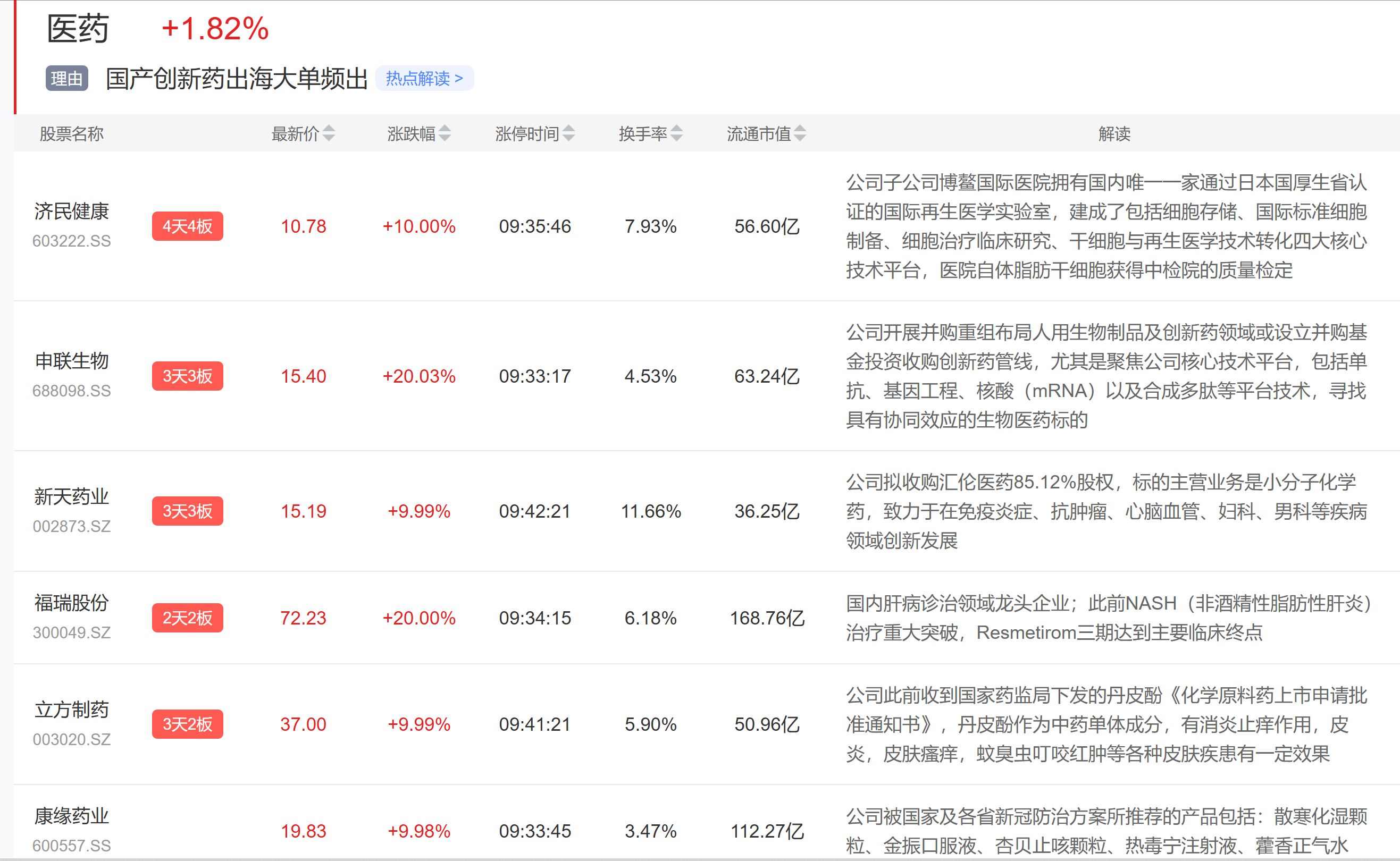
Market Overview - On August 19, the innovative drug sector experienced a significant surge, with multiple companies including Shenyuan Biological and Xintian Pharmaceutical hitting the daily limit increase [1] Key Events - On August 19, Rongchang Biopharmaceutical announced a licensing agreement for its RC28-E injection with Santen China, receiving an upfront payment of 250 million RMB and potential milestone payments totaling up to 12.45 billion RMB [4] - On August 7, Buchang Pharmaceutical's subsidiary signed an exclusive supply agreement with GOODFELLOW for the registration and sales of Efparepoetinalfa in the Philippines [4] - On July 28, Hengrui Medicine announced a deal with GSK for global exclusive rights to the HRS-9821 project, with an upfront payment of 500 million USD and potential total payments of approximately 12 billion USD [4] - Prior to these announcements, companies like CSPC Pharmaceutical, 3SBio, and China National Pharmaceutical Group also secured significant overseas contracts [5] Institutional Insights - According to data from Toubao, the U.S. pharmaceutical market was valued at 600.3 billion USD in 2022, with innovative drugs accounting for over 70%, approximately 420 billion USD. In contrast, China's pharmaceutical market was valued at 250.8 billion USD, with innovative drugs making up less than 20%, around 50 billion USD [6] - The trend of Chinese pharmaceutical companies collaborating with international giants is increasing, with record-high upfront payments and total transaction amounts. The potential market for domestic innovative drugs could rise from 50 billion USD domestically to over 420 billion USD in the U.S. market alone [6] - Recent catalysts in the innovative drug sector are emerging, with upcoming industry conferences expected to showcase promising data from companies like Diligent Pharma and Fuhong Hanlin [6] - The domestic innovative drug industry is transitioning from a capital-driven model to a profit-driven model, with expectations for performance and valuation recovery opportunities in the sector by 2025 [7]



石药集团(01093)下跌2.75%,报10.62元/股
Jin Rong Jie· 2025-08-19 02:23
Group 1 - The core viewpoint of the article highlights the recent stock performance of CSPC Pharmaceutical Group, which saw a decline of 2.75% to HKD 10.62 per share, with a trading volume of HKD 3.02 billion [1] - CSPC Pharmaceutical Group is a Hong Kong-listed pharmaceutical company focused on the production of finished drugs and active pharmaceutical ingredients, with a strategic emphasis on innovative drugs targeting various therapeutic areas including neurological diseases, oncology, anti-infection, and cardiovascular diseases [1] - As of the first quarter of 2025, CSPC Pharmaceutical Group reported total revenue of HKD 70.15 billion and a net profit of HKD 14.78 billion [1] Group 2 - CSPC Pharmaceutical Group is scheduled to disclose its interim report for the fiscal year 2025 on August 22 [2]
GLP-1闯入新大陆
3 6 Ke· 2025-08-18 23:48
Core Insights - The FDA approval of semaglutide for treating metabolic dysfunction-associated steatotic liver disease (MASH) marks a significant milestone, potentially elevating GLP-1 drugs to a dominant position in the pharmaceutical market [1][5][6] - The MASH market is projected to reach $32.2 billion by 2030, driven by a growing patient population and significant unmet medical needs [3][6] - The entry of GLP-1 into the MASH market raises questions about its impact on existing and pipeline MASH therapies, whether it will disrupt the market or serve as a complementary treatment [7][8] Group 1: Market Potential - MASH is a large and growing market, with an estimated 351 million patients globally in 2020, expected to rise to 486 million by 2030 [3] - The approval of semaglutide is expected to accelerate the growth of the MASH market, which has been historically challenging for drug development [3][6] - The first approved MASH drug, Madrigal's Rezdiffra, achieved sales of $317 million within its first year, indicating strong market potential [6] Group 2: Clinical Evidence - In clinical trials, semaglutide demonstrated significant efficacy, with 36.8% of patients showing improvement in liver fibrosis compared to 22.4% in the placebo group [5] - The drug also showed a 62.9% rate of fatty liver disease resolution without worsening fibrosis, compared to 34.3% in the placebo group [5] Group 3: Competitive Landscape - Over 60 GLP-1 related drugs are currently in development for MASH, indicating a highly competitive environment [7] - The market dynamics may shift as companies explore combination therapies, with approximately 25% of Rezdiffra patients already using it in conjunction with GLP-1 treatments [8] - The future of the MASH market will depend on how GLP-1 drugs perform against existing therapies and whether they can coexist or dominate the market [7][8] Group 4: Future Outlook - The potential of GLP-1 drugs extends beyond MASH, with ongoing research exploring their efficacy in various conditions, including neurodegenerative diseases and metabolic disorders [10][11] - The innovation landscape in pharmaceuticals is evolving, with GLP-1 representing a significant shift that may redefine treatment paradigms across multiple therapeutic areas [11][12]


老树发新芽 医药行业“仿转创”迎来收获季
Zheng Quan Shi Bao· 2025-08-18 18:31
Core Viewpoint - The transformation of Chinese pharmaceutical companies from generic drugs to innovative drugs is a challenging yet rewarding journey, with companies like Heng Rui Medicine, Shi Yao Group, and Han Sen Pharmaceutical leading the way in international markets after overcoming initial hurdles [1][2]. Industry Development - Historically, China's pharmaceutical industry was predominantly focused on generic drugs, with minimal innovative drug achievements. The 2015 drug approval reform significantly shortened the new drug review process from an average of 3 years to 60 days, creating a conducive environment for the rise of innovative drugs [2][3]. - The introduction of drug procurement policies in 2018 led to a substantial decrease in average procurement prices for generic drugs, marking the end of the high-profit era for generics and necessitating a shift towards high-level innovation [2][3]. Company Examples - Heng Rui Medicine's revenue from innovative drugs grew to 14 billion yuan in 2024, accounting for over 50% of total sales, a significant increase from just 10% in 2018 [2]. - Companies like Ao Sai Kang, which previously thrived on generic drugs, have successfully pivoted to innovative drug development, with plans to launch one new innovative drug annually over the next three years [4][6]. Strategic Approaches - The "using generics to support innovation" strategy is crucial, as it allows companies to leverage their existing resources and expertise in generics to fund and facilitate innovative drug development [5][6]. - The collaboration between generic and innovative drug development is seen as a strategic resource reorganization, where the experience gained in generics aids in the commercialization of innovative drugs [5]. Challenges in Transition - The transition from generics to innovative drugs is fraught with difficulties, including high costs and low success rates in drug development, with the industry facing an average investment of 1 billion USD and a success rate of less than 10% for innovative drugs [6][7]. - Companies like Jiahe Biopharmaceutical faced setbacks, such as the rejection of their PD-1 drug application, highlighting the risks associated with innovative drug development [6]. Cultural and Structural Shifts - A significant challenge lies in overcoming the ingrained mindset of traditional pharmaceutical companies, which are often structured for mass production rather than innovative exploration [7]. - The need for a cultural shift towards embracing trial and error in innovation is emphasized, as this is essential for fostering breakthroughs in drug development [7].

减持创新药,补换AI医疗!部分基金动向曝光
券商中国· 2025-08-18 15:25
Core Viewpoint - The public fund's strategy of "first doing drugs, then doing medicine" is enhancing the net value of pharmaceutical-themed funds and creating switching opportunities [1] Group 1: Fund Performance and Strategy - In June and July, innovative drug-themed funds began to double in value, accelerating the demand for portfolio adjustments among public funds and boosting interest in AI healthcare [2][4] - As of August 17, medical-themed funds achieved a maximum return rate of nearly 150% within eight months, primarily driven by the "drug" segment [4] - Fund managers have started to reduce their positions in innovative drugs and shift towards AI healthcare stocks, indicating a strategic transition in the market [6][9] Group 2: Market Dynamics and Fund Manager Insights - Fund managers emphasize that innovative drugs and AI healthcare are at different developmental stages, with innovative drugs currently in a results realization phase, while AI healthcare is still exploring product validation and commercialization [5] - The shift towards AI healthcare is reflected in the significant stock price increases of AI healthcare companies, such as a 65% rise in the stock price of Crystal Technology within ten trading days [7] - Fund managers are increasingly optimistic about AI healthcare becoming a major investment theme by 2025, with a focus on companies that can leverage high-quality data for improved healthcare outcomes [10]

乐普生物20250818
2025-08-18 15:10
Summary of the Conference Call for Lepu Biopharma Company Overview - **Company**: Lepu Biopharma - **Industry**: Biopharmaceuticals, specifically focusing on Antibody-Drug Conjugates (ADCs) Key Points and Arguments 1. **Patent Dispute with CSPC**: Lepu Biopharma is involved in a patent dispute with CSPC following CSPC's acquisition of Jinmant. CSPC is currently seeking to invalidate Lepu's antibody patent, which could impact the commercialization of the EGFR ADC [2][3][4] 2. **Clinical Development**: Lepu's GP104 ADC is in Phase I trials and shows promise in treating second-line liver cancer, with plans to present detailed data at the SGO conference in 2026 [2][5] 3. **Revenue Growth**: Lepu Biopharma reported a revenue of 368 million RMB in 2024, a 63% increase year-on-year. The company anticipates its core product MRG003 will be launched by late 2025 or early 2026, with an expected profit of over 20 million RMB in 2025 [2][6] 4. **NDA Submission**: The EGFR ADC (MRG003) for nasopharyngeal carcinoma has submitted a New Drug Application (NDA) and received priority review status, expected to be approved in early 2026 [2][6] 5. **Platform Upgrade**: The ADC platform has been upgraded from second-generation to third-generation, enhancing its potential for international collaboration, as evidenced by licensing agreements with AstraZeneca and Arrivant totaling 1.2 billion USD [2][7] 6. **Pipeline and Market Potential**: Lepu's pipeline focuses on unmet clinical needs in major diseases such as pancreatic cancer, liver cancer, and colorectal cancer, indicating a strategic direction towards high-demand therapeutic areas [2][5][10] 7. **Clinical Data**: Recent data from the SGO conference showed that Lepu's ADC outperformed chemotherapy in terms of Objective Response Rate (ORR) and Progression-Free Survival (PFS), with a notable safety profile [3][11] 8. **Market Size**: The combined peak sales potential for nasopharyngeal and head and neck squamous cell carcinoma is estimated at 2.7 billion RMB, with head and neck cancer representing a larger market opportunity [12] 9. **Future Catalysts**: Key upcoming events include the presentation of clinical data at the ESMO conference in October 2025 and the potential for breakthrough therapy designation for the 004 drug, which would enhance its market entry prospects [9][10] 10. **Valuation**: Lepu Biopharma's valuation is based on pipeline progress and projected sales multiples, estimated at approximately 22.4 billion HKD, indicating room for growth in the current market [19] Other Important but Overlooked Content - **Acquisition Strategy**: Lepu has grown through mergers and acquisitions, integrating various small companies and collaborating on multiple projects, which strengthens its market position [10] - **Emerging Technologies**: The company is also exploring the use of oncolytic viruses, with plans for a BLA submission in the U.S. by the end of 2025, which could further diversify its product offerings [8][10] - **Competitive Landscape**: The ADC market is competitive, with several companies, including Innovent and AstraZeneca, developing similar products, highlighting the need for Lepu to maintain a strong clinical and commercial strategy [16][17] This summary encapsulates the critical insights from the conference call, focusing on Lepu Biopharma's current status, future prospects, and the competitive landscape within the biopharmaceutical industry.
下一个BD大药
投资界· 2025-08-18 07:57
Core Viewpoint - The article discusses the rising trend of business development (BD) in the Chinese innovative pharmaceutical sector, highlighting significant transactions and the evolving landscape of BD strategies among companies and investors [5][11]. BD Trends - Many fund teams are researching the next BD trends and adjusting their investments accordingly, with a notable increase in BD transaction amounts in China, exceeding $48.4 billion in the first half of 2025, including over $2 billion in upfront payments [5][6]. - The impact of BD news on companies' short-term strategies is significant, especially in a resource-constrained environment where pipeline prioritization is critical [5][6]. Major BD Events - Significant transactions this year include a $60.5 billion collaboration between 3SBio and Pfizer, setting a record for domestic dual antibodies, and a $53.3 billion deal between CSPC and AstraZeneca [8][9]. - The trend is shifting towards "packaged" BD deals, which help build trust between companies, as MNCs remain cautious about the long-term delivery capabilities of Chinese biotech firms [9][10]. Changes in Perception of Going Global - The perception of Chinese innovative drugs going global has evolved, with a shift from high barriers to entry to recognizing numerous opportunities as MNCs actively seek partnerships [12][13]. - The focus has shifted to products that can be standardized and have a proven track record in China, indicating that BD opportunities are increasingly competitive [12][13]. High-Value BD Opportunities - The PD-1/VEGF dual antibody market is highlighted as a high-value area, with multiple Chinese biotech firms entering clinical stages and generating significant BD events [13][14]. - The TCE (T-cell engagers) sector is also emerging as a promising area for BD, with substantial transaction amounts already recorded [15]. Future Considerations - The BD landscape is expected to evolve, with uncertainties about the long-term sustainability of current successes and the potential impact of future clinical data on the reputation of Chinese biotech [17][18]. - Concerns exist regarding the sustainability of companies focusing solely on BD, as excessive reliance on selling core pipelines may hinder future growth and exit strategies [18][19].

创新药成份含量100%的恒生创新药ETF(159316)涨超3.3%,净值创历史新高!下半年以来资金净流入额6.63亿元
Ge Long Hui· 2025-08-18 07:00
Group 1 - The market sentiment is bullish, with both Hong Kong and A-shares rising, and the Shanghai Composite Index reaching a 10-year high [1] - The Hang Seng Innovative Drug ETF (159316) increased by over 3.3% today, marking a 76.5% rise since its launch at the end of March this year, achieving a new net asset value high [1] - The Hang Seng Innovative Drug ETF is currently the only ETF tracking the Hang Seng Hong Kong Stock Connect Innovative Drug Index, focusing on high-purity and high-elasticity stocks, including leading innovative drug companies [1] Group 2 - Recent adjustments to the Hang Seng Hong Kong Stock Connect Innovative Drug Index have removed CXO companies, resulting in a 100% concentration of innovative drug components [1] - The Hang Seng Innovative Drug ETF (159316) has attracted significant capital, with a net inflow of 663 million yuan since the second half of this year, bringing its latest scale to 1.258 billion yuan, a 357% increase since its launch [1] - Tianfeng Securities indicates that with the upcoming concentrated release period for innovative drugs and continued government policy support, the development trend and industrial upgrade of the innovative drug sector are becoming clearer [1]
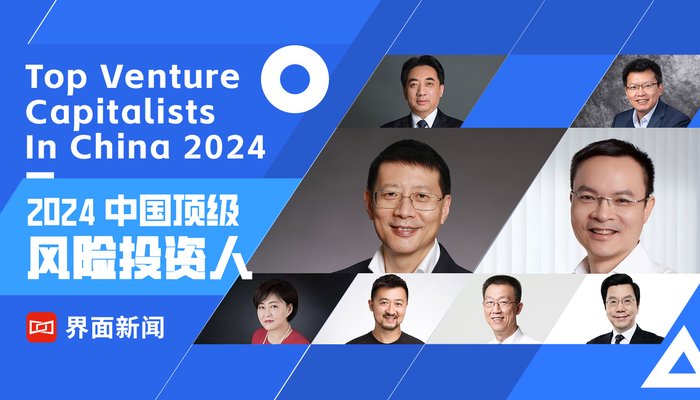
界面新闻2025中国顶级风险投资人/中国顶级风险机构评选启动
Xin Lang Cai Jing· 2025-08-18 06:06
Group 1 - The Chinese government has launched a national venture capital guidance fund with a scale of 1 trillion RMB, focusing on cutting-edge technology sectors such as AI, quantum technology, hydrogen energy storage, and biomanufacturing [1] - The financial asset investment company (AIC) equity investment pilot has expanded to 18 provinces, with Guangdong and Hunan leading the establishment of provincial AIC funds [1] - The optimization of exit paths for technology companies includes IPO adjustments, expansion of S fund trials, and accelerated private equity fund share transfers, enhancing capital circulation certainty [1] Group 2 - The global advanced packaging market is expected to reach $57.1 billion in 2025, with China's market growing from $35.1 billion in 2020 to $69.8 billion in 2024, achieving a compound annual growth rate of 18.7% [2] - The Chinese electric vehicle sector has seen significant growth, with production and sales reaching 6.968 million and 6.937 million units respectively in the first half of 2025, marking year-on-year increases of 41.4% and 40.3% [2] - CATL plans to invest up to 14 billion RMB to establish a core European battery base in Hungary, with an expected annual production capacity of 100 GWh by 2025 [2] Group 3 - Over 40% of the upfront payments exceeding $50 million in BD transactions by multinational pharmaceutical companies have gone to Chinese firms, indicating a strong global presence in the biopharmaceutical sector [3] - Top investment firms such as Sequoia China, Qiming Venture Partners, Hillhouse Capital, and Peakview Capital remain optimistic about the long-term value of the biopharmaceutical industry despite its high-risk nature [3] - The launch of the "Top Venture Capitalists in China" and "Top Venture Capital Institutions in China" lists aims to highlight the strengths of the venture capital ecosystem in China [3]