京东集团

Search documents
京东注重银发经济:破解老龄化社会之问的生态实验
Yang Zi Wan Bao Wang· 2026-01-10 14:44
Core Viewpoint - JD Group is undergoing a strategic transformation from a traditional e-commerce platform to a comprehensive solution provider for the silver economy, addressing the pressing societal question of elder care as the population aged 60 and above exceeds 310 million in China, accounting for 22% of the total population [2] Group 1: Infrastructure Development - The core issue in elder care services is the shortage of professional talent, with a significant gap between 44 million disabled elderly individuals and only about 300,000 certified caregivers. JD has chosen a heavy asset investment approach [4] - By the end of 2023, JD's home service training base in Wanzhou, Chongqing, will be operational, covering 20,000 square meters and providing systematic training for caregivers to offer standardized care for disabled elderly individuals [4] - JD plans to invest 1 billion yuan over the next three years to build a training system, with over 150 standardized training bases and a pioneering "three-level training network" model to enhance professional skills and dignity among workers [4] Group 2: Digital Health Services - JD Health is evolving from product sales to health management, utilizing its self-developed medical model "JD Medical Inquiry" to launch AI doctors and pharmacists, addressing nearly 30% of health consultations during nighttime, which meets the immediate needs of the elderly [5] - In the smart hardware sector, sales of age-friendly medical devices such as dynamic blood glucose monitors and hearing aids have increased by over 100%. JD is creating a health management loop that transitions elderly care from "availability of medication" to "scientific management" [5] Group 3: Community Service Network - The key to implementing the silver economy lies in community integration. JD's partnership with local streets through JD Fresh Kitchen provides elder meal assistance services [6] - In the field of home adaptation for the elderly, JD has co-developed group standards and launched strategic new products, planning to procure over 1 million age-friendly products [6] Group 4: Challenges and Collaborative Solutions - Despite the promising outlook, the elder care industry faces deep-rooted challenges such as limited payment capacity and difficulties in service standardization. JD's strategy may involve ecological collaboration, transforming elder care services into high-frequency service entry points [8] - This approach aims to create a service loop of health management, home adaptation, and daily care, which could reinforce its retail and logistics core business, distinguishing it from traditional elder care providers [8] Group 5: Broader Implications - JD's engagement in the silver economy transcends commercial interests, reflecting a new phase where Chinese tech companies integrate deeply with industrial and societal issues. This model of heavy asset investment in infrastructure, standardization to enhance service quality, and ecological collaboration to create value offers new insights for the industry [9] - When corporate strategies resonate with national development issues, commercial value aligns with social value, highlighting the responsibility of leading enterprises in the face of demographic changes [9]


外卖骑手 如何才能慢下来?
Shang Hai Zheng Quan Bao· 2026-01-10 13:55
Core Viewpoint - The implementation of the new national standard for electric bicycles and the basic requirements for delivery platforms aims to enhance rider safety while raising concerns about potential income reductions for over 10 million delivery riders in China [1][2][3]. Group 1: New Regulations and Their Implications - The new national standard (GB 17761—2024) limits the maximum speed of electric bicycles to 25 km/h, while the basic requirements mandate an average speed of no more than 15 km/h for deliveries [7][8]. - The regulations are seen as necessary adjustments to improve rider safety, addressing the high incidence of traffic accidents in the delivery industry [5][4]. - Riders express support for the new regulations but emphasize the need for systemic changes in delivery rules, pricing structures, and assessment standards to ensure their income is not adversely affected [8][21]. Group 2: Impact on Riders' Income - Riders like Wang Wei estimate that limiting speed to 25 km/h could reduce their daily order volume by one-third, potentially halving their income [12][20]. - The current income model is under pressure, with many riders feeling that the delivery fees have decreased over time, exacerbating their financial concerns [20][19]. - The industry is characterized by intense competition, with platforms focusing on cost-cutting and speed, which may not align with the new safety regulations [17][18]. Group 3: Industry Dynamics and Future Outlook - The delivery industry is undergoing a transformation, with a shift from a focus on speed and low prices to a more balanced approach that includes safety and service quality [22]. - The new regulations are intended to address issues such as "ghost deliveries" and inadequate rider rights, promoting a healthier industry ecosystem [21][22]. - However, there is skepticism about the platforms' willingness to implement substantial changes, as many have yet to take significant action following the announcement of the new standards [23][24].
前瞻2026:“两新”政策优化激发中国消费新活力
Zhong Guo Xin Wen Wang· 2026-01-10 13:49
(文章来源:中国新闻网) 从乡村田间的高效送货上门到城市商超里的人头攒动,中国新一轮"两新"(大规模设备更新和消费品以 旧换新)政策正在各地加速落地实施,持续激发消费市场新活力。记者从京东平台获悉,元旦以来,平 台已收到许多来自乡镇区域的订单,得益于平台自身强大的供应链优势和基层物流服务覆盖范围,"国 补"产品能快速送达乡镇农村消费者手中,助力国家补贴更好惠及乡镇农村消费者。 2026年,农村消费者将更多享受到"两新"政策红利。据中国官方"两新"工作部署,国家补贴政策在延续 以往以旧换新主线的基础上,进一步优化支持范围、补贴标准和实施机制。其中,"提高农村地区消费 便利度"被列入完善消费品以旧换新实施制度的一项内容。 各大电商平台已纷纷跟进,通过线上线下全渠道承接、补贴力度加码、服务体系升级等举措,力争 让"国补"政策直达乡村消费者。记者从京东方面获悉,京东2025年已投入近300亿元支持"国补"进乡 村,2026年还将继续加大投入力度。 ...
(经济观察)前瞻2026:“两新”政策优化激发中国消费新活力
Zhong Guo Xin Wen Wang· 2026-01-10 11:40
Group 1 - The new "Two New" policy in China is accelerating the implementation of large-scale equipment updates and the replacement of consumer goods, stimulating new vitality in the consumption market [1][2] - Rural areas are showing significant consumption potential, with retail sales of consumer goods in rural China expected to reach 66,729 billion yuan in 2024, a year-on-year increase of 4.3%, outpacing urban growth by 0.9 percentage points [1] - E-commerce platforms, particularly JD.com, are actively supporting the "National Subsidy" policy, having invested nearly 30 billion yuan by 2025 to enhance rural consumer access [2] Group 2 - The latest "National Subsidy" policy focuses on smart and green consumption trends, providing a 15% subsidy for eligible products such as smartphones and smart glasses, with a cap of 500 yuan per item [2][3] - The policy encourages green consumption by only subsidizing products with high energy efficiency ratings, with a maximum subsidy of 1,500 yuan for eligible appliances [3] - The "Two New" policy aims to precisely match high-end supply with demand, with projections indicating that 1.83 million vehicles will be replaced under the old-for-new program, with nearly 60% being new energy vehicles [3]

上海冲出千亿AI应用龙头,上市首日暴涨109%!马斯克旗下xAI公司完成200亿美元融资,英伟达参与投资; OpenAI发布ChatGPT健康 | AI周报
创业邦· 2026-01-10 10:38
Group 1 - MiniMax, a Chinese AI unicorn, made its debut on the Hong Kong Stock Exchange, with its stock price soaring 109% on the first day, pushing its market value over HKD 100 billion, reflecting strong investor interest in generative AI assets [8] - xAI, founded by Elon Musk, completed a $20 billion funding round with participation from Nvidia, Cisco Investments, and Qatar Investment Authority, although specific investment amounts were not disclosed [9] - OpenAI launched ChatGPT Health, targeting the trillion-dollar AI healthcare market, with projections indicating the market could grow from approximately $26.65 billion in 2024 to about $505.59 billion by 2033, at a CAGR of 38.8% [9] Group 2 - Alibaba Cloud introduced a multimodal interaction development kit, integrating various AI models and tools for applications in smart devices [9] - Roborock showcased a stair-climbing robot, Saros Rover, which utilizes AI and multiple sensors for navigation, demonstrating advanced mobility capabilities [10] - Tencent's AI workspace, ima, launched a "generate PPT" feature, allowing users to create presentations using their personal knowledge base [17] Group 3 - WeChat announced an AI application growth plan, providing comprehensive support for AI applications and tools from January 1 to December 31, 2026 [19] - Ant Group's AI assistant, Ant Fu, reached 30 million monthly active users, with daily inquiries exceeding 10 million, doubling in both metrics compared to the previous month [24] - JD.com established a "Chameleon Business Unit" to accelerate the commercialization of AI technologies, with plans to launch a second batch of self-developed AI toys in mid-January [25] Group 4 - AMD's CEO stated that AI active users surged from 1 million to 1 billion since the launch of ChatGPT, predicting that by 2030, there will be 5 billion active AI users, necessitating a 100-fold increase in global computing power in the coming years [26] - Hyundai began mass production of an AI chip named Edge Brain, enabling robots to operate autonomously without external network connections, with plans for pilot projects in various locations [23] - A report indicated that global humanoid robot shipments are expected to reach 13,000 units by 2025, with Chinese manufacturers leading the market [32] Group 5 - The global AI financing landscape saw 21 disclosed events this period, totaling approximately RMB 162.96 billion, with an average funding amount of RMB 14.81 billion [34] - In the domestic AI sector, a total of RMB 3.38 billion was disclosed, with BrainCo securing the highest funding of RMB 1.8 billion in a Pre-B+ round [41] - The overseas AI financing total reached RMB 159.57 billion, with xAI leading with its $20 billion funding round [49]


阿里云“杀入”AI硬件
财联社· 2026-01-10 10:25
Group 1 - The core viewpoint of the article emphasizes that major tech companies, including Alibaba Cloud, are aggressively entering the AI hardware market to capture the next generation of smart entry points and integrate "cloud-edge-end" solutions [3][31]. - Alibaba Cloud showcased its multi-modal interaction development kit at the AI hardware exhibition, integrating three foundational models for various AI hardware applications [3][4]. - The competition among tech giants in AI hardware is driven by the need to bridge the gap between cloud-based large models and physical applications, making AI hardware a crucial container for deploying these capabilities [3][31]. Group 2 - Various AI toys and robots powered by Alibaba's foundational models were prominently displayed at the exhibition, indicating a broad coverage of AI hardware categories [4][5]. - Companies like Ubiquiti and Shifeng Culture launched AI products that utilize Alibaba's models, showcasing capabilities such as emotional interaction and intelligent voice responses [5][7]. - The integration of Alibaba's models into products like AI glasses and smart toys highlights the trend towards creating emotionally engaging and interactive devices [11][19]. Group 3 - Alibaba Cloud's strategy involves collaborating closely with chip and module partners to enhance the capabilities of AI hardware, indicating a fragmented product landscape [26][25]. - The company is optimistic about the growth of smart hardware in 2026, predicting the emergence of new product categories beyond traditional devices [26]. - The exploration of embodied intelligence through multi-modal interaction and VLA models is a key focus for Alibaba Cloud, with expectations for significant advancements in the coming years [28][29]. Group 4 - The article discusses the parallel development of GUI and A2A paradigms in AI, with Alibaba Cloud actively engaging in both areas [29][30]. - The future of AI hardware is expected to shift from passive responses to proactive services, driven by advancements in multi-modal perception and agent memory technologies [32][31]. - The industry faces challenges in aligning user expectations with actual experiences, particularly in the AI toy sector, where high return rates indicate unmet consumer demands [31][32].

年货经济暖透新年:年轻人“即时悦己”、宠物吃上年夜饭
Bei Ke Cai Jing· 2026-01-10 06:25
Group 1 - The Ministry of Commerce is implementing a special action to boost consumption, organizing various activities such as the Spring Festival Consumption Season and online New Year goods festivals to drive consumption through a combination of policies and events [1] - The New Year goods market is showing new characteristics this year, with younger consumers becoming the main force, shifting from bulk purchasing for families to more personalized and immediate satisfaction [2][4] - The concept of "inventory goods" has evolved into everyday choices, with the pet economy emerging as a new consumption hotspot, and upgraded instant delivery services making it possible to shop for New Year goods anytime and anywhere [3] Group 2 - The Taobao Flash Sale New Year Festival data reflects this trend, with over 75 million imported cherries sold and over 10 million Dandong strawberries sold, indicating a shift in New Year consumption logic from material reserves to emotional satisfaction and social investment [5] - Offline supermarkets are adapting to this trend, with retailers like RT-Mart launching New Year goods promotions and creating festive atmospheres in stores to enhance customer experience [9][21] - The pet economy is becoming an essential part of New Year consumption, with products like pet New Year dinners and smart feeders gaining popularity, reflecting the growing status of pets in families [10][14] Group 3 - Instant delivery services are a core driver of the shift from bulk purchasing to immediate satisfaction, with platforms enhancing logistics capabilities to offer same-day and even hourly delivery options [16][19] - JD Logistics has introduced the industry's first "AI New Year Map" to predict demand accurately, ensuring efficient distribution and timely delivery of New Year goods [19] - The introduction of government subsidies for replacing old consumer goods has stimulated consumer enthusiasm, with significant financial incentives for purchasing new digital and home appliances [20][21]

京东外卖回应:坚决支持开展外卖行业调查评估
Sou Hu Cai Jing· 2026-01-10 06:10
Group 1 - The company supports and welcomes the decision to combat internal competition and maintain fair market order, ensuring the rights of consumers, operators, and delivery personnel [2] - The company emphasizes its commitment to resisting harmful competition within the industry and aims to innovate its supply chain model to promote high-quality development in the food delivery sector [2] - The company intends to better serve consumers, partner businesses, and delivery personnel while fostering innovation and healthy development in the food delivery platform service industry [2]
投资门槛低、卫生条件参差不齐,无堂食外卖怎样把好安全关
Xin Lang Cai Jing· 2026-01-10 06:07
Core Viewpoint - The rise of "no-dine-in" delivery services has created convenience for consumers but raises significant concerns regarding food safety and hygiene standards, necessitating enhanced regulatory measures to protect consumer health [1][3][4]. Group 1: Industry Trends - The "no-dine-in" delivery model has gained popularity due to its low investment threshold, with entrepreneurs able to start a business for under 100,000 yuan, making it an attractive option for small business owners [2][5]. - Research indicates that "no-dine-in" delivery stores account for approximately 5.78% of all delivery businesses, with a concentration of 73.91% in major cities [2]. Group 2: Hygiene and Safety Concerns - There are significant disparities in hygiene conditions among "no-dine-in" delivery establishments, leading to consumer distrust, as evidenced by reports of foodborne illnesses linked to these services [3][5]. - The lack of stringent regulatory oversight means that many establishments operate with minimal checks on food safety practices, relying heavily on self-regulation by the business owners [3][4]. Group 3: Regulatory Developments - Regulatory efforts are being implemented to enhance oversight of "no-dine-in" delivery services, including the introduction of national standards and guidelines aimed at improving food safety and transparency [4]. - Initiatives such as the "Internet + Bright Kitchen" model and the establishment of group standards for "no-dine-in" services are part of the government's strategy to strengthen food safety regulations [4].
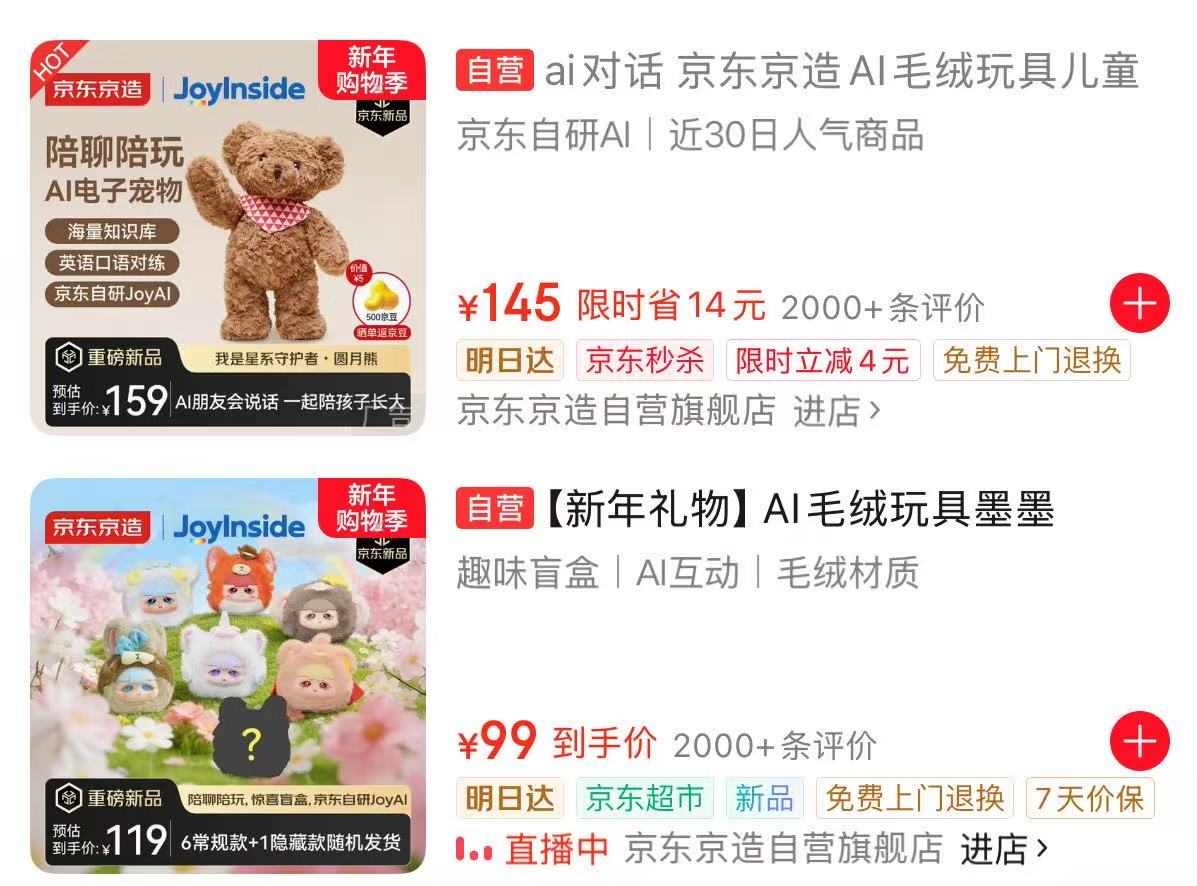
京东升级“变色龙” 发出AI落地信号
Di Yi Cai Jing· 2026-01-10 03:02
Core Insights - JD.com has established the "Chameleon Business Unit" to focus on the development and commercialization of AI products such as JoyAI App, JoyInside, and digital humans, marking a strategic shift towards AI product implementation [1][2] - The upgrade of the Chameleon project group to a business unit signals JD.com's commitment to transitioning its AI strategy from research and development to commercial operations, aiming to leverage large model technology and supply chain channels for consumer electronics [2][3] Group 1: AI Product Development - The Chameleon Business Unit will enhance the development of multimodal AI tools, digital humans, and intelligent products, differentiating JD.com from other e-commerce platforms by connecting directly with manufacturing [1][2] - JD.com's R&D expenditure has increased by 28.4% year-on-year to 5.6 billion yuan, representing 1.9% of revenue, indicating a strong commitment to AI investment [2] - The company has seen a significant rise in AI job postings, ranking among the top 20 companies for new AI positions from January to October 2025 [2] Group 2: Digital Human Technology - JD.com's digital human technology has evolved, allowing for the creation of digital personas with significantly reduced production costs, dropping from tens of thousands to double digits, a reduction of over 90% compared to traditional filming methods [3] - The company aims to lower the barriers for using digital humans in live streaming, enhancing features like "one-click broadcasting" to minimize the need for manual intervention [3][4] Group 3: AI Toy Market - JD.com has entered the AI toy market, launching a series of AI toy products since November 2022, including self-developed AI toys and the JoyInside chess robot [5][6] - Sales figures indicate strong market acceptance, with over 4,000 units sold for the initial toy series and over 8,000 for the JoyInside chess robot [6] - The AI toy sector is projected to experience rapid growth, with sales of AI robots, trendy toys, and educational toys expected to increase significantly, highlighting the market's potential [9][10]