
奇瑞汽车

Search documents
汽车与汽车零部件行业周报、月报:智界转向独立化运营,理想i8调价-20250812
Guoyuan Securities· 2025-08-12 02:17
Investment Rating - Maintain recommendation [6] Core Insights - The wholesale of passenger cars is growing faster than retail, with a stable and rapid growth in the passenger car market. In July 2025, the national retail of passenger cars reached 1.834 million units, a year-on-year increase of 7%, while wholesale reached 2.192 million units, a year-on-year increase of 12% [1][20] - The new energy vehicle market is also showing strong growth, with retail sales of 1.003 million units in July, a year-on-year increase of 14%, and a cumulative retail of 6.472 million units this year, up 30% year-on-year [1][20] - The penetration rate of new energy vehicles in the passenger car market reached 54.7% in July, indicating a significant shift towards electric vehicles [1][20] Summary by Sections 1. Weekly Market Review - The automotive sector rose by 2.68% in the week of August 2-8, 2025, outperforming the Shanghai Composite Index by 1.45 percentage points [12] - The motorcycle and other segments saw the highest increase of 8.24%, while the passenger car segment experienced a slight decline of 0.65% [15] 2. Weekly Data Tracking - Passenger car retail and wholesale data for July 1-31, 2025, showed retail at 1.834 million units and wholesale at 2.192 million units, both reflecting year-on-year growth [20] - The new energy vehicle segment's wholesale reached 1.179 million units in July, with a year-on-year increase of 25% [20] 3. Industry News - Chery and Huawei signed a strategic cooperation agreement for the Zhijie brand, committing over 10 billion yuan and increasing the R&D team to 5,000 people [2][49] - Li Auto announced a price reduction for the Li One model, now priced at 339,800 yuan, reflecting the competitive nature of the mid-to-high-end electric vehicle market [3][41] - The integration of autonomous driving teams within Geely aims to streamline operations and enhance technological capabilities [32] 4. Investment Suggestions - Focus on leading automotive companies enhancing their competitive edge in differentiated markets and the potential for brand reputation to create a snowball effect [4]
德赛西威上半年 净利润同比增长45.82%
Zheng Quan Shi Bao· 2025-08-11 17:40
Core Viewpoint - Desay SV's half-year report shows significant growth in net profit and revenue, driven by increased customer payments and overseas income growth outpacing domestic income [1][2] Financial Performance - The company achieved operating revenue of 14.644 billion yuan, a year-on-year increase of 25.25% [1] - Net profit attributable to shareholders reached 1.223 billion yuan, up 45.82% year-on-year [1] - Operating cash flow net amount increased by 166% year-on-year, reaching 1.6 billion yuan [1] Accounts Receivable and Payment Terms - The accounts receivable turnover days improved slightly to 112.97 days from 119.81 days in the first quarter [1] - In 2025, the automotive industry is expected to reduce payment terms to suppliers to no more than 60 days [1] Business Segments - The smart cockpit business generated sales of 9.459 billion yuan, a growth of 18.76% [2] - The fourth-generation smart cockpit has been mass-produced for clients such as Li Auto, Xiaomi, and Geely, with new project orders from several leading automakers [2] - The smart driving business achieved revenue of 4.147 billion yuan, growing by 55.49% [2] - The company maintains the largest market share in the domestic auxiliary driving domain controller sector [2]
德赛西威上半年净利润同比增长45.82%,加强AI 技术作为核心支撑
Ju Chao Zi Xun· 2025-08-11 14:26
Core Insights - Desay SV's revenue for the first half of 2025 reached 14.64 billion yuan, a year-on-year increase of 25.2%, while net profit attributable to shareholders was 1.22 billion yuan, up 45.8% [1] - The company has successfully launched its fourth-generation intelligent cockpit in mass production for clients such as Li Auto, Xiaomi Auto, and Geely Auto, and continues to secure new project orders from various automakers [1][2] Financial Performance - The operating cash flow net amount was 1.638 billion yuan, reflecting a significant year-on-year growth of 166.2% [1] - In Q2 2025, the company reported revenue of 7.85 billion yuan, a 29.9% increase year-on-year, and a net profit of 640 million yuan, up 41.1% [1] Technological Advancements - The company is capitalizing on the trends of AI and 5G, focusing on the evolution from high-speed NOA in 2022 to urban NOA in 2024, and aiming for full-scene vehicle-to-vehicle (D2D) capabilities by 2025 [2] - Desay SV has developed an integrated cockpit solution that has been validated in real-world conditions, addressing key challenges in complex traffic scenarios [2] Strategic Initiatives - The company is actively exploring new business areas such as smart transportation, unmanned delivery, and robotics, aiming to create a new growth curve for sustainable development [2] - By leveraging existing automotive-grade supply chain resources and technological foundations, the company aims to enter new markets with lower costs and faster speeds [2]
车市最新成绩单来了
Shang Hai Zheng Quan Bao· 2025-08-11 12:40
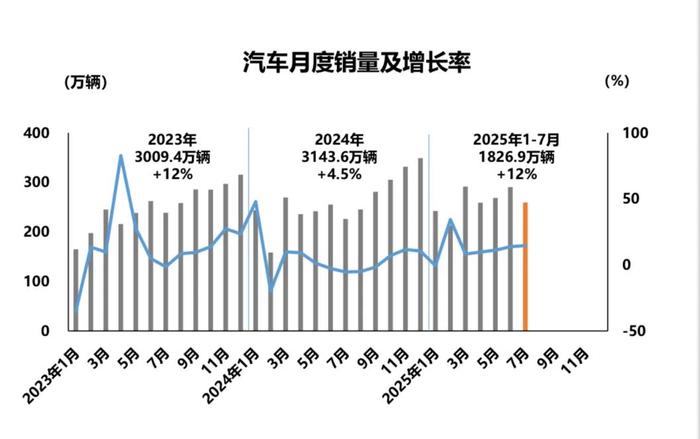
8月11日,中国汽车工业协会(简称"中汽协")信息发布会在北京召开,2025年1—7月汽车产销数据及 经济运行情况在会上公布。中汽协最新统计显示,7月,中国汽车销量同比增长14.7%,在7—8月的行 业传统淡季呈现淡季不淡的新态势。 中汽协有关负责人表示,从行业市场环境看,以旧换新政策效果继续显现,行业综合整治"内卷"工作取 得积极进展,企业新车型持续投放,助力车市平稳运行,同比实现增长。 另外,华为鸿蒙智行最新数据显示,2025年7月鸿蒙智行全系交付新车突破4.7万辆,位居"新势力第一 阵营",同比增长8.3%。其中,赛力斯和华为合作的问界系列7月交付突破4万辆,占据主力。 中国汽车月度销量及增长率数据 1—7月,新能源汽车产销累计完成823.2万辆和822万辆,同比分别增长39.2%和38.5%,新能源汽车新车 销量达到汽车新车总销量的45%。在新能源汽车主要品种中,与上年同期相比,氢燃料电池汽车产销明 显下降,其他大类新能源汽车品种产销呈不同程度增长。 在汽车出口方面,7月,中国汽车出口57.5万辆,环比下降2.8%,同比增长22.6%。2025年1—7月,汽车 出口368万辆,同比增长12.8%。 " ...






德赛西威: 2025年半年度报告
Zheng Quan Zhi Xing· 2025-08-11 11:14
Core Viewpoint - The report highlights the financial performance and strategic direction of Huizhou Desay SV Automotive Co., Ltd. for the first half of 2025, showcasing significant growth in revenue and net profit, alongside a commitment to innovation and international expansion in the automotive electronics sector. Financial Performance - The company's operating revenue for the first half of 2025 reached approximately 14.64 billion yuan, representing a year-on-year increase of 25.25% compared to 11.69 billion yuan in the same period last year [11][21]. - The net profit attributable to shareholders was approximately 1.15 billion yuan, up 45.94% from 789.72 million yuan in the previous year [11][21]. - Basic earnings per share increased to 2.21 yuan, a rise of 46.36% from 1.51 yuan [11][21]. - The total assets at the end of the reporting period were approximately 21.66 billion yuan, showing a slight increase of 0.81% from the previous year [11][21]. Business Overview - The company focuses on three main areas: intelligent cockpits, intelligent driving, and connected services, maintaining a leading position in the industry [9][10]. - The intelligent cockpit segment generated approximately 9.46 billion yuan, accounting for 64.59% of total revenue, while the intelligent driving segment achieved 4.15 billion yuan, reflecting a growth of 55.49% [11][21]. - The connected services and other segments contributed approximately 1.04 billion yuan, a slight decrease of 2.11% [11][21]. Market Trends - The automotive industry in China experienced a significant increase in production and sales, with new energy vehicle sales reaching 696.8 million units, a year-on-year growth of 41.4% [7][8]. - The report indicates a strong demand for intelligent and connected vehicle technologies, driven by the rapid advancement of smart driving systems and the need for enhanced safety and reliability [8][9]. Strategic Initiatives - The company has updated its development strategy, emphasizing a mission to lead in safe, enjoyable, and green travel, and a vision of "smart travel, globally shared" [8][9]. - It aims to enhance its technological capabilities and expand its international presence, with a focus on building a global supply chain network and localizing services [16][18]. - The company is committed to sustainable development, aligning its operations with carbon neutrality goals and enhancing its product offerings to meet low-carbon standards [18][19].
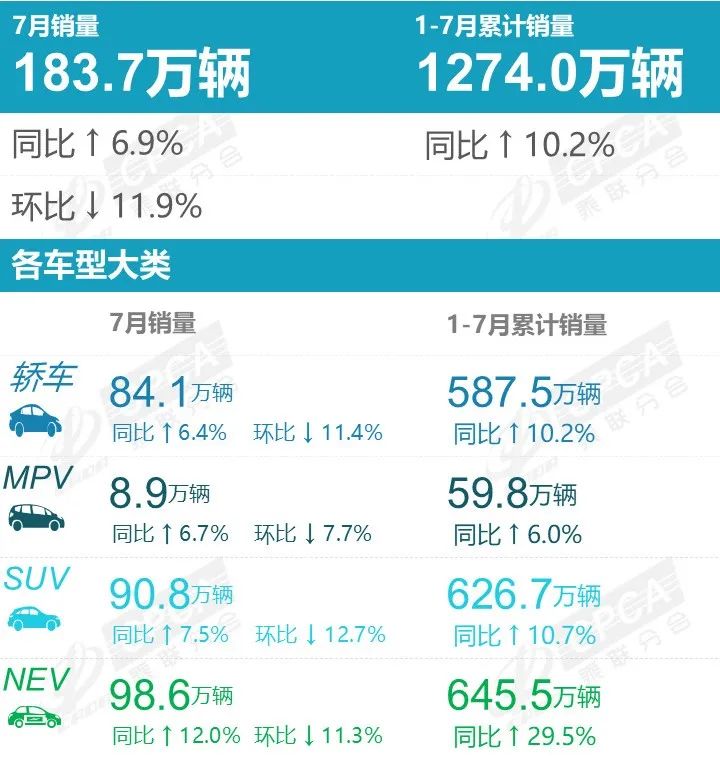
乘联分会:7月份国内狭义乘用车市场零售销量达183.7万辆 同比增长6.9%
Zhi Tong Cai Jing· 2025-08-11 09:00
Core Insights - In July 2025, the domestic narrow passenger car market retail sales reached 1.837 million units, representing a year-on-year increase of 6.9% but a month-on-month decrease of 11.9% [1] - Cumulative sales from January to July 2025 totaled 12.74 million units, showing a year-on-year growth of 10.2% [1] - The retail penetration rate of new energy vehicles (NEVs) in July reached 53.7%, driven by policies such as tax exemptions and trade-in incentives [1] Sales Data Summary - July 2025 sales: 1.837 million units, YoY ↑ 6.9%, MoM ↓ 11.9% [2] - Cumulative sales (Jan-Jul 2025): 12.74 million units, YoY ↑ 10.2% [2] - NEV sales in July: 986,000 units, YoY ↑ 12.0%, MoM ↓ 11.3% [2] Manufacturer Performance - BYD Auto led July sales with 341,030 units, a decrease of 9.7% MoM but a slight increase of 0.1% YoY, holding a market share of 15.2% [4] - Geely Auto and Chery Auto followed with sales of 237,735 and 215,278 units respectively, with Geely showing a 0.7% increase MoM and Chery a 4.2% decrease [4] - Cumulative sales for BYD from January to July reached 2.454 million units, a 26.0% increase YoY, maintaining a market share of 15.8% [6] New Energy Vehicle Market - In July 2025, BYD's NEV sales were 341,030 units, with a market share of 28.7% [10] - Geely's NEV sales increased significantly by 120.4% YoY to 130,142 units [10] - Cumulative NEV sales for BYD from January to July were 2.454 million units, representing a 26.0% increase YoY [11]


【月度排名】2025年7月厂商销量排名快报
乘联分会· 2025-08-11 08:40
Core Viewpoint - The domestic narrow passenger car market in China showed a retail sales volume of 1.837 million units in July 2025, representing a year-on-year increase of 6.9% but a month-on-month decrease of 11.9%. Cumulative sales from January to July reached 12.74 million units, up 10.2% year-on-year [2][4]. Sales Performance - July 2025 saw record highs in retail, export, wholesale, and production for passenger car manufacturers. The price war in the car market has calmed down, and the penetration rate of new energy vehicles (NEVs) reached 53.7% due to supportive policies [4]. - The overall car market is expected to follow a "low in the front, high in the middle, and flat in the back" trend for the year [4]. Wholesale Sales Rankings (July 2025) - BYD Auto led with wholesale sales of 341,030 units, a decrease of 9.7% month-on-month but a slight increase of 0.1% year-on-year, capturing 15.2% market share [5]. - Geely Auto and Chery Auto followed with 237,735 units (up 57.7% year-on-year) and 215,278 units (up 13.8% year-on-year), respectively [5]. Retail Sales Rankings (July 2025) - BYD Auto also topped the retail sales with 274,644 units, down 22.0% month-on-month and down 11.9% year-on-year, holding a 14.9% market share [7]. - Geely Auto achieved 202,447 units, reflecting a year-on-year increase of 71.0% [7]. New Energy Vehicle Sales Rankings (July 2025) - In the NEV wholesale segment, BYD Auto again led with 341,030 units, while Geely Auto saw a significant year-on-year increase of 120.4% with 130,142 units [11]. - Tesla China reported 67,886 units, down 8.4% year-on-year [11]. Cumulative Sales Rankings (January to July 2025) - BYD Auto maintained its lead with 2.454 million units sold, a year-on-year increase of 26.0% and a market share of 15.8% [6]. - Geely Auto and Chery Auto followed with 1.647 million units (up 48.8% year-on-year) and 1.429 million units (up 14.6% year-on-year), respectively [6].

必须拉中国和印度入伙,给美国一点颜色瞧瞧,78岁的总统振臂高呼
Sou Hu Cai Jing· 2025-08-11 03:43
Group 1 - Brazilian President Lula's urgent communication with leaders of China and India highlights the importance of BRICS cooperation in response to U.S. tariff pressures [1][19] - Lula's past experiences with U.S. tariffs during Trump's administration have shaped his current stance, emphasizing the need for Brazil to strengthen ties with BRICS nations [3][4] - The imposition of tariffs by the Trump administration has severely impacted Brazil's steel and agricultural sectors, leading to significant economic challenges [4][17] Group 2 - The BRICS nations, now expanded to 11 members, control a significant portion of global resources, making them a crucial platform for Brazil's international development [19][24] - India's collaboration with Brazil in agriculture and automotive sectors has provided opportunities for Brazil to reduce dependency on U.S. products [19][21] - China's investment in Brazil, particularly in logistics and automotive industries, has helped Brazil navigate trade difficulties caused by U.S. tariffs [21][24]
“科技变量”如何变为强劲动能(人民观点) ——安徽以科技创新引领高质量发展观察
Ren Min Ri Bao· 2025-08-10 22:50
搭建平台、健全体制机制,扎实推进深度融合,新质生产力对高质量发展的推动力更为强劲 从更大视野看,应善用市场化的方式,激发各类要素资源活力 科技创新做到"苟日新,日日新,又日新",关键就在于"形成'乔木'参天、'灌木'茁壮、'苗木'葱郁的创 新生态" 百年变局重塑全球格局,科技创新是关键变量。推进中国式现代化,科技要打头阵。 "抢占科技竞争和未来发展制高点",党中央高瞻远瞩、布局落子。 "安徽的科技创新,可谓'士别三日,当刮目相看',每一次来都看到新的飞跃、新的发展",习近平总书 记的话语,蕴含着国家向前发展的秘诀。 "科技变量",如何变为高质量发展的强劲动能、"最大增量"?安徽以科技创新引领新质生产力发展的实 践,提供了一个方法论视角。 看"融合"。 科技创新和产业创新深度融合,是加快发展新质生产力的重要方法。 搭建平台、健全体制机制,扎实推进深度融合,新质生产力对高质量发展的推动力更为强劲。 看"有为"。 智能网联新能源汽车,迫切要求融合发展汽车产业、交通产业、人工智能产业、能源产业。 "合工大—蔚来创新研究院"瞄准智能电动汽车的前瞻性技术等开展攻关;超80%的研发经费、超90%的 省产业创新研究院由企业牵 ...
“科技变量”如何变为强劲动能(人民观点)
Ren Min Ri Bao· 2025-08-10 22:00
Group 1 - The core viewpoint emphasizes the importance of technology innovation as a key variable in reshaping global dynamics and driving high-quality development in the context of China's modernization [1][2][4] - The integration of technology innovation and industrial innovation is highlighted as a crucial method for accelerating the development of new productive forces [3][4] - The establishment of a robust innovation ecosystem is essential for fostering continuous technological advancements, characterized by a diverse range of enterprises from large corporations to startups [12][13] Group 2 - The article discusses the role of government in facilitating market efficiency and supporting innovation through strategic initiatives, such as forming advisory committees with experts [7][8] - Various regions in China, such as Anhui and Jiangsu, are showcased for their innovative practices, including collaborative research centers and technology transfer mechanisms that enhance industrial application [5][9] - The development of a comprehensive innovation environment is illustrated through examples of successful ecosystems in cities like Hangzhou and Shenzhen, which promote a full-chain incubation model [14][15] Group 3 - The narrative includes success stories of companies like Chery Automobile, which exemplify resilience and innovation in the face of challenges, contributing to China's global leadership in sectors like new energy vehicles [16][17] - The article underscores the significance of nurturing a diverse innovation landscape, where large enterprises lead, while small and medium-sized enterprises contribute to filling gaps in the industrial chain [13][14] - The call for a high-level self-reliance in technology is presented as a pathway to creating new development momentum and advantages for China's modernization efforts [17]