
洋河股份

Search documents
扎堆光瓶酒,酒企应对调整期的良策?
Sou Hu Cai Jing· 2025-07-09 21:37
Core Insights - The bottled liquor market is experiencing significant growth, with major brands launching new products and strategies to capitalize on this trend [2][5][7] Market Dynamics - The bottled liquor market has expanded from 35.2 billion RMB in 2013 to 98.8 billion RMB in 2021, with a compound annual growth rate (CAGR) of 13.8%. It is projected to reach 150 billion RMB by 2024, maintaining a 16% annual growth rate from 2022 to 2024 [7] - The under 100 RMB price segment is currently the best-performing in the liquor market, with bottled liquor accounting for over 60% of this segment [7] Consumer Trends - Young consumers, particularly those born in the 1980s and 1990s, are driving the demand for bottled liquor, favoring quality and cost-effectiveness over packaging [9] - The "strictest alcohol ban" has negatively impacted high-end liquor sales, while bottled liquor remains resilient due to its popularity in casual dining settings [9] Competitive Landscape - The market is becoming increasingly crowded, leading to intensified competition among brands [10] - To stand out, brands must focus on building strong identities and value propositions, as well as developing product lines that cater to diverse consumer preferences [11] Strategic Recommendations - Emphasizing branding and systematic marketing strategies is essential for success in the bottled liquor market [12] - Companies should prioritize direct consumer engagement and create sample markets to enhance brand recognition and loyalty [11][12]

集体“降度”谋变 白酒巨头借低度酒抢占年轻市场
Bei Jing Shang Bao· 2025-07-09 13:22
Core Viewpoint - The Chinese liquor industry is experiencing a trend towards "lower alcohol content" as consumer demand for low-alcohol beverages increases, particularly among younger consumers [1][4][5]. Industry Trends - The demand for low-alcohol liquor is rising as consumers prioritize health and diverse drinking experiences, prompting major liquor companies to innovate and launch lower-alcohol products [5][6]. - Major companies like Wuliangye and Luzhou Laojiao are planning to introduce new low-alcohol products, indicating a strategic shift towards lower alcohol content to capture the younger demographic [5][6][7]. Consumer Behavior - Young consumers, who now account for 34% of liquor consumption, prefer low-alcohol options that are easier to drink and suitable for various social settings [8][9]. - The market for low-alcohol liquor is projected to grow significantly, with estimates suggesting an increase from approximately 200 billion yuan in 2020 to around 742 billion yuan by 2025, reflecting a compound annual growth rate of 30% [7][8]. Market Dynamics - The shift towards lower alcohol content is seen as a response to changing consumer preferences and the need for liquor companies to adapt to a more health-conscious market [4][9]. - Despite the push for lower alcohol products, companies face challenges in truly resonating with younger consumers, as many low-alcohol offerings lack distinct flavors and cultural depth, leading to a risk of market homogenization [9][10].
专家访谈汇总:周杰伦入驻抖音,引爆概念股
阿尔法工场研究院· 2025-07-09 12:31
Group 1: Financial Products and Market Trends - Fixed income products dominate the market, with non-cash management fixed income products reaching a scale of 23.4 trillion yuan, accounting for over 70% [1] - Investors show a conservative preference for low-risk fixed income products, especially during market volatility [1] - The transition to net value-based operation models for bank wealth management products is a key development, with a shift from long-term bonds to short-term high-rated bonds to reduce net value fluctuations [1] - The expected annual incremental funds for the equity market from this transition is estimated to be between 80 to 120 billion yuan, with a focus on neutral return products like IPOs and stock index hedging [1] Group 2: AI Collaboration and Market Impact - Kakao's strategic partnership with OpenAI aims to enhance its AI capabilities, particularly in the KakaoTalk application, serving 49 million users with personalized services [2][3] - This collaboration is seen as transformative for Kakao, especially under the leadership of its first female CEO, amid sales challenges and economic pressures [2][3] - Kakao plans to integrate AI across its services, targeting double-digit sales growth within the next two years through innovation [2][3] Group 3: Food and Beverage Sector Performance - The food and beverage sector has shown strong performance, with the food ETF rising by a maximum of 1.34% during trading, ultimately closing up 0.84% [3] - Key stocks in the sector, such as Shanxi Fenjiu and Yingjia Gongjiu, saw significant increases, with several major liquor stocks also performing well [3] - Despite potential macroeconomic pressures in the second half of the year, the liquor sector is viewed as having sufficient valuation to present investment opportunities [3] Group 4: Celebrity-Driven Market Movements - The entry of Jay Chou into Douyin has significantly impacted the capital market, with shares of Juying Legend soaring by 100% [4] - Juying Legend, founded in 2017, has a long-term IP licensing agreement with Jay Chou's agency, providing a stable operational foundation [4] - The company continues to experience revenue growth, particularly in IP creation and new retail, with future IP launches expected to sustain this growth [4] Group 5: ESG Disclosure in New Tea Beverage Industry - Food safety and compliance issues have become increasingly prominent in the new tea beverage industry, with notable brands facing public scrutiny [5] - Companies like Nayuki and Mixue have been criticized for management and quality control failures, highlighting the need for improved ESG practices [5] - While some companies have begun disclosing ESG reports, inconsistencies remain, particularly in carbon emissions reporting, indicating a lag in ESG management [5] - As consumer expectations rise, companies must proactively disclose ESG information to enhance brand loyalty and competitiveness [5]
白酒行业现人事巨震,高管加速离场,背后指向哪些行业困局?
Nan Fang Du Shi Bao· 2025-07-09 11:48
Core Viewpoint - The recent wave of high-level executive departures in the Chinese liquor industry reflects deep-seated challenges and transformation pains faced by the sector, driven by high inventory levels and price inversions impacting growth [2][11]. Group 1: Executive Changes - Recent resignations include the chairman and board members of Yanghe Co. and the general manager of Jinzhongzi Liquor, indicating a trend of leadership instability across major liquor companies [3][4]. - Guizhou Moutai has also seen personnel changes, with new appointments aimed at addressing internal management dynamics [4]. - The performance pressures, such as Jinzhongzi Liquor's revenue drop of 37.04% to 925 million yuan and a net loss of 258 million yuan, are significant catalysts for these executive changes [4][10]. Group 2: Industry Challenges - The liquor industry is grappling with high inventory levels, with total inventory among 20 listed liquor companies reaching 168.39 billion yuan, an increase of 19.29 billion yuan year-on-year [5][8]. - The prolonged inventory cycle and frequent price inversions are eroding profits and confidence among distributors, leading to increased pressure on sales targets for management [8][9]. - The younger generation's declining interest in traditional liquor, with less than 30% of Gen Z purchasing liquor, poses a significant challenge for the industry [9]. Group 3: Market Dynamics - The liquor market is undergoing a structural adjustment, with a shift from high-growth expectations to a focus on stable dividends, as evidenced by the stock price declines of 19 out of 20 listed liquor companies in 2024 [10][12]. - The industry is witnessing a shift towards consumer-oriented strategies, moving from reliance on government and business consumption to targeting the mass market [13][16]. - New management is increasingly emphasizing innovation and digital marketing to adapt to changing consumer preferences and market conditions [16].



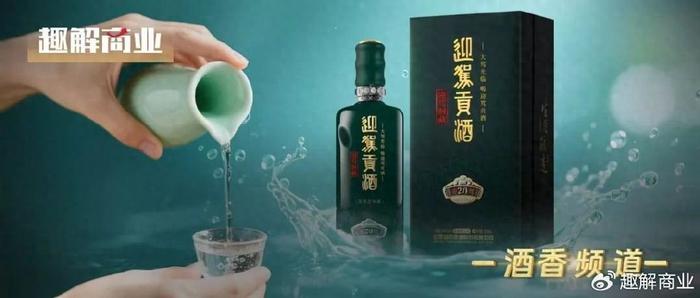
迎驾贡酒的“百亿围城”
Xin Lang Cai Jing· 2025-07-09 05:03
Core Viewpoint - Yingjia Gongjiu, once a rising star in the Anhui liquor market, is currently facing significant challenges, including a sharp decline in stock price and disappointing financial performance, leading to a strategic shift in its growth targets [2][4][5]. Financial Performance - Yingjia Gongjiu's stock price fell below 40 yuan, reaching a low of 37.12 yuan per share, marking a nearly 23% decline in 2023, the second worst performance since its listing [2][5]. - In 2024, the company reported revenue of 7.344 billion yuan, an 8.46% increase year-on-year, and a net profit of 2.589 billion yuan, up 13.45% [5]. - However, the company did not meet its annual budget targets of 8.064 billion yuan in revenue and 2.866 billion yuan in net profit [6]. Market Challenges - The liquor industry is experiencing a shift towards a "stock competition," with leading brands capturing market share, putting pressure on Yingjia Gongjiu [8]. - The company is increasingly reliant on the Anhui market, with revenue from the province rising from 63.5% in 2021 to 72.74% in 2024, while revenue from outside the province remains below 30% [12]. - The gross profit margin for products sold outside Anhui is lower than that of products sold within the province, indicating challenges in expanding its market presence [13]. Strategic Adjustments - Yingjia Gongjiu has shifted its strategic focus from a "100 billion target" to a more conservative growth approach, aiming for a net profit growth rate of just 1% by 2025 [4][11]. - The company is facing increased competition from both local brands like Gujing Gongjiu and Kouzi Jiao, as well as national giants like Moutai and Wuliangye, which are penetrating regional markets [19]. Operational Issues - The company is experiencing slow sales and high inventory levels, with inventory rising from over 3 billion yuan in 2020 to 5.04 billion yuan in 2024, accounting for 37.67% of total assets [21]. - Cash flow from operating activities decreased by 12.89% in 2024, breaking a trend of continuous growth since 2020 [23]. Management and Governance - Despite the company's financial struggles, executive compensation has increased, with the chairman's salary rising by 16% in 2024, surpassing the growth rates of revenue and net profit [24].

“禁酒令”下,中国白酒市场的新变化
Sou Hu Cai Jing· 2025-07-09 02:07
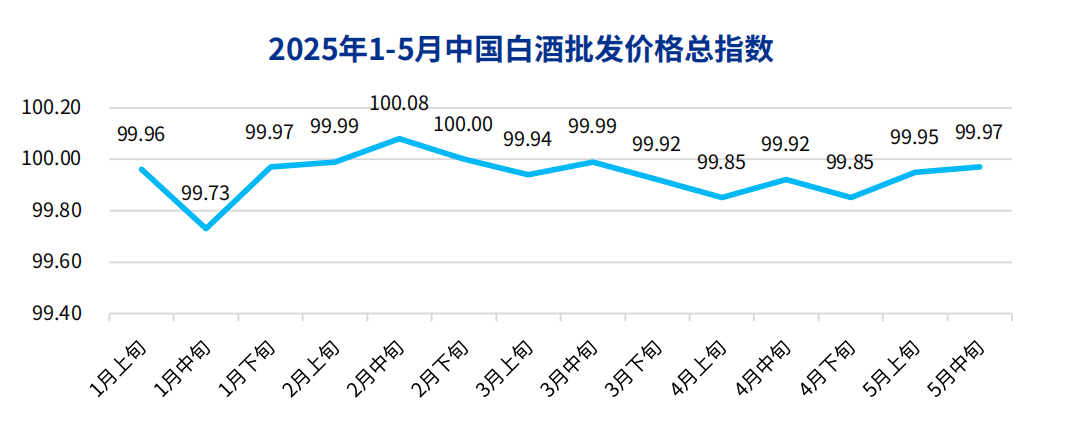
Group 1 - The core viewpoint of the article highlights the deepening policy regulation impacting market sentiment, particularly in the liquor industry, with a notable shift in consumption patterns due to new regulations banning all alcoholic beverages in government settings [2][3] - The white liquor market is currently experiencing a weak performance in wholesale prices due to high inventory levels and economic uncertainties, leading to cautious consumer behavior [3][6] - The adjustment in consumption scenarios is accelerating, with weddings and family gatherings becoming the primary consumption contexts, while business banquets are declining [2][18] Group 2 - The price index for famous liquor, local liquor, and base liquor shows divergence, with local liquor experiencing smaller fluctuations compared to famous brands, which face dual pressures of inventory accumulation and market demand volatility [5][11] - Major liquor companies are implementing price adjustments to cope with inventory pressures, but these measures have not significantly alleviated the inventory burden, which has increased to 168.39 billion yuan, a year-on-year rise of 19.29 billion yuan [6][11] - The competitive landscape is evolving, with the top six brands capturing 87.6% of the market share, indicating a trend of "the strong getting stronger" [11][21] Group 3 - The white liquor consumption structure is shifting towards younger demographics, with a significant focus on appealing to younger consumers as traditional consumption patterns change [15][18] - The market is witnessing a cautious outlook, with over 80% of distributors prioritizing cash flow preservation in their business strategies for the second half of 2025 [23] - Companies are focusing on core products and innovation, with 64.9% of firms concentrating resources on core offerings while also developing new products to attract consumers [21][23]
水井坊稳价出“重拳”!臻酿八号500ml装全渠道停货,严肃查处回收违规流通产品
Mei Ri Jing Ji Xin Wen· 2025-07-08 11:55
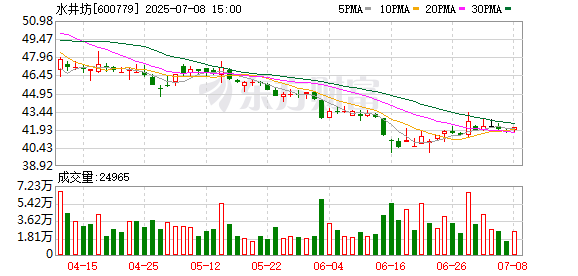
Group 1 - The core point of the article is that Sichuan Shui Jing Fang Co., Ltd. has taken significant measures to address market disruptions, including halting sales of its key product, Zhen Niang No. 8, to stabilize pricing and restore market confidence [2][3] - The company has implemented a "first punch" by stopping the sales of Zhen Niang No. 8 500ml across all channels until further notice, as this product contributes over 50% of the company's annual revenue [2] - The "second punch" involves strict control over e-commerce pricing policies to maintain a stable pricing system, including measures for the 520ml version of Zhen Niang No. 8 to support the product's value [2] Group 2 - The "third punch" focuses on investigating and recovering products that are being sold in violation of company policies, with a commitment to "recover as much as possible" from the market [3] - The company has already taken action against customers and individuals who violated policies during the 618 shopping festival, including fines and termination of partnerships [3] - The white liquor industry is currently facing an adjustment period with high channel inventory and sluggish terminal sales, leading to low-price dumping and channel conflicts that have affected industry confidence [3][4] Group 3 - Other liquor companies, such as Wuliangye, Yanghe, and Luzhou Laojiao, have also issued stop-sale notices, indicating a broader industry trend towards stabilizing prices and managing inventory [4] - Yanghe's future channel strategy aims for stable sales, inventory reduction, and price protection, while Wuliangye is expected to reduce output this year [4] - The industry is collectively focusing on ensuring channel profitability and preventing price wars, as highlighted by the statements from various liquor companies [3][4]

国信证券晨会纪要-20250708
Guoxin Securities· 2025-07-08 03:05
Group 1: Automotive Industry - The humanoid robot industry is evolving from product definition to functional realization and commercialization, focusing on software and hardware upgrades and their integration [3][7] - New cycloidal reducers are expected to become a new iteration direction for humanoid robots, offering higher precision and load capacity compared to existing planetary and harmonic reducers [8][9] - The market for new cycloidal reducers in humanoid robots is projected to exceed 14 billion RMB by 2030, driven by advancements in structure, materials, and components [9] Group 2: Chemical Industry - The oil and gas sector is experiencing price fluctuations due to geopolitical tensions and OPEC+ decisions, with Brent crude oil averaging $69.9 per barrel in June 2025, up 5.9 from the previous month [21][22] - The agricultural chemical sector is seeing rising prices for potassium fertilizers and glyphosate, with domestic potassium chloride prices expected to increase by approximately 100 RMB per ton in July 2025 [24][27] - The supply of chlorantraniliprole (Kangkuan) is restricted due to production incidents, leading to price increases in the market [27] Group 3: Real Estate Industry - The real estate market is in a downward trend, with a projected sales decline of 5.8% and a construction drop of 26% for 2025 if no new policies are introduced [18][19] - Companies with strong land reserves and product quality are expected to stand out during the market downturn, with recommendations for firms like China Jinmao and China Resources Land [20] Group 4: Media and Entertainment Industry - The media sector is benefiting from a strong performance in the gaming market, with a 10% year-on-year revenue growth in May 2025 [32] - The release of new films and series during the summer season is anticipated to drive further engagement and revenue, with significant viewership for top series [33] - AI applications in gaming and media are rapidly advancing, with major companies releasing new tools and models to enhance user interaction and content creation [34][36]
痛失“探花”座次董事长辞职,洋河股份业绩承压如何突围?
Sou Hu Cai Jing· 2025-07-08 02:40
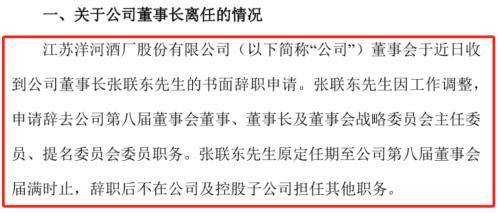
Core Viewpoint - Yanghe Co., Ltd. is undergoing significant leadership changes, with Zhang Liandong resigning as chairman, raising questions about the company's future performance amid declining financial results and increased competition in the liquor industry [2][4][39]. Group 1: Leadership Changes - On July 1, 2024, Zhang Liandong announced his resignation from the position of chairman and other roles at Yanghe Co., Ltd. [2] - Zhang Liandong, who took over from the company's previous leader Wang Yao in February 2021, had a term set to end in April 2027 [3][4]. - Gu Yu has been appointed as the new party secretary of Jiangsu Yanghe Distillery Co., Ltd. on the same day [6]. Group 2: Financial Performance - Yanghe's financial performance has seen a downturn, with 2024 revenues and net profits both declining significantly; revenues fell to approximately 289 billion yuan, a 13% year-on-year decrease, while net profits dropped to around 67 billion yuan, down 33% [9][10][12]. - The company's revenue growth has slowed over the past few years, with 2021-2023 revenues of 254 billion, 301 billion, and 331 billion yuan, reflecting growth rates of 20%, 19%, and 10% respectively [9][12]. - In 2024, Yanghe's revenue ranking in the liquor industry fell from third to fifth, losing its position as a top player for the first time in 14 years [16]. Group 3: Market Challenges - The liquor industry is experiencing intensified competition, particularly in the mid-range and premium segments where Yanghe's main products are concentrated [13]. - The company's mid-to-high-end liquor revenue declined by 15% in 2024, marking a significant drop compared to previous years [13]. - Yanghe's domestic market revenue fell by over 11%, while the external market saw a decline of more than 14% [14]. Group 4: Sales and Marketing Efforts - Yanghe has increased its number of distributors to 8,866, with a notable presence in both domestic and external markets [16]. - The company has invested heavily in sales expenses, amounting to 5.5 billion yuan in 2024, which is significantly higher than competitors like Shanxi Fenjiu and Luzhou Laojiao [19][21]. - Despite high sales expenses, the effectiveness of these investments has been questioned, as the company has not seen corresponding growth in performance [21]. Group 5: Innovation and Product Development - Yanghe's product innovation has been lacking, with R&D expenditures decreasing over the past four years, contrasting with competitors who have increased their R&D investments [27]. - The company's main products, such as "Dream Blue" and "Sky Blue," have been in the market for over 20 years, leading to market saturation [27]. - The need for innovative products is critical as the market for liquor is becoming increasingly competitive, especially with the introduction of lower-alcohol products by competitors [28]. Group 6: Stock Performance and Investor Sentiment - Yanghe's stock price has significantly declined, dropping 74% from its peak of 249.55 yuan per share in January 2021 to 64.80 yuan as of July 7, 2024 [30]. - The number of institutional investors holding Yanghe shares has decreased dramatically from 866 to 48 since 2022, indicating a loss of confidence among investors [33]. - The recent leadership change has sparked interest in whether the new management can reverse the company's fortunes and restore investor confidence [35][39].
平安证券晨会纪要-20250708
Ping An Securities· 2025-07-08 01:37
Group 1: Bond Market Insights - In May 2025, the bond custody scale maintained rapid growth, with a year-on-year increase of 15.1%, and an additional custody scale of 2.3 trillion yuan, which is 940.2 billion yuan more than seasonal increases [7] - Government bonds (including national and local bonds) had a total supply scale of nearly 1.4 trillion yuan in May, with national bonds at 904.1 billion yuan and local bonds at 521.6 billion yuan [7] - Banks and asset management accounts are the main players in bond allocation, with foreign capital and securities firms reducing their holdings [7] Group 2: Macroeconomic Trends - The start of the summer travel season has led to increased offline activities, with indicators showing a rise in travel and entertainment, such as a 18.2% year-on-year increase in the Baidu migration index [3][10] - The production of raw materials is showing marginal recovery, supported by stabilized prices, with various industries experiencing different levels of recovery [9] - The real estate market is seeing a slight decline in new home transactions, with average daily sales in 30 major cities decreasing [10] Group 3: Food and Beverage Industry - The white liquor sector is focusing on low-alcohol products and continuous innovation, with companies like Shui Jing Fang and Yanghe actively developing lower alcohol content products to meet changing consumer preferences [16] - The beverage market is shifting towards functional products, with companies launching new offerings to cater to specific consumer needs, such as electrolyte drinks and health-focused beverages [17] - The snack industry is experiencing strong growth, driven by consumer demand for value and health-conscious options, with companies expanding their product lines [17] Group 4: Pharmaceutical Industry - The introduction of the first commercial health insurance innovation drug directory in 2025 aims to guide innovative drugs back to their clinical value, with a focus on high-innovation and high-clinical-value drugs [18][19] - The collaboration between commercial insurance and the healthcare system is expected to enhance the accessibility and affordability of innovative drugs [18] Group 5: Renewable Energy Sector - The wind power index increased by 1.3%, while the solar energy index rose by 5.76%, indicating a positive trend in the renewable energy market [22] - The central government is emphasizing the development of offshore wind power and addressing issues of low-price competition in the solar industry [23] - Investment opportunities are emerging in offshore wind demand and solar energy, with recommendations for companies like Mingyang Smart Energy and LONGi Green Energy [25] Group 6: Company-Specific Insights - The company is expected to achieve a net profit of 460 million to 490 million yuan in the first half of 2025, reflecting a year-on-year growth of 19% to 26.76% [27] - The company's strategy of fully embracing AI has led to significant improvements in operational efficiency and market competitiveness [28] - The company is focusing on expanding its presence in global markets, particularly in the automotive aftermarket and energy sectors, which is expected to drive future growth [29]