迈瑞医疗

Search documents
双创ETF(588300)开盘跌1.01%,重仓股宁德时代跌1.12%,中芯国际跌2.10%
Xin Lang Cai Jing· 2025-08-26 01:38
Core Viewpoint - The double innovation ETF (588300) opened with a decline of 1.01%, indicating a negative market sentiment towards the fund and its underlying assets [1] Group 1: ETF Performance - The double innovation ETF (588300) opened at 0.782 yuan, reflecting a decrease of 1.01% [1] - Since its establishment on June 25, 2021, the fund has recorded a return of -21.15% [1] - Over the past month, the fund has shown a recovery with a return of 25.13% [1] Group 2: Major Holdings Performance - Major holdings in the ETF include: - Ningde Times: down 1.12% [1] - SMIC: down 2.10% [1] - Mindray: down 0.57% [1] - Haiguang Information: down 3.29% [1] - Zhongji Xuchuang: down 2.00% [1] - Xinyi Sheng: up 0.63% [1] - Cambrian: down 5.41% [1] - Huichuan Technology: up 0.21% [1] - Sunshine Power: down 0.66% [1] - Lanke Technology: down 0.96% [1]





从0.16亿到4711亿 描摹金融强国建设“深圳样本”
证券时报· 2025-08-26 00:56
Core Viewpoint - Shenzhen has evolved into a financial innovation center, significantly contributing to the development of China's financial system and supporting the growth of high-tech industries and small to medium-sized enterprises (SMEs) through a diverse financial ecosystem [1][7][12]. Financial Development in Shenzhen - Over 45 years, Shenzhen's financial sector has grown from an initial value of 0.16 million yuan to 4710.5 billion yuan in 2024, marking an increase of nearly 30,000 times with an average annual growth rate of 26.3% [2]. - The financial industry in Shenzhen has played a crucial role in addressing funding challenges for the special economic zone, fostering an environment conducive to innovation and supporting both large enterprises and SMEs [4][5]. Historical Context and Innovations - The establishment of the first enterprise group financial company in Shenzhen in 1979 marked a significant step in breaking the funding bottleneck, leading to the creation of the first bank founded by an enterprise, China Merchants Bank, in 1987 [5][6]. - Shenzhen's financial landscape was further enhanced by the introduction of the first foreign bank in China, which facilitated foreign trade and currency exchange, laying the groundwork for a robust financial system [6]. Support for High-Tech Industries - Shenzhen's financial sector has transitioned to support high-tech industries, acting as a catalyst for innovation and enabling projects to move from concept to market [9][10]. - The establishment of venture capital firms in the late 1990s, such as Shenzhen Venture Capital, has been pivotal in nurturing technology startups, with nearly 4000 projects incubated since then [10][11]. Financing Solutions for SMEs - The introduction of tailored financial solutions, such as seed loans, has addressed the financing challenges faced by SMEs, allowing for quick access to funds without traditional banking hurdles [11][12]. - As of Q1 2025, the loan balance for technology-based enterprises in Shenzhen reached 1.23 trillion yuan, reflecting a year-on-year growth of 7.9% [11]. Capital Market Dynamics - Shenzhen's capital market, particularly the Shenzhen Stock Exchange and the ChiNext board, has been instrumental in supporting the growth of innovative companies, with recent regulatory changes facilitating the listing of unprofitable firms [15][17]. - The number of A-share listed companies in Shenzhen reached 425, with a total market capitalization of 10.39 trillion yuan, showcasing the city's significant role in the national financial landscape [16]. Conclusion - Shenzhen's financial ecosystem, characterized by resource aggregation, strong technological innovation capabilities, and high openness, is uniquely positioned to support the sustainable development of the local economy, enhancing the resilience and structural quality of its financial services [17].




特区45载:深交所引领资本赋能创新 新兴产业迎价值重估
2 1 Shi Ji Jing Ji Bao Dao· 2025-08-26 00:07
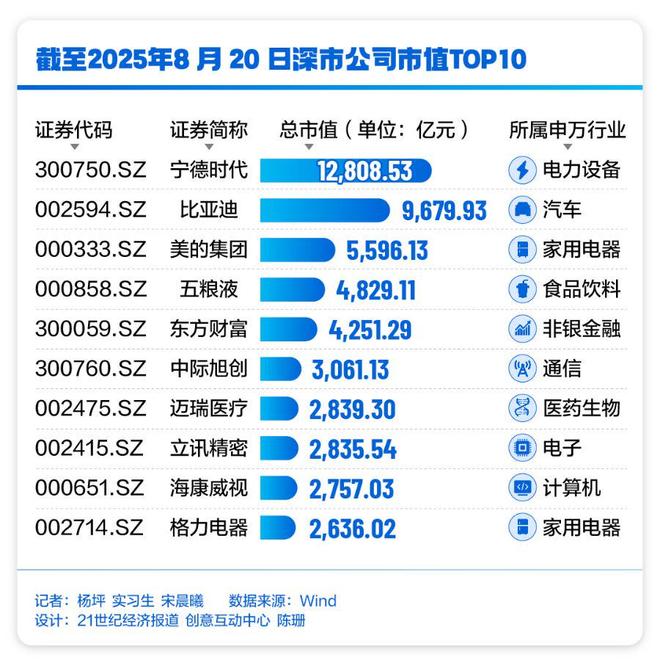
Group 1 - Shenzhen Stock Exchange (SZSE) has become a core force in China's capital market, supporting the development of strategic emerging industries and high-tech enterprises through the implementation of the registration system reform for the ChiNext board [1][2] - As of August 20, 2025, the number of A-share listed companies on SZSE has exceeded 2870, with a total market capitalization surpassing 40 trillion yuan, and nearly 70% of ChiNext companies belong to strategic emerging industries [1][3] - The top five industries by market capitalization on the ChiNext board are electronics, power equipment, biomedicine, robotics, and machinery, reflecting a significant shift towards technology-driven sectors [3][9] Group 2 - The market capitalization of leading companies has changed significantly over the past five years, with CATL surpassing Wuliangye to become the top company at 1.28 trillion yuan, and BYD's market cap increasing by over 90% to 978 billion yuan [4][5] - The overall revenue of 1376 ChiNext listed companies reached 4.03 trillion yuan in 2024, with a net profit of 207.46 billion yuan, indicating a continuous growth trend [11] Group 3 - R&D investment in the Shenzhen market exceeded 760 billion yuan in 2024, a nearly 68% increase from 2020, with companies like BYD and ZTE leading in R&D spending [12][14] - The number of new listings on the ChiNext board under the registration system has reached 577, with a total market capitalization of 4.64 trillion yuan, all in high-tech industries [8][12] Group 4 - The implementation of new policies has led to an increase in mergers and acquisitions, with 121 restructuring proposals disclosed in 2024, and 964 new mergers and acquisitions reported by listed companies [17][18] - The new restructuring regulations simplify the process for companies, allowing for quicker approvals and enhancing the market's capacity for resource allocation [18][19] Group 5 - In 2024, cash dividends from Shenzhen-listed companies reached 575.3 billion yuan, a 41.8% increase, with several companies announcing significant buyback plans [20][21] - The introduction of policies allowing Hong Kong-listed companies to return to the A-share market presents new opportunities for both companies and investors [22][23]
国产创新药靠BD大火,医疗器械能否复制这一路径?
Xin Lang Cai Jing· 2025-08-25 23:51
Group 1 - Business Development (BD) is a significant trend in the domestic medical device industry, with a notable increase in BD transactions for innovative drugs, reaching a total of $60.8 billion in the first half of the year, surpassing the total for 2024 [1] - The Chinese government is promoting the development of domestic medical devices, with a focus on high-end medical equipment and technologies such as medical robots and AI medical devices, as outlined in the announcement released in July 2025 [2] - There is a fundamental difference in the evaluation systems and investment models between innovative drugs and medical devices, with medical devices requiring more extensive market and academic investment for recognition in different markets [3] Group 2 - The current BD model for medical devices is not suitable for a simple license-out approach due to the high dependency on usage scenarios and the experience of practitioners, which complicates the management and control of subsequent clinical trials and registrations [4] - Although the current BD model for innovative drugs may not fit medical devices, there are still BD transactions occurring in the medical device sector, such as the joint venture established between China Medical Device Co., Ltd. and GE Healthcare China [5] - The recently published "Medical Device BD White Paper 2025" indicates that BD in the medical device sector encompasses various transaction activities, including technology licensing, joint development, and strategic investments, with a focus on the actual product deployment [6] Group 3 - The trend in medical device BD is shifting from single transactions to a more structured resource allocation system, with an increasing willingness among investors and partners to engage in the early stages of product development and registration [7]


从“敢闯敢试”到“追求卓越”——企业家眼中的深圳精神
Shang Hai Zheng Quan Bao· 2025-08-25 20:09
Core Perspective - Shenzhen has developed a vibrant economy over 45 years, driven by a spirit of innovation and collaboration among over 580 listed companies, which have significantly contributed to the city's growth [12][13]. Group 1: Pursuit of Excellence - Mindray Medical has become a leader in the medical device industry, emphasizing the importance of innovation and a strong technological foundation, with over 10% of revenue allocated to R&D, amounting to over 4 billion yuan in 2024 [13][14]. - The company has successfully developed several pioneering medical devices, filling gaps in domestic technology and expanding into international high-end markets [14][15]. Group 2: Daring to Explore - Hytera, originally founded as a small trading company, has transformed into a major player in specialized communication, driven by a willingness to innovate and adapt to market demands [16][17]. - The company has expanded its operations internationally and has focused on developing proprietary technology to compete against global giants [17][18]. Group 3: Openness and Inclusiveness - BGI, a leading player in gene technology, relocated to Shenzhen in 2007, benefiting from the city's open and innovative environment, which has facilitated its growth from a research institution to a global leader [20][21]. - The company has successfully developed non-invasive prenatal genetic testing technology, significantly impacting public health services in Shenzhen [22][23]. Group 4: Practicality and Rule of Law - Bawoo Storage has thrived in Shenzhen's market-oriented environment, focusing on semiconductor storage solutions and adapting quickly to market trends, which has led to its successful IPO on the STAR Market [25][26]. - The company has leveraged local venture capital support to navigate industry challenges and has established itself as a key player in the storage industry [26][27]. Group 5: Innovation and Development - Aihuilong has emerged as a leader in the in-vitro diagnostic field, achieving significant technological breakthroughs and expanding its product offerings to cover various medical areas [27][28]. - The company has introduced innovative logistics solutions and is actively pursuing international market expansion, with products available in over 120 countries [30].



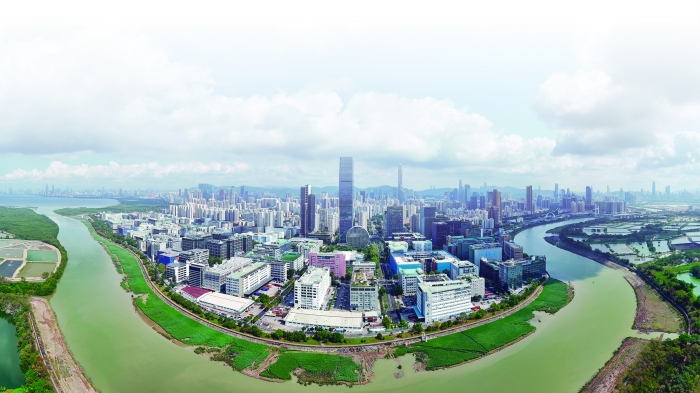
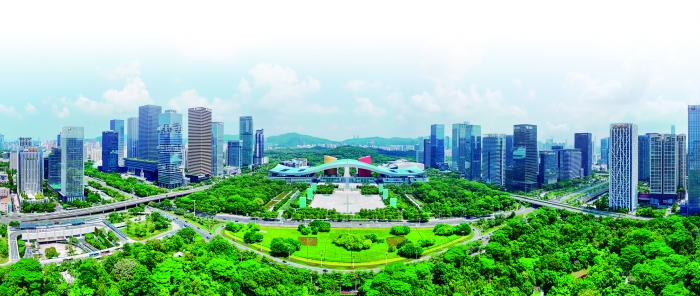
与特区共成长——“深圳奇迹”背后的资本力量
Shang Hai Zheng Quan Bao· 2025-08-25 20:09
Group 1 - Shenzhen has developed a robust financial ecosystem with 24 securities firms, 31 public fund management companies, 14 futures companies, and 2,977 private fund managers, ranking among the top in China [7] - As of April 2025, Shenzhen's private equity and venture capital funds have invested in over 20,000 projects, supporting approximately 12,000 companies nationwide with total investments exceeding 1 trillion yuan [7] Group 2 - Shenzhen's venture capital institution, Shenchuang Investment, was established to support technology companies in overcoming financing challenges, reflecting a dual mission of promoting growth and facilitating market-oriented development [8][9] - Shenchuang Investment has created a fund ecosystem exceeding 480 billion yuan, providing over 300 billion yuan in support to more than 3,500 companies, including over 900 specialized and innovative "little giant" enterprises [9][10] Group 3 - The private sector plays a crucial role in Shenzhen's economy, with approximately 70% of the 400+ A-share listed companies being private enterprises, contributing 80% of the city's technological innovations [11][14] - Shenzhen's industrial landscape is characterized by a complete supply chain in advanced manufacturing, a strong innovation atmosphere, and effective policy-capital collaboration, fostering numerous technology-driven "unicorns" [14] Group 4 - Guoxin Securities has assisted 68 Shenzhen companies in going public, with nearly 70% being technology innovation firms, raising a total of 83.4 billion yuan through 114 equity financing projects [16] - Guoxin Securities has developed a comprehensive financial service model covering the entire lifecycle of companies, from incubation to listing and industry integration [16][17] Group 5 - Songhe Capital, one of China's oldest private venture capital firms, has invested in 208 Shenzhen technology companies, focusing on sectors like artificial intelligence and biomedicine, managing over 30 billion yuan in various funds [18][21] - The firm emphasizes the importance of patience and courage in supporting early-stage technology companies, providing essential funding and guidance throughout their growth journey [19][21]
从0.16亿到4711亿 描摹金融强国建设“深圳样本”
Zheng Quan Shi Bao· 2025-08-25 18:34
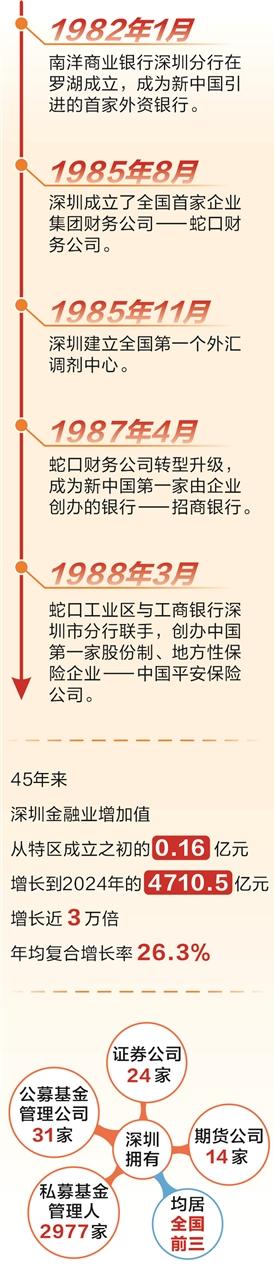
Core Viewpoint - Shenzhen has evolved into a financial innovation hub over the past 45 years, with its financial industry growing from a mere 0.16 billion yuan to 4710.5 billion yuan by 2024, marking a nearly 30,000-fold increase and an average annual growth rate of 26.3% [4][12]. Group 1: Historical Development - Shenzhen's financial industry began with significant challenges, including a lack of funding and financial institutions, which were addressed by establishing the first enterprise group financial company and later the first bank founded by a corporation, China Merchants Bank [6][9]. - The establishment of the first foreign bank in China, Nanyang Commercial Bank, and the first foreign exchange adjustment center in Shenzhen were pivotal in facilitating trade and financial services [7][9]. Group 2: Support for Innovation - Shenzhen's financial sector transitioned to support high-tech industries by providing diverse financial solutions tailored for small and medium-sized enterprises (SMEs), particularly in the technology sector [11][12]. - The introduction of seed loans and other innovative financing methods has significantly improved access to capital for tech startups, enabling them to thrive despite initial challenges [12][13]. Group 3: Capital Market Development - The Shenzhen Stock Exchange and the ChiNext board have played crucial roles in supporting the growth of innovative companies, with recent regulatory changes allowing unprofitable companies to list [13][14]. - The capital market has facilitated significant expansions for listed companies, enabling them to access funding for technological advancements and global market penetration [14][15]. Group 4: Current Financial Landscape - As of mid-2023, Shenzhen hosts nearly 1,600 private equity and venture capital management firms, with a total management scale of 1.41 trillion yuan, reflecting its robust financial ecosystem [12][16]. - The city has become a leader in the number of listed companies and market capitalization, with major firms like Ping An Insurance and BYD contributing to its financial prominence [15][16].
深圳全方位打造“创新之城”
Ren Min Ri Bao· 2025-08-25 09:22
Group 1 - The core viewpoint emphasizes the rapid development of the robotics industry in Shenzhen, driven by innovation and collaboration among enterprises, universities, and research institutions [1][2] - The company, Pashini, has developed a bionic dexterous hand with over a thousand high-precision multi-dimensional tactile sensors, achieving a global leading shipment volume of tactile sensors within just four years [1] - Shenzhen's strategic emerging industries are projected to reach an added value of 1.56 trillion yuan in 2024, accounting for 42.3% of the regional GDP, marking a continuous annual increase of over 100 billion yuan for three consecutive years [1] Group 2 - The "Robot Valley" in Nanshan District, Shenzhen, spans approximately 10 kilometers and has become a global hub for the robotics industry, housing over 74,000 related enterprises with a total output value exceeding 200 billion yuan [2] - Shenzhen's government has implemented policies to support the robotics industry, including a three-year action plan and a "challenge and lead" mechanism, facilitating the rapid growth of the sector [2] - The number of national high-tech enterprises in Shenzhen is expected to exceed 25,000 in 2024, with an average of 12 high-tech firms per square kilometer [3] Group 3 - Shenzhen is enhancing its innovation platforms and focusing on key core technology breakthroughs, such as the efficient production of mussel adhesive protein using synthetic biology technology [4] - The city has established over 4,000 various innovation carriers, including major scientific research infrastructures and national-level innovation centers [4] Group 4 - Shenzhen is leveraging its urban environment as a testing ground for new technologies and products, promoting a dual innovation approach in technology and industry [5][6] - The city has released nearly 200 "city + artificial intelligence" application scenarios, showcasing its commitment to fostering a robust innovation ecosystem [6]
医药生物行业报告(2025.08.18-2025.08.24):国家卫生健康委等四部门联合印发《关于推进耳与听力健康工作的指导意见》,相关行业确定性提高
China Post Securities· 2025-08-25 06:12
Investment Rating - The industry investment rating is "Outperform" [2] Core Insights - The recent issuance of the "Guiding Opinions on Promoting Ear and Hearing Health Work" by multiple government departments is expected to enhance certainty in the related industry [4][14] - The report highlights that approximately 220 million people in China suffer from hearing loss, with a prevalence rate of about 45% among individuals aged 60 and above [5][25] - The medical device sector showed the highest growth this week, increasing by 4.49%, while the overall pharmaceutical sector rose by 1.05%, underperforming the CSI 300 index by 3.13 percentage points [6][27] Summary by Sections Industry Investment Rating - The industry maintains a rating of "Outperform" [2] Recent Developments - The "Guiding Opinions" aim to strengthen ear and hearing health across all age groups, focusing on prevention, early detection, and effective rehabilitation [14][25] - Key targets include increasing the number of ENT practitioners and ensuring that over 95% of county hospitals have ENT departments by 2030 [14][15] Market Performance - The medical device sector experienced the largest increase this week, followed by the vaccine sector at 4.41% and traditional Chinese medicine at 2.86% [6][31] - The pharmaceutical sector has underperformed the CSI 300 index, with a year-to-date increase of 2.71%, lagging behind the index by 2.75 percentage points [27][32] Beneficiary Stocks - Beneficiary stocks include innovative drugs and medical devices, with specific companies such as Innovent Biologics, Kangfang Biotech, and Mindray Medical highlighted for their potential [7][34][40]
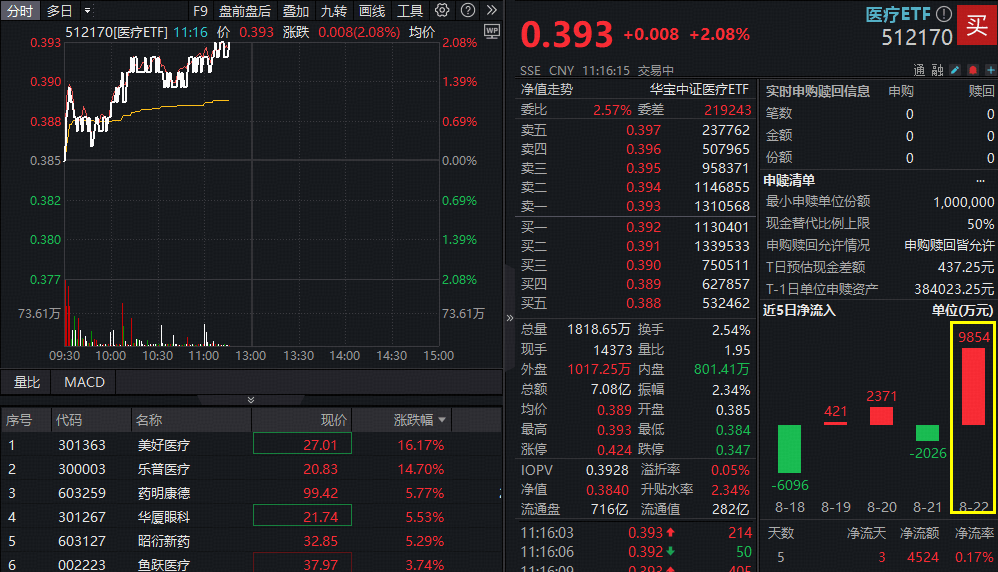
ETF盘中资讯|医疗继续向上,美好医疗、乐普医疗领涨!医疗ETF(512170)涨超2%逼近“924”行情高点,最新单日吸金近亿元
Sou Hu Cai Jing· 2025-08-25 03:37
Core Viewpoint - The medical sector is experiencing significant activity, with the largest medical ETF in A-shares (512170) showing a 2% increase, nearing last year's peak, indicating strong investor confidence in the medical market [1][3]. Group 1: ETF Performance - The medical ETF (512170) reached a peak increase of 2%, with a trading volume exceeding 700 million yuan on the morning of August 25 [1]. - The latest scale of the ETF is 27.94 billion yuan, maintaining a leading position among similar ETFs [1]. - On the previous trading day, the ETF saw a net subscription of 98.54 million yuan, reflecting positive market sentiment towards the medical sector [1]. Group 2: Market Dynamics - Major stocks within the ETF, such as Meihua Medical and Lepu Medical, surged over 15%, while Wu Electric Physiology and other companies experienced declines [1][3]. - The ETF passively tracks the CSI Medical Index, with top-weighted stocks including Mindray Medical, United Imaging Healthcare, and Aier Eye Hospital [3]. Group 3: Policy and Innovation - The National Medical Products Administration announced support for companies to conduct global clinical trials simultaneously, aiming to shorten the drug approval process [3]. - A recent investment cooperation exchange meeting in Shenzhen focused on supporting the development of pharmaceuticals and medical devices [4]. - The establishment of a domestic medical technology innovation zone at the Medical Expo highlighted breakthroughs in domestic technology, with companies like Mindray and Weigao showcasing advanced diagnostic equipment [5]. Group 4: Industry Outlook - CITIC Securities noted that the performance and valuation of the medical device sector are gradually recovering, with recent procurement policies being optimized [5]. - The medical device industry is expected to benefit from policy easing, procurement clearance, and strategic transformations, with internationalization, technological innovation, and mergers and acquisitions becoming key growth paths [5].