博时基金

Search documents
博时基金王祥:黄金再次于3400美元区域遇阻回落,投资者兑现黄金收益
Xin Lang Ji Jin· 2025-08-19 09:18
Market Overview - The gold market faced resistance around $3,400 last week due to significantly higher-than-expected July PPI data [1] - The meeting between Trump and Putin increased the likelihood of a resolution to the Russia-Ukraine conflict, which may weaken geopolitical support for gold [2][3] - Domestic investors continued to realize gains in gold amid a favorable equity market backdrop [1] Economic Indicators - The U.S. July CPI remained steady at 2.7% year-on-year, matching the previous value, while the core CPI rose from 2.9% to 3.1%, supported by rising service costs [1] - The July PPI surged to 3.3% year-on-year, significantly exceeding the market expectation of 2.5%, with core PPI also rising to 3.7% [3] - The increase in PPI indicates potential upward pressure on inflation, with expectations for continued inflationary trends due to tariffs on imported goods [1][3] Monetary Policy - U.S. Treasury Secretary Becerra suggested a potential rate cut of over 150 basis points, with an initial cut of 50 basis points expected in September [2][3] - This statement reflects increasing political pressure on the Federal Reserve from the Trump administration [2] Geopolitical Developments - The recent U.S.-Russia summit in Alaska has marginally increased expectations for a ceasefire in Ukraine, with further diplomatic engagements planned [2][3] - Ukrainian President Zelensky is scheduled to visit Washington, indicating ongoing negotiations for a peace framework [3] Investment Trends - Following the U.S. clarification that gold would not be subject to tariffs, COMEX gold net longs were reduced, while European and American gold ETFs saw net inflows [2] - The increase in mini trust investments by individual investors outpaced that of SPDR, indicating a shift in investment dynamics [2]
历史新高!突破4.8万亿
中国基金报· 2025-08-19 06:37
Core Viewpoint - The article highlights the significant growth of the ETF market in China, with total ETF assets surpassing 4.8 trillion yuan, reflecting increased confidence and willingness of institutional and individual investors to enter the market [2] Group 1: Long-term Investment Strategy - The "long money, long investment" strategy aligns with the "three investment" philosophy, emphasizing the need for stability in the market and promoting a virtuous cycle between the capital market and the real economy [4] - Regulatory support through policies like the "National Nine Articles" and the "High-Quality Development Action Plan for Index Investment" aims to guide long-term capital into the market [4][5] - Investor education initiatives have been crucial in promoting long-term investment concepts, with significant outreach efforts reaching millions of clients [4] Group 2: ETF Market Dynamics - Broad-based ETFs tracking major indices like the CSI 300 and the STAR Market have become primary tools for long-term capital allocation, showing resilience during market adjustments [6] - The share of institutional investment in broad-based ETFs has increased significantly, indicating a shift towards long-term strategies [6] - The rise of thematic and sector-specific ETFs is driving capital towards strategic emerging industries, aligning with national priorities [7] Group 3: Bond ETFs and Market Stability - Bond ETFs have seen explosive growth, exceeding 500 billion yuan, serving as a stabilizing force in investor portfolios amid declining interest rates [8] - The demand for bond ETFs reflects strong long-term capital allocation needs among investors [8] Group 4: Institutional Investor Influence - Institutional investors have become a cornerstone of the ETF ecosystem, with their holdings in equity ETFs exceeding 40% by the end of 2024 [10] - The penetration rates of institutional investors in stock and bond ETFs have reached 62.14% and 84.9%, respectively, indicating a robust shift towards long-term investment [10] Group 5: Future Outlook - The deepening of personal pension systems and expansion of the third pillar of pensions will continue to broaden the supply of long-term capital [13] - ETFs are expected to play a crucial role in aligning capital with national innovation strategies, particularly in hard technology sectors [13] - The article envisions a resilient and vibrant capital market driven by patient capital flowing into strategic areas like hard technology and green initiatives [13]


历史新高!突破4.8万亿
Zhong Guo Ji Jin Bao· 2025-08-19 06:37
Group 1 - The core viewpoint of the articles highlights the significant growth of the ETF market, which has surpassed 4.8 trillion yuan, reflecting increased confidence and willingness of institutional and individual investors to enter the market [1][2][7] - The "long money long investment" strategy is gaining traction, aligning with the "three investment" philosophy, which emphasizes stable market conditions and a positive cycle between capital markets and the real economy [2][9] - Regulatory support through policies such as the "National Nine Articles" and the "High-Quality Development Action Plan for Index Investment" is facilitating the entry of long-term capital into the market [2][3] Group 2 - Broad-based ETFs tracking major indices like the CSI 300 and the STAR Market are becoming primary tools for long-term capital allocation, demonstrating resilience during market adjustments [3][4] - The rise of thematic and sector-specific ETFs is directing funds towards strategic emerging industries, such as hard technology and new energy, thereby enhancing the development of new productive forces [4][5] - Bond ETFs have seen explosive growth, exceeding 500 billion yuan, serving as a stabilizing force in investors' asset allocation amidst a declining interest rate environment [5][6] Group 3 - Institutional investors are increasingly becoming the backbone of the ETF ecosystem, with their holdings in stock ETFs surpassing 40% by the end of 2024, indicating a shift towards long-term investment strategies [7][8] - The low-cost nature of ETFs reduces friction in long-term investments, while their transparency enhances investors' understanding of value logic, effectively connecting long-term capital with quality assets [8][10] - The future of the ETF market is expected to expand with the deepening of personal pension systems and the integration of capital with technological innovation, promoting sustainable growth in strategic sectors [9][10]
209只“翻倍”,主动权益基金“满血复活”
Zhong Guo Jing Ji Wang· 2025-08-19 06:01
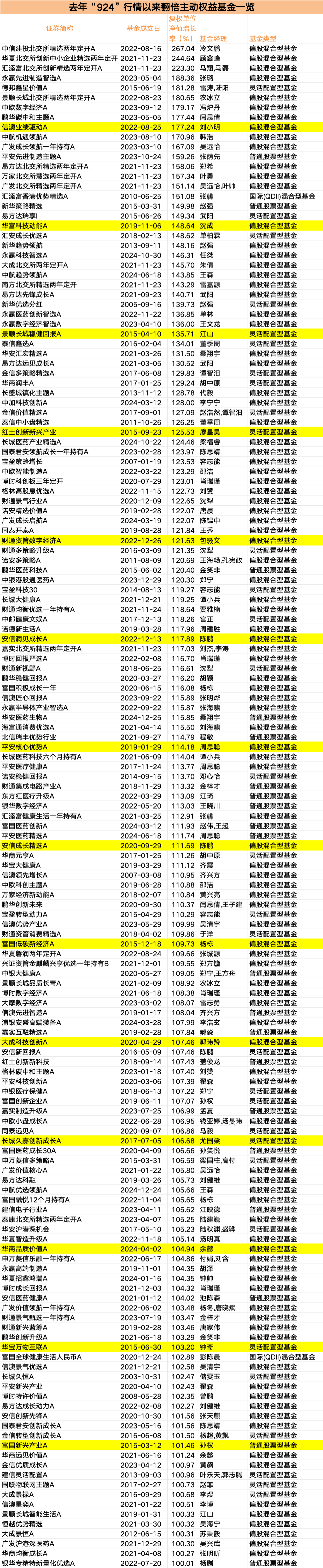
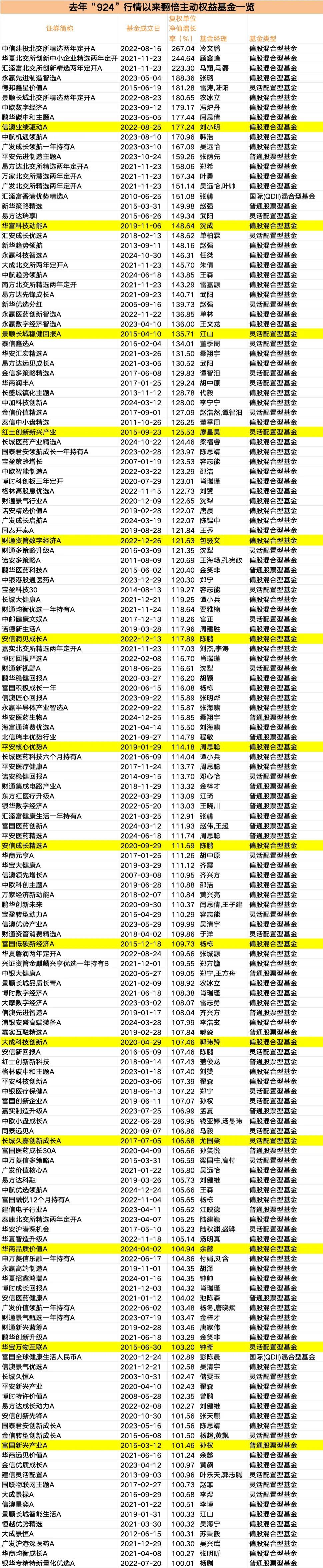
Group 1 - The A-share and Hong Kong stock markets have been on a bullish trend since the "9·24" market rally, with significant improvements in market sentiment [1][2] - Since July this year, the Hang Seng Index has surpassed 25,000 points, while the Shanghai Composite Index has broken through key levels of 3,600 and 3,700 points [2] - A total of 209 public funds have seen their unit net value growth rates double since the "9·24" rally, with 155 of these being active equity funds, indicating a strong recovery in this category [4][13] Group 2 - Active equity funds have shown a remarkable ability to generate excess returns, outperforming index funds significantly, with the best-performing active fund exceeding the highest index fund return by over 90 percentage points [2][13] - The North Exchange theme funds have emerged as leaders in performance, with 11 out of 124 doubling funds being North Exchange theme funds, and the North 50 Index has surged over 162% since September 2024 [6][13] - Various sectors such as dividends, artificial intelligence, banking, and innovative pharmaceuticals have seen active performance, with funds targeting these areas achieving substantial returns [6][7] Group 3 - The average return of active equity funds is now comparable to that of index funds, marking a shift in performance dynamics [3][15] - Passive index funds have not matched the performance of active funds, with only 54 index funds achieving double returns since the "9·24" rally, indicating a stronger recovery in active management [13][15] - The overall performance of the public fund industry has improved, with the average returns of ordinary stock funds and mixed funds showing significant growth since the "9·24" rally [15]
209只“翻倍”,这类产品“满血复活”
Zhong Guo Ji Jin Bao· 2025-08-19 05:43
Core Viewpoint - Since the "9·24" market rally last year, both A-shares and Hong Kong stocks have continued to rise, with significant improvements in market sentiment [1][2]. Group 1: Market Performance - Since July this year, the market has shown stronger bullish trends, with the Hang Seng Index surpassing 25,000 points and the Shanghai Composite Index breaking through key levels of 3,600 and 3,700 points [2]. - As of August 18, 209 public funds have doubled their net asset value since the "9·24" rally, with 155 of these being active equity funds, significantly outperforming index funds [4][2]. - The best-performing active equity fund has outperformed the highest-gaining index fund by over 90 percentage points, while the top active fund from the Beijing Stock Exchange has a performance gap of nearly 150 percentage points compared to the corresponding index fund [2][13]. Group 2: Fund Performance - The average return of active equity funds is now comparable to that of index funds, indicating a resurgence in their performance [3][15]. - Among the 124 funds that have doubled, 11 are themed funds from the Beijing Stock Exchange, which have dominated the performance rankings [6][5]. - The Beijing Stock Exchange's representative index, the North China 50, has seen a cumulative increase of over 162% since September last year, driving strong performance in related themed funds [7]. Group 3: Sector Trends - Various sectors such as dividends, artificial intelligence, banking, and innovative pharmaceuticals have shown active performance, with funds focused on these areas yielding substantial profits [7]. - Specific funds like Yongying Advanced Manufacturing and Debang Xinxing Value have reported net asset value increases exceeding 170%, while several others have surpassed 150% [7]. Group 4: Comparison with Passive Funds - In contrast to the active funds, only 54 stock index funds (including QDII funds) have doubled their returns since the "9·24" rally, indicating that the number of doubling passive funds is significantly lower than that of active funds [13]. - The performance of passive index funds has not matched that of active equity funds, highlighting a shift in investor preference back towards active management as market conditions improve [15][16].
瑞银上调2026年黄金目标价,黄金ETF基金(159937)近1月日均成交6.71亿元,杰克逊霍尔全球央行年会将至备受世界瞩目
Sou Hu Cai Jing· 2025-08-19 03:52
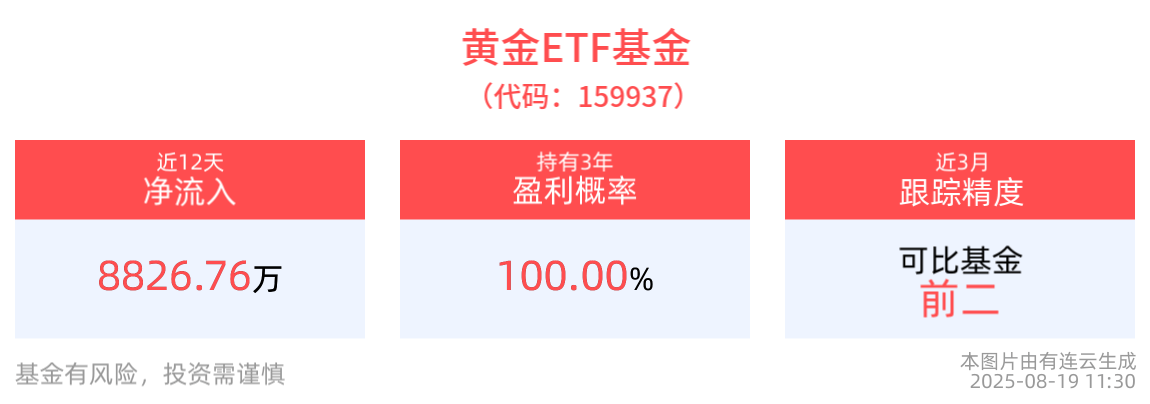
Core Viewpoint - The gold ETF fund is experiencing fluctuations, with a recent decline of 0.20% and a 3.34% increase over the past three months, indicating a mixed short-term performance while long-term prospects remain positive due to macroeconomic factors [2][3]. Market Performance - As of August 19, 2025, the gold ETF fund's latest price is 7.39 yuan, with a trading volume of 1.40 billion yuan and a turnover rate of 0.5% [2]. - The fund has seen an average daily trading volume of 6.71 billion yuan over the past month, ranking it among the top two comparable funds [2]. Economic Indicators - The upcoming Jackson Hole Global Central Bank Conference is expected to draw significant investor attention, particularly regarding Federal Reserve Chairman Jerome Powell's speech, which may provide insights into future monetary policy [2]. - UBS has raised its gold price forecasts, projecting a target price of $3,600 per ounce by March 2026 and $3,700 per ounce by June 2026, citing factors such as anticipated interest rate cuts and a weaker dollar [2]. Investment Trends - Short-term expectations indicate a strong fluctuation in gold prices, with medium-term interest rate cuts likely to anchor prices [3]. - The gold ETF fund has experienced a net outflow of 13.31 million yuan recently, but has attracted a total of 88.27 million yuan over the past 12 trading days [3]. Fund Performance Metrics - The gold ETF fund has achieved a net value increase of 75.11% over the past five years, ranking it among the top two comparable funds [3]. - Historical performance shows a maximum monthly return of 10.62% and a 100% probability of profit over a three-year holding period [3]. Risk and Fee Structure - The management fee for the gold ETF fund is 0.50%, and the custody fee is 0.10% [5]. - The fund has a tracking error of 0.002% over the past three months, indicating high tracking precision compared to similar funds [5].
ETF资金榜 | 香港证券ETF(513090)资金加速流入,国债、券商相关ETF吸金居前-20250818
Sou Hu Cai Jing· 2025-08-19 02:10
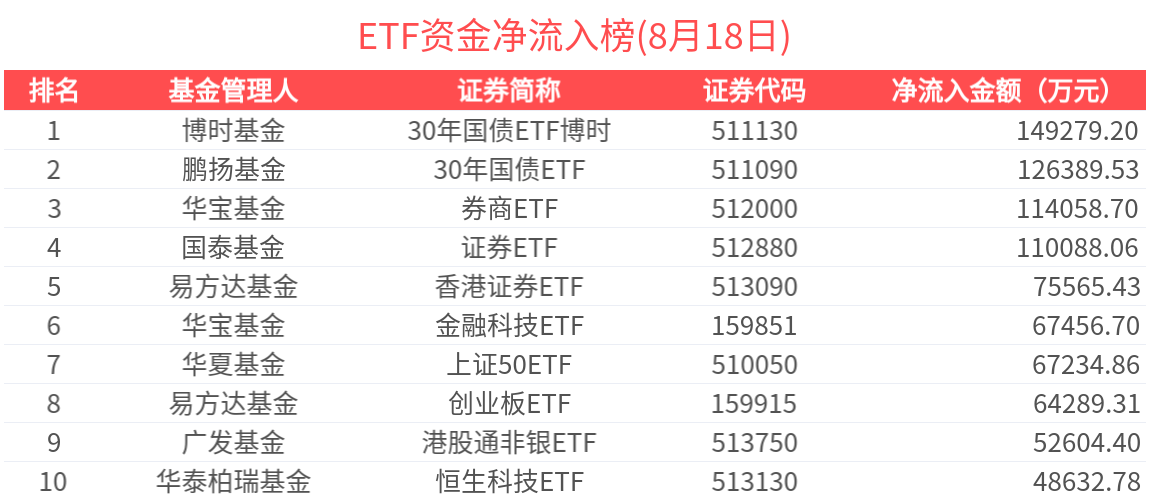
Core Insights - On August 18, 2025, a total of 316 ETFs experienced net inflows, while 483 ETFs saw net outflows, indicating a significant disparity in investor sentiment towards different funds [1] - The top five ETFs with net inflows exceeding 100 million yuan included the 30-Year Treasury Bond ETF from Bosera, which attracted 1.49 billion yuan, and the Broker ETF, which saw inflows of 1.14 billion yuan [3] - Conversely, 36 ETFs had net outflows exceeding 100 million yuan, with the Huabao Tianyi ETF leading the outflows at 2.17 billion yuan [5] Inflow Summary - The Hong Kong Securities ETF led the continuous inflow category, with 28 consecutive days of inflows totaling 13.53 billion yuan, bringing its total assets to 28.27 billion yuan [7] - Other notable ETFs with significant inflows included the Hong Kong Internet ETF and the Hong Kong Innovative Drug ETF, with cumulative inflows of 14.79 billion yuan and 410.3 million yuan, respectively [7] Outflow Summary - The continuous outflow category was dominated by the CSI A500 ETF, which experienced 45 consecutive days of outflows totaling 2.98 billion yuan, leading to a rapid decline in its asset size [9] - Other ETFs with significant outflows included the A500 ETF and the A50 ETF, with cumulative outflows of 2.67 billion yuan and 485.51 million yuan, respectively [9] Recent Trends - Over the past five days, 106 ETFs recorded net inflows exceeding 100 million yuan, with the top inflow being the Sci-Tech Bond ETF, which saw inflows of 3.92 billion yuan [10] - In contrast, 113 ETFs experienced net outflows exceeding 100 million yuan, with the Sci-Tech 50 ETF leading the outflows at 8.09 billion yuan [10]
信用债ETF总规模下降,平安公司债ETF回撤控制稳定备受关注
Sou Hu Cai Jing· 2025-08-19 01:52
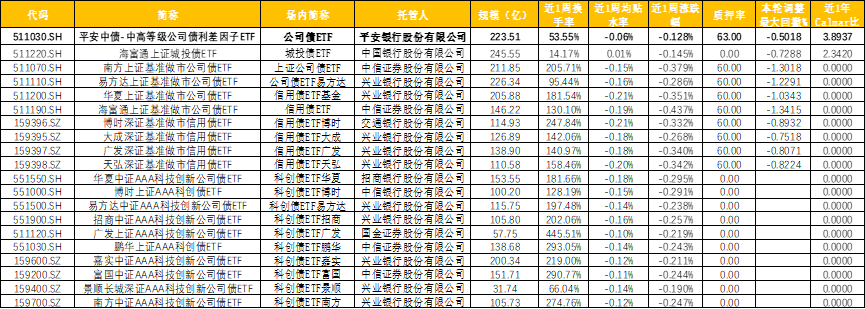
Group 1 - The total scale of credit bond ETFs is 347.6 billion yuan, with a daily decrease of 800 million yuan [1] - The median weighted duration is 3.9 years, indicating the average time until cash flows are received [1] - The overall trading volume is 68.4 billion yuan, with an average single transaction amount of 760,000 yuan [1] Group 2 - The median yield is 1.90%, and the median discount rate is -33.8 basis points [1] - The Ping An Company Bond ETF (511030) has the best performance in controlling drawdown this year, with a net value that remains stable [1] - The data shows various ETFs with their respective scales, weekly performance, and drawdown metrics, highlighting the performance of different funds [1]
超2000只权益类基金净值创历史新高
证券时报· 2025-08-19 00:49
Core Viewpoint - The A-share market has reached a nearly 10-year high, with significant increases in market confidence and trading activity, leading to a strong performance of equity funds [1][4]. Group 1: Market Performance - As of August 18, over 96% of equity funds have achieved positive returns this year, with more than 20 funds doubling their performance and over a thousand funds exceeding 30% returns [2]. - The latest index for equity funds has reached a three-year high, with over 2,000 equity funds hitting historical net value highs in August [3]. Group 2: Market Drivers - Fund companies attribute the upward trend in the equity market to factors such as ample liquidity, gradual recovery in corporate earnings, and the influx of new funds [4]. - The increase in institutional accounts and the return of foreign capital are seen as key drivers for the market's strong performance [5]. Group 3: Future Outlook - Fund managers remain optimistic about future investment opportunities, particularly in sectors like AI, fintech, defense, semiconductors, and robotics [6]. - The market is expected to exhibit a "slow bull" pattern, supported by policy measures and improving corporate earnings, contrasting with the rapid growth seen in previous bull markets [6][7].

超1000只基金年内回报已超30%!三大资金共振铸就反弹行情
Zheng Quan Shi Bao Wang· 2025-08-18 23:57
Core Viewpoint - The A-share market is experiencing a significant rebound, with the Shanghai Composite Index reaching a nearly 10-year high and the total market capitalization exceeding 100 trillion yuan, indicating a strong recovery in market confidence and fund activity [1][2]. Fund Performance - Over 96% of equity funds have achieved positive returns this year, with more than 20 funds doubling their performance and over 1,000 funds exceeding 30% returns [2]. - The latest index for equity funds has reached a nearly 3-year high, with over 2,000 equity funds hitting historical net value highs in August [2]. Market Drivers - Key factors driving the upward trend in the equity market include ample liquidity, gradual recovery in corporate earnings, and the influx of new funds [3]. - Institutional funds, particularly from insurance and private equity, are seen as core incremental capital, with new account openings by institutions reaching a yearly high in July [3]. - External risks have eased, and favorable policies have created a supportive environment for equity assets [3]. Investor Sentiment - The margin trading balance has risen above 2 trillion yuan, reflecting strong bullish sentiment among investors and their willingness to leverage for higher returns [4]. - Recent data shows that over 30 new active equity funds have been established in the past month, with many entering the investment phase, indicating proactive fund management [6]. Future Outlook - Analysts express optimism about future investment opportunities, particularly in sectors such as AI, fintech, defense, semiconductors, and robotics [6][7]. - The market is expected to transition into a "slow bull" phase, driven by policy support and improving corporate earnings, similar to past recovery periods [7]. - The current market environment is characterized by a combination of internal liquidity and external capital inflows, with a focus on sectors that are likely to benefit from ongoing economic reforms [7]. Market Characteristics - The market is anticipated to continue its upward trajectory, albeit with a potential for volatility, as it may reflect a "slow bull" rather than a rapid surge [8]. - Caution is advised against the risks associated with a "fast bull" market, which could undermine long-term investor returns [8].