
中国移动

Search documents
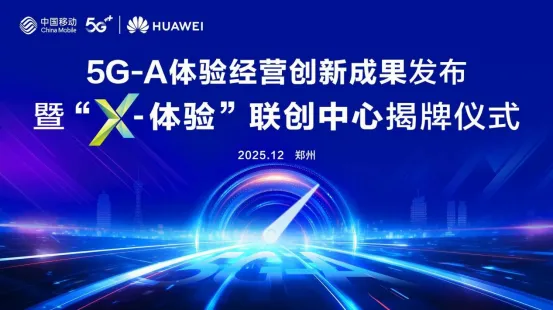
河南移动携手华为成立“X-体验”联创中心发布5G-A体验经营创新成果
Xin Hua Wang· 2025-12-17 03:59
Core Viewpoint - The collaboration between Henan Mobile and Huawei aims to enhance 5G-A experience and innovation, marking a shift from basic connectivity to a focus on customer experience in the telecommunications sector [8][11]. Group 1: Event Overview - The event held on December 12 showcased the launch of the "X-Experience" co-creation center and featured discussions on the evolution of 5G-A technology and innovative operational paths [1]. - The event utilized a hybrid format with both offline and online participation, gathering representatives from various sectors including operators, equipment manufacturers, and industry partners [1]. Group 2: Technological Innovations - The "X-Experience" interactive display area highlighted the latest innovations aimed at upgrading customer experiences through real business scenarios such as video streaming and cloud uploads [3]. - The demonstration focused on the "Experience Interactive Entry," which has been implemented on the Huawei Mate 80, allowing for visual and purchasable network differentiation rates, thus providing customized service entry points [5][10]. Group 3: Industry Development Discussion - Henan Mobile's Vice General Manager Wang Ying emphasized the transition of communication services from basic connectivity to a customer experience-driven model, aiming to enhance service quality through technological innovation [8]. - The company serves over 65 million customers in the province and has established the largest 5G-A premium network in Henan, with 19,000 5G-A cell sites [8]. Group 4: Key Achievements - Henan Mobile has achieved continuous 5G-A network coverage within the fourth ring of Zhengzhou and has created a premium demonstration area, leading the nation in key network capabilities [9]. - The number of 5G-A users has reached 2 million, positioning Henan Mobile among the top in the country, with the "Experience 2.0" service set to provide enhanced network products and direct service access [9]. Group 5: Future Collaboration - The unveiling of the "X-Experience Co-Creation Center" signifies a new phase in the partnership between Henan Mobile and Huawei, focusing on transforming service standards and accelerating the commercialization of innovative solutions [11]. - Both companies plan to deepen ecological cooperation and promote the widespread adoption of intelligent services, aiming to unlock the commercial potential of 5G-A technology [11].


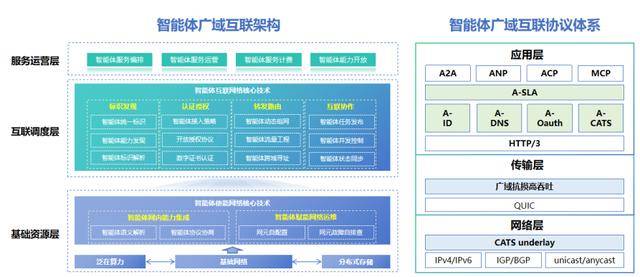
AI WAN:从智算互联到智能体互联,开启IP广域网创新之路
Sou Hu Cai Jing· 2025-12-17 03:15
Core Insights - The rapid development of artificial intelligence (AI) technology is driving the emergence of innovative applications, which pose new challenges for computing power and network infrastructure [1][2] - The transition from "connection empowerment" to "computing power empowerment" and now to "AI empowerment" in IP wide area networks (WAN) is being facilitated by national policies supporting the development of computing power and AI technologies [1][2] Group 1: AI WAN Development - AI WAN is emerging as a high-intelligence, high-reliability, and high-security IP wide area network, integrating computing power networks with AI [2] - The need for a new type of AI network infrastructure is driven by the demand for intelligent services and applications, such as AI model training and inference [2] Group 2: Network Requirements for Intelligent Computing - Intelligent computing networks require lossless, ultra-high throughput, and ultra-low latency networks to address the challenges of large-scale GPU cluster interconnection [3] - The construction of a lossless network connection is essential, as even a 2% packet loss can significantly reduce throughput [3] - High throughput transmission mechanisms are necessary to handle the petabyte-scale data transmission in intelligent computing networks [3] Group 3: Transformation of Internet Paradigms - The advent of AI agents represents a paradigm shift in the development of wide area networks, enabling proactive demand discovery and resource collaboration [4] - The concept of an "intelligent agent internet" is proposed, which focuses on efficient connections and interactions among users, agents, and tools [4] Group 4: New Interaction Paradigms - The intelligent agent internet will give rise to a new interaction paradigm, termed multi-modal user interface (MUI), which integrates various sensory modalities for more natural human-machine interaction [5] - The collaboration model will shift from human operation to human decision-making, with intelligent agents executing tasks autonomously [5] Group 5: Protocol Innovations - Innovations in the transport layer are necessary to enhance throughput performance in wide area intelligent computing networks, as traditional TCP protocols face limitations [6] - The introduction of computing power routing technology aims to optimize network and computing resource states for low-latency scheduling [7] - G-SRv6 technology addresses the limitations of native SRv6, enhancing transmission efficiency and scalability for intelligent computing networks [8][9] Group 6: Physical Layer Innovations - Hollow-core fiber technology is identified as a core technology for AI wide area interconnection, offering significant advantages in reducing transmission latency and increasing capacity [10] Group 7: Application Layer Protocol Innovations - The intelligent agent internet will require new application layer protocols to manage diverse traffic types and enhance operational efficiency [11] - Key components include identity resolution, authentication, and routing mechanisms to ensure secure and efficient interactions among agents [13][14][15] Group 8: Network Management Enhancements - The integration of intelligent agents into network management can significantly improve efficiency and reliability by automating the translation of user intentions into network actions [16] Conclusion - The AI technology landscape is entering a phase of continuous business model evolution, necessitating further development of wide area networks to fully realize their potential [17] - The focus should be on integrating new productivity factors, enhancing performance metrics, and fostering new business models centered around AI training and intelligent agent interconnection [17] - The global landscape for intelligent computing networks and intelligent agent internet technology is evolving, with a need for continued development of autonomous AI WAN technologies [18]
每日投资策略-20251217
Zhao Yin Guo Ji· 2025-12-17 02:09
Global Market Overview - The Hang Seng Index closed at 25,235, down 1.54% for the day but up 25.80% year-to-date [1] - The Shanghai Composite Index closed at 3,825, down 1.11% for the day and up 14.11% year-to-date [1] - The US markets showed slight declines, with the Dow Jones down 0.62% and the S&P 500 down 0.24%, while the Nasdaq increased by 0.23% [1] Hong Kong Stock Performance - The Hang Seng Financial Index closed at 47,342, down 1.32% for the day and up 34.74% year-to-date [2] - The Hang Seng Real Estate Index closed at 17,540, down 1.71% for the day and up 17.62% year-to-date [2] - The Hang Seng Technology Index saw a decline of 1.74% for the day, with a year-to-date increase of 20.91% [1][2] Sector Performance in China - The Chinese stock market experienced a pullback, with materials, conglomerates, and consumer discretionary sectors leading the declines, while healthcare, staples, and telecommunications sectors outperformed [3] - Southbound capital saw a net inflow of 0.82 million HKD, with notable net purchases in Xiaomi, Xpeng Motors, and Tencent, while Alibaba, China Mobile, and SMIC saw the most significant net sales [3] Economic Indicators - The Central Financial Office of China emphasized the need to expand domestic demand and continue a moderately loose monetary policy, with expectations for investment and consumption growth to recover next year [3] - The Eurozone's manufacturing PMI showed accelerated contraction, with Germany experiencing its worst performance in 10 months, while France unexpectedly returned to expansion [3] US Market Insights - The US stock market saw slight declines, particularly in energy, healthcare, and industrial sectors, while technology, discretionary, and communication services sectors performed relatively well [3] - Tesla's stock reached a historic high, driven by optimistic expectations for autonomous driving commercialization, although it faced a post-market decline due to regulatory issues [3] - The US added more non-farm jobs than expected in November, but the unemployment rate unexpectedly rose to a four-year high, which may not significantly impact the Federal Reserve's interest rate path [3]
12月16日港股通净买入0.82亿港元





Zheng Quan Shi Bao Wang· 2025-12-17 01:36
Market Overview - On December 16, the Hang Seng Index fell by 1.54%, closing at 25,235.41 points, with a total net inflow of southbound funds through the Stock Connect amounting to HKD 0.82 billion [1][3] Trading Activity - The total trading volume for the Stock Connect on December 16 was HKD 89.399 billion, with a net inflow of HKD 0.82 billion. Specifically, the Shanghai Stock Connect had a trading volume of HKD 51.919 billion with a net outflow of HKD 1.106 billion, while the Shenzhen Stock Connect had a trading volume of HKD 37.480 billion with a net inflow of HKD 1.188 billion [1][2] Active Stocks - In the Shanghai Stock Connect, Alibaba-W had the highest trading volume at HKD 71.36 billion, followed by Tencent Holdings and Xiaomi Group-W with trading volumes of HKD 23.41 billion and HKD 19.99 billion, respectively. Tencent Holdings had the highest net inflow of HKD 0.63 billion, while Alibaba-W experienced the largest net outflow of HKD 1.012 billion [1][2] - In the Shenzhen Stock Connect, Alibaba-W also led with a trading volume of HKD 42.60 billion, followed by Tencent Holdings and Xiaomi Group-W with HKD 29.11 billion and HKD 14.09 billion, respectively. Xiaomi Group-W had the highest net inflow of HKD 0.459 billion, while Tencent Holdings faced the largest net outflow of HKD 0.432 billion [2] Stock Performance - The closing prices for key stocks on December 16 showed declines: Alibaba-W fell by 2.96%, Tencent Holdings decreased by 1.08%, and Xiaomi Group-W dropped by 2.25% [1][2]
中国石油股份近一个月首次上榜港股通成交活跃榜
Zheng Quan Shi Bao Wang· 2025-12-17 01:21
Core Viewpoint - On December 16, China Petroleum & Chemical Corporation (Sinopec) made its first appearance on the Hong Kong Stock Connect active trading list in a month, amidst a total trading volume of 319.39 billion HKD for active stocks, which accounted for 35.73% of the day's total trading amount [1] Group 1: Trading Activity - The total trading volume for Hong Kong Stock Connect on December 16 was 319.39 billion HKD, with a net selling amount of 13.29 billion HKD [1] - Alibaba Group (BABA) led the trading volume with 113.96 billion HKD, followed by Tencent Holdings (TCEHY) at 52.52 billion HKD and Xiaomi Corporation (XIACF) at 34.07 billion HKD [1] - The most frequently listed stocks in the past month were Alibaba and Tencent, each appearing 22 times, indicating strong interest from Hong Kong Stock Connect investors [1] Group 2: Individual Stock Performance - Sinopec's trading volume on December 16 was 6.50 billion HKD, with a net selling of 3.31 billion HKD, and the stock closed down by 1.35% [1] - Tencent Holdings had a trading volume of 52.52 billion HKD with a net buying of 1.98 billion HKD, closing down by 1.08% [1] - Xiaomi Corporation recorded a trading volume of 34.07 billion HKD with a net buying of 6.33 billion HKD, closing down by 2.25% [1] - Alibaba's trading volume was 113.96 billion HKD with a net selling of 6.32 billion HKD, closing down by 2.96% [1]


上证50VS道琼斯:中美传统行业差距抹平,未来分野唯在科技
3 6 Ke· 2025-12-17 00:31
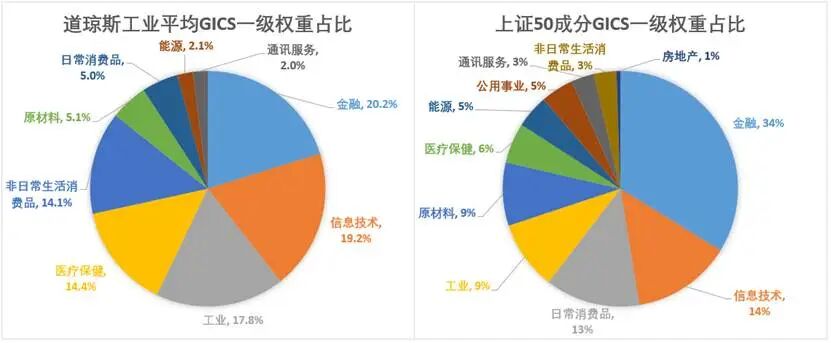
Group 1 - The article compares the valuation and fundamental changes between the Nasdaq and the Hong Kong stock market's Chinese internet companies over the past three years, highlighting the differences in pricing logic and relative performance of the Dow Jones Industrial Average and the Shanghai Stock Exchange 50 Index [1] - The Dow Jones Industrial Average consists of 30 stocks across 27 GICS sectors, with only three companies in the same sub-industry, while the Shanghai Stock Exchange 50 Index has 50 stocks across 26 GICS sectors, with nearly half not being the only representative in their respective industries [2] - The financial sector holds a higher weight in the Shanghai Stock Exchange 50 Index at 34%, compared to 20.2% in the Dow Jones Industrial Average, indicating a higher concentration in the former [2][5] Group 2 - The average PE valuation of the Dow Jones Industrial Average is approximately three times that of the Shanghai Stock Exchange 50 Index, indicating a less rational composition in the latter [5] - The total market capitalization of the Dow Jones increased from $2.9 trillion to $7.9 trillion, with a compound annual growth rate (CAGR) of 64.4%, while the Shanghai Stock Exchange 50 Index's CAGR was only 23.4% [8] - After excluding Nvidia and Cambrian, the market capitalization growth of the Shanghai Stock Exchange 50 Index outpaced that of the Dow Jones in traditional industries, with a CAGR of 20.5% compared to 15.1% for the Dow Jones [9][11] Group 3 - The valuation levels of the Shanghai Stock Exchange 50 Index and the Dow Jones Industrial Average are similar, with PE ratios of approximately 19.9x and 19.3x, respectively, indicating a convergence in valuation logic [11] - The historical percentile averages for the Dow Jones and the Shanghai Stock Exchange 50 Index are 31.4% and 37.8%, respectively, suggesting that both indices are below median levels [13] - The traditional industries represented by both indices show minimal differences in valuation levels, with the Shanghai Stock Exchange 50 Index slightly outperforming the Dow Jones in certain aspects [15] Group 4 - The revenue growth rates for both indices are similar, with the Dow Jones showing a quarterly revenue increase from $313 billion to $408 billion, while the Shanghai Stock Exchange 50 Index experienced a slight decline before rebounding to a 10.5% growth [16][18] - The profit margins between the two indices are comparable, with the Shanghai Stock Exchange 50 Index benefiting from resource concentration, leading to higher net profit margins than the Dow Jones [20][22] Group 5 - The cost structures of both indices are nearly identical, with the Shanghai Stock Exchange 50 Index's sales and management fee rate at approximately 10.5% and the Dow Jones at 10.3% [23] - The debt structure shows that the Dow Jones has a higher overall debt ratio of 68%, while the Shanghai Stock Exchange 50 Index maintains a more conservative debt ratio of 45% [27] - The competition level in the Shanghai Stock Exchange 50 Index is higher than in the Dow Jones, with a lower free cash flow to revenue ratio, indicating ongoing capital expenditures [31][33] Group 6 - The article concludes that there are no significant differences between the traditional industries of the Dow Jones and the Shanghai Stock Exchange 50 Index, with both showing similar market scales, valuation logic, and revenue growth rates [37] - The capital structure differences highlight that the Dow Jones firms are more leveraged and focused on shareholder returns, while the Shanghai Stock Exchange 50 Index firms are more conservative and maintain a higher safety margin [39]
马斯克身家超6700亿美元,韦氏词典评出年度词汇 | 财经日日评
吴晓波频道· 2025-12-17 00:29
Digital Consumption - Digital consumption in China is projected to reach 9.37 trillion yuan by mid-2025, accounting for 46.5% of total household consumption expenditure [2] - Physical goods make up 66.3% of digital consumption, while digital services and content account for 29.2% and 4.5% respectively [2] - The number of digital consumption users is expected to exceed 958 million, with significant representation from Generation Z, the elderly, and rural users [2][3] - The rapid growth of digital consumption is driven by improved internet infrastructure, the evolution of e-commerce, and mobile payment systems [2] Electricity Consumption - National electricity consumption in China is expected to surpass 10 trillion kilowatt-hours by 2025, doubling the total from 2015 [4] - High-tech and equipment manufacturing sectors are leading in electricity consumption growth, with specific segments like new energy vehicle manufacturing and wind energy equipment exceeding 20% and 30% growth respectively [4] - The increase in electricity demand is closely linked to the growth in consumer markets, particularly in smart appliances and new energy vehicles [4] Autonomous Driving - The first batch of L3 conditional autonomous driving vehicle permits has been issued, with models from Changan Automobile and BAIC Blue Valley [6] - These vehicles can operate in specific conditions but require the driver to remain ready to take control [6][7] - The L3 technology faces limitations due to reliance on high-precision maps and road testing equipment, hindering large-scale deployment [7] Market Trends - Elon Musk has become the world's first billionaire with a net worth exceeding $600 billion, largely due to the rising valuations of Tesla and SpaceX [8][9] - The term "slop" has been designated as the 2025 word of the year by Merriam-Webster, reflecting concerns over low-quality AI-generated content flooding the internet [10][11] - Nasdaq plans to extend trading hours to 23 hours a day to meet global investor demand, aiming for implementation by mid-2026 [12][13] Investment Flows - Southbound capital has reached a historical net purchase amount of 50,912.63 billion HKD, with significant investments in major tech stocks like Tencent and Alibaba [14] - The A-share market is larger and more accessible, but institutional funds are increasingly favoring the Hong Kong market due to its transparency and regulatory environment [15]


中原证券晨会聚焦-20251217
Zhongyuan Securities· 2025-12-16 23:30
Core Insights - The report emphasizes the gradual recovery of the domestic economy, with a focus on the stabilization of consumer demand and the implementation of policies to boost consumption in various sectors, including healthcare and tourism [5][7] - The A-share market is experiencing fluctuations, with various sectors such as consumer goods, finance, and automotive showing resilience, while others like real estate and energy are underperforming [8][10] - The report suggests that the A-share market is suitable for medium to long-term investment, with the Shanghai Composite Index expected to consolidate around the 4000-point mark [10][12] Domestic Market Performance - The Shanghai Composite Index closed at 3,824.81, down 1.11%, while the Shenzhen Component Index closed at 12,914.67, down 1.51% [3] - The average P/E ratios for the Shanghai Composite and ChiNext are 15.89 and 48.54, respectively, indicating a favorable investment environment for medium to long-term strategies [8][12] International Market Performance - Major international indices such as the Dow Jones and S&P 500 experienced slight declines, with the Dow down 0.67% and the S&P 500 down 0.45% [4] Industry Analysis - The report highlights the chemical industry, noting a slowdown in price declines for chemical products, with sulfur and phosphate fertilizers performing well [14][15] - The food and beverage sector saw a rebound in November, particularly in prepared foods and alcoholic beverages, although overall performance remains weak compared to market benchmarks [21][22] - The semiconductor industry is experiencing growth, with global sales increasing by 27.2% year-on-year, driven by strong demand for AI-related hardware [24][25] Investment Recommendations - The report recommends focusing on sectors with strong growth potential, such as renewable energy, AI applications, and the chemical industry, particularly companies like Wanhua Chemical and Baofeng Energy [36][37] - In the food and beverage sector, investment opportunities are suggested in soft drinks, health products, and baked goods, with specific companies highlighted for potential growth [24][22]

A股分红创新高
2 1 Shi Ji Jing Ji Bao Dao· 2025-12-16 23:05
Core Insights - A-share listed companies are entering a new phase of high-quality development in dividend distribution, with a significant increase in total dividends expected for 2025, potentially exceeding 2.6 trillion yuan [1][3][5] - The continuous optimization of the dividend ecosystem reflects not only in the scale but also in the frequency and coverage of dividends, with a notable rise in companies disclosing dividend plans [1][3][4] Dividend Scale and Structure - As of December 15, 2025, the total dividend amount for A-share listed companies is nearing 2.5 trillion yuan, surpassing the previous year's total of 2.4 trillion yuan, marking a historical high [1][3] - The trend shows a steady increase in dividend amounts from 2.07 trillion yuan in 2022 to 2.4 trillion yuan in 2024, indicating improved awareness and capability among listed companies regarding dividends [3][5] - The number of companies disclosing quarterly dividends has significantly increased, with 267 companies reporting third-quarter dividends in 2025, a substantial rise from previous years [3][4] Policy Support and Market Changes - Regulatory support has been crucial in driving the dividend trend, with the China Securities Regulatory Commission (CSRC) encouraging companies to enhance shareholder returns through cash dividends and buybacks [1][7][8] - The introduction of new regulations and guidelines aims to establish a more stable and transparent dividend distribution mechanism, promoting multiple dividend distributions within a year [7][8] Industry Trends and Coverage - The dividend potential is expanding beyond traditional sectors, with industries such as pharmaceuticals, food and beverage, and home appliances showing rapid growth in dividend distribution [2][5] - Leading companies like China Mobile and Kuaishou have established stable high-dividend styles, while Kweichow Moutai continues to demonstrate strong profit distribution capabilities [2][5] Future Directions and Challenges - There is still room for improvement in the A-share dividend market, particularly in enhancing the dividend contributions from emerging industries like technology and pharmaceuticals [9][10] - The concentration of dividend distribution among large-cap stocks indicates a need for better governance and profitability among small and mid-cap companies [10]
资产配置日报:考验定力-20251216
HUAXI Securities· 2025-12-16 15:25
Market Overview - On December 16, global markets experienced a decline in equities while bonds showed limited recovery, with the A-share market down 1.45% and trading volume decreasing by 463 billion yuan compared to the previous day[1][2]. - The Hang Seng Index fell by 1.54%, and the Hang Seng Tech Index dropped by 1.74%, with net inflows into Xiaomi and XPeng but outflows from Alibaba and China Mobile[1][2]. Global Economic Pressures - The decline in markets is attributed to global factors, including expectations of a 25 basis point interest rate hike by the Bank of Japan on December 19, raising concerns about potential impacts on equity markets[2]. - The Nasdaq index has seen a cumulative decline of 2.52% since December 11, driven by renewed fears regarding the AI bubble[2]. Market Sentiment and Strategy - The current market downturn, coupled with reduced trading volume, suggests that investors may be holding onto their positions rather than selling at a loss, indicating a potential lack of buying interest[2]. - Analysts recommend a cautious approach, advising to observe for stabilization signals before making further moves in the market[2]. Bond Market Dynamics - The bond market saw a slight recovery, with 10-year and 30-year government bond yields decreasing by 0.65 basis points and 0.40 basis points, respectively, to 1.85% and 2.28%[4]. - Fund behavior indicates a shift towards selling longer-duration bonds while increasing holdings in shorter-duration bonds, reflecting a strategy to reduce duration risk[4]. Sector Performance - The market is characterized by structural trends, with the North China 50 index rising by 0.54% while other indices fell, suggesting selective strength in smaller-cap stocks[3]. - There is a notable focus on sectors such as commercial aerospace, smart driving, fintech, and consumer goods, although overall market sentiment remains weak[3]. Commodity Market Trends - The commodity market is experiencing a cooling of sentiment, with precious metals like gold and silver seeing declines of 0.60% and 0.30%, respectively[6]. - Industrial metals also faced declines, with copper and aluminum down by 0.79% and 0.21%[6]. Capital Outflows - Significant capital outflows were noted, with the commodity index experiencing a net outflow of 4 billion yuan, continuing a trend from the previous day[7]. - Precious metals faced substantial selling pressure, with gold and silver seeing outflows of 2.9 billion yuan and 1.7 billion yuan, respectively[7]. Employment Data Impact - The U.S. employment data released showed a slight increase in non-farm payrolls but a rise in the unemployment rate to 4.6%, indicating a cooling labor market and reinforcing expectations for continued monetary easing by the Federal Reserve[8]. - This data led to a rebound in gold prices, which rose by over $10, reaching a peak of $4312.5 per ounce[8]. Policy Implications - The central economic work conference emphasized the importance of domestic demand, which may lead to increased policy support in the coming year[3]. - Analysts suggest that the market may react positively to potential policy adjustments aimed at boosting consumption[3].