特变电工

Search documents
聚焦光伏产业高质量发展机遇,光伏ETF(515790)单周获14.62亿元资金加仓
Xin Lang Ji Jin· 2025-07-07 05:35
Group 1 - The core viewpoint is that the photovoltaic ETF (515790) has shown significant trading activity and liquidity, with an average daily trading volume of 7.73 billion yuan and a net inflow of 1.462 billion yuan during the period from June 30 to July 4 [1] - The ETF's shares reached a historical high for four consecutive trading days, with the latest share count at 16.627 billion and a total scale of 11.423 billion yuan, marking a new high since the second quarter [1] - Positive policy signals for the photovoltaic industry have been released, including a 30% production cut by leading photovoltaic glass companies to address long-standing industry issues [1] Group 2 - The photovoltaic ETF (515790) closely tracks an index that covers the entire photovoltaic industry, selecting no more than 50 representative companies, with the top five constituents being leading firms in the sector [2] - As the first photovoltaic-themed ETF to exceed 10 billion yuan in scale, it stands out for its large size and liquidity, with over 220,000 investors holding shares, indicating its role in capturing opportunities in the high-quality development of the photovoltaic industry [2]
电新公用环保行业周报:聚焦“防内卷”政策投资策略,优先推荐风电整机环节-20250707
EBSCN· 2025-07-07 01:42
Overall Viewpoint - The report emphasizes the "anti-involution" policy investment strategy, prioritizing recommendations for the wind power complete machine segment [3][4] - The government is focusing on regulating low-price disorderly competition in industries such as photovoltaics, energy storage, and new energy vehicles, with a significant emphasis on the orderly exit of backward production capacity [3][4] - The report suggests that the recent policies aim to combat deflation through price increases and assist local governments in debt reduction, while the exit of backward production capacity will be gradual rather than rapid [3] Photovoltaics - The report highlights that the prices of photovoltaic glass and silicon materials are relatively elastic, but profitability after price increases is generally moderate. It suggests focusing on policy and price catalysts [3] - Integrated companies with low price-to-book ratios are expected to benefit from overall valuation increases in the sector. New technologies like BC and perovskite have certain price elasticity, with better profitability in overseas markets [3] - Recommended companies include Tongwei Co., Ltd., TBEA Co., Ltd., Xinte Energy (H), GCL-Poly Energy (H), Aiko Solar Energy, JA Solar Technology, Trina Solar, Jinjing Technology, and Juhua Group [3] Wind Power - Wind power complete machine prices are stabilizing and will benefit from the "anti-involution" policy. The complete machine segment has significant earnings elasticity, with larger units and cost reductions in components expected to improve profitability in 2026 [4] - The report notes that the 136 document reshapes the logic of new energy installations, with expectations for wind power development and power station sales to recover [4] - Key companies to watch include Windar Photonics, Mingyang Smart Energy, and Goldwind (A+H). The report also highlights investment opportunities in the bearing segment and European offshore wind products [4] Energy Storage - The market has a generally positive outlook for large-scale energy storage in Europe and overseas commercial storage, but there are still divergences regarding profitability improvements in domestic large-scale storage post-136 document [5] - The report indicates that the good bidding data for large-scale storage in May-June is related to the "531" rush installation and independent storage competition [5] - Companies to focus on include Haibo Sichuang, Sungrow Power Supply, Goodwe, and Deye [5] Solid-State Batteries - The report mentions a potential pullback risk in the solid-state battery sector, with some companies in the copper foil segment experiencing stock price rebounds following the "anti-involution" policy [4] - It suggests that while there are risks in the materials sector related to solid-state batteries, mid-term capital expenditures are expected to rise due to manufacturers actively advancing semi-solid and all-solid experimental lines [4] - Recommended companies include Honggong Technology, Naconor, Winbond Technology, and Xiamen Tungsten [4] Public Utilities - The report states that as of July 4, 2025, the price of 5500 kcal thermal coal at Qinhuangdao Port is 622 RMB/ton, a slight increase from the previous week [35] - The maximum national power load reached 1.465 billion kilowatts, a historical high, with significant increases in regions like Jiangsu, Anhui, Shandong, Henan, and Hubei [35]
向“新”发力 “两重”等重点项目牵引投资稳中有升
Shang Hai Zheng Quan Bao· 2025-07-06 18:03
Group 1: Economic Overview - The National Development and Reform Commission has allocated over 300 billion yuan to support the third batch of "two heavy" construction projects for 2025, completing the 800 billion yuan project list for this year [1] - Major engineering projects are accelerating in various regions, with a focus on power grid upgrades, rail transportation, and high-end energy equipment [1][5] - Infrastructure investment from January to May increased by 5.6% year-on-year, contributing 34.5% to overall investment growth [4] Group 2: Project Progress - The Beijing Urban Sub-center Station, Asia's largest underground comprehensive transportation hub, is nearing completion, with 95% of the main construction decoration finished [1] - In Lanzhou, Gansu Province, 493 projects have been planned with a total investment of 104.5 billion yuan, and 3 billion yuan in national funding has leveraged 6.6 billion yuan in investments [2] Group 3: Investment Trends - There is a notable increase in investments in new industries and models, particularly in sectors like new energy vehicles, intelligent driving, and artificial intelligence [6][5] - Manufacturing investment from January to May grew by 8.5%, with high-tech manufacturing sectors like aerospace and computer equipment seeing significant increases [6] Group 4: Policy Support - The macroeconomic policies are effectively boosting confidence, with the completion of the 800 billion yuan "two heavy" project list expected to further drive investment in the second half of the year [7] - The central government's investment support in the water conservancy sector has been increased by an average of 20 percentage points, expanding the scope of support [7][8]

过剩压力仍较大,可关注政策扰动引发行情
Hua Tai Qi Huo· 2025-07-06 10:55
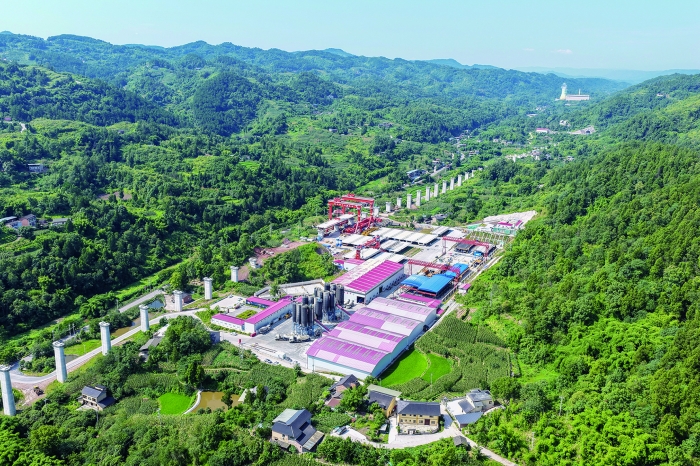
Report Industry Investment Rating - Not provided in the content Core Viewpoints Industrial Silicon - In 2025, the price of industrial silicon showed a downward trend in the first half of the year, and the fundamentals are expected to remain weak in the second half. The supply may increase during the wet season, while the demand is overall weak, with the export market expected to decline year-on-year. The inventory pressure is large, and the cost support is relatively weak. Without policy intervention, the price is expected to range from 6,000 to 9,000 yuan/ton [7][35][36] - The cost of industrial silicon may further decrease, but it is necessary to focus on policy impacts. The supply capacity has increased, but the output has decreased. The demand shows a pattern of significant recovery in exports and suppressed demand due to polysilicon production cuts [10][11][12] Polysilicon - In the first half of 2025, the price of polysilicon first stabilized and then declined. In the second half, the supply is affected by policy disturbances and cost pressures, with certain uncertainties, but the overall operation may remain at a low level. The industry is facing a situation of large capacity, high inventory, and weak demand, and the price will face greater pressure without policy intervention. The price is expected to fluctuate between 31,000 and 40,000 yuan/ton [18][25][37] - The cost of polysilicon has significantly decreased, mainly driven by the decline in raw material prices and energy cost optimization. The supply has decreased, and the pressure of overcapacity remains large. The demand is driven by the short - term increase in domestic photovoltaic installations, but the growth rate is expected to decline [19][20][23] Summary by Relevant Catalogs 2025 First - Half Price Review Industrial Silicon - From January to February 2025, the industrial silicon price was relatively firm due to production cuts in the southwest and northwest regions. In March, the price declined due to increased supply pressure and weak demand. From April to May, the price accelerated its decline under the influence of the US trade war and falling raw material costs. In June, the price rebounded after hitting the bottom [6][33] Polysilicon - In the first half of 2025, the price of polysilicon first stabilized and then declined. It was stable around the Spring Festival and declined in April due to reduced downstream orders and falling raw material prices [18][34] 2025 Second - Half Price Outlook Industrial Silicon - The supply is expected to increase during the wet season, and the demand is overall weak. The inventory pressure is large, and the cost support is weak. Without policy intervention, the price is expected to range from 6,000 to 9,000 yuan/ton [7][35][36] Polysilicon - The supply is affected by policy and cost, with uncertainties, but the overall operation may remain at a low level. The industry has large capacity, high inventory, and weak demand. Without policy intervention, the price will face pressure, and it is expected to fluctuate between 31,000 and 40,000 yuan/ton [18][25][37] Supply - Side Situation Industrial Silicon - As of the end of June, the overall furnace - opening rate was 27.62%. In 2024, about 650,000 tons of new capacity were added, and there were about 700,000 tons of built - but - unoperated capacity and nearly 1 million tons of planned capacity. The output from January to June 2024 decreased by 15% year - on - year, mainly due to price drops and production cuts in most regions. The northwest has become the main production area [45][46] Polysilicon - In 2024, 850,000 tons of new capacity were added, and there are still about 470,000 tons of capacity under construction or built but unoperated. The production in the first half of 2025 decreased significantly year - on - year, and the average operating rate of enterprises dropped to a historical low. The annual output is expected to decrease to about 1.2 million tons [20][102][109] Cost and Profit Industrial Silicon - In the first half of 2025, the raw material cost of industrial silicon decreased, and the full cost and cash cost also decreased. The electricity price in some areas decreased, and the prices of silicon coal, charcoal, electrodes, and silica also declined. Without policy intervention, the cost may further decrease, but the decline space is limited [55][56] Polysilicon - In 2025, the production cost of polysilicon decreased significantly, mainly due to falling raw material prices and optimized energy costs. The current tax - free cash cost of granular silicon can be controlled at 25,000 yuan/ton, and that of rod - shaped silicon is between 30,000 and 45,000 yuan/ton [19] Export - End - From January to May 2025, China's metal silicon exports totaled 272,400 tons, a year - on - year decrease of 10.31%. The annual export volume is expected to decrease by 5 - 10% year - on - year compared to 2024, mainly affected by the global economic outlook and overseas tariff policies [69] Consumption - End - In the first half of 2025, the production of polysilicon decreased significantly year - on - year, organic silicon increased slightly, and the demand for aluminum alloy increased steadily. The export volume is expected to decline due to the slowdown of overseas economies [72] Organic Silicon - As of June, the total production capacity of Chinese organic silicon monomers reached 6.88 million tons/year. The production from January to June increased by about 1% year - on - year. The consumption structure is changing, with the proportion of the traditional construction industry decreasing and that of new energy, electronics, and other fields increasing. The overall consumption growth may slow down in the second half of the year, and the annual growth rate is expected to be about 5%. The price decreased after a slight rebound in the first quarter, and the industry operating rate was between 60% and 70% [72][73] Aluminum Alloy - In 2025, the overall operation of the aluminum alloy industry remained stable, and the consumption of industrial silicon increased. From January to June, the production of primary aluminum alloy increased by 12.4% year - on - year, and that of recycled aluminum alloy increased by 1% year - on - year. The downstream consumption of aluminum alloy increased, and the primary industrial silicon consumption in 2025 is expected to be 650,000 tons [92][95] Polysilicon (Continued) Supply - Side - In early 2025, the domestic polysilicon capacity remained high, but the production decreased significantly in the first quarter due to low prices and industry self - discipline agreements. The production increased slightly in the second quarter, but the overall operating rate remained low [102] Consumption - Side - In the first half of 2025, the domestic photovoltaic installation rush significantly drove the demand for polysilicon, but the demand entered a vacuum period after June. The overseas market demand was weak. The growth rate of new installations in 2025 is expected to decline, with domestic new installations expected to be 310GW and global new installations about 610GW [112][114] Import and Export - From January to April, the export of photovoltaic modules decreased by 6% year - on - year. Only the African market showed significant growth, while the European, American, and Middle - Eastern markets declined [115] Inventory and Supply - Demand Balance Industrial Silicon - As of the end of June, the inventory of the metal silicon industry was 970,000 tons. The inventory decreased slightly in the first half of the year, is expected to increase slightly in the wet season of the second half, and may decrease slightly in the fourth quarter. The annual inventory is expected to increase slightly, and the industry inventory pressure remains high [171] Polysilicon - The upstream inventory of polysilicon is large, and the total industry inventory is expected to be higher than 400,000 tons. The total inventory decreased slightly in the first half of the year, and if the industry self - discipline production cuts are effective, a slight reduction in inventory is expected throughout the year [171]
郎咸平:美国整个电力系统都讲中文,只因所有标准都在中国
Sou Hu Cai Jing· 2025-07-06 08:40
Core Viewpoint - The article highlights the significant transformation of China's power system standards, emphasizing that China has become a leader in power technology and standards, influencing even the U.S. power system [1][22]. Historical Development - The introduction of electricity in China began in the late Qing Dynasty, with the first power plant established in 1882, marking the start of China's journey towards self-sufficient power development [4]. - By the 1980s, major projects like the Three Gorges Dam and Qinshan Nuclear Power Plant showcased China's engineering capabilities and integration with international technology [6][8]. - The establishment of the first domestically designed 110 kV transmission line in 1955 marked a significant milestone in China's independent power infrastructure [5]. Technological Advancements - China's installed power generation capacity reached 2.72 billion kilowatts, with clean energy accounting for over 53.9%, surpassing thermal power for the first time [8]. - The development of Ultra High Voltage (UHV) transmission technology, which allows efficient long-distance power transmission, is a key innovation that has positioned China as a global leader in power technology [10][12]. Global Influence - China has successfully exported its power technology and standards to over 40 countries, including Brazil and several African nations, demonstrating the global acceptance of Chinese power standards [14][16]. - The International Electrotechnical Commission (IEC) has seen China take a leading role in establishing various technical standards, further solidifying its position as a standard-setter in the power industry [13]. Organizational Strength - China's unified national grid system contrasts with the fragmented U.S. system, showcasing superior planning and operational efficiency [17]. - The concentration of top talent in power engineering and continuous government investment over the past two decades have been crucial in advancing China's power technology from follower to leader [19].


全国用电负荷破14亿千瓦,特高压建设按下“加速键”
Huan Qiu Wang· 2025-07-06 01:56
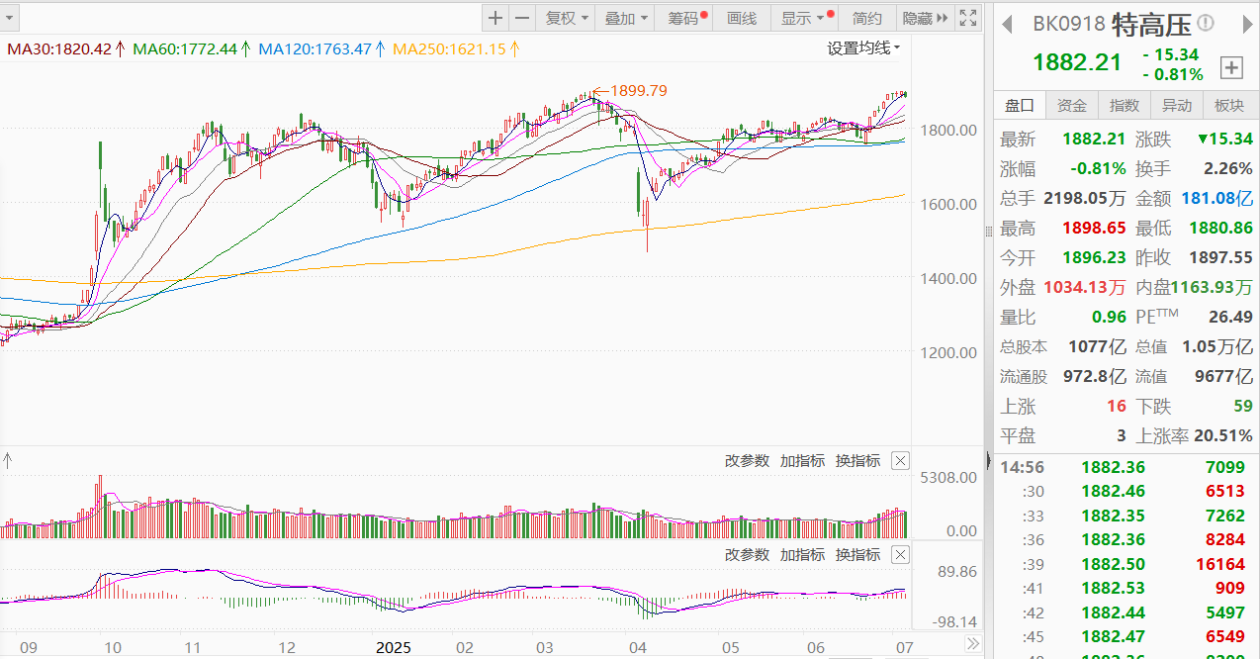
Core Insights - The recent surge in electricity demand in China, driven by high temperatures, has led to record power loads, with a peak of 1,465 million kilowatts on July 4, marking a significant increase compared to the end of June and the same period last year [1] - The State Grid is leveraging ultra-high voltage (UHV) technology to manage electricity supply, with cross-regional transmission capacity exceeding 200 million kilowatts, highlighting the importance of UHV in connecting energy production and consumption [1] - The steady increase in national electricity consumption is expected to support the high-quality development of the UHV industry, with a projected 5% growth in total electricity consumption by 2025 [1] Industry Developments - China's UHV transmission technology is internationally leading, with 70% of clean energy transmitted through the "West-to-East Power Transmission" project [2] - The State Grid's investment in UHV projects is set to exceed 600 billion yuan in 2024 and is expected to surpass 650 billion yuan in 2025, focusing on UHV construction, county-level grid enhancements, and digital upgrades [2] - The acceleration of UHV construction presents growth opportunities for related listed companies, with the total market capitalization of UHV concept stocks exceeding 750 billion yuan as of July 4, 2023 [2] Company Insights - Among UHV concept stocks, companies like Hengtong Optic-Electric, TBEA, State Grid Yingda, Changgao Electric, and Zhongtian Technology have rolling P/E ratios below 30, with State Grid Yingda at only 16.58 and a 45.22% year-on-year profit increase in Q1 [4] - Notably, several UHV concept stocks also exhibit low P/B ratios, with 12 stocks having P/B ratios below 2, including TBEA and Hengtong Optic-Electric, which have shown significant profit growth [4] - Pinggao Electric, with a 55.94% year-on-year profit increase in Q1 2025, has actively participated in UHV projects and has a leading market share in State Grid projects, attracting investments from insurance and social security funds [4]

电力设备新能源行业点评:工信部召开光伏企业座谈会,蒙西至京津冀特高压直流输电工程获批
Guoxin Securities· 2025-07-04 08:52
Investment Rating - The investment rating for the electric equipment and new energy industry is "Outperform the Market" (maintained) [1][5] Core Insights - The Ministry of Industry and Information Technology held a meeting with photovoltaic manufacturing enterprises to address issues such as chaotic competition and the exit of backward production capacity [2] - The approval of the ±800 kV DC transmission project from Inner Mongolia to Beijing-Tianjin-Hebei has been granted, which will transport 36 billion kWh of green electricity annually to the Beijing-Tianjin-Hebei region [3] - Investment suggestions include focusing on TBEA and leading polysilicon companies [1] Summary by Sections Photovoltaic Industry - The Ministry of Industry and Information Technology emphasized the need for comprehensive governance of low-price chaotic competition in the photovoltaic industry, aiming to enhance product quality and promote the orderly exit of backward production capacity [2] Power Grid - The ±800 kV DC transmission project from Inner Mongolia to Beijing-Tianjin-Hebei is a key project under the national "14th Five-Year" power planning, with a total investment of 17.178 billion yuan and a length of 669 kilometers [3] Company Profit Forecasts - TBEA is projected to have a net profit of 4.13 billion yuan in 2024, increasing to 6.20 billion yuan in 2025 and 7.80 billion yuan in 2026, with a PE ratio of 14.8x for 2024 [6]

光伏行业供给侧改革有望深化,光伏龙头ETF(159609)盘中交投活跃,配置机遇备受关注
Xin Lang Cai Jing· 2025-07-04 06:26
Group 1 - The China Securities Photovoltaic Industry Index (931151) decreased by 0.70% as of July 4, 2025, with mixed performance among constituent stocks [1] - Leading stocks included Lin Yang Energy (601222) up 4.55%, Daqo New Energy (688303) up 3.58%, and Kehua Data (002335) up 2.35%, while Jinlang Technology (300763) led the decline at 3.67% [1] - The Photovoltaic Leaders ETF (159609) saw an active trading session with a turnover of 7.55% and a transaction volume of 20.52 million yuan, reflecting a vibrant market [1] Group 2 - The article emphasizes the need to break away from "involution" competition to achieve high-quality development, advocating for market-oriented reforms and the elimination of local protectionism [1] - The report highlights the importance of institutional guidance for healthy competition and acknowledges the role of industry associations and corporate self-discipline [1] - Current efforts by GCL-Poly Energy and Tongwei Co. to promote capacity consolidation in the polysilicon industry align with policy directions and are expected to receive support [1] Group 3 - The Photovoltaic Leaders ETF closely tracks the China Securities Photovoltaic Industry Index, which selects up to 50 representative listed companies in the photovoltaic industry chain [2] - The index's valuation is at a historical low, with a latest price-to-book ratio (PB) of 1.8, indicating significant value [2] - As of June 30, 2025, the top ten weighted stocks in the index accounted for 55.39%, including companies like Sungrow Power Supply (300274) and LONGi Green Energy (601012) [2]

中国—巴西电力创新联合体举办新成员签约暨技术交流活动
人民网-国际频道 原创稿· 2025-07-04 06:02
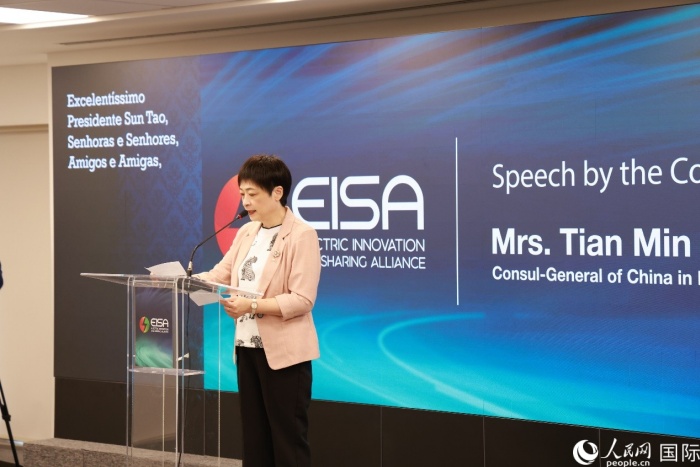
Core Viewpoint - The establishment of the China-Brazil Power Innovation Consortium aims to enhance cooperation in the energy sector between China and Brazil, focusing on technological innovation and green development [1][4]. Group 1: Consortium Formation and Membership - The China-Brazil Power Innovation Consortium was officially formed in November 2024, led by the State Grid Corporation of Brazil, involving various institutions, enterprises, and universities from both countries [1]. - During the recent event, nine new members, including the State Grid Electric Power Research Institute and several Brazilian universities, were formally accepted into the consortium [2]. Group 2: Technological Exchange and Collaboration - Experts from institutions such as the China Electric Power Research Institute and São Paulo University engaged in discussions on key topics including grid stability, efficient renewable energy utilization, artificial intelligence, and digital transformation [4]. - The consortium has made significant progress in practical work related to technology exchange, talent cultivation, and scientific research over the past year, establishing itself as a vital platform for cooperation in the energy sector [4].
在先进制造业强省建设中挑大梁
Da Zhong Ri Bao· 2025-07-04 02:19
Group 1: Advanced Manufacturing in Shandong - Shandong provincial enterprises are leading the advanced manufacturing sector, focusing on digital transformation and building manufacturing clusters [1] - Weifang, known as China's "Agricultural Machinery City," hosts major agricultural machinery companies, with Shandong Heavy Industry's Weichai Lovol as a key player [1] - The Weifang-Linyi-Rizhao intelligent agricultural machinery cluster generated a production value of 165 billion yuan in 2023, accounting for one-quarter of the national agricultural machinery industry [1] Group 2: Coal and Gold Mining Industry - Shandong Energy and Shandong Gold are collaborating with Huawei to implement industrial internet technologies, transforming traditional mining into smart mining [2] - The partnership has led to the development of a new generation of industrial production networks, enhancing operational efficiency and security in mining [2] - The "slice network" technology allows for differentiated data traffic management, improving the overall performance of mining operations [2] Group 3: Production and Operation Software - The production and operation software, represented by MES/MOM, is crucial for advancing smart manufacturing in Shandong [3] - Inspur Group has integrated various technologies to create a comprehensive smart management system for manufacturing processes [3] - According to IDC, Inspur's digital enterprise ranks first among domestic vendors in the production and operation software market, highlighting its leading position [3]