
三星

Search documents
AI引爆存储需求!2025年存储芯片企业注册量激增四成
Zhong Guo Jing Ying Bao· 2025-12-19 15:01
Core Insights - The storage chip industry in China is experiencing a "super cycle" driven by strong demand from AI computing and a mismatch in supply, with 11,500 new storage chip companies registered in 2025, marking a 41.4% increase from the same period in 2024 [1][2] - Major storage companies like SK Hynix, Micron, and Samsung are focusing resources on HBM and DDR5, leading to significant supply shortages in traditional products, with spot prices for DRAM and NAND Flash rising over 300% since September [1][2] - Micron Technology reported a revenue of $13.64 billion for Q1 FY2026, a 57% year-over-year increase, exceeding analyst expectations, and its stock price surged over 7% following the earnings report [1] Industry Trends - The majority of new storage chip companies are located in South China (30.8%) and East China (29.1%), aligning with the development of storage industry clusters in these regions [4][5] - The demand for storage chips is driven by the explosion of data in the AI era, with significant opportunities in consumer electronics and smart devices, although many new registrations may be speculative or trade-focused rather than core manufacturing [6][7] - Price increases for consumer products such as PCs and tablets are being implemented due to rising memory costs, with companies like HP and Dell announcing price hikes of 10%-30% [3][4] Market Dynamics - The ongoing shortage of storage chips is expected to persist, with new production facilities from major suppliers taking over two years to complete, limiting supply until late 2027 [4][6] - The price of NAND and DRAM for smartphones and PCs is projected to rise by 25%-30% and 30%-35% respectively in Q1 2026, indicating that price increases for consumer electronics may just be the beginning [4][6] - The storage chip market is characterized by a high concentration of companies in technology and information services, with a significant portion of new registrations in research and technical services [6]
苹果折叠屏iPhone将发布,2026年引领市场增长
Xin Lang Cai Jing· 2025-12-19 12:48
Core Viewpoint - Apple is set to launch its highly anticipated foldable smartphone in the fall of 2026, marking a significant breakthrough in the mobile device sector [1][4]. Market Growth - The global shipment of foldable smartphone displays is projected to grow by 46% year-on-year in 2026, driven by the entry of leading tech companies and technological advancements [1][4]. - The introduction of Apple's foldable iPhone is expected to reignite consumer interest in foldable devices, leading to a substantial increase in overall market demand [3][4]. Industry Forecast - The foldable smartphone market is anticipated to experience a rapid growth phase in 2026, with an expected year-on-year shipment increase of 30% due to Apple's new product and other manufacturers' next-generation devices [3][4]. Competitive Landscape - The global foldable smartphone market in 2026 is expected to be dominated by Samsung, Huawei, and Apple, with Apple projected to capture approximately 22% of the market share, placing it among the top three players [5]. Technological Advancements - The upcoming foldable iPhone is likely to feature several key upgrades, including a crease-free inward-folding main screen, a 24-megapixel under-display front camera, and support for a larger battery capacity to enhance user experience [5]. Pricing Strategy - The foldable iPhone is expected to maintain Apple's high-end product pricing strategy, with a predicted starting price of around $2,400, equivalent to approximately 16,901 yuan, potentially making it the most expensive iPhone model in history [5].

1500亿市值芯片龙头,通过港交所聆讯!
Xin Lang Cai Jing· 2025-12-19 12:48
Core Viewpoint - Company is pursuing a dual listing in Hong Kong and A-share markets to enhance its international strategy and financing capabilities [1][3] Group 1: Company Overview - Company, formerly known as Weir Shares, rebranded to Howie Group on June 11, 2023 [2][5] - Founded in 2007 by chip tycoon Yu Renrong, Howie Group is recognized as one of the top three image sensor suppliers globally, alongside Sony and Samsung [2][5] - The company focuses on three main product lines: image sensor solutions, display solutions, and analog solutions, while expanding its product offerings to serve high-growth sectors such as smartphones, automotive, medical, security, and emerging markets like machine vision and AI [2][5][6] Group 2: Financial Performance - According to the prospectus, the company's revenue for 2022, 2023, and 2024 is projected to be 20.04 billion, 20.98 billion, and 25.71 billion yuan respectively [6] - For the first nine months of 2025, the company reported revenue of 21.78 billion yuan, a year-on-year increase of 15.2%, with a net profit of 3.21 billion yuan, up 35% [3][6] - The company aims to enhance its overall competitiveness through this listing, focusing on international expansion and overseas business development [3][6]

我们准备好让AI“看”世界了吗?
Xin Lang Cai Jing· 2025-12-19 12:14
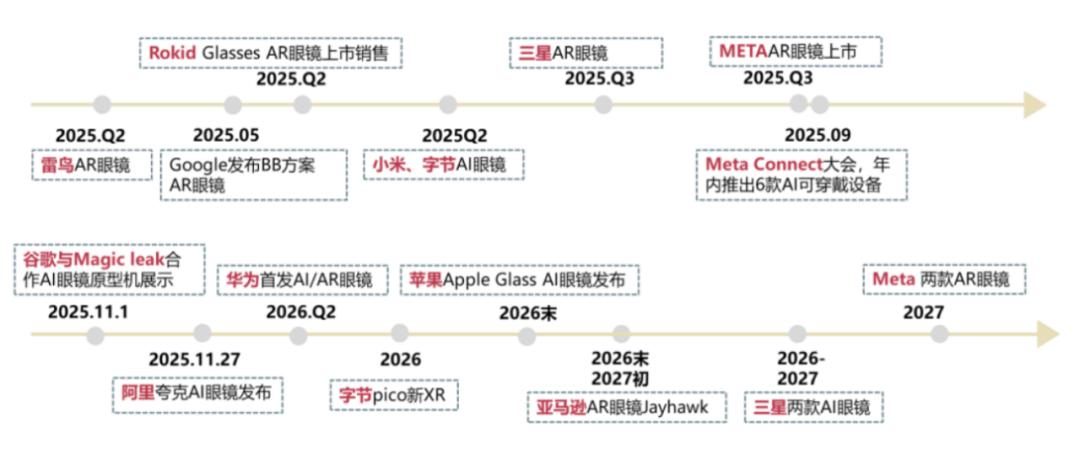
Core Insights - In 2025, AI glasses have emerged as a significant trend in the tech industry, with major companies like Meta, Google, and Apple making substantial advancements and product launches in this space [1][3] - Domestic companies in China, including Huawei, Xiaomi, Alibaba, and ByteDance, are also actively developing AI glasses, with notable products like Alibaba's Quark AI glasses experiencing high demand [1][3] - The competition landscape is diverse, with various types of AI glasses categorized into AI audio glasses, AI photography glasses, and AI+AR glasses, each with distinct functionalities [3][7] Industry Overview - The AI glasses market is driven by advancements in large model technology, with companies recognizing the necessity to invest in AI glasses to avoid falling behind in the AI race [3][21] - Meta's Ray-Ban smart glasses have set a successful precedent, selling over 1 million units and demonstrating the feasibility of integrating AI capabilities into eyewear [3][21] - The market is expected to see significant sales growth, with projections indicating that AI glasses could reach 7 million units sold, with Meta accounting for 5 million of that total [9] Competitive Landscape - Major competitors in the AI glasses market include: - Internet platform companies like Alibaba, Baidu, and ByteDance, leveraging their ecosystem advantages [8] - Hardware manufacturers such as Xiaomi and Huawei, utilizing their supply chain and user base [9] - New automotive entrants like Li Auto, which are creating niche products tailored to specific use cases [9] - Specialized XR/AR companies like Rokid and Thunderbird, focusing on optical display technology and lightweight designs [9] Market Dynamics - The pricing of AI glasses varies widely, from hundreds to thousands of yuan, reflecting the differentiation in product features and target markets [12] - The current market is characterized by a mix of established tech giants and agile startups, each pursuing different strategies to capture market share [10][20] - The demand for AI glasses is still being evaluated, with concerns about whether consumers truly need such devices compared to existing technologies like smartphones [13][19] Future Outlook - The AI glasses market is anticipated to evolve, with companies needing to address privacy concerns and enhance user experience to transition from novelty items to essential tools [17][24] - The exploration of AI glasses is seen as a stepping stone towards more advanced human-machine interactions, potentially leading to future innovations like implantable devices or brain-computer interfaces [24][22] - As the market matures, companies are expected to focus on validating the value of AI glasses in B2B applications while nurturing consumer interest in C2C scenarios [20][22]






万字拆解371页HBM路线图
半导体行业观察· 2025-12-19 09:47
Core Insights - The article emphasizes the critical role of High Bandwidth Memory (HBM) in supporting AI technologies, highlighting its evolution from a niche technology to a necessity for AI performance [1][2][15] - A comprehensive roadmap for HBM development from HBM4 to HBM8 is outlined, indicating significant advancements in bandwidth, capacity, and efficiency over the next decade [15][80] Understanding HBM - HBM is designed to address the limitations of traditional memory types, such as DDR5, which struggle to meet the high data transfer demands of AI applications [4][7] - The architecture of HBM utilizes a 3D stacking method, significantly improving data transfer efficiency compared to traditional flat layouts [7][8] HBM Advantages - HBM offers three main advantages: superior bandwidth, reduced power consumption, and compact size, making it essential for AI applications [11][12][14] - For instance, training a model like GPT-3 takes 20 days with DDR5 but only 5 days with HBM3, showcasing the drastic difference in performance [12] HBM Generational Upgrades - HBM4, expected in 2026, will introduce customizable base dies to enhance memory performance and capacity, addressing mid-range AI server needs [17][21] - HBM5, anticipated in 2029, will incorporate near-memory computing capabilities, allowing memory to perform calculations, thus reducing GPU wait times [27][28] - HBM6, projected for 2032, will focus on high throughput for real-time AI applications, with significant improvements in bandwidth and capacity [32][35] - HBM7, set for 2035, will integrate high-bandwidth flash memory to balance high-speed access with large storage needs, particularly for multimodal AI systems [41][44] - HBM8, expected in 2038, will feature full 3D integration, allowing seamless interaction between memory and GPU, crucial for advanced AI applications [49][54] Industry Landscape - The global HBM market is dominated by three major players: SK Hynix, Samsung, and Micron, which collectively control over 90% of the market share [81][84] - The demand for HBM is projected to grow significantly, with the market expected to reach $98 billion by 2030, driven by the increasing need for high-performance computing in AI [80] Future Challenges - The HBM industry faces challenges related to cost, thermal management, and ecosystem development, which must be addressed to facilitate widespread adoption [86] - Strategies for overcoming these challenges include improving yield rates, expanding production capacity, and innovating cost-reduction technologies [86]



【招银研究|行业深度】AI系列研究——端侧AI将重塑全球智能终端产业格局
招商银行研究· 2025-12-19 08:58
Core Insights - Edge AI is leading a technological paradigm shift, reshaping the new landscape of the smart terminal industry by enabling local execution of AI models, resulting in low latency, high energy efficiency, and privacy protection [4][9][10] - The development of Edge AI is driven by innovations in AI computing architecture, multimodal perception and interaction, and system-level AI integration, transitioning smart devices from mere "computing nodes" to "local reasoning and autonomous decision-making" [4][6][10] Application Ecosystem - Multiscenario integration is accelerating the growth of the Edge AI terminal market, with AI PCs expected to achieve a penetration rate of 64% by 2028, and AI smartphones projected to exceed 900 million units in shipments by the same year [5][6] - AI wearables are anticipated to reach a market size of $153.8 billion by 2030, while AI smart homes are expected to grow to $537.2 billion, highlighting Edge AI as the core growth engine of smart hardware [5][6] Upstream Ecosystem - Breakthroughs in advanced process technology and Chiplet architecture are driving significant performance improvements in Edge AI, with NPU computing power increasing to 50-100 TOPS to meet local model operation demands [6][10] - The global Edge AI processor market is projected to grow from $31 billion in 2022 to $60.2 billion by 2028, with major players like Qualcomm, Apple, and NVIDIA dominating the high-end market [6][10] Business Recommendations - Companies should prioritize Edge AI as a key strategic focus, developing differentiated strategies around terminals, supply chains, and application scenarios to capitalize on this emerging trend [6]

AI眼镜:我们准备好让AI“看”世界了吗?
3 6 Ke· 2025-12-19 08:46
Core Insights - In 2025, AI glasses have emerged as a significant trend in the tech industry, with Meta's Ray-Ban smart glasses selling over 2 million units by February and projected to reach 4-5 million units for the year [1][3] - Major companies like Google, Samsung, and Apple are re-entering the AI glasses market, while domestic firms such as Huawei, Xiaomi, Alibaba, and ByteDance are also making significant moves in this space [1][3] - The competition is driven by the need for companies to stay relevant in the AI race, with hardware becoming a new frontier for user engagement and data collection [3][20] Market Dynamics - AI glasses are categorized into three types: AI audio glasses, AI shooting glasses, and AI+AR glasses, with the latter being seen as an advanced form that integrates AR technology [4][6] - The market features a wide range of AI glasses with prices varying from hundreds to thousands of yuan, reflecting the differentiation in product positioning [6][10] - Key competitors in the domestic market include internet platform companies (Alibaba, Baidu, ByteDance), hardware manufacturers (Xiaomi, Huawei, OPPO), automotive newcomers (Li Auto), XR/AR specialists (Thunderbird Innovation, Rokid), and AI hardware startups [6][7][10] Competitive Landscape - Xiaomi is leveraging its supply chain and channel advantages to capture market share, with its AI glasses priced as low as 1,630 yuan [7][10] - Li Auto's AI glasses, Livis, are priced starting at 1,999 yuan and are designed to integrate with vehicle systems, targeting a specific user base [8][10] - Companies like Rokid and Thunderbird Innovation focus on optical display technology and have experience in specialized applications, although they face challenges in expanding to consumer markets [9][10] User Demand and Experience - The current AI glasses market is characterized by a lack of clear consumer demand, as many features offered are already available on smartphones [11][12] - Privacy concerns are significant, as AI glasses can record and capture data, raising issues similar to those faced by Google Glass [12][13][14] - For AI glasses to transition from novelty items to essential tools, they must address real-world needs and provide seamless integration into daily life [15][16][19] Future Outlook - The potential for AI glasses to become mainstream hinges on their ability to solve specific problems in B2B scenarios, such as in industries like energy and healthcare [16][18] - The evolution of AI glasses may lead to more advanced forms of human-computer interaction, with future devices potentially being embedded or non-intrusive [25][26] - The market for AI glasses is expected to grow significantly, with investments in related technologies and components reaching nearly 4 billion yuan [22][23]

iPhone Air成苹果“滑铁卢” 库克未来要如何找回场子?
Sou Hu Cai Jing· 2025-12-19 07:55
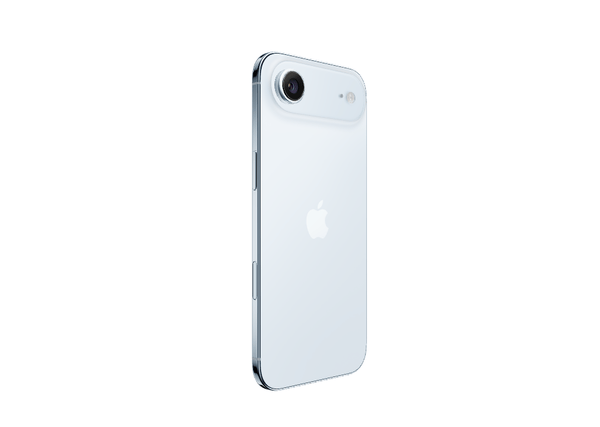
Core Insights - Apple's iPhone Air, launched in 2025, faced significant market challenges due to a lack of innovation, high pricing, and technical issues, leading to poor sales performance [1][3][18] Product Performance - The iPhone Air's first-week activation was less than one-tenth of the iPhone 17 Pro Max, with pre-order sales accounting for only 6% of total orders, prompting a price cut within five days of launch [3][7] - The device's ultra-thin design resulted in compromises on key features, including a single 48MP camera, reduced battery capacity, and limited audio capabilities, which negatively impacted user experience [9][11] Market Reaction - The failure of iPhone Air has caused a ripple effect in the smartphone industry, leading competitors like Xiaomi, OPPO, and vivo to cancel similar lightweight models and refocus on other market segments [8] - Samsung's Galaxy S25 Edge also underperformed, resulting in the cancellation of its successor, indicating a shift in consumer preference towards comprehensive user experience rather than just thinness [8] Future Strategies - Apple is planning to launch iPhone Air 2, aiming to enhance its features and adjust pricing to improve competitiveness, including the addition of a dual-camera system to address previous shortcomings [12][15] - The potential new pricing strategy for iPhone Air 2 may lower the starting price to around 6000 yuan, significantly improving its value proposition [15][17] - The release of iPhone Air 2 has been postponed to spring 2027 to avoid internal competition with the iPhone 17 series and to allow more time for product optimization [17] Lessons Learned - The iPhone Air's failure highlights Apple's need for better market research and product definition, emphasizing that sacrificing core user experiences for design aesthetics can alienate consumers [11][20] - The smartphone market's competitive landscape has shifted towards optimizing overall user experience rather than focusing solely on individual features, necessitating a balanced approach in future product development [20]
为什么说,时间是公平且坚固的壁垒?| 轻分享
高毅资产管理· 2025-12-19 07:00
Core Viewpoint - The article emphasizes that time is a crucial barrier in business, as it cannot be bought or replicated, and it plays a significant role in establishing competitive advantages [5][12][33]. Group 1: Strategic Six Variables - The article introduces the "Strategic Six Variables" which include value, scarcity, barriers, assets, leverage, and flywheel, highlighting their importance in building a business [5]. - It acknowledges that while these variables are essential, the most significant barrier for ordinary people is time, which is often overlooked [5][6]. Group 2: Barriers in Manufacturing - In manufacturing, the true barrier is often the "ineffable know-how" that comes from years of experience rather than just equipment or standard operating procedures [7][8]. - An example is given of Corning, which has developed its expertise in glass manufacturing over 170 years, creating a barrier that competitors cannot easily overcome [9][10][11]. Group 3: Time as a Barrier - Time is presented as a unique barrier because it is the one resource that cannot be purchased; companies like Amazon have leveraged their early start in cloud computing to build significant advantages that later entrants struggle to replicate [15][16]. - The article encourages businesses to identify what unique aspects they possess that competitors cannot quickly copy, emphasizing the importance of investing time in building these advantages [16][30]. Group 4: The Value of Persistence - The article discusses the importance of persistence in business, using examples like Luo Zhenyu, who has built a brand over years through consistent effort [27][28]. - It suggests that businesses should focus on long-term projects that accumulate value over time rather than seeking immediate returns [22][31]. Group 5: Conclusion - The article concludes by encouraging businesses to embrace time as a friend and to focus on building enduring barriers that will yield rewards in the long run [34][35].


消费电子ETF(561600)盘中交投活跃,AI终端迎来爆发临界点
Xin Lang Cai Jing· 2025-12-19 05:41
Group 1 - The core viewpoint of the articles highlights the contrasting dynamics in the global consumer electronics market, characterized by a slowdown in traditional business and an explosion of AI innovation, with AI terminal shipments expected to exceed 300 million units in 2025, driving revenue growth of 25%-40% for related supply chain companies [2] - The shortage and price increase of storage chips are identified as critical variables affecting the industry, with DRAM and NAND Flash spot prices rising over 300% from September to mid-December 2025, and major manufacturers like Samsung and SK Hynix raising prices by up to 30% in Q4 [1][2] - The consumer electronics ETF closely tracks the CSI Consumer Electronics Theme Index, which includes 50 listed companies involved in component production and design, reflecting the overall performance of the consumer electronics sector [2][3] Group 2 - The top ten weighted stocks in the CSI Consumer Electronics Theme Index account for 56.39% of the index, with notable companies including Luxshare Precision, Cambricon, and Industrial Fulian [3] - The anticipated price increase of storage chips in 2025 is projected to be between 30%-50% year-on-year, with the cost of storage for AI phones expected to rise by $80-$120 per unit, potentially leading to a 5-8 percentage point decline in gross margins for brands lacking core technology reserves [2] - The consumer electronics ETF has various connection options, including multiple classes of the Ping An CSI Consumer Electronics Theme ETF, indicating a structured investment approach for investors [3]


