可口可乐

Search documents
盘前:纳指期货涨0.06% 软件股劲升
Xin Lang Cai Jing· 2026-02-10 13:41
Market Overview - Global stock markets have returned to historical highs, with Japan's market continuing its upward trend and software stocks stabilizing, boosting overall risk appetite [2][30] - As of the report, Dow futures rose by 0.06%, S&P 500 futures increased by 0.11%, and Nasdaq futures gained 0.06% [3][30] - European markets saw the Stoxx 600 index slightly retreat from a record high, while Kering Group surged by 11% due to signs of recovery in its Gucci business [4][30] Japanese Market - The Nikkei 225 index closed up by 2.3%, with other Asian markets showing moderate gains: Hang Seng Tech Index up by 0.5%, Shanghai Composite Index up by 0.1% [5][31] - The market anticipated that the victory of the ruling party would benefit the Japanese stock market due to planned fiscal stimulus, with unexpected rebounds in Japanese government bonds and the yen [5][31] Economic Data Focus - Traders are awaiting a series of U.S. economic data, with retail sales being the first major report expected to show resilience in consumer spending despite high living costs and a weak job market [6][32] - Upcoming data includes non-farm payrolls and inflation metrics, which will influence expectations regarding the Federal Reserve's interest rate path [6][32] Technology Sector Insights - PineBridge Investments' Mike Kelly expressed confidence in the current tech stock rebound, emphasizing the importance of identifying winners in the evolving landscape of disruptive technologies [7][33] - Ecofi Investissements' Karen Georges anticipates an economic rebound in the second half of the year, although short-term consumer data may appear less optimistic [7][33] Currency and Commodity Movements - The Chinese yuan strengthened to its highest level against the dollar since May 2023, following reports of regulatory recommendations to reduce U.S. Treasury exposure [7][33][34] - Gold prices maintained above $5,000, with traders awaiting new catalysts, while Bitcoin fell by 2.3% to $68,708 [6][36] Company-Specific Developments - Datadog's stock surged over 10% in pre-market trading, while Spotify's shares rose by 11% due to expected profits exceeding forecasts [15][42] - Conversely, Coca-Cola's stock fell over 2% as its fourth-quarter net revenue missed market expectations [17][43] - Ferrari's stock jumped nearly 10% due to strong demand, with orders extending to the end of 2027 [20][46]

港股周观点:寒潮暂退,恒科何时企稳?-20260209
Soochow Securities· 2026-02-09 05:20
Group 1 - The report indicates that the Hong Kong stock market experienced its worst weekly performance since November 2025, with the Hang Seng Technology Index falling by 6.5% and the Hang Seng Index down by 3.0% due to concerns over global tech stock capital expenditure and changes in tax cost expectations in China [1][2] - The report highlights that despite a significant inflow of southbound funds amounting to 56 billion HKD, the overall trading volume decreased, indicating a prevailing cautious sentiment in the market [1][2] - The report notes that the inflow of funds into ETFs targeting the Hong Kong market accelerated, reaching a total scale of 423.24 billion HKD, with a net inflow of 46.7 billion HKD into Hong Kong Stock Connect ETFs [2] Group 2 - The report emphasizes that the short-term challenges for the Hong Kong stock market are not yet fully resolved, and ongoing observation of overseas risks and domestic AI developments is necessary [2][4] - It is suggested that if domestic AI developments exceed expectations around the Chinese New Year, the Hong Kong stock market may experience a rally alongside the A-share market [2][4] - The report warns that the high volatility risks for the Hang Seng Technology Index remain, and a defensive strategy is recommended in the short term while monitoring potential offensive opportunities [4]
食品饮料行业周度市场观察-20260204
Ai Rui Zi Xun· 2026-02-04 06:40
Investment Rating - The report does not explicitly provide an investment rating for the food and beverage industry Core Insights - The food and beverage industry is experiencing significant trends, including the rise of canned foods, the expansion of herbal drinks, and the increasing popularity of low-sugar and functional beverages. The market is also seeing a shift towards health-conscious products and innovative marketing strategies to attract younger consumers [1][4][10] Industry Environment - Canned Foods: Recent regulatory updates aim to enhance the standards for canned foods, which are currently perceived as affordable but lack innovation to attract younger consumers. The industry is focusing on product diversification and premium offerings to drive growth [2] - Herbal Drinks: The market for traditional herbal drinks is booming, with sales expected to exceed 10 billion yuan. This growth is driven by rising health awareness among consumers and the entry of new brands [4] - Beverage Market: The beverage sector is witnessing a clear trend towards health-oriented products, with low-sugar and functional drinks gaining traction. Traditional brands are facing challenges as they adapt to these changes [4][10] Top Brand News - Dongpeng Beverage has successfully captured a significant market share in the ready-to-drink coffee segment, leveraging its cost-effective strategies and strong distribution network [18] - The brand "BASAO," founded by the creator of Yinlu, is entering the tea market with a focus on high-end products and cultural experiences [16] - The company "Three Squirrels" is expanding into the community discount supermarket sector, aiming to leverage its brand and supply chain capabilities to capture market share [21]
2026年苏超赞助商公布,小微企业可花5万元上桌
2 1 Shi Ji Jing Ji Bao Dao· 2026-01-29 10:31
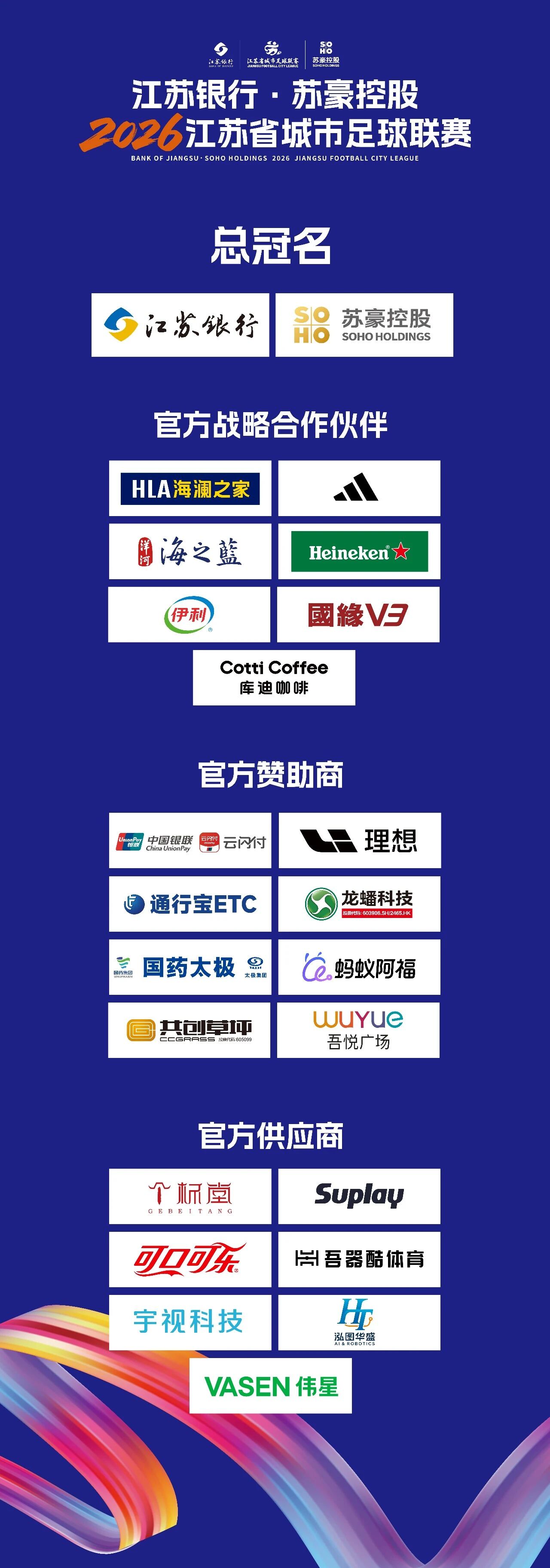
Core Insights - The 2026 Jiangsu Provincial Urban Football League (referred to as "Su Super") is set to continue the momentum generated by its inaugural season in 2025, with a strong lineup of sponsors and heightened public interest [1][2] Sponsorship and Financial Aspects - The 2026 season has attracted 24 sponsors, including notable companies such as Jiangsu Bank, Suhao Holding Group, Heineken, Adidas, and Ant Financial, showcasing a robust sponsorship portfolio [1][2] - The total sponsorship amount for the 2026 season was previously reported to exceed 202 million yuan, although this figure is still subject to confirmation due to pending agreements [2] Audience Engagement and Popularity - The inaugural season of Su Super saw significant audience engagement, with a total attendance of 2.43 million across 85 matches, averaging 28,000 spectators per match, and online viewership reaching 2.2 billion [4] - The league has generated a cultural phenomenon, with various social media trends and memes emerging from the matches, indicating a strong community connection and engagement [4][5] Socioeconomic Context - The success of Su Super is attributed to the unique competitive spirit among the 13 cities in Jiangsu, each with its own economic strengths and cultural pride, creating a vibrant local rivalry [5][6] - The league's rapid growth in sponsorship from 6 to nearly 40 partners within a year reflects the effective governance and responsiveness of local authorities to capitalize on this sporting event [5] Changes and Innovations for the New Season - The 2026 season will introduce a new competition format, including a two-leg knockout stage in the playoffs, increasing the total number of matches to 91 [8] - The league will also expand its sponsorship model to include small and micro enterprises, allowing them to participate as official sponsors, thereby enhancing community involvement [9] Broader Implications and Future Prospects - The success of Su Super has inspired other regions to launch similar sports events, but experts suggest that replicating its success requires a deep understanding of local cultural and social dynamics [10]



苏超验证城市足球联赛商业价值,但竞争者也在涌入
Xin Lang Cai Jing· 2026-01-27 14:06
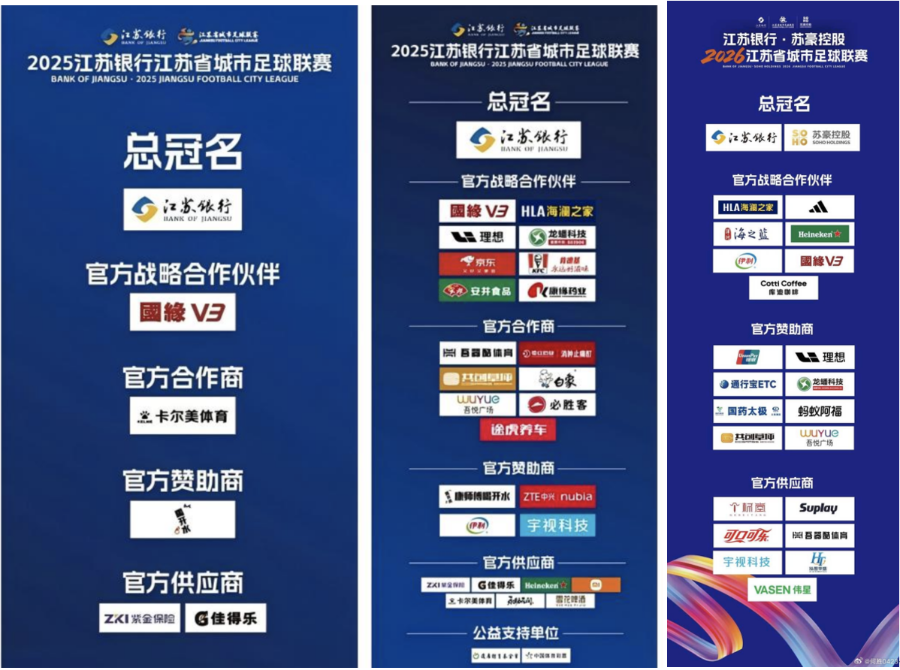
Core Insights - The 2026 Jiangsu Province Urban Football League has announced 24 official sponsors, with notable absences of previously rumored sponsors like Suning and JD.com [1] - The total sponsorship amount for the new season was previously reported to be 202 million yuan, but this figure is now considered inaccurate as some partnerships are still pending confirmation [10] - The league has eliminated the "official partner" category, indicating increased competition for commercial resources [10] Sponsorship Structure - The league's title sponsors are Jiangsu Bank and Suhao Holdings, which is a large state-owned enterprise in Jiangsu [10] - International brands such as Adidas and Coca-Cola have joined as official strategic partners, with Heineken upgrading its status from supplier to strategic partner [11] - New sponsors include well-known Chinese companies like Yanghe Baijiu and Yili, with a trend towards younger brands like Cotti Coffee and Suplay [11] Market Performance - The 2025 season saw over 2.43 million attendees, with an average attendance of 28,000, setting a record for provincial leagues [12] - Online viewership reached over 2.2 billion, and social media engagement surpassed 100 billion views [12] - The league's impact on local tourism was significant, with 23.97 million visitors to A-level tourist attractions, a 17.71% increase year-on-year [12] Expansion of Urban Football Leagues - Following the success of the Jiangsu league, other regional leagues like Sichuan, Zhejiang, and Guangdong are being developed [12][19] - The Sichuan Urban Football League has already begun, with significant ticket demand and sponsorship from international companies [13] - The overall growth of social football in China is evident, with a reported increase in amateur players and competitions [19]
谁是真汇源?
Jing Ji Guan Cha Wang· 2026-01-20 09:50
Core Viewpoint - The article discusses the intense trademark dispute between two entities associated with the "Huiyuan" brand, leading to confusion in the market regarding the authenticity of Huiyuan juice products as the sales season approaches [2][3]. Trademark Dispute - The focal point of the conflict is the ownership and usage rights of the "Huiyuan" trademark, with both parties claiming legitimacy [4]. - The dispute escalated after Huiyuan Group announced on January 8 that it would fully take over Beijing Huiyuan, citing a breach of investment agreement by its partner, Wensheng Asset [5][6]. - Beijing Huiyuan asserts that it is an independent legal entity and that the "Huiyuan" trademark ownership is clear and undisputed, belonging to them [6][9]. Financial Discrepancies - The underlying financial disagreements stem from differing interpretations of the restructuring investment agreement, with Huiyuan Group accusing Wensheng Asset of failing to fulfill its financial commitments [7][8]. - Beijing Huiyuan claims that the funds from the initial investment were used appropriately for debt repayment and operational costs, while Huiyuan Group contends that the funds were misappropriated [7][8]. Market Impact - The conflict has led to significant disruptions in the market, with reports of product shortages on e-commerce platforms and confusion among consumers regarding the authenticity of products [16][17]. - The market share of Huiyuan juice has significantly declined, dropping from 53.4% in 2016 to 11.0% in 2025, indicating a loss of competitive position against rivals like Coca-Cola [18].

运动巨头渠道策:销售下滑 门店升级丨消费参考
2 1 Shi Ji Jing Ji Bao Dao· 2026-01-20 05:10
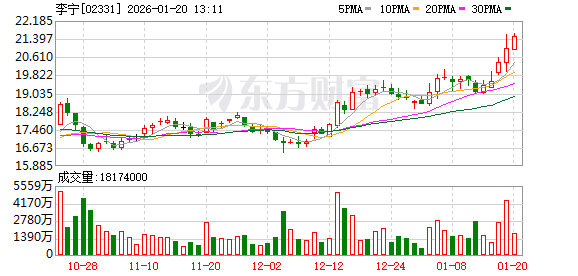
Group 1: Li Ning Company Overview - Li Ning remains optimistic about its future despite a low single-digit decline in retail sales for the fourth quarter ending December 31, 2025, excluding Li Ning YOUNG [2] - The number of sales points in China for Li Ning (excluding Li Ning YOUNG) decreased by 41 to a total of 6,091, with retail points down by 59 and wholesale points up by 33 [3] - Li Ning is investing in flagship stores, launching its first "Dragon Store" in Beijing, which is expected to create a strong synergy with the new "Honor Gold Standard" product line [3] Group 2: Market Trends and Competitors - The trend in the industry shows major brands like Nike upgrading key stores in China, with a reported 25% sales increase in upgraded locations, despite a 16% decline in overall sales [4] - Li Ning's stock price increased by 2.94% to HKD 21 per share on January 19, 2026, indicating positive market sentiment [4] Group 3: Financial Performance and Projections - Li Ning's e-commerce virtual store business remained flat, indicating stability in that segment amidst overall sales declines [2] - The company is focusing on enhancing customer experience through flagship stores, aligning with broader industry trends of investing in experiential retail [4]
企业如何定位AI营销的发力点
Jing Ji Guan Cha Wang· 2026-01-17 06:28
Core Insights - Marketing serves as the frontline for AI application, with generative AI rapidly penetrating various marketing processes since the launch of ChatGPT, including copywriting, proposal planning, and visual design [1] - The value of AI in marketing is highly context-dependent, necessitating a systematic approach to determine the conditions and methods for effective AI integration [1] - An analytical framework is proposed, intersecting "internal/external" and "technical/strategic" perspectives, to help businesses accurately identify the focal points for AI marketing [1] Internal Perspective + Technical Perspective - The foundation for AI marketing lies not in the algorithms but in the enterprise's readiness to implement AI, which includes having the necessary data, systems, and processes [2] - Data assets are crucial; for instance, Luckin Coffee's success in personalized marketing stems from its early investment in a digital infrastructure that accumulated over 200 million user behavior and transaction data [2] - Technical integration capabilities are essential, as AI marketing requires seamless connectivity with systems like CRM and CDP; without this, AI efforts remain isolated and ineffective [3] External Perspective + Technical Perspective - Even with technical capabilities, the effectiveness of AI depends on its ability to address specific industry marketing pain points, which vary across sectors [4] - The fast fashion industry, for example, faces challenges in using advanced AI applications due to high demands for authenticity and compliance, necessitating a focus on simpler functionalities [4][5] - Conversely, in the fast-moving consumer goods sector, AI tools can significantly enhance marketing efficiency by processing large volumes of unstructured data and automating content production [5] Internal Perspective + Strategic Perspective - The adoption of AI marketing is fundamentally a strategic choice, with some companies embracing it as a core competitive advantage while others rely on unique strengths to avoid dependence on AI [6] - Strategic priorities dictate resource allocation; for example, China Resources Sanjiu employs AI to enhance marketing efficiency in a competitive OTC drug market, while Tesla leverages its unique brand identity and direct sales model, minimizing reliance on traditional advertising [6][7] - Companies may exhibit caution in AI marketing due to concerns about disrupting existing sales channels, indicating that willingness to adopt AI is as crucial as technical capability [7] External Perspective + Strategic Perspective - AI marketing strategies are shaped by external factors such as industry structure, regulatory frameworks, and consumer behavior [8] - Consumer attributes, such as purchase frequency and price sensitivity, influence how AI is utilized in marketing across different sectors [8][9] - Regulatory environments, particularly in finance and healthcare, impose restrictions that can limit AI's application in marketing, necessitating innovative approaches to comply with regulations while achieving marketing goals [10] Conclusion - The application of AI in marketing is a complex, systemic issue that requires a holistic view of internal capabilities, external environments, technical feasibility, and strategic intent [11] - Companies must prioritize strengthening their data and systems if their technical foundation is weak, reassess investment priorities if industry and AI are misaligned, and ensure that marketing is viewed as a core battleground for strategic success [11]

从卫龙CEO到大窑掌门,快消悍将孙亦农接棒百亿汽水帝国
Jin Rong Jie· 2026-01-16 10:53
Group 1 - The core viewpoint of the news is the appointment of Sun Yinan as the CEO of Dayao Beverage Co., following a strategic investment by KKR, indicating a significant leadership change aimed at future growth and potential capital plans [1][3]. - Sun Yinan, a well-known executive in the fast-moving consumer goods (FMCG) sector, previously served as CEO of Weilong, where he led the company to a successful IPO on the Hong Kong Stock Exchange and launched a new sub-brand [3]. - Under Sun's leadership, Weilong achieved record revenues of 6.266 billion yuan and a net profit of 1.069 billion yuan in 2024, showcasing his capability in driving financial performance [3]. Group 2 - Dayao Beverage, originally established in 1983 as Hohhot Bayi Beverage Factory, has rapidly expanded its market presence through strategic branding and partnerships, achieving sales exceeding 3 billion yuan in 2022 [3]. - The company currently operates seven core production bases across the country, with over 2,000 distributors and more than one million retail outlets, reflecting its extensive distribution network [3]. - The leadership transition follows KKR's acquisition of an 85% stake in Dayao, which has led to significant changes in the company's governance and operational strategy [3].