九毛九

Search documents
“酸菜鱼之王”卖不动了? 太二亲手拆招牌,转战川菜赛道
Sou Hu Cai Jing· 2026-01-06 03:33
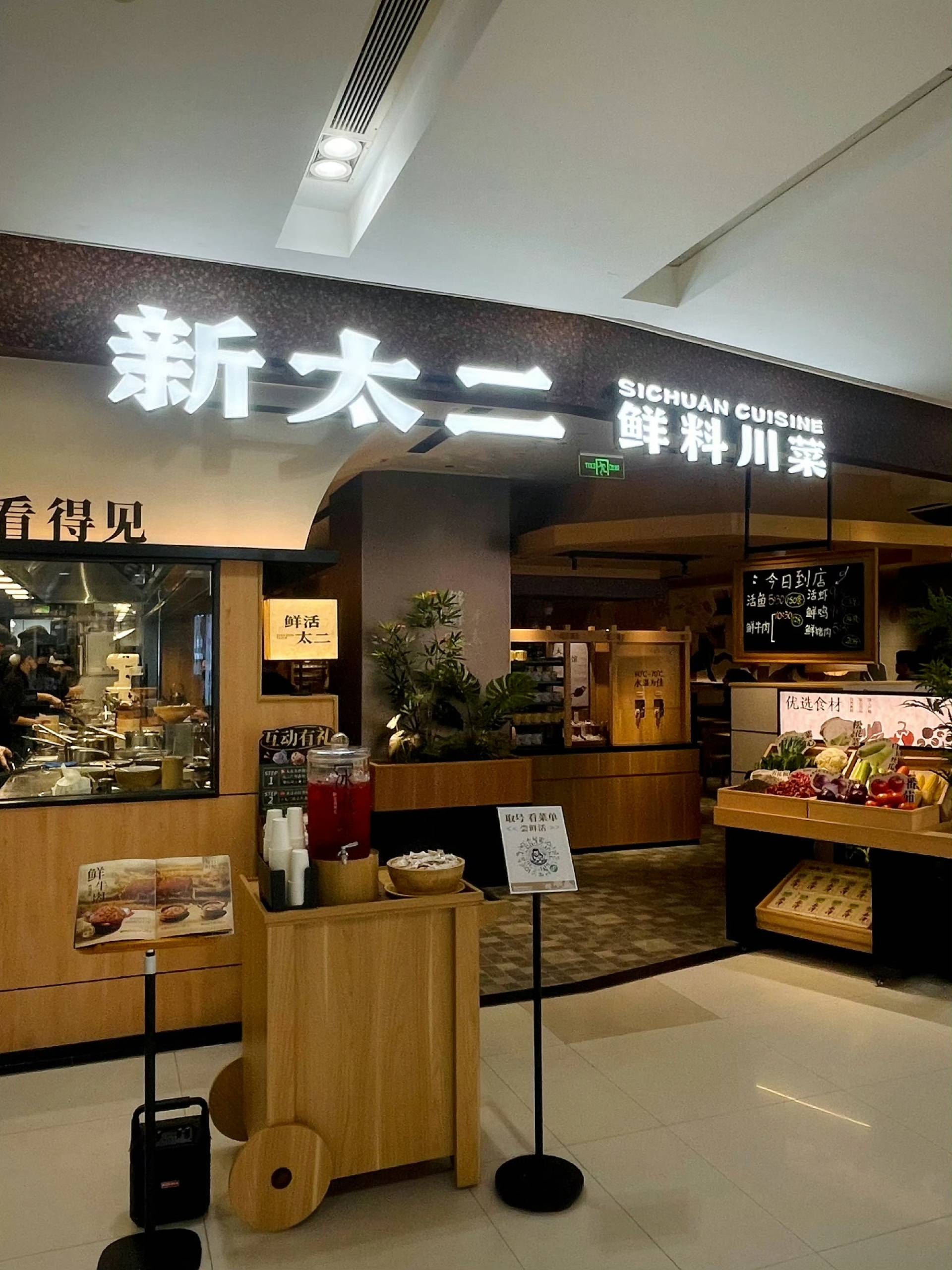
Core Viewpoint - The company "太二" is undergoing a transformation as its signature dish, the sour fish, is losing popularity, prompting a shift towards a broader menu that includes various fresh ingredients [1][2][4] Group 1: Company Strategy - "太二" is rebranding some of its locations to "新太二·鲜料川菜" to reflect its new direction [1] - The signature sour fish dish has been reduced in portion size by 50 grams and its price lowered by 40 yuan to encourage customers to order additional dishes [1] - The new menu features over 20 new dishes centered around five categories of fresh ingredients, aiming to diversify offerings beyond the once-dominant sour fish [1][4] Group 2: Market Challenges - The sour fish market has become saturated with competitors, leading to a decline in customer traffic for "太二" [2] - The rise of pre-prepared meals has damaged consumer trust, as customers increasingly seek freshness and authenticity in their dining experiences [2] Group 3: Financial Performance - The latest financial report from the parent company, 九毛九, indicates a decline in both revenue and profit for "太二," with a revenue of 1.949 billion yuan in the first half of 2025, down 13.3% year-on-year [3] - The profit for the same period was 262 million yuan, a decrease of 50 million yuan compared to the previous year [3] - The number of "太二" locations has decreased by 65, with both turnover and table turnover rates declining [3] Group 4: Industry Perspective - There is a debate on whether "太二" abandoning its "sour fish king" status for a broader "川菜" (Sichuan cuisine) approach is a strategic misstep or a necessary adaptation to industry trends [4] - The shift from a single popular dish to a more comprehensive menu reflects a broader industry trend where the focus is moving from "small and refined" to "large and affordable" offerings [4] - The future of "太二" hinges on its ability to deliver fresh ingredients while managing supply chain and cost control challenges [4]
撕掉“太二”酸菜鱼标签,收购北美火锅品牌 增长见顶的九毛九展开“自救”
Sou Hu Cai Jing· 2026-01-05 12:46
Core Viewpoint - The recent actions taken by Jiumaojiu, including rebranding its flagship restaurant and acquiring a North American hot pot brand, are seen as a proactive response to operational pressures and declining performance [1][2]. Group 1: Company Actions - Jiumaojiu has rebranded its flagship restaurant, Tai Er, to "New Tai Er · Fresh Ingredients Sichuan Cuisine," marking its first name change in over a decade [1]. - The company announced the acquisition of a 49% stake in North American hot pot brand Big Way Hot Pot for a total of $28 million, following an initial 10% stake purchase in July 2025 [3]. - Big Way Hot Pot operates 21 restaurants in North America and has shown significant growth, with a projected pre-tax profit of approximately $1.39 million in 2024, a fourfold increase from the previous year [3]. Group 2: Market Challenges - Jiumaojiu's restaurant count decreased by 78 in the first half of 2025, with revenue and profit both declining by over 10% [1][7]. - The Tai Er brand has faced challenges, including controversies over pre-packaged food and a decline in customer turnover rates, dropping from 4.9 in 2018 to 2.2 in the first half of 2025 [7]. - The overall dining industry in China is experiencing increased competition and declining consumer spending, with major players like Haidilao and Xiaobawang also reporting revenue declines [7]. Group 3: Strategic Insights - The acquisition of Big Way Hot Pot represents a strategic shift, allowing Jiumaojiu to leverage an established brand in North America rather than relying solely on direct store openings [8]. - The rebranding of Tai Er to focus on fresh ingredients aligns with current consumer preferences against pre-packaged food, although it risks losing the brand's original identity [8]. - Analysts emphasize that the priority for Jiumaojiu is to reverse the downward trend in performance, suggesting that survival is more critical than maintaining a unique brand style at this time [2][8].

九毛九1月5日斥资200.23万港元回购106.6万股
Zhi Tong Cai Jing· 2026-01-05 10:45
九毛九(09922)发布公告,于2026年1月5日,该公司斥资200.23万港元回购106.6万股股份,每股回购价 格为1.86-1.89港元。 ...
九毛九(09922)1月5日斥资200.23万港元回购106.6万股
智通财经网· 2026-01-05 10:45
智通财经APP讯,九毛九(09922)发布公告,于2026年1月5日,该公司斥资200.23万港元回购106.6万股股 份,每股回购价格为1.86-1.89港元。 ...
九毛九(09922.HK)1月5日耗资200.2万港元回购106.6万股
Ge Long Hui· 2026-01-05 10:44
格隆汇1月5日丨九毛九(09922.HK)公告,1月5日耗资200.2万港元回购106.6万股。 ...
九毛九(09922) - 翌日披露报表
2026-01-05 10:40
如上市發行人的已發行股份或庫存股份出現變動而須根據《香港聯合交易所有限公司(「香港聯交所」)證券上市規則》(「《主板上市規則》」)第13.25A條 / 《香港聯合交易所有限公司GEM證券 上市規則》(「《GEM上市規則》」)第17.27A條作出披露,必須填妥第一章節 。 | 第一章節 | | | | | | | | | --- | --- | --- | --- | --- | --- | --- | --- | | 1. 股份分類 | 普通股 | 股份類別 | 不適用 | | 於香港聯交所上市 | 是 | | | 證券代號 (如上市) | 09922 | 說明 | | | | | | | A. 已發行股份或庫存股份變動 | | | 已發行股份(不包括庫存股份)變動 | | 庫存股份變動 | | | | | 事件 | | 佔有關事件前的現有已發 | | | 每股發行/出售價 (註4) | 已發行股份總數 | | | | 已發行股份(不包括庫存股份)數 目 | 行股份(不包括庫存股 份)數目百分比 (註3) | | 庫存股份數目 | | | | 於下列日期開始時的結存(註1) | 2026年1月2日 | 1,3 ...
林清轩登陆港交所;Meta收购Manus;Saks Global CEO离职
Sou Hu Cai Jing· 2026-01-05 07:47
Investment Dynamics - Neeman's, an Indian DTC footwear brand, has completed a Series B2 funding round, raising ₹3.55 billion [3] - The brand, established in 2017, focuses on eco-friendly and sustainable materials, balancing comfort and design [3] - Neeman's is expanding its online presence while also growing its offline retail network, benefiting from increased investor interest in sustainable consumer brands [3] - Jiumaojiu plans to invest a total of $43 million (approximately ¥300 million) to increase its stake in North American restaurant chain Big Way Group Inc. from 10% to 49% [5] - This investment will double Jiumaojiu's North American store count and is a key step in its "going global" strategy, leveraging Big Way's established local model [5] Listing Dynamics - Shanghai Linqingxuan Cosmetics Group has officially listed on the Hong Kong Stock Exchange under the stock code "2657.HK" [7] - The company focuses on anti-wrinkle skincare products and aims to provide high-end solutions using natural camellia ingredients [7] - Linqingxuan's listing marks it as the first high-end domestic skincare stock in the Hong Kong market, boosting the domestic beauty industry's high-quality development [7] Acquisition Dynamics - LVMH has completed the acquisition of French media publisher Les Editions Croque Futur, increasing its stake from 40% to 100% [9] - The acquisition includes the leading business magazine "Challenges," and Maurice Szafran has been appointed as the president of the publisher [9] - LVMH's strategy to acquire media assets is aimed at gaining pricing power in the luxury sector, although it raises concerns about media independence and market concentration [9] - Meta has announced the acquisition of Chinese company Butterfly Effect, which develops the AI application Manus, for several billion dollars [12] - Manus, set to launch in March 2025, is a general-purpose AI agent that can break down complex tasks and utilize various tools to deliver complete results [12] - This acquisition is significant as it represents one of the largest purchases of a Chinese AI team in 2025, allowing Meta to enhance its AI capabilities [12] Brand Dynamics - Zhou Dasheng Jewelry has accelerated its entry into instant retail, launching 200 direct stores on Meituan Flash Purchase, with daily sales increasing approximately tenfold since launch [14] - The company plans to expand instant retail to over 5,000 franchise stores by 2026, aiming to capture the growing gift market [14] - Norwegian outdoor brand Norrøna is preparing to open its first store in Beijing at the high-end commercial landmark SKP, featuring a minimalist design that reflects its outdoor aesthetic [15] - The store will offer a range of products for skiing, climbing, and outdoor activities, catering to various outdoor exploration needs [15] Personnel Dynamics - Saks Global announced the departure of CEO Marc Metrick, with Executive Chairman Richard Baker taking over the role [19] - Baker's background in real estate suggests a shift in the company's strategy towards a dual focus on retail and real estate [19] - Shenzhen Ge Li Si Apparel Co., Ltd. has appointed Wang Dusen as the new general manager, following the resignation of former general manager Xia Guoxin [21] - This leadership change indicates a strategic shift within the company, allowing the founder to focus on long-term planning and development [21] - Zong Fuli has resumed her role as the legal representative of Hongsheng Group, consolidating her control over the company and facilitating the integration of resources across its beverage and packaging sectors [24] - This change is expected to accelerate the launch and channel expansion of new brands like "Wawa Xiaozong" [24]


食品饮料行业周度更新:魔芋零食市场格局正如何演绎?-20260104
Changjiang Securities· 2026-01-04 13:10
Investment Rating - The industry investment rating is "Positive" and is maintained [10] Core Insights - The konjac snack market is currently a standout growth category within the snack market, achieving a 17.45% year-on-year growth during the MAT202511 period (December 2024 to November 2025) despite an overall decline in the snack market [2][4][17] - The market share of the top three groups (CR3) in the konjac snack industry increased from 67% to 75%, indicating a significant concentration trend [4][26][28] - The konjac snack category is expected to continue expanding, with the number of SKUs increasing by 53% and the number of participating groups growing by 41% from December 2023 to November 2025 [26][33] Summary by Sections Konjac Snack Market Dynamics - The konjac snack category has shown remarkable growth, with a 17.45% year-on-year increase during the MAT202511 period, contrasting with an 11.94% decline in overall snack sales [2][17] - The spicy flavor remains the most stable and dominant in the konjac snack category, maintaining over 35% market share [18] - The market share of traditional snacks like spicy strips is declining, while konjac snacks are gaining traction, with their market share surpassing 2% for the first time in May 2025 [17][18] Supply and Market Concentration - The supply side of the konjac snack category is expanding, with SKU numbers rising from 2,718 to 4,158, and brand numbers increasing from 859 to 1,261 [26] - The CR3 group's market share has increased significantly, indicating a trend towards market concentration, while the CR10 group now holds 84.3% of the market [26][28] Competitive Landscape - Major brands like Weilong and Yanjin are adapting their strategies, with Yanjin's sub-brand "Big Demon King" rapidly gaining market share, while Weilon's sub-brand "Little Witch" has seen a decline [31][33] - The konjac snack market is characterized by strong competition, with both established and emerging brands vying for market share, highlighting its attractiveness and growth potential [33]




「新消费观察」餐饮元旦强势开局:假期“一桌难求”,等位长龙拉动行业“开门红”
Hua Xia Shi Bao· 2026-01-04 09:27
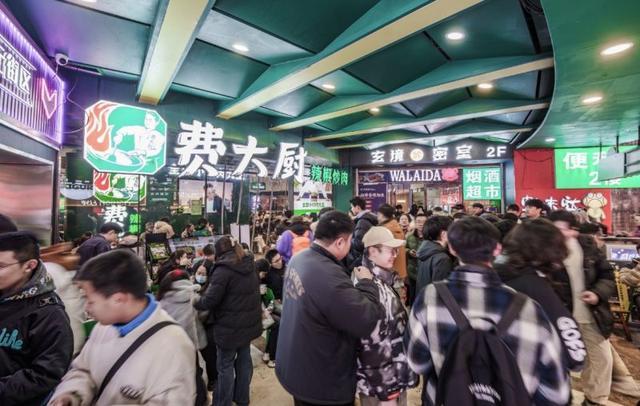
Core Insights - The restaurant industry experienced a significant surge in consumer traffic during the New Year's holiday, marking a hopeful recovery after a challenging year [2][6][8] - Major brands like Hai Di Lao, Xi Bei, and Fei Da Chu reported high demand, with some locations experiencing wait times of up to 1500 tables [2][5][6] Group 1: Market Performance - The New Year's holiday saw a 142% year-on-year increase in traffic for the "must-eat" list on Meituan [3] - Xi Bei reported approximately 500,000 customer visits across its national stores during the holiday period, with an average wait time of 40-50 minutes on January 1 [3][4] - Hai Di Lao's reservation data indicated over 400,000 tables booked for the New Year's period, reflecting strong consumer interest [3][5] Group 2: Brand Strategies - Hai Di Lao launched interactive activities to enhance customer engagement, including themed events and prize giveaways [7] - Xi Bei and other brands implemented pre-holiday promotional strategies to attract customers, such as themed collaborations and lottery events [7][8] - Fei Da Chu opened a new location in Changsha and extended operating hours to accommodate increased demand, with wait times reaching over 200 tables during peak hours [8] Group 3: Industry Outlook - The resurgence in consumer activity during the New Year's holiday is expected to set a positive tone for the restaurant industry in 2026, with overall consumption growth projected to exceed double digits [8] - Analysts suggest that restaurants should adapt to changing consumer preferences by enhancing experiential dining and integrating with tourism [8]

酸菜鱼不香了?太二“爆改”闯川菜红海
凤凰网财经· 2026-01-03 12:37
Core Viewpoint - The article discusses the transformation of the restaurant brand "Tai Er" from a focus on "sauerkraut fish" to a broader identity as "New Tai Er · Fresh Material Sichuan Cuisine," driven by declining performance and market pressures [1][9]. Group 1: Brand Transformation - Tai Er has replaced its iconic "sauerkraut fish" signage with "New Tai Er · Fresh Material Sichuan Cuisine" in several locations, indicating a significant brand overhaul [5][6]. - The new branding includes an expanded menu with over 20 new dishes, focusing on fresh ingredients like live fish, shrimp, beef, chicken, and pork, while the original sauerkraut fish remains but is less emphasized [6][7]. - The restaurant's atmosphere has been updated to appeal to family dining, featuring a more inviting design and an open kitchen concept to enhance transparency about food preparation [6][8]. Group 2: Financial Performance - Tai Er's parent company, Jiu Mao Jiu Group, reported a 10.14% decline in revenue and a 16.05% drop in net profit for the first half of 2025, with Tai Er's revenue specifically down by 13.3% [9][10]. - The restaurant's table turnover rate has halved from 4.9 times per day in 2019 to 2.2 times in the first half of 2025, reflecting decreased customer traffic [10][12]. - The number of Tai Er locations has decreased by over 60 in the past year, indicating challenges in maintaining its previous growth trajectory [10][12]. Group 3: Market Challenges - The decline in popularity of the sauerkraut fish category is evident, with a reduction in the total number of related restaurants since 2022, alongside increased competition from lower-priced fast-casual brands and retail offerings [12][13]. - Tai Er's pricing strategy, with an average customer spend of 70-80 yuan, is seen as a disadvantage compared to both budget and premium Sichuan restaurants [14][15]. - The shift to a "fresh and live" concept is expected to increase supply chain costs by over 15%, with significant renovation costs for restaurants, posing a financial challenge for the company [13][15].