佳能

Search documents
JPEG 活了 30 多年还没被淘汰!后浪一波接一波,它凭啥仍是“网图扛把子”?
程序员的那些事· 2025-06-18 10:59
为什么 JPEG 仍然统治着网络? 三十年前, JPEG 成为我们在互联网上分享数码照片的主要方式 1. 引言 近三十年来,JPEG 一直是万维网的主流图像格式。但它并非网络最初的选择。事实上,首款主流图形浏览器 NCSA Mosaic 最初并不支持嵌入式 JPEG 文件——只支持嵌入式 GIF,以及其他几种已被历史遗忘的格式。然而,JPEG 相比其迅速取代的格式具有诸多优势。 当时 Ernie Smith 在 Tumblr 上转发了这段采访(那时 Tumblr 正是 GIF 的"宇宙中心")。很快,这条帖子被转发数千次,几乎所有人都在反驳威尔特。 不久后,他的这段话甚至成了网络迷因。 这个故事折射出威尔特(2022 年去世)的创作模式:他并非通过委员会协作开发格式。正因如此,他可以自行定义发音。1987 年,作为 CompuServe 员工的他接到开发任务,独自完成了这个产品。最初描述其工作原理的文档?简单到极致。三十八年后的今天,我们仍在使用 GIF,但它从未达到 JPEG 的普及程度。 而大约五年后正式诞生的 JPEG 则完全不同。两者的差异,本质是"事实标准"与"正式标准"的区别,而这正是 JPEG ...


东亚第一内卷国,靠「山寨」发家?
3 6 Ke· 2025-06-17 03:33
Group 1 - Japanese car manufacturers have increasingly focused on disassembling Chinese electric vehicles, with companies like BYD, Geely, and NIO being targeted for detailed analysis [1] - A comprehensive disassembly manual for BYD was sold for approximately 43,700 RMB, indicating a lucrative market for such analyses [1] - This trend reflects a historical pattern where Japan, once known for its imitation, is revisiting its roots in reverse engineering [3][6] Group 2 - Japan's manufacturing industry has evolved from being a "copycat" to a leader in design and innovation, with brands like Muji and renowned designers contributing to its image [4][6] - The historical context reveals that Japan's rise involved meticulous imitation of Western products, leading to significant advancements in various sectors, including automotive and electronics [32][43] - The transformation from imitation to innovation allowed Japan to dominate markets in the 1980s, with companies like Toyota and Sony becoming global leaders [47][49] Group 3 - Despite past successes, Japan's current technological landscape shows a decline in competitiveness, attributed to a conservative approach towards patent usage and innovation [52][56] - The high barriers created by Japanese companies in sectors like DVD and plasma screens have led to a lack of global participation and eventual obsolescence of certain technologies [58][60] - The fear of imitation has resulted in a self-imposed isolation, hindering Japan's ability to adapt and thrive in the 21st-century technology race [62]

产业观察:【数字经济周报】高通24亿收购SerDes IP巨头Alphawave-20250616
GUOTAI HAITONG SECURITIES· 2025-06-16 09:10
Semiconductor Sector - Qualcomm announced the acquisition of Alphawave for $2.4 billion, aiming to enhance its data center capabilities and meet the growing demand for high-performance computing[9] - Micron Technology plans to increase its investment in U.S. manufacturing to $200 billion, creating approximately 90,000 jobs and expanding its semiconductor production capacity[16] - AMD launched the Instinct MI350 series GPUs, featuring a 35x improvement in inference capability compared to the previous MI300 series, utilizing a 3nm process technology[15] Automotive Electronics Sector - GAC Group unveiled the GOVY AirCab flying car, designed for low-altitude travel, with a lightweight carbon fiber structure and a 25-minute quick recharge capability[18] - NIO successfully established a battery swap network across 38 districts in Chongqing, with over 75 battery swap stations operational, achieving over 1 million battery swaps[24] - Leap Motor's C10 and T03 models officially entered the Hong Kong market, showcasing advanced technology and design aimed at young consumers[26] AI Sector - Cambridge University introduced the MTLA attention mechanism, achieving a 5x acceleration in inference speed while reducing memory usage to 1/8 of traditional methods[28] - The Chinese Academy of Sciences launched the "Enlightenment" system for fully automated chip design, achieving performance levels comparable to human experts[31] Metaverse Sector - Snap announced plans to release AR smart glasses, Specs, in 2026, featuring improved design and AI capabilities for enhanced user interaction[39] - Saphlux released a 0.13-inch full-color MicroLED display for AR applications, promising lower manufacturing costs and improved performance[41]



颠覆性技术,让芯片制造速度提高15倍!
半导体行业观察· 2025-06-10 01:18
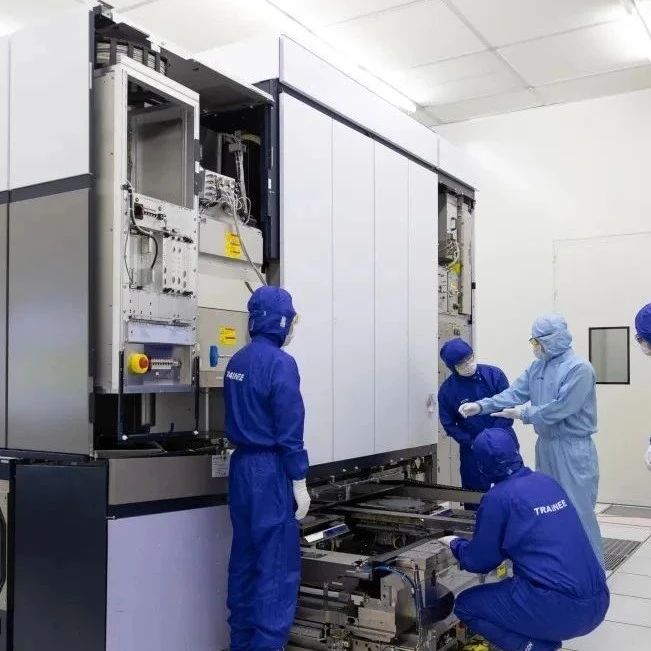
Core Viewpoint - Inversion Semiconductor aims to develop a compact, high-performance light source based on laser wakefield acceleration (LWFA) technology, claiming its power will be 10 times higher than ASML's current EUV sources, potentially revolutionizing semiconductor manufacturing [4][24]. Group 1: Company Overview - Inversion Semiconductor, founded in 2024 by Rohan Karthik and Daniel Vega, is backed by Y Combinator and focuses on creating a new type of light source for advanced lithography [7][24]. - The company plans to utilize a "tabletop" particle accelerator that is 1,000 times smaller than traditional accelerators but can output up to 10 kW of power [4][8]. Group 2: Technology and Innovation - The proposed technology can increase chip manufacturing speed by 15 times, allowing for the powering of multiple lithography tools simultaneously, thus reducing costs [4][25]. - Inversion's light source can generate wavelengths between 20 nm and 6.7 nm, including the 13.5 nm light currently used in ASML's EUV tools [8][24]. - The LWFA method used by Inversion is distinct from traditional methods, producing coherent and monochromatic radiation that is crucial for next-generation lithography systems [12][24]. Group 3: Challenges and Considerations - The development of such a light source requires petawatt-level laser systems, which are complex, expensive, and energy-intensive, posing significant challenges for Inversion [5][21]. - Inversion must either collaborate with ASML or develop its own lithography systems, which would require creating a new ecosystem and could be time-consuming and costly [5][25]. - The company lacks experience in building high-volume, reliable wafer fabrication equipment, which is critical for the semiconductor industry [5][22][25].

visionOS 26增强了空间体验 支持PlayStation VR2 感应控制器
news flash· 2025-06-09 18:54
Core Insights - visionOS 26 introduces enhanced spatial experiences for Apple Vision Pro, allowing widgets to be spatially integrated into the user's environment [1] - Users can customize the appearance of widgets with various frame widths, colors, and depth options [1] - The update enables sharing of spatial experiences among Apple Vision Pro users in the same room [1] Industry Impact - visionOS 26 supports content from Insta360, GoPro, and Canon, including 180-degree, 360-degree, and wide-field content [1] - A new enterprise API allows organizations to create unique spatial experiences exclusive to visionOS [1] - The addition of support for PlayStation VR2 motion controllers opens up new gaming experiences on Apple Vision Pro [1]
突发!广东又一跨境大卖IPO终止
Sou Hu Cai Jing· 2025-06-05 00:22
Core Viewpoint - SIRUI Optical's IPO on the Beijing Stock Exchange has been terminated due to unanswered inquiries regarding the sustainability of its performance growth, product technology, competitive advantages, and market space [1] Company Overview - SIRUI Optical, founded in 2001, is based in Wuguishan Town, Zhongshan City, Guangdong Province, and specializes in photography and videography equipment [2] - The company's product range includes camera support rigs, broadcasting equipment, optical lenses, photography bags, and dehumidifying cabinets, with the "SIRUI" brand widely used among photography enthusiasts and professionals [2] Financial Performance - From 2021 to 2023, SIRUI Optical's revenue increased from 189 million yuan to 262 million yuan, while net profit rose from 17.1 million yuan to 31.3 million yuan [4] - In 2023, the company reported total assets of approximately 418 million yuan, with total equity of about 166.6 million yuan and a debt-to-asset ratio of 55.13% [3] - Despite a 30.08% increase in revenue in 2024, the company experienced a 35.33% decline in net profit, indicating a "growth without profit" scenario [4] Market and Sales - SIRUI Optical's products are primarily exported to the United States, Europe, Japan, and South Korea, with overseas sales accounting for approximately 76% of total revenue during the reporting periods [4] - The company has faced challenges due to tariffs imposed by the U.S., raising concerns about the stability of its foreign sales amid potential trade tensions [5] Regulatory Concerns - The Beijing Stock Exchange's inquiries focused on the rationale behind the company's 2023 performance growth, the sustainability of foreign sales, and the impact of international trade policies on its business [7] - Specific questions included the need for a quantitative analysis of revenue growth drivers and a comprehensive assessment of external market conditions affecting sales [7]

摩根大通:中美关系缓和、超长端利率波动下的日本股票交易
摩根· 2025-06-04 01:50
Investment Rating - The report maintains an Overweight rating on domestic demand-oriented stocks, banks, IT services, and financials [21][68]. Core Insights - Japanese equities are supported by upward revisions to the global economic outlook following the US-China trade agreement, easing appreciation pressures on the yen due to changes in monetary policy expectations from the Bank of Japan and the Federal Reserve [7][9]. - A recovery in the domestic economy has been delayed by elevated inflation, but the yen's rebound and declining fuel prices are expected to gradually ease inflation and support domestic demand-oriented stocks [7][9]. - The report estimates a 4-6% negative impact on corporate earnings from US tariffs, but corporate forecasts remain resilient, particularly among domestic demand-oriented companies [10][69]. - Ultra-long interest rates have reached record highs, reflecting deteriorating supply-demand conditions and concerns about potential consumption tax cuts after the Upper House election [11][24]. - The decoupling of the equities market and the bond market is expected to continue, with historical trends indicating that bank and real estate sector stocks may outperform during rising interest rate cycles [12][25]. - Corporate reforms are progressing more quickly than anticipated, with significant share buybacks and restructuring efforts, particularly noted in the NTT group [14][70]. Summary by Sections Economic Outlook - The global economic growth expectations have been revised upward, positively impacting Japanese equities, which are closely correlated with the global economic cycle [9]. - The domestic economic recovery is anticipated to improve, supported by a rebound in consumer spending despite current inflationary pressures [21]. Tariff Impact - The report highlights that the market has already priced in tariff cuts, particularly in the auto sector, and further upside will require new catalysts [10][69]. - Corporate earnings guidance for FY2025 indicates a flat sales outlook with a net profit decline of 5.8%, but domestic demand-related sectors are expected to perform better [68]. Interest Rates - The report notes that ultra-long interest rates have risen sharply, with the 30-year JGB yield reaching record highs, which has not yet been fully priced into the equity markets [11][24]. - Rising interest rates are not viewed as a risk event that would lead to a decline in the stock market, as they are occurring alongside improvements in economic fundamentals [24]. Corporate Reforms - Corporate reforms are highlighted as a key investment theme, with larger-than-expected share buybacks and restructuring efforts indicating strong momentum [14][70]. - The report emphasizes the importance of monitoring the outcomes of the Upper House election and potential fiscal policy changes, particularly regarding consumption tax [13][25].
电子信息制造业:数字时代的核心引擎与创新载体 市场、创新与竞争交织的产业图景
Huan Qiu Wang· 2025-06-03 07:49
Core Viewpoint - The electronic information manufacturing industry is undergoing a transformation driven by disruptive technological breakthroughs and collaborative innovation, reshaping production and lifestyle in society [1] Market Demand - Consumption Upgrade, Industrial Transformation - The demand in the electronic information manufacturing industry is increasingly diverse and complex, with consumption upgrades and industrial transformations as key guiding directions [2] - The consumer electronics sector, particularly smartphones and wearable devices, is experiencing continuous growth and upgrades, with enhanced performance requirements leading to significant advancements in processing technology and camera capabilities [2] - Industry applications, especially in automotive electronics and industrial internet, show strong demand for electronic information manufacturing products, with advanced driver-assistance systems (ADAS) and industrial robots requiring high-performance chips and sensors [3] - Emerging technology fields, such as quantum computing and space exploration, are creating new demands for specialized electronic components that can operate under extreme conditions [3] Technological Innovation - Breaking Bottlenecks, Fusion Development - Hardware technology breakthroughs are evident in chip manufacturing processes, transitioning from micron to nanometer processes, significantly enhancing chip integration and performance [4] - Software innovation is marked by the application of artificial intelligence algorithms in various fields, improving functionalities in smartphones and industrial internet applications [5] - The trend of hardware and software collaboration is emerging, particularly in the Internet of Things (IoT) and smart automotive sectors, optimizing resource allocation and data processing efficiency [6] Industry Competition - Technological Leadership, Strategic Layout - Intense competition exists between industry giants and emerging companies in the electronic information manufacturing sector, with established players like Intel and Apple maintaining significant market positions through innovation and brand influence [7] - National policies are shaping the development of the electronic information industry, with regions like Shenzhen and the Yangtze River Delta in China playing crucial roles in the global supply chain [8] - Intellectual property and standard-setting have become focal points of competition, with companies like Huawei and ZTE actively participating in the formulation of 5G standards to enhance their market influence [9]
一觉醒来,我们成“工业克苏鲁”了
3 6 Ke· 2025-05-29 02:38
Core Viewpoint - The article draws a parallel between the concept of "Cthulhu" in literature and China's manufacturing industry, suggesting that China's manufacturing capabilities are vast, complex, and often misunderstood, akin to the ancient gods in Lovecraft's mythos [3][6]. Group 1: Manufacturing Cost Dynamics - The article highlights that the low prices of Chinese manufactured goods, such as a disposable lighter costing around 0.47 yuan each, are not due to low manufacturing costs but rather due to innovative business models that focus on advertising revenue rather than product sales [6][8]. - It argues that foreign manufacturing is expensive not because of production costs but due to high brand premiums and inefficiencies in non-manufacturing processes [6][7]. - The example of GoPro illustrates how Chinese manufacturers have successfully reduced costs by utilizing reverse engineering and modular manufacturing, allowing them to create similar products at significantly lower prices [8][9]. Group 2: Reverse Innovation and Supply Chain - Chinese manufacturers have adopted "reverse innovation" strategies, allowing them to bypass patent barriers by developing alternative technologies that achieve similar functionalities without infringing on existing patents [8][9]. - The modular manufacturing approach in China enables rapid assembly of products using standardized components, which contrasts with the custom manufacturing processes often used by Western brands [11][12]. - The article emphasizes the strength of China's supply chain, particularly in Shenzhen, where a dense network of suppliers and manufacturers facilitates quick and cost-effective production [13][16]. Group 3: R&D Efficiency - The article discusses how China's engineering workforce, which numbers around 4 million, allows for high efficiency in research and development, enabling rapid product iterations and market responsiveness [19][20]. - It contrasts the slow and costly R&D processes in Western companies, where high salaries and small teams hinder innovation speed, with China's ability to quickly develop and test new products [18][19]. - The success of companies like DJI in the drone market exemplifies how rapid iteration and a full-chain engineering approach can lead to significant market share and competitive pricing [20][22]. Group 4: Market Impact and Consumer Perception - The rise of Chinese manufacturing has disrupted the market for high-end products, making previously luxury items accessible to a broader consumer base [23][26]. - The article likens the current competition between Chinese manufacturers and Western luxury brands to the historical conflict between artisanal guilds and emerging factories, highlighting the shift in consumer perception regarding product value and pricing [25][26]. - It concludes that the success of Chinese manufacturing reveals inefficiencies in traditional high-end production processes, prompting consumers to reassess what constitutes true value in products [26][27].


是时候重估中国相机了
Hua Er Jie Jian Wen· 2025-05-28 13:07
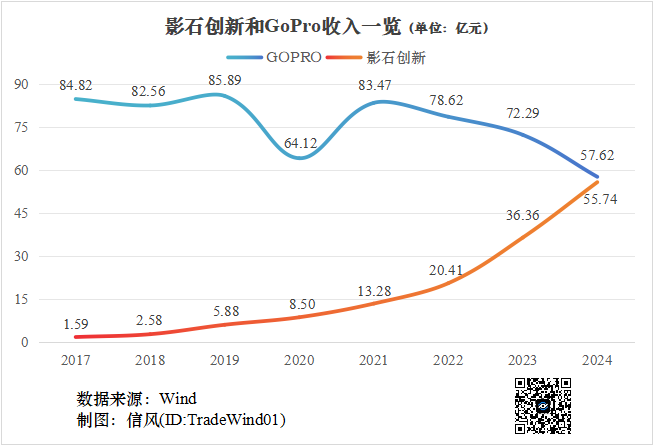
Core Insights - The article highlights the rise of Insta360, a Chinese company, which is set to launch its IPO on the STAR Market, becoming the first camera brand to enter the A-share market after nearly five years of preparation [2][3] - Insta360 has achieved a remarkable compound annual growth rate (CAGR) of 65% over the past three years, with its core product, the panoramic camera, holding a global market share of 67% in 2023, significantly up from 47% in 2021 [4] - The company is positioned to generate revenues of 5.6 billion yuan and a net profit of 1 billion yuan in 2024, contrasting sharply with GoPro, which is facing significant losses [4][19] Company Overview - Insta360 was founded only ten years ago and has quickly established itself as a competitor to GoPro, which has been the market leader in action cameras for years [15][18] - The company has effectively leveraged the rise of social media and streaming platforms to capture market share in a declining traditional camera market [4][7] - Insta360's innovative product design, such as the Nano panoramic camera, has addressed consumer pain points by enabling easy connectivity and sharing [16] Competitive Landscape - The article discusses the historical dominance of Japanese brands like Nikon and Canon in the camera industry, which has been disrupted by the rise of smartphones and companies like GoPro [7][8] - GoPro's strategic missteps, including its attempt to pivot towards becoming a software company, have left it vulnerable to competition from Insta360 and other emerging brands [21][23] - The article notes that GoPro's market value has plummeted by over 90% since its IPO, while Insta360 is on a growth trajectory [20][42] Market Trends - The rise of short video platforms like TikTok has created a favorable environment for Insta360, allowing it to capitalize on the demand for user-generated content [28][30] - Insta360's latest flagship product, the X5 panoramic camera, boasts superior specifications compared to GoPro's offerings, indicating a shift in competitive dynamics [32][34] - The company has adopted a free model for its AI editing software, contrasting with GoPro's subscription-based approach, which has implications for user engagement and revenue generation [35][36] Industry Dynamics - The article emphasizes the importance of the Guangdong-Hong Kong-Macau Greater Bay Area in supporting Insta360's growth through a robust supply chain [42][44] - The efficiency of Insta360's supply chain, primarily based in Shenzhen, has contributed to its higher profit margins compared to GoPro, which relies on outsourced manufacturing [43] - The competition between Insta360 and GoPro is framed as a broader contest between the innovation ecosystems of China and Silicon Valley [46][47]