
联发科

Search documents
聚焦智能汽车“神经系统”:芯升半导体时敏通信芯片的突围之路
半导体芯闻· 2025-12-24 10:19
Core Viewpoint - The article discusses the evolution of smart automotive communication systems, emphasizing the importance of Time-Sensitive Networking (TSN) as a critical infrastructure for intelligent driving, highlighting the dominance of international giants in this field and the emergence of domestic players like Beijing Chiprise Semiconductor Technology Co., Ltd. [2][6] Group 1: Smart Automotive Communication - Traditional automotive communication networks are limited in bandwidth and speed, while smart vehicles require high-speed, reliable data transmission to support multiple sensors and real-time processing [4][6] - TSN technology enhances traditional Ethernet to ensure deterministic and reliable data transmission, crucial for safety in smart driving scenarios [6][10] Group 2: Competitive Differentiation - Chiprise Semiconductor aims to create value through differentiated innovation rather than simple replacements, focusing on the unique demands of the Chinese market [8][10] - The company is developing next-generation vehicle communication technologies, including the SV37XX series TS-PON chips, which support high-speed data transmission and various interface protocols [8][10] Group 3: Future Trends in Communication - The trend of "optical fiber replacing copper" is seen as inevitable for future vehicle communication, driven by the increasing demand for high bandwidth and low latency in automotive applications [10][12] - The company believes that as the automotive industry matures, the challenges of integrating fiber optics in vehicles will be addressed, leading to faster adoption of this technology [10][12] Group 4: Strategic Vision - Chiprise Semiconductor's strategy extends beyond the automotive sector, aiming to provide high-speed, time-sensitive communication solutions for various intelligent applications, including industrial automation and robotics [12][14] - The automotive industry is viewed as a foundational market due to its scale and stringent quality standards, which can help develop technologies applicable to other sectors [12][14] Group 5: Industry Outlook - China's automotive production is projected to reach 32 to 33 million units this year, with a growing demand for next-generation intelligent semiconductors [14][15] - The Chinese automotive chip industry is expected to undergo significant transformation, moving from reliance on imports to developing autonomous capabilities and eventually exporting advanced technologies [14][15]


华米OV竞速AI,谁都不想成为“诺基亚”
3 6 Ke· 2025-12-23 04:29
Core Insights - The smartphone market is experiencing a dichotomy, with stagnant hardware specifications and extended replacement cycles on one side, while AI smartphones are gaining traction on the other [2][3][4] Market Trends - The average global smartphone replacement rate has dropped to 23.7%, corresponding to a replacement cycle of approximately 51 months [2] - AI smartphones are projected to reach a global shipment of 170 million units in 2024, accounting for 15% of total smartphone shipments [3] - In China, the share of AI smartphones is expected to exceed 50% by 2027, with a global penetration rate surpassing 35% by 2026 [4] Company Performance - As of Q3 2025, vivo leads the Chinese smartphone market with a 17.2% share, despite a year-on-year decline of 7.8% [8][9] - Xiaomi and OPPO are hovering around a 14% market share, with Xiaomi experiencing a 1.7% decline and OPPO a slight increase of 0.4% [8][9] - Honor's market share stands at 14.4%, down 1.5% year-on-year [8][9] AI Integration and Strategy - The introduction of AI features in smartphones has not yet significantly boosted overall sales, but there is a noticeable impact in the high-end market segment [11] - Companies like vivo and OPPO are heavily investing in AI, with vivo's investment exceeding 23 billion yuan and OPPO's surpassing 10 billion yuan [13][15] - Honor plans to invest $10 billion in AI terminal technology over the next five years, while Xiaomi aims to invest over 200 billion yuan in AI research and development [15] Technological Advancements - The shift towards "on-device AI" is a key focus, allowing smartphones to perform complex tasks independently [16][20] - Major advancements in AI chip performance are enabling more sophisticated AI applications in smartphones, with Qualcomm and MediaTek leading the way [21][22][24] Competitive Landscape - The smartphone market is highly concentrated, with the top six brands holding a combined market share of 91.8% [11] - The overall smartphone shipment in China is projected to remain stagnant, with a slight year-on-year decline of 0.3% [11][13] Future Outlook - The AI smartphone market is seen as a critical area for growth, with companies needing to adapt or risk obsolescence [26][30] - Despite challenges such as rising costs and competition from other smart devices, smartphones remain the central hub for personal AI interactions [30]

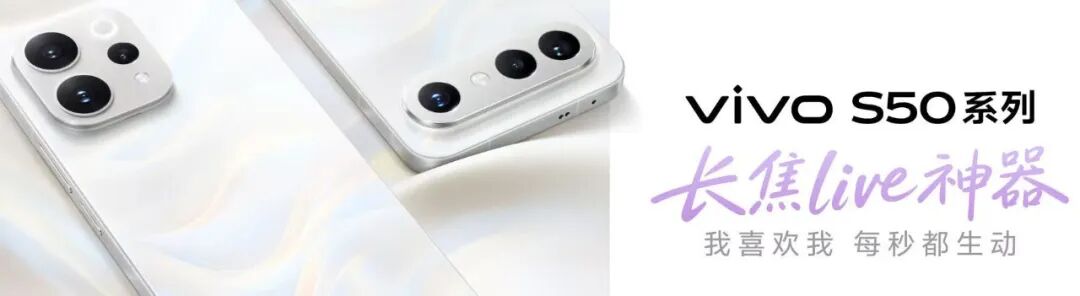
手游体验再升级,天玑9500瞄准移动端“主机化”体验
Xin Lang Cai Jing· 2025-12-23 02:40
Core Viewpoint - The launch of MediaTek's Dimensity 9500 chip aims to enhance mobile gaming experiences by providing a "console-like" performance, addressing stability and efficiency challenges in high-load gaming scenarios [1][10]. Group 1: CPU Architecture - The Dimensity 9500 utilizes TSMC's third-generation 3nm process (N3P) and features a full big-core architecture with a combination of 4 ultra-large cores and 4 large cores, achieving a maximum clock speed of 4.21GHz for the C1-Ultra core [3][12]. - MediaTek claims a maximum single-core performance improvement of 32% and a multi-core performance increase of 17% compared to the previous generation, with peak power consumption for ultra-large cores reduced by up to 55% [3][13]. Group 2: GPU Performance - The chip is equipped with the G1-Ultra GPU, which boasts a peak performance increase of 33% and an energy efficiency improvement of 42% at the same peak performance level [5][15]. - Hardware ray tracing performance has improved by 119%, and the chip supports Vulkan Raytracing Pipeline, enabling a 120FPS ray-traced gaming experience [5][15]. Group 3: Storage and Memory - The Dimensity 9500 introduces support for 4-lane UFS 4.1, claiming a "doubling" of sequential read and write speeds to reduce loading times for large resource packages [7][17]. - It features the second-generation Dimensity scheduling engine, which aims to minimize frame time fluctuations through finer-grained prediction and allocation [7][17]. Group 4: System Optimization - The overall design of the Dimensity 9500 focuses on systematic optimization for mobile gaming under heavy load, balancing high graphics quality and frame rates while managing power consumption and temperature [9][18]. - Technologies like MRFC 3.0 frame doubling and Super zRAM are included to enhance responsiveness during heavy loads and multitasking [7][17].
TPU 订单狂增,谷歌扩产新一代芯片!谷歌首席科学家:我们使用 10 多年了,一直非常满意
AI前线· 2025-12-20 05:32
作者 | 褚杏娟 所以,这就是我们的初衷:如果我们设计专门用于这类机器学习计算的硬件,也就是密集低精度线性代数相关的硬件,就能大 幅提升效率。事实也证明了这一点。第一代 TPU 的能效比当时的 CPU 或 GPU 高出 30 到 70 倍,速度也快 15 到 30 倍。 根据最新报道,随着谷歌 TPU 芯片需求大涨,谷歌扩大了对联发科合作定制新一代 TPU v7e 的订单,订单量比原规划激增数 倍。消息称,联发科为谷歌操刀定制的首款 TPU v7e 将于下季度末进入风险性试产,并再拿下谷歌下一代 TPU v8e 的订单。 联发科大单获得了台积电的先进封装产能支持,2027 年台积电提供给联发科谷歌项目的 CoWoS 产能更将暴增 7 倍以上。 尽管承认谷歌在过去 10 年中取得了进步,但英伟达认为其大约领先谷歌 TPU 两年。由于人工智能模型变化迅速,英伟达认为 谷歌很难让云服务提供商采用 TPU,因为 TPU 是为更特定的模型类型而设计的。相比之下,英伟达相信其更灵活、可编程的 平台仍然是构建大规模云端人工智能基础设施的最佳选择。 但无论如何,谷歌确实让英伟达产生了些许危机。近日,在 NeurIPS 大会期 ...


【招银研究|行业深度】AI系列研究——端侧AI将重塑全球智能终端产业格局
招商银行研究· 2025-12-19 08:58
Core Insights - Edge AI is leading a technological paradigm shift, reshaping the new landscape of the smart terminal industry by enabling local execution of AI models, resulting in low latency, high energy efficiency, and privacy protection [4][9][10] - The development of Edge AI is driven by innovations in AI computing architecture, multimodal perception and interaction, and system-level AI integration, transitioning smart devices from mere "computing nodes" to "local reasoning and autonomous decision-making" [4][6][10] Application Ecosystem - Multiscenario integration is accelerating the growth of the Edge AI terminal market, with AI PCs expected to achieve a penetration rate of 64% by 2028, and AI smartphones projected to exceed 900 million units in shipments by the same year [5][6] - AI wearables are anticipated to reach a market size of $153.8 billion by 2030, while AI smart homes are expected to grow to $537.2 billion, highlighting Edge AI as the core growth engine of smart hardware [5][6] Upstream Ecosystem - Breakthroughs in advanced process technology and Chiplet architecture are driving significant performance improvements in Edge AI, with NPU computing power increasing to 50-100 TOPS to meet local model operation demands [6][10] - The global Edge AI processor market is projected to grow from $31 billion in 2022 to $60.2 billion by 2028, with major players like Qualcomm, Apple, and NVIDIA dominating the high-end market [6][10] Business Recommendations - Companies should prioritize Edge AI as a key strategic focus, developing differentiated strategies around terminals, supply chains, and application scenarios to capitalize on this emerging trend [6]


台积电(TSM.US)涨逾3% 大摩预计四季度公司毛利率将突破60%
Zhi Tong Cai Jing· 2025-12-18 17:16
周四,台积电(TSM.US)涨逾3%,报286.17美元。消息面上,据报道,台积电2nm的量产工作会在今年 底正式启动,目前两座工厂的2nm产能已经被预订一空,台积电需要额外新建工厂来满足客户需求,这 项工程预计需要286亿美元的投资。据悉,苹果、高通、联发科、AMD等多家企业都是台积电2nm工艺 的客户,台积电难以满足所有客户的需求,目前苹果拿下了超半数的初始产能,剩下的产能则由其它客 户瓜分。按照计划,台积电将在2026年底前把月产量提升至10万片。 摩根士丹利上调台积电目标股价,从1688元台币上调至1888元台币。该行认为其营收和利润率具有增长 潜力,并建议投资者在2026年初之前增持该股。预计台积电将在指引中显示2026年营收增长在20%中段 区间,最终实现同比增长30%;并预计公司在2025年第四季度毛利率将突破60%,2026年全年保持在 60%以上。 ...

美股异动 | 台积电(TSM.US)涨逾3% 大摩预计四季度公司毛利率将突破60%
Zhi Tong Cai Jing· 2025-12-18 15:55
Core Viewpoint - TSMC is set to begin mass production of its 2nm technology by the end of this year, with significant demand from major clients like Apple, Qualcomm, MediaTek, and AMD, leading to a need for additional factory construction to meet this demand [1] Group 1: Company Developments - TSMC's 2nm production capacity has been fully booked, necessitating an investment of $28.6 billion for new factory construction to satisfy customer needs [1] - Apple has secured over half of the initial 2nm production capacity, with remaining capacity allocated to other clients [1] - TSMC plans to increase its monthly production to 100,000 wafers by the end of 2026 [1] Group 2: Financial Outlook - Morgan Stanley has raised TSMC's target stock price from NT$1,688 to NT$1,888, citing growth potential in revenue and profit margins [1] - TSMC is expected to show a revenue growth guidance in the mid-20% range for 2026, ultimately achieving a year-on-year growth of 30% [1] - The company is projected to exceed a gross margin of 60% in Q4 2025 and maintain over 60% for the entire year of 2026 [1]
英伟达市占高达71.2%,AMD仅为5.8%
半导体芯闻· 2025-12-18 10:24
Core Insights - NVIDIA holds a dominant position in the cloud accelerator market with a 71.2% market share, while AMD only accounts for 5.8% [2] - NVIDIA has successfully deployed its GPUs in 258 data centers, indicating strong demand for its products [2] - The potential for market share competition exists between NVIDIA and AMD as more data centers adopt AMD accelerators [3] Market Share Analysis - NVIDIA's GPUs, including older models like A100 and H100, continue to capture significant portions of the GPU cloud market [2] - AMD's Instinct MI GPUs are deployed in only 21 out of 359 data centers, highlighting their limited presence in the cloud services sector [3] - Custom ASIC designs represent a substantial market opportunity, with 22.3% of data centers utilizing such designs, driven by products like Google's TPU and AWS Trainium [3] Executive Insights - Jensen Huang, CEO of NVIDIA, expresses satisfaction with his life and career, emphasizing the company's role in driving the AI revolution [4] - Huang's recent meetings with political figures, including former President Trump, may lead to eased export restrictions on NVIDIA chips to lucrative markets like China and the Middle East [4][5] - The potential lifting of export controls could significantly benefit NVIDIA, allowing access to a market worth billions [6]


IO资本赵占祥:绕开HBM依赖,国产AI芯片正在走哪些新路线?丨GAIR 2025
雷峰网· 2025-12-18 10:10
" 云端之外,端侧AI也是国产芯片下一个主战场。 " 作者丨赵之齐 编辑丨包永刚 2025年12月12-13日,第八届GAIR全球人工智能与机器人大会在深圳·博林天瑞喜来登酒店正式启幕。 作为AI产学研投界的标杆盛会,GAIR自2016年创办以来,始终坚守"传承+创新"内核,始终致力于连接 技术前沿与产业实践。 在人工智能逐步成为国家竞争核心变量的当下,算力正以前所未有的速度重塑技术路径与产业结构。13日 举办的"AI算力新十年"专场聚焦智能体系的底层核心——算力,从架构演进、生态构建到产业化落地展开 系统讨论,试图为未来十年的中国AI产业,厘清关键变量与发展方向。 IO资本创始合伙人赵占祥,专注于硬科技与半导体领域的早期及成长期投资,在大会上,他发表了题为 《大模型时代,国产AI芯片破局的几种新技术路线》 的演讲。 | | | | 基于SRAM的Al推理芯片 | | --- | --- | --- | --- | | GPGPU | | 低时延 | 创新推理架构提供 | | | | | < 1ms 时延 | | 推理时延高 | 依靠同步并发处理大 | 低成本 | 同时实现高吞吐率,单 位成本性能提升10x ...
难怪高通急了
半导体行业观察· 2025-12-18 01:02
Core Insights - Media reports indicate that MediaTek is set to become a focal point in the semiconductor industry due to its collaboration with Google on the TPU v7e, which is expected to enter risk trial production by the end of Q1 2026, with explosive growth in order volume anticipated [1] - The estimated shipment of TPU v7e from 2026 to 2027 could contribute over two times MediaTek's equity in profits, suggesting that the company's revenue targets may be conservative [1] - MediaTek's core competitiveness in the cloud ASIC market is attributed to its SerDes technology, which has been showcased in collaboration with NVIDIA, indicating a strong position in high-speed data transmission [4][5] MediaTek's ASIC Business - MediaTek's annual production capacity for CoWoS is projected to increase from approximately 10,000 units in 2026 to over 150,000 units by 2027, a sevenfold increase [1] - The company has also secured a significant order from Meta for a 2nm ASIC, indicating its growing influence in the cloud service provider market [4] - MediaTek's strategy focuses on deep collaboration with major clients like Google and Meta, emphasizing a targeted approach rather than broad expansion [19] Qualcomm's Challenges - Qualcomm is experiencing anxiety due to its reliance on a single business model, particularly as the smartphone market growth slows and competition intensifies [7] - Despite reporting a 10% year-over-year revenue growth to $112.7 billion, Qualcomm's smartphone business still accounts for over 62% of its revenue, raising concerns about its long-term sustainability [8] - The decline in Qualcomm's high-margin licensing revenue and the slow progress in its AI chip initiatives highlight the company's vulnerabilities in adapting to the evolving market landscape [9][10] Acquisition Strategy - Qualcomm has accelerated its acquisition strategy to address its AI business shortcomings, acquiring several companies to enhance its capabilities, including Edge Impulse and Alphawave Semi [11][12] - However, the effectiveness of these acquisitions in generating immediate revenue remains uncertain, as they primarily address long-term strategic needs rather than short-term financial relief [13] - The comparison with Intel's past acquisition strategy reveals potential pitfalls for Qualcomm, as both companies face strategic clarity issues while attempting to diversify their business models [15][16] Conclusion - The contrasting paths of MediaTek and Qualcomm illustrate the changing dynamics of competition in the AI semiconductor market, where specialization and deep customer relationships are becoming more critical than broad diversification [19][20] - MediaTek's focused approach on ASIC design services and its collaboration with leading tech companies position it favorably, while Qualcomm's scattered strategy may hinder its ability to capitalize on emerging opportunities in the AI space [19][20]

