舍得酒业

Search documents
翌耀科技冲刺IPO 郭广昌再拓资本版图
Bei Jing Shang Bao· 2026-01-08 15:50
Core Viewpoint - Fosun Group is actively expanding its capital footprint, with its subsidiary Yiyao Technology initiating the IPO process to list on the A-share market, which would mark another addition to its portfolio of listed companies [1][3]. Group 1: Company Overview - Yiyao Technology, established on July 31, 2018, has a registered capital of approximately 625 million yuan and currently has no controlling shareholder [3]. - The largest shareholder of Yiyao Technology is Ningbo Meishan Bonded Port Area Fuliang Investment Partnership, holding 22.16% of the shares, which is backed by Fosun High Technology Group [3][4]. - Fosun Group has a total of 10 listed companies, including 6 on the A-share market and 4 on the Hong Kong stock exchange, with a focus on sectors such as health, happiness, wealth, and intelligent manufacturing [6][7]. Group 2: Financial Performance - The financial performance of Fosun's listed companies shows significant divergence, with 6 A-share companies reporting a decline in net profits, reflecting operational pressures in certain sectors [1][8]. - In the first three quarters of 2025, among the 6 A-share companies, Shanghai Steel Union led with revenue of approximately 57.32 billion yuan, while Fosun Pharma and Yuyuan Holdings followed with revenues of 29.39 billion yuan and 28.4 billion yuan, respectively [8]. - In the Hong Kong market, Fosun International and Furuya Medical Technology reported a decline in net profits, while Fuhong Hanlin showed a year-on-year increase in net profit [8]. Group 3: Strategic Direction - The push for IPOs among Fosun's subsidiaries is seen as a strategic move to enhance capital efficiency and meet business growth demands, particularly in the high-tech intelligent manufacturing sector [4][7]. - Fosun's strategy is shifting from diversified expansion to a focus on core sectors, aiming to optimize cash flow and strengthen its capital platform in health and intelligent manufacturing [7].


大动作!翌耀科技启动上市辅导 复星系再拓资本版图
Bei Jing Shang Bao· 2026-01-08 15:03
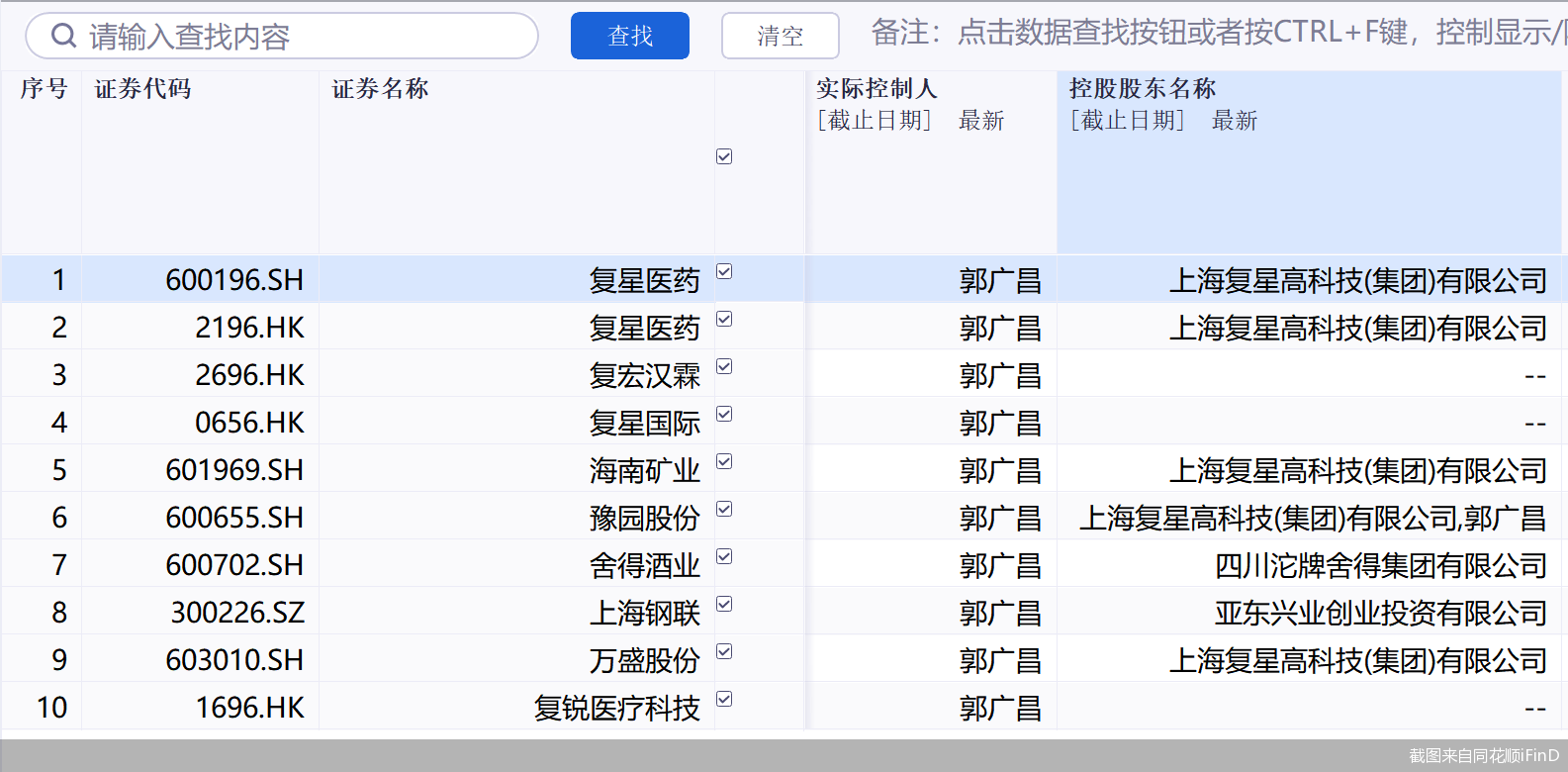
Group 1 - Fosun International's subsidiary, Shanghai Yiyao Technology Co., Ltd., has initiated the IPO process, aiming to expand its capital footprint in the A-share market [1][3] - Under the leadership of Guo Guangchang, Fosun has evolved into an innovation-driven global family consumption industry group, focusing on a happiness ecosystem centered around health, happiness, and wealth [1][4] - Currently, Fosun controls six A-share listed companies and four Hong Kong listed companies, with four of the A-share companies having a market capitalization exceeding 100 billion [1][6] Group 2 - The performance of Fosun's listed companies shows significant divergence, with six companies reporting a decline in net profit, reflecting operational pressures in certain sectors [1][8] - In the first three quarters of 2025, six A-share companies reported revenues exceeding 2 billion, with Shanghai Steel Union leading at approximately 57.32 billion [8] - Among the A-share companies, only Fosun Pharma and Shanghai Steel Union reported year-on-year growth in net profit, while others, including Yuyuan and Hainan Mining, experienced declines [8][9] Group 3 - Yiyao Technology, established in July 2018, focuses on providing high-tech solutions across various intelligent manufacturing sectors, including automotive and food automation [3][4] - Fosun's total assets exceeded 796.5 billion as of December 31, 2024, with a significant portion of revenue coming from international operations [4][6] - The group is shifting its strategy from diversification to deepening its core sectors, particularly in health and intelligent manufacturing, to optimize capital structure and enhance cash flow [7]
大动作!翌耀科技启动上市辅导,复星系再拓资本版图
Bei Jing Shang Bao· 2026-01-08 14:05
Group 1 - The core point of the article is that Fosun International is expanding its capital footprint by pushing its subsidiary, Shanghai Yiyao Technology Co., Ltd., towards an IPO in the A-share market, which would mark another addition to its portfolio of listed companies [1][3] - Fosun has developed into an innovative global family consumption industry group over more than 30 years, focusing on a happiness ecosystem centered around health, happiness, and wealth [1][4] - As of now, Fosun controls six A-share listed companies and four Hong Kong-listed companies, with four of the A-share companies having a market capitalization exceeding 10 billion [1][6] Group 2 - The financial performance of Fosun's listed companies shows significant divergence, with six companies reporting a decline in net profit, reflecting operational pressures in certain sectors [1][8] - In the first three quarters of 2025, among the six A-share companies, Shanghai Steel Union reported the highest revenue of approximately 57.32 billion, while the net profit of several companies, including Yuyuan and Hainan Mining, saw a year-on-year decline [8][9] - Fosun's strategic focus is shifting from diversified expansion to deepening its core sectors, particularly in health and intelligent manufacturing, as indicated by its efforts to optimize cash flow and enhance capital efficiency [7]
预见2026|白酒经历更艰难一年后,消费者和场景重构刚刚开始
Di Yi Cai Jing Zi Xun· 2026-01-08 08:13
Core Insights - The white liquor industry is experiencing a significant downturn, with 2025 being particularly challenging due to rational consumption and ongoing anti-corruption efforts, prompting companies to reassess their market strategies [1][4] Group 1: Market Conditions - Many liquor businesses, including those in Tianjin, reported losses in 2025, with sales figures dropping significantly compared to previous years, indicating a severe market contraction [2][4] - The average retail price of major liquor brands has decreased by 30% in 2025, with 99% of premium liquor prices falling [3][4] - The industry is facing a deep adjustment period, with many companies experiencing double-digit declines in revenue and net profit in the third quarter of 2025 [4] Group 2: Changes in Business Strategy - Liquor companies are shifting their focus from traditional sales models to consumer-centric approaches, emphasizing supply-demand matching and price balance [6][8] - There is a notable trend of companies avoiding long-term contracts with suppliers to mitigate financial risks associated with unsold inventory [3][4] - New growth models are emerging, with companies like Moutai and Fenjiu focusing on consumer engagement and exploring new consumption scenarios [6][7] Group 3: Consumer Behavior and Preferences - The demand for liquor is declining, particularly in corporate gifting and festive occasions, leading to increased competition and pressure on distributors [3][5] - The industry is witnessing a shift towards lower-alcohol products and innovative offerings to attract younger consumers and diversify market reach [7][8] - The implementation of new regulations against wasteful consumption has further altered drinking scenarios, compelling companies to adapt their strategies [7][8]





酒价内参1月8日价格发布 青花郎环比下跌15元/瓶
Xin Lang Cai Jing· 2026-01-08 01:25
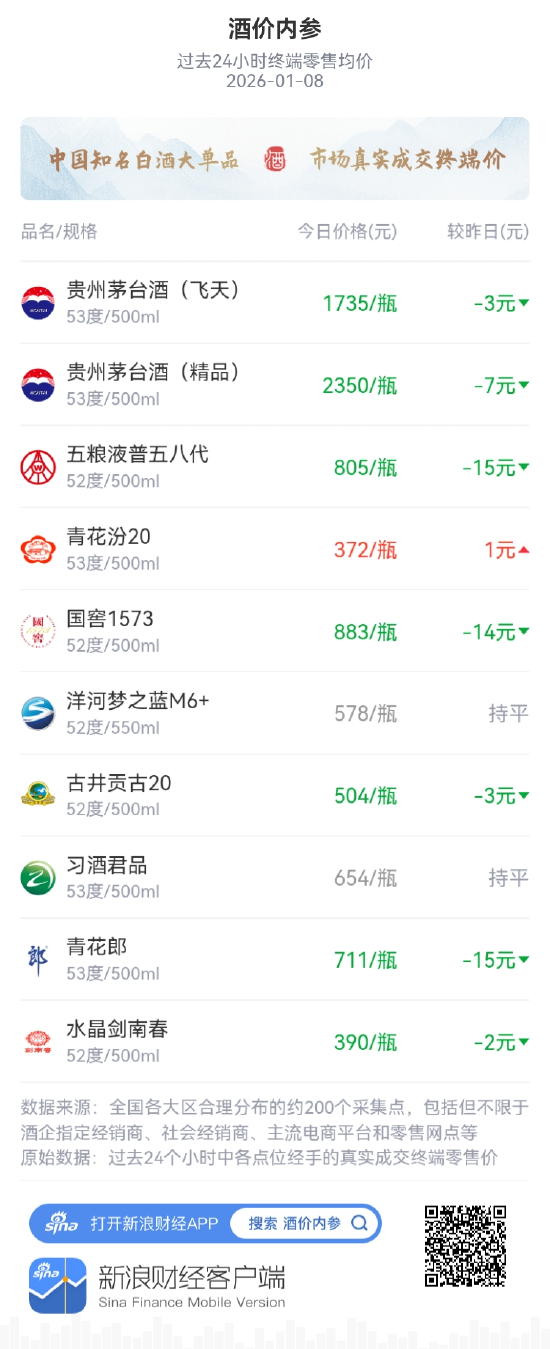
Core Insights - The core viewpoint of the news is that the Chinese liquor market, particularly the top ten liquor products, has experienced a significant decline in retail prices, indicating a downward pressure on the market and a lack of confidence among consumers [1][6][7]. Price Trends - The average retail price of the top ten liquor products dropped to 8,982 yuan on January 8, down 58 yuan from the previous day, marking the lowest point since November 18 of the previous year [1][6]. - Seven out of the ten products saw price declines, with notable drops including Wuliangye (down 15 yuan) and Qinghua Lang (down 15 yuan) [7][9]. - Other products that experienced price reductions include Guojiao 1573 (down 14 yuan), boutique Moutai (down 7 yuan), and others with smaller declines [7][10]. Market Sentiment - The overall market is characterized by a widespread decline, reflecting insufficient confidence among consumers and investors [7][8]. - Only one product, Qinghua Fen 20, saw a slight increase of 1 yuan, while others remained stable [7][9]. Data Collection Methodology - The data for the liquor price reference is sourced from approximately 200 collection points across various regions, including designated distributors, social distributors, major e-commerce platforms, and retail outlets, ensuring a comprehensive and objective representation of market prices [2][7]. ESG Rankings - Five liquor companies were included in the "2025 China ESG Top 100" list published by Sina Finance, with rankings as follows: Kweichow Moutai (27th), Wuliangye (53rd), Gujing Gongjiu (74th), Shanxi Fenjiu (89th), and Shede Jiuye (97th) [2][7]. - The rankings are based on a comprehensive evaluation of ESG performance among over 5,000 A-share listed companies and Hong Kong-listed mainland enterprises, aiming to promote sustainable development in the industry [2][7].
酒价内参1月8日价格发布 精品茅台价格下跌7元/瓶
Xin Lang Cai Jing· 2026-01-08 01:25
Core Insights - The core viewpoint of the news is that the Chinese liquor market, particularly the top ten liquor products, has experienced a significant decline in retail prices, indicating a downward pressure on the market and a lack of confidence among consumers [1][6]. Price Trends - The average retail price of the top ten liquor products has decreased, with a total price of 8982 yuan for a bundled sale, down 58 yuan from the previous day, marking a new low since November 18 of the previous year [1][6]. - Seven out of the ten products have seen price declines, with notable drops including Wuliangye (down 15 yuan/bottle) and Qinghua Lang (down 15 yuan/bottle) [7][1]. - Other products such as Guojiao 1573 and premium Moutai also experienced price reductions of 14 yuan and 7 yuan per bottle, respectively [7][1]. Market Sentiment - The overall market is characterized by a broad decline, reflecting insufficient confidence among consumers, as indicated by the simultaneous price drops of leading brands and core products [7][1]. Data Collection Methodology - The data for the liquor price reference is sourced from approximately 200 collection points across various regions, including designated distributors, social distributors, mainstream e-commerce platforms, and retail outlets, aiming to provide objective and traceable market price data [2][7]. ESG Rankings - Five liquor companies were included in the "2025 China ESG Top 100" list published by Sina Finance, with rankings as follows: Kweichow Moutai (27th), Wuliangye (53rd), Gujing Gongjiu (74th), Shanxi Fenjiu (89th), and Shede Jiuye (97th) [2][7]. - The rankings are based on a comprehensive evaluation of ESG performance among over 5,000 A-share listed companies and Hong Kong-listed mainland enterprises, utilizing 18 industry-specific ESG evaluation models [2][7].


丁勇岱:生活是最好的剧本
凤凰网财经· 2026-01-07 14:14
Core Viewpoint - The article explores the life and career of Chinese actor Ding Yongdai, emphasizing his journey from humble beginnings to becoming a respected figure in the film industry, highlighting the importance of authenticity and dedication in his craft [5][20]. Group 1: Early Life and Career Beginnings - Ding Yongdai fell in love with acting during a challenging period in his life, working as a temporary laborer for three years after high school [6][10]. - He faced skepticism from others regarding his ambition to become an actor, but he remained resolute in his decision to pursue this path [8][9]. - His first performance on a makeshift stage in a factory marked a turning point, solidifying his desire to leave behind manual labor for a career in acting [10]. Group 2: Personal Growth and Family Influence - Ding's relationship with his father, an engineer, was complex; he initially sought to rebel against his father's expectations but later gained his father's acceptance through his success in acting [11][13]. - His life experiences have deeply informed his performances, allowing him to connect with the characters he portrays [13][16]. - He adheres to the principle of "true observation and feeling," which guides his approach to acting and resonates with the audience [14][15]. Group 3: Artistic Philosophy and Commitment - Ding Yongdai emphasizes the importance of authenticity in acting, believing that true artistry involves understanding and empathizing with the human experience [15][20]. - He maintains a commitment to prioritizing character over personal fame, resisting the pressures of the entertainment industry [17][18]. - His lifestyle reflects a dedication to simplicity and authenticity, choosing to live away from the spotlight while focusing on his craft [18][20]. Group 4: Broader Reflections on Society and Art - The article suggests that true courage and responsibility in the current fast-paced world involve remaining true to oneself and one's values [23][24]. - Ding's journey from a laborer to a celebrated actor serves as a testament to the idea that true sacrifice and understanding of one's purpose are essential in navigating life's challenges [24].

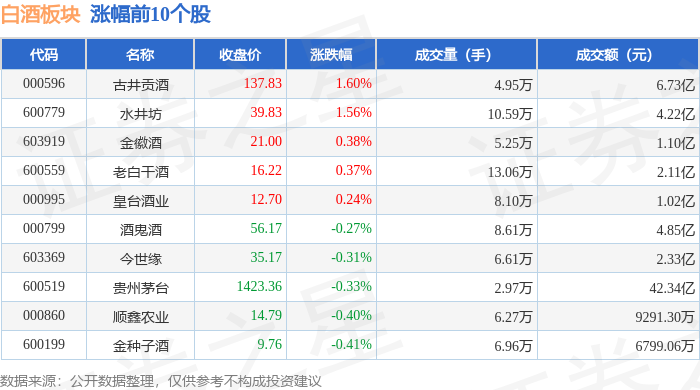
白酒板块1月7日跌0.47%,*ST岩石领跌,主力资金净流出2.44亿元
Zheng Xing Xing Ye Ri Bao· 2026-01-07 08:58
Core Viewpoint - The liquor sector experienced a decline of 0.47% on January 7, with *ST Rock leading the drop, while the Shanghai Composite Index rose by 0.05% and the Shenzhen Component Index increased by 0.06% [1]. Group 1: Market Performance - The closing prices and performance of key liquor stocks showed mixed results, with Guizhou Moutai at 1423.36 yuan (-0.33%), and Wuliangye at 107.52 yuan (-0.60%) [1][2]. - The total net outflow of main funds from the liquor sector was 244 million yuan, while retail investors saw a net inflow of 437.07 thousand yuan [2]. Group 2: Trading Volume and Value - Guizhou Moutai had a trading volume of 29,700 hands and a transaction value of 4.234 billion yuan, while Wuliangye had a trading volume of 123,100 hands and a transaction value of 1.326 billion yuan [1][2]. - The trading volume for the liquor sector was highlighted, with notable transactions including Luzhou Laojiao at 93,700 hands and a transaction value of 1.102 billion yuan [2]. Group 3: Fund Flow Analysis - Guizhou Moutai saw a main fund inflow of 76.40 million yuan, while *ST Rock experienced a main fund outflow of 4.17 million yuan [3]. - The fund flow analysis indicated that retail investors contributed positively to some stocks, such as Tianyoude Liquor, which had a retail net inflow of 121.59 thousand yuan [3].


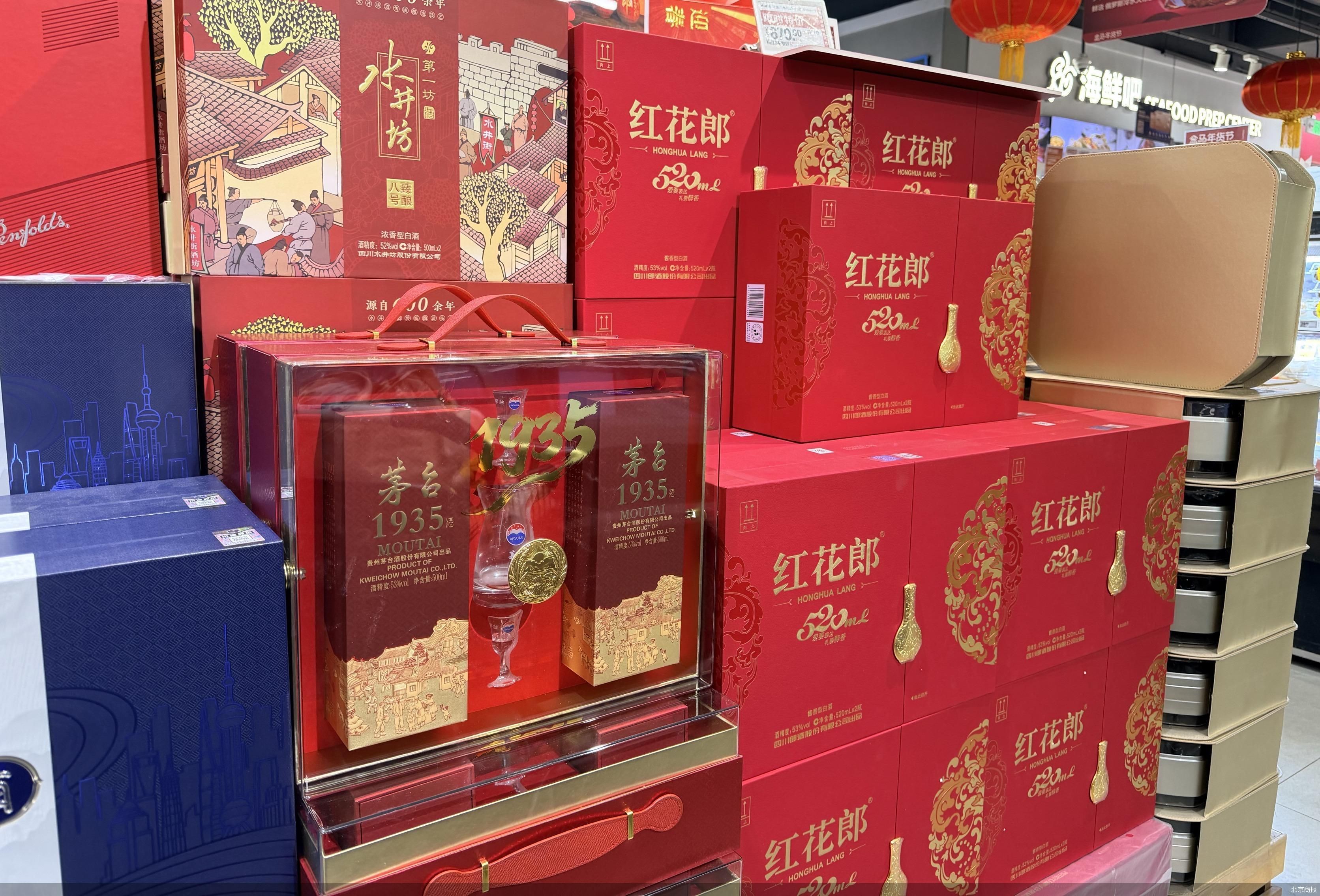
高端、次高端率先发力 白酒市场复苏显现
Bei Jing Shang Bao· 2026-01-06 15:52
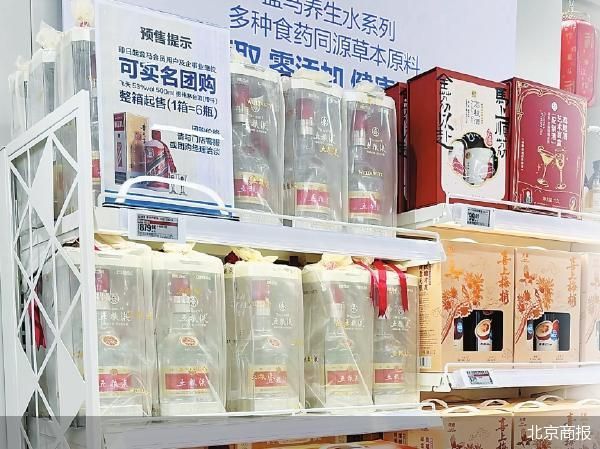
Core Viewpoint - The Chinese liquor market is showing signs of recovery at the beginning of 2026, with high-end and mid-range products driving sales during the New Year holiday, supported by gifting and banquet demands [1][3][6]. Group 1: Market Trends - High-end liquor brands such as Wuliangye and Moutai are prominently featured in supermarkets and liquor stores, indicating a strong consumer preference for premium products [3][4]. - The mid-range price segment (300-500 RMB) is becoming a sales leader during the holiday season, reflecting a shift in consumer behavior towards more affordable yet quality options [1][3][4]. - The banquet market is recovering significantly, with a notable increase in demand for liquor during festive occasions like New Year and Spring Festival [3][6][7]. Group 2: Consumer Behavior - The gifting market is evolving from excessive packaging to more rational consumption, with consumers placing additional criteria on their product choices [6]. - High-end liquor brands are less affected by these changes compared to smaller brands, indicating a strong brand loyalty among consumers for top-tier products [6]. - The dual recovery in the market reflects a maturation of consumer preferences, with a balance between high-end and mid-range products [6][8]. Group 3: Market Opportunities - The banquet market remains crucial for liquor sales, with a capacity of approximately 2500 billion RMB, primarily driven by wedding banquets [7]. - Companies are encouraged to focus on niche markets and enhance their distribution channels to capitalize on the evolving consumer landscape [8][9]. - The rise of instant retail channels presents significant growth opportunities, with projections indicating a market size of 360 billion RMB by 2024 [8][9].
高端、次高端率先发力 元旦酒业市场勾勒2026年“双轨复苏”路线图
Bei Jing Shang Bao· 2026-01-06 12:29
Core Viewpoint - The Chinese liquor market is showing signs of recovery in 2026, particularly in the high-end and mid-range segments, driven by gifting and banquet demands during the New Year holiday season [1][4][8] Group 1: Market Trends - High-end liquor products, such as Wuliangye and Moutai, are prominently featured in supermarkets and liquor stores, indicating a shift in consumer preferences [4][6] - The price range of 300-500 RMB for mid-range products has become a sales powerhouse during the New Year, reflecting a dual demand from gifting and banquet markets [1][6] - Online channels are also witnessing strong sales of high-end liquor, with significant sales figures reported during live-streaming events [7] Group 2: Consumer Behavior - The liquor market is experiencing a transformation in consumer behavior, with a shift from excessive packaging to more rational consumption patterns [8] - The banquet market remains crucial for liquor sales, with a significant portion of consumption still tied to traditional gifting and business events [9] - The dual recovery in the market reflects both consumer rationality and the maturation of the market, with high-end products stabilizing and mid-range products gaining traction [8][10] Group 3: Future Opportunities - The liquor industry is expected to face a new normal characterized by rational consumption, channel flattening, and intensified competition [10] - Companies need to focus on niche markets and immediate retail channels to capture growth opportunities [10] - The instant retail market is projected to grow significantly, with estimates suggesting a market size of 720 billion RMB by 2025, indicating a competitive landscape for liquor companies [11]