三星

Search documents
AI时代怎么做硬件出海,沈劲谈中国公司:该轮到我们定义品类了
创业邦· 2026-02-15 10:57
Core Viewpoint - The article discusses the evolution of Chinese consumer electronics from a phase of following global leaders to a phase of leading and defining new product categories, particularly in the context of AI and emerging technologies [5][14][36]. Group 1: Transition Phases in Chinese Consumer Electronics - The evolution of Chinese consumer electronics can be categorized into three phases: following, catching up, and leading. The "following" phase involved benchmarking against leaders and offering high cost-performance products, while the "catching up" phase focused on single-point innovations and high-end breakthroughs [10][12]. - The leading phase is characterized by a reconstruction of product paradigms and the discovery of new usage scenarios, with the expectation that 2025 will mark the year when China leads in smart cleaning technology [14][19]. Group 2: New Product Categories and Innovations - The article highlights the emergence of two new product categories: Ambient AI terminals and personal AI supercomputing centers. Ambient AI terminals focus on passive interaction and context establishment, while personal AI supercomputing centers emphasize offline intelligence and privacy protection [21][25]. - OpenAI's upcoming AI hardware is expected to fill specific gaps rather than replace smartphones, aligning with the identified market needs [25]. Group 3: Factors for Successful Category Definition - The ability to define product categories is broken down into five dimensions: trend recognition, scene selection, technology integration, experience closure, and scalability. Chinese companies have made significant progress in these areas, particularly in understanding overseas markets [27][29]. - The article emphasizes the importance of deeply understanding the lifestyles and values of different generations, such as Gen Z and Alpha, to successfully define and market new products [29][32]. Group 4: Historical Context and Future Outlook - The historical context of Chinese companies' evolution in consumer electronics is discussed, noting that past successes were often built on following established leaders. The current environment presents a "definer's dividend," where Chinese companies are positioned to lead in new categories [35][36]. - The article concludes with a call for entrepreneurs to strive for category definition, suggesting that the process of naming and defining new products is collaborative and iterative [42][43].


美日韩慌了!中国造船三大指标霸榜全球,曾经的行业霸主集体失势
Sou Hu Cai Jing· 2026-02-15 10:22
Group 1 - The election of Sanna Takashi is seen as a pivotal moment for Japan, allowing for constitutional amendments and influencing the country's future direction, particularly in the shipbuilding industry [1] - Japan's largest shipbuilding company, Imabari Shipbuilding, has completed the acquisition of the second-largest shipbuilder, Japan Shipbuilding Corporation, highlighting the importance of the shipbuilding sector to Japan's economy [1] - The historical significance of shipbuilding in Japan is emphasized, with references to the memorial built for the Chinese warship Dingyuan, showcasing Japan's long-standing connection to its maritime history [5] Group 2 - Japan lost its title as the "world's shipbuilding king" after 43 years, with China now holding a 51% share of the global shipbuilding market, indicating a significant shift in industry leadership [7] - The U.S. shipbuilding industry, which once dominated global production during World War II, has seen its market share decline to 0.5%, with Japan briefly taking the lead before being overtaken by South Korea and then China [11] - Japan's government historically supported the shipbuilding industry through subsidies and low-interest loans, enabling it to become the world's leading shipbuilding nation by 1956 [13] Group 3 - South Korea adopted Japan's shipbuilding model in the 1970s, leading to the rapid development of its own shipbuilding industry, which eventually surpassed Japan's due to strategic government support and market conditions [15][17] - China's shipbuilding industry began to gain momentum after joining the WTO in 2001, with a clear goal to become the world's leading shipbuilding nation, supported by both state-owned and private enterprises [19][21] - By 2010, China had overtaken South Korea to become the global leader in shipbuilding, with over 400 shipbuilding companies contributing to its market dominance [21] Group 4 - China's shipbuilding industry is characterized by two key advantages: a strong domestic market and a comprehensive industrial chain, allowing it to maintain a leading position in global shipbuilding [23][25] - As of 2024, China accounted for 55.7% of global shipbuilding completions, 74.1% of the order backlog, and 63.1% of new orders, significantly outpacing competitors [25] - The U.S. is attempting to address its shipbuilding deficit through partnerships with South Korean firms, but China's comprehensive advantages in technology and production capacity make it difficult for competitors to catch up [27] Group 5 - The evolution of the shipbuilding industry reflects China's rise from historical humiliation to a position of strength, symbolizing national power and resilience [30]
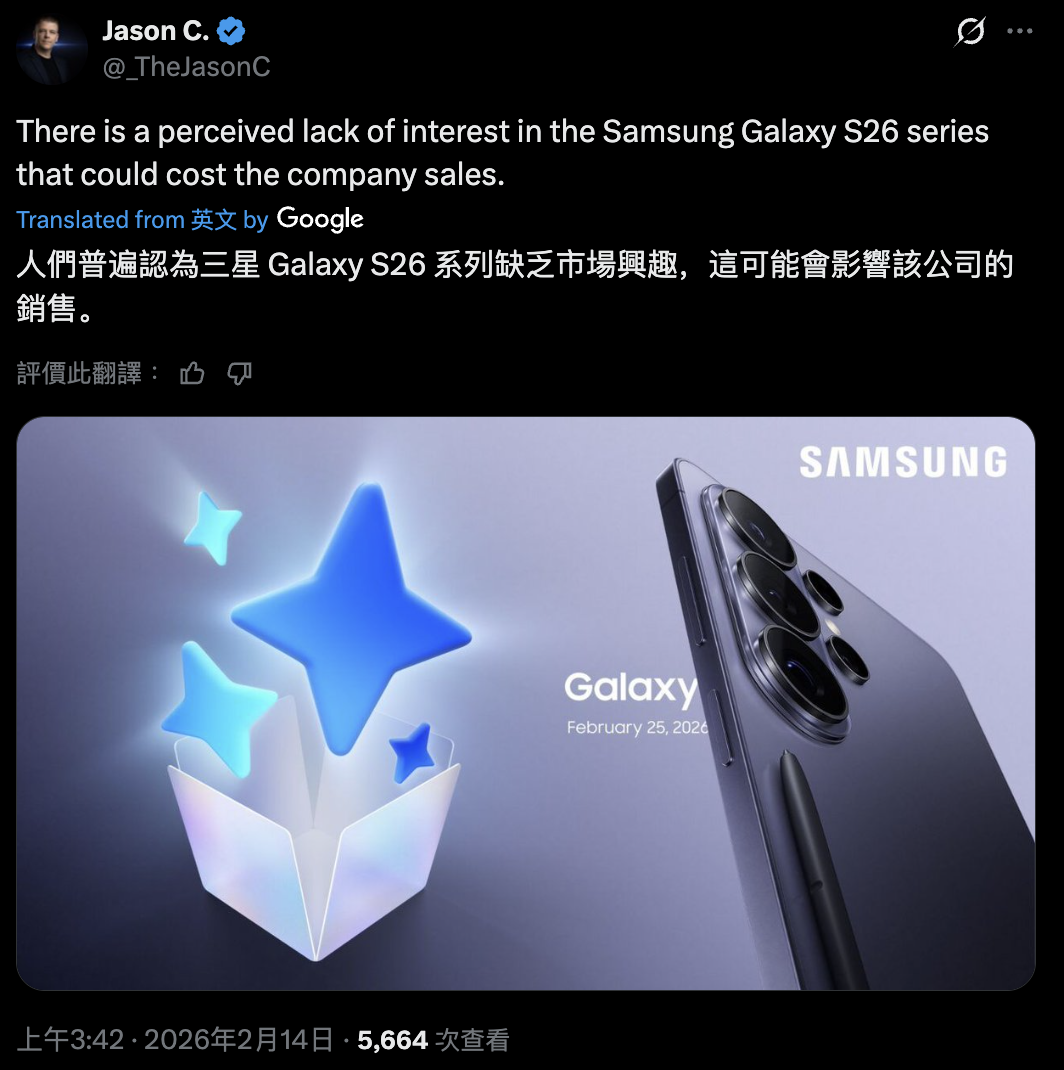
消息称三星Galaxy S26系列手机预售反应冷淡,3400万销量目标难实现
Feng Huang Wang· 2026-02-15 10:14
2 月 14 日消息,消息人士 Jason C 今天在 X 平台透露,目前消费者对三星 Galaxy S26 系列手机的预售活动反应冷淡。 同时,另一名消息人士 @SPYGO19726 也对此表示,大量消费者取消了 Galaxy S26 系列的预定订单,三星预期的 3400 万台销量很难实现,而且一切均 源于"卢泰文及其团队的贪婪"(卢泰文是三星 MX 事业部负责人),他们团队根据先前泄露的正面回馈下定了 3400 万台销量目标。 据悉,三星 Galaxy S26 Ultra 手机将拥有钴紫色、星河蓝等多种配色,预计采用圆润边角设计、独立摄像头模组、全黑版本,支持 S Pen,有望搭载 5000mAh 电池。 此外,三星 Galaxy S26 系列手机将引入"隐私显示屏"技术,可在不影响正面观感的情况下,自动降低侧面观看的可视效果,进而防止他人在公众场 合"窥屏"。 ...
Stratechery创始人深度访谈:预警2029年“芯片荒”,SaaS模式将终结,广告才是AI终极商业闭环
Hua Er Jie Jian Wen· 2026-02-15 10:02
Group 1 - The core concern raised by Ben Thompson is the conservative capacity expansion of TSMC, which he believes is a limiting factor for global AI expansion [2][3] - Thompson predicts a significant chip shortage around 2029 due to insufficient capital expenditure growth to meet the exponential demand for computing power driven by AI [2][3] - He emphasizes that TSMC's cautious approach to capacity expansion is rational, as they prefer to avoid the risks associated with overcapacity and its impact on profit margins [2][3] Group 2 - Thompson advocates for tech giants to support companies like Intel or Samsung through prepayments or other means to mitigate future capacity bottlenecks [3] - He argues that the advertising model is the most effective monetization strategy for AI applications, countering the prevalent skepticism in Silicon Valley regarding advertising [4][5] - Thompson cites Facebook's advertising system as a successful automated agent, highlighting its effectiveness in delivering results for businesses [4][5] Group 3 - Thompson provides insights on the performance of major tech companies, labeling Meta as the strongest in execution despite concerns over its capital expenditures [5] - He describes Google as chaotic yet resilient, comparing it to a slime mold that adapts effectively despite its apparent disorder [5] - Concerns are raised about Amazon's chip strategy in the AI era, suggesting that its low-cost approach may not be sustainable in a rapidly evolving market [5] Group 4 - Thompson discusses the potential end of the SaaS business model if AI leads to a reduction in workforce, indicating a growth ceiling for per-seat pricing [6] - He posits that in a world of infinite content, live experiences will gain value, as they cannot be personalized by AI [7] - The future of AI-generated content will redefine value based on scarcity, emphasizing the importance of shared experiences [7]
AI吓坏美股,亚洲股市“因祸得福”,芯片股抢跑成最大受益者
美股研究社· 2026-02-15 06:24
以下文章来源于硬AI ,作者专注科技产研的 硬AI . AI时代,快人一步~ 来源 | 硬AI 市场押注的核心在于 , 全球资金正在从"烧钱"的AI先锋,转向具备定价权的硬件与上游供应链,且亚洲在先进芯片制造、代工与组装环节占 据关键位置。 美光关于存储芯片供应趋紧的最新表态,以及英伟达关于支出可持续性的评论,进一步巩固了这种配置逻辑。据彭博援引多位机构人士表 态,随着市场开始定价"AI agents的ChatGPT时刻", 基础设施需求可能更先兑现到亚洲资产上。 资金从"AI颠覆交易"撤离, 美股承压与亚洲受益同步发生 本轮美股波动的导火索, 是投资者担心AI模型会威胁部分软件、法律以及房地产服务提供商的商业模式 ,相关股票遭遇抛售。彭博称,这 一"AI Scare Trade"还波及美国房地产服务股与保险经纪板块。 与之相对,亚洲市场的科技敞口更多集中在上游环节。宝盛集团香港研究主管Richard Tang表示:"美国主要担心的是超大规模企业的支出 问题。亚洲大部分科技敞口在上游。 无论最终谁获胜,上游仍将从下游参与者那里获得收入。" 存储芯片价格上涨强化了硬件端的景气信号,三星等区域龙头从中受益。台积电 ...


从米兰巨幅广告到快闪店,冬奥迎来史上最多中国顶级赞助商
第一财经· 2026-02-15 01:23
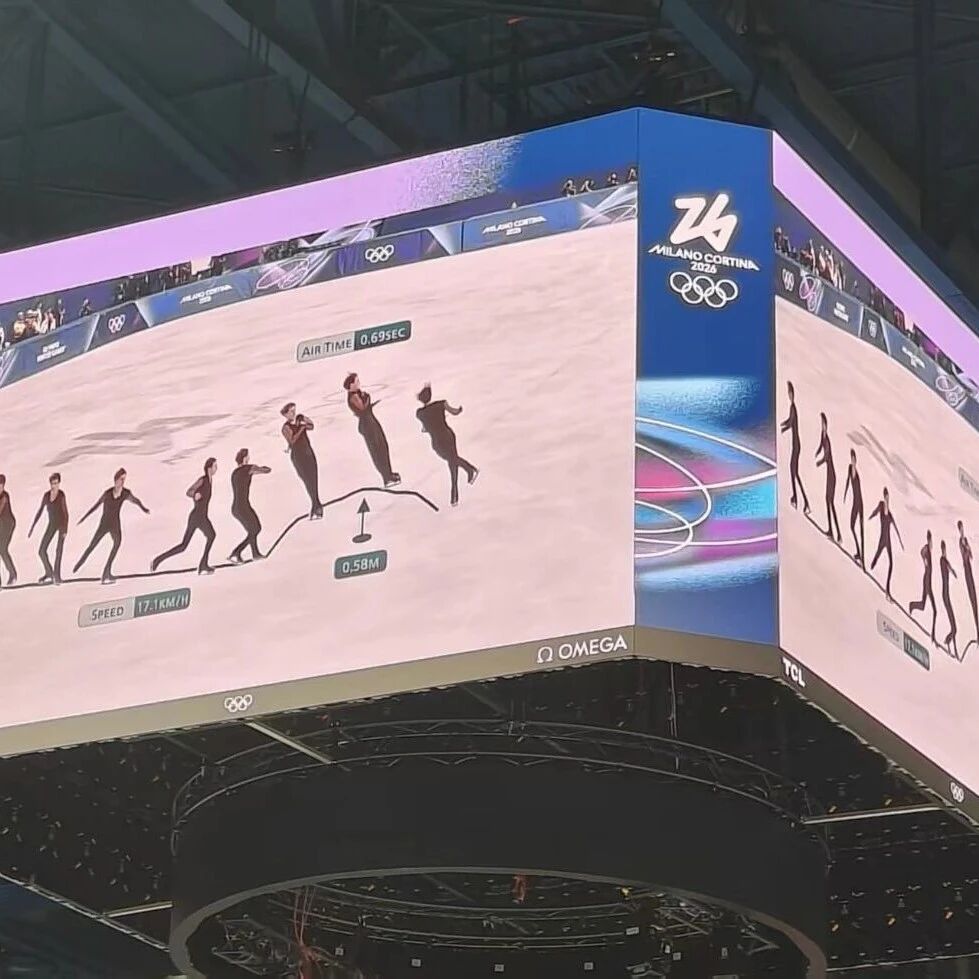
Core Viewpoint - The article highlights the significant presence and impact of Chinese brands as TOP sponsors at the Milan-Cortina Winter Olympics, showcasing the evolving landscape of sports marketing and sponsorship dynamics in the context of global sporting events [5][15]. Group 1: Sponsorship Landscape - The Milan-Cortina Winter Olympics features a record number of Chinese brands as TOP sponsors, with TCL, Alibaba, and Mengniu participating, marking the highest representation of Chinese sponsors in Olympic history [5][15]. - The TOP sponsorship program is crucial for the financial support of the Olympics, with companies paying over $300 million per cycle, contributing significantly to the International Olympic Committee's revenue [12]. - The article notes that the TOP sponsorship program has seen a shift in participants, with traditional sponsors like Panasonic and Toyota exiting, while new entrants like TCL and Budweiser are filling the gaps [17][18]. Group 2: Marketing and Brand Visibility - Major sponsors have utilized prominent advertising spaces in Milan, with TCL securing the largest outdoor billboard, showcasing their products alongside Olympic themes [7][10]. - The presence of sponsors extends beyond advertising, as they provide services and products within the Olympic Village, enhancing the experience for athletes and staff [10][11]. - The article emphasizes the importance of sports marketing for brand recognition, with TCL's market share in Italy growing by approximately 50% due to their Olympic sponsorship efforts [20]. Group 3: Technological Integration - The integration of new technologies, such as AI and cloud services, is highlighted as a key trend among sponsors, enhancing the viewing experience and operational efficiency during the Olympics [18][20]. - Alibaba's AI assistant and TCL's advanced display technologies are examples of how sponsors are leveraging innovation to improve engagement and service delivery at the event [11][18]. Group 4: Economic Impact and Market Strategy - The article discusses the economic implications of the Olympics for sponsors, noting that brands are seeking to expand their global presence through strategic marketing initiatives tied to the event [20]. - Companies like TCL are adapting their strategies to local market conditions in Italy, recognizing the diverse economic landscape and competitive environment [20].



2025年,芯片行业都发生了啥?
芯世相· 2026-02-15 01:07
Core Insights - The chip industry in 2025 experienced significant volatility due to tariff conflicts, storage market fluctuations, and rising raw material prices, leading to structural opportunities amidst the chaos [4] - The year was marked by a series of layoffs and production adjustments among major companies, reflecting the industry's struggle to stabilize [5][7][9][10] - The emergence of AI technologies and products, such as AI glasses, created new market opportunities and heightened competition [5][11][12] January Highlights - Major news included Samsung and other Korean manufacturers reducing production of consumer-grade NAND Flash due to weak demand [5] - Renesas Electronics announced layoffs of hundreds of employees, indicating industry challenges [5] - The sentiment for 2025 was mixed, with many industry players expressing uncertainty about recovery [5] February Highlights - STMicroelectronics considered laying off over 3,000 employees, while NXP's Q4 2024 revenue fell short of expectations [7] - The NAND flash market faced oversupply, prompting major manufacturers to plan production cuts [7] - The rise of humanoid robots sparked renewed interest in market potential and chip opportunities [7] March Highlights - Microchip announced layoffs and plans to sell a wafer fab, while Analog Devices (ADI) reported a recovery from previous lows [9] - The storage market saw significant price increases, with Samsung's production cuts igniting market optimism [9] - The competitive landscape among chip distributors shifted, with notable changes in the rankings of top distributors [9] April Highlights - STMicroelectronics faced management turmoil and announced layoffs of 2,800 employees [10] - The market reacted to tariff conflicts, with the U.S. imposing tariffs that affected chip distribution and pricing [10][11] - The demand for chips began to show signs of recovery, with increased orders reported [10] May Highlights - The first quarter of 2025 saw over 60% of semiconductor companies reporting year-on-year profit growth [12] - Major NAND manufacturers reduced production by 10-15%, leading to better-than-expected price rebounds [12] - Xiaomi unveiled its 3nm chip, highlighting advancements in technology [12] June Highlights - Significant layoffs were announced by STMicroelectronics and Micron, while the market for storage chips surged [13] - The demand for DDR4 memory skyrocketed, with prices reaching historical highs [13] - The MCU market faced intense competition, with price wars affecting profitability [13] July Highlights - The storage chip market continued to experience price increases, with DDR4 prices stabilizing after a surge [14] - The industry saw ongoing mergers and acquisitions among distributors, indicating a trend towards consolidation [14] August Highlights - The market for storage chips remained strong, with continued price increases and demand outpacing supply [16] - TI and ADI reported improving financial performance, signaling a recovery in the analog chip sector [16] September Highlights - The U.S. initiated anti-dumping investigations into imported analog chips, affecting market dynamics [18] - Major companies announced acquisitions and strategic shifts, reflecting ongoing consolidation in the industry [18] October Highlights - The Anshi Semiconductor incident caused significant market disruptions, with prices for certain chips skyrocketing [20] - The automotive chip market faced challenges, with ongoing price discrepancies affecting supply chains [20] November Highlights - The semiconductor market saw widespread price increases, with many companies reporting strong financial results [21] - The ongoing Anshi situation continued to impact the market, leading to supply shortages and production adjustments [21] December Highlights - A broad price surge affected the semiconductor supply chain, with many companies announcing price hikes [22] - The market for storage chips experienced explosive growth, benefiting several distributors [22] - The annual gathering of industry professionals highlighted trends and strategies for navigating the evolving market landscape [22]

从米兰巨幅广告到快闪店 冬奥迎来史上最多中国顶级赞助商
Di Yi Cai Jing· 2026-02-14 23:49
Core Insights - The Milan-Cortina Winter Olympics is showcasing a strong presence of global brands, particularly Chinese sponsors, marking a significant moment in sports marketing [1][7]. Group 1: Sponsorship and Advertising - Major sponsors like TCL, Alibaba, and Coca-Cola are leveraging the Olympics for extensive advertising, with TCL securing the largest outdoor billboard in Milan [1][2]. - The city has transformed into a winter Olympics-themed venue, with advertisements from various sponsors visible in public spaces, including bus stops and tram bodies [2]. - The current Winter Olympics features 12 TOP sponsors, including three from China, highlighting the increasing influence of Chinese brands in global sports [3][7]. Group 2: Services and Products Provided by Sponsors - TOP sponsors are not only providing financial support but also services, such as TCL setting up a lounge in the Olympic Village equipped with their products [4]. - Other sponsors like Alibaba and Procter & Gamble are also providing unique experiences and products for athletes, enhancing the overall Olympic experience [4]. - The use of advanced technology, such as AI and cloud services, is evident in the broadcasting and event management, with Alibaba's AI assistant deployed for operational support [9]. Group 3: Economic Impact and Market Dynamics - The TOP sponsorship program is a significant revenue source for the International Olympic Committee, with companies paying over $300 million per cycle [6]. - The financial contributions from TOP sponsors are crucial for the organization and development of Olympic events globally [5]. - TCL's market share in Italy has grown by approximately 50%, indicating the effectiveness of sports marketing in enhancing brand recognition [10]. Group 4: Changes in Sponsorship Landscape - The upcoming Paris Olympics will see a shift in the sponsorship landscape, with several long-standing sponsors exiting the TOP program, creating opportunities for new entrants [8]. - The departure of traditional sponsors reflects a broader trend of industry transformation, with a focus on new technologies and market dynamics [8]. - The increasing presence of Chinese brands in the TOP sponsorship ranks signifies a shift in global commercial power within the Olympic framework [7].
超科林半导体股价大幅震荡,多重因素共同作用
Jing Ji Guan Cha Wang· 2026-02-14 16:48
资金面与技术面2月10日成交量放大至261万股,换手率5.75%,推动股价冲高;但2月12日成交额骤降 至5576万美元,换手率2.31%,资金参与度快速下降引发获利盘了结。低流通市值(约25.14亿美元)使得 少量资金即可引发大幅波动。 股价情况机构目标均价38.75美元低于当前股价,市场对估值分歧较大。同时,美股科技股整体情绪谨 慎,纳斯达克指数近5日下跌2.10%,放大了个股波动。 以上内容基于公开资料整理,不构成投资建议。 经济观察网超科林半导体(UCTT.OQ)股价近期大幅震荡,是行业景气、公司基本面、资金情绪及技术面 等多重因素共同作用的结果。 股票近期走势截至2026年2月13日收盘,超科林半导体股价报55.39美元,单日上涨5.59%,振幅达 6.71%。近5个交易日(2月9日至13日)累计上涨14.70%,但区间振幅高达38.81%,其中2月10日股价触及 58.70美元的阶段高点后,2月12日单日下跌6.20%,显示波动剧烈。 股价异动原因行业政策与环境全球半导体零部件市场预计保持增长(2025-2032年复合增长率7.8%),三 星2纳米芯片技术突破、日月光投控扩产等产业动态提振需求预期 ...
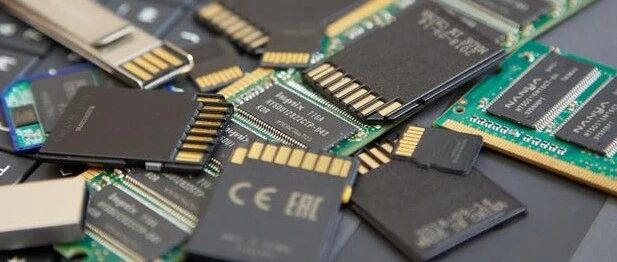
Memory后续怎么走?Bernstein开始看空Kioxia
傅里叶的猫· 2026-02-14 15:13
Core Viewpoint - Kioxia's recent financial report indicates a mixed outlook, with a strong profit guidance for the next quarter but concerns over its pricing strategy and competitive position in the NAND market [2][4][8]. Financial Performance - Kioxia reported an operating profit of 142.8 billion yen for Q3, slightly above market expectations but with an average selling price (ASP) increase of only about 10%, lagging behind competitors like Samsung and SK Hynix [2][6]. - The company provided a profit guidance range of 436 billion to 526 billion yen for the next quarter, significantly higher than market expectations of 250 billion to 300 billion yen, driven by price increases across all application areas [2][8]. Analyst Opinions - **Bernstein - Bearish View** - Concerns over high valuation and lack of DRAM business, leading to a cautious outlook on Kioxia's long-term competitiveness [4][5]. - Kioxia's ASP growth is lagging behind competitors, primarily due to lower pricing for major client Apple [6]. - Bernstein maintains a low target price of 7,000 yen, suggesting a significant downside risk [7]. - **Bank of America - Bullish View** - Upgraded target price to 32,000 yen, citing strong demand driven by generative AI and limited expansion among global NAND manufacturers [8]. - Profit forecast for FY2027 increased by 112% to 2.3 trillion yen based on Q3 performance [8]. - **Goldman Sachs - Neutral View** - Target price adjusted to 24,000 yen, indicating limited upside due to cyclical nature of the NAND industry and existing valuation ceilings [9][10]. - Highlights risks related to supply-demand dynamics and reliance on major clients, which could affect long-term profitability [10][11]. - **GSR - Bullish View** - Notable price increases in data center products, including a 70% hike accepted by Apple, indicating a shift in market perception regarding Kioxia's pricing power [13]. - Transition from a volatile commodity model to a stable industrial product model through long-term agreements, enhancing profitability and reducing performance volatility [13].