
科顺股份

Search documents
科顺股份(300737) - 关于控股股东、实际控制人及其一致行动人部分股份质押及解除质押的公告
2025-10-09 10:12
| 证券代码:300737 | 证券简称:科顺股份 | 公告编号:2025-054 | | --- | --- | --- | | 债券代码:123216 | 债券简称:科顺转债 | | 科顺防水科技股份有限公司 关于控股股东、实际控制人及其一致行动人 部分股份质押及解除质押的公告 本公司及董事会全体成员保证信息披露的内容真实、准确、完整,没有虚假 记载、误导性陈述或重大遗漏。 科顺防水科技股份有限公司(以下简称"公司")近日接到控股 股东、实际控制人陈伟忠先生及其一致行动人陈智忠先生的通知,获 悉陈伟忠先生、陈智忠先生将其所持有本公司的部分股份办理了质押 业务,陈智忠先生将其所持有本公司的部分股份办理了解除质押业务。 具体情况如下: 一、股东股份质押及解除质押的基本情况 | | 是否为控 股股东或 | | 占其 所持 | 占公 司总 | 是否 | 是否 | | | | | | --- | --- | --- | --- | --- | --- | --- | --- | --- | --- | --- | | 股东名称 | | 本次质押数 | | | | 为补 | 质押起 | 质押到 | | 质押 | | ...
周期专场2-2025研究框架线上培训
2025-10-09 02:00
Summary of Key Points from Conference Call Records Industry Overview - The petrochemical industry is closely tied to ethylene profitability, with historical cycles lasting approximately 6-8 years, and the next peak expected around 2025 due to pandemic impacts [1][4][17]. - Oil prices are positively correlated with the petrochemical stock index, necessitating attention to supply-demand dynamics and full costs, with Middle Eastern countries requiring higher oil prices for fiscal balance [1][5][7]. - The real estate industry requires a comprehensive analysis of policy, valuation, economy, and profitability, with significant influence from the synchronized monetary cycles of China and the US [1][26]. Core Insights and Arguments - **Oil Price Dynamics**: Oil prices are a critical indicator for the petrochemical industry, with fluctuations directly affecting stock indices. The expected price range is between $45-80 per barrel in the coming years [1][5][14]. - **OPEC Strategies**: OPEC will shift to a market share preservation strategy in 2025 due to increased production from non-OPEC countries and US inflation control measures [1][9][13]. - **Geopolitical Risks**: Geopolitical factors significantly impact oil prices, with recent tensions having a pronounced effect, although risks have somewhat diminished recently [1][12][16]. - **Investment Focus**: Investment in the petrochemical sector should prioritize new materials and fine chemicals, moving away from outdated small-scale operations [1][24]. Additional Important Content - **Capital Expenditure**: High oil prices encourage capital expenditure among companies, while low prices can lead to reduced production and investment [6][10]. - **Ethylene as an Indicator**: Ethylene profitability serves as a key measure of the petrochemical industry's health, with historical data indicating cyclical peaks and troughs [4][17]. - **Real Estate Market Dynamics**: The real estate sector is currently undervalued, with stable cash flows and dividend capabilities, making it an area of interest for investors [1][43]. - **Supply-Side Reforms**: The shift from demand-side to supply-side reforms in real estate aims to improve supply quality, despite potential short-term negative impacts on the economy and employment [1][38][40]. Conclusion The petrochemical and real estate industries are undergoing significant transformations influenced by cyclical patterns, geopolitical factors, and strategic shifts in investment focus. Investors should remain vigilant about these dynamics to identify potential opportunities and risks in the market.
建材稳增长方案出台,反内卷有望强化 | 投研报告
Zhong Guo Neng Yuan Wang· 2025-10-09 01:16
Core Viewpoint - The introduction of the "Construction Materials Industry Stabilization and Growth Work Plan (2025-2026)" aims to effectively enhance profitability as a primary goal for the period, with a focus on strengthening industry management and promoting a competitive environment [2] Group 1: Industry Policy and Management - The plan emphasizes the need for capacity replacement proposals for cement enterprises by the end of 2025 to align actual capacity with registered capacity [2] - It also highlights the transition of risk warnings for photovoltaic glass production from project management to planning guidance [2] Group 2: Market Trends and Price Movements - National cement prices have seen a significant month-on-month increase of 1.5%, with attempts to raise prices since late August facing challenges due to insufficient demand [3] - The glass market is experiencing a slowdown in price increases, with overall prices showing slight gains, supported by mid and downstream replenishment [3] Group 3: Investment Recommendations - The stabilization plan is expected to boost industry expectations, particularly in the cement and glass sectors, with companies likely to continue pushing for price increases in Q4 [4] - Recommended companies include Conch Cement, Huaxin Cement, and Taipai Group, with additional focus on investment opportunities in Tibet and Xinjiang due to major project constructions [4][5]
建筑建材双周报(2025年第15期):建材稳增长方案出台,反内卷有望强化-20251008
Guoxin Securities· 2025-10-08 07:05
Investment Rating - The report maintains an "Outperform" rating for the construction materials sector, indicating expected performance above the market index by more than 10% over the next 6 to 12 months [5][89]. Core Views - The introduction of the "Stabilization Growth Work Plan for the Building Materials Industry (2025-2026)" aims to enhance profitability and strengthen industry management, promoting a competitive environment [1][3]. - Cement prices have seen a significant increase of 1.5% recently, with expectations for further price hikes as companies strive to meet annual growth targets [2][22]. - The glass market is experiencing a slight price increase, supported by downstream replenishment, although demand acceptance at higher prices remains limited [2][37]. - The fiberglass market shows stable pricing for non-alkali yarn, while electronic yarn remains in high demand, indicating a robust market for high-end products [2][54]. Summary by Sections Cement - National cement prices have risen significantly, with a 1.5% increase noted. Companies are expected to continue pushing for price increases as the fourth quarter approaches [2][22]. - The report anticipates that cement companies will maintain upward price momentum to achieve annual growth targets [2][22]. Glass - Float glass prices have shown a slight increase, supported by replenishment from downstream sectors, although the acceptance of high prices is limited [2][37]. - The photovoltaic glass market has seen a slight decline in demand, with inventory levels increasing, but manufacturers are maintaining stable pricing strategies [2][45]. Fiberglass - The price of non-alkali yarn remains stable, with mainstream prices for 2400tex yarn at 3250-3700 CNY/ton, while electronic yarn prices are stable due to high demand in the high-end market [2][54]. Investment Recommendations - The report suggests focusing on the cement and glass sectors due to stricter supply controls and improving profitability. Recommended companies include Conch Cement, Huaxin Cement, and Qibin Group [3][5]. - For fiberglass, companies like China National Materials and China Jushi are highlighted as beneficiaries of structural demand growth [3][5]. - In the construction sector, a recovery in infrastructure investment is anticipated, with recommendations for companies such as China Railway Construction and China State Construction [3][5].



建材行业策略周报:建材稳增长方案发布,继续看好水泥-20250929
CAITONG SECURITIES· 2025-09-29 06:37
Core Viewpoints - The report maintains a positive outlook on the building materials sector, particularly cement, following the release of the "Building Materials Industry Stabilization Growth Work Plan (2025-2026)" by the Ministry of Industry and Information Technology and other departments [4][6]. Summary by Sections Recent Market Performance - The building materials sector has shown a decline of 11% over the past 12 months, while the Shanghai Composite Index has decreased by 5% [2]. Policy and Industry Outlook - The stabilization plan aims to enhance profitability and innovation in the building materials industry, with a target for green building materials revenue to exceed 300 billion by 2026 [6]. - Key measures include restricting supply by prohibiting new cement clinker and flat glass production capacity, promoting the unification of actual and registered production capacities, and fostering green building materials through various initiatives [6]. Supply and Demand Dynamics - The report notes that while there is a temporary pressure on real estate and infrastructure demand, recent policies have led to a gradual improvement in supply-demand dynamics, with expectations for a slow price recovery in the cement market [6]. - Cement production increased by 1.7% month-on-month in August, supported by significant government bond issuances and major project launches, which may lead to a turning point in infrastructure work in Q4 [6]. Investment Recommendations - The cement sector is recommended for investment due to its high dividend yield and the anticipated recovery in demand and prices. The report suggests focusing on companies like Conch Cement and Huaxin Cement, while also considering companies in the photovoltaic supply chain such as Qibin Group [6]. - The consumer building materials sector is expected to stabilize, with companies like Sankeshu, Rabbit Baby, Dongfang Yuhong, and Keshun Co. being highlighted for potential growth [6].


转债周策略20250927
Minsheng Securities· 2025-09-27 09:14
Group 1 - The report highlights the top ten convertible bonds for October, emphasizing companies like Zhengfan Technology, Wentai Technology, and Huanxu Electronics, which are positioned for growth in their respective sectors [1][2][57]. - Zhengfan Technology's non-equipment business is a key driver of its continuous performance growth, focusing on high-tech industries such as integrated circuits and biopharmaceuticals [8][9]. - Wentai Technology is recognized as a global leader in automotive semiconductors, with a strong focus on high ASP products that support its future growth [38][39]. Group 2 - Huanxu Electronics provides comprehensive manufacturing services for electronic products, with a strong presence in cloud computing and data centers, indicating robust demand in these sectors [46][48]. - The report suggests that the "反内卷" (anti-involution) trend may create opportunities for midstream sectors like new energy and steel, which could see price recoveries [2][58]. - The report anticipates that the inflow of fixed-income funds into the convertible bond market will continue, supporting valuations and reducing the likelihood of significant declines in October [2][58]. Group 3 - The report identifies specific convertible bonds to watch, including those from companies like TianNeng Heavy Industry, which is a domestic leader in wind power tower manufacturing, and is expected to benefit from increasing demand in the renewable energy sector [42][43]. - The agricultural chemical sector is highlighted through Hebang Biological, which is experiencing improved profitability due to favorable supply-demand dynamics in glyphosate products [24][27]. - The report also notes that companies like Youfa Group are poised to benefit from the new round of supply-side reforms, enhancing their national and international market presence [19][20].



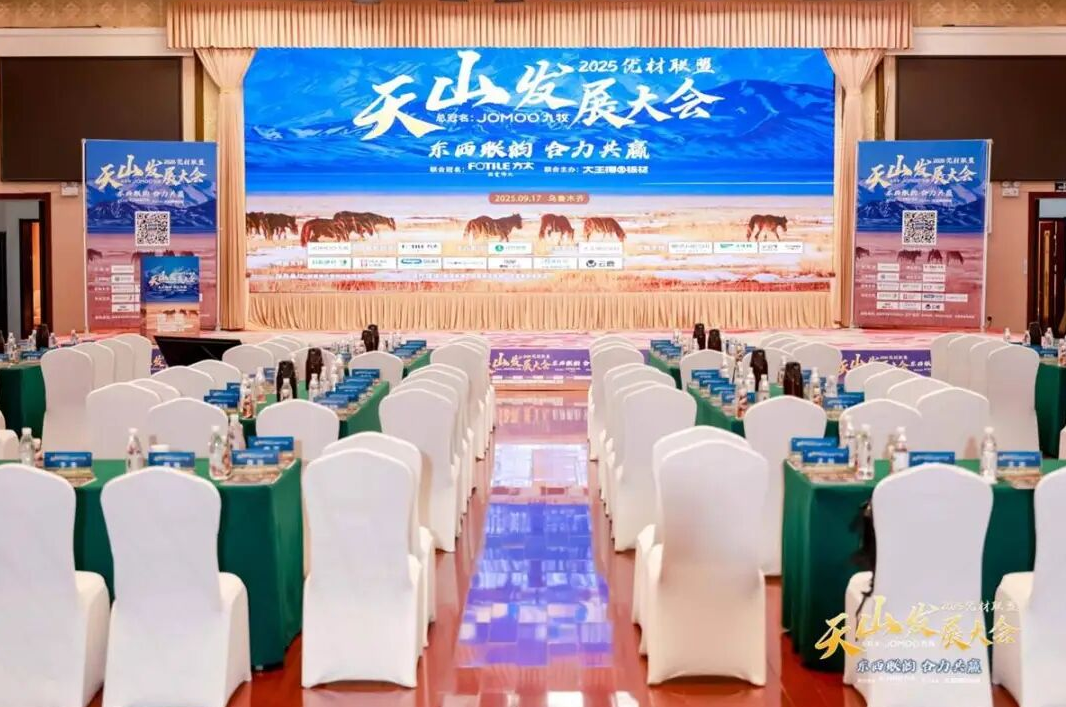
2025年优材联盟天山发展大会圆满举办
Zhong Guo Zhi Liang Xin Wen Wang· 2025-09-22 09:18
Core Insights - The "East-West Harmony and Win-Win Cooperation" Yucai Alliance Tianshan Development Conference was held in Urumqi, Xinjiang, on September 17, 2025, focusing on collaboration and resource sharing in the home decoration industry [1][21] - The event aimed to break regional barriers and foster communication and cooperation between the eastern and western home decoration industries, injecting strong momentum for industry growth and ecological construction [1][21] Group 1: Event Overview - The conference was sponsored by Jomoo Group, with co-sponsorship from Fotile Group and Dawangye Group, and strategic support from several other companies [1] - The event gathered industry elites and aimed to share insights, engage in dialogue, and facilitate precise connections among quality resources in the home decoration sector [1] Group 2: Key Themes and Discussions - The morning session focused on "Brand Power and Growth Breakthrough," featuring interactive discussions on industry pain points and trends, which set a collaborative tone for the event [5][7] - Notable speakers included representatives from Jomoo Group, Fotile Group, and Dawangye Group, who shared insights on product innovation, market demands, and the importance of environmental sustainability in home decoration [7][9][11] Group 3: Industry Trends and Future Directions - The afternoon sessions emphasized industry trend analysis, ecological co-construction, and practical dialogues, highlighting the potential of the Xinjiang home decoration market and the need for collaboration with developed eastern regions [13][14] - Discussions included the necessity for home decoration companies to shift from dependency on real estate to actively exploring the renovation and upgrading of existing properties [14][16] Group 4: Collaborative Efforts and Future Vision - The conference concluded with a strong emphasis on the importance of ecological development and resource sharing among industry players, advocating for breaking down barriers between companies to achieve collaborative growth [19][21] - The Yucai Alliance aims to continue serving as a bridge for resource integration and industry collaboration, promoting higher quality growth in the home decoration sector [21]



行业投资策略周报:反内卷持续推进,产业链或加速企稳-20250921
CAITONG SECURITIES· 2025-09-21 10:19
Core Viewpoints - The report maintains a positive outlook on the building materials industry, indicating a potential stabilization in the supply chain due to ongoing anti-involution efforts [1][4]. Industry Analysis - The anti-involution movement is expected to continue impacting the real estate supply chain, with the photovoltaic industry leading the way through a combination of gradual policy adjustments and market-oriented measures [6]. - Recent government initiatives aim to address issues such as chaotic competition and unreasonable procurement practices, which are anticipated to enhance market efficiency and fair competition within the building materials sector [6]. - The cement industry is experiencing improved supply-demand dynamics, with various regions implementing staggered production schedules to stabilize prices. For instance, companies in Jiangxi, Sichuan, and other provinces are reducing output significantly during peak season [6]. - Investment recommendations highlight the cement sector's attractive dividend yield and the expectation of price recovery, with specific companies like Conch Cement and Huaxin Cement being emphasized for potential investment [6]. Investment Recommendations - The report suggests actively monitoring the cement sector due to its favorable fundamentals, with a focus on companies such as Conch Cement and Huaxin Cement, while also considering related photovoltaic industry stocks like Qibin Group [6]. - The consumer building materials sector is expected to see a reversal of its current challenges, with anticipated stabilization in demand and pricing, leading to improved performance for companies like Sangke Tree and Rabbit Baby [6].
调研速递|科顺股份接受申万宏源等30家机构调研 聚焦行业格局与发展规划
Xin Lang Zheng Quan· 2025-09-19 11:43
Core Viewpoint - The company is actively responding to industry challenges by adjusting pricing strategies and focusing on healthy competition, while also planning for future growth through diversification and market expansion [2][3]. Group 1: Industry Response and Market Dynamics - The company is advocating for a "de-involution" approach in the industry, promoting healthy competition centered around product and service quality [2]. - Many small waterproof enterprises are facing declining market shares due to factors like centralized procurement and regulatory compliance, leading to increased operational pressures and market exits [2]. - Leading companies like the company are enhancing their market share through transformation and channel optimization, solidifying the competitive landscape [2]. Group 2: Future Development Plans and Revenue Structure - The company's future plans focus on three main areas: deepening its core waterproof business, advancing the "Concentric Circle" strategy to leverage technical advantages, and exploring new materials and technologies through an acquisition fund [3]. - The revenue structure is set to evolve, with retail business expected to account for 30%, overseas business for 20%, and construction-related and concentric circle business for 50% in the coming years [3]. Group 3: Retail Business Growth and C-end Development - The growth in retail business is attributed to increased brand awareness, expanded distribution networks, and a diverse product offering, with over 80,000 distribution points established nationwide [4]. - The company aims for retail business to exceed 30% of total revenue by 2027, with plans to enhance retail network layout, brand building, and product diversification [4]. Group 4: Raw Material Prices and Profitability - Raw material prices have remained stable this year, with potential for future declines, contributing to improved gross margins due to revenue and product structure optimization [5]. - The entry of state-owned capital has positively impacted the company by providing business support and enhancing creditworthiness, alongside the establishment of an acquisition fund for exploring emerging sectors [5].

科顺股份(300737) - 2025年9月19日投资者关系活动记录表
2025-09-19 11:08
Group 1: Industry Overview - The company actively responds to the "anti-involution" trend by adjusting product prices and tightening credit policies to promote healthy competition in the industry [2] - The market share of small and medium-sized waterproof enterprises has been declining due to stricter government regulations and increased competition from leading companies [2][3] - The competitive landscape has fundamentally changed, with leading companies rapidly occupying market share and creating barriers for smaller enterprises [3] Group 2: Company Development Strategy - The company aims to deepen its focus on the waterproof main business, optimizing its business structure and increasing the share of retail, repair, and overseas markets [4] - Future revenue structure is planned to be: 30% from retail, 20% from overseas, and 50% from construction and related businesses [5][6] - The company will leverage its technological advantages to accelerate the industrialization of laboratory technologies and explore new materials and technologies through mergers and acquisitions [4] Group 3: Retail Business Growth - The rapid growth of the retail business is attributed to increased brand awareness, an expanded distribution network, and a diversified product range [7] - The company plans to enhance its retail market presence, aiming for retail business to account for over 30% of total revenue by 2027 [8] - The retail network has over 80,000 distribution points, facilitating customer access and order growth [7] Group 4: Financial Performance and Projections - The company has seen an improvement in gross margin due to optimized revenue structure and cost reduction efforts [11] - The entry of a state-owned enterprise as a shareholder has enhanced business credibility and access to government projects, positively impacting order growth [12] - Raw material prices are expected to remain stable, with potential for further decreases [10]