华硕

Search documents
存储芯片价格每十天翻倍,2026款PC或全面涨价至少20%
Jin Shi Shu Ju· 2025-12-04 05:44
Core Viewpoint - The demand for AI hardware is causing a significant shortage of traditional storage chips, leading major PC manufacturers to plan price increases of at least 20% for their 2026 models due to rising component costs [2][3]. Group 1: Supply Chain and Pricing - The shortage of storage is attributed to major manufacturers like Samsung, SK Hynix, and Micron shifting production capacity towards high-bandwidth memory (HBM), which is crucial for AI accelerators, thereby constricting the supply of mainstream PC components such as DDR5 and LPDDR5 DRAM and SSDs [3][6]. - Wholesale prices for wafers have surged since late September, with reports indicating that storage prices have nearly doubled every ten days in early Q4 [3]. - Major PC brands are expected to face a supply bottleneck, with procurement managers estimating that next year's storage availability may only meet about half of the demand [3][5]. Group 2: Inventory Management and Market Strategy - To mitigate the impact of rising costs and supply constraints, PC brands are planning significant price hikes for next year's models while accelerating inventory clearance and phasing out older products [4]. - The tightening supply has been evident since early this year, as major storage suppliers have begun to phase out DDR4 production in favor of more profitable AI storage [4]. Group 3: Market Outlook and Forecasts - The storage supply bottleneck is negatively impacting industry forecasts, with IDC and Gartner both revising down their PC shipment predictions for 2026 [5]. - If the storage shortage persists, actual production may fall short of expectations, with some models potentially facing production cuts or temporary halts [5]. - The imbalance in production capacity between HBM and traditional PC DRAM is expected to continue into next year, making 2026 one of the most expensive product cycles in recent years if major suppliers do not expand mainstream storage capacity [6].
芯片内战!DRAM大缺货!三星拒签长约!
Xin Lang Cai Jing· 2025-12-03 13:20
Core Viewpoint - The semiconductor industry is experiencing a significant price surge in memory products, driven by increased demand from AI applications and a supply shortage, leading companies like Samsung to prioritize profitability over long-term contracts with their mobile division [1][2][3]. Group 1: Samsung's Strategy - Samsung's semiconductor division has rejected a long-term DRAM contract from its mobile division, opting instead for a short three-month agreement due to rising DRAM prices and AI demand [1][3]. - The price of high-end LPDDR5X 12GB has increased to approximately $70 by the end of November, more than doubling from around $33 at the beginning of the year [4]. - The rising costs of memory chips and processors are expected to increase their share of smartphone production costs by at least 5 percentage points [4]. Group 2: Industry Trends - The industry is entering a "super cycle" for memory, with high demand for high-bandwidth memory (HBM) and low-power DRAM (LPDDR) driven by AI applications, resulting in a significant supply shortage [2][4]. - Major tech companies, including Dell and HP, have warned of potential memory chip shortages in the coming year due to surging demand from AI infrastructure [5]. - Consumer electronics manufacturers like Xiaomi have issued warnings about potential price increases, while companies like Lenovo and ASUS are stockpiling memory chips to mitigate rising costs [5]. Group 3: Market Outlook - Analysts expect the price increases for DRAM and NAND flash memory to continue for several quarters due to strong demand and lagging supply [5].
飞荣达:不断提高综合竞争优势
Zheng Quan Ri Bao Zhi Sheng· 2025-12-03 09:39
Core Viewpoint - The company has signed non-disclosure agreements with several clients, indicating a strong client base and confidentiality in its operations [1] Group 1: Client Base - The company serves a diverse range of clients, including notable names such as H Company, ZTE, Cisco, Inspur, Datang Mobile, and others [1] - The client list also includes significant players like Firefly, New H3C, Super Fusion, Lenovo, Wistron, Compal, Asus, Oriental Communication, and Shenzhou Kuntai [1] Group 2: Product Offering - The company offers a wide variety of products that cater to different customer needs, environments, and usage levels [1] - The company has demonstrated significant technological advantages in the liquid cooling field, which is a key area of its product offering [1] Group 3: Business Development - The company has made notable progress in advancing its business, particularly in the liquid cooling technology sector [1] - The company will continue to monitor developments in relevant technology fields to enhance its competitive advantages [1]

AI与手机电脑“抢”芯片:手机厂商警告价格或上涨30%,存储短缺将持续至2027
Hua Er Jie Jian Wen· 2025-12-03 08:15
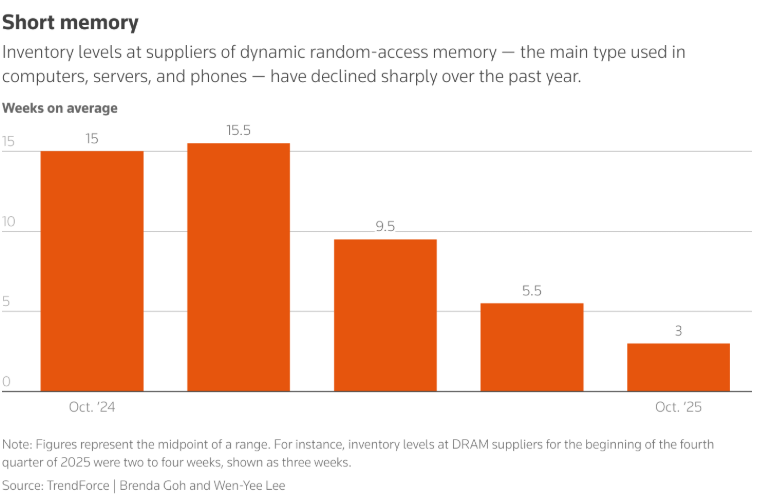
Core Viewpoint - The global storage chip market is facing a supply crisis, driven by competition between AI data centers and consumer electronics manufacturers, leading to skyrocketing prices and potential macroeconomic risks [1] Group 1: Supply Crisis Overview - The shortage affects nearly all types of storage chips, from USB flash drives to high-end HBM chips, threatening to increase consumer product prices and impact AI infrastructure investment returns [1] - SK Hynix predicts that the storage shortage will last until the end of 2027, with major tech companies like Microsoft and Google vying for supplies from manufacturers like Micron, Samsung, and SK Hynix [1][4] - TrendForce reports that some storage chip prices have more than doubled since February, with average inventory levels for DRAM suppliers dropping significantly [1] Group 2: Market Dynamics - The crisis stems from a mismatch between chip manufacturers' strategic shifts and market demand, particularly following the AI boom initiated by the release of ChatGPT in November 2022 [5] - Samsung and Micron have announced plans to halt production of older DDR4 chips, reallocating capacity to high-bandwidth memory for AI processors [5][8] - Major tech companies are placing open orders with Micron, indicating they will accept any available capacity regardless of price [9] Group 3: Consumer Impact - The rising storage costs are expected to lead to price increases for smartphones, with Realme indicating potential hikes of 20% to 30% [4][11] - Retailers in Japan are limiting the quantity of storage products consumers can purchase to prevent hoarding, with prices for certain memory products having surged dramatically [11] - Companies like Xiaomi are planning to offset higher storage costs through price increases and a shift towards selling more high-end devices [11] Group 4: Secondary Market and Economic Implications - The price surge is driving customers to the secondary market, with increased sales of used components and a rapid change in pricing dynamics among distributors [12] - The storage shortage is evolving into a macroeconomic risk, potentially delaying significant digital infrastructure investments and exacerbating inflationary pressures in various economies [12]


中国平板季度出货:华为占比31%甩开苹果,联想增长71%
Guan Cha Zhe Wang· 2025-12-03 06:28
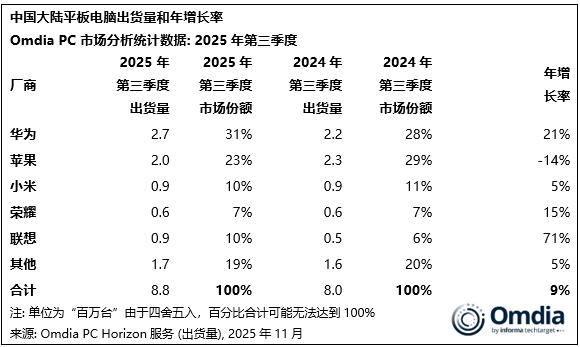
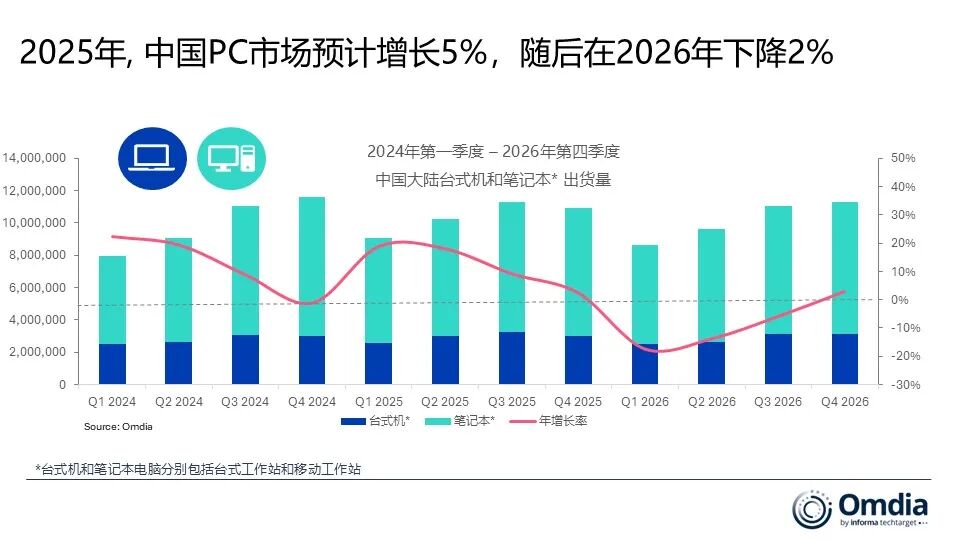
Group 1: Tablet Market Overview - The Chinese tablet market continues to show strong momentum, with Q3 2025 shipments increasing by 9% year-on-year to 8.8 million units, characterized by a split between domestic brands leading and Apple declining [1] - Huawei leads the market with a shipment of 2.7 million units and a 31% market share, growing 21% year-on-year, while Apple's iPad shipments fell 14% to 2 million units, reducing its market share from 29% to 23% [1] - Domestic manufacturers collectively hold 77% of the market share, up 5 percentage points from the previous year, with Xiaomi and Lenovo each shipping 900,000 units and Honor at 600,000 units [1] Group 2: Challenges for Apple - Apple's iPad faces multiple challenges in the domestic market, including competition from local tablets priced between 2,000-3,000 yuan that offer superior specifications [1] - The lack of product innovation and extended iteration cycles for the iPad, despite the strong performance of the M chip, make it difficult to compete with localized innovations from Huawei and Lenovo [1] Group 3: Future Market Projections - Omdia forecasts that the tablet market will grow by 12% to 35 million units by the end of 2025, driven by aggressive product launches and pricing strategies from domestic manufacturers [2] - However, a market adjustment is expected in 2026, with a projected decline of 9% to 32 million units [2] Group 4: PC Market Overview - In Q3 2025, the Chinese PC market saw a 2% year-on-year increase in shipments, reaching 11.3 million units, with desktop shipments growing by 8% to 3.3 million units, primarily driven by strong demand in the commercial sector [2][3] - Lenovo remains the market leader with a 39% share, shipping 4.4 million units, while Huawei's shipments declined by 7% to 1 million units, reducing its market share to 9% [3] Group 5: Future Projections for PC Market - Omdia anticipates a 5% year-on-year growth in the PC market by the end of 2025, reaching 41.5 million units, supported by robust commercial procurement and steady consumer demand [5] - The trend is expected to continue into 2026, although a slight decline of 2% is projected due to weakening consumer demand [5] - The adoption of AI is accelerating in both consumer and commercial markets, with 32% of PCs in Greater China expected to have AI capabilities by 2025, increasing to 46% by 2026 [5]


韩媒:京东方8.6代OLED面板产线将于明年5月量产
WitsView睿智显示· 2025-12-03 05:08
Core Viewpoint - BOE plans to start mass production of 8.6-generation OLED panels for laptops in May next year, with Acer and ASUS as initial customers [1][2]. Group 1: Production and Technology - The 8.6-generation OLED production line in Chengdu, Sichuan, can produce both laptop and smartphone panels [2]. - Compared to the current mainstream 6th generation, the 8.6-generation (2290mm×2620mm) can produce approximately 2.5 times the number of 14-inch panels per substrate, significantly reducing costs and improving production efficiency [2]. - BOE aims to be the first company globally to achieve mass production of 8.6-generation OLED panels, having completed the factory's lighting ceremony and entered trial production [2]. Group 2: Competitive Landscape - Samsung Display also plans to start mass production of 8.6-generation OLED panels in the second quarter or third quarter of next year, with Apple as a customer for its products [2]. - The first Apple laptops featuring OLED screens, specifically the "MacBook Pro," will utilize Samsung's 8.6-generation panels [2]. - BOE is in discussions with multiple Chinese smartphone manufacturers, including Apple and OPPO, regarding OLED screen supply [2].

Omdia:2025年第三季度联想平板出货量暴增超70% PC市占率再扩大
Zhi Tong Cai Jing· 2025-12-03 01:43
Core Insights - The Chinese PC market is experiencing a slowdown in growth, with a year-on-year increase of only 2% in Q3 2025, primarily due to reduced consumer subsidies [1][3] - Lenovo demonstrates strong resilience in this challenging market, achieving a significant year-on-year growth of 14% in shipment volume, reaching 4.4 million units and capturing 39% market share [3] - In contrast, major competitors like Huawei and Softcom Power are facing declines in shipment volumes, with Huawei's shipments down 7% and Softcom Power's down 13% [3] PC Market Performance - Total PC shipments in China reached 11.3 million units in Q3 2025, reflecting a 2% increase from the previous year [2][3] - Lenovo leads the market with 4.4 million units shipped, while Huawei and Softcom Power both shipped 1 million units [2][3] - Other competitors like Asus and HP show stagnant or minimal growth, with Asus maintaining 90,000 units and HP achieving a 2% increase but still around 100,000 units [3] Tablet Market Growth - The tablet market in China continues to thrive, with a year-on-year growth of 9%, reaching 8.8 million units in Q3 2025 [4] - Lenovo's tablet shipments surged by 71% to 900,000 units, increasing its market share to 10% [4][5] - In contrast, Apple experienced a 14% decline in tablet shipments, highlighting Lenovo's competitive edge in this segment [5] AI Integration and Future Outlook - The adoption of AI technology is accelerating in both consumer and commercial markets in China, with Lenovo integrating AI capabilities into its PC and tablet products [6] - Omdia forecasts that by 2025, 32% of PCs in the Greater China region will have AI capabilities, increasing to 46% by 2026 [6] - Despite anticipated declines in the PC and tablet markets in 2026, Lenovo's strong presence in the commercial sector and ongoing AI enhancements position it well to maintain its leadership [7]

全球领先通信公司五大排名揭示华为投资控股公司居第二位,展示其在行业内的重要地位与发展潜力
Sou Hu Cai Jing· 2025-12-02 18:56
Core Insights - Huawei ranks second among global communication companies, highlighting its significant position and development potential in the industry [1][3][6] Investment and Industry Position - The ranking is based on the industry influence and investment scale of holding companies, rather than just market share of core businesses [3][4] - Huawei's strategy focuses on investment and collaboration in emerging technologies like chips, cloud computing, and 5G equipment, positioning itself as a leader in network infrastructure [3][4] Supply Chain and Technology Development - Huawei has established a resilient supply chain for chips, aided by collaboration with multiple suppliers in China, despite facing challenges from U.S. sanctions [4][6] - The company adopts an open cooperation model, contrasting with competitors like Apple and Samsung, which follow a closed innovation approach [4][6] Future Potential and Innovation - Huawei's investment holding structure may evolve into a dual role of technology driver and capital engine, aiming for stable revenue and new market opportunities [6][7] - The company is actively pursuing breakthroughs in core technologies, although it still faces significant challenges in achieving complete autonomy in certain areas [6][9] Market Dynamics and Performance - Despite a declining share of overseas revenue, Huawei maintains a strong position in the domestic market, indicating a solid foundation for future growth [9][10] - The company controls approximately 30% of core technology resources in the industry, reflecting its strategic positioning and potential for future advancements [12]
Omdia:三季度中国PC市场出货量同比增长2% 达到1130万台
Zhi Tong Cai Jing· 2025-12-02 06:40
Omdia最新数据显示,2025年第三季度,中国PC市场同比增长2%,达到1130万台。台式机(包括台式工作站)出货量达到330万台,同比增 长8%,主要由商用市场强劲需求推动,该市场出货量增长了9%。笔记本(包括移动工作站)出货量维持在800万台,基本与去年持平,主 要由于本季度消费补贴力度减弱。平板电脑市场继续保持强劲势头,出货量同比增长9%至880万台。 Omdia高级分析师徐颖(Emma Xu)表示:"2024年8月底启动的补贴措施确实在当年下半年推动了出货量增长,但到了2025年第三季度,这 些补贴的覆盖范围和实际拉动效果都已明显减弱。然而,在过去两个季度,大型国有企业和政府机构仍保持较高水平的商用PC采购。随 着信创生态体系内的国产替代加速推进,我们预计未来一年偏向本地供应PC零部件的采购需求将成为新的关键增长动力,特别是在消费 补贴逐渐退坡的背景下。" 展望未来,预计到2025年底,中国PC市场将同比增长5%,达到4150万台。增长动力来自上半年稳健的消费需求和强劲的商用采购,特 别是信创领域的推动。平板电脑市场预计在2025年底增长12%至3500万台,这一增长主要受国内厂商激进的产品发布与定 ...
存储芯片涨价,太猛了
半导体芯闻· 2025-12-01 10:29
Group 1 - The price of DDR5 memory has surged significantly, leading to a reported sales decline of up to 50% for major Taiwanese motherboard manufacturers like ASUS, MSI, and Gigabyte, prompting them to revise their sales targets downward for November and December 2025 [1] - The increase in DDR5 memory prices is expected to negatively impact CPU sales, which are likely to fall below last year's levels [1] - Many manufacturers have started bundling DDR5 RAM kits with motherboards, although this strategy does not benefit existing motherboard users [1] Group 2 - NAND Flash prices have increased by 60% in November 2025, driven by strong demand from AI applications and enterprise SSD orders, with average monthly price increases ranging from 20% to over 60% across various products [2] - The price of 1Tb TLC NAND Flash has risen significantly due to a supply shortage, while 512Gb TLC prices have surged over 65% due to a reduction in old process production and steady market demand [2] - The QLC supply has tightened due to the explosive demand for enterprise-grade high-capacity products, leading to a substantial price increase for 1Tb QLC in November [3]