
欧莱雅

Search documents
化妆品医美行业周报:11月化妆品淘系略承压,胶原医美赛道再添两员-20251214
Shenwan Hongyuan Securities· 2025-12-14 09:49
Investment Rating - The report maintains a "Positive" outlook on the cosmetics and medical beauty industry, despite recent underperformance compared to the market [3][4]. Core Insights - The cosmetics and medical beauty sector has shown weaker performance, with the Shenwan Beauty Care Index declining by 1.6% from December 5 to December 12, 2025, underperforming the market [4][5]. - The report highlights that the November sales in the cosmetics sector were impacted by pre-Double 11 promotions and the rise of Douyin as a sales channel, leading to a weaker overall GMV [4][10]. - The collagen medical beauty segment is expanding, with two new animal-sourced collagen products approved for market, indicating growth potential in this area [4][10]. - The report emphasizes the strong market position of Mandi International in the minoxidil hair growth market, with a revenue increase from 982 million yuan in 2022 to approximately 1.455 billion yuan in 2024, reflecting a CAGR of 21.7% [4][11][12]. - L'Oréal's recent acquisition of an additional 10% stake in Galderma signifies a strategic shift towards medical aesthetics and skin health, aiming to adapt to the slowing growth in the Chinese beauty market [4][21]. Summary by Sections Industry Performance - The Shenwan Beauty Care Index decreased by 1.6%, with the Shenwan Cosmetics Index down by 1.2% and the Shenwan Personal Care Index down by 1.7% during the specified period [4][5]. - Notable stock performances included Water Sheep Co. (+5.9%) and Jinsong New Materials (+4.3%), while Hongmian Co. (-10.6%) and Juzhi Biological (-8.4%) faced significant declines [7]. Market Trends - The overall GMV for cosmetics in November was weak, influenced by the earlier sales surge in October and the emergence of Douyin as a competitive sales platform [4][10]. - The report notes that brands like Han Shu and Lin Qingxuan maintained stable GMV, while brands like Feicui continued to experience high growth [4][10]. Company Highlights - Mandi International has established a leading position in the minoxidil market, with a market share of approximately 57% in the hair loss treatment sector and 71% in the minoxidil product market as of 2024 [4][15]. - The company has shown consistent revenue growth, with a net profit increase from 2022 to the first half of 2025, indicating a robust business model [4][12][15]. Investment Recommendations - The report recommends focusing on companies with strong product lines and high profitability in the medical beauty sector, such as Ai Meike, while also suggesting attention to companies like Langzi Co. and Ru Yi Chen [4][10].
研发在静安、生产在奉贤 破解美妆产业“研发难转换慢量产贵”痛点 静安奉贤双向赋能“美美与共”
Jie Fang Ri Bao· 2025-12-14 01:57
Core Insights - Shanghai is recognized as a major beauty city in China, with leading cosmetic brands and nearly one-third of the national retail sales of cosmetics coming from the city [1] - The two key districts in Shanghai's cosmetic industry are Fengxian, known for its production capabilities, and Jing'an, which serves as a hub for global cosmetic headquarters and innovation [2][4] Group 1: Industry Overview - Fengxian has established itself as a significant production base, housing nearly 40% of the city's cosmetic companies and is projected to account for 50% of the city's cosmetic output value by 2024 [2] - Jing'an is home to numerous high-profile beauty and skincare companies, including L'Oréal and Perfect Diary, and has launched the "Beauty Innovation Zone" initiative to create a comprehensive beauty economy ecosystem [2][5] Group 2: Collaborative Advantages - The collaboration between Fengxian and Jing'an aims to leverage their respective strengths: Jing'an's innovation and research capabilities with Fengxian's manufacturing prowess [4][7] - Fengxian's production facilities include a range of enterprises from major OEMs to flexible custom manufacturers, while Jing'an boasts top-tier medical resources and innovation centers [4][5] Group 3: Strategic Initiatives - The recent meeting between the two districts focused on developing a coordinated approach to enhance the beauty economy, emphasizing the importance of matching resources and capabilities [3][9] - The proposed model includes a closed-loop mechanism for innovation incubation and industrial transformation, aiming to create a nurturing environment for both emerging and established brands [7][9] Group 4: Market Dynamics - The synergy between the two districts is expected to reduce costs and enhance value across the entire supply chain, allowing companies to focus on core competencies while benefiting from established production capabilities [9][10] - This collaborative approach reflects a broader shift in Shanghai's industrial strategy, moving from competition to cooperation among districts to optimize resource allocation [9][10]


2025年第49周:美妆行业周度市场观察
艾瑞咨询· 2025-12-14 00:04
Group 1 - The beauty industry is focusing on deepening basic research and utilizing Eastern ingredients to define "Eastern beauty," with tea polyphenols being highlighted as a new whitening ingredient [3][4] - The beauty market is witnessing a shift towards cost-saving strategies among young consumers, emphasizing value for money and emotional satisfaction [5] - The apparel industry is adapting to high return rates and expensive online traffic by integrating online and offline channels, with brands like Uniqlo and KEIGAN opening high-end physical stores [6] Group 2 - The beauty sector is preparing for a potential IPO boom in 2025, with a supportive policy environment and a significant number of companies lining up for listings, although only a few have successfully gone public [8][9] - High-end beauty products are experiencing a resurgence, particularly in the Asia-Pacific market, with brands like SK-II and La Mer showing strong performance [10]


解码美妆业ESG新趋势:绿色包装成共识 中国特色案例增多
Nan Fang Du Shi Bao· 2025-12-13 23:11
Core Viewpoint - The article emphasizes the growing importance of ESG (Environmental, Social, and Governance) practices among Chinese beauty companies, highlighting their commitment to sustainable development and social responsibility through innovative practices and reporting [2][3]. Group 1: ESG Practices and Reporting - The "Sustainable Innovation Laboratory" by Southern Metropolis Daily is collaborating with Shanghai University of Finance and Economics to evaluate and recognize outstanding ESG practices among companies, culminating in the release of the "2025 ESG Sustainable Innovation Trend Insight Report" [3]. - Major Chinese beauty companies, including Up Beauty, Proya, and Huaxi Biological, are increasingly focusing on "green packaging" as a key ESG issue, with a consensus emerging on carbon reduction and product circular consumption [3][4]. - Proya has provided detailed disclosures regarding its green packaging initiatives, including a 20% increase in sustainable materials and a 15% reduction in packaging usage intensity [4]. Group 2: Specific Initiatives by Companies - Up Beauty has implemented eight guidelines for sustainable packaging, including using FSC-certified paper and eco-friendly inks, while Huaxi Biological has improved packaging processes to minimize waste [4]. - Beitaini reported a significant increase in its bottle recycling program, achieving 2.67 million bottles recycled in 2024, which is eight times the amount from 2023 [5]. - L'Oréal has committed to ensuring that 100% of its plastic packaging is refillable, reusable, recyclable, or compostable by 2025, promoting refillable options for its products [6]. Group 3: Emerging Trends in ESG Reporting - Chinese beauty companies are beginning to incorporate "Chinese characteristics" into their ESG narratives, such as employee welfare initiatives and rural revitalization projects [7][8]. - The trend of "pure beauty" is gaining traction, with companies focusing on the safety and transparency of product ingredients, responding to consumer demand for cleaner products [14][15]. - Companies are increasingly establishing anti-corruption mechanisms, with some, like Mao Geping, including anti-corruption training in their ESG reports [10]. Group 4: Challenges and Opportunities - There is a notable lack of quantifiable targets in ESG reporting among Chinese beauty companies, particularly regarding greenhouse gas emissions and sustainable sourcing [16][19]. - The complexity of supply chains poses challenges for accurate carbon emission reporting, with many companies struggling to obtain reliable data from suppliers [19]. - The regulatory environment in China is less stringent compared to Western markets, leading to a reliance on voluntary commitments rather than mandatory compliance for ESG goals [19].



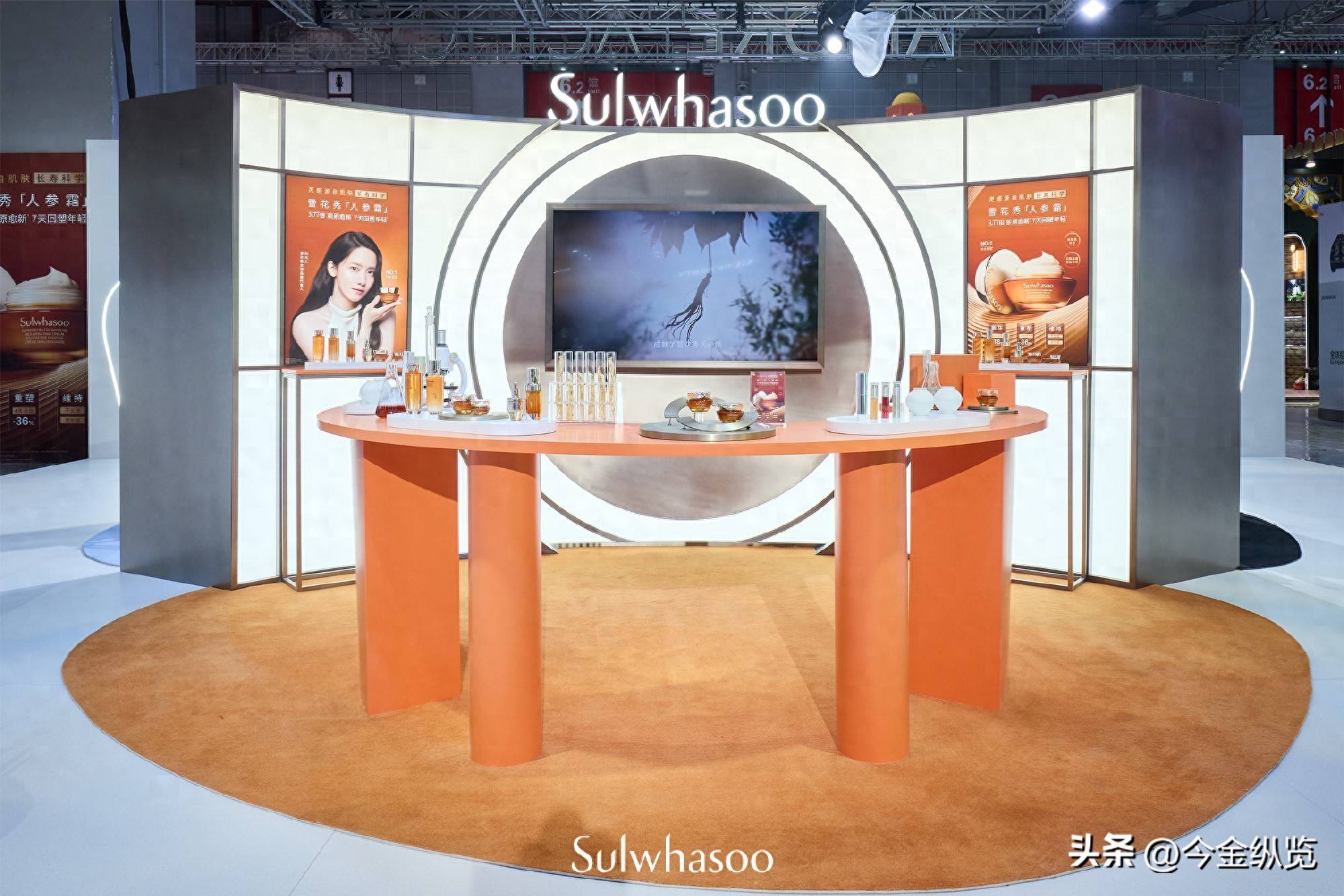
雪花秀撤店潮席卷二线!韩妆告别中国,背后藏着惊人消费剧变!
Sou Hu Cai Jing· 2025-12-13 12:03
Core Viewpoint - The article discusses the decline of Korean cosmetics brands, particularly Sulwhasoo, in the Chinese market, highlighting the rise of domestic beauty brands and changing consumer preferences [1][9]. Group 1: Market Trends - Sulwhasoo plans to close approximately 30 stores in China, primarily in second-tier cities, reflecting a broader struggle for Korean cosmetics brands in the market [3][5]. - From 2022 to 2025, the share of Korean cosmetics in China's online sales is projected to drop from 69% to 23%, while the U.S. market share will increase to 51%, indicating a significant loss of popularity in China [10]. - In 2023, domestic beauty brands surpassed international brands in market share for the first time, with brands like Winona and Fulejia gaining traction due to better understanding of local consumer needs and competitive pricing [12]. Group 2: Consumer Behavior - There has been a shift in consumer purchasing behavior from valuing brand reputation and packaging to focusing on product ingredients and effectiveness [13]. - Consumers are increasingly scrutinizing product ingredient lists, leading to a preference for brands that provide clear information about their formulations and benefits [15]. Group 3: Channel Dynamics - The decline of foot traffic in traditional department stores has negatively impacted brands like Sulwhasoo that rely heavily on physical retail locations [7][19]. - Many leading domestic brands have over 90% of their sales coming from online channels, while Korean brands have been slow to adapt to this shift, missing out on the online sales boom [17][19]. Group 4: Innovation and Adaptation - Korean cosmetics brands are struggling with product innovation and are unable to keep pace with the rapid changes in consumer demand in China [21][23]. - Unlike international giants that invest in local R&D to cater to Chinese consumers, Korean brands like Amorepacific continue to rely on a one-size-fits-all approach, limiting their adaptability [23]. Group 5: Future Outlook - The ongoing store closures may signal a challenging future for Korean brands in China, as they must reconsider their strategies to remain relevant in a highly competitive market [25].
百亿珀莱雅,难圆大牌梦
Xin Lang Cai Jing· 2025-12-12 14:20
Core Viewpoint - In 2023, Proya surpassed L'Oreal on Tmall's Double 11 list, but after achieving over 10 billion in revenue, it faced significant declines in performance, with Q3 revenue down 11.63% and net profit down 23.64%, marking the largest quarterly drop in recent years [1][41] Company Performance - Proya's revenue for the first half of the year was 39.79 billion yuan, a slight decline of 0.08% year-on-year [1] - The company aims to enter the top ten global cosmetics brands within the next decade under the "Double 10 Strategy" initiated by the new general manager, Hou Yameng [1][41] - Proya's sales expenses reached 35.25 billion yuan in Q3 2025, accounting for 49.66% of revenue, a significant increase from the previous year [17][57] Market Positioning - Proya has been labeled as a "big brand alternative," often compared to L'Oreal, which has helped it penetrate the market but now poses challenges as it seeks to break through its brand ceiling [2][42] - The brand's product matrix follows a pyramid structure similar to L'Oreal, with a focus on mid-to-high-end efficacy skincare [5][45] Consumer Trends - The rise of domestic brands has been supported by a shift in consumer preferences towards value for money, with Proya's products priced between 200-500 yuan appealing to cost-conscious consumers [7][47] - Consumers are increasingly prioritizing product efficacy and ingredient safety over brand prestige, creating opportunities for Proya and other domestic brands [8][48] Challenges Faced - Proya is experiencing a decline in the effectiveness of its core products, with the market becoming saturated and competition intensifying [11][57] - The company's heavy reliance on marketing over research and development has led to a situation where marketing efforts are not translating into sustained product innovation [18][58] - Proya's online sales channel dependency exceeds 95%, limiting its ability to engage with consumers through offline experiences, which are increasingly valued by younger consumers [21][62] Global Expansion Efforts - Proya aims to expand internationally, focusing on markets in Japan and Southeast Asia, but its overseas revenue remains low at only 1.6% of total revenue [35][68] - The brand's high-end product lines and overseas operations are still in the early stages, lacking the scale and maturity of its mainstream offerings [28][68]

这家被欧莱雅看中的中国公司,如何从资本寒冬死里逃生?
虎嗅APP· 2025-12-12 09:32
百亿市场创业窗口正在关闭 出品 | 虎嗅科技医疗组 作者 | 陈广晶 编辑 | 苗正卿 头图 | 视觉中国 让赵亚冉感慨万千的一幕发生在3年前( 2022年 ),那正是美元基金大退潮的时候。处于商业化关键阶段 的未名拾光,急需资金来建设工厂。恰逢疫情期间,赵亚冉每天收拾停当,简单吃完早饭,就坐在电脑前 等待约好的投资人做线上交流。路演的那一个月里平均每天要见三到四个投资人。一共见了六七十家机构 的投资人。"业内的投资人几乎都见了个遍。" 好不容易敲定投资,就在11月份要交割的时候,跟投机构又忽然改主意了。"一下子出现2000多万元的缺 口,当时我脑袋嗡的一下。"赵亚冉告诉虎嗅,他最担心的是跟投基金撤退,会导致领投撤资。 那时候还在疫情期间,未名拾光账上的钱仅能维持基础运营一年,如果融不到这笔钱,建厂计划泡汤,订 单无法按期交付,公司基本上会处于慢性死亡的状态。 很多企业没有未名拾光这么幸运。2022年以来,有多家合成生物知名企业破产或陷入危机,包括号称合成 生物鼻祖的Amyris。 在冷暖交替的巨变和命运的跌宕起伏中,未名拾光和它所身处的合成生物正在AI等新技术浪潮裹挟中,涌 入一个拥有无限可能又容错率极低的 ...
“香水经济”拯救美妆品牌企业?
Xi Niu Cai Jing· 2025-12-12 08:31
Core Insights - The beauty industry is increasingly focusing on the fragrance business as a key growth area, with major brands like Estée Lauder and L'Oréal ramping up investments in this sector [2][3][7] - The fragrance market is seen as a new opportunity for beauty brands to break through current market challenges, with the "fragrance economy" emerging as a significant trend [2][5] Investment and Strategic Moves - L'Oréal announced a €60 million investment to double the production capacity at its historic Gossy factory in France, which serves luxury brands [3] - Kering Group has entered a long-term strategic partnership with L'Oréal, allowing L'Oréal to acquire the high-end fragrance brand Creed and gain 50-year licenses for several iconic brands [3] - Estée Lauder made a minority investment in the Mexican high-end fragrance brand XINÚ through its New Incubation Ventures [3][4] Market Trends and Consumer Behavior - The fragrance category is evolving from a secondary role in beauty to a primary emotional driver for consumers, with a growing willingness to spend on emotional value [5][6] - According to a report, the primary reasons for purchasing fragrances include self-pleasure and enhancing emotional value, with social gifting being secondary [5][6] Market Potential and Growth - The fragrance market in China is still in a "blue ocean" phase, with low penetration rates compared to mature international markets, presenting significant growth opportunities [6][7] - Data shows that fragrance imports in China surpassed body care products for the first time in Q1 2025, with a 20.5% year-on-year growth in the first half of 2025, reaching $600 million [6][7] Financial Performance - L'Oréal's fragrance business now accounts for 40% of its luxury division's revenue, with a compound annual growth rate of 20% over the past five years, projected to exceed €6 billion by 2025 [7] - Estée Lauder reported a 14% year-on-year increase in fragrance revenue, reaching $721 million in Q1 of the 2026 fiscal year [7][8] Competitive Landscape - The fragrance category offers high margins and a longer product lifecycle compared to other beauty products, making it an attractive segment for brands [8] - As the market becomes more competitive, brands must find unique positioning and storytelling to connect emotionally with consumers, whether through high-end or niche fragrances [8]


Kering: Financial information regarding the reclassification of Kering Beauté in accordance with IFRS 5
Globenewswire· 2025-12-11 16:45
Core Insights - Kering Beauté will be reclassified as discontinued operations in the consolidated financial statements as of December 31, 2025, following the agreement with L'Oréal for its sale, expected to close in the first half of 2026 [2]. Financial Information - For H1 2025, reported revenue was €7,587 million, which will be restated to €7,439 million after excluding Kering Beauté's contribution of €148 million. In 2024, reported revenue was €17,194 million, restated to €16,874 million after excluding Kering Beauté's contribution of €320 million [2]. - The recurring operating income for H1 2025 was reported at €969 million, restated to €920 million after excluding Kering Beauté's contribution of €49 million. For 2024, reported recurring operating income was €2,554 million, restated to €2,440 million after excluding Kering Beauté's contribution of €114 million [2]. - Quarterly revenue for Q3 2025 was reported at €3,415 million, with a comparable change of -5%. After restating for Kering Beauté, the revenue was adjusted to €3,331 million, reflecting a comparable change of -6% [3]. Future Reporting - Kering Beauté's contributions will be presented separately within net income from discontinued operations, and comparative periods will be restated for consistency across reporting periods. The Group's financial indicators will be presented excluding Kering Beauté under continuing operations [8].

两大美妆巨头同时出手,一边狂买一边狂卖
2 1 Shi Ji Jing Ji Bao Dao· 2025-12-10 12:25
Group 1 - L'Oréal Group announced the acquisition of an additional 10% stake in Galderma, increasing its ownership from 10% to 20%, indicating a strategic focus on the aesthetic and medical beauty market [1][2] - The acquisition is expected to be completed in the first quarter of 2026, with plans to nominate two non-independent directors from L'Oréal to Galderma's board [2] - L'Oréal's recent investments include a €4 billion acquisition of luxury beauty licenses from Kering Group, reflecting a strong recovery in its performance, particularly in the North Asia region [3] Group 2 - Unilever is undergoing a restructuring process, focusing on core businesses by divesting non-core brands, including the planned spin-off of its ice cream business [4][5] - Unilever's CEO emphasized that the spin-off aims to create a more streamlined company, concentrating on beauty and personal care sectors for higher profit margins [5] - The contrasting strategies of L'Oréal's acquisitions and Unilever's divestitures reflect a broader industry trend of resource concentration on core business areas [5][6] Group 3 - Estee Lauder is also considering divesting its Korean beauty brand Dr. Jart+ and has previously planned to sell Too Faced and Smashbox, indicating a trend of brand portfolio optimization among major beauty companies [6] - Domestic brands are also pursuing acquisitions to build their brand portfolios, as seen with Perfect Diary's parent company acquiring high-end skincare brands [6] - An ideal brand matrix in the beauty industry should exhibit strategic synergy, growth gradient, and profit orientation to withstand market fluctuations [7]
