呷哺呷哺

Search documents
山姆上架太二酸菜鱼预制菜 九毛九4年市值蒸发480亿
2 1 Shi Ji Jing Ji Bao Dao· 2025-09-21 02:12
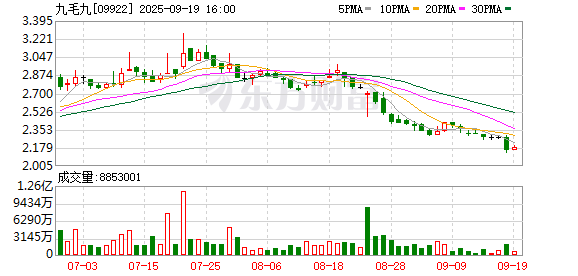
Core Viewpoint - The ongoing "pre-made dish war" in the restaurant industry has intensified, with companies like Jiumaojiu (09922.HK) facing significant challenges, including declining stock prices and poor financial performance [2][5][19]. Company Performance - Jiumaojiu's stock price has dropped significantly from a peak of 37.8 HKD per share in early 2021 to 2.18 HKD per share by September 2025, resulting in a market capitalization decline from nearly 55 billion HKD to 3 billion HKD, a loss of over 94% [5][8]. - The company reported a revenue decline of 10.1% year-on-year to 2.753 billion CNY and a net profit decrease of 16.05% to 61 million CNY in the first half of 2025 [7]. - The three main brands under Jiumaojiu, including Taier, Song Hotpot, and Jiumaojiu (Northwest Cuisine), have all experienced revenue declines, with Taier's revenue dropping 13.3% to 1.949 billion CNY in the first half of 2025 [9][10]. Market Trends - The restaurant industry is facing a brutal price war, with many companies reporting poor financial results. For instance, Xiaobai Xiaobai's revenue fell by 18.9% to 1.942 billion CNY in the first half of 2025 [19]. - The overall restaurant market is undergoing a significant shakeout, with a closure rate of 61.2% in 2024, indicating a challenging environment for many players [21]. Brand Challenges - Taier, once a popular brand, is now facing criticism regarding its product quality and service speed, leading to a decline in customer interest [12][14]. - The brand's store count has decreased from 612 to 547 within six months, marking the first significant closure since its inception [9][16]. Strategic Adjustments - In response to its challenges, Taier has initiated a comprehensive overhaul, introducing a new store model focused on fresh ingredients and improved customer experience [17]. - The company has also expanded its pre-made dish offerings, with sales from this segment increasing by 140% year-on-year to 132 million CNY in the first half of 2025 [17].

650亿市场引巨头竞逐,小火锅的“热闹”与“挑战”,都在这了
3 6 Ke· 2025-09-20 10:02
Group 1 - The small hot pot sector is transitioning from a niche market to a mainstream focus starting in 2024, with major brands like Haidilao, Yang Guofu, and Xiaobai Xiaobai entering the space alongside cross-category brands and individual operators [1][2] - The number of small hot pot enterprises in China is approximately 23,000, with a compound annual growth rate of 2.8% from 2019 to 2023, and the market size is projected to reach nearly 65 billion yuan by July 2025 [2] - The small hot pot format is particularly appealing to young consumers due to its fast-casual dining attributes, making it a preferred choice for daily meals and gatherings [3] Group 2 - July 2023 marked a significant expansion in the small hot pot sector, with Haidilao launching its self-service hot pot model and Yang Guofu opening its first self-service location, both experiencing high customer demand [4] - Major brands like Banu, Shengxiangting, and others have also entered the small hot pot market, driven by consumer demand and brand capabilities, leading to a new wave of entrepreneurship in this sector [5] - The small hot pot industry is moving from "wild growth" to "refined operations," with a focus on balancing quality and price, as well as innovative business models [6][7] Group 3 - The supply chain is becoming a critical competitive advantage in the small hot pot industry, with brands needing to provide high-quality ingredients at low costs to succeed [8] - The entry of large chains is seen as a challenge for smaller brands lacking supply chain infrastructure, emphasizing the importance of operational efficiency and cost management [8][9] - The ongoing excitement in the small hot pot sector will continue, but brands must enhance their operational capabilities and differentiate themselves to thrive in a competitive landscape [9]
餐饮商家,集体上演“擦边餐”
虎嗅APP· 2025-09-19 11:10
Core Viewpoint - The article discusses the emerging trend of combining dining with performance in the restaurant industry, highlighting how this "borderline economy" is being rapidly adopted to attract younger consumers and drive foot traffic in a challenging market environment [4][10]. Group 1: Dining and Performance Integration - The integration of dining and performance is becoming a popular trend, with restaurants like Haidilao introducing themed night venues featuring DJs and interactive performances to enhance customer experience [6][8]. - The "night snack" theme introduced by Haidilao has generated significant social media buzz, with over 10 million views on Xiaohongshu and 9 million on Douyin, indicating strong consumer interest [7][10]. - Other restaurants are also adopting similar strategies, such as introducing live performances and themed service staff to create a unique dining atmosphere [4][8]. Group 2: Market Challenges and Consumer Behavior - The restaurant industry is facing significant challenges, with major brands like Nayuki and Xiaobawang reporting substantial losses in 2024, highlighting the need for innovative customer engagement strategies [10][12]. - Younger consumers, particularly those born in the 1990s and 2000s, are seeking more than just food; they desire social interaction and entertainment, which has led to the rise of "borderline" performances in dining settings [10][11]. - The perception of value has shifted, with consumers willing to pay for experiences that combine dining with entertainment, as seen in the popularity of Haidilao's new offerings [10][11]. Group 3: Risks and Sustainability - The article warns that while "borderline" dining can generate short-term interest, it may not be sustainable in the long run, as evidenced by the closure of restaurants like Staneemeehoi and Hooters due to changing consumer preferences and societal values [13][14]. - The reliance on provocative marketing strategies can backfire, as seen in the backlash against establishments that objectify staff, indicating a need for restaurants to balance entertainment with respect for social norms [14][15]. - Ultimately, the success of performance dining hinges on maintaining food quality and service standards, as consumers prioritize taste and value over mere spectacle [21][22].

餐饮“四大金刚”,挤满全国商场
东京烘焙职业人· 2025-09-19 08:33
Core Viewpoint - The article discusses the rapid expansion of the restaurant industry in shopping malls, highlighting the dominance of four key segments: tea and coffee, baking, hot pot, and noodle shops, which are becoming essential players in mall transformations [8][10][19]. Group 1: Industry Trends - The restaurant industry is expanding at an unprecedented rate in both high-end and community shopping centers [7]. - The four key segments—tea and coffee, baking, hot pot, and noodle shops—are becoming the main players in mall openings [10]. - In April, the Shenzhen iN City Plaza reopened with a significant presence of food and beverage brands, indicating a shift away from luxury brands [9]. Group 2: Market Dynamics - In Q2 of this year, the proportion of new restaurant openings in high-end malls reached 30%, with a store opening-to-closing ratio of 1.51 [9]. - The increasing number of restaurant stores is a response to the declining performance of apparel and beauty brands, which have seen significant store closures [19][20]. - The average rental price in Shanghai's core shopping districts was reported at 1,877 RMB per month per square meter in Q2 2025, indicating the financial viability of these restaurant segments [26]. Group 3: Consumer Behavior - The restaurant segments are characterized by a high turnover rate, with some malls reporting over 30% annual turnover in their restaurant offerings [23]. - The tea and coffee segment alone has nearly 900,000 stores nationwide, while the baking segment has reached 338,000 stores [23]. - The rapid expansion of these segments is driven by a large influx of entrepreneurs, making it a popular area for new business ventures [23]. Group 4: Strategic Importance - The "four kings" of the restaurant industry are seen as crucial for malls facing high vacancy rates, as they can attract foot traffic and generate stable rental income [22][26]. - Malls are increasingly viewed as essential platforms for restaurant brands to enhance their visibility and expand their market presence [28][30]. - The standardized operations of these restaurant segments make them well-suited for mall environments, allowing for quicker openings and brand updates [34].



餐饮商家,集体上演“擦边餐”
投中网· 2025-09-19 02:37
Core Viewpoint - The article discusses the rise of "borderline economy" in the restaurant industry, where dining experiences are increasingly combined with entertainment elements to attract younger consumers, reflecting a shift in consumer preferences towards social and interactive dining experiences [5][10]. Summary by Sections Emergence of "Borderline Economy" - The restaurant industry is witnessing a trend where dining is paired with performances, as seen in establishments like Haidilao, which has introduced night-themed dining experiences featuring DJs and interactive performances to draw in customers [5][7]. - This shift is a response to the challenges of attracting young consumers, as traditional food offerings alone are no longer sufficient [5][9]. Consumer Experience and Engagement - Young consumers, particularly those born in the 1990s and 2000s, are seeking not just food but a comprehensive experience that includes social interaction and entertainment [9][10]. - The popularity of Haidilao's night-themed restaurants has led to significant social media engagement, with over 10 million views on Xiaohongshu and 9 million on Douyin [7]. Historical Context and Evolution - The combination of dining and entertainment is not new, with historical precedents in ancient marketplaces and tea houses, but current implementations are more aggressive and visually oriented [8]. - The article highlights that while entertainment can enhance the dining experience, it cannot replace the fundamental quality of food [12][19]. Risks and Challenges - The article points out that while the "borderline" approach may generate short-term interest, it poses risks for long-term sustainability, as seen in the decline of restaurants like Staneemeehoi and Hooters, which relied heavily on provocative marketing strategies [12][13]. - Regulatory scrutiny is increasing, with establishments facing penalties for inappropriate entertainment content, indicating a potential backlash against overly provocative dining experiences [12][14]. Alternative Approaches - A new trend of culturally rich performances is emerging, where dining experiences incorporate local traditions and culinary practices, providing a more authentic and sustainable model for attracting customers [17][19]. - The article emphasizes that successful "performance dining" should enhance rather than overshadow the quality of food, ensuring that the core dining experience remains appealing [20].
罗永浩“停战”后,西贝紧急培训厨师
Xin Lang Cai Jing· 2025-09-18 10:59
Core Viewpoint - Xibei is implementing a series of apology and rectification measures in response to the "pre-made food" controversy, including adjustments to cooking processes and ingredient sourcing [1][3]. Summary by Sections Rectification Measures - Xibei announced plans to shift from centralized kitchen processing to on-site cooking at stores, aiming to complete these changes by October 1 [1][3]. - Specific adjustments include switching to non-GMO soybean oil for all dishes, preparing children's meals on-site, and modifying the preparation of various signature dishes [1][3]. Operational Challenges - The transition to on-site cooking will likely increase labor costs due to the need for skilled chefs and additional training for existing staff [3][4]. - The adjustments may also lead to higher food waste and require more kitchen space and equipment, potentially affecting overall efficiency [3][4]. Financial Implications - Xibei's average profit margin of 5% may be further compressed due to increased operational costs from the changes [5]. - Comparatively, Xibei's profit margin is positioned in the middle range within the industry, with competitors like KFC and Haidilao reporting higher margins [5][6]. Market Conditions - The overall restaurant industry is facing challenges, with a reported 4.3% growth in national dining revenue, but a decline in revenue growth for larger establishments [6][7]. - Xibei has experienced a significant drop in customer traffic following the controversy, with daily revenue losses estimated at 1 million to 3 million yuan [6][7]. Consumer Trust Issues - Xibei's shift towards a "family-friendly restaurant" model, focusing on children's meals, raises concerns about regaining consumer trust, particularly regarding food safety and ingredient transparency [10][12]. - The controversy surrounding pre-made foods has highlighted a disconnect between industry standards and public perception, complicating Xibei's efforts to rebuild trust with consumers [12].
餐饮商家,集体上演“擦边餐”
Xin Lang Cai Jing· 2025-09-18 04:00
Core Insights - The article discusses the emerging trend of combining dining with entertainment in the restaurant industry, particularly focusing on the "borderline economy" where restaurants incorporate performances to attract customers [1][6][8] - The shift in consumer preferences, especially among younger generations, emphasizes the need for a comprehensive experience that includes social interaction and entertainment, rather than just food [4][12] Industry Trends - The integration of performance elements in dining experiences is rapidly being adopted across various restaurant brands, such as Hai Di Lao and others, to enhance customer engagement and drive foot traffic [1][2][3] - Hai Di Lao has launched a "night snack" theme store that has gained significant attention, with over 10 million views on Xiaohongshu and 9 million on Douyin, leading to the opening of nearly 30 such stores in major cities [2][3] Financial Performance - The restaurant industry is facing significant financial pressures, with several well-known brands reporting losses in 2024, including Nayuki's Tea with a net loss of 919 million yuan and Xiaobing Xiaobing with a revenue of 4.755 billion yuan and a total loss of 401 million yuan [3][6] Consumer Behavior - The "experience generation" of consumers, particularly those born in the 1990s and 2000s, seeks not only food but also social and entertainment experiences, driving restaurants to innovate beyond traditional offerings [4][5] - The perception of value has shifted, with consumers willing to pay for multi-faceted experiences that combine dining with entertainment, as seen in the popularity of Hai Di Lao's new offerings [5][12] Risks and Challenges - The reliance on "borderline" entertainment strategies poses risks, as evidenced by the closure of previously successful establishments like Staneemeehoi in Bangkok and Hooters in the U.S., highlighting the potential pitfalls of such marketing approaches [6][7] - Regulatory scrutiny is increasing, with incidents of restaurants being penalized for inappropriate performances, indicating that the sustainability of the "borderline economy" is uncertain [7][8] Future Directions - A new trend of "positive performance" is emerging, where restaurants incorporate culturally rich and meaningful entertainment that enhances the dining experience without compromising food quality [9][10] - Successful models are focusing on integrating local culture and culinary traditions into performances, creating a more authentic and engaging dining experience [10][12]
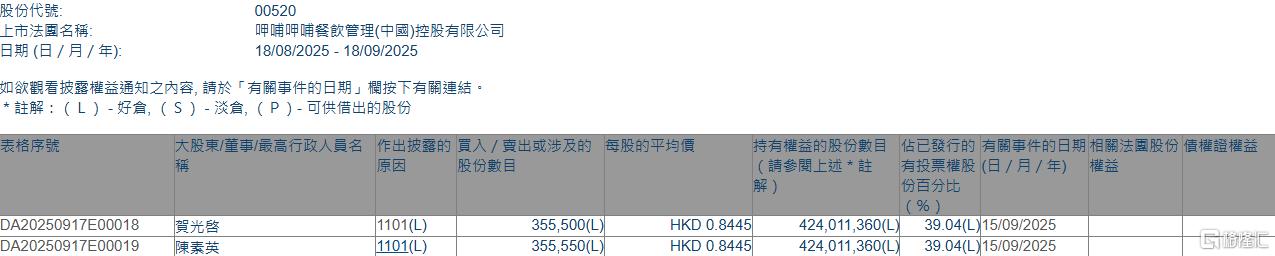
呷哺呷哺(00520.HK)获执行董事兼主席贺光启增持35.55万股
Ge Long Hui· 2025-09-18 00:09
Group 1 - The core point of the news is that He Guangqi, the executive director and chairman of Xia Bo Xia Bo (00520.HK), increased his shareholding by purchasing 355,500 shares at an average price of HKD 0.8445 per share, totaling approximately HKD 300,200 [1] - Following this transaction, He Guangqi's total shareholding increased to 424,011,360 shares, raising his ownership percentage from 39.00% to 39.04% [1]
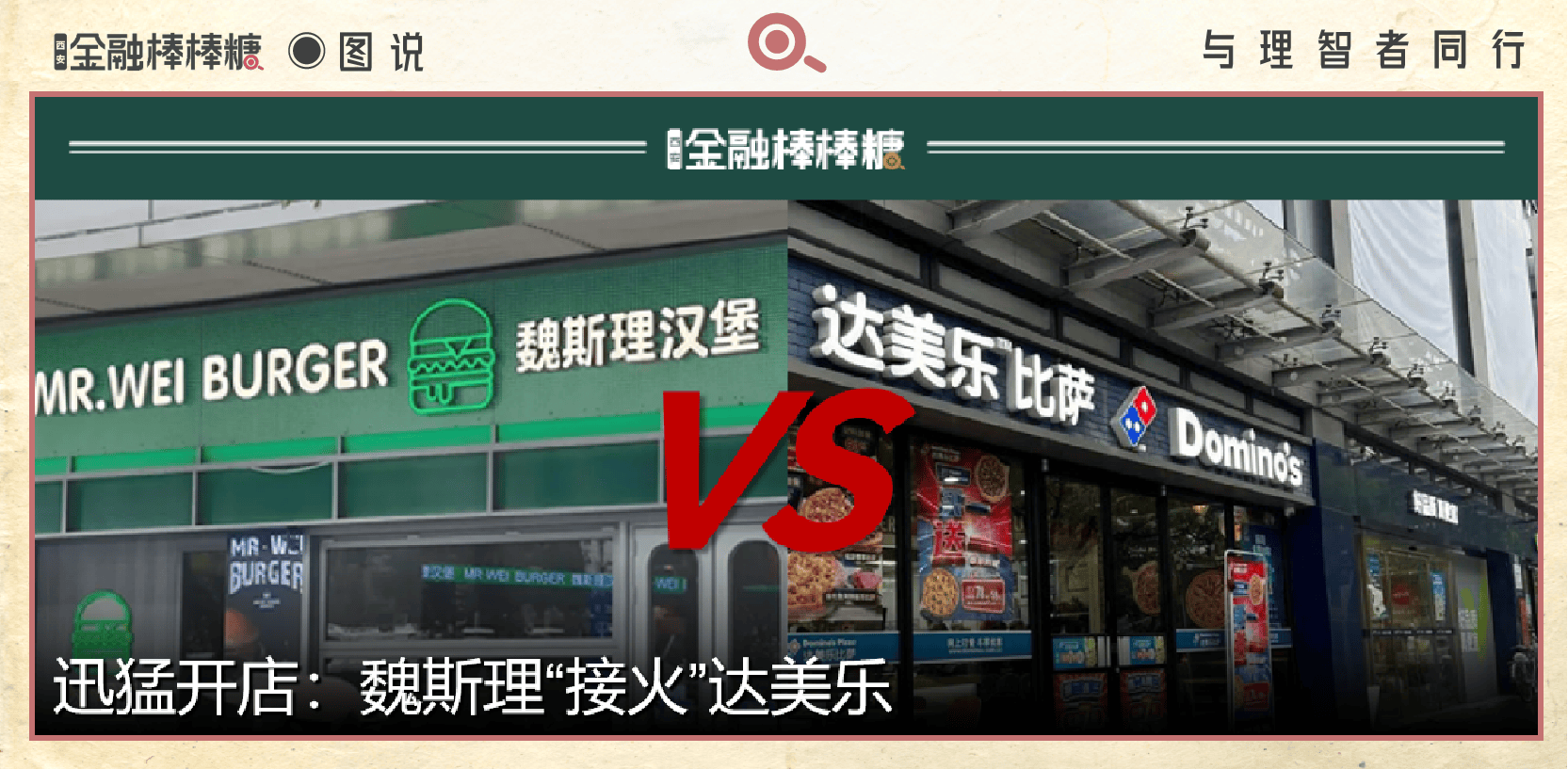
“再平衡”信号:谁是下一个魏家?
Sou Hu Cai Jing· 2025-09-17 10:12
Core Viewpoint - The exit of Wei Family Restaurant Group from the Ele.me platform signals a significant shift in the platform economy, as it emphasizes a focus on physical store expansion while other major players like Haidilao and Xiaocaiyuan continue to invest in delivery services [1][7]. Company Summary - Wei Family has confirmed its withdrawal from the Ele.me platform, stating that it may return in the future but has not set a specific timeline [1]. - The company is experiencing high customer traffic, with occupancy rates around 70% in various locations, indicating strong demand for its offerings [3]. - Wei Family's pricing strategy remains competitive, with menu items priced affordably even in high-cost cities like Shanghai, where the average rent is significantly higher than in other cities [5]. - The company has successfully opened new locations in major cities, with initial customer responses showing long wait times and high demand [6]. Industry Summary - The overall restaurant industry is facing challenges, with several listed companies reporting losses or declining revenues. For instance, three out of twelve companies reported losses in the first half of the year [7]. - Companies like Haidilao and Xiaocaiyuan are increasingly relying on delivery services, with Haidilao's delivery revenue growing nearly 60% in the first half of the year [11]. - The competitive landscape is intensifying, with large restaurant chains leveraging their bargaining power to minimize delivery platform fees, thus maintaining profitability [14]. - The shift towards online delivery services is becoming a critical growth avenue for both struggling and profitable companies, contrasting with the challenges faced by smaller restaurants [10][23].
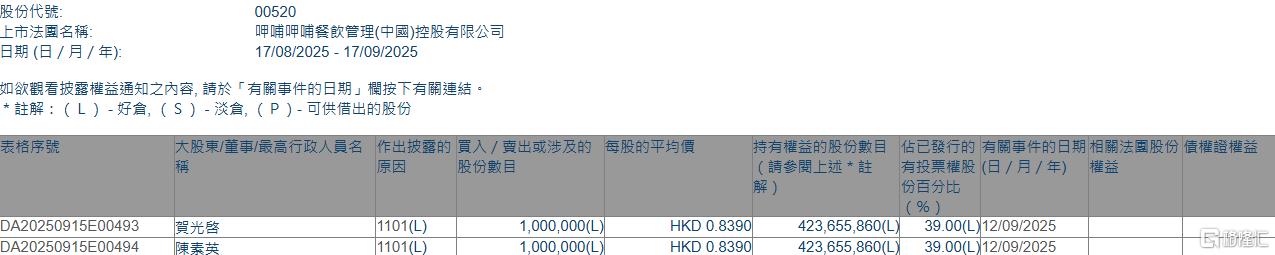
呷哺呷哺(00520.HK)获执行董事兼主席贺光启增持100万股
Ge Long Hui· 2025-09-16 23:41
Group 1 - The core point of the news is that He Guangqi, the executive director and chairman of Xia Bo Xia Bo (00520.HK), increased his shareholding by purchasing 1 million shares at an average price of HKD 0.839 per share, totaling approximately HKD 839,000 [1] - Following this purchase, He Guangqi's total shareholding increased to 423,655,860 shares, raising his ownership percentage from 38.91% to 39.00% [1]