华为云

Search documents
民营经济促进法来了!如何服务民企发展?看看广东这些“招”
Nan Fang Du Shi Bao· 2025-05-19 14:48
Core Points - The "Private Economy Promotion Law" officially implemented on May 20 marks a significant legal recognition of the private economy in China, emphasizing the importance of promoting its sustainable and high-quality development as a long-term national policy [1][3] - The law aims to create a fair and efficient development environment for private enterprises through legal means, addressing regulatory barriers and promoting supportive policies [3][4] Group 1: Legal Framework and Implementation - The law is the first to explicitly define the legal status of the private economy and incorporates the principle of "two unwavering commitments" [1] - It establishes a framework for government and enterprise communication, mandating local governments to create effective channels for feedback from various economic organizations, including private enterprises [4][5] Group 2: Regional Focus on Guangdong - Guangdong province, a pioneer in private economic development, has a total of 18.38 million registered private economic entities, accounting for 96.48% of all operating entities by the end of 2024 [3] - The implementation of the law is expected to further support the growth and scaling of private enterprises in Guangdong, fostering a robust economic environment [3] Group 3: Communication Mechanisms - Guangdong has established a long-term communication mechanism between government and enterprises, highlighted by regular forums such as the "Cantonese Business and Governor Face-to-Face Consultation Meeting" [5][6] - This mechanism allows for direct dialogue between provincial leaders and entrepreneurs, facilitating the rapid identification and resolution of operational challenges faced by private enterprises [8][9] Group 4: Policy Support and Talent Development - The law includes provisions for simplifying access to preferential policies for private enterprises and encourages entrepreneurship through public services [10][11] - Guangdong has launched initiatives to attract talent, including the "Million Talents Gather in South Guangdong" campaign, aiming to recruit 1 million college graduates for employment and entrepreneurship in the province [14] Group 5: International Expansion and Trade - The law also addresses the need for private enterprises to engage in international exchanges and protect their overseas rights, reflecting the growing trend of enterprises expanding abroad [15][17] - Guangdong's foreign trade reached over 9 trillion yuan in 2024, with private enterprises playing a crucial role in this growth, supported by government initiatives to facilitate international market access [15][16]

汽车行业周报:特斯拉发布强化学习视频,优必选、越疆等本体企业与模型厂商达成合作
Huaxin Securities· 2025-05-19 03:00
Investment Rating - The report maintains a "Recommended" investment rating for the automotive industry [9][41]. Core Insights - The automotive market is experiencing stable overall performance, with domestic demand being supported by new vehicle cycles and "old-for-new" policies, leading to a significant increase in consumption [7][8]. - The production and sales of new energy vehicles (NEVs) have shown rapid growth, with NEV sales accounting for 42.7% of total new vehicle sales in April [8]. - The collaboration between companies like Tesla, UBTECH, and Weijiang with model manufacturers is expected to accelerate advancements in humanoid robots and their applications in various sectors [6][9]. Summary by Sections Industry Performance - The automotive sector has outperformed the market, with a 10.1% increase over the past month and a 27.4% increase over the past year, compared to the Shanghai Composite Index's 3.1% and 5.7% respectively [3][16]. - In April, the production and sales of automobiles reached 2.619 million and 2.59 million units, respectively, marking a year-on-year increase of 8.9% and 9.8% [8]. Investment Recommendations - The report highlights several key companies for investment: - Recommended companies in the humanoid robot sector include Shuanglin Co. and Rongtai Co. [9][41]. - For linear joint assemblies, Shuanglin Co. and Dechang Electric Holdings are recommended [9][41]. - In the sensor sector, KAIT Co. is recommended, with attention to Lingyun Co. and Anpeilong [9][41]. Market Trends - The report notes that the automotive industry is benefiting from the increasing penetration of intelligent driving technologies and the integration of robotics, which are expected to drive further growth [8][9]. - The report emphasizes the importance of self-controlled equipment manufacturers in the humanoid robot sector, predicting that those with strong R&D capabilities will have a higher chance of success [6][9]. Company Announcements - The report includes updates on company activities, such as Top Group's acquisition of Wuhu Changpeng Auto Parts Co. and the restructuring of NIO's brand divisions [43][50].


阳光诺和:投资者开放日展现创新实力 绘制医药研发新蓝图
Zheng Quan Shi Bao Wang· 2025-05-15 02:08
Group 1 - The core viewpoint of the articles highlights Sunlight Nuohe's innovative capabilities and growth potential in the pharmaceutical research and development sector, showcasing its integrated business ecosystem of "R&D services + pipeline cultivation + new quality industrial chain" [1] - The company has several innovative products in the R&D phase, covering various therapeutic areas such as autoimmune diseases, pain management, cardiology, central nervous system, oncology, metabolism, and respiratory diseases [1] - Sunlight Nuohe is committed to a dual-driven strategy of "independent innovation + technology transfer," establishing an international standard R&D platform and enhancing its industrial collaboration network to help domestic pharmaceutical companies overcome technical barriers and accelerate import substitution [1] Group 2 - The company is aligning with the trends in biomedicine, leveraging technological breakthroughs, policy support, and market demand, and has established a self-owned peptide innovation drug library screening system [2] - Currently, three innovative drugs have entered clinical stages, including STC007 for postoperative pain, which is in Phase II and soon to enter Phase III, and STC008 targeting cancer cachexia, which has completed Phase IA and is about to start Phase IB [2] - In the field of modified new drug development, the company focuses on sustained-release formulations and high-end formulations, with multiple technology platforms working together to design personalized sustained-release technologies [2] Group 3 - The company has made significant progress in its transdermal delivery research platform, with experience in gel patches and hot melt adhesives, and has partnered with Japan's KANEKA to introduce advanced transdermal patch technology [3] - Sunlight Nuohe is actively exploring the small nucleic acid drug field, which has substantial development potential, and is conducting in-depth research on chemical modifications and delivery systems for small nucleic acid drugs [3] - The company aims to enhance its R&D capabilities by absorbing global cutting-edge technologies and strives to secure a position in the global pharmaceutical market while contributing to the competitiveness of China's pharmaceutical industry [3]

IDC行业: IDC向AIDC升级,展望供需演变
2025-05-12 15:16
Summary of IDC and AIDC Industry Conference Call Industry Overview - The IDC (Internet Data Center) industry primarily provides server hosting, network access, and other infrastructure support for internet services. The core business includes offering cabinets, servers, and network equipment, relying on cabinet leasing for revenue generation [3][4] - In 2023, China's data center revenue reached 240.7 billion yuan, a year-on-year increase of 26.64%, with a compound annual growth rate of 17.07% over the past three years. The total electricity consumption of computing centers was approximately 150 billion kWh, up 15%, accounting for about 1.63% of total social electricity consumption [12][3] Key Points on IDC and AIDC - The transition from traditional IDC to AIDC (Artificial Intelligence Data Center) is driven by the increasing demand for high-performance computing resources due to AI development. AIDC requires higher power, cooling, and intelligent operation systems compared to traditional IDC [5][22] - The average power per rack in global data centers increased from 5.6 kW in 2017 to 12.8 kW in 2023, indicating a rising demand for higher power density [6] - AIDC's construction and operational requirements include low-carbon power supply and liquid cooling systems, which are becoming the new standards for data center construction [22][23] Financial Metrics and Investment Returns - IDC's profitability model relies on rack utilization rates, cabinet prices, and the number of cabinets. The investment structure shows that hardware acquisition costs account for over 80%, while civil engineering costs account for about 14-15%. The investment return period is approximately 6.7 years, with an internal rate of return (IRR) between 12.09% and 12.3% [4][8] - The relationship between rack utilization and gross margin is significant, with rack utilization increasing from 50% to 90% leading to gross margin improvements from 24% to 40% [2][9] Supply Side Dynamics - The supply side of the IDC industry is evolving, with a focus on supply scale, competitive landscape, and barriers to entry. Key barriers include power supply capacity and cooling efficiency, which directly impact operational costs and reliability [7][15] - The emergence of computing resource leasing is providing rental services for small and medium-sized tech companies, enhancing the flexibility and responsiveness of service offerings [15][16] Market Trends and Demand Drivers - Current demand drivers have shifted from cloud computing to AI, with significant demand concentrated in first-tier cities and surrounding areas, particularly in the Yangtze River Delta and Beijing-Tianjin-Hebei regions, where investment exceeds 50 billion yuan [13][14] - The demand for customized, flexible, low-cost, and fast-delivery value-added services is increasing among internet clients [13] Competitive Landscape - Major players in China's intelligent computing center include operators, third-party IDC service providers, large enterprises, and local government initiatives. Operators dominate the market due to their extensive network bandwidth and data center resources [17] - The share of third-party IDC service providers is expected to increase due to their ability to respond quickly and flexibly to customer needs, especially in high-demand areas [18][19] Future Outlook - Chinese companies are actively advancing global AIDC construction projects, with investments in countries like South Korea and Malaysia, indicating a strategic move to meet growing data processing demands and expand international influence [24]
CDN鼻祖转型,为何“云+AI”成标配?丨企服国际观察
Tai Mei Ti A P P· 2025-05-12 06:09
Group 1: Core Strategy - The "Cloud + AI" development strategy has become a common goal for major tech companies globally, with Akamai transitioning towards this strategy as well [1][2] - Akamai's revenue growth is increasingly driven by its security and cloud computing segments, with cloud computing being the fastest-growing business unit [1][4] Group 2: Market Trends - The shift towards "Cloud + AI" is largely driven by customer demand for digital transformation, leading to increased needs for cloud computing [2][3] - AI technology has become essential in the digital transformation process across various industries, with companies willing to invest heavily in AI despite strict cost control measures [3][5] Group 3: Business Performance - Akamai's CDN business has seen a decline in revenue contribution from nearly 80% in 2016 to 40% currently, while security services have risen to 47% and cloud computing services to 13% of total revenue [4][6] - The emergence of the inference market is expected to see investments in AI inference surpassing those in training by a factor of ten [5][6] Group 4: Edge Computing - The edge computing market is experiencing growth, with predictions indicating a potential market size of $445 billion by 2030, driven largely by AI inference demand [9][10] - Akamai aims to leverage its CDN resources to enhance edge computing capabilities, reducing latency and costs for clients [6][10] Group 5: Competitive Landscape - The competition in the "Cloud + AI" space is shifting from scale of computing power to how effectively companies can integrate edge intelligence, distributed architecture, and security capabilities [10]

国盛证券:光模块升级回归理性节奏 无源器件与CPO价值重估
智通财经网· 2025-05-10 23:27
Core Viewpoint - The optical module industry is entering a critical period of technological iteration and demand restructuring, with 800G remaining the mainstream product while the mass production cycle for 1.6T is longer than previously expected. CPO technology is unlikely to replace pluggable solutions in the short term, and the passive components market is undergoing a value reassessment [1]. Group 1: Product Iteration and Market Dynamics - The 800G optical module will maintain its mainstream status, while the 1.6T trend is confirmed but will not see significant volume until 2026 and beyond. The market size for 800G is projected to reach approximately $750 million in 2024, growing to $1.7 billion by 2027, with a CAGR of about 31% [2]. - The industry typically follows a 2-3 year iteration cycle for product upgrades, with the transition from 400G to 800G taking about three years. The expectation for rapid advancement to 1.6T has not accounted for the necessary maturity in materials, packaging, and testing [3]. Group 2: Market Expectations and Performance - The second quarter of 2025 saw significant profit increases for companies like NewEase, which reported a net profit of 1.57 billion yuan, up 385% year-on-year, primarily due to the large-scale rollout of 800G modules. This indicates a correction in market expectations regarding 1.6T [4]. Group 3: CPO Technology and Market Positioning - CPO technology is one of many solutions rather than a complete replacement for pluggable options. While CPO offers advantages such as reduced interface loss and lower power consumption, challenges in packaging, heat dissipation, and cost remain, indicating that pluggable solutions will continue to meet mainstream demands in the near term [5]. Group 4: Passive Components Market Growth - The passive components market is experiencing a new wave of high-elasticity growth, with the value and complexity of these components increasing alongside optical module speed upgrades. The AWG chip market is expected to grow from $1.13 billion in 2023 to $2.89 billion by 2032, with a CAGR of 11.1% [7]. Group 5: Industry Structure and Competitive Positioning - The industry structure is solid, with high concentration among downstream CSPs and an oligopolistic landscape among upstream suppliers. Major cloud providers are significantly increasing their capital expenditures, which will drive demand for optical modules [8]. - Companies like NewEase and Zhongji Xuchuang are leveraging their expertise in niche markets to establish competitive advantages, making it difficult for new entrants to disrupt established players [9].
助力打造人工智能先锋城市 深圳市训力券兑现申请启动
Shen Zhen Shang Bao· 2025-05-10 23:05
Core Viewpoint - The Shenzhen government has officially launched the application for the 2025 training vouchers, aimed at supporting innovation in high-performance computing for AI model training and inference, addressing the demand-supply gap in computing power [1][2]. Group 1: Policy Initiatives - The issuance of training vouchers is part of Shenzhen's broader strategy to support the AI industry, as outlined in the "Action Plan for Accelerating the Development of the Artificial Intelligence Terminal Industry (2025-2026)" which mentions the issuance of "training vouchers," "corpus vouchers," and "model vouchers" to reduce costs for enterprises [1][2]. - Shenzhen plans to issue up to 500 million yuan annually in training vouchers to lower the costs associated with AI model research and training [1]. Group 2: Application Process - Eligible applicants can apply for training vouchers from May 8 to May 28, 2025, through the Shenzhen Technology Business Management System [1]. - The training voucher service institutions include notable organizations such as Huawei Cloud and the National Supercomputing Shenzhen Center, which will provide intelligent computing and AI model services to voucher holders [2]. Group 3: Financial Support and Eligibility - Companies, universities, and research institutions must incur a minimum annual rental cost of 500,000 yuan for intelligent computing services to qualify for the training vouchers, which can cover up to 50% of the service contract amount [2]. - For newly registered startups (less than one year old), the voucher deduction can be increased to 60% of the service contract amount if they meet the same minimum cost requirement [3].
新旧势力再较量,数据库不需要投机 | 企服国际观察
Tai Mei Ti A P P· 2025-05-08 09:50
Core Insights - The generative AI technology transformation is driving intense competition among database vendors [2][3] - Traditional vendors are being challenged by cloud-native distributed databases, prompting adjustments in data strategies to better align with enterprise AI use cases [3][4] - The competition between Databricks and Snowflake highlights the ongoing battle in the cloud lakehouse space, with both companies striving to capture market share [4][15] Industry Dynamics - The emergence of generative AI applications has not yet produced widely adopted enterprise solutions, primarily due to issues like "hallucination" in AI outputs [5] - The evolution of the database market is a natural progression, influenced by technological advancements and changing enterprise needs [5][6] - The concepts of data warehouses and data lakes have evolved, with data lakes emerging to address the limitations of traditional data warehouses in handling unstructured data [9][10] Technological Developments - The introduction of the lakehouse architecture by Databricks in 2020 aims to combine the benefits of data warehouses and data lakes, enhancing data management capabilities [11][12] - Databricks has positioned itself as a leader in the lakehouse space, leveraging open-source technologies like Apache Spark and Delta Lake to build a comprehensive product suite [13][19] - Snowflake has also made significant strides in AI and data analytics, acquiring multiple companies to enhance its platform and compete effectively with Databricks [22] Competitive Landscape - Databricks and Snowflake are engaged in a fierce competition, with both companies focusing on enhancing their AI capabilities and expanding their customer bases [18][21] - Recent trends indicate a shift in market demand from traditional data warehouses to lakehouse technologies, benefiting Databricks [21] - The competition has prompted both companies to explore acquisitions and partnerships to strengthen their positions in the AI-driven database market [15][17] Market Trends - The global big data analytics market is projected to reach $549.73 billion by 2028, indicating a growing demand for advanced data management solutions [13] - The integration of AI capabilities into database solutions is becoming essential, as enterprises seek to leverage data for actionable insights [14][27] - The database market is increasingly competitive, with numerous startups and established companies vying for market share, particularly in the lakehouse segment [15][27]

21健讯Daily | 国家药监局发布《医疗器械网络销售质量管理规范》;恒瑞医药赴港IPO获中国证监会备案
Sou Hu Cai Jing· 2025-04-29 01:38
Policy Developments - The National Medical Products Administration (NMPA) released the "Quality Management Specifications for Online Sales of Medical Devices," effective from October 1, 2025, which emphasizes qualification review, information transparency, and risk prevention for online medical device sales [1] Drug and Device Approvals - Insilico Medicine's INS018_055 tablet is expected to receive breakthrough therapy designation for treating idiopathic pulmonary fibrosis [2] - Yuyuan Pharmaceutical's injectable Ganciclovir has passed the consistency evaluation for generic drugs, which will enhance the company's market share and competitiveness [3] - Warner Pharmaceuticals' Bismuth Potassium Citrate Granules have also passed the consistency evaluation for generic drugs, benefiting future market sales [4] - Changchun High-tech's subsidiary, Jinsai Pharmaceutical, received approval for clinical trials of Fuxin Qibai monoclonal antibody injection, aimed at treating endometriosis [5] Financial Reports - Yunnan Baiyao reported a Q1 2025 net profit of 1.935 billion yuan, a 13.67% increase year-on-year, with total revenue of 10.841 billion yuan, up 0.62% [6] - WuXi AppTec's Q1 2025 net profit surged by 89.06% to 3.672 billion yuan, driven by revenue growth and operational efficiency improvements [7][8] - Kefu Medical's 2024 annual report showed a net profit increase of 22.6% to 312 million yuan, with revenue of 2.983 billion yuan, up 4.53% [9] - Hongbo Pharmaceutical's Q1 2025 net profit increased by 226.47% to 11.974 million yuan, with revenue of 16.9 million yuan, up 29.61% [10] Capital Market Activities - Jiangsu Hengrui Medicine has received approval from the China Securities Regulatory Commission for its Hong Kong IPO, planning to issue up to 815.1 million shares [11] - Merck announced its acquisition of SpringWorks for approximately $3.9 billion in equity value [12] - China Merchants Bio intends to increase its stake in Renfu Pharmaceutical by 0.5%-1% within six months, reflecting confidence in the company's future [13] Industry Developments - Xiangyu Medical expects to obtain registration certificates for seven robotic products by 2025, focusing on rehabilitation and other medical applications [14] - Soundon Medical has formed a strategic partnership with MED-EL's BHM to advance global bone conduction hearing solutions [16] - Hanyu Pharmaceutical signed a comprehensive cooperation agreement with Huawei Cloud to focus on "AI Smart Drugs" in drug development [17] Public Sentiment Alerts - Innovative Medical announced that shareholder Shanghai Guanghuan Technology reduced its stake by 3.41 million shares, representing 0.8191% of the total circulating shares [18]





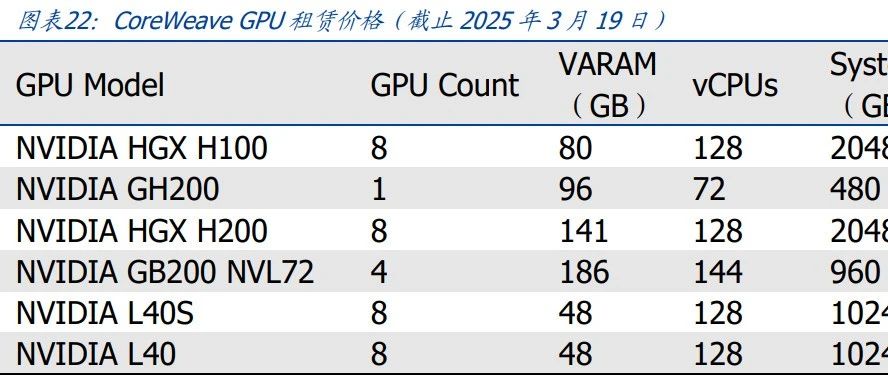
GPU租赁价格调研
傅里叶的猫· 2025-04-26 11:15
Industry Trends Overview - The synergy between AI and cloud computing has created a tight feedback loop driven by technological iteration, application expansion, and computing power demand [3] - The rapid enhancement of AI large model capabilities is pushing AI from being an auxiliary tool to a core productivity driver, heavily relying on cloud service providers for continuous upgrades in computing power, storage, and operations [3] - For instance, Alibaba Cloud's ninth-generation ECS instance has seen a 20% increase in computing power while prices have decreased by 5%, lowering the AI development threshold for enterprises [3] Cloud Service Providers' Technological Upgrades and Competitive Landscape - Cloud service providers are engaged in intense competition centered around AI computing power demands, with leading firms building competitive advantages through differentiated technological paths [5] - Alibaba Cloud focuses on end-to-end optimization, achieving a 20% improvement in AI preprocessing efficiency and a 92% reduction in response time for its PAI platform [5][6] - Huawei Cloud emphasizes architectural innovation, with its CloudMatrix 384 super node achieving three times the GPU density of traditional servers, addressing enterprise needs for customized AI solutions [6] AI Model Progress and Multimodal Breakthroughs - The current phase of AI model iteration is driven by "multimodal + deep thinking," with significant breakthroughs transitioning from laboratories to commercial applications [7] - Upcoming releases like Qwen3 and Llama4 are expected to enhance logical reasoning and voice interaction capabilities, while Alibaba's Qwen2.5-Omni demonstrates end-to-end processing across four modalities [7][8] - The competition among AI models is intensifying, with Google’s Gemini 2.5 Pro showcasing its potential in complex reasoning tasks, while GPT-4o aims to improve image generation precision for enterprise needs [7] Computing Power Demand Surge and Price Transmission in the Industry Chain - The explosive growth of AI technology is leading to a significant surge in computing power demand, creating a structural shortage on the supply side [9] - For example, the price of H100 calls has jumped 22% within two weeks, reflecting the scarcity of computing resources [11] - In North America, IDC rents have increased by over 60% due to high demand and limited supply, while in China, the upgrade of AI-specific data centers has raised unit cabinet costs [15][16] Rise of Computing Power Leasing Models - The emergence of computing power leasing models is becoming a new variable to balance supply and demand contradictions, with companies like CoreWeave reducing marginal costs [17] - However, the sustainability of this business model depends on the downstream application side's ability to pay, as some startups face losses due to high inference costs [17] - Overall, the price transmission in the computing power industry chain is shifting from short-term spikes to long-term structural inflation, reinforcing the barriers for leading firms while posing risks for smaller players [17]