华夏基金

Search documents
中电港股价涨5%,华夏基金旗下1只基金位居十大流通股东,持有165.2万股浮盈赚取188.33万元
Xin Lang Cai Jing· 2026-02-09 02:56
Group 1 - The core point of the article highlights the performance and business profile of Shenzhen Zhongdian Port Technology Co., Ltd., which saw a 5% increase in stock price, reaching 23.93 CNY per share, with a trading volume of 330 million CNY and a turnover rate of 3.19%, resulting in a total market capitalization of 18.184 billion CNY [1] - The company, established on September 28, 2014, and listed on April 10, 2023, specializes in electronic component distribution, design chain services, supply chain collaboration services, and industrial data services [1] - The revenue composition of the company includes processors at 40.78%, memory at 30.53%, others at 16.09%, analog devices at 8.74%, and RF and wireless connections at 3.85% [1] Group 2 - From the perspective of the top ten circulating shareholders, Huaxia Fund's Huaxia CSI 1000 ETF (159845) reduced its holdings by 4,800 shares in the third quarter, now holding 1.652 million shares, which accounts for 0.38% of the circulating shares [2] - The estimated floating profit from this transaction is approximately 1.8833 million CNY [2] - The Huaxia CSI 1000 ETF, established on March 18, 2021, has a current scale of 49.908 billion CNY, with a year-to-date return of 5.97%, ranking 1539 out of 5579 in its category, and a one-year return of 34.84%, ranking 1807 out of 4289 [2]
首批377亿!国泰海通、中信证券,霸榜!商业不动产REITs来了
证券时报· 2026-02-09 02:51
Core Viewpoint - The first batch of 10 commercial real estate REITs has been submitted for approval, aiming to raise a total of 37.7 billion yuan, marking the official entry of China's public REITs market into a comprehensive development phase for both infrastructure and commercial real estate [1][9]. Group 1: REITs Submission Details - As of February 8, 10 commercial real estate REITs have been submitted, with 9 to the Shanghai Stock Exchange and 1 to the Shenzhen Stock Exchange [3]. - The specific funds include Everbright's closed-end commercial real estate fund, Bosera's infrastructure fund, and several others, with notable fundraising targets [3][4]. - The largest fundraising target is for the CICC Vipshop closed-end commercial real estate fund at 7.47 billion yuan, followed by Guotai Junan's fund at 5.064 billion yuan [4]. Group 2: Asset Types and Market Dynamics - The underlying assets of the commercial real estate REITs are diverse, including hotels, office buildings, shopping malls, and commercial complexes [5]. - The hotel assets are primarily four-star and above, with only one project involving hotel assets, indicating sensitivity to economic cycles [5]. - The CICC Vipshop fund's underlying projects include the Zhengzhou and Harbin Outlets, with significant operational history and remaining land use rights [5][6]. Group 3: Regulatory and Institutional Support - The development of commercial real estate REITs is supported by regulatory bodies, with the China Securities Regulatory Commission emphasizing its importance for the capital market and real estate sector [9][10]. - Various local securities regulatory bureaus are actively promoting the implementation of commercial real estate REITs, conducting training sessions and preparing for pilot submissions [10]. - Multiple listed companies, including Poly Developments, are preparing to submit their commercial real estate REITs, aligning with regulatory calls to enhance their real estate management capabilities [11]. Group 4: Role of Intermediaries - The commercial real estate REITs involve various intermediaries, including fund managers, custodians, and financial advisors, with major firms like Guotai Junan and CITIC Securities playing significant roles [7][12]. - The regulatory framework mandates strict adherence to responsibilities by all involved parties to ensure compliance and effective operation of the REITs [7].



恒生科技指数“越跌越买”,近5日净流入超69亿元
Jing Ji Wang· 2026-02-09 02:06
Market Overview - The A-share market saw a rebound with the Shanghai Composite Index returning to 4100 points, while the ChiNext Index experienced a recovery after hitting a low [1] - The coal sector showed significant gains, and the space photovoltaic concept stocks continued their upward trend, whereas AI application stocks declined [1] ETF Market Dynamics - The stock ETF market experienced a net outflow of approximately 1.6 billion yuan, with notable outflows from products like the Huatai-PB CSI 300 ETF and the CSI 500 ETF [1] - The total scale of the stock ETF market reached 4.15 trillion yuan, with the Hang Seng Technology Index seeing a net inflow of 2.884 billion yuan, marking it as the top sector for fund inflows [3][5] Fund Inflows and Outflows - The top three ETFs by net inflow included the Hang Seng Technology Index ETF (1.021 billion yuan), the Hang Seng Internet ETF (957 million yuan), and the Sci-Tech 50 ETF (910 million yuan) [4] - The Huatai-PB CSI 300 ETF experienced the largest net outflow at 2.597 billion yuan, followed by the CSI 500 ETF with 1.662 billion yuan [8] Fund Management Insights - Leading fund companies like E Fund and Huaxia Fund reported significant net inflows across their ETFs, with E Fund's total ETF scale reaching 655.65 billion yuan, reflecting a net inflow of 2.33 billion yuan [5] - The market remains active with a high trading volume, particularly in the context of approaching the Chinese New Year holiday, indicating sustained liquidity support [9]

黄金还能入手吗?
Sou Hu Cai Jing· 2026-02-09 01:00
Group 1 - The current market sentiment is influenced by the nomination of the next Federal Reserve chair, with a significant focus on the potential hawkish stance of candidate Waller. However, the economic pressures in the U.S., particularly in the real estate market, suggest that tightening monetary policy may not be straightforward [1][2] - The U.S. faces substantial government debt and persistent fiscal deficits, which impose a "soft constraint" on monetary policy. The expected fiscal deficit rate is projected to remain around 6% in the coming years, making aggressive tightening by the Federal Reserve potentially destabilizing for the bond market [2][3] - The Federal Reserve may enter a "technical balance sheet expansion" as a new norm, focusing on maintaining sufficient reserves in the financial system rather than stimulating the economy. This operational approach is seen as necessary for financial stability, regardless of the personal views of the new chair [3][6] Group 2 - The ongoing strategic reallocation from U.S. Treasury holdings to gold by central banks reflects concerns over the long-term credibility of the U.S. dollar, positioning gold as a critical asset in national reserves. This trend provides a solid support base for gold prices [9] - Gold's low correlation with traditional assets like stocks and bonds makes it an attractive option for family asset allocation. The increasing volatility of gold prices, driven by global uncertainties, suggests that investors should focus on long-term strategic holdings rather than short-term trading [9][10] - Recommended strategies for gold investment include maintaining a long-term holding ratio of 5% to 10% of total family assets and employing a systematic approach to purchasing, such as regular monthly investments or buying during significant market dips [10][11]
布局港股!南向资金,连续7日净流入
券商中国· 2026-02-08 23:34
Core Viewpoint - Southbound capital has been continuously increasing its investment in the Hong Kong stock market since the beginning of 2026, indicating strong investor interest and potential opportunities in the market [1][2]. Group 1: Southbound Capital Trends - As of February 8, 2026, southbound capital has recorded a net inflow for seven consecutive trading days, totaling 56.6 billion yuan [1]. - Notably, on February 5, 2026, the net buying amount reached a recent high of 22.206 billion yuan [1]. - In 2025, the net inflow of southbound capital reached a historical high of 1,408.7 billion HKD, significantly surpassing the 807.9 billion HKD recorded in 2024 [2]. Group 2: ETF Market Dynamics - There is a notable trend of funds shifting from traditional high-dividend sectors to technology growth sectors, with Hong Kong tech leaders attracting increased investment due to their low valuations and high growth potential [2]. - Six out of the top ten cross-border ETFs with the highest growth in scale this year are technology-related, indicating a strong preference for tech investments [2]. - The newly launched Ping An Fund's Hong Kong Stock Connect Technology ETF has seen a scale increase of 0.862 billion yuan since its listing on February 3, 2026, reflecting investor enthusiasm for Hong Kong stocks [1]. Group 3: Valuation Insights - The Hang Seng Technology Index's price-to-earnings ratio was reported at 22.38 times as of February 4, 2026, which is lower than major global market indices, suggesting that Hong Kong stocks are undervalued [3]. - The investment logic for Hong Kong stocks has shifted from traditional valuation recovery to a revaluation based on new productivity and high-quality development, with expectations for moderate expansion in valuation and earnings in 2026 [4]. - There is a growing consensus among foreign investors regarding the investability of Chinese assets, with emerging market funds showing a significant preference for the Chinese market [4].

资金加仓恒生科技等赛道 宽基核心资产受关注
Zhong Guo Zheng Quan Bao· 2026-02-08 21:55
Group 1 - The consumer and photovoltaic sectors saw significant gains last week, with several related ETFs rising over 3% [1][2] - The A-share market's broad-based products experienced active trading, with ETFs tracking the CSI A500 index exceeding a total transaction volume of 250 billion yuan [1][2] - The market outlook for February suggests a continuation of the upward trend, driven by concentrated earnings forecasts and the recovery of leading companies' performance [1][4] Group 2 - The Hong Kong consumer sector performed strongly, with ETFs such as the Hang Seng Consumer ETF leading the gains [2] - Gold-related ETFs faced a downturn, with an average decline of over 5% across 14 commodity gold ETFs, and some gold stock ETFs dropping more than 13% [2] - The technology sector attracted significant capital inflow, with the Huatai-PineBridge Hang Seng Technology ETF seeing a net inflow of over 3.8 billion yuan last week [3] Group 3 - Several asset management institutions have released macro outlooks for China's equity market in 2026, highlighting diverse growth paths driven by the 14th Five-Year Plan [4][5] - Key investment areas identified include technology, manufacturing, renewable energy, healthcare, and emerging consumer sectors [4][5] - The market is expected to maintain a structural trend in February, with a focus on core growth assets that are currently at historical median valuation levels [5]
资金加仓恒生科技等赛道宽基核心资产受关注
Zhong Guo Zheng Quan Bao· 2026-02-08 20:22
Group 1 - The consumer and photovoltaic sectors saw significant gains, with several related ETFs rising over 3% last week, while gold and artificial intelligence sectors experienced declines, with some ETFs dropping over 9% [1][2] - A-shares market showed active trading in broad-based products, with ETFs tracking the CSI 500 index exceeding a total trading volume of 250 billion yuan, and those tracking the Sci-Tech 50 index surpassing 30 billion yuan [1][2] - The market outlook for February suggests a continuation of the upward trend, driven by concentrated earnings forecasts and the recovery of leading companies' performance, benefiting core assets [1][4] Group 2 - The Hong Kong consumer sector performed strongly, with ETFs such as the Hang Seng Consumer ETF leading the gains, while the photovoltaic sector also showed positive performance [1] - The gold sector underperformed, with commodity gold ETFs declining over 5%, and gold stock ETFs experiencing even greater declines, with some dropping over 13% [2] - The technology sector attracted significant capital inflow, with the Hang Seng Technology ETFs seeing substantial net inflows, particularly the Huatai-PineBridge Hang Seng Technology ETF, which had a net inflow of over 3.8 billion yuan last week [2] Group 3 - The satellite communication sector also experienced notable capital inflow, with the Yongying National Commercial Satellite Communication Industry ETF seeing a net inflow of over 1.8 billion yuan [3] - Several ETFs, including the Huazhong Gold ETF and the Southern CSI Nonferrous Metals ETF, reported net inflows exceeding 10 billion yuan this year [3] - Investment firms are focusing on five key areas for the Chinese equity market by 2026: technology, manufacturing, renewable energy, healthcare, and emerging experiential consumption [3] Group 4 - The market is expected to stabilize in February, with a shift in focus from January's credit and liquidity performance to macro and industry clues [4] - The "14th Five-Year Plan" is anticipated to provide a clearer framework for high-quality development and new growth drivers, stabilizing market perceptions of future growth [4] - Core assets are recommended for continued attention, as their valuations are at historical median levels, with stable profit expectations and increasing foreign capital inflow [4]
资金流向逆转 新发ETF纷纷上市
Shang Hai Zheng Quan Bao· 2026-02-08 17:31
Group 1 - The reversal of significant net outflows from stock ETFs occurred, with a net inflow of 6.965 billion yuan on February 3, marking the first net inflow since January 14 [1] - From February 3 to 6, multiple broad-based ETFs saw substantial net inflows, including 2.549 billion yuan into the Huaxia Science and Technology Innovation 50 ETF and 1.763 billion yuan into the Huaxia CSI A500 ETF [1] - Conversely, resource-themed ETFs experienced notable outflows, with the Huaxia Nonferrous Metals ETF seeing a net outflow of 4.364 billion yuan [1] Group 2 - A total of 10 new ETFs were launched from February 2 to 6, with an additional 6 ETFs set to list between February 9 and 11, contributing to market liquidity [2] - Significant investments in newly launched ETFs were made by entities such as China Shipbuilding Group, which purchased 100 million yuan worth of shares in the Fortune CSI Selected Shipbuilding Industry ETF [2] - The ETF market is expected to continue expanding, with numerous new products being reported by fund companies, including the Hang Seng A-share Power Grid Equipment ETF [2]
广发、信澳、华夏等多家公司核心基金经理近期变动
Xin Lang Cai Jing· 2026-02-08 14:12
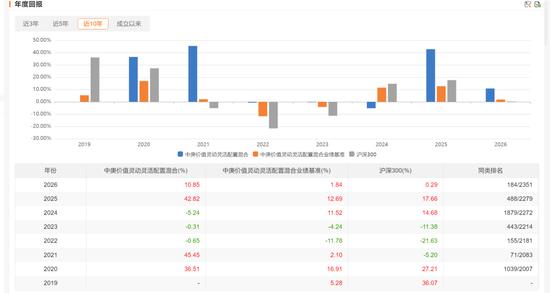
吴承根之前和丘栋荣一起合管过中庚价值灵动灵活配置。 来源:硬核姬老板 好久没盘基金经理动向了,最近有一些动态值得说一下。 一、中庚基金的吴承根也跳槽去广发了 前阵子有人在后台给我留言问我吴承根去哪了。 他不提醒我都不知道吴承根已经离职了,周末看见动向,原来他也跳槽去广发了…… 这只基金他们内部定位是非常清晰的,他们不做工具类产品,就是低估值价值策略下的低波动、具备资 产配置功能的产品。 后面丘离任后,吴承根开始独挑大梁,截至离职,中庚价值灵动灵活配置5年收益166%,同时回撤控制 的也不错。 也算是丘之后,中庚另外一个被认可的基金经理了。 其实丘那时候要走,他们所有基金经理全部出来路演了一下,当初我也在会议里面听了一下,说实话, 如果他们能前置这个事情就好了。 其他基金经理说的也非常好,大家都各有特点。 其中吴承根的特点是低估值的价值投资策略。 他是以绝对收益为导向,严格控制回撤,核心在于从中微观层面寻找低估值、高预期回报的结构性机 会,尤其关注供给侧有约束、需求有空间或平衡的行业。 并反对简单追逐高分红策略(主要是因为单因子策略风险较高,除非与其他因子比如说周期成长、资本 供给、创新等叠加以降低风险),整体 ...