泸州老窖

Search documents
酒价内参2月6日价格发布 精品茅台微跌1元
Xin Lang Cai Jing· 2026-02-06 01:30
Core Insights - The core insight of the news is that the retail prices of major Chinese liquor brands have significantly increased, with the average price of the top ten products reaching a new high since 2026, indicating a strong market recovery and demand surge ahead of the Spring Festival [1][6]. Price Trends - The total retail price for a package of the top ten liquor products is 9118 yuan, which is an increase of 67 yuan from the previous day [1][6]. - Among the top ten products, eight saw price increases while two experienced declines, reflecting a general upward trend in the market [1][6]. - The most notable price increases include: - Gujinggong 20, up 15 yuan per bottle, reaching a 30-day high [1][6]. - Yanghe Dream Blue M6+ increased by 12 yuan per bottle [1][6]. - Both Feitian Moutai and Qinghua Lang rose by 10 yuan per bottle [1][6]. - Other products like Qinghua Fen 20, Guojiao 1573, and Shuijing Jian Nan Chun increased by 6 yuan per bottle [1][6]. - The only products that saw price declines were Wuliangye Pu 58 and boutique Moutai, which fell by 2 yuan and 1 yuan respectively [1][6]. Market Analysis - The data for the "Liquor Price Reference" is collected from approximately 200 points across various regions, ensuring a comprehensive and accurate representation of the market [2][7]. - The recent price trends are attributed to several factors: - The upcoming Spring Festival, which traditionally boosts consumer demand [8]. - Improved macroeconomic policies that enhance domestic demand [8]. - A shift in investment strategies, with institutional holdings at historically low levels [8]. - The current state of the liquor industry is characterized by a "five-bottom phase" in terms of policy, inventory, sales, and pricing, suggesting a potential turning point for the market [8].






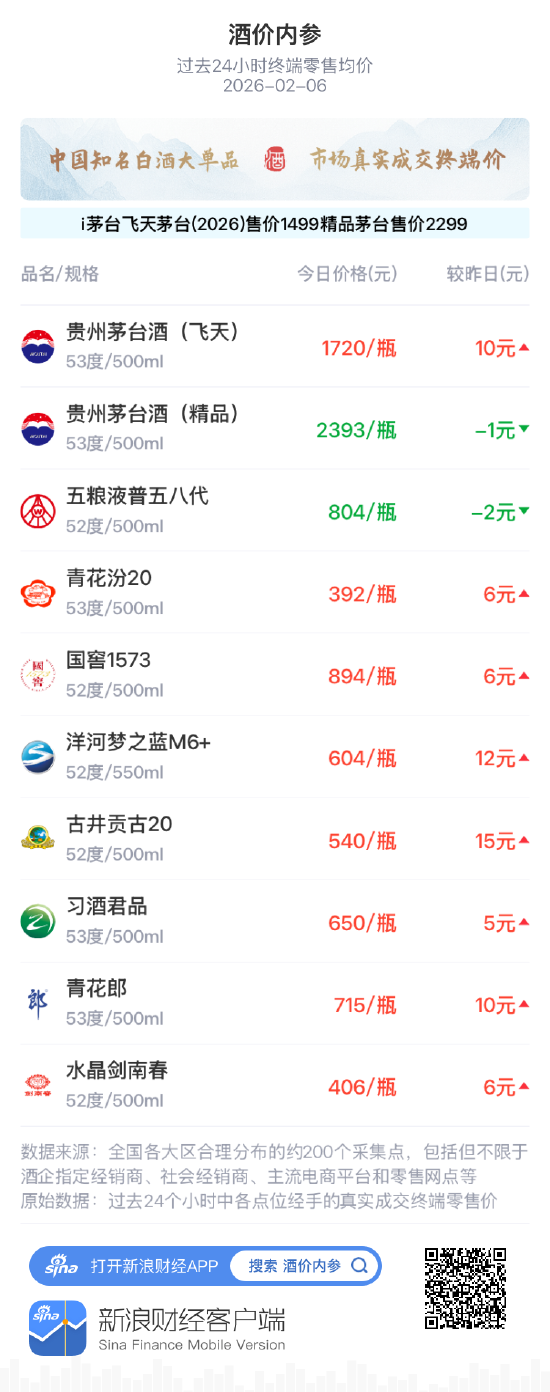
酒价内参2月6日价格发布 洋河梦之蓝M6+上涨12元
Xin Lang Cai Jing· 2026-02-06 01:24
Core Insights - The core point of the news is the significant increase in the retail prices of major Chinese liquor brands, with the average price of the top ten products reaching a new high since 2026, indicating a recovery in the market driven by seasonal demand and improved macroeconomic conditions [1][6]. Price Trends - The average retail price of the top ten liquor products rose to 9118 yuan, an increase of 67 yuan from the previous day [1][6]. - Eight out of the ten products saw price increases, with notable rises including: - Gujinggong 20, up 15 yuan per bottle, reaching a 30-day high [1][6]. - Yanghe Dream Blue M6+ increased by 12 yuan per bottle [1][6]. - Both Feitian Moutai and Qinghua Lang rose by 10 yuan per bottle [1][6]. - The only two products that experienced price declines were: - Wuliangye Pu 58th generation, down 2 yuan per bottle [1][6]. - Premium Moutai adjusted down by 1 yuan per bottle, maintaining a high price level [1][6]. Market Analysis - The data for the "Liquor Price Reference" is collected from approximately 200 sampling points across various regions, ensuring a comprehensive and objective representation of the market [2][7]. - The recent performance of the liquor sector has been buoyed by three main factors: 1. The upcoming Spring Festival, which traditionally boosts consumption [8]. 2. Improved macroeconomic policies that enhance domestic demand [8]. 3. A shift in capital market dynamics, with institutional holdings at historically low levels [8]. - The current state of the liquor industry is characterized by a "five-bottom phase" in terms of policy, inventory, sales, wholesale prices, and production-sales dynamics, suggesting a potential turning point in the market [8].
春节临近 白酒市场再现价格异动
Nan Fang Du Shi Bao· 2026-02-05 23:15
Core Viewpoint - The white liquor market is experiencing price fluctuations as the Spring Festival approaches, with Moutai's prices rising and various brands engaging in aggressive promotional activities, leading to a complex interplay of supply control and demand stimulation in the industry [4][5][9]. Price Movements - Moutai's wholesale price has increased, with some distributors predicting it could reach 2000 yuan per bottle before the festival. The average retail price for Moutai (500ml/53 degrees) was reported at 1843.38 yuan per bottle as of January 30, up from 1600 yuan in December, marking a 15.6% increase [5][9]. - The price of Wuliangye (500ml/52 degrees) has seen a slight decline, with an average retail price of 874.75 yuan per bottle as of January 30, indicating a downward trend [7]. Promotional Activities - Major liquor brands are launching extensive promotional campaigns, including cash rewards and limited edition gifts, to boost sales during the festive season. For instance, Wuliangye's promotional activities include a gift card worth up to 5000 yuan and a limited edition gift box priced at 1599 yuan [7][8]. - Other brands like Fenjiu and Guojiao 1573 are also offering similar incentives, such as cash prizes and gold jewelry, to attract consumers [8]. Market Dynamics - There is a divergence in market expectations regarding sales performance during the Spring Festival. Some distributors are optimistic about sales, while others report a decline in year-on-year sales, indicating a cautious approach to inventory management [9][11]. - Analysts suggest that the overall market is characterized by a "strong at both ends, weak in the middle" dynamic, where high-end brands like Moutai and Wuliangye maintain stable inventory levels, while mid-tier and regional brands face inventory pressures [11].

争抢“Z世代” “老白酒”杀向低度酒
Shen Zhen Shang Bao· 2026-02-05 17:55
Group 1 - The core viewpoint of the articles highlights the increasing trend of low-alcohol beverages in the Chinese liquor market, particularly driven by the younger generation's consumption preferences as the Spring Festival approaches [1][5] - Traditional liquor companies are launching new low-alcohol products to attract younger consumers, with notable examples including Moutai's 6-degree blueberry sparkling wine and Wuliangye's 29-degree product that achieved over 100 million yuan in sales within 60 days [2][3] - The market for low-alcohol beverages is experiencing growth rates that exceed the industry average, indicating a shift in consumer preferences from high-alcohol content to more moderate options [4][5] Group 2 - The competition between traditional and new liquor brands is intensifying, with established companies adapting their strategies to include younger demographics and low-alcohol products [2][3] - The market is transitioning from "expansion-based growth" to "structural growth," indicating a new phase of competition and differentiation among liquor brands [4] - The Chinese Alcoholic Drinks Association notes that the growth rate of low-alcohol products reflects a change in consumer attitudes, where alcohol is increasingly viewed as an emotional medium rather than just a social tool [5]
争抢“Z世代”,“老白酒”杀向低度酒
Shen Zhen Shang Bao· 2026-02-05 17:53
Core Viewpoint - The low-alcohol beverage market is experiencing significant growth, driven by the younger generation's changing preferences and the strategic shifts of traditional liquor companies towards lower-alcohol products [5][8]. Group 1: Market Trends - The low-alcohol beverage segment is gaining traction, with new brands and products emerging to cater to the preferences of the "Z generation" [5]. - Traditional liquor companies are launching lower-alcohol products to attract younger consumers, with several major brands already introducing new offerings [5][6]. - The growth rate of low-alcohol beverages is surpassing the average growth rate of the industry, indicating a shift in consumer demand [8]. Group 2: Product Launches - Moutai's subsidiary launched a 6-degree blueberry sparkling wine in October 2024, available on multiple online platforms [5]. - Wuliangye introduced a 29-degree product called "Yijianqingxin" in August 2023, which achieved over 100 million yuan in sales within 60 days [5][6]. - Luzhou Laojiao is preparing to launch a 28-degree product, while Yanghe has introduced a 33.8-degree "light white wine" [6]. Group 3: Consumer Preferences - Younger consumers are increasingly drawn to low-alcohol beverages for reasons such as appealing packaging and celebrity endorsements [5]. - Traditional high-alcohol products still dominate the preferences of long-time customers, who may view lower-alcohol options as less desirable [7].
从“银发专属”到“朋克养生” 养生酒赛道持续升温下的新出口
Bei Jing Shang Bao· 2026-02-05 13:48
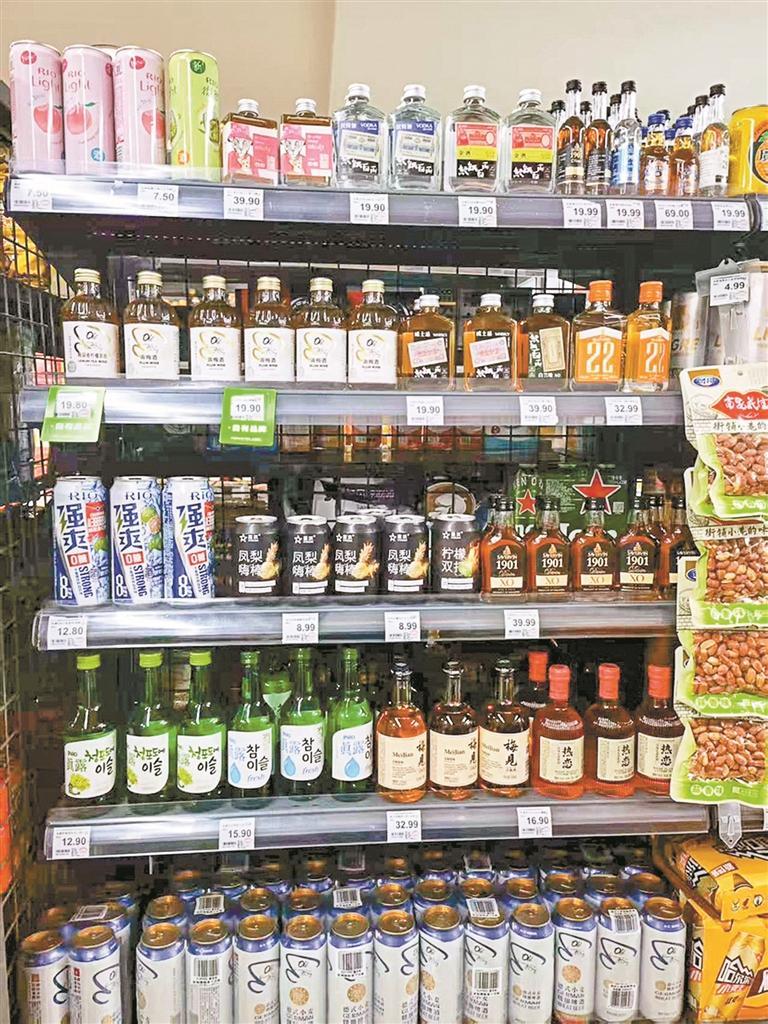
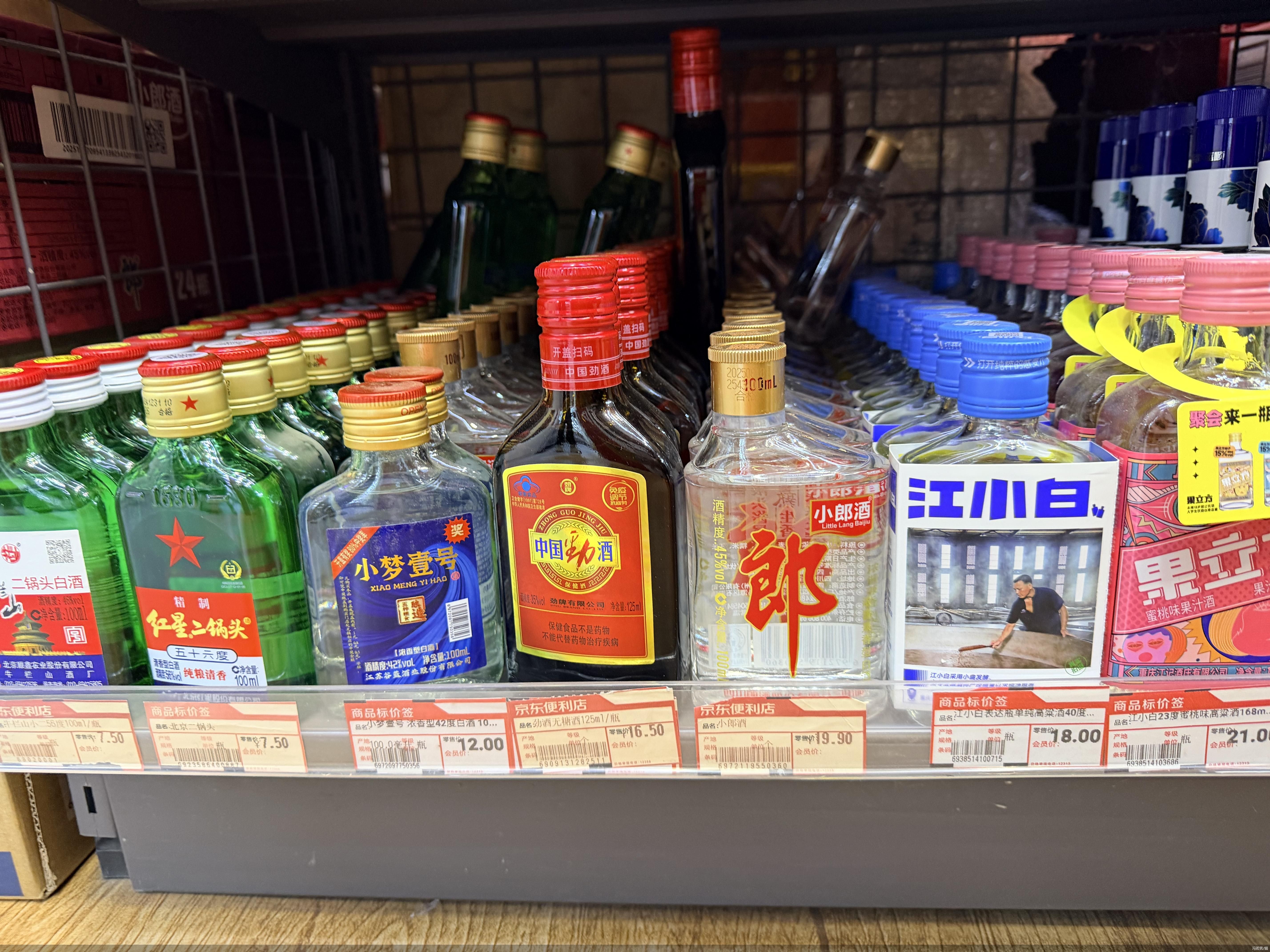
Core Insights - The health wine market is experiencing a surge in popularity, particularly among young consumers embracing the "punk health" trend, with products like Jinjiu becoming market leaders [1][5][9] - Traditional brands such as Yedao and Haiwang are also seeing a revival, while established pharmaceutical companies like Tongrentang and Guangyuyuan are entering the health wine sector [1][8] - The market is projected to continue expanding, with health wine sales increasing by 75.8% year-on-year in the first eight months of 2025, and a forecasted market size of 200 billion yuan by 2030 [9][10] Market Trends - Jinjiu has become a prominent product in health wine shelves, with a 600ml bottle priced at 59 yuan and a 125ml bottle at 15 yuan, indicating strong demand, especially among female consumers [5][6] - The health wine sector is expected to grow at an annual rate of 23%, driven by a shift in consumer preferences towards lower-alcohol and lighter products [9][10] - The health wine market is characterized by a lower price point compared to traditional liquors, making it more accessible to consumers [8][9] Company Performance - Jinjiu's parent company, Jinpai, anticipates a 10.8% growth in overall performance by 2025, reflecting a stable development trend [5][6] - Hainan Yedao reported a revenue of 178 million yuan in the first three quarters of 2025, marking an 8.75% year-on-year increase, with a significant 111.74% growth in the third quarter [6] - Companies like Gujinggongjiu and Luzhou Laojiao are also entering the health wine market, launching various health-oriented projects and products [7][8] Consumer Behavior - Approximately 35% of consumers aged 18-35 prefer health wine over traditional liquor in social settings, indicating a shift in consumption habits [9][10] - The rise of health wine discussions on social media platforms, with over 800 million views on related topics, highlights the growing interest among younger demographics [9][10] Industry Challenges - The health wine market faces significant challenges related to product homogenization, with many brands offering similar concepts and formulations [11][22] - Companies are urged to differentiate their products through quality and technological innovation to avoid being overshadowed by competitors [22] - The market is expected to transition from a "blue ocean" phase to a "refinement" phase by 2026, emphasizing the need for companies to focus on health, youthfulness, and consumer-centric strategies [22]
食品饮料板块基金持仓报告:2025Q4白酒基金持仓低位,大众品环比改善
Caixin Securities· 2026-02-05 10:25
Investment Rating - The industry investment rating is "Leading the Market" [6] Core Insights - The report indicates that the consumer demand in 2026 is expected to improve, and given the low level of active equity fund holdings in the food and beverage sector, the rating of "Leading the Market" is maintained [6] Summary by Sections Overall Sector Performance - In Q4 2025, the active equity fund's heavy holdings in the food and beverage sector decreased slightly, with an overweight ratio increasing by 0.2 percentage points. The total market capitalization of the food and beverage sector was 43,559 billion, down 5.36% from Q3 2025, underperforming the CSI 300 index by 4.64 percentage points [6][8] Subsector Analysis - In Q4 2025, the heavy holdings in the liquor sector decreased, while the heavy holdings in the consumer goods sector increased. The heavy holdings in liquor were 2.93%, down 0.25 percentage points, while the consumer goods sector's heavy holdings were 1.12%, up 0.15 percentage points [6][19] Key Companies - Only Kweichow Moutai entered the top 20 heavy holdings of active equity funds in the food and beverage sector. The heavy holding ratio for Kweichow Moutai remained stable, while other liquor companies like Shanxi Fenjiu and Luzhou Laojiao saw decreases [6][36] Stock Connect Analysis - In Q4 2025, the food and beverage sector's holdings in the Stock Connect accounted for 5.4% of the total market value, down 0.92 percentage points, with an overweight ratio of +1.52 percentage points [6][39] Investment Recommendations - The report suggests that the food and beverage sector is positioned for potential growth, with a maintained rating of "Leading the Market" due to expected improvements in consumer demand and low fund holdings [6]


12只白酒股下跌 贵州茅台市值接近2万亿
Bei Jing Shang Bao· 2026-02-05 10:24
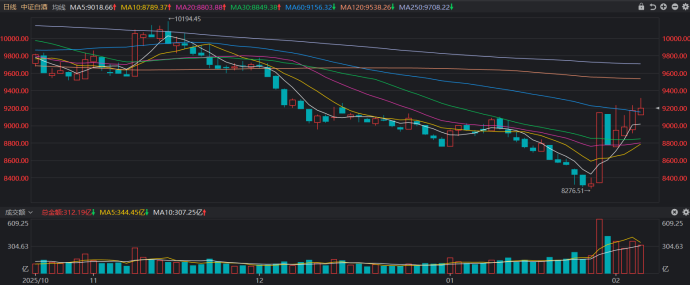
从个股来看,贵州茅台收盘价达1555元/股,上涨1.97%;五粮液收盘价达108.89元/股,上涨0.34%;山 西汾酒收盘价180.21元/股,下跌0.2%;泸州老窖收盘价达125.46元/股,下跌0.67%;洋河股份收盘价达 55.78元/股,上涨0.31%。 北京商报讯(记者 刘一博 冯若男)2月5日尾盘,沪指4075.92点下跌0.64%。白酒板块以2316.81点收盘 上涨0.2% ,其中12只白酒股下跌,贵州茅台1555元/股收盘。 值得关注的是,贵州茅台于当日盘中逆势拉升,股价最高至1564.9元/股,总市值达1.96万亿元。截至收 盘,贵州茅台总市值约1.95万亿元。 开源食饮在其研报中指出,从白酒板块历史上看,白酒一直跟随宏观环境呈现出较强周期性,现在随着 库存出清,行业从被动应对进入主动调整,预计2026年预期逐步筑底企稳,后续随着居民资产负债表修 复,消费意愿提升,从而进入下一个上行周期。 ...
茅台股价创9个月新高!融资余额却连降5日,白酒指数4连涨,板块均价重登首位
Xin Lang Cai Jing· 2026-02-05 09:14
茅台重返千五关口,融资余额连降五日 作为板块第一权重龙头,贵州茅台的股价动向一直是市场关注焦点。在1月下旬一度迎来9连跌后,其股 价自1月29日起快速反弹,至今共累计回升17.5%,跑赢市场98.6%个股同期表现。其中,贵州茅台1月 29日大涨8.6%,全天成交额263亿元,为"924"行情以来第三高单日涨幅纪录,仅次于2024年9月26日 (9.3%)、2024年9月24日(8.8%)。 从资金面来看,贵州茅台近期遭融资客大幅减持。截至2月4日数据,其融资余额连降5日,从1月28日创 下的高点200.86亿元回落至目前的175.93亿元,累计减少24.9亿元,降幅达12.4%。其中,贵州茅台2月4 日遭融资客减持11.72亿元,单日融资净卖额创历史新高。目前,贵州茅台以176亿元的融资余额规模在 全市场中位居第7位。 注:贵州茅台近期股价持续拉升(截至2月5日收盘) 智通财经2月5日讯(编辑 梓隆),今日(2月5日),白酒板块再度活跃,截至收盘,中证白酒指数连 涨4日。个股方面,皇台酒业涨近6%,贵州茅台、舍得酒业、古井贡酒涨超1%。其中,贵州茅台今日 盘中股价创2025年5月以来近9个月新高。 注:中证白 ...
基金行业大洗牌,453名基金经理离职创纪录
Sou Hu Cai Jing· 2026-02-05 08:45
资本市场,现在是冰火两重天。 买科技股的公募,最高年盈利233%,另一方面,持有老登股的基金经理们,逐渐被基民抛弃。 基金行业正在经历一轮大洗牌。本来嘛,基民的钱亏了,基金经理却还拿着高薪和奖金,管理费一分不 少,这事被吐槽很久了。 就在上个月,新规出来,一切都要改变。 文丨金融八卦女特约作者:兴华 · · · 除了医药女神,其他明星基金经理也有翻车的。 四季度,医药女神们纷纷扑街。还有基金持仓紧握老登股的基金经理,被爆出来自己偷偷买了很多科技 股赚了大钱,成了众矢之的。 业绩轮流翻车,去年的基金经理离职人数创下新高,已经达到453人。而基金经理总人数却在持续扩 大,很多年轻的基金经理,83%连上一轮牛市都没经历过。 整个基金行业,正在经历一轮大洗牌。 知名基金经理刘彦春的四季报,普遍亏损在5.8%-7.5%之间,最近五年基本上是腰斩。 尤其是基金的四季报一披露,不少医药女神都扑街了。张韡、赵蓓等管理的医药基都在四季度陷入了亏 损,把上半年的利润吐回去不少。 赵蓓管理的工银前沿医疗A第四季度跌了13.7%,年度回报17%。 张韡管理的添富创新医药A 第四季度跌了15.5%,年度回报为36%。 金笑非的鹏华医药 ...