
海信视像

Search documents
彩电出货量或继续走低 Mini LED技术爆发 RGB成分水岭
Nan Fang Du Shi Bao· 2026-01-22 23:11
Industry Overview - The global TV industry is undergoing unprecedented adjustments, with significant market differentiation driven by large screen adoption, Mini LED technology proliferation, and AI integration [2] - Global TV shipments fell below 200 million units in 2025, marking a ten-year low, with a projected further decline of 5%-7% in 2026 [2] - China's TV market, as the largest consumer market, saw a shipment drop to 32.895 million units in 2025, a decline of 8.5%, the lowest in 16 years [2][3] Market Dynamics - The Chinese market showed a notable split in performance, with a slight increase of 1.4% in the first half of 2025 due to government subsidies, followed by a significant decline of 16.9% in the second half [2] - European markets are under pressure, with Western Europe expected to see a decline, while Eastern Europe may experience slight growth due to economic recovery [2][3] - North America remains relatively stable, supported by a solid consumer base and event marketing [2] Emerging Markets - Emerging markets in Asia-Pacific, Latin America, and the Middle East and Africa still hold growth potential, but price sensitivity may limit actual volume if prices rise due to memory cost increases [3] - The Indian market, despite strong demand, is dominated by local brands using low-price strategies, posing challenges for international brands [3] Technology Trends - Mini LED technology is expected to enter a phase of widespread adoption in 2026, with RGB-Mini LED shipments projected to exceed 300,000 units, becoming a new profit driver in the high-end market [6] - In 2025, China's Mini LED TV shipments surged by 92.8%, with a penetration rate of 28.9%, and are expected to exceed 10 million units in 2026 [6][7] Competitive Landscape - Chinese brands like Hisense and TCL are leading innovations in RGB-Mini LED and SQD-Mini LED technologies, respectively, with significant growth in global shipments [6][7] - International brands such as Samsung and Sony are entering the RGB technology space, but Chinese companies maintain advantages in technology iteration and cost control [8] - The competition is shifting from price wars to a comprehensive contest of technology, supply chain, and globalization capabilities [3][8] Consumer Trends - Large screen adoption is an irreversible trend, with 75-inch and larger TVs expected to account for 23% of the Chinese market in 2025, with further growth anticipated in 2026 [9] - AI technology is redefining the role of TVs as central to living spaces, with companies like Huawei and Skyworth investing heavily in AI capabilities for their products [9] Market Share - In 2025, the top three brands—Samsung, TCL, and Hisense—held over 43% of the global market share, with Samsung leading at 35.3 million units shipped [9] - TCL's growth of 5.4% positioned it as the most significant growing brand, while Hisense maintained a strong presence with 29.3 million units shipped [9] Strategic Partnerships - Sony and TCL have signed a memorandum of understanding for strategic cooperation in the home entertainment sector, which may impact market dynamics and competition [10]



财经观察:日韩品牌为何纷纷牵手中国电视厂商
Huan Qiu Shi Bao· 2026-01-22 22:35
Core Viewpoint - Sony's decision to spin off its television business and form a joint venture with China's TCL reflects a significant structural reorganization in the global television industry, driven by increasing competition and changing consumer demands for larger, higher-resolution screens [1][2][7]. Group 1: Industry Dynamics - The global television market is not declining; instead, it is growing in the large-screen and high-end segments, with a shift in competition rules from technology differentiation to manufacturing scale and cost structure [4][8]. - Japanese brands are losing their competitive edge in the television industry, with companies like Toshiba and Sharp either selling their TV businesses or significantly downsizing their operations [2][6]. - The joint venture between Sony and TCL is seen as a rational choice, allowing both companies to leverage their strengths—Sony's expertise in high-value products and TCL's efficiency and scale [4][7]. Group 2: Market Positioning - Chinese television brands are rapidly gaining market share, with TCL's global TV shipments reaching 20.8 million units in the first three quarters of 2025, marking a 4.1% year-on-year increase [10]. - By 2024, Chinese brands are expected to surpass Korean brands in global TV shipments, with TCL, Hisense, and Xiaomi collectively holding a market share of 31.8% compared to 28.5% for Samsung and LG [8]. - The shift in the global television supply chain is evident, with Chinese manufacturers dominating the LCD panel market, while Japanese and Korean companies are retreating from this segment [11]. Group 3: Competitive Landscape - The decline of Japanese brands is attributed to multiple factors, including slow progress in supply chain advancements and inadequate localization strategies [5][6]. - Despite the rise of Chinese brands, Samsung still maintains a significant lead in brand reputation and high-end market segments, indicating that the competition is ongoing and evolving [12].


铝价支撑较为坚实 铝代铜趋势或带来需求增量
Shang Hai Zheng Quan Bao· 2026-01-22 18:37
◎记者 霍星羽 1月22日,沪铝主力合约小幅上涨,截至日间收盘涨幅为0.59%,报24055元/吨。而在1月13日,该合约 一度冲高至25075元/吨,刷新上市以来最高纪录,印证了铝的强势表现。 虽然近期步入回调阶段,但自2025年12月中旬以来,铝价累计涨幅一度超12%,铝板块个股亦同步走 强,成为有色金属赛道中表现最亮眼的资产类别之一。 也有观点认为,对标铜铝比,铝价还有补涨潜力。按照1月22日铜铝主力合约日间收盘价计算,铜价是 铝价的4.2倍。另一位铝企高管对记者表示,铜铝比具有一定数据支撑。 一位私募从业人士对记者表示,此前铝的行情并非"补涨"。按照以往经验判断,铝的弹性偏弱,补涨力 度一般不会很强。近期带动铝价上涨的正是其内生原因,主要是宏观题材对铝价的带动。 这位私募人士说,铝与白银有相似之处。此前白银也被视作黄金的一种附属品,有时相较于黄金,投资 者更青睐白银的波动幅度和弹性,于是便参考黄金走势做多或做空白银。近期白银的涨势更多是内生因 素驱动。铝的这波行情同样来源于内生动力。 同时,铝的基本面也为其行情提供了较为坚实的支撑。中金有色团队分析认为,铝供给端弹性下降、脆 弱性上升。国内产能接近45 ...
占据90%RGB-Mini LED销量 海信加速抢占高端电视赛道
Zhong Guo Jing Ying Bao· 2026-01-22 16:23
Group 1 - The core viewpoint is that Hisense is accelerating its presence in the high-end television market with its RGB-Mini LED technology, which offers significant advantages over competing technologies like QD-Mini LED [2] - Hisense's RGB-Mini LED technology features independent R/G/B light-emitting chips in each LED, achieving 100% BT.2020 ultra-wide color gamut and providing over 40% energy savings compared to QD-Mini LED televisions [2] - The company has achieved a remarkable 95.67% market share in the RGB-Mini LED television segment as of the 2025 Double Eleven sales event, indicating strong consumer acceptance and market dominance [3] Group 2 - The integration of innovation by companies like Hisense signifies that the Chinese display industry has moved beyond merely following trends, leveraging its full industry chain advantages to build a sustainable and advanced display ecosystem [3]
新一轮国补拉动高端家电销量翻倍涨 100英寸电视送装有招
Nan Fang Du Shi Bao· 2026-01-22 15:09
伴随2026年新一轮以旧换新国补接力发放,各平台优化消费场景、升级服务,"焕新"消费再提速。1月 21日,南都N视频记者获悉,菜鸟联手天猫持续升级大家电送装取一体服务:将100英寸电视等难进电 梯的大型家电纳入送货上门、送装取一体服务,进一步优化体验,推动高端电器线上增长。数据显示, 目前,2026年国补实施半个多月,天猫大家电销量环比大涨超90%,物流服务对消费拉动效应显著。 据天猫电视行业负责人蔚冬介绍,2026年国补实施半个多月以来,对于消费尤其是中高端产品拉动作用 更为明显,诸如100英寸超大屏电视、壁画电视和新技术MiniLED电视成为增长主力,同比翻倍增长。 同时,智能、健康、节能等高端化、品质化的家电成为消费者追逐的热点。支持语音控制、可远程操作 的智能家电,无霜超薄零嵌节能冰箱,多分区洗烘套装、一级能效空调、冰箱等成为近期热销的爆款家 电。 海信集团显示事业部客户体验运营部总经理逄晓睿认为,随着电视产品技术的迭代和成本的降低,叠加 国补政策,100英寸电视的爆火是必然。同时,目前海信所有98英寸及以上的产品,和其他爆款产品, 已经实现了100%入菜鸟仓和送装取一体服务,提升了体验,持续拉动了销 ...
TCL电子:25年业绩表现优异,合作Sony加强全球品牌竞争力-20260122
海通国际· 2026-01-22 13:30
Investment Rating - The report maintains an "Outperform" rating for TCL Electronics Holdings, with a target price of HK$15.60 based on a current price of HK$12.23 [2][5]. Core Insights - TCL is expected to achieve an adjusted net profit of HK$2.33 billion to HK$2.57 billion in 2025, representing a year-on-year growth of 45% to 60% compared to 2024 [3][9]. - The company continues to adhere to a globalization and high-end development strategy, with strong growth in global business and improving profitability [3][9]. - A strategic partnership with Sony in the home entertainment sector aims to establish a joint venture, enhancing TCL's global competitiveness and expanding its business territory [3][10]. Financial Performance - Revenue projections for TCL are as follows: HK$99.32 billion in 2024, HK$119.64 billion in 2025 (up 26% year-on-year), HK$135.67 billion in 2026 (up 20%), and HK$152.14 billion in 2027 (up 13%) [2][5]. - Net profit is projected to grow from HK$1.76 billion in 2024 to HK$2.47 billion in 2025 (up 137%), HK$3.02 billion in 2026 (up 41%), and HK$3.62 billion in 2027 (up 22%) [2][5]. - The diluted EPS is expected to increase from HK$0.70 in 2024 to HK$0.98 in 2025, HK$1.20 in 2026, and HK$1.43 in 2027 [2][5]. Market Position - In 2025, global TV shipments are projected to reach 220 million units, a slight decline of 0.7% year-on-year, while TCL's shipments are expected to grow by 5.4% to 30.4 million units, capturing a 13.8% market share [4][11]. - TCL ranks second globally in TV shipments, while Sony ranks tenth with a significant decline in shipments [4][11]. - The report anticipates that major sports events in 2026 will help stabilize or increase global TV shipments, with TCL and other leading brands expected to expand their market share [4][11]. Valuation - The valuation for TCL has been adjusted, with EPS forecasts for 2025-2027 raised to HK$0.98, HK$1.20, and HK$1.43 respectively, and a PE valuation of 13x for 2026 [5][12]. - The target price of HK$15.60 reflects the company's strong performance and growth potential in the high-end display technology market [5][12].
智能时代,新兴科技品牌落地海外有哪些颠覆性变化?| CES 2026
Tai Mei Ti A P P· 2026-01-22 10:21
Core Insights - Chinese emerging technology brands are transitioning from low-end price competition to high-end smart and scenario-based branding in North America [1] - The CES event showcased the significant presence of Chinese brands, particularly DREAME, which emphasizes a shift in global brand image through comprehensive marketing strategies [1] Brand Strategy - DREAME's president highlighted three key strategies for building brand awareness: leveraging global exhibitions like CES, enhancing online and offline marketing, and engaging with influencers and sports stars [2] - The importance of balancing global brand consistency with local expression was emphasized, as different markets require tailored approaches while maintaining core brand values [2][3] - SKG's marketing director noted the need for unified brand tone across all channels and adapting marketing strategies to local cultural events and consumer behavior [3] Product Innovation - DREAME introduced several innovative products at CES, including a smart home robot capable of various household tasks and a stair-climbing vacuum cleaner [6] - Baseus showcased advanced mobile digital products with features like fast charging and smart temperature control, as well as innovative security cameras with AI capabilities [7] - SKG presented a range of massage devices utilizing advanced materials and technology for enhanced user experience [8] Market Insights - DREAME identified specific user needs in North America, such as the demand for stair-climbing vacuums due to the prevalence of multi-story homes [9] - Differences in user preferences between North America and Europe were noted, particularly regarding carpet cleaning needs and product functionality [10] Brand Positioning - The shift in perception of Chinese brands from cost-effective to high-end was discussed, with a focus on the importance of user insights and product innovation for long-term competitiveness [16] - Companies are investing significantly in R&D to maintain innovation, with DREAME allocating over 7% of its revenue to this area [16] Globalization Challenges - The complexities of global brand management were highlighted, emphasizing the need for localized strategies that respect regional differences while maintaining a unified brand message [24][25] - Companies face challenges in navigating compliance and market entry, with a focus on building trust and effective communication with local consumers [21][22] Marketing Strategies - Effective marketing in North America requires a blend of online and offline strategies, with a strong emphasis on community engagement and local partnerships [20][21] - The importance of adapting marketing messages to resonate with local cultural values and consumer expectations was underscored [23][25]

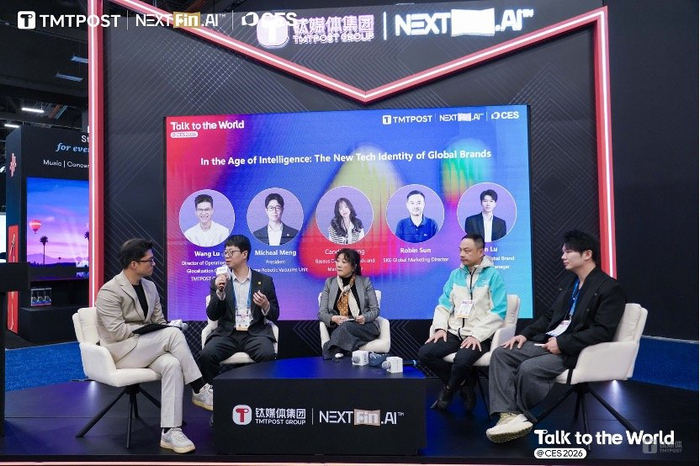
黑色家电板块1月22日涨0.8%,同洲电子领涨,主力资金净流出4304.33万元
Zheng Xing Xing Ye Ri Bao· 2026-01-22 09:01
Core Viewpoint - The black home appliance sector experienced a 0.8% increase on January 22, with Tongzhou Electronics leading the gains [1] Group 1: Market Performance - The Shanghai Composite Index closed at 4122.58, up 0.14% [1] - The Shenzhen Component Index closed at 14327.05, up 0.5% [1] - Key stocks in the black home appliance sector showed varied performance, with Tongzhou Electronics rising by 4.90% to a closing price of 13.07 [1] Group 2: Stock Performance Details - Non-axis shares increased by 4.77% to 9.67, with a trading volume of 1.79 million and a transaction value of 1.717 billion [1] - ST Gauss rose by 1.80% to 11.90, with a trading volume of 33,500 and a transaction value of 3.945 million [1] - Other notable stocks included Cheny Intelligent, which increased by 1.24% to 36.65, and Jiulian Technology, which rose by 0.72% to 9.77 [1] Group 3: Capital Flow Analysis - The black home appliance sector saw a net outflow of 43.0433 million from institutional investors and 40.7725 million from retail investors, while retail investors had a net inflow of 83.8158 million [1] - Non-axis shares had a net inflow of 150 million from institutional investors, while retail investors experienced a net outflow of 1.06 million [2] - Tongzhou Electronics had a net inflow of 37.6008 million from institutional investors, with retail investors seeing a net outflow of 2.24685 million [2]

谭丽旗下嘉实价值精选股票基金四季报披露!增配有色金属个股 兑现贵金属股票
Zhi Tong Cai Jing· 2026-01-22 08:28
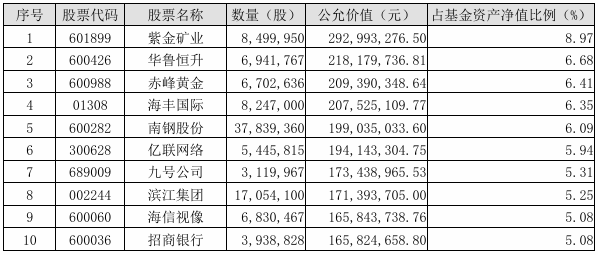
Core Viewpoint - The report highlights the performance and portfolio adjustments of the Jiashi Value Select Equity Fund managed by Tan Li, indicating a shift in top holdings and a focus on commodity prices and market dynamics in the context of investment strategies. Group 1: Fund Holdings - As of the end of Q4 2025, the top ten holdings of the Jiashi Value Select Equity Fund include Zijin Mining, Hualu Hengsheng, Chifeng Jilong Gold, and others, with notable new entries being Ninebot and Binjiang Group, while Chengdu Bank exited the top ten [1][2]. - The fund's stock position was reported at 91.88% at the end of Q4 [2]. Group 2: Performance Metrics - The net asset value per share for Jiashi Value Select Equity A was 2.2893 yuan, with a growth rate of -0.32%, while the C share had a net asset value of 2.2825 yuan and a growth rate of -0.48%, against a benchmark return of -2.06% [3]. Group 3: Market Analysis - In Q4, there was a significant increase in the prices of gold and industrial metals, influenced by factors such as resource nationalism and strategic metal reserves in developed countries, leading to a widening supply-demand gap [3]. - The A-share market saw a rebound in Q3 2024 and a substantial rise in Q3 2025, with the Sci-Tech Innovation Board and Growth Enterprise Market achieving around 50% gains year-to-date, driven by a strong technology narrative and high market risk appetite [4]. - The report indicates a structural adjustment in the portfolio, with increased allocation to non-ferrous metals and a realization of profits in precious metals, while maintaining overall allocation ratios [4].
海信视像青岛工厂成为全球电视行业首座“灯塔工厂”
Zhong Guo Zhi Liang Xin Wen Wang· 2026-01-22 03:55
Core Viewpoint - Hisense has been recognized as the first company in the global television industry to achieve "Lighthouse Factory" status, highlighting its innovative user-centered and AI-driven digital transformation in manufacturing [1]. Group 1: Digital Transformation and AI Integration - Hisense's Qingdao factory utilizes a dual-engine digital transformation model that combines user-centric design with AI-driven manufacturing, allowing for rapid insights from vast data sets [1]. - The company has implemented over 40 advanced use cases integrating AI, big data, VR, and digital simulation technologies, resulting in significant improvements in efficiency, quality, and flexible manufacturing [2]. - AI has reduced the time to convert user feedback into product features by 62%, enhancing product competitiveness [1]. Group 2: R&D and Production Efficiency - The introduction of a large language model (LLM)-based intelligent platform has shortened software development cycles by 31% and increased R&D efficiency by 27% [2]. - Hisense's digital process design model has created a knowledge base of over 100,000 process data points, enabling the automatic generation of comprehensive process plans in just 5 minutes, improving efficiency by 75% [2]. - AI-driven production planning has significantly reduced the time required for production validation from 10 hours to 19 minutes, achieving "zero-cost" trial and error [3]. Group 3: Quality Control and Automation - Hisense has developed an AI-based intelligent inspection platform that enhances detection efficiency by 70.7%, ensuring high product quality through a complete quality feedback loop [5]. - The company has pioneered a matrix panel alignment technology that automates the assembly process, achieving precision within 0.1 millimeters, thus improving assembly efficiency and accuracy [4]. - Hisense aims to redefine assembly standards for the "large-size" era through intelligent and flexible production capabilities [5]. Group 4: Future Directions and Commitment - Hisense is committed to advancing smart manufacturing, green manufacturing, and innovative manufacturing, integrating new technologies like 5G and AI into its operations [6]. - The company has established three "Lighthouse Factories," four zero-carbon factories, and 17 national-level green factories, demonstrating its leadership in advanced manufacturing [5].