
DeepSeek

Search documents
X @Tesla Owners Silicon Valley
Tesla Owners Silicon Valley· 2026-02-08 18:03
BREAKING: Grok just passed DeepSeek for the first time in January.314.0M visits vs 298.3M.That makes Grok the 3rd most visited Gen AI tool, according to @Similarweb. 📈🔥 https://t.co/HYKsApAeyf ...
X @Tesla Owners Silicon Valley
Tesla Owners Silicon Valley· 2026-02-08 16:38
BREAKING: Grok just passed DeepSeek for the first time in January.314.0M visits vs 298.3M.That makes Grok the 3rd most visited Gen AI tool, according to @Similarweb. 📈🔥 https://t.co/39sokz4pkP ...
X @Tesla Owners Silicon Valley
Tesla Owners Silicon Valley· 2026-02-08 14:10
RT Tesla Owners Silicon Valley (@teslaownersSV)BREAKING: Grok (314.0 million visits) surpasses DeepSeek (298.3 million visits) for the first time in January and becomes the third most-visited Gen AI tool after ChatGPT and Gemini. https://t.co/N8OGsRbEf3 ...
X @Elon Musk
Elon Musk· 2026-02-08 10:59
CoolDogeDesigner (@cb_doge):BREAKING: Grok just passed DeepSeek for the first time in January with 314.0M visits vs 298.3M.That makes Grok the third most visited Gen AI tool, as per @Similarweb https://t.co/kaXMAHdvv3 ...
Agent叙事强化,算力与SaaS分化加剧
HTSC· 2026-02-08 04:20
Investment Rating - The report maintains an "Overweight" rating for the technology and computer sectors [6]. Core Insights - The report emphasizes the ongoing evolution of AI models, particularly focusing on the advancements in Agent capabilities and the increasing differentiation between computing power and SaaS applications [1][2][3]. Summary by Sections AI Models - DeepSeek has launched DeepSeek-OCR 2, which enhances visual understanding capabilities and aims to improve the next generation of models [10][23]. - Kimi K2.5 introduces the Agent Swarm architecture, significantly improving efficiency in complex tasks through parallel agents [24][30]. - Tencent's CL-bench aims to quantify and improve the context learning capabilities of large models, revealing a need for better handling of new knowledge [32][39]. AI Computing - The report identifies Agent penetration as the next acceleration point for token usage, with significant advancements in long-chain task capabilities observed since late 2025 [2][49]. - Major cloud service providers (CSPs) have reported continuous growth in capital expenditures, indicating optimistic AI demand [50][51]. AI Applications - The performance of cloud service providers has accelerated, with AI application companies exceeding market expectations in Q4 2025, while SaaS market expectations remain pessimistic [3][57]. - The report anticipates a comprehensive acceleration in global AI applications in 2026, with potential for SaaS companies to realize product value and corporate re-evaluation [3][57]. AI for Science (AI4S) - The report highlights the commercialization potential of AI in biopharmaceuticals and materials science, predicting significant advancements in 2026 [4][17]. Monthly Focus - The report discusses the rapid iteration of Agentic Coding products and the potential restructuring of the software industry due to advancements in agent applications [5][28].
张一鸣登顶中国首富
Xin Lang Cai Jing· 2026-02-07 08:52
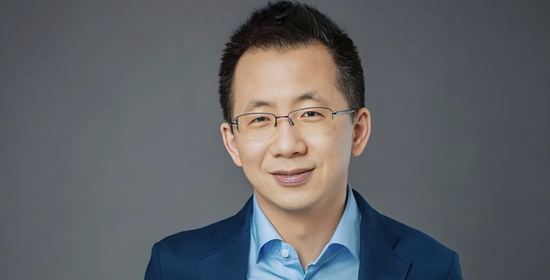
Group 1 - Zhang Yiming, founder of ByteDance, tops the Forbes 2026 China Rich List with a net worth of $69.3 billion, surpassing Zhong Shanshan for the first time [2][5] - The list reflects a significant reshuffling, with many traditional industries being disrupted by the rise of internet and hard technology sectors [2][5] - The top ten includes major figures from technology, new energy, and manufacturing, indicating a shift in wealth towards hard tech [6] Group 2 - Lei Jun of Xiaomi makes a notable comeback, ranking tenth with a net worth of $30.4 billion, surpassing Jack Ma, who is now ranked eleventh with $29.6 billion [2][5] - ByteDance's investments in AI, including a $160 billion budget for AI development, are key to Zhang Yiming's wealth increase [5] - The real estate tycoons have seen a decline, with internet billionaires now making up less than 40% of the list, highlighting a trend towards AI, new energy, and high-end manufacturing [6]





Here's How Much You'd Be Up If You'd Invested in Nvidia During the DeepSeek Sell-Off Last Year
Yahoo Finance· 2026-02-06 17:50
Last January, artificial intelligence (AI) stocks declined briefly and suddenly due to news that DeepSeek, a company out of China, had an AI model that rivaled ones in the U.S. The most startling development was that it was supposedly at just a fraction of the cost. AI stocks, including Nvidia (NASDAQ: NVDA), spiraled. While they ended up recovering, it's a great example of how quickly the market can turn, and how reacting too quickly can potentially result in significant losses. At the same time, buying o ...

网传雷军、梁文锋、王兴兴将亮相马年春晚
Sou Hu Cai Jing· 2026-02-06 11:57
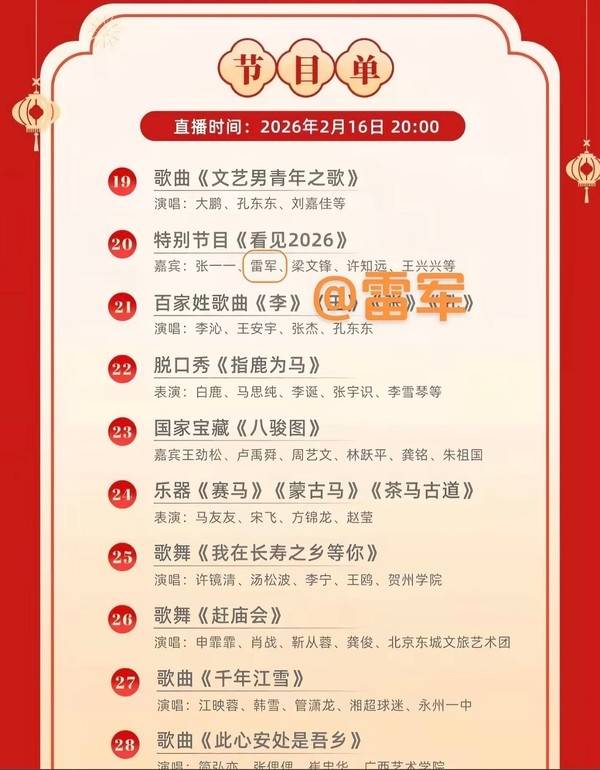
目前央视官方未对此作出回应,节目真实性仍待确认。网友普遍表示期待,认为科技企业家登上主流晚 会舞台具有标志性意义。 名单显示,小米集团创始人雷军、DeepSeek创始人梁文锋、宇树科技创始人王兴兴三位科技圈代表人 物或将同台亮相。 雷军作为老牌企业家,公众认知度较高。梁文锋与王兴兴则分别凭借AI大模型和人形机器人两大热门 赛道在近期快速出圈,二人平日公开露面较少,此次若属实,将是其罕见的高曝光场合。 马年春晚尚未公布正式节目单,但一张网传节目单已在社交平台引发热议。 ...
一切为了Agent:千问、阶跃、Gemini打响“3.5模型大战”,春节将成关键节点?
3 6 Ke· 2026-02-06 10:15
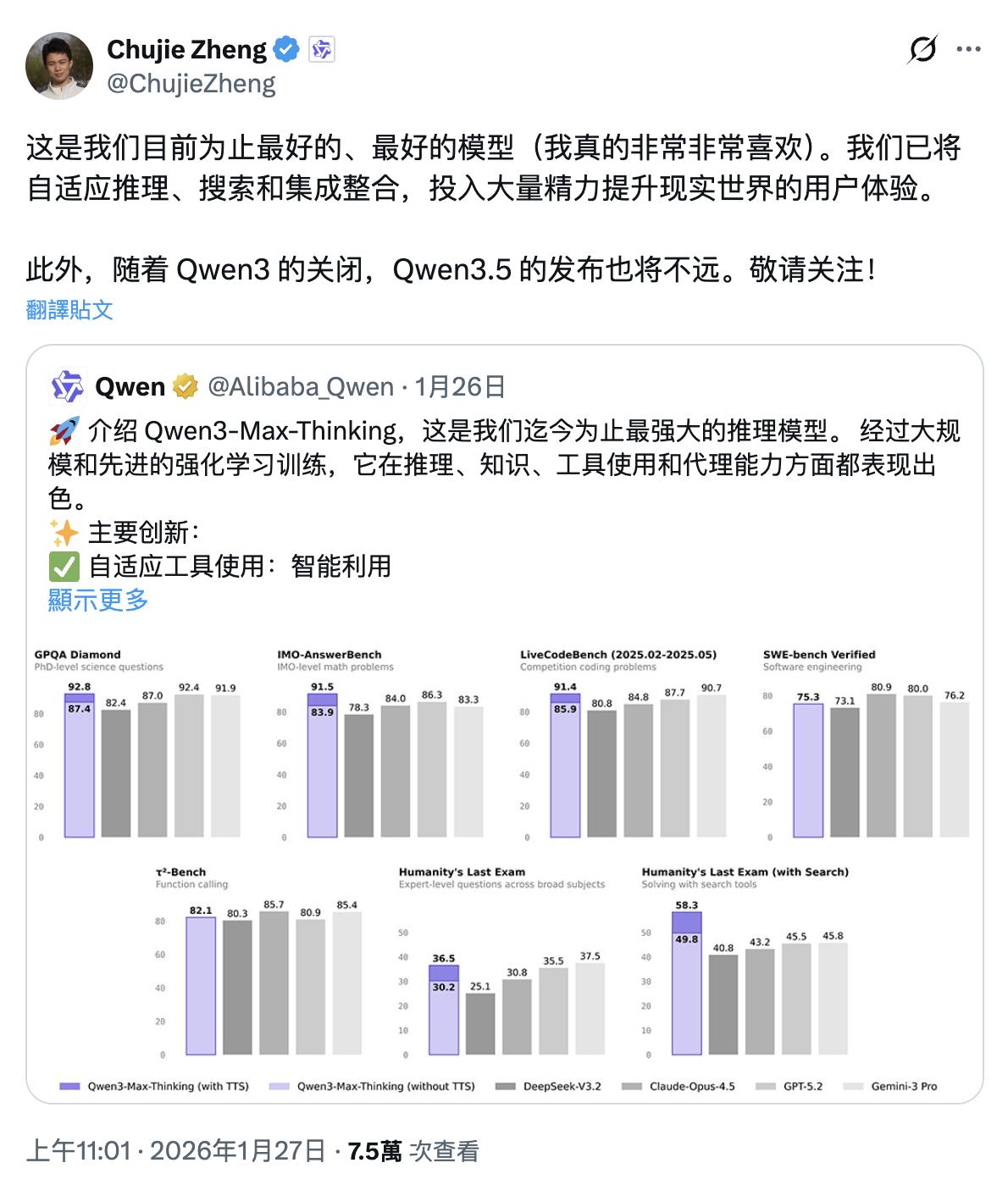
Core Insights - The AI model competition is heating up with multiple new releases expected around the Chinese New Year in early 2026, including significant updates from major players like OpenAI, Anthropic, and domestic companies such as Qwen and DeepSeek [1][2][20]. Group 1: Upcoming Model Releases - Major updates are anticipated from Qwen, with Qwen3-Max-Thinking being highlighted as the best model to date, and Qwen 3.5 expected soon [2][4]. - Other companies like ByteDance are also set to release new models, including Doubao 2.0 and Seedream 5.0, in March [5]. - The upcoming releases are not just limited to minor iterations but represent a broader trend of simultaneous major updates across the industry [7][21]. Group 2: Shift in Model Capabilities - The focus of the new generation of models is shifting from merely larger and stronger models to practical applications and enhanced reasoning capabilities [8][23]. - Reinforcement learning is being reintroduced, and reasoning is becoming a default capability rather than a unique selling point [9][10]. - Long context handling is emphasized as a core upgrade, with models like GLM-5 and Gemini 3.5 designed for real-world applications rather than just performance metrics [14][16]. Group 3: The Role of Agents - Agents are evolving from demonstration tools to central components of AI systems, with a focus on completing complex tasks with minimal human intervention [17][19]. - New models are being designed to enhance multi-agent collaboration and maintain context over long tasks, indicating a shift towards more integrated AI solutions [17][19]. - The success of these models will depend on their ability to be embedded into various systems, transforming them from simple assistants to essential engines of operation [19][25]. Group 4: Competitive Landscape and Market Dynamics - The timing of these releases is strategic, capitalizing on the heightened attention around the Chinese New Year, which previously saw significant developments in the AI sector [20][21]. - The upcoming model releases are expected to lead to rapid comparisons in real-world applications, with developers and users able to test capabilities almost immediately [22][23]. - The true measure of success will not be the initial release but rather the ability to integrate these models into everyday tools and systems, influencing the competitive landscape for the year ahead [25][26].
中原证券晨会聚焦-20260206
Zhongyuan Securities· 2026-02-06 01:32
Core Insights - The report highlights a moderate recovery in the A-share market, with various sectors showing different performance trends, particularly in financial consumption and growth industries [9][10][13] - The macroeconomic environment indicates a shift towards service consumption, with policies aimed at enhancing digital services for inbound travelers and promoting service trade [6][8] - The energy sector, particularly electricity and public utilities, is recommended for investment, with a focus on stable returns and growth opportunities in renewable energy [17][19] Domestic Market Performance - The Shanghai Composite Index closed at 4,075.92, down 0.64%, while the Shenzhen Component Index closed at 13,952.71, down 1.44% [3] - The A-share market experienced slight fluctuations, with significant trading volumes indicating investor interest, particularly in sectors like banking, securities, and food and beverage [9][10][13] Industry Analysis - The electricity and public utilities sector showed strong performance, with the index rising 2.76% in January, outperforming the broader market [17] - The chemical industry is experiencing a price recovery, with a notable increase in the prices of key chemical products, suggesting potential investment opportunities in sectors benefiting from rising oil prices [20][21] - The photovoltaic industry is expected to see significant growth, with over 300 GW of new installations anticipated in 2025, despite challenges in export demand and rising production costs [28][29] Investment Recommendations - The report suggests a "barbell strategy" for investing in the electricity sector, focusing on stable, high-dividend companies and emerging opportunities in virtual power plants and nuclear fusion [19] - In the chemical sector, attention is drawn to industries benefiting from anti-involution policies and rising raw material prices, particularly in chlor-alkali and pesticide sectors [20][21] - The new materials sector is projected to continue its growth trajectory, driven by increasing demand in manufacturing and technological innovations [25][27]
