SK On

Search documents
美国拟取消《通胀削减法案》(IRA)电动汽车补贴对中韩电池产业的影响
鑫椤锂电· 2025-05-29 08:08
Core Viewpoint - The article discusses the recent changes in the IRA (Inflation Reduction Act) proposals, focusing on the implications for electric vehicle subsidies and clean energy support, particularly affecting the battery industries in China and South Korea [3][4][6]. Policy Changes - The original IRA included a $7,500 tax credit for consumers purchasing eligible electric vehicles, contingent on the production of battery components and critical minerals in North America or free trade agreement countries, with restrictions on materials linked to Chinese supply chains [2]. - The new proposal aims to gradually eliminate electric vehicle subsidies by the end of 2025 or 2026, and to terminate hydrogen subsidies and clean energy tax credits by 2029 [3]. Impact on Chinese Battery Industry - Short-term impacts are limited, but long-term adjustments in the supply chain are anticipated, with significant export restrictions on key battery materials from China to the U.S. [8]. - China currently supplies 68% of natural graphite and 59% of synthetic graphite imported by the U.S., and strict enforcement of "decoupling" policies could significantly increase export costs for Chinese battery companies [8]. - Chinese battery manufacturers hold over 60% of the global market share and dominate processing of key resources like lithium and cobalt, facing challenges if the U.S. enforces a decoupling strategy [9]. - Chinese companies are accelerating overseas investments to mitigate trade barriers, with firms like CATL and Guoxuan High-Tech expanding their manufacturing presence in Europe [8]. Impact on South Korean Battery Industry - South Korean battery manufacturers, such as LG Energy Solution and SK On, are at risk of losing subsidy eligibility due to their reliance on Chinese supply chains, which could lead to significant profit reductions [11]. - For instance, LG Energy Solution could see a 30% decrease in profits if subsidies are removed, while SK On may shift from profit to loss [11]. - Investment plans in North America are being delayed, with companies considering lower-cost regions like Mexico or Europe for new facilities [13]. Industry and Policy Controversies - There is opposition from the U.S. clean energy sector, with companies like Siemens and Hyundai warning that subsidy cuts could lead to investment losses and job reductions [16]. - Environmental organizations criticize the subsidy reductions, predicting an increase in greenhouse gas emissions and higher household energy costs [16]. - The competitive landscape may shift, with Tesla potentially gaining an advantage due to its cost control and local supply chain strategies, while emerging brands like Rivian and Lucid could be marginalized [17]. - Despite policy barriers, there remain opportunities for collaboration between Chinese and South Korean companies in battery technology and resource procurement [17].


中国实力领跑全球动力电池市场
Zhong Guo Qi Che Bao Wang· 2025-05-28 08:39
Core Insights - The global power battery installation volume reached 221.8 GWh in Q1 2025, marking a year-on-year growth of 38.8% [3] - Chinese companies dominate the global power battery market, holding a combined market share of 67.5% in Q1 2025, up from 60.4% in 2022 [2][4] - CATL remains the largest player globally, with an installation volume of 84.9 GWh, representing a 40.2% year-on-year increase [1][4] Group 1: Market Performance - The top ten companies in global power battery installation volume include six Chinese firms, with a total market share of 67.5% [1][2] - BYD's battery installation volume grew by 62% to 37 GWh, securing the second position [1][5] - The overall market for power batteries is expanding, with significant contributions from Chinese manufacturers [2][5] Group 2: Company-Specific Insights - CATL continues to lead the market, supplying batteries to major global automakers like Tesla and BMW [4][12] - Honeycomb Energy has shown the highest growth rate at 100.2%, driven by a surge in orders and recognition of its short-blade battery technology [1][4] - Gotion High-Tech's battery installation volume surged by 86.6% to 7.7 GWh, indicating strong demand from various automakers [5][19] Group 3: Competitive Landscape - Korean manufacturers, including LG Energy, SK On, and Samsung SDI, have seen a decline in market share, collectively holding 18.7% in Q1 2025, down 4.6 percentage points from the previous year [9][10] - LG Energy's battery installation volume increased by 15.1% to 23.8 GWh, but its market share fell to 10.7% [9][11] - Samsung SDI reported a decline in battery installation volume, primarily due to weak demand for its products [10][11] Group 4: Future Trends and Innovations - The focus on solid-state batteries is intensifying, with companies like CATL and Gotion High-Tech investing heavily in this technology [13][14] - The energy storage sector is emerging as a new battleground for competition, with significant growth potential driven by rising demand for clean energy solutions [15][20] - Companies are diversifying their product lines to include energy storage systems, with LG Energy and CATL making significant strides in this area [18][19]



这家企业正加速布局美国动力电池市场,背后有何玄机?
Zhong Guo Qi Che Bao Wang· 2025-05-23 09:50
Core Insights - Panasonic Battery is accelerating production of power battery products for its American clients, particularly Tesla, in response to customer demands [2][3] - The company is focusing on expanding its presence in the North American market, driven by strategic considerations and local policy incentives [2][5] Group 1: Factory Production and Capacity - The De Soto battery factory in Kansas, which began construction in 2022, is in the final stages before trial production and is expected to achieve mass production by March 2027, increasing Panasonic's total battery production capacity in the U.S. by 60% [3] - The Kansas factory represents a $4 billion investment, adding 30 GWh of capacity and creating 4,000 jobs, marking it as the largest battery project in the state's history [4] - Panasonic aims to increase its total U.S. production capacity by 2-4 times by 2028, with plans for a third factory in Kansas or Oklahoma [4] Group 2: Technological Advancements - The Kansas factory will initially produce 2170 cylindrical batteries while also advancing the mass production of 4680 large cylindrical batteries, targeting a 20%-25% increase in energy density by 2030 [4] - The factory will incorporate advanced manufacturing processes and cutting-edge technologies, such as dry electrode technology, to strengthen its position in the high-end market [4] Group 3: Market Dynamics and Competition - The North American battery market is expected to grow significantly over the next decade, providing ample opportunities for battery manufacturers [6] - Panasonic aims to capture 20% of the North American market share and plans to return to the top three in global battery installations by 2028 [6] - Competitors like LG Energy Solution and SK On are also expanding their production capacities in North America, with LG planning 110 GWh and SK On 150 GWh [6] Group 4: Policy Incentives - The Inflation Reduction Act (IRA) in the U.S. mandates that by 2024, 50% of electric vehicle battery components must be produced domestically to qualify for tax credits, increasing to 100% by 2029 [5] - Panasonic has secured $830 million in subsidies from Kansas and additional federal tax incentives exceeding $1.3 billion, which cover 30% of the factory's construction costs [5] - The urgency from Tesla for local production aligns with Panasonic's strategy to expedite the construction of its Kansas factory by 15% to meet demand for high-end models [5]

【院士报告】32页PPT详解新能源汽车行业革命技术路线图
材料汇· 2025-05-22 15:26
Core Viewpoint - The article discusses the transformative phases of the new energy vehicle (NEV) industry, focusing on three main areas: power electrification, vehicle intelligence, and energy decarbonization, highlighting the expected growth and technological advancements in these sectors. Group 1: Power Electrification - The power electrification phase is characterized by the emergence of electric vehicles (EVs), with significant milestones such as the establishment of a "pure electric drive" strategy in 2010 and the surpassing of 1 million units sold in 2018 [3] - In 2021, EV sales reached 3.52 million units, marking a significant breakthrough in the electrification of passenger vehicles [3] - Projections indicate that by 2025, EV sales will exceed 15 million units annually, with a stable growth period expected thereafter, potentially reaching 100 to 160 million vehicles by 2030 [3] Group 2: Solid-State Battery Development - The solid-state battery sector is seeing collaborative innovation, with the establishment of the China All-Solid-State Battery Collaborative Innovation Platform in January 2024, involving various stakeholders including academicians and leading enterprises [5][6] - The focus is shifting towards sulfide solid electrolytes, with numerous companies investing in research and development to establish mass production capabilities by 2027-2028 [9] - Key players are expected to achieve significant production milestones, such as Idemitsu's plan for a 100-ton annual production line by 2027-2028 and AGC's anticipated mass production of sulfide solid electrolytes by 2027 [9] Group 3: Vehicle Intelligence - The vehicle intelligence phase is projected to explode in 2025, driven by advancements in AI and intelligent driving technologies, with expectations for L4-level fully autonomous vehicles to be commercially viable by 2030 [20] - The integration of AI in vehicle systems is expected to enhance the entire lifecycle of NEVs, from design and manufacturing to usage and recycling [21][29] Group 4: Energy Decarbonization - The energy decarbonization phase is set to gain momentum with the implementation of China's dual carbon strategy, aiming for a significant increase in renewable energy sources by 2030, including a target for non-fossil energy to account for over 50% of total power generation [37] - By 2035, it is anticipated that green electricity will become the primary power source for charging, with the number of electric vehicles reaching between 200 to 300 million [37][42] Group 5: Future Industry Outlook - The NEV industry is expected to evolve into a multi-trillion-dollar sector, with projections indicating that the total annual sales of NEVs could approach 30 million units by 2035, supported by advancements in battery technology and energy systems [54] - The integration of various energy systems, including vehicle-to-grid (V2G) technologies, is anticipated to revolutionize energy consumption and management in urban environments [51][53]
碳酸锂:锂盐厂减产,并未影响资源端,上方仍然承压
Guo Tai Jun An Qi Huo· 2025-05-22 01:25
2025 年 5 月 22 日 商 品 研 究 | 碳酸锂:锂盐厂减产,并未影响资源端,上方仍然 | | | | | | | | | --- | --- | --- | --- | --- | --- | --- | --- | | 承压 | | | | | | | | | 投资咨询从业资格号:Z0015722 shaowanyi@gtht.com | 邵婉嫕 | | | | | | | | 刘鸿儒(联系人) 期货从业资格号:F03124172 liuhongru@gtht.com | | | | | | | | | 【基本面跟踪】 | | | | | | | | | 碳酸锂基本面数据 | | | | | | | | | T-22 | | T | T-1 | T-5 | T-10 | | T-66 | | 2507合约(收盘价) | | 61,100 | 240 | -4,100 | -3,060 | -9,280 | -16,820 | | 2507合约(成交量) | | 270,174 | 27,898 | -107,351 | 66,360 | 213,449 | 266,264 | | | | 250 ...
韩国电池三巨头负债2500亿
起点锂电· 2025-05-21 12:25
Core Viewpoint - The South Korean battery manufacturers LG Energy Solution, Samsung SDI, and SK On are facing significant financial challenges due to declining electric vehicle sales and increased debt levels, while simultaneously investing heavily in North American production facilities to maintain growth and competitiveness in the market [1][3][4]. Group 1: Debt and Financial Performance - As of Q1 2025, the combined borrowing of the three major battery companies reached 49.6 trillion KRW (approximately 257.4 billion RMB), a substantial increase from 42.5 trillion KRW at the end of the previous year [1]. - SK On has the highest debt burden at 20.39 trillion KRW (approximately 105.8 billion RMB), followed by LG Energy Solution at 17.61 trillion KRW (approximately 91.4 billion RMB) and Samsung SDI at 11.61 trillion KRW (approximately 60.3 billion RMB) [1]. - In Q4 2024, the three companies collectively reported an operating loss exceeding 840 billion KRW (approximately 4.2 billion RMB), with LG Energy Solution, Samsung SDI, and SK On reporting significant losses for the first time in years [3]. Group 2: Market Position and Competition - The combined market share of the three South Korean battery manufacturers in Q1 2025 was 18.7%, a decrease of 4.6 percentage points compared to the previous year, while Chinese companies' market share increased to 67.5% [4]. - The average plant utilization rates for the three companies have significantly declined, with LG Energy Solution's utilization dropping to 51.1% from 69.3% at the end of 2023, and Samsung SDI's small battery division utilization falling from 58% to 32% [4]. Group 3: Strategic Investments and Future Plans - SK On's new borrowing of 4.791 trillion KRW is primarily sourced from government loans under the ATVM program, with plans to build three factories in the U.S. through a joint venture with Ford [2]. - Samsung SDI plans to raise up to 2 trillion KRW (approximately 1.4 billion USD) through equity financing for its joint battery factory with General Motors in Indiana [2]. - LG Energy Solution issued 800 billion KRW in corporate bonds for the construction of multiple battery factories in North America, including a joint factory with Hyundai in Georgia and another with Honda in Ohio [2][5]. Group 4: Product Diversification and Technological Development - To compete with Chinese firms, South Korean battery manufacturers are diversifying their product offerings, including lithium iron phosphate (LFP) batteries and solid-state batteries [5]. - LG Energy Solution has signed a five-year supply contract for LFP batteries with Renault, while Samsung SDI is developing both LFP and solid-state batteries, aiming for mass production in 2026 and 2027, respectively [5][6]. - SK On plans to start large-scale production of LFP batteries by 2026 and aims to commercialize solid-state batteries by 2027 [6].
全球四大固态电池企业最新进展!
DT新材料· 2025-05-20 14:07
Core Viewpoint - Recent advancements in solid-state battery technology have been reported by several international companies, including Ampcera, Idemitsu Kosan, Ilika, and SK On, indicating a significant push towards commercialization and improved performance in this sector [1]. Group 1: Ampcera's Developments - Ampcera has announced the commercial launch of its new nano-sulfide solid electrolyte powder, which features uniform particle size and a chip size smaller than one micron, enhancing ionic conductivity and overall performance of solid-state batteries [2]. - The new electrolyte is expected to address technical bottlenecks in energy density and manufacturability, making it suitable for applications in electric vehicles, consumer electronics, aerospace, and defense [2]. - Ampcera's CEO stated that multiple battery developers and automotive manufacturers from the Americas, Europe, and Asia are already validating and ordering the product [2]. Group 2: Idemitsu Kosan's Strategy - Idemitsu Kosan plans to strengthen its solid-state battery materials business and is in discussions with various automotive companies for collaboration [3]. - The company aims to supply solid electrolytes for solid-state batteries by 2027, utilizing sulfur resources generated during petroleum refining [3]. - Idemitsu is also considering investments in large-scale solid electrolyte production facilities, with a decision expected before the end of the current fiscal year [3]. Group 3: Ilika's Testing Success - Ilika's latest vehicle solid-state battery prototype, P1 Goliath, has successfully passed tests conducted by OEMs and tier-one suppliers, confirming its performance meets specifications [4]. - The tests focused on the battery's charge and discharge capabilities, energy storage, and stability under repeated use, indicating good reproducibility and expected electrochemical characteristics [4]. Group 4: SK On's Research Innovations - SK On has published research on extending the lifespan of sulfide solid-state batteries, demonstrating that lithium metal can significantly enhance energy density but poses challenges in efficiency and longevity [5]. - By immersing lithium metal anodes in a special solution to form a protective layer, SK On has achieved over 300 charge-discharge cycles at room temperature, tripling the lifespan of existing metal batteries [5]. - Additionally, SK On's research on gel polymer electrolytes indicates that longer curing times improve battery performance, with a significant difference in discharge capacity based on curing duration [6].
东盟观察丨经济基本面支撑亚太股市多周上涨,泰国和马来西亚后续或降息
Sou Hu Cai Jing· 2025-05-19 00:04
Group 1: Market Performance - The majority of Asia-Pacific stock markets recorded gains last week, with the Jakarta Composite Index leading with a weekly increase of 4.01% [1] - Other notable performances include the Nikkei 225 Index rising by 0.67%, the KOSPI Index increasing by 1.92%, and the S&P/ASX200 Index up by 1.37% [1][2] - Most Asia-Pacific stock markets have seen five consecutive weeks of increases, although some indices experienced slight pullbacks [2] Group 2: Economic Factors - The reduction of bilateral tariffs between the US and China has alleviated market tensions and boosted investor confidence, contributing to the rise in Asia-Pacific stock markets [2] - The US Consumer Price Index (CPI) for April showed a year-on-year increase of 2.3%, lower than the expected 2.4%, which has led to increased expectations for interest rate cuts [2][3] - Economic fundamentals, such as better-than-expected export growth in China and Japan, are providing internal support for the rise in Asia-Pacific stock markets [2][3] Group 3: Foreign Investment - There has been a significant influx of foreign capital into Asia-Pacific markets, with overseas investors net buying over 8 trillion yen (approximately $57 billion) in Japanese stocks and bonds in April, the highest level since 2005 [3] - Thailand's stock market also saw strong foreign interest, with international funds net buying $9.95 million in Thai stocks, marking the highest level since February [4] Group 4: Currency Trends - Despite the rise in stock markets, most Asia-Pacific currencies depreciated against the US dollar last week, with the Thai baht down 1.12% and the Singapore dollar down 0.19% [5] - The future performance of Asia-Pacific currencies will largely depend on US Federal Reserve interest rate cut expectations and China's economic policies [5] Group 5: Central Bank Actions - Central banks in Thailand and Malaysia may consider interest rate cuts to support their economies, while Indonesia and the Philippines have less incentive to lower rates [6] - The IMF has noted that Singapore's fiscal and monetary policies are adequately supporting its economy, with sufficient fiscal space to provide targeted support if needed [5] Group 6: Trade Dynamics - South Korea's exports to China have rebounded, with exports to China accounting for 21.8% of total exports in early May, driven by stable demand and deepening industrial ties [7][8] - Cooperation between Chinese and South Korean companies in sectors like electric vehicles and cosmetics is enhancing trade, with significant growth in exports of related materials and products [8]
中国动储上市企业财务健康指数排行榜|独家
24潮· 2025-05-18 16:35
Core Viewpoint - Financial health has become the most critical indicator for the survival and development of companies in the current global downturn of the dynamic storage industry, with many once-prominent companies facing bankruptcy due to cash flow crises [1][2]. Industry Overview - The dynamic storage industry in China has experienced significant consolidation, with the number of battery manufacturers decreasing from 81 in 2017 to 36 in April 2023, a decline of 55.56% [1]. - As of 2024, nearly 30,000 energy storage companies in China are in abnormal statuses such as cancellation or liquidation, with over 3,200 of these companies established for only one year [2]. - The overall revenue of 108 listed dynamic storage companies in 2024 has decreased by 11.87% year-on-year, with net profit dropping by 67.27%, marking a continuous decline for two years [2]. Company-Specific Developments - Hive Energy, the seventh-largest battery manufacturer in China, has decided to suspend the construction of two battery factories in Germany due to financial constraints, with no timeline for resumption [2][3]. - The construction of Hive Energy's planned factories in Germany included a 24 GWh module and assembly factory with a total investment of €2 billion and a 16 GWh cell factory, which has also been halted [3]. Global Industry Impact - Major global battery manufacturers, including South Korea's LG Energy, Samsung SDI, and SK On, reported significant losses in Q4 2024, with combined operating losses exceeding 840 billion KRW (approximately 4.2 billion RMB) [3]. - In the U.S., Ambri Inc., a notable battery company, filed for bankruptcy in May 2024, with an auction price of $38 million [4]. - ACC, a joint venture battery company in Europe, has paused the construction of two electric vehicle battery plants due to a slowdown in demand for electric vehicles [4]. Financial Health Importance - The current industry landscape emphasizes the importance of financial health, as companies with strong financials are better positioned to survive the downturn, while financially weak companies face severe challenges and potential bankruptcy [5]. - The 24潮产业研究院 (TTIR) has developed a financial health index for listed dynamic storage companies, assessing key indicators such as capital structure and debt repayment ability [5].
镍,五年之内重新起航
3 6 Ke· 2025-05-15 23:37
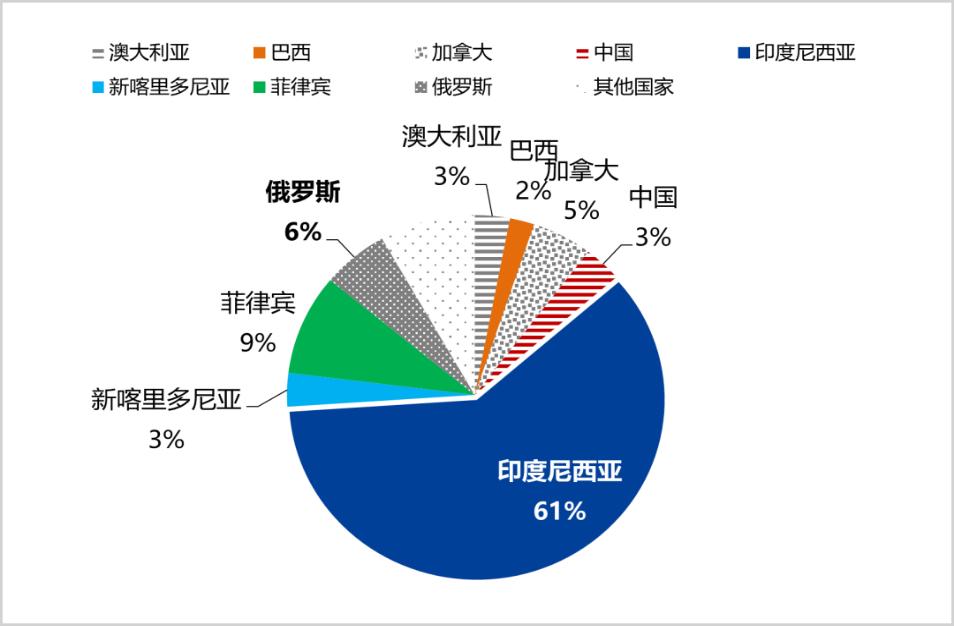
Core Viewpoint - The nickel market is currently facing significant challenges, but there is potential for recovery and growth in the next five years, particularly driven by advancements in solid-state battery technology [1] Supply Expansion and Market Dynamics - Indonesia has become the dominant player in the global nickel industry, with its nickel ore resources primarily consisting of high-grade laterite nickel, accounting for over 60% of global nickel production by 2024 [2][4] - From 2015 to 2022, Indonesia's nickel production increased from 130,000 tons to 1.6 million tons, representing a 144% share of the global increase in nickel production during that period [2] - The recent increase in nickel prices has led to a situation where prices are nearing or below production costs, prompting a market correction [4] Demand Side and Battery Technology - The shift from ternary lithium batteries to lithium iron phosphate (LFP) batteries has reduced the demand for nickel, as LFP batteries do not require nickel [5][7] - Solid-state batteries, expected to be commercially available between 2027 and 2030, could significantly increase nickel demand due to their higher energy density and longer lifespan [9] - The anticipated demand for nickel in solid-state batteries could lead to a substantial increase in overall nickel consumption, with projections indicating a potential shortage by 2030 [10] Industry Outlook and Opportunities - Chinese companies have established a strong presence in the nickel supply chain, positioning themselves to benefit from future market shifts [10][11] - Companies like Grinm and others are expanding their production capabilities, with Grinm expected to increase its nickel output from 51,600 tons in 2024 to over 216,000 tons by 2027 [11] - The current market challenges may serve as a foundation for future growth, as companies that endure the downturn could emerge stronger in the next cycle [11]