
中国进出口银行

Search documents
股债跷跷板依然主导,关注长端债券机会
Ning Zheng Qi Huo· 2025-08-25 11:48
Group 1: Report Industry Investment Rating - The industry investment rating is "oscillating bearish, pay attention to the stock-bond seesaw" [5] Group 2: Core Viewpoints of the Report - The stock-bond seesaw remains the dominant factor, and attention should be paid to long-term bond opportunities. The main policy tone in the second half of the year is a proactive fiscal policy and a moderately loose monetary policy. Although counter-cyclical adjustments such as promoting consumption and major project construction may continue to be introduced, the incremental policies exceeding market expectations may be limited. Liquidity is expected to be loose, which may intensify stock market fluctuations and short-term bond market volatility, making short-term bond market operations more difficult. The supply-demand contradiction in the long-term bond market may be more prominent, with more obvious negative factors [2][3][4] Group 3: Summary by Relevant Catalogs Chapter 1: Market Review - The stock-bond seesaw logic has led the long-term bond market to effectively break below the 60-day moving average, and this logic may continue to dominate the bond market. However, in the context of loose liquidity, this logic becomes less obvious, making market operations difficult. The Politburo meeting in July set the policy tone for the second half of the year, and the stock-bond seesaw remains the main logic in the bond market [10] Chapter 2: Overview of Important News - The central bank will implement a moderately loose monetary policy in the next stage and maintain ample liquidity. In August, the central bank will conduct a 6000 billion yuan MLF operation, with a net investment of 3000 billion yuan, and a 3000 billion yuan outright reverse repurchase net investment, resulting in a total net investment of 6000 billion yuan in medium-term liquidity for the month. A new policy-based financial instrument worth 500 billion yuan will be launched, focusing on emerging industries and infrastructure. The central bank has increased the re-lending quota for supporting agriculture and small businesses by 100 billion yuan. In July, China's total goods trade import and export value reached 3.91 trillion yuan, a year-on-year increase of 6.7%. In July, M2 increased by about 8.8% year-on-year, M1 by about 5.6%, and M0 by about 11.8% [13][15] Chapter 3: Analysis of Important Influencing Factors 3.1 Economic Fundamentals - In July, China's official manufacturing PMI was 49.3, a month-on-month decrease of 0.4 percentage points, and the comprehensive PMI output index was 50.2, a decrease of 0.5 percentage points. The official non-manufacturing PMI was 50.1, a month-on-month decrease of 0.4 percentage points. China's Q2 GDP increased by 5.2% year-on-year and 1.1% quarter-on-quarter, both exceeding expectations. In July, the total goods trade import and export value reached 3.91 trillion yuan, a year-on-year increase of 6.7%. Although the economic data shows certain resilience, the economic downward pressure has increased, and counter-cyclical adjustments need to be continuously strengthened [16] 3.2 Policy Aspect - At the end of July, the broad money M2 balance was 329.94 trillion yuan, a year-on-year increase of 8.8%. The narrow money M1 balance was 111.06 trillion yuan, a year-on-year increase of 5.6%. The difference between M2 and M1 growth rates was 3.2%, narrowing slightly. The social financing stock reached 431.26 trillion yuan, a 9% increase from July last year, with a slight increase of 0.1 percentage point in the growth rate. The new social financing in the month was 1.16 trillion yuan, 389.3 billion yuan more than last year, mainly driven by government bond issuance [18] 3.3 Capital Aspect - Since July 25, DR007 has been continuously declining, and the cost of funds has decreased. The central bank will implement a moderately loose monetary policy in the next stage. A potential interest rate cut by the Federal Reserve in the second half of the year may further open up space for domestic monetary policy easing, but the adjustment of monetary policy still depends on domestic demand. According to the Politburo meeting in July, the liquidity in the second half of the year will likely remain moderately loose, and the probability of an unexpectedly loose monetary policy is low [18] 3.4 Supply and Demand Aspect - The National Development and Reform Commission will allocate the third batch of funds for consumer goods trade-in in July this year and formulate a monthly and weekly usage plan for national subsidy funds. The support from the ultra-long-term special treasury bond funds for equipment renewal this year is 200 billion yuan, with the first batch of about 173 billion yuan already allocated to about 7,500 projects in 16 fields. The issuance of special bonds has also accelerated recently [21] 3.5 Sentiment Aspect - The stock-bond ratio has broken through the short-term shock range and declined, indicating that the market pays more attention to the stock market than the bond market, and the market risk appetite has increased. Recently, the stock-bond ratio has slightly decreased but is still in a high range compared to the previous period. Short-term bonds are more affected by the capital aspect, while long-term bonds are more significantly affected by the stock-bond seesaw [23] Chapter 4: Market Outlook and Investment Strategy - The central bank will implement a moderately loose monetary policy in the next stage, and loose liquidity may be the main policy tone in the second half of the year. Loose liquidity combined with the expectation of a rising stock market may intensify stock market fluctuations and short-term bond market volatility. The stock-bond seesaw logic remains the main logic, and the logic of long-term bonds is relatively clear, so it is recommended to pay attention [26]
棉系周报:短期去库仍存支撑,关注下游旺季表现-20250825
Zhong Hui Qi Huo· 2025-08-25 07:58
Report Industry Investment Rating - The report has a "Cautious Bullish" rating on the cotton industry [4] Core Viewpoints - Considering the current de - stocking speed of cotton commercial inventory and the import situation, the tight supply of cotton before the new cotton goes on the market still exists. There is still some short - term support for the market due to the high - production capacity and the possibility of a small - scale pick - up in some areas. However, the expected increase in this year's new cotton production and the possibility of early listing limit the upside space and time. In terms of demand, the "Golden September and Silver October" stocking market has started, with the operating rate and orders gradually improving, but the demand performance needs further observation. It is recommended to take a long - position approach on dips and consider adjusting the long - short rhythm according to the year - on - year demand situation in September [4] Summary by Related Catalogs 1. Week - on - Week Review - **Macro**: China's central bank aims to promote a reasonable recovery of prices. A 500 - billion - yuan new policy - based financial instrument will be launched. Internationally, the drought in the US cotton - growing areas has slightly eased, and the cotton excellent - rate has slightly rebounded. Brazil's new cotton harvest progress is the slowest in the past five years [4] - **Supply**: In the international market, the drought in the US cotton - growing areas has eased, and Brazil's new cotton harvest progress is slow. Domestically, most of Xinjiang's new cotton has entered the boll - splitting stage, and some may be listed early in early October. The import quota policy has not been introduced, and the import volume in July did not effectively ease the tight inventory [4] - **Inventory**: Domestically, the commercial de - stocking of cotton is still fast and lower than the same period. The downstream terminal products are also slightly de - stocking, with pure - cotton products de - stocking faster than blended products [4] - **Demand**: Domestically, the "Golden September and Silver October" has started, with orders accelerating and the operating rate rising but still lower than the same period. The trading volume in the light - textile market has recovered, but the pure - cotton fabric trading has not recovered well. Externally, the textile and clothing export data in July was under pressure [4] 2. August USDA Supply - Demand Balance Sheet - The US cotton production and ending inventory in the August USDA supply - demand balance sheet were significantly revised down, which was more bullish than expected. For example, the US cotton production was revised down from 315 (July) to 262.7 (August) [5] 3. Cotton Futures and Spot - The weekly average cotton price and the basis both declined significantly [6] 4. Cotton Yarn Futures and Spot - The weekly cotton - yarn price declined along with the cotton price [13] 5. Supply - **Raw Material and Finished - Product Inventory**: This week, the national commercial cotton inventory decreased by 153,500 tons to 1.7126 million tons, lower than the same period. The inventory of pure - cotton yarn, terminal grey fabric, and polyester - cotton yarn in the factory all decreased [16] - **Imported Cotton**: In July, the imported cotton resources increased month - on - month but were still weak year - on - year, with a total of about 150,766 tons [18] - **Warehouse Receipts**: As of August 22, the number of Zhengzhou cotton registered warehouse receipts decreased by 564 to 7,198, and the total of warehouse receipts and forecasts was equivalent to 290,400 tons of cotton [20] 6. Demand - **Operating Rate and Orders**: This week, the spinning mill's operating rate increased by 0.3% to 65.8%, and the weaving mill's operating rate increased by 0.2% to 37%. The spinning mill's orders increased by 3.06 days to 11.42 days. The spinning profit improved [22] - **Light - Textile Market**: The total trading volume in the light - textile market increased, but the cotton - fabric trading volume decreased. The prices of fabric and accessories in the Keqiao market declined [25] - **Retail Sales**: In July, the retail sales of clothing, footwear, and knitted textiles above the designated size increased by 1.8% year - on - year, with a slightly slower growth rate than in June [28] - **Exports**: From January to July 2025, the cumulative textile and clothing exports increased by 0.6%. In July, the exports decreased by 0.1% year - on - year and 2% month - on - month. Exports to the US, ASEAN, and the EU all weakened to varying degrees [30][33] - **PMI**: In July, the cotton - spinning industry PMI decreased by 12% to 35.71%, and sub - indicators such as new orders and operating rate also declined [35] 7. CFTC Positioning Data - The net short positions of non - commercial and fund investors decreased slightly [36] 8. Macro - China's central bank aims to promote a reasonable recovery of prices, and a large - scale policy - based financial instrument will be launched [4]
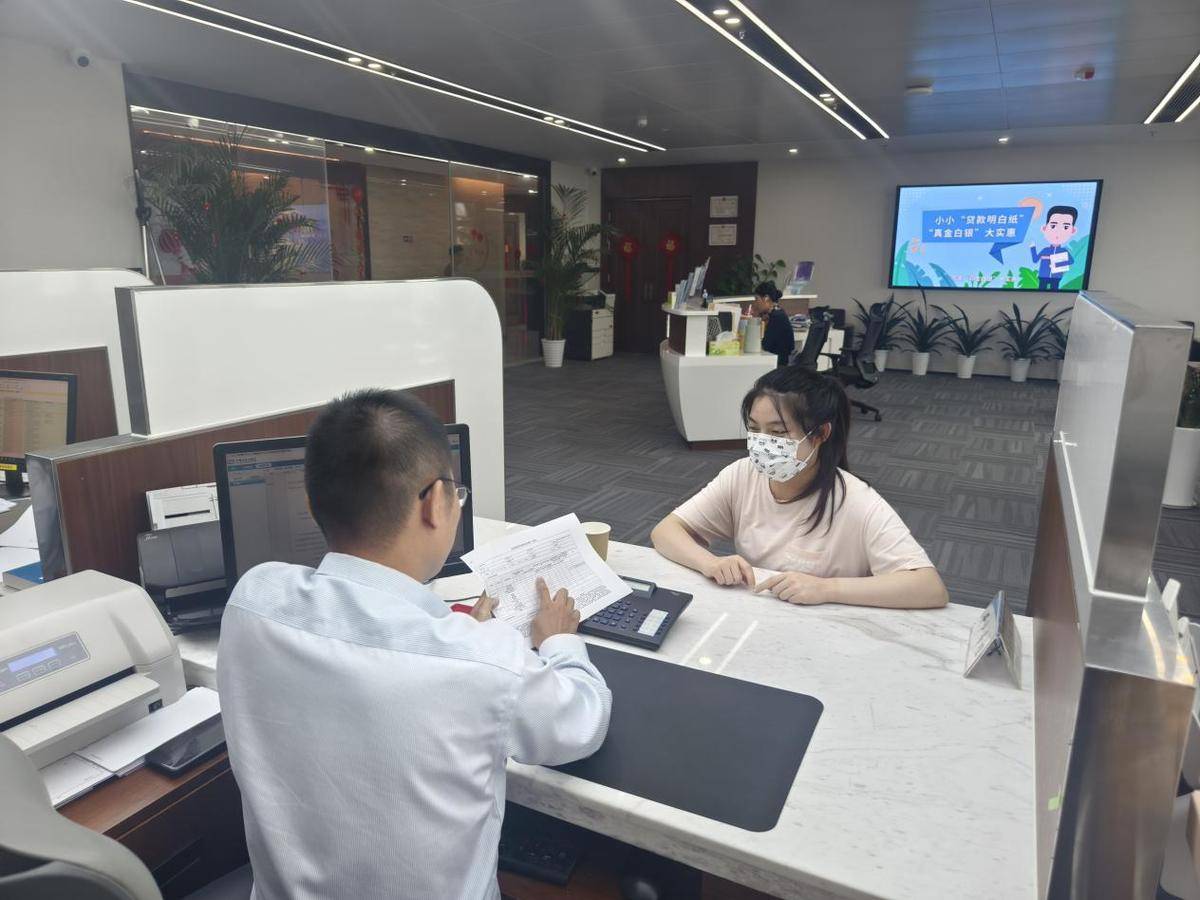
透明融资暖企心 银企同行共发展——进出口银行江西省分行以"明白纸"绘就惠企新图
Sou Hu Cai Jing· 2025-08-25 03:16
Core Viewpoint - The China Export-Import Bank's Jiangxi Branch is actively promoting transparency in corporate financing costs to support the real economy, ensuring that enterprises can clearly understand and calculate their financing expenses [1][2][3]. Group 1: Initiatives and Strategies - The branch has prioritized the transparency of financing costs as a key service to the real economy, establishing a special task force and creating a comprehensive work plan to ensure effective implementation of policies [2]. - Training sessions for credit personnel have been organized to ensure a thorough understanding of policy implications, and the bank has integrated policy explanations into the entire loan process [3]. Group 2: Communication and Outreach - A multi-dimensional promotional strategy has been developed, combining online and offline efforts to ensure that more enterprises can benefit from policy advantages, including immersive policy environments in physical locations and detailed online content [5]. - Customized promotional materials are being sent to clients, and dedicated personnel are available to answer questions, facilitating the effective implementation of financing cost transparency policies [5]. Group 3: Commitment to Quality Service - The Jiangxi Branch aims to enhance its financing cost transparency services, striving to provide higher quality, more transparent, and efficient financial services to support the high-quality development of the real economy [6].

外资唱多中国股市,股指期货震荡上行走高IF2509和IC2509合约再创近3年多来新高
Guo Tai Jun An Qi Huo· 2025-08-22 06:05
Report Industry Investment Rating No relevant content provided. Core View of the Report - On August 22, the main contracts of stock index futures opened slightly higher, oscillated upward, and rose slightly. IF2509 and IC2509 reached new highs in over 3 years, and IH2509 reached a new high in over 2 years. Foreign - funded institutions are accelerating their entry into the A - share market. Their latest research reports suggest that the sentiment in the A - share market has significantly improved and the medium - term outlook is positive. Foreign investors continue to be bullish on the Chinese stock market, which will attract more funds and help the stock index futures to oscillate upward in the medium, medium - short, and short terms [2]. Summary by Relevant Catalogs 1. Market Outlook - **Intraday Forecast**: - IF2509 is likely to oscillate strongly, attacking resistance levels at 4350 and 4380 points (4380 is a stronger resistance), with support levels at 4282 and 4270 points (4270 is a stronger support) [2][9]. - IH2509 is likely to oscillate strongly, attacking resistance levels at 2908 and 2920 points (2920 is a stronger resistance), with support levels at 2865 and 2858 points (2858 is a stronger support) [2][10]. - IC2509 is likely to oscillate strongly, attacking resistance levels at 6750 and 6800 points (6800 is a stronger resistance), with support levels at 6656 and 6621 points (6621 is a stronger support) [3][10]. - IM2509 is likely to oscillate strongly, attacking resistance levels at 7312 and 7370 points (7370 is a stronger resistance), with support levels at 7202 and 7156 points (7156 is a stronger support) [3][11]. - **August Forecast**: - The IF main contract in August 2025 is likely to oscillate strongly in a wide range, attacking resistance levels at 4400 and 4535 points, with support levels at 4003 and 3983 points [3][11]. - The IH main contract in August 2025 is likely to oscillate strongly in a wide range, attacking resistance levels at 2941 and 3000 points, with support levels at 2725 and 2700 points [3][11]. - The IC main contract in August 2025 is likely to oscillate strongly, attacking resistance levels at 6900 and 7017 points, with support levels at 6070 and 6050 points [3][12]. - The IM main contract in August 2025 is likely to oscillate strongly, attacking resistance levels at 7500 and 7800 points, with support levels at 6500 and 6450 points [3][12]. 2. Macroeconomic and Stock Market News - In July, the total social electricity consumption reached 1.02 trillion kilowatt - hours, a year - on - year increase of 8.6%. The proportion of new energy has significantly increased, and the power generation of wind, solar, and biomass has increased rapidly, accounting for nearly a quarter of the total [4]. - A new policy - based financial instrument worth 500 billion yuan will be launched, focusing on emerging industries and infrastructure, including digital economy, artificial intelligence, etc. Policy - based banks such as the National Development Bank will participate [6]. - The EU and the US announced details of a new trade agreement. The US will impose a 15% tariff on most EU goods, while the EU will cancel tariffs on US industrial products, provide preferential market access for US seafood and agricultural products, and plans to purchase US energy and AI chips worth hundreds of billions of dollars by 2028 [6]. - The preliminary value of the US S&P Global Manufacturing PMI in August was 53.3, the highest since May 2022, far exceeding the expected 49.5. The service PMI slightly declined to 55.4, but the manufacturing rebound pushed the composite PMI to a 9 - month high of 55.4 [6]. - Foreign - funded institutions are accelerating their entry into the A - share market. As of August 21, foreign - funded institutions held A - shares worth about 2.5 trillion yuan, an 8% increase from the end of 2024, accounting for 2.72% of the total A - share floating market value. 261 out of 920 companies that disclosed their mid - year reports had QFIIs in their top ten floating shareholders, with a total market value of about 30.14 billion yuan. Foreign - funded institutions believe that the A - share market sentiment has improved and the medium - term outlook is positive [7]. - Goldman Sachs' latest research report points out that the current rise in the Chinese stock market is mainly driven by retail funds, and there is still a large amount of "idle funds" waiting to enter the market. Chinese small - and medium - cap stocks still have significant room for growth, and indices such as the CSI 1000 and CSI 500 are worthy of attention [7]. - South Korean investors have been actively buying Chinese assets. As of August 20, the cumulative trading volume of South Korean investments in the Hong Kong stock market this year has exceeded $5.8 billion. South Korean funds have net - bought about $499 million of Chinese stocks this year, compared with a net - selling of $985 million in the previous three years. They are particularly interested in high - growth industry leaders in the Hong Kong and A - share markets [8]. 3. Technical Analysis and Market Outlook - On August 22, IF2509 opened slightly higher, oscillated upward, and closed at 4338.8 points at noon, up 1.43% (1.32% based on the closing price). It reached a new high since July 12, 2022, but failed to break through the 4350 - point resistance. The 4282.2 - point closing price on August 21 and the 5 - day moving average provided obvious support [8]. - IH2509 opened slightly higher, oscillated upward, and closed at 2898.0 points at noon, up 1.26% (1.14% based on the closing price). It reached a new high since January 31, 2023, but failed to break through the 2908.4 - point resistance. The 2865.4 - point closing price on August 21 and the 5 - day moving average provided obvious support [9]. - IC2509 opened slightly higher, oscillated upward, and closed at 6739.8 points at noon, up 1.44% (1.25% based on the closing price). It reached a new high since January 26, 2022, but failed to break through the 6750 - point resistance. The 6656.4 - point closing price on August 21 and the 5 - day moving average provided obvious support [10]. - IM2509 opened slightly higher, oscillated upward, and closed at 7274.0 points at noon, up 1.21% (1.00% based on the closing price). It failed to break through the 7300 - point and 7312.0 - point resistances. The 7202.2 - point closing price on August 21 provided obvious support, and the 5 - day moving average support was regained, with the short - term trend turning upward [11].
商务部:前7月中国外贸稳中有进
Huan Qiu Wang· 2025-08-22 02:27
Core Viewpoint - Despite increasing risks and challenges in the international economic and trade environment, China's foreign trade has maintained a steady growth trajectory, with a cumulative import and export growth of 3.5% in the first seven months of the year, reflecting both quantity and quality improvements [1] Group 1: Policy Support - Continuous policy support has been a significant factor in sustaining foreign trade growth, with multiple rounds of measures implemented since the fourth quarter of last year to stabilize foreign trade, enhance public services, and support enterprises in maintaining orders and employment [3] - The China Export & Credit Insurance Corporation reported a short-term insurance coverage amount of $573.5 billion, a year-on-year increase of 14.7% [3] - The China Export-Import Bank has issued over 700 billion RMB in new loans in the foreign trade sector [3] Group 2: Trade Cooperation - Trade cooperation has become more diversified, with a 5% increase in imports and exports to emerging markets and developing countries, accounting for 65.5% of total foreign trade, an increase of 0.9 percentage points year-on-year [3] - Exports to ASEAN and Africa grew by 9.4% and 17.2%, respectively, both exceeding the overall growth rate [3] - Trade with countries involved in the Belt and Road Initiative increased by 5.5%, further raising its share of foreign trade to 51.7% [3] Group 3: New Trade Dynamics - The export of electromechanical products grew by 9.3%, making up 60% of total exports, an increase of 1.1 percentage points year-on-year [4] - High-tech and high-value-added products, such as smart home devices, electric vehicles, industrial robots, and ships, have maintained rapid growth in exports [4] - Approximately 654,000 enterprises engaged in foreign trade in the first seven months, with nearly 90% being private enterprises, demonstrating strong adaptability and innovative vitality [4] Group 4: Global Economic Uncertainty - The global economic and trade landscape remains uncertain, with rising tariff barriers increasing global trade costs and affecting supply chain efficiency and stability [4] - China is committed to expanding high-level opening-up and addressing uncertainties with high-quality development, expressing confidence in continuing to promote stable and quality-enhanced foreign trade [4]
中国电子与中国进出口银行签署战略合作协议
Zheng Quan Shi Bao Wang· 2025-08-21 14:58
Core Viewpoint - China Electronics and China Export-Import Bank signed a strategic cooperation agreement to deepen practical collaboration and leverage their respective resource advantages in key sectors such as integrated circuits, advanced computing, and financial technology [1] Group 1: Strategic Cooperation - The agreement aims to create a benchmark for deep integration between the financial industry and the electronic information industry [1] - Both parties expressed a commitment to utilize policy-based financial tools effectively to support their collaboration [1] Group 2: Focus Areas - The collaboration will focus on addressing financial needs related to the development of the electronic industry, technological innovation, and major projects [1] - China Export-Import Bank will play a crucial role in aligning its policy-based financial functions with the needs of China Electronics [1]

5000亿“准财政”工具要来了
2 1 Shi Ji Jing Ji Bao Dao· 2025-08-21 14:31
Core Viewpoint - The new policy financial tools, with a funding scale of 500 billion yuan, aim to boost investment in emerging industries and infrastructure, including digital economy, artificial intelligence, and green low-carbon sectors [2][3][9] Group 1: Policy and Government Initiatives - Since May, various regions have been organizing policy briefings and project preparation meetings regarding new policy financial tools [2] - The central government has signaled an increase in investment efforts, with the State Council emphasizing the need to expand effective investment and promote private investment [2][3] - The National Development and Reform Commission (NDRC) plans to expedite the establishment of new policy financial tools [2][3] Group 2: Project Preparation and Focus Areas - Local governments are actively preparing project reserves, focusing on matching projects with the new financial tools, including traditional industry upgrades and high-tech projects [5][6] - Specific regions, such as Hubei and Guangdong, are identifying projects that align with national strategies and the requirements of the new financial tools [5][6] - In Shanxi, 11 projects have been reserved with a total investment of 13.369 billion yuan, indicating a strong focus on transportation, logistics, and green transformation [5][6] Group 3: Financial Mechanism and Market Impact - The new policy financial tools are characterized as "quasi-fiscal" instruments, with project selection managed by the NDRC and funding provided by policy banks [3][10] - The tools are designed to address capital shortages for project construction and to lower financing thresholds, thereby expanding effective investment [7][11] - The implementation of these tools is expected to complement special bonds and enhance capital input for projects [10][11] Group 4: Economic Context and Challenges - The introduction of new policy financial tools comes in response to declining investment growth, with fixed asset investment growth slowing to 1.6% in July [10][11] - There are concerns regarding the effectiveness of policy banks in investing in emerging industries, which require specialized judgment [11] - The focus on ensuring that investments yield returns while avoiding increased local hidden debt is a critical consideration for the successful deployment of these tools [11]

5000亿“准财政”工具要来了
21世纪经济报道· 2025-08-21 13:47
Core Viewpoint - The article discusses the establishment and implementation of new policy financial tools aimed at stabilizing investment and promoting economic growth, with a focus on emerging industries and infrastructure projects [1][2][8]. Group 1: Overview of New Policy Financial Tools - Since May 2023, various regions have been conducting policy briefings and project preparation meetings regarding new policy financial tools, with a total funding scale of 500 billion yuan [1]. - The new policy financial tools are designed as "quasi-fiscal" instruments, with project lists curated by the National Development and Reform Commission (NDRC) and financing provided by policy banks [2][10]. - The tools will focus on sectors such as digital economy, artificial intelligence, low-altitude economy, consumption, green and low-carbon initiatives, agriculture, rural development, transportation logistics, and urban infrastructure [1][2]. Group 2: Project Preparation and Implementation - Multiple regions have completed project reserves, with Hubei and Guangdong actively matching projects from their planning libraries to align with national strategies [4][5]. - In Shanxi, 11 projects have been reserved with a total investment of 13.369 billion yuan, requiring 2.186 billion yuan from the new policy financial tools [5][6]. - Nanjing's Pukou District has added 12 new projects with a total investment of 4.2 billion yuan, focusing on high-tech and green projects [6]. Group 3: Government Support and Economic Context - The central government has signaled an increase in investment efforts, with the State Council emphasizing the need for effective investment to adapt to changing demands [1][11]. - Investment data from June and July 2023 indicates a need for stronger measures to stabilize investment, as fixed asset investment growth has slowed to 1.6% [11]. - The new policy financial tools are expected to help address capital shortages for project construction and stimulate effective investment, particularly in infrastructure and technology innovation [11].

5000亿“准财政”工具将出,重点支持新兴产业、基础设施等
2 1 Shi Ji Jing Ji Bao Dao· 2025-08-21 12:37
Core Insights - The new policy financial tools are aimed at stabilizing investment and promoting innovation, with a total funding scale of 500 billion yuan, focusing on emerging industries and infrastructure [1][6][8] - Local governments are actively preparing and identifying projects for funding, with a focus on high-tech and socially beneficial projects [3][4][5] Group 1: Policy and Funding Mechanism - The new policy financial tools are classified as "quasi-fiscal" instruments, with project lists screened by development and reform departments, and funding provided by policy banks [2][8] - The tools are designed to address capital shortages for project construction, lower financing thresholds, and expand effective investment [6][8] Group 2: Project Identification and Preparation - Various regions, including Hubei and Guangdong, are conducting project preparation meetings to align with national strategies and identify high-quality projects [3][5] - Specific projects have been identified, such as 11 projects in Shanxi with a total investment of 13.369 billion yuan, requiring 2.186 billion yuan from the new financial tools [4][6] Group 3: Economic Context and Challenges - The introduction of these tools comes in response to declining investment growth, with fixed asset investment growth slowing to 1.6% in July [8][9] - There are concerns regarding the effectiveness of policy banks in investing in emerging industries, which require specialized judgment [9]
进出口银行广东省分行支持外资企业在华业务发展
Zhong Guo Neng Yuan Wang· 2025-08-15 06:17
Core Viewpoint - The China Export-Import Bank's Guangdong Branch is actively supporting the panel industry by providing liquidity loans to a leading foreign enterprise, enhancing the stability of the domestic panel industry chain [1] Group 1: Financial Support and Impact - The Guangdong branch of the China Export-Import Bank has issued liquidity loans to a foreign enterprise that is a leader in the panel industry, specifically targeting high-end panel products for automotive and IT sectors [1] - This foreign enterprise has been investing in China's panel industry since 2002 and has established production bases and sales networks in cities like Guangzhou, Shanghai, and Nanjing, significantly contributing to the local panel industry ecosystem [1] - Since 2019, the bank has collaborated with this foreign enterprise, providing financing support amounting to several billion yuan to its subsidiaries in Guangzhou and Nanjing [1] Group 2: Policy Alignment and Future Plans - The loan issuance aligns with the "2025 Action Plan for Stabilizing Foreign Investment" jointly released by the Ministry of Commerce and the National Development and Reform Commission, which aims to support foreign enterprises in expanding their investment and operations in China [1] - The Guangdong branch plans to continue its policy-driven financial mission, enhancing its roles as a foreign trade bank, international cooperation bank, and advanced manufacturing bank to support foreign enterprises in their investment and business expansion in China [2]