小米汽车

Search documents
渗透率剑指60%!11月新能源车企交付量集体冲高 多家品牌刷新月销纪录
Mei Ri Jing Ji Xin Wen· 2025-12-01 13:52
Core Insights - Multiple electric vehicle brands reported their November delivery figures, showcasing significant growth in the sector, particularly for Leap Motor, which achieved a record monthly sales figure [1][2]. Group 1: Company Performance - Leap Motor delivered 70,327 vehicles in November, marking a year-on-year increase of over 75% and achieving its annual sales target of 500,000 units 45 days ahead of schedule [1]. - Xiaomi Auto surpassed 40,000 deliveries for the third consecutive month, while XPeng Motors delivered 36,728 vehicles, reflecting a 19% year-on-year growth [2]. - NIO reported 36,275 deliveries, a 76.3% increase year-on-year, with expectations for accelerated production and delivery in December [3]. - Li Auto delivered 33,181 vehicles in November, with a cumulative total of approximately 1.496 million vehicles delivered to date [3]. - Zeekr and Lynk & Co combined delivered 63,902 vehicles, showing a 7.1% year-on-year increase [4]. - Lantu achieved a historic monthly sales record of 20,005 vehicles, while IM Motors delivered 13,577 vehicles, marking three consecutive months of over 10,000 deliveries [4]. Group 2: Market Trends - The overall passenger car retail market in November is expected to reach around 2.25 million units, with new energy vehicle sales projected at approximately 1.35 million units, indicating a penetration rate of about 60% [4]. - The domestic electric vehicle market is anticipated to experience a new consumption peak due to adjustments in vehicle purchase tax and the traditional year-end sales surge [4]. - A report from Zhongyuan Securities forecasts a moderate adjustment or stabilization in the total domestic passenger car market in 2026, driven by reduced purchase tax subsidies and elevated technical thresholds [5].


纳百川(301667):动力电池+储能热管理双轮驱动
Shenwan Hongyuan Securities· 2025-12-01 13:15
Investment Rating - The report assigns a rating of "Neutral" to the company based on its AHP score of 1.69, which places it in the 22.6% percentile of the non-innovation system AHP model [7][8]. Core Insights - The company has successfully transitioned from fuel vehicle thermal management to new energy vehicle battery thermal management and has expanded into the energy storage thermal management market. It is a strategic supplier for CATL, with a market share of approximately 12.16% in 2024 [2][9]. - The company’s revenue from energy storage thermal management products has grown significantly, from 36 million yuan in 2022 to 337 million yuan in 2024, representing a CAGR of 204% [11]. - The global market for battery liquid cooling plates is projected to reach 14.5 billion yuan in 2025, with a growth rate of 95.95% compared to 2022 [13]. - The company is also focusing on capacity expansion and product upgrades, with plans to produce 3.6 million sets of water cooling plates annually, integrating core components with battery box production [16][32]. Summary by Sections AHP Score and Expected Allocation Ratio - The company’s AHP score, adjusted for liquidity premium factors, is 1.69, indicating a mid-to-low level performance in the market [7][8]. New Stock Fundamentals and Features - The company leads in the liquid cooling plate segment and has established a stable supply capability, with ongoing negotiations for product supply with major clients like BYD and LG Energy [9][10]. - The company has completed over 300 product projects for various automotive manufacturers, including NIO and Mercedes-Benz, and has adapted over 200 vehicle models [9][10]. Comparable Company Financial Metrics - The company’s revenue from 2022 to 2024 was 1.031 billion, 1.136 billion, and 1.437 billion yuan, respectively, with net profits declining from 113 million to 95 million yuan during the same period [20][21]. - The company’s gross margin has decreased from 21.79% in 2022 to 17.36% in 2024, which is below the average of comparable companies [20][22]. Fundraising Projects and Development Vision - The company plans to raise funds for a new production project aimed at producing 3.6 million sets of water cooling plates annually, with a projected internal rate of return of 7.06% [30][33].
零跑销量再破7万辆,再夺新势力“销冠”!小米汽车超4万辆,“蔚小理”均超3万辆
Mei Ri Jing Ji Xin Wen· 2025-12-01 12:21
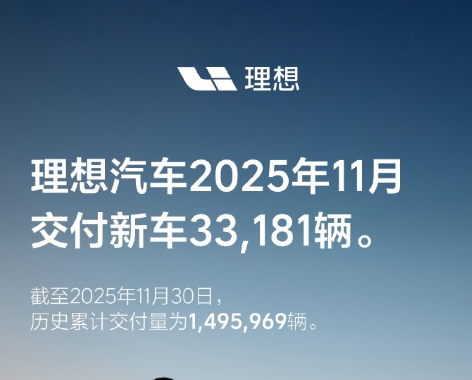
12月1日,各家新能源车企11月成绩单陆续出炉。 蔚来:2025年11月,蔚来公司交付新车36,275台,同比增长76.3%。其中,蔚来品牌交付新车18,393 台;乐道品牌交付新车11,794台;firefly萤火虫品牌交付新车6,088台。 理想汽车:2025年11月,理想汽车交付新车33,181辆。截至2025年11月30日,理想汽车历史累计交付量 为1,495,969辆。 极氪汽车:11月销量28843台,环比增长35%,实现国内国际市场双增长,过去一个月,极氪品牌累计 销量已突破60万台。 岚图汽车:11月交付新车20005辆,同比增长84%,系品牌单月交付量首次突破2万辆大关,并实现连续 10个月环比增长。 智己汽车:11月销售量为13577台,环比增长3%。 零跑汽车:11月全系交付再创新高,达70327台,同比增长超75%,持续刷新月销纪录。自2025年3月 起,零跑汽车已连续九个月保持增长,位居造车新势力榜首。今年1~10月,零跑汽车共交付新车46.58 万辆。 北汽蓝谷:子公司北京新能源汽车股份有限公司2025年11月份产销快报,当月产量为31935辆,同比增 长180.57%;销量为32 ...

财经早知道|主要产油国宣布维持明年头三个月暂停增产计划
Sou Hu Cai Jing· 2025-12-01 02:54
Macro Economy - In November, the manufacturing PMI was 49.2%, an increase of 0.2 percentage points month-on-month; the non-manufacturing business activity index was 49.5%, a decrease of 0.6 percentage points month-on-month; the composite PMI output index was 49.7%, a decrease of 0.3 percentage points month-on-month [2] - The National Development and Reform Commission plans to further expand market access, strengthen support for factors, and accelerate the establishment of a national venture capital guidance fund to enhance the sense of gain for private enterprises [2] Industry Trends - In November, the inventory warning index for Chinese automobile dealers was 55.6%, an increase of 3.8 percentage points year-on-year and an increase of 3.0 percentage points month-on-month, indicating a decline in the automotive circulation industry's prosperity [4] - China has opened imports of frozen durians from Malaysia and fresh durians from Thailand and Vietnam, with 1.701 million tons of fresh durians imported in the first ten months, a year-on-year increase of 13.6% [4] Company Dynamics - Xiaomi Auto added 17 new stores in November, with a total of 441 stores across 131 cities; plans to add 36 more stores in December, covering seven cities [6] - Beyond Meat, known as the "first stock of plant-based meat," has quietly closed flagship stores on major e-commerce platforms, with a stock price of $0.98 per share and a total market value of $445 million as of November 30 [6]
新能车ETF(515700)涨超1.5%,11月零跑全系交付再创新高,同比增长超75%
Xin Lang Cai Jing· 2025-12-01 02:14
Core Viewpoint - The Chinese new energy vehicle (NEV) market is experiencing significant growth, with notable increases in sales and production, as evidenced by the performance of key companies and indices in the sector [1][2]. Group 1: Market Performance - As of December 1, 2025, the CSI New Energy Vehicle Industry Index (930997) rose by 1.47%, with constituent stocks such as Tianhua New Energy (300390) increasing by 10.90% and Defu Technology (301511) by 5.75% [1]. - The New Energy Vehicle ETF (515700) also saw a rise of 1.50%, with the latest price reported at 2.44 yuan [1]. Group 2: Company Deliveries - Leap Motor reported a record high delivery of 70,327 units in November, marking a year-on-year increase of over 75% and maintaining a growth trend for nine consecutive months [1]. - Xiaomi's automotive division also achieved consistent delivery figures, exceeding 40,000 units in November 2025 [1]. Group 3: Industry Statistics - In the first three quarters of 2025, China's NEV sales reached 11.23 million units, reflecting a year-on-year growth of 35%, while the installed capacity of power batteries increased by 43% [1]. - The electrification rate in the NEV sector has risen to 49.7%, indicating a strong shift towards electric vehicles [1]. - The energy storage sector is benefiting from favorable capacity pricing policies, leading to increased economic viability and a temporary tightening of battery cell supply, which supports a rise in industry chain prices [1]. Group 4: Index Composition - The CSI New Energy Vehicle Industry Index comprises 50 listed companies involved in various aspects of the NEV industry, including vehicle manufacturing, electric control systems, and battery materials [2]. - As of November 28, 2025, the top ten weighted stocks in the index accounted for 51.96% of the total index weight, with major players including CATL (300750) and BYD (002594) [2].
左手AI,右手生态
Zhong Guo Qi Che Bao Wang· 2025-12-01 01:44
Core Insights - The automotive industry is transitioning from traditional hardware competition to a new era driven by AI, which is deeply integrated into vehicle control and intelligent driving, transforming cars into essential "smart partners" and "ecological hubs" in daily life [2][12] AI Empowerment and Breakthroughs - AI technology has penetrated various aspects of the automotive sector, including intelligent driving and smart cockpits, showcasing significant advancements in both technical depth and application breadth [3] - The shift towards software-defined intelligent platforms is evident, with companies like Li Auto and Xiaomi showcasing advanced driver assistance systems that enhance user experience and mimic human decision-making [3][4] Market Accessibility and Cost Reduction - The price range of 120,000 to 150,000 yuan has emerged as a new battleground for intelligent driving, with companies like GAC Toyota and Dongfeng Nissan introducing advanced features at lower price points due to a significant drop in core component costs [4] - The cost of automotive-grade lidar has decreased from approximately 8,000 yuan in 2023 to below 3,000 yuan, indicating a trend towards more affordable intelligent driving technologies [4] Intelligent Cockpit Innovations - AI models are transforming traditional vehicles into emotionally aware travel companions, as seen in the Roewe M7 DMH's AI cockpit system, which offers advanced interaction capabilities and personalized user experiences [5] - The system can understand complex commands and remember user preferences, enhancing the overall driving experience [5] New Automotive Ecosystem - AI serves as a core hub connecting various elements of a vast automotive ecosystem, integrating travel services, energy networks, hardware, software applications, and urban infrastructure [7] - This integration breaks down the traditional isolation of vehicles, creating a more interconnected and efficient transportation network [7] Integrated Smart Mobility - AI is the foundational technology for building an integrated "vehicle-road-cloud" smart mobility ecosystem, enhancing collaborative driving and optimizing traffic network efficiency [8] - In the energy sector, AI is transforming vehicles into active participants in smart energy networks, improving battery management and charging efficiency [8] Comprehensive User Experience - AI is becoming the central engine for connecting "people-vehicles-home" ecosystems, evolving cars from mere transportation tools to personal mobility control centers [9] - The shift in human-machine interaction is moving towards an AI-centric model, where AI understands user intentions and provides tailored services [9] Industry Transformation - The dual drive of AI and ecosystem integration is reshaping the global automotive industry's competitive landscape, requiring participants to reassess their roles and value [11] - The focus of competition has shifted from mechanical performance to intelligence and ecosystem integration, with new business models emerging that emphasize lifecycle value rather than one-time hardware sales [11] Future Outlook - The automotive industry is moving from a horsepower competition to one focused on computing power and collaboration, with AI as the driving force behind this transformation [12] - Companies must understand these trends and build comprehensive capabilities to thrive in the evolving automotive landscape [12]

汽车早餐 | 国家统计局:11月份制造业PMI为49.2%;王志坚任山东重工集团有限公司党委书记、董事长
Zhong Guo Qi Che Bao Wang· 2025-12-01 01:29
Domestic News - In November, the manufacturing PMI was reported at 49.2%, an increase of 0.2 percentage points from the previous month, indicating an improvement in economic conditions [2] - Large enterprises had a PMI of 49.3%, down 0.6 percentage points from last month, while medium and small enterprises reported PMIs of 48.9% and 49.1%, respectively, with increases of 0.2 and 2.0 percentage points, both remaining below the critical point [2] Industry News - The 23rd Guangzhou International Auto Show attracted 855,000 visitors, featuring 93 new car launches and a total of 1,085 vehicles on display, with 629 of them being new energy vehicles, accounting for 58% of the total [4] - A meeting on the standardization of power battery recycling was held in Ningde, emphasizing the importance of establishing a standardized system to support the high-quality development of the new energy industry and promote a green and low-carbon transformation of manufacturing [3] International News - Volkswagen Group appointed Ludwig Fazel as the new head of group strategy, effective December 1, 2025, who will report directly to the CEO [5] - Hyundai Motor Group announced a new collaboration with Michelin to accelerate the development of next-generation tire technology, continuing their previous partnerships [6] - Tesla's FSD testing in Spain has progressed, with the country becoming a key hub for testing under the ES-AV plan, allowing for remote monitoring and expanding the fleet of vehicles authorized for public road testing [7] - The UK saw a significant decline in vehicle production in October, with a 30.9% year-on-year drop to 62,116 units, including a 23.8% decrease in passenger car production [8] Company News - Mahindra launched a new seven-seat electric SUV, the XEV 9S, priced at approximately 2 million Indian Rupees (around 158,300 RMB), aiming to capture a larger market share in India's electric vehicle sector [11] - Genesis confirmed the production of its first mid-engine supercar, the Magma GT, and plans to introduce a full range of derivative models to compete with the Porsche 911 [12] - Xiaomi Auto announced the opening of 17 new stores in November, bringing the total to 441 across 131 cities, with plans for 36 more stores in December [14] - Li Auto entered the Russian market with the official pricing of its L6, L7, and L9 series models, ranging from 626,000 to 862,000 RMB, in collaboration with a local partner for sales and service [15] - Ganfeng Lithium announced plans to issue $100 million in exchangeable notes to the African Development Fund, which can be converted into preferred shares of its subsidiary [16]



购车旺季碰上政策窗口期 汽车金融借势发力
Shang Hai Zheng Quan Bao· 2025-11-30 18:33
Core Insights - The automotive market is experiencing a consumption peak as the year-end approaches, driven by adjustments in the new energy vehicle (NEV) purchase tax policy, prompting automakers to offer subsidies and banks to introduce zero-interest financing options [1][2]. Policy Changes - Starting January 1, 2026, the full exemption of purchase tax for NEVs will be replaced by a half-reduction policy, with a maximum tax exemption of 15,000 yuan per vehicle [2]. - The new policy is expected to create a rush among consumers to purchase vehicles before the end of the year to take advantage of the tax benefits [2]. Market Dynamics - Many automakers are providing "bottom-line" subsidies to attract consumers, with reports of increased foot traffic in NEV showrooms [2]. - The delivery timelines for pure electric vehicles have improved to 4-6 weeks, but remain longer than for extended-range models due to battery supply constraints [2]. Financial Services - Banks are actively promoting automotive consumer finance products, with several institutions offering zero-interest loans to stimulate demand during the year-end sales peak [4]. - For instance, Postal Savings Bank is offering financial subsidies up to 4,500 yuan for specific models, while Ping An Bank has introduced zero-interest loan options with flexible amounts [4]. Consumer Awareness - There are concerns regarding hidden costs associated with zero-interest financing, as some third-party platforms may impose high fees and commissions to offset risks [5][6]. - Consumers are advised to be vigilant about potential hidden charges, such as service fees disguised under various names, which can lead to higher effective interest rates [6]. Quality Concerns - The rush to meet delivery deadlines may compromise quality, with reports of simplified quality control processes leading to discrepancies between actual vehicles and promotional claims [2][3].
购车旺季碰上政策窗口期汽车金融借势发力
Shang Hai Zheng Quan Bao· 2025-11-30 18:29
Core Viewpoint - The automotive market is experiencing a consumption peak as the year-end approaches, driven by adjustments in the new energy vehicle (NEV) purchase tax policy and various promotional strategies from car manufacturers and banks to stimulate sales [1][2]. Group 1: Policy Changes and Market Reactions - The NEV purchase tax will shift from full exemption to a half-reduction starting January 1, 2026, prompting a surge in vehicle purchases as consumers aim to take advantage of the remaining tax benefits [2]. - Many car manufacturers are offering "bottom-line" subsidies to attract buyers, with some providing up to 15,000 yuan in purchase tax subsidies and additional value in accessories for orders placed before December 1 [2]. - The new tax policy allows for a maximum tax reduction of 15,000 yuan per vehicle for purchases made between January 1, 2026, and December 31, 2027, which is significant given that mainstream NEV prices are concentrated around 200,000 to 300,000 yuan [2]. Group 2: Financial Institutions' Strategies - Banks are accelerating their entry into the automotive consumer finance sector, with institutions like Postal Savings Bank and Ping An Bank launching attractive year-end car loan programs, including "0% interest" offers [4]. - For instance, Postal Savings Bank is providing up to 4,500 yuan in financial subsidies for specific new models, while Ping An Bank's loans range from 10,000 yuan to 1 million yuan with promotional interest rates [4]. - Financial products are being innovated to enhance consumer experience, such as the new car owner credit cards that integrate various vehicle-related services [4]. Group 3: Risks and Consumer Awareness - Despite the attractive "0% interest" offers, there are hidden costs associated with these financial products, including service fees that can raise the effective interest rate significantly [5]. - Some dealerships are employing tactics like increasing vehicle prices or reducing trade-in subsidies to offset the costs of promotional financing, creating a misleading perception of savings for consumers [5]. - Consumers are advised to be vigilant about their rights, ensuring clarity in contracts regarding subsidies and costs, and retaining documentation for potential disputes [6].
2030年将大变天!“全球十大车企,中国占半壁江山”
Guan Cha Zhe Wang· 2025-11-28 02:55
Core Viewpoint - Chinese automakers are expected to rise in the global automotive rankings over the next five years, potentially placing five companies among the top ten by 2030, driven by advancements in electric vehicle (EV) technology and production capacity [1][4]. Group 1: Market Position and Predictions - By 2030, significant changes in the automotive industry are anticipated, with indications of a major transformation already underway [1]. - BYD and Geely are currently ranked fifth and tenth globally in terms of vehicle deliveries, with BYD delivering 4.27 million vehicles and Geely 3.34 million in the previous year [3]. - Emerging EV manufacturers like Xiaomi, Xpeng, and Leap Motor have seen substantial sales growth, attracting consumers away from traditional brands like Tesla [1][4]. Group 2: Production and Export Trends - China's automotive production accounts for over 30% of the global total, with three out of every five electric vehicles sold globally purchased by Chinese consumers [4]. - Over 70% of the batteries used in global electric vehicles are produced by Chinese companies, with CATL and BYD leading in production capacity [4]. - In the first ten months of 2025, China's automotive exports reached 5.62 million units, marking a year-on-year increase of 15.7% [4]. Group 3: Future Growth and Challenges - Analysts suggest that while the growth rate of Chinese automotive exports may slow in the coming years, an overall increase is still expected [4]. - The profitability of Chinese EV manufacturers in overseas markets can be significantly higher, with profit margins reaching 20,000 RMB per vehicle, four times that of the domestic market [5]. - The automotive industry is projected to achieve an annual sales volume of 40 million vehicles during the "14th Five-Year Plan" period, with substantial growth potential [5].