
未提及具体公司

Search documents
国家能源局:目前全国统调电厂煤炭库存超过2亿吨、可用30天
Xin Hua Cai Jing· 2025-07-31 07:05
Core Insights - The coal market in China is currently in a relatively loose balance, with daily coal production maintaining above 12 million tons since July [1] - As of July 28, coal inventories at major ports are at high levels, with 27.81 million tons at the Bohai Rim ports and 5.76 million tons at Qinhuangdao port [1] - Coal prices have shown a decline, with the long-term contract price for Qinhuangdao 5500 kcal thermal coal at 666 CNY/ton, down 27 CNY/ton from the beginning of the year [1] Group 1: Current Market Conditions - The average daily coal production has been over 12 million tons since July, indicating a stable supply [1] - The total coal inventory across the country exceeds 200 million tons, sufficient for 30 days of consumption [1] - From January to June, the industrial raw coal output reached 2.4 billion tons, a year-on-year increase of 5.4% [1] Group 2: Price Trends - The long-term contract price for Qinhuangdao 5500 kcal thermal coal was 666 CNY/ton in July, reflecting a decrease of 27 CNY/ton since the start of the year [1] - The spot price for the same coal grade was recorded at 646 CNY/ton on July 28, indicating stable prices during the peak summer consumption period [1] Group 3: Future Strategies - The National Energy Administration plans to enhance monitoring and analysis of supply and demand dynamics in the coal market [2] - There will be a focus on maintaining stable production and supply, with guidance for coal-producing provinces to adhere to production capacities [2] - The administration aims to improve the quality and flexibility of coal supply by approving modern coal mine projects and implementing a coal capacity reserve system [2]
只是假摔!系好安全带!周四,A股走势分析
Sou Hu Cai Jing· 2025-07-30 12:30
Group 1 - The core viewpoint is that the market sentiment is negative despite the Shanghai Composite Index reaching new highs, indicating a disconnect between index performance and individual stock performance [1][3]. - The Shanghai Composite Index has rebounded by 600 points, suggesting that those investing in index funds are likely to see profits due to the overall rise in indices [4]. - The market is expected to continue its upward trend, with sector rotation driving the index higher, particularly in banking, liquor, and insurance sectors [6]. Group 2 - The strategy discussed is focused solely on index investment, which may not be suitable for all trading styles, emphasizing that those aligned with this strategy have seen significant gains this year [8]. - The market's rhythm is independent of individual opinions, and the performance of key stocks in sectors like liquor and banking is crucial for index movements [6]. - The commentary suggests that the index's strength is not affected by the performance of individual stocks, as the major weight stocks constitute a small percentage of the total market [3][6].

所见即所得 深圳楼市加速进入“现房时代”
Zheng Quan Shi Bao Wang· 2025-07-29 07:41
Group 1 - The core viewpoint is that more cities are exploring the model of selling completed properties, which is gaining traction in the real estate market [1][2] - In Shenzhen, the first half of the year saw a total of 21,868 new residential units signed, with 6,767 of these being completed properties, accounting for 30.9% of total sales [1] - The proportion of completed property sales in Shenzhen has shown a fluctuating upward trend, increasing from 22% in January to 42% in June [1] Group 2 - Various cities have been actively implementing policies to support the sale of completed properties since the end of 2022, with specific regulations emerging in places like Henan Province [2] - In Shenzhen, new land sales have begun to include requirements for completed property sales, with developers needing to meet certain conditions before selling [2] - While the completed property sales model increases financial pressure on developers, it is seen as a way to mitigate risks associated with unfinished projects and boost market confidence [2]
煤焦:市场情绪降温,盘面震荡回调
Hua Bao Qi Huo· 2025-07-29 05:07
1. Report Industry Investment Rating - No information provided 2. Core View of the Report - After continuous surges in the futures market, market sentiment has been released. Coupled with exchange rule restrictions, coal prices lack upward momentum. In the short term, price fluctuations will intensify, and it is recommended to adopt a wait - and - see approach [4] 3. Summary by Related Content Market Performance - Yesterday, market sentiment gradually cooled. Coal and coke futures prices hit the daily limit during the session, and the weak trend continued at night. The spot market remained stable for the time being, and quotes for some port resources adjusted downward following the futures market. Last weekend, coke producers initiated the fourth round of coke price hikes, and some steel mills have accepted them [3] - Since July, a series of positive news such as "anti - involution" and "stable growth" have stimulated the market. Coupled with improved supply - demand fundamentals and the National Energy Administration's inspection of coal mine over - production, the market sentiment to buy has exploded, and coal prices have soared continuously, with suspected excessive speculation. Last Friday after the session, the exchange adjusted the opening limits for coking coal. The daily opening volume of the JM2509 contract was reduced from no more than 2000 lots to no more than 500 lots [3] Fundamental Analysis - In terms of fundamentals, coal mines in major production areas have continued the复产 rhythm. Although there are still sporadic production suspensions and cuts in some areas, overall production has continued to increase slightly. The speculative replenishment demand in the market has been concentratedly released, and coking coal in some production areas is in short supply, with mine - end inventories continuously decreasing [4] - On the demand side, recently, coking plants and steel mills have accelerated their raw material replenishment. The available days of coking coal inventory in factories have rebounded from a low level. Last week, the average daily hot metal output of steel mill blast furnaces remained at around 2.42 million tons, supporting raw material demand [4]
2024年美国投资公司白皮书(重点摘要)
Sou Hu Cai Jing· 2025-07-27 09:22
Industry Overview - The asset management industry is crucial in the global financial system, managing funds for individual and institutional investors through diverse investment strategies aimed at maximizing returns while controlling risks [1] - The industry serves a wide range of clients, including individuals, corporations, pension funds, insurance companies, and governments, offering various investment products such as stocks, bonds, mutual funds, ETFs, hedge funds, private equity, and real estate [1] - There is a distinction between active management, which relies on continuous market analysis, and passive management, which primarily tracks market indices [1] - Asset management companies typically charge management fees based on a percentage of assets under management (AUM) or performance-based fees, and the industry is subject to strict regulation by bodies like the SEC and FCA to protect investor rights and ensure market fairness [1] Key Players - The asset management sector comprises numerous companies of varying sizes, from large multinational firms serving global clients to small boutique firms focusing on local markets [2] - Large banks and financial institutions dominate the market with their extensive client bases and strong capital, while independent asset management firms attract investors through unique investment strategies and high-quality services [2] - Emerging fintech companies are introducing advanced technologies into the asset management space, enhancing competition and bringing new vitality to the industry [2] Investment Strategies and Products - Investment strategies and products are diverse, including traditional investments like stocks for capital appreciation, bonds for fixed income and principal safety, and mutual funds for risk diversification [2] - Alternative investment products such as private equity, real estate, and hedge funds employ various complex strategies to seek profit opportunities in different market environments [2] - Different investment strategies include value investing, which focuses on undervalued assets, growth investing, which emphasizes future growth potential, and diversification to reduce risk through asset allocation [2] Market Dynamics and Challenges - The asset management industry is expanding due to global economic growth and increasing household wealth, with technological innovations like AI and big data enhancing efficiency in investment decisions and risk management [3] - However, the industry faces challenges such as increasing fee pressure due to heightened competition and investor cost sensitivity, competition from low-cost passive investment products, evolving regulatory policies, and changing investor preferences towards sustainable and socially responsible investments [3] - Future trends indicate that technology will continue to drive industry transformation, with intelligent investment decisions and personalized services becoming mainstream, and a growing focus on sustainable investments [3] Future Outlook - The asset management industry is expected to continue innovating and adjusting to meet the diverse needs of investors in a complex and changing environment [3] - There is a trend of consolidation within the industry, with large asset management firms pursuing mergers and acquisitions to enhance scale and competitiveness, while smaller boutique firms leverage specialized services to establish a foothold in niche markets [3]

“反内卷”政策驱动下,中国PX行业产能升级与价格波动分析
Sou Hu Cai Jing· 2025-07-25 16:29
Core Viewpoint - The recent fluctuations in China's bulk commodity market are closely related to the implementation of "anti-involution policies," particularly impacting the petrochemical industry due to new or reiterated policy documents aimed at capacity reduction [1] Group 1: Policy Impact on Petrochemical Industry - The introduction of the "Old Chemical Equipment Assessment Method (Draft for Comments)" and notifications targeting production facilities over 20 years old have raised widespread expectations for capacity reduction in the petrochemical sector [1] - The "Elimination and Upgrade Work Plan for Outdated Chemical Equipment" released in June 2024 mandates the complete elimination of production facilities operating for 30 years or more by the end of 2029 [1] - China has intensified efforts in energy conservation and emission reduction, establishing clear energy consumption standards for the refining and chemical sectors, including multiple policies aimed at phasing out outdated production facilities [1] Group 2: Energy Consumption Standards - The newly implemented national standard GB 30251-2024 sets strict energy consumption limits for key refined chemical products, requiring existing facilities to meet at least level three energy consumption standards, while new or expanded facilities must meet at least level two standards [2] - By 2025, over 50% of the PX industry's capacity is expected to meet benchmark energy efficiency levels, with a goal to phase out capacities below the minimum efficiency standards [2] - Many companies are actively responding to policy requirements by implementing technological upgrades to reduce energy consumption, with most existing PX capacities meeting the energy requirement of below 550 kg oil equivalent/ton [2] Group 3: Current Capacity and Market Dynamics - Over 500,000 tons/year of PX capacity is currently idle, with gradual shutdowns starting from 2022 [4] - China's total PX capacity has reached 43.67 million tons/year, with significant portions of this capacity being older facilities, including approximately 900,000 tons/year of PX units that have been in operation for over 30 years [4] - The total capacity of outdated facilities amounts to 3.3 million tons/year, with nearly 2.8 million tons/year still in operation, indicating a significant risk of obsolescence in the PX industry [4] Group 4: Market Reactions and Price Implications - The futures market and financial platforms are particularly sensitive to future price expectations and respond quickly to marginal variables [5] - The "anti-involution" measures are expected to not only control capacity but also guide and adjust prices, potentially impacting the overall commodity market [5]

2025年新能源企业“出海”系列之启航欧美研究报告(英文版)
Sou Hu Cai Jing· 2025-07-25 06:27
Core Insights - The report highlights that Chinese new energy enterprises are becoming key players in the global green transition, driven by technological advancements, cost advantages, and supply chain resilience, with Europe and the US being significant markets for expansion [7][8][12] - The European market is identified as the primary arena for Chinese new energy companies, particularly in photovoltaics, energy storage, and wind energy, with strong competitiveness and market potential [13][14][18] - The US market, despite policy fluctuations, remains attractive due to rising electricity demand and opportunities in photovoltaics and energy storage, although challenges such as high tariffs and local operational capacity persist [19][20][22] Europe Market Analysis - The European new energy market is vast and profitable, with the EU aiming for renewable energy to constitute 45% of total energy consumption by 2030, significantly increasing from previous targets [34][36] - Negative electricity prices have prompted the EU to plan substantial investments in upgrading its power grid, creating opportunities for Chinese companies involved in power transmission and distribution [39][44] - The average price for energy storage systems in Europe is significantly higher than in China, indicating greater profitability potential for Chinese enterprises [45][46] Photovoltaics Sector - China's photovoltaic exports to Europe rebounded to 50.7% in 2022 after the EU lifted anti-dumping measures, with the Netherlands, Spain, and Germany being key markets [14][54][58] - The EU's push for localizing photovoltaic production has led to increased competition, prompting Chinese companies to consider relocating manufacturing capacity to Europe [64] - The average price for high-efficiency crystalline modules in Europe saw a year-over-year decrease of 31.8% in late 2024, indicating intense price competition [61] Energy Storage Sector - The European energy storage market has experienced significant growth, with installed capacity expected to exceed 56.3 GWh by 2024, driven by rising demand for household and large-scale storage systems [66][70] - Exports of energy storage products from China to Europe have been favorable, with Germany being the main market, accounting for over 30% of total exports [70][73] - Policies supporting energy storage projects in Europe, such as tax cuts and subsidies, are expected to further stimulate demand [73] Challenges and Strategies - Chinese new energy enterprises face challenges in the form of trade barriers, high operational costs, and insufficient local operational capacity when entering European and American markets [25][26][24] - Recommended strategies include diversifying production capacity, implementing a technology-brand dual-driver strategy, and optimizing post-investment risk control systems [27][28][29]

重磅会议定调城市工作,如何从中看懂白酒业转型?
Sou Hu Cai Jing· 2025-07-18 09:08
Core Viewpoint - The recent high-level urban work conference has set a new direction for the real estate industry, emphasizing "new paths, high quality, and risk control," which reflects the necessary transformation journey for the liquor industry [2][8]. Group 1: Historical Context and Interconnection - From 2004 to 2013, real estate investment grew over 520%, while the liquor industry experienced a golden decade with production increasing by 293%, revenue rising by 719%, and profits soaring by 1272% [3]. - The real estate sector has significantly influenced high-end liquor consumption through various business events and celebrations, establishing a strong foundation for the liquor market [3]. Group 2: Quality Revolution - The urban work conference has shifted the focus of housing demand from mere availability to quality, paralleling the upgrade in liquor consumption where consumers now seek superior quality rather than just availability [5]. - The liquor industry must prioritize product quality, unique flavors, and cultural heritage, similar to the emphasis on green technology and building quality in real estate [5]. Group 3: Scene Renewal - The conference has elevated "urban renewal" to a strategic level, indicating a transformation in lifestyle that will affect social dining venues [6]. - The liquor sales network should adapt to urban renewal opportunities by transitioning from broad distribution to targeted strategies, focusing on community boutique stores and cultural dining areas [6]. Group 4: Stable Development Path - The conference stressed the importance of "guarding the bottom line and controlling risks," which is also relevant for the liquor industry facing challenges in inventory management and pricing stability [7]. - The liquor industry should adopt a balanced supply-demand approach, establish inventory alerts, and maintain a stable pricing system to avoid unhealthy competition [7]. Group 5: Future Outlook - The transformation roadmap for real estate—focusing on quality, reducing scale, and controlling risks—serves as a guide for the liquor industry [8]. - Liquor companies need to understand the essence of "new paths, high quality, and risk control," focusing on quality over scale, adapting to changing scenes, and building a robust channel foundation for sustainable growth [8].

链接世界 共创未来 | 从外国果园到中国餐桌 绿色农业链串起全球共赢市场
Yang Shi Wang· 2025-07-18 07:09
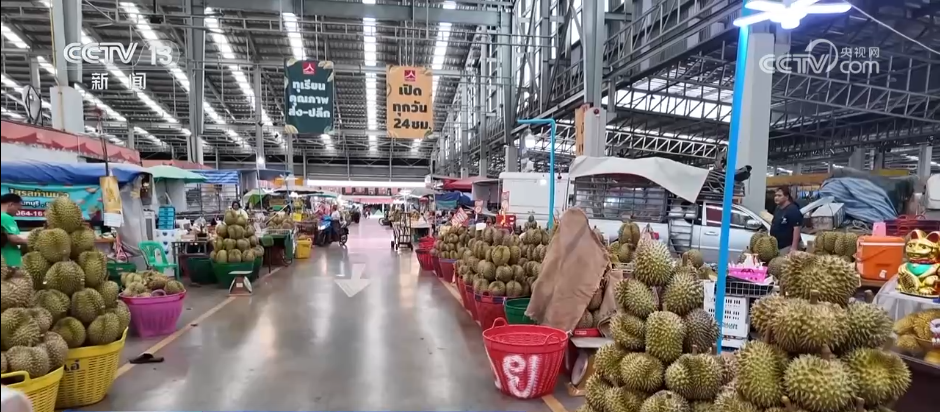
Group 1 - The core concept of the green agricultural chain is to connect the entire process from production to consumption, emphasizing sustainability and efficiency [1][5] - The green agricultural chain includes various stages such as agricultural research, production, processing, storage, transportation, sales, branding, and consumer services, all characterized by eco-friendly practices [1][3] - The integration of smart manufacturing and preservation technologies in processing helps maintain the taste and nutritional value of agricultural products [3][9] Group 2 - Thailand is the largest supplier of durian to China, with an improved supply chain facilitating faster and more convenient access to the Chinese market [7][9] - The demand for "green durian" has increased, leading to a low-carbon transformation in the durian industry, including organic farming and eco-friendly processing methods [9][11] - The introduction of cold chain transportation via the China-Laos railway has significantly enhanced the efficiency and reduced carbon emissions in the logistics of tropical fruits, particularly durian [11][13]
土耳其:对涉华家用电动厨房器具用的刀反倾销措施即将到期
news flash· 2025-07-18 05:55
Core Viewpoint - Turkey's Ministry of Trade announced the expiration of anti-dumping measures on electric kitchen appliance knives from China, set to end on March 24, 2026, with stakeholders required to submit sunset review applications three months prior [1] Group 1: Anti-Dumping Measures - The anti-dumping investigation against Chinese electric kitchen appliance knives began on January 15, 2009 [1] - An anti-dumping tax of $20.85 per kilogram was officially imposed on June 18, 2009 [1] - Turkey conducted two sunset reviews, resulting in affirmative decisions to extend the tax period on May 23, 2015, and March 24, 2021 [1] Group 2: Regulatory Details - The relevant Turkish tax code for the products in question is 8208.30.00.00.00 [1] - The announcement is effective immediately upon publication [1]