春秋航空

Search documents
国泰海通交运周观察:元旦航空量价两旺,油运淡季运价回落
GUOTAI HAITONG SECURITIES· 2026-01-04 08:06
Investment Rating - The report maintains an "Overweight" rating for the aviation and oil transportation sectors, indicating a positive outlook for both industries [35]. Core Insights - The aviation sector is expected to see robust demand growth, driven by increased travel during the New Year holiday, with significant year-on-year increases in both passenger volume and ticket prices. The report suggests a strategic investment during the off-peak season, anticipating a long-term super cycle [3][4]. - In the oil transportation sector, while seasonal price declines are noted, the report emphasizes the potential for future price increases due to ongoing global oil production growth and limited capacity expansion. It recommends a contrarian investment approach during the off-peak period [3][4]. Summary by Sections Aviation Sector - The report highlights a strong increase in travel demand during the New Year holiday, with a 19% year-on-year increase in overall passenger movement from December 31, 2025, to January 2, 2026. Specifically, civil aviation saw a 13% increase [3][4]. - Domestic ticket prices are estimated to rise by over 10% year-on-year during the holiday period, despite a projected short-term dip in passenger flow post-holiday [3][4]. - The aviation industry is experiencing high load factors while ticket prices remain at historical lows, suggesting a favorable environment for profitability growth driven by demand recovery and market pricing dynamics [3][4]. Oil Transportation Sector - The report notes that the average daily earnings for Very Large Crude Carriers (VLCC) reached $51,000 in 2025, significantly higher than the $36,000 in 2023-2024, driven by improved capacity utilization and increased oil production from the Middle East and South America [3][4]. - Despite a recent decline in freight rates during the traditional off-peak season, the report maintains a positive outlook for future price increases, supported by ongoing global oil production growth and limited fleet expansion [3][4]. - The report suggests monitoring geopolitical developments, particularly in Venezuela, and recommends increasing positions in companies like COSCO Shipping Energy, China Merchants Energy Shipping, and China Shipbuilding Leasing [3][4].

春秋航空(601021) - 春秋航空关于股份回购进展公告
2026-01-04 07:48
春秋航空股份有限公司 关于股份回购进展的公告 本公司董事会及全体董事保证本公告内容不存在任何虚假记载、误导性陈述 或者重大遗漏,并对其内容的真实性、准确性和完整性承担法律责任。 重要内容提示: 证券代码:601021 证券简称:春秋航空 公告编号:2026-001 根据《上市公司股份回购规则》《上海证券交易所上市公司自律监管指引第 7 号——回购股份》等相关规定,公司在回购股份期间,应当在每个月的前 3 个交 易日内公告截至上月末的回购进展情况。现将公司截至上月末回购股份的进展情 况公告如下: 2025 年 12 月,公司通过集中竞价交易方式已累计回购股份 2,463,800 股,占 公司目前总股本的比例为 0.2518%,购买的最高价为 54.99 元/股、最低价为 52.01 元/股,支付的金额为 132,148,114.00 元(不含交易佣金、过户费等交易费用)。 截至 2025 年 12 月 31 日,公司通过上海证券交易所交易系统以集中竞价交易 方式回购公司股份 3,208,350 股,占公司目前总股本的 0.3279%,回购最高价格为 人民币 55.99 元/股,回购最低价格为人民币 52.01 ...

国内“反内卷”叠加价格修复下关注航空和快递,海外美联储降息周期下推荐油散及大宗商品供应链
Zhong Guo Neng Yuan Wang· 2026-01-04 01:47
Core Viewpoint - The report from Zhongyin Securities highlights a recovery in domestic CPI and PPI, alongside a continued interest rate cut cycle by the Federal Reserve, suggesting potential investment opportunities in the transportation sector, particularly in aviation and express delivery, as well as in oil and bulk commodity supply chains [1][2][3]. Group 1: Macro and Industry Analysis - Domestic CPI and PPI indices are showing signs of recovery, while the Federal Reserve remains in a rate-cutting cycle [2][3]. - The express delivery industry is experiencing a narrowing of price declines due to ongoing "anti-involution" efforts, with average express delivery prices stabilizing [3][4]. - In aviation, ticket prices have shown significant recovery, with the average domestic ticket price in October 2025 reaching 809 yuan, a year-on-year increase of 7.6% [3][4]. Group 2: Investment Opportunities - Two main investment themes are identified: 1. Opportunities in aviation and express delivery driven by "anti-involution" and price recovery in the domestic market [2][6]. 2. Investment prospects in oil and bulk commodity supply chains during the Federal Reserve's rate-cutting cycle [2][5]. - Recommended companies in the express delivery sector include Jitu Express, Yunda Holdings, and SF Holdings, while in aviation, China National Airlines and China Eastern Airlines are highlighted [6]. Group 3: Bulk Commodity and Shipping Insights - Oil shipping rates have been rising, with OPEC's average crude oil production increasing by 3.4% year-on-year, and significant growth in imports from Brazil [5]. - The bulk shipping sector is benefiting from increased iron ore shipments from Brazil and Australia, with the BDI index showing upward trends [5]. - Major commodity supply chains are entering a replenishment phase, with improvements in the performance of companies like Xiamen Xiangyu [5].
国内“反内卷”叠加价格修复下关注航空和快递,海外美联储降息周期下推荐油散及大宗商品供应链 | 投研报告
Sou Hu Cai Jing· 2026-01-04 01:47
Core Viewpoint - The report from Zhongyin Securities highlights a recovery in domestic CPI and PPI indices, alongside the ongoing interest rate cuts by the Federal Reserve, suggesting potential investment opportunities in the transportation sector, particularly in aviation and express delivery, as well as in oil and bulk commodity supply chains [1][2][3]. Group 1: Macro and Industry Analysis - Domestic CPI and PPI indices are showing signs of recovery, while the Federal Reserve remains in a rate-cutting cycle [2][3]. - The express delivery industry is experiencing a narrowing of price declines due to the ongoing "anti-involution" trend, with a notable improvement in air ticket prices and rising shipping rates in oil and bulk transport [1][2][3]. - The average price of express delivery per ticket in October 2025 was 7.48 yuan, reflecting a year-on-year decline of 3.00%, which is an improvement from the previous month's decline of 4.91% [3][4]. Group 2: Investment Opportunities - Two main investment themes are identified: 1. Opportunities in aviation and express delivery driven by the "anti-involution" trend and price recovery in the domestic market [2][6]. 2. Investment prospects in oil and bulk commodity supply chains during the Federal Reserve's rate-cutting cycle [2][6]. - Recommended companies in the express delivery sector include Jitu Express, Yunda Holdings, and SF Express, while in aviation, China Eastern Airlines and China Southern Airlines are highlighted [6]. Group 3: Sector-Specific Insights - The express delivery sector's growth rate has slowed, with a cumulative year-on-year growth of 16.10% from January to October 2025, and a single-digit growth in October [4]. - The average price of domestic air tickets in October 2025 was 809 yuan, showing a year-on-year increase of 7.6%, marking the best monthly performance of the year [3][4]. - In the oil transport sector, OPEC's average crude oil production from January to November was 27,484 thousand barrels per day, a year-on-year increase of 3.4% [5]. Group 4: Bulk Commodity Supply Chain - The bulk commodity supply chain is entering a replenishment cycle, with significant increases in iron ore shipments from Brazil and Australia, leading to a rise in the BDI freight index [5]. - Major commodity prices are showing signs of recovery, with companies like Xiamen Xiangyu reporting improved performance in the first three quarters [5].
2026年,民航十大展望!
Xin Lang Cai Jing· 2026-01-01 11:39
来源:民航之翼 2025 年民航业已稳稳站在常态化发展新起点,旅客运输量创下历史新高,航司盈利实现实质性突破。 迈入 2026 年,行业将迎来供需格局重塑、政策红利释放、创新动能集聚的关键一年,翼哥继续为大家 带来新一年民航十大展望。 整体而言,2026年民航业"中性偏乐观"! 一、增长新常态:中速增长 2026年将是十五五的开局之年,民航业将迎来一个全新的开始。 2026年,行业将彻底告别以2019年为基准的恢复性话语体系。 民航的增速值得关注。 中央经济工作会提出的"盘活存量、左右增量"对民航业显得尤为重要。 未来对民航业来说,存量越来越大,增量越来越小,甚至有一天增量为负也不是不可能。 过去民航业的增速与GDP的增速有个乘数效应,大概是在1.4-1.5左右。 也就是说,民航业增速是GDP增速的1.4-1.5倍。 但未来可能这个乘数效应慢慢消失,与GDP增速趋同,甚至还低于GDP增速。 预计2026年民航业增速在5%左右,但客座率将维持高位,甚至高于2025年。 2026年将呈现"中速增长、高客座率"的增长新常态。 二、规模新突破:首破8亿人次 2025 年全民航旅客运输量顺利达成 7.7 亿人次的预期目 ...
航空板块重点推荐-人民币升值下的-春季躁动-机会
2025-12-31 16:02
Summary of Key Points from Conference Call Industry Overview - The focus is on the aviation sector, particularly in the context of the appreciation of the Renminbi (RMB) and its impact on various industries including airports and light industry paper manufacturing [1][3]. Core Insights and Arguments - The appreciation of the RMB is expected to enhance the financial performance of sectors like aviation and light industry paper due to improved cost and debt structures [1][3]. - Historical data indicates that different sectors lead the market during phases of rapid RMB appreciation, with core assets leading in 2017, new energy and military industries in 2020-2021, and economic recovery valuation logic in late 2022 to early 2023 [1][6]. - The current phase of RMB appreciation differs from previous ones, with reduced foreign capital influence and increased domestic pricing power, shifting market focus towards technological transformation rather than mere economic recovery [1][7]. - The aviation sector is highlighted as a key beneficiary, with significant cost components (over 60%) being dollar-denominated, meaning even slight RMB appreciation can lead to substantial profit increases [3][9]. Investment Opportunities - Short-term investment opportunities are identified in the aviation and light industry paper sectors, particularly as companies prepare to release annual reports [1][8]. - The second tier of investment opportunities includes foreign-invested blue-chip stocks such as electric equipment, electronics, and food and beverage sectors, which have shown resilience during past RMB appreciation phases [5]. - The third tier includes large financial and real estate sectors, which have a high proportion of RMB-denominated assets, benefiting from balance sheet improvements during RMB appreciation [5]. Additional Important Insights - The global aircraft manufacturing industry is facing supply chain bottlenecks due to de-globalization, affecting the availability of materials and components [11]. - The performance of Chinese airlines has significantly outpaced the Shanghai and Shenzhen 300 index, driven by increased international route demand and favorable pricing dynamics [12]. - Airlines like China Southern, China Eastern, Air China, and budget carriers such as Spring Airlines are identified as high-elasticity investment opportunities due to their potential recovery from historical lows [3][12]. - The upcoming delivery of new aircraft orders (e.g., Spring Airlines and Juneyao Airlines) is expected to support fleet updates and future growth [10].



中国航司年末集体订购148架飞机
Di Yi Cai Jing Zi Xun· 2025-12-31 14:32
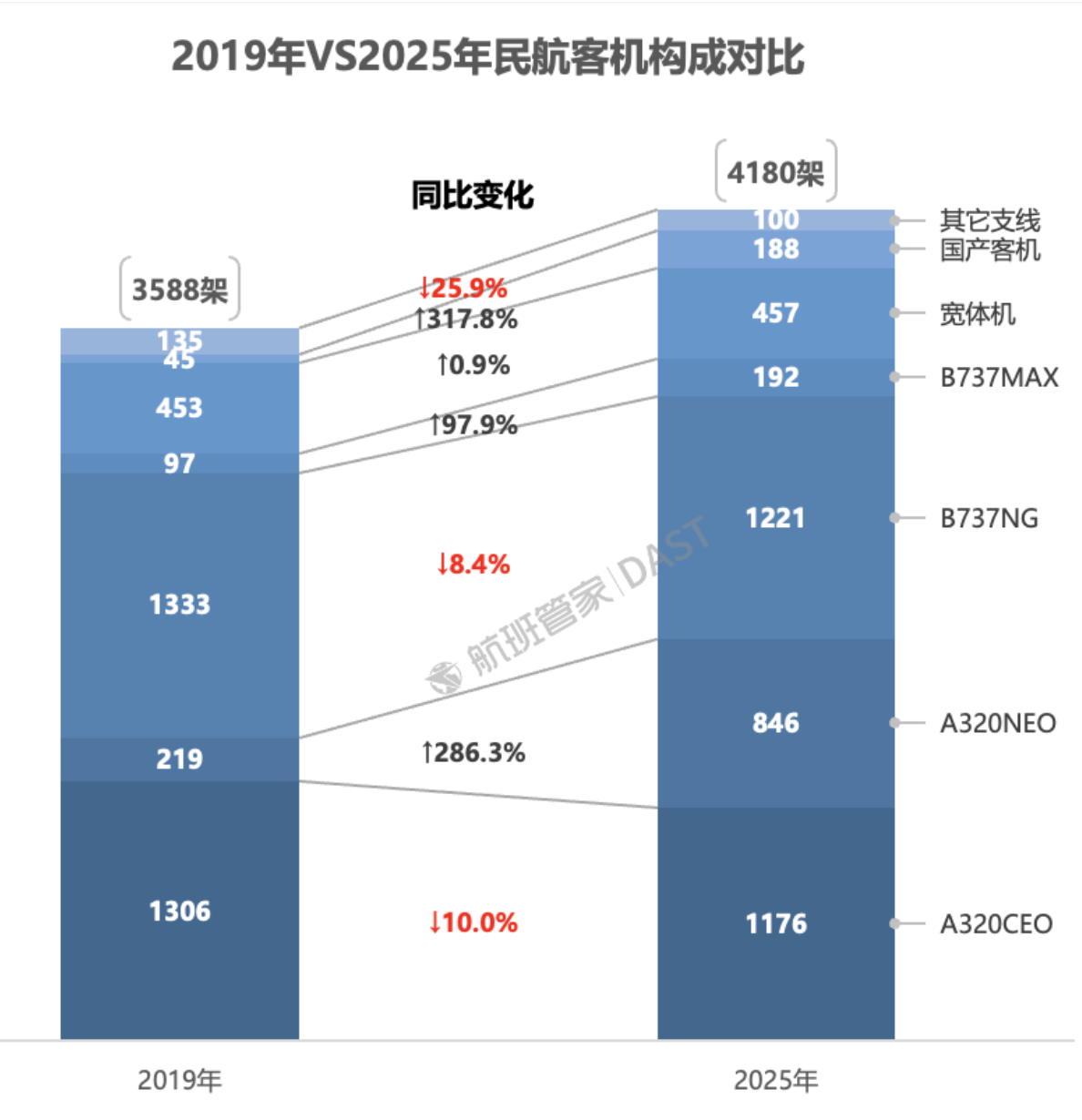
Core Insights - Multiple domestic airlines in China have signed agreements with Airbus to purchase a total of 148 A320 series aircraft, indicating strong demand for narrow-body planes in the market [2][5]. Group 1: Aircraft Orders - Air China and its subsidiary signed a purchase agreement for 60 A320neo aircraft, with a total catalog price of approximately $9.53 billion, scheduled for delivery between 2028 and 2032 [3]. - Huaxia Airlines ordered 3 A320 series aircraft, expected to be delivered over three years starting in 2030, pending government approval [3]. - Spring Airlines and Juneyao Airlines announced orders for 30 and 25 A320neo aircraft, respectively, with delivery planned between 2028 and 2032 [3]. - China Aircraft Leasing Company also signed an agreement for 30 A320neo aircraft, with deliveries planned before 2033 [4]. Group 2: Market Trends - Airbus has seen a significant increase in orders from China, with a market share expected to exceed Boeing's, reaching 55% by 2025 [5]. - The demand for narrow-body aircraft is rising, with older models like A320CEO and B737NG decreasing by 10% and 8.4%, while new models A320neo and B737max have surged by 286.3% and 97.9% respectively [8]. - The introduction of wide-body aircraft has stagnated, with only a net increase of 4 aircraft from 2019 to 2025, largely due to slow recovery in international routes [9]. Group 3: Operational Challenges - Airlines are facing operational challenges due to engine shortages, leading to increased grounded aircraft and delayed new deliveries [7]. - The International Air Transport Association reported over 5,000 grounded aircraft, the highest level historically, exacerbated by trade tensions affecting supply chains [7]. - Despite the operational challenges, the current tightness in capacity has somewhat alleviated the oversupply in the domestic market [7].



中国航司年末集体订购148架飞机
第一财经· 2025-12-31 13:06
Core Viewpoint - Multiple domestic airlines in China have signed significant aircraft purchase agreements with Airbus, totaling 148 A320 series aircraft, indicating a strong demand for narrow-body planes despite current market challenges [3][8]. Group 1: Aircraft Orders - China National Airlines and its subsidiary signed an agreement to purchase 60 A320neo aircraft, with a total list price of approximately $9.53 billion, scheduled for delivery between 2028 and 2032 [5]. - Spring Airlines and Juneyao Airlines announced orders for 30 and 25 A320neo aircraft, respectively, with total prices of up to $4.128 billion and approximately $4.1 billion, to be delivered from 2028 to 2032 [6]. - China Aircraft Leasing Company ordered 30 A320neo aircraft, with deliveries planned before 2033 [7]. Group 2: Market Dynamics - Airbus has secured a total of 148 aircraft orders from China in a short period, reflecting a growing trend of large orders from Chinese airlines [8]. - By 2025, Airbus is expected to hold a market share of over 55% in China, making it the largest single-country market for the company [9]. - The global second-largest aircraft leasing company, Avolon, indicated that popular aircraft models like the Boeing 737 MAX and Airbus A320neo are sold out by 2030, highlighting strong demand [9]. Group 3: Operational Challenges - The recent aircraft orders may be a strategic move to secure aircraft availability and mitigate operational challenges caused by engine shortages, which have led to increased grounded aircraft [11]. - The International Air Transport Association reported that over 5,000 aircraft are currently grounded, the highest level in history, exacerbated by supply chain issues due to U.S.-China trade tensions [11]. - Despite the current overcapacity in the domestic market, the introduction of new aircraft is slowing, with the fleet size growing at a compound annual growth rate of 2.6% from 2019 to 2025 [12]. Group 4: Aircraft Type Trends - The introduction of wide-body aircraft has nearly stagnated, with only a net increase of 4 aircraft from 2019 to 2025, primarily due to slow recovery in international routes [13]. - The domestic market is seeing a shift towards narrow-body aircraft, with significant increases in new models like the A320neo and B737 MAX, while older models are being phased out [12][13]. - The share of domestic aircraft in the fleet has increased from 1.3% in 2019 to 4.5%, indicating a growing presence of domestic manufacturers in the narrow-body market [13].

148架!中国航司年末给空客送大单,运力过剩为何还要买飞机
Di Yi Cai Jing· 2025-12-31 11:45
Core Insights - Airbus has secured a significant order for 148 narrow-body aircraft from multiple Chinese airlines, indicating strong demand in the narrow-body segment [1][5]. Group 1: Aircraft Orders - China National Airlines and its subsidiary signed a purchase agreement for 60 Airbus A320neo aircraft, with a total catalog price of approximately $9.53 billion, scheduled for delivery between 2028 and 2032 [2]. - Huaxia Airlines ordered 3 A320 series aircraft, while Spring Airlines and Juneyao Airlines ordered 30 and 25 A320neo aircraft, respectively, with deliveries planned from 2028 to 2032 [3]. - China Aircraft Leasing Company also signed an agreement for 30 A320neo aircraft, with deliveries expected before 2033 [4]. Group 2: Market Dynamics - Airbus's market share in China is projected to exceed Boeing's, reaching 55% by 2025, making China Airbus's largest single-country market for several consecutive years [6]. - The global second-largest aircraft leasing company, Avolon, indicated that models like Boeing 737 MAX and Airbus A320neo are expected to be sold out by 2030, highlighting the demand for these narrow-body aircraft [6]. Group 3: Production Capacity - To meet increasing demand, Airbus is enhancing its production capacity by activating a second A320 assembly line in Tianjin, aiming for a monthly production target of 75 A320 aircraft by 2027 [7]. Group 4: Industry Challenges - The recent aircraft orders may be a strategic move by Chinese airlines to secure aircraft availability and mitigate operational challenges caused by engine issues, which have led to temporary groundings [8]. - Despite a shortage of new aircraft, over 5,000 grounded planes represent a historical high, exacerbated by trade tensions affecting supply chains and increasing maintenance costs [8]. - The domestic market is experiencing a slowdown in fleet growth, with a projected fleet size of 4,180 aircraft by the end of 2025, reflecting a compound annual growth rate of 2.6% since 2019 [8]. Group 5: Aircraft Composition - The narrow-body aircraft segment is seeing a shift, with older models like A320 CEO and B737 NG decreasing by 10% and 8.4%, while new models like A320neo and B737 MAX have surged by 286.3% and 97.9% respectively [9]. - The introduction of wide-body aircraft has stagnated, with only a net increase of 4 aircraft from 2019 to 2025, largely due to slow recovery in international routes [10]. - Domestic airlines are accelerating the retirement of older wide-body aircraft, focusing on acquiring narrow-body models, which explains the recent orders being exclusively for narrow-body aircraft [10].
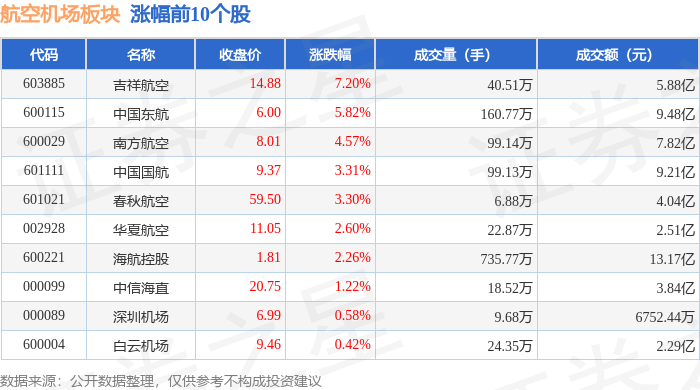
航空机场板块12月31日涨3.31%,吉祥航空领涨,主力资金净流入1.85亿元
Zheng Xing Xing Ye Ri Bao· 2025-12-31 09:07
Core Insights - The aviation and airport sector experienced a significant increase of 3.31% on December 31, with Juneyao Airlines leading the gains [1] - The Shanghai Composite Index closed at 3968.84, up 0.09%, while the Shenzhen Component Index closed at 13525.02, down 0.58% [1] Stock Performance - Juneyao Airlines (603885) closed at 14.88, up 7.20%, with a trading volume of 405,100 shares and a transaction value of 588 million yuan [1] - China Eastern Airlines (600115) closed at 6.00, up 5.82%, with a trading volume of 1,607,700 shares and a transaction value of 948 million yuan [1] - Southern Airlines (600029) closed at 8.01, up 4.57%, with a trading volume of 991,400 shares and a transaction value of 782 million yuan [1] - Air China (601111) closed at 9.37, up 3.31%, with a trading volume of 1,991,300 shares and a transaction value of 921 million yuan [1] - Spring Airlines (601021) closed at 59.50, up 3.30%, with a trading volume of 68,800 shares and a transaction value of 404 million yuan [1] Capital Flow - The aviation and airport sector saw a net inflow of 185 million yuan from institutional investors, while retail investors experienced a net outflow of 209 million yuan [2] - The net inflow from speculative funds was 23.96 million yuan [2] Individual Stock Capital Flow - Hainan Airlines (600221) had a net inflow of 104 million yuan from institutional investors, but a net outflow of 22.42 million yuan from retail investors [3] - China Eastern Airlines (600115) saw a net inflow of 54.73 million yuan from institutional investors, with a net outflow of 73.04 million yuan from retail investors [3] - Air China (601111) had a net inflow of 46.63 million yuan from institutional investors, while retail investors experienced a net outflow of 77.78 million yuan [3] - Southern Airlines (600029) recorded a net inflow of 18.42 million yuan from institutional investors, with a net outflow of 40.39 million yuan from retail investors [3]