美的集团

Search documents
十论广货④丨科技遇见人文,造就“新广货”竞争力
2 1 Shi Ji Jing Ji Bao Dao· 2026-02-09 23:12
Core Insights - The "Guangdong Goods Going Global" initiative represents a significant transformation in China's manufacturing industry, showcasing Guangdong's strength as the leading manufacturing province in China [1][4] - Guangdong produces a substantial portion of the world's electronics, with statistics indicating that for every two televisions and three air conditioners produced in China, one is made in Guangdong [1] - The shift from factor-driven to innovation-driven growth in Guangdong's manufacturing sector highlights the evolution of local companies from OEMs to world-class brands [2][4] Group 1: Manufacturing Strength - Guangdong accounts for 70% of consumer drones, 18% of integrated circuits, and 40% of industrial robots in China, emphasizing its manufacturing dominance [1] - The province has developed a comprehensive industrial ecosystem, enabling rapid production response and innovation efficiency through close collaboration among various sectors [1][4] - The "Shunde-Zhongshan home appliance cluster" exemplifies successful industrial collaboration, contributing nearly 30% of the province's home appliance revenue and fostering global brands like Midea and Galanz [1] Group 2: Innovation and Technology - The transition to innovation-driven growth has led to increased R&D investments, resulting in breakthroughs in core technologies and brand development [2] - Guangdong's new generation of products is characterized by a combination of "hardcore technology and cultural aesthetics," redefining its position in the global value chain [2][3] - Companies like DJI have overcome technical barriers, establishing new standards in aerial imaging and enhancing Guangdong's influence in high-value segments [2] Group 3: Cultural Integration and Market Adaptation - Cultural elements from Guangdong, such as traditional arts and games, are being integrated into modern products, shifting the competitive landscape from price to cultural recognition [3] - Digital technologies are transforming production and sales ecosystems, significantly reducing production cycles and enhancing responsiveness to market demands [3] - The "Guangdong Goods Going Global" initiative is leveraging multi-channel marketing strategies, achieving impressive sales figures in both online and offline platforms [3] Group 4: Future Outlook - The initiative is expected to drive a shift from "manufacturing products" to "manufacturing aesthetics," pushing companies to enhance product quality and brand value [4] - The integration of smart manufacturing and cultural elements in regions like Beijiao Town serves as a model for harmonizing industrial and cultural development [4] - Guangdong's evolution from imitation to leadership in manufacturing reflects a broader systemic transformation, offering a replicable model for global manufacturing [4]
科技遇见人文,造就“新广货”竞争力
2 1 Shi Ji Jing Ji Bao Dao· 2026-02-09 21:56
Core Insights - The "Guangdong Goods Going Global" initiative represents a significant transformation in China's manufacturing industry, showcasing Guangdong's strength as the leading manufacturing province in China [1][6] - Guangdong produces a substantial share of various consumer goods, including 50% of the world's mobile phones and 40% of industrial robots in China, highlighting its critical role in global supply chains [1][6] Group 1: Manufacturing Strength - Guangdong accounts for 50% of the world's mobile phones, 70% of consumer drones, and 18% of integrated circuits, emphasizing its manufacturing dominance [1] - The province has developed a comprehensive industrial ecosystem, enabling rapid production response and innovation efficiency through "one-hour supply" and "one-hour industrial circles" [1][6] Group 2: Evolution of the Industry - The "Shunde-Zhongshan Home Appliance Cluster" in Foshan exemplifies the evolution from independent competition to collaborative synergy, contributing nearly 30% of the province's home appliance revenue [3] - Guangdong's manufacturing has shifted from factor-driven to innovation-driven, with increased R&D investments post-2008 financial crisis leading to breakthroughs in core technologies and brand development [3][4] Group 3: Technological and Cultural Integration - The new generation of Guangdong goods is driven by "hardcore technology + cultural aesthetics," redefining global value chains and transitioning from merely meeting demand to creating demand [4][6] - Digital technologies are reshaping production and sales ecosystems, significantly reducing production adjustment cycles and enhancing market responsiveness [5] Group 4: Future Outlook - The "Guangdong Goods Going Global" initiative is expected to focus on transitioning from "manufacturing products" to "manufacturing aesthetics," pushing companies to enhance product quality and brand value [5][6] - The integration of smart manufacturing and cultural elements in places like Beijiao Town serves as a model for harmonizing industrial development with humanistic values [5][6]


四季度主动权益基金主动加仓前四大行业:金属、化学品、保险和机械设备
Changjiang Securities· 2026-02-09 11:38
[Table_Title] 四季度主动权益基金主动加仓前四大行业: 金属、化学品、保险和机械设备 金融工程丨深度报告 %% %% %% %% research.95579.com 1 丨证券研究报告丨 报告要点 [Table_Summary] 与 2025 年三季报相比,2025 年四季度主动权益基金增持最多的四个行业为电信业务(1.90 pct)、金属材料及矿业(1.90pct)、化学品(1.10 pct)和保险(0.94 pct)。从主动调仓角度来 看,主动加仓最多的四个行业分别是金属材料及矿业(0.99 pct)、化学品(0.86 pct)、保险(0.77 pct)和机械设备(0.59 pct)。剔除行业主题基金影响后,主动加仓最多的四个行业分别是保险 (1.03pct)、金属材料及矿业(0.90pct)、化学品(0.86pct)和机械设备(0.62pct)。 分析师及联系人 [Table_Author] 覃川桃 杨凯杰 SAC:S0490513030001 SAC:S0490525080004 SFC:BUT353 请阅读最后评级说明和重要声明 2 / 31 %% %% %% %% research. ...
广东人大2025履职印记:以法治硬保障擘画现代化新篇章
Xin Hua Wang· 2026-02-09 08:56
2025年是广东推进中国式现代化建设的关键之年,也是省人大及其常委会在立法、监督、代表工作领域 协同发力、深耕有为的一年。 这一年,聚焦重点领域与新兴领域立法,助力城市轨道交通互联互通、粤港澳气象合作提速;为促进海 洋经济高质量发展,省人大常委会主要负责同志带队,8个小组分赴十余地市开展岸线保护利用执法检 查,清单式查摆问题、台账化推进整改;围绕现代化产业体系建设,2万余名人大代表开展深调研1785 场次,精准建言献策。 这一年,广东省人大常委会制定修改法规、决定项目19件;批准设区的市、自治县法规、决定项目66 项;开展监督工作项目33件;依托数字人大平台,1万多个人大代表联络站拓宽代表密切联系群众渠 道……为广东在推进中国式现代化建设中走在前列提供坚实法治保障。 以高质量立法服务大局护航发展 早上在广州叹早茶,中午到佛山吃顺德菜,下午去肇庆爬鼎湖山……粤港澳大湾区"1小时生活圈"因轨 道交通的加速融合而变得触手可及。然而,这"一张网、一串城"便捷体验的背后,曾面临干线铁路、城 际铁路、市域铁路、城市轨道交通"四网"制式不一、标准各异、管理分散的深层梗阻,制约了网络整体 效能。 为破解从"线"到"网"升级的 ...
中国电子设备行业展望
Zhong Cheng Xin Guo Ji· 2026-02-09 08:22
Investment Rating - The investment outlook for the electronic equipment industry is rated as stable for the next 12 to 18 months [3][4][37]. Core Insights - The electronic equipment industry in China is expected to maintain a stable credit level in 2026, supported by favorable policies and AI computing power, despite challenges from international trade policy adjustments and rising core material prices [3][7]. - The industry is characterized by a strong operational resilience since 2025, with differentiated performance across sub-sectors, including stable growth in home appliances and computers, strong growth in communication equipment, and moderate recovery in smart consumer devices [18][19][23][27]. - The macroeconomic environment is projected to remain neutral, with ongoing uncertainties in global tariff policies impacting the industry [6][8]. Industry Fundamental Analysis - The electronic equipment industry is expected to face a mixed environment in 2026, with supportive policies like "old-for-new" programs boosting domestic demand while international trade tensions and material cost increases pose challenges [7][9]. - The "old-for-new" policy has significantly stimulated market demand, with over 129 million home appliances and 91 million digital products exchanged, generating sales exceeding 2.6 trillion yuan [9][10]. - The overall credit risk in the industry is manageable, with no bond defaults or extensions reported in 2025, indicating a stable credit quality outlook for 2026 [37][38]. Sub-sector Analysis Home Appliances - The home appliance sector is expected to see a moderate recovery driven by policy support and structural upgrades, despite facing pressures in specific product categories like televisions [19][21]. - The market dynamics show a concentration of competition among leading brands, with smaller players struggling to survive due to intense competition and pricing pressures [38][39]. Computer Equipment - The server segment is experiencing robust growth, particularly in AI servers, with a projected shipment of 486,000 units in 2025, reflecting a 15.4% year-on-year increase [23][24]. - The personal computer market is stable, with government and large enterprise demand driving growth, while consumer demand remains flat due to rising component prices [25][26]. Communication Equipment - The communication equipment sector is benefiting from strong demand for optical fibers and data center switches, with significant growth expected in 2026 [27][28]. - The market for optical fibers is projected to continue its upward trend, supported by increased procurement from major telecom operators and a growing need for high-end products [28][30]. Smart Consumer Devices - The smart consumer device market is facing challenges due to prolonged replacement cycles and rising costs, with expectations of a decline in overall shipment volumes in 2026 [32][36]. - The smartphone market is particularly affected, with a slight decrease in shipments anticipated due to market saturation and lack of innovation [32][33].
智通AH统计|2月9日
智通财经网· 2026-02-09 08:17
Core Insights - The article highlights the top and bottom AH premium rates for various stocks, indicating significant discrepancies between H-shares and A-shares [1] Group 1: Top AH Premium Rates - Northeast Electric (00042) has the highest AH premium rate at 831.03%, with H-share priced at 0.290 HKD and A-share at 2.25 CNY [1] - Zhejiang Shibao (01057) follows with a premium rate of 347.33%, H-share at 5.810 HKD and A-share at 21.7 CNY [1] - Sinopec Oilfield Service (01033) ranks third with a premium rate of 304.44%, H-share at 0.900 HKD and A-share at 3.04 CNY [1] Group 2: Bottom AH Premium Rates - Contemporary Amperex Technology (03750) has the lowest AH premium rate at -13.97%, with H-share priced at 513.500 HKD and A-share at 368.82 CNY [1] - China Merchants Bank (03968) has a premium rate of -3.80%, H-share at 49.220 HKD and A-share at 39.53 CNY [1] - Heng Rui Medicine (01276) shows a minimal premium rate of -0.35%, with H-share at 69.050 HKD and A-share at 57.45 CNY [1] Group 3: Top Deviation Values - Sinopec Oilfield Service (01033) leads in deviation value at 26.29%, indicating a significant difference from its average premium rate [1] - Beijing Jingcheng Machinery Electric (00187) has a deviation value of 22.66% [1] - Longpan Technology (02465) ranks third with a deviation value of 19.24% [1] Group 4: Bottom Deviation Values - Junda Co., Ltd. (02865) has the lowest deviation value at -66.46%, indicating a substantial drop from its average premium rate [1] - Zhejiang Shibao (01057) follows with a deviation value of -42.67% [1] - Yangtze Optical Fibre and Cable (06869) shows a deviation value of -33.26% [1]


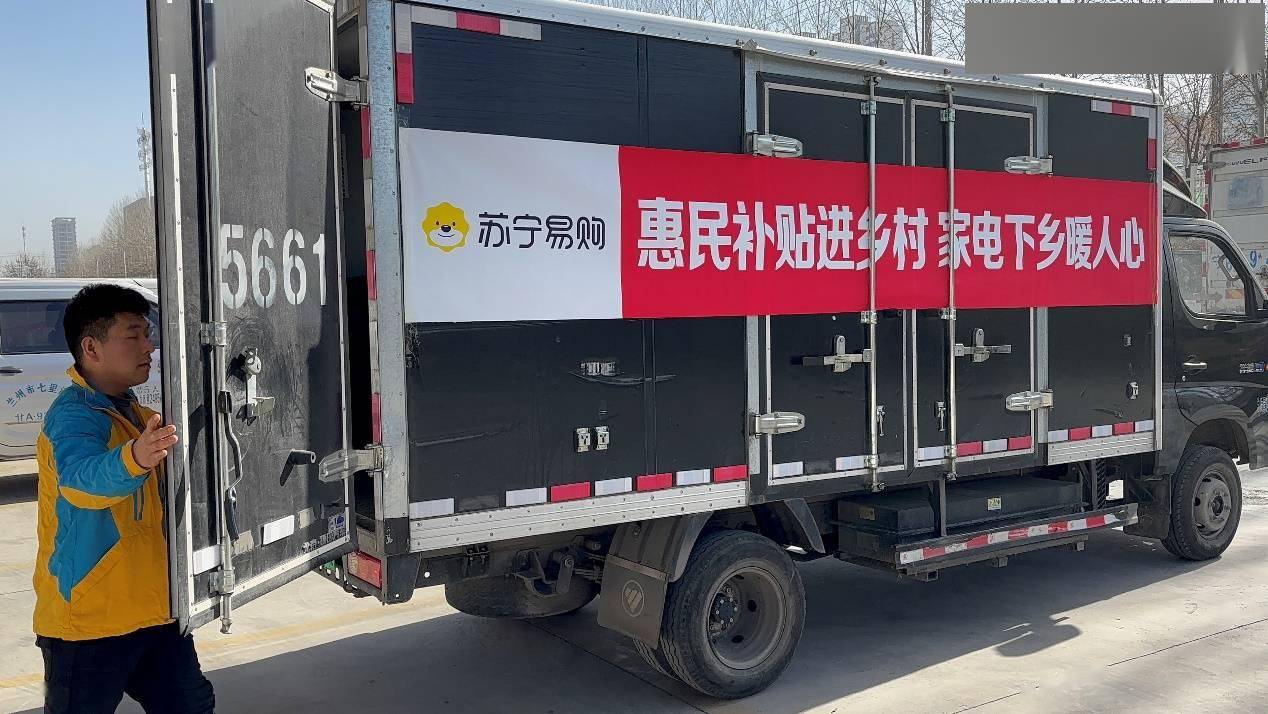
增长51%!苏宁零售云新智家电下乡迎“开门红”
Sou Hu Cai Jing· 2026-02-09 07:39
Core Insights - The 2026 Central Document emphasizes the modernization of agriculture and rural areas, supporting rural consumption upgrades and the recycling of old appliances [1] Group 1: Company Initiatives - Suning Retail Cloud plans to leverage the upcoming New Year Festival to launch the "Subsidy for Rural Areas" initiative across over 10,000 stores, enhancing rural consumer access to smart appliances [1][4] - The company is focusing on a "walk into villages" service model to facilitate the exchange of old appliances and promote consumption policies [1][4] Group 2: Market Trends - The county market is experiencing a generational shift in consumer demographics, with younger consumers prioritizing quality and digital experiences [3] - There is a transition in household consumption from basic appliances to a demand for smart, healthy, and comfortable home experiences [3] Group 3: Sales Performance - In January 2026, Suning Retail Cloud reported a 51% year-on-year increase in sales, with significant growth in "burden-reducing" and "atmospheric" appliances [6] - Specific product sales saw remarkable increases: robotic vacuum sales up 147%, dishwashers up 83%, and large-screen TVs up 75% [6] Group 4: Strategic Developments - Suning Retail Cloud is enhancing its large store strategy, with 24.10% of new franchise stores being large format, providing ample space for experiential retail [3] - The integration of local cultural elements into the "Subsidy for Rural Areas" initiative aims to create a festive atmosphere while facilitating consumer engagement [4][8] Group 5: Future Outlook - The comprehensive rollout of the "Subsidy for Rural Areas" initiative is expected to amplify the synergy between policy and market, invigorating the New Year consumption market [8] - The deep service model being explored by Suning Retail Cloud is anticipated to unlock further potential in rural consumption and improve residents' quality of life through smart appliance adoption [8]

2026中国十大消费品行业GEO现状及趋势研究报告2026
亿欧智库· 2026-02-09 06:25
Investment Rating - The report does not explicitly provide an investment rating for the industry. Core Insights - The transition from SEO (Search Engine Optimization) to GEO (Generative Engine Optimization) represents a fundamental shift in digital marketing, driven by generative AI technologies that change how brands interact with consumers [5][12][15]. - The report emphasizes the importance of understanding and mastering GEO logic for brands to capture new growth opportunities in the evolving digital landscape [6][36]. - The industry shows a clear tiered structure in GEO maturity, with significant disparities in development levels across different consumer goods sectors [41][49]. Summary by Sections Chapter 1: Background of the Transition from SEO to GEO - The shift from SEO to GEO is characterized by a change in search paradigms, where users now seek direct answers through natural language queries rather than keyword-based searches [11][15]. - Generative AI is reshaping the logic of brand exposure, requiring brands to adapt their strategies to ensure their products and narratives are accurately understood and recommended by AI [5][6]. Chapter 2: Overview of GEO Status in the Consumer Goods Industry - The report presents a GEO maturity index that categorizes the top ten consumer goods industries into three tiers: high maturity, medium maturity, and low maturity [49][50]. - Key indicators such as visibility, recommendation rate, and content quality are used to assess the performance of brands within these tiers [60][61]. Chapter 3: In-Depth Analysis of Key Consumer Goods Industries - The report highlights the top 50 brands in the consumer goods sector, with a focus on the home appliance, digital 3C, and maternal and infant industries, which are leading in GEO maturity [70][72]. - High maturity industries like home appliances and digital 3C benefit from standardized data and structured content, allowing for precise AI learning and logical reasoning [53][56]. Chapter 4: GEO Brand Rankings - The report provides a ranking of brands based on their GEO index, which is calculated from visibility, recommendation rate, and content quality [72][74]. - Brands such as Apple, Huawei, and Haier lead the rankings, showcasing high visibility and recommendation rates [72]. Chapter 5: Analysis of GEO Content Ecosystem and Implementation Guide - The report outlines the characteristics of effective brand content in the GEO era, emphasizing semantic richness, factual accuracy, and narrative coherence [30][34]. - Brands are encouraged to create content that is not only informative but also structured in a way that is easily understood by AI [34][36]. Chapter 6: Future Trends and Outlook - The report anticipates that brands that quickly adapt to the GEO landscape will secure a competitive advantage, as the digital marketing environment continues to evolve [6][41]. - It highlights the need for brands to build a robust semantic correction mechanism to monitor and correct AI-generated content related to their brand [45].




上证指数重返4100点、站稳5日线,多家机构建议“持股过节”
Mei Ri Jing Ji Xin Wen· 2026-02-09 06:01
Group 1 - The last week before the Spring Festival saw a rally in sectors such as non-ferrous metals, communications, and media, with the Shanghai Composite Index returning above 4100 points and stabilizing above the 5-day moving average [1] - Major stocks leading the index rebound include Zhongji Xuchuang (300308), Zijin Mining (601899), Xinyi Sheng (300502), and China Merchants Bank [1] - Multiple institutions recommend a "hold through the holiday" strategy, suggesting that the recent global narrative changes impacting market sentiment may be stabilizing, creating a favorable environment for market recovery [1] Group 2 - The current market is experiencing rapid structural rotation, making it risky to chase single industry themes; investors are advised to anchor to broad indices like the CSI 300 [2] - The CSI 300 Index consists of 300 representative securities from the Shanghai and Shenzhen markets, covering major sectors such as technology, cyclical, finance, and consumer [2] - As of now, there are over 30 ETFs related to the CSI 300 Index, with the lowest management fee for the Huaxia CSI 300 ETF at 0.15% per year [2]
从功能消费到情绪消费:2026,人们把家“买”成了什么样?
第一财经· 2026-02-09 06:00
Core Insights - The article emphasizes the transformation in consumer behavior from merely purchasing products to seeking comprehensive "home living solutions" that cater to emotional and experiential needs [1][3][60] Group 1: Consumer Trends - The demand for "ceremony" is shifting inward, focusing on self-care rather than social display, with 40.2% of individuals preferring to spend personal time at home and 77.8% willing to pay a premium for home products that provide emotional value [4][10] - The concept of "meta-scenes" is introduced, breaking down the abstract notion of home rituals into four actionable categories: "reset," "link," "light up," and "renew," which brands can leverage to connect with consumers [6][12] - The trend of "AI personalization" indicates that consumers are willing to invest in smart appliances that understand and meet their needs, moving away from cold, technical specifications to more human-like interactions [14][17] Group 2: Marketing Trends - The integration of online and offline channels is crucial, as consumers prefer immersive experiences in physical stores while valuing the convenience of online shopping [34][35] - Emotional resonance is becoming a key marketing strategy, with brands creating "emotional events" that connect with consumers' feelings rather than relying on traditional advertising methods [40][42] - Products must be contextualized within familiar life scenarios, allowing their functional value to naturally integrate into consumers' daily lives [48][49] Group 3: Future Predictions - The future of smart home technology will focus on "emotional alignment," where devices not only respond to commands but also anticipate user emotions and needs [55][56] - Brands will need to cater to specific consumer segments, offering tailored products that meet the unique demands of different demographics [57] - A shift towards providing "holistic value" will be essential, where brands offer comprehensive solutions that encompass functionality, emotional connection, and service throughout the product lifecycle [58][59]