问界

Search documents
车企抢滩“金九银十”销售旺季
Ren Min Ri Bao Hai Wai Ban· 2025-10-08 22:11
Group 1 - The automotive market in China is experiencing a surge in activity during the traditional peak sales months of September and October, with numerous new car launches aimed at attracting consumers [1][3] - Over 20 new car models were launched in the second half of September, covering a price range from 50,000 to 500,000 yuan, with significant sales reported for models like the new Audi A5L Sportback and the new XPeng P7 [1] - A new marketing strategy of "one price nationwide" has been adopted by many automakers, which sets a fixed and transparent sales price, enhancing brand credibility and consumer confidence [1] Group 2 - The "trade-in subsidy" has become a key marketing strategy, with 8.3 million applications for vehicle trade-ins reported as of September 10, indicating strong consumer interest [2] - Local governments are promoting car purchases through various incentives, such as the 560 million yuan subsidy program in Zhengzhou and a 5,000 yuan subsidy for new cars priced over 100,000 yuan in Guangzhou [2] - A new auto consumption loan interest subsidy policy, effective from September, has increased consumer engagement, with over 60% of buyers opting for financing options [2]
新车上市、“一口价”、贷款贴息——车企抢滩“金九银十”销售旺季
Ren Min Ri Bao Hai Wai Ban· 2025-10-08 21:31
Group 1 - The automotive market in China is experiencing a surge in activity during the traditional peak sales months of September and October, with numerous new car launches aimed at attracting consumers [1][3] - Over 20 new car models were launched in the second half of September, covering a price range from 50,000 to 500,000 yuan, with significant sales reported for models like the new Audi A5L Sportback and the new XPeng P7 [1] - A new marketing strategy of "national unified pricing" has emerged, where car manufacturers set a fixed and transparent sales price, enhancing brand credibility and consumer confidence [1] Group 2 - The "trade-in subsidy" has become a key marketing strategy, with 8.3 million applications for vehicle trade-ins reported as of September 10, indicating strong consumer engagement [2] - Local governments are promoting car purchases through initiatives like the 560 million yuan subsidy in Zhengzhou and a 5,000 yuan subsidy for new cars priced over 100,000 yuan in Guangzhou [2] - The implementation of a car consumption loan interest subsidy policy in September has increased consumer interest in financing options, with over 60% of consumers opting for loans to purchase vehicles [2]
中国“D级SUV”头号车型:今年前八个月,累计零售量已超8万台
Sou Hu Cai Jing· 2025-10-07 15:11
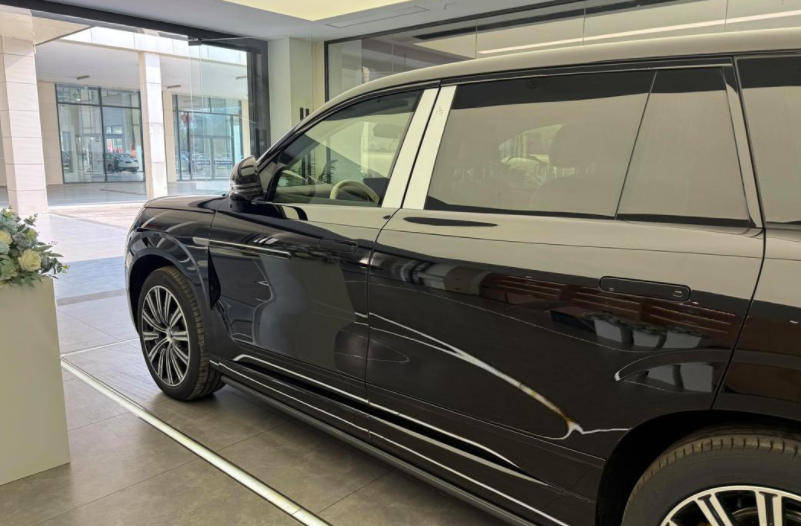
Core Insights - The D-class SUV market, once a niche segment, has become a vibrant and promising sector in the Chinese automotive industry, driven by technological advancements, consumer upgrades, and changes in family structures [4][19] Market Dynamics - D-class SUVs are characterized by their large size, typically exceeding 5 meters in length, and luxurious interiors, making them appealing to consumers seeking comfort and safety [2] - The rise of self-driving tourism has created new opportunities for the D-class SUV market, as these vehicles offer spacious interiors and strong off-road capabilities, enhancing travel experiences [5] Leading Brands and Performance - Key players in the D-class SUV market include Wanjie, Ideal, Lynk & Co, Tengshi, and Ledao, each leveraging unique strengths such as technological partnerships and innovative designs [5] - Wanjie M9 leads the sales with a cumulative retail volume of 82,599 units from January to August 2025, targeting high-end family users with its technological luxury [7][18] - Other notable models include Wanjie M8 with 78,285 units, Ideal L9 with 34,357 units, and Lynk & Co 900 with 28,667 units sold in the same period [7][18] Sales Rankings - The top five D-class SUVs by sales from January to August 2025 are: 1. Wanjie M9: 82,599 units 2. Wanjie M8: 78,285 units 3. Ideal L9: 34,357 units 4. Lynk & Co 900: 28,667 units 5. Tengshi N9: 20,136 units [7][18] - The sixth to tenth positions include Ledao L90, Deep Blue S09, Haval H5, NIO ES8, and Haobo HL, with Ledao L90 achieving over 10,000 units in less than a month since its launch [7][18] Conclusion - The D-class SUV segment has transformed from a niche category to one of the most dynamic and potential-rich areas in the Chinese automotive market, with domestic brands redefining the value of "large" vehicles through innovation and speed [19]

年轻人「整顿」婚车市场:不爱老牌了?新能源车队订单暴增
Feng Huang Wang· 2025-10-06 10:40
Core Insights - The demand for new energy vehicles (NEVs) in the wedding car market has surged during the National Day holiday, with orders exceeding the total for the first nine months of the year [1][4] - Young couples are increasingly choosing NEVs like Xiaomi SU7, Xpeng P7, NIO ET5, and Tesla Model Y as wedding cars, shifting away from traditional luxury brands [1][4][11] - The trend reflects a generational shift, with younger consumers prioritizing personal expression and unique experiences over conventional notions of prestige associated with brands like BMW, Mercedes-Benz, and Audi (BBA) [3][14] Market Trends - A significant increase in wedding car orders for NEVs has been reported, with some rental businesses experiencing a five to six-fold increase in demand compared to the previous year [1][9] - The wedding car rental market is undergoing a generational transformation, with NEVs expected to capture over 60% of the market share by 2025, while traditional luxury cars will still hold around 40% [4][11] - The rise of social media has facilitated a new service model where NEV owners organize wedding car services through community groups, creating a more flexible and cost-effective rental option [5][10] Consumer Behavior - Young consumers are redefining the concept of "face" in weddings, favoring unique and personalized vehicles over traditional luxury options [3][14] - Many couples are opting to use their own vehicles as wedding cars, enhancing the personal significance of the occasion [3][11] - Despite the growing popularity of NEVs, traditional luxury brands still maintain a presence in high-end wedding and business events due to their established reputation [14] Competitive Landscape - The market is witnessing a shift in competitive dynamics, with domestic brands like BYD, Li Auto, and NIO gaining market share at the expense of traditional luxury brands [11][12] - The sales of traditional luxury brands have shown signs of decline, while domestic brands continue to achieve record sales [11][12] - The wedding car rental sector is adapting to the increasing demand for NEVs, with traditional rental companies planning to establish dedicated teams to cater to this emerging market [9][10]

00后,出手整治酒店涨价
Sou Hu Cai Jing· 2025-10-06 08:06
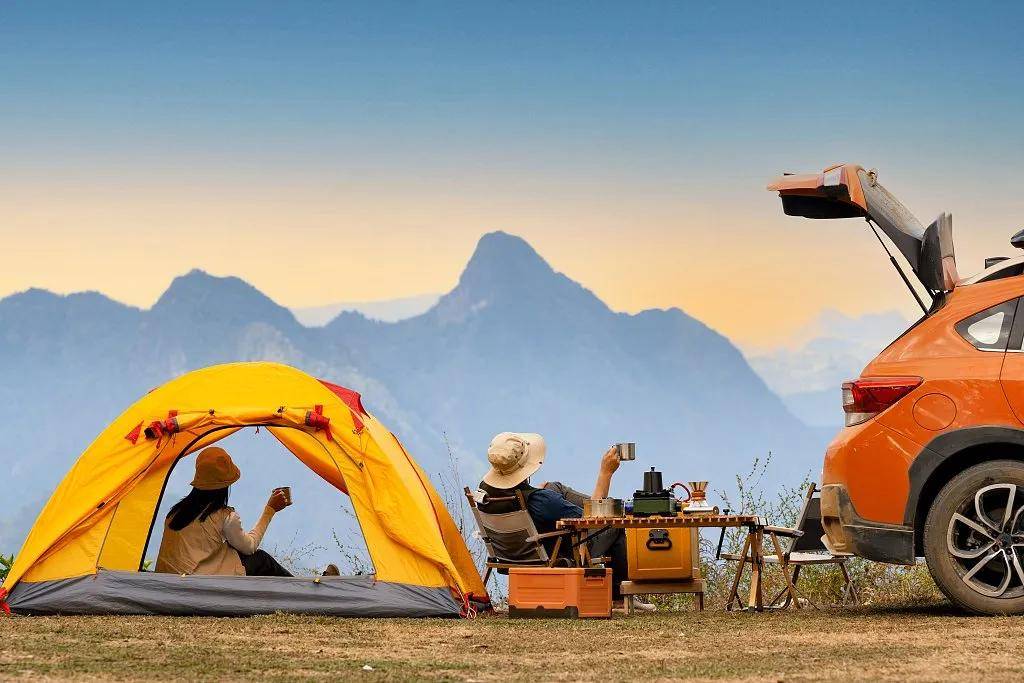
Core Viewpoint - The hotel industry significantly raises prices during the National Day holiday, often resulting in hotel costs far exceeding the savings from toll-free highways [1][4]. Group 1: Hotel Pricing Dynamics - Hotels in popular tourist areas may increase prices by two to eight times during the holiday season [2]. - The supply of hotel rooms is fixed and cannot be increased quickly, leading to a supply-demand imbalance that drives up prices [3]. - In contrast, restaurants can adjust supply by preparing more ingredients or extending hours, which prevents them from raising prices [3]. Group 2: Changing Consumer Behavior - The post-2000 generation (00s) has developed strategies to avoid high hotel prices by camping in tourist centers, city parks, or even sleeping in cars [5][6]. - Electric vehicles are becoming a popular alternative, providing a mobile living space with amenities at a low cost, further impacting hotel demand [8][9]. - The 00s no longer view hotel stays as essential for travel, opting instead for camping and sharing tips on social media to counter hotel price hikes [11]. Group 3: Market Impact and Future Trends - The collective actions of the 00s have challenged the pricing power of hotels, indicating a shift in consumer behavior that could lead to more stable hotel pricing in the future [11][14]. - The 00s have previously influenced markets, such as the decline in value of collectible stamps and high-end liquor, showcasing their ability to impact various industries [12][13]. - If current trends continue, it is anticipated that hotels will be less likely to raise prices arbitrarily during holidays in the next decade [15].
开着辅助驾驶 昊铂GT高速追尾工程车
Di Yi Cai Jing· 2025-10-05 13:41
Core Viewpoint - The incident involving the Haobo GT vehicle highlights the limitations of L2 level driver assistance systems, particularly in recognizing irregularly shaped obstacles and the failure of the Autonomous Emergency Braking (AEB) system to activate during a collision [1][2][3] Group 1: Incident Details - A video showing a Haobo GT vehicle colliding with a stationary construction vehicle while using Adaptive Cruise Control (ACC) has drawn public attention [1] - The vehicle involved is a 2023 model of Haobo GT 560, which is equipped with an L2 level driver assistance system that lacks lidar and uses a single monocular camera for front perception [1] - The vehicle was traveling at a speed exceeding 80 km/h at the time of the collision, surpassing the speed limit for AEB activation [2] Group 2: System Limitations - The user manual for Haobo vehicles specifies that the system may not function properly under certain conditions, such as when encountering irregularly shaped vehicles or when using ACC with stationary or low-speed vehicles [2] - The AEB system's limitations have been a topic of debate, with various manufacturers facing similar issues regarding the activation speed and response to obstacles [3] - Current AEB systems primarily focus on longitudinal braking and have limited capabilities in recognizing static objects, which raises concerns about their effectiveness in emergency situations [3] Group 3: Regulatory Developments - The recent draft regulations from the Ministry of Industry and Information Technology aim to clarify safety requirements for L2 driver assistance systems, including the use of AEB and lane-keeping functions [3][4] - The new standards emphasize the need for driver assistance systems to effectively respond to foreseeable misuse by drivers and to provide continuous alerts regarding following distances [4] - The upcoming 2025 model of Haobo GT will include configurations with lidar, indicating a shift towards improved obstacle detection capabilities [4]
9月新势力销量:理想同比下滑37%,老车型增长乏力
凤凰网财经· 2025-10-03 13:44
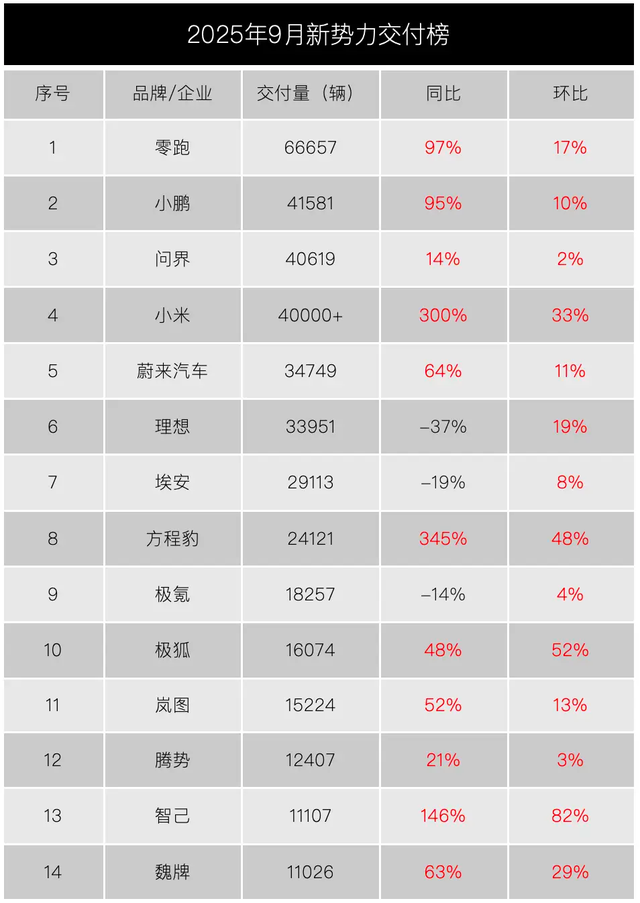
Core Insights - The article discusses the significant changes in the new energy vehicle (NEV) market in September 2025, highlighting the competitive landscape among various brands and their delivery volumes [2][34]. - It emphasizes the rise of brands like Leap Motor and Xiaomi, while traditional automakers face challenges in the NEV segment [34][35]. Delivery Rankings - Leap Motor leads with 66,657 units delivered, a 97% year-on-year increase, followed by XPeng with 41,581 units (95% increase) and AITO with 40,619 units (14% increase) [3][4]. - Xiaomi's delivery surpasses 40,000 units for the first time, marking a 300% year-on-year increase, indicating improved production capacity [5][20]. - NIO ranks fifth with 34,749 units delivered, showing a 64% year-on-year growth, while Li Auto ranks sixth with 33,951 units, down 37% year-on-year [6][29]. Brand Strategies - Leap Motor's strategy focuses on offering high-value features at competitive prices, appealing to cost-conscious consumers [11][15]. - XPeng's growth is attributed to aggressive promotional financing policies, although concerns about profitability remain due to high discounting [15][35]. - AITO maintains a strong position in the high-end market, with its models contributing significantly to its sales [16][19]. Market Dynamics - The article notes that traditional automakers' NEV brands are growing but struggle to compete with the top new energy players [8][34]. - The monthly delivery threshold for leading brands has risen to 40,000 units, creating a competitive barrier for those unable to meet this volume [8][34]. Future Trends - The article identifies key trends such as the mainstream adoption of range-extended technology and the increasing competitiveness of traditional luxury brands in the NEV market [35][36]. - It suggests that the future winners in the NEV market will be those who can balance cost control through scale while offering differentiated technological experiences [36][37].




讨厌隐藏式门把手的用户们,如今终于胜利了
虎嗅APP· 2025-10-02 13:41
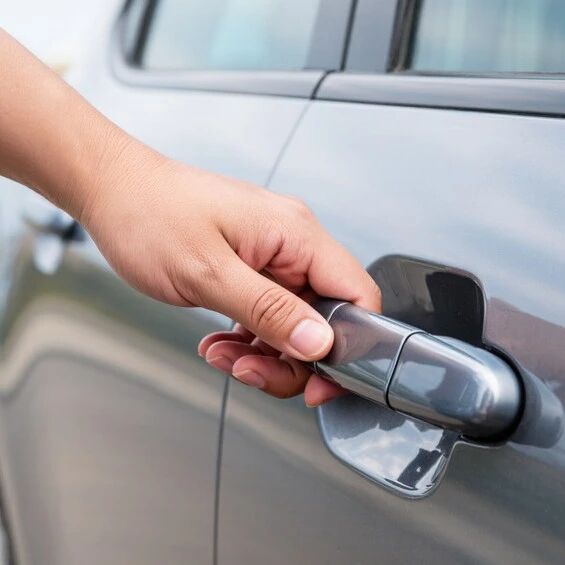
Core Viewpoint - The new national standard for car door handles prohibits hidden handles, requiring mechanical release mechanisms for all new vehicles starting from January 1, 2027, which is expected to significantly impact the automotive industry [5][15][49]. Summary by Sections New National Standard Requirements - The new regulations mandate that external door handles must have a mechanical release function, eliminating electronic-only designs [8]. - Door handles must provide a hand operation space of at least 60mm x 20mm x 25mm, disallowing fully hidden designs [9]. - Internal door handles must also have a mechanical release and be free from structural obstructions, ensuring they are easily accessible [9][12]. Implementation Timeline - The new standard is likely to take effect on January 1, 2027, with all new vehicles launched after this date required to comply [15]. - Existing models must meet the new standards by July 1, 2028, or they will lose their market eligibility [15][49]. Impact on Existing Vehicles - Current vehicle owners will not be affected by the new regulations, as vehicles purchased before the implementation date will not require modifications [36][37]. Industry Reactions - Responses from automotive companies vary significantly; some international firms express concern about meeting the new requirements, while domestic manufacturers feel less impacted due to their existing design practices [41][46]. - Domestic manufacturers report that their development cycles are fast enough to adapt to the new standards within the required timeframe [46][48]. Safety Concerns - The hidden door handle design poses safety risks, particularly in collision scenarios where mechanical handles allow for quicker access [54][56]. - The complexity of validating hidden handle designs raises concerns about their reliability compared to traditional handles [60]. Conclusion - The new regulations are seen as a positive step towards enhancing vehicle safety and practicality, moving away from designs that prioritize aesthetics over functionality [61].
9月新势力销量:零跑6万,“鹏界米”4万
Xin Lang Cai Jing· 2025-10-02 02:21
Core Viewpoint - The new energy vehicle market is experiencing significant changes, with new players like Leap Motor and Xiaomi making substantial gains in delivery volumes, while traditional brands face challenges in maintaining their positions [1][20]. Group 1: Delivery Rankings and Performance - Leap Motor leads the delivery rankings with 66,657 units, showing a 97% year-on-year increase and a 17% month-on-month increase [2][3]. - Xiaomi enters the top four for the first time with over 40,000 deliveries, marking a 300% year-on-year increase and a 33% month-on-month increase [2][4]. - NIO ranks fifth with 34,749 units delivered, reflecting a 64% year-on-year growth, indicating the effectiveness of its multi-brand strategy [5][14]. - Li Auto's performance is mixed, with 33,951 units delivered, a 19% month-on-month increase but a 37% year-on-year decline [6][18]. Group 2: Market Dynamics and Strategies - The market is seeing a shift where traditional automakers' new energy brands are growing but struggle to pose a significant threat to the top six new energy players [7]. - Leap Motor's strategy focuses on offering high-value features in mainstream models, appealing to cost-conscious consumers [8][9]. - Xiaomi's growth is attributed to improved production capacity, although it faces challenges with long wait times for customers [12][13]. Group 3: Competitive Landscape - The competitive landscape is evolving, with brands like Aion experiencing a nearly 20% year-on-year decline, while BYD's Equation Leopard sees a 345% increase [7][14]. - The delivery threshold for the top tier has risen to 40,000 units per month, creating a gap for brands unable to meet this benchmark [7][20]. - The introduction of new models, such as Li Auto's i6, is seen as a potential solution to declining sales, but internal competition may pose challenges [18][19]. Group 4: Future Trends - The market is expected to further differentiate, with technological advancements becoming crucial for maintaining competitiveness [21][22]. - Traditional luxury brands are beginning to take the electric vehicle market seriously, as seen with the local production of Mercedes-Benz's electric CLA [21]. - The overall conclusion points to a future where the winners will be those who can balance cost control through scale while offering differentiated experiences through technology and multi-brand strategies [23].
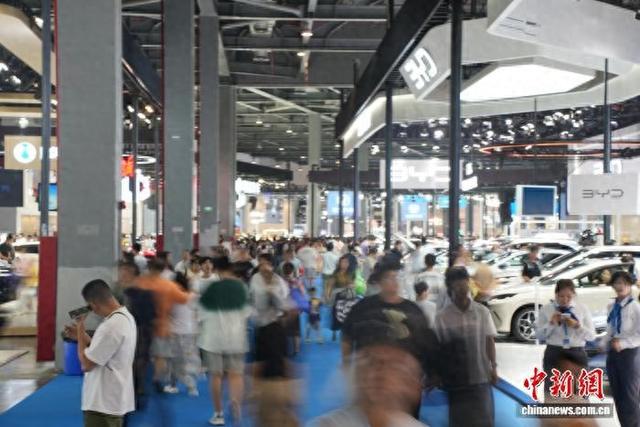
2025南昌国际车展开展 打造国庆多元消费体验
Zhong Guo Xin Wen Wang· 2025-10-01 09:33
Core Insights - The 20th Nanchang International Auto Show opened on October 1, 2025, and will last until October 4, showcasing over 70 vehicle brands and more than 800 models, with a focus on new energy vehicles [2] Group 1: Event Overview - The auto show features new energy as a core highlight, attracting significant public interest during the National Day holiday [2] - Major brands such as Xiaomi, AITO, and BYD showcased their latest new energy vehicles, emphasizing advanced intelligent driving and comprehensive range capabilities [2] - The event serves as a platform for integrating automotive consumption with cultural and tourism activities, providing insights into the automotive consumption upgrade in Nanchang and Jiangxi [2] Group 2: Technological Innovations - The exhibition includes cutting-edge technologies such as onboard drone systems, enhancing the appeal of the showcased vehicles [12] - The presence of eVTOL aircraft at the show indicates a cross-industry display of automotive and aviation technologies [12]