
荣昌生物

Search documents
“出海”与并购并举 创新药产业跑出加速度
Zheng Quan Ri Bao· 2026-01-19 16:12
Core Insights - The Chinese innovative pharmaceutical industry is experiencing a surge in overseas orders and mergers, indicating a vibrant market as companies engage in international collaborations and acquisitions [1][2] Group 1: International Collaborations - Since January, local companies like West Bioman and Rongchang Biopharmaceutical have completed at least five overseas licensing agreements with multinational pharmaceutical firms, showcasing active global transaction capabilities [1] - China's drug pipeline accounts for approximately 30% of the global total, ranking second worldwide, which signifies a shift from following to leading in the biopharmaceutical sector [2] - It is projected that by 2025, the total value of innovative drug licensing transactions from China will exceed $130 billion, with over 150 deals, significantly surpassing the previous year's figures [2] Group 2: Mergers and Acquisitions - China National Pharmaceutical announced a full acquisition of Hegia Biopharmaceutical for RMB 1.2 billion, aiming to enter the small interfering RNA (siRNA) innovative drug sector and expand its pipeline in cardiovascular and metabolic diseases [3] - WuXi AppTec plans to acquire Easton Pharmaceuticals at HKD 4.00 per share to enhance its capabilities in the commercial production of antibody-drug conjugates [3] - Aopu Mai has completed the acquisition of Pengli Biopharmaceutical, integrating it as a wholly-owned subsidiary to strengthen industry chain collaboration and achieve business integration [4] Group 3: Future Outlook - Companies like Fuhong Hanlin expect to launch over 20 products globally by 2030, with more than 15 anticipated to be approved in the US and Europe [5] - Jiangsu Hengrui Medicine has over 100 innovative products in clinical development and expects multiple milestone advancements in 2026, including approvals for over 10 innovative drugs or indications [5]


港股通创新药三连跌,什么原因?520880放量跌2.72%溢价高企!机构维持重点推荐
Xin Lang Cai Jing· 2026-01-19 11:42
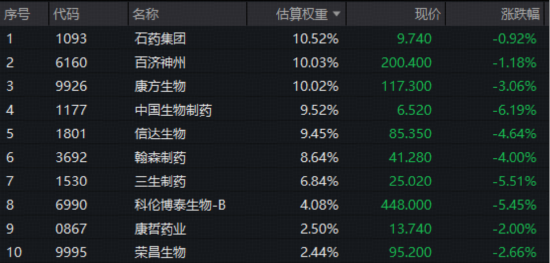
Market Overview - The Hong Kong stock market experienced a decline on January 19, with the Hang Seng Index falling by 0.76% [1] - The pharmaceutical sector faced significant losses, particularly in the innovative drug industry, with major stocks like Alibaba Health and others in the AI medical concept continuing to drop [1][10] Innovative Drug Sector Performance - The innovative drug sector saw a broad adjustment, with leading companies experiencing declines: China Biologic Products fell by 6.19%, CanSino Biologics by 3%, and others like Innovent Biologics and Hansoh Pharmaceutical dropped over 4% [1][13] - The Hong Kong Stock Connect Innovative Drug ETF (520880) fell by 2.72%, marking a three-day losing streak and losing both the 10-day and 60-day moving averages, with trading volume increasing by over 50% to 390 million HKD [11][12] Factors Influencing Market Sentiment - The adjustments in the innovative drug sector are attributed to the market digesting sentiments post the JPMorgan Healthcare Conference, which concluded on January 15, and a cautious outlook ahead of upcoming earnings forecasts for 2025 [4][15] - The market is currently in a phase of waiting for actual revenue and profit data, leading to a tendency to avoid uncertainty, particularly for companies that are not yet profitable or are in the early stages of commercialization [4][15] Future Outlook for Innovative Drug Sector - The innovative drug sector is expected to see significant earnings forecasts from leading companies in 2025, which could present opportunities for valuation recovery if results exceed expectations [5][16] - The sector's long-term fundamentals remain strong, with projections indicating that the total overseas licensing revenue for innovative drugs could reach 135.7 billion USD in 2025, reflecting global recognition of Chinese pharmaceutical R&D capabilities [16] - Continued policy support is anticipated, with the National Medical Products Administration expected to approve 76 innovative drugs in 2025, the highest globally, and ongoing optimization of the review and approval processes [16] Investment Strategy - The Hong Kong Stock Connect Innovative Drug ETF (520880) is positioned as a high-elasticity T+0 investment tool, focusing exclusively on innovative drug R&D companies [5][16] - The ETF's index features a significant concentration of leading companies, with the top ten holdings accounting for over 73% of the total weight, indicating a strong representation of the sector's core strengths [6][17]

创新药周报20260118:强生BCMA CD3 TCE特立妥单抗单药治疗2L MM III期成功
Huachuang Securities· 2026-01-19 10:30
Investment Rating - The report indicates a positive investment outlook for the innovative drug sector, particularly focusing on the advancements in T-cell engagers (TCE) for multiple myeloma (MM) treatment [1]. Core Insights - Johnson & Johnson's teclistamab has shown significant efficacy in the treatment of relapsed or refractory multiple myeloma (r/r MM), with a 71% reduction in disease progression or death risk and a 40% reduction in mortality risk compared to standard treatments [14][15]. - The report highlights the unmet medical needs in the MM treatment landscape, emphasizing the potential of TCE therapies targeting BCMA and GPRC5D to improve patient outcomes [9][10]. - The ongoing clinical trials and approvals for various TCE therapies, including teclistamab and talquetamab, are expected to reshape the treatment paradigm for MM, particularly in patients who have undergone multiple lines of therapy [28][34]. Summary by Sections Innovative Drug Focus - The report reviews the recent developments in innovative drugs, particularly in the context of TCE therapies for blood cancers, with a focus on their expanding applications beyond hematological malignancies [5][7]. TCE Therapy Developments - TCE therapies have gained traction in the treatment of MM, with several candidates achieving FDA approval for patients who have received multiple prior therapies. The overall response rates (ORR) for these therapies range from 60% to 74% [9][10]. - The report details the clinical trial results for teclistamab, which has been shown to significantly improve progression-free survival (PFS) and overall survival (OS) in r/r MM patients [14][21]. Market Potential - The report estimates that the sales for teclistamab in China could reach approximately $5.49 billion by 2024, indicating a strong market potential for TCE therapies in the region [6]. - The ongoing research and development efforts in TCE therapies are expected to address the significant unmet needs in the MM treatment landscape, with a focus on improving patient outcomes and survival rates [9][10].


医药生物行业周报:26年小核酸行业催化不断,持续看好产业链投资机会
China Post Securities· 2026-01-19 10:24
Investment Rating - The industry investment rating is "Outperform the Market" and is maintained [2] Core Views - The report highlights continuous catalysts in the small nucleic acid industry for 2026, with a focus on investment opportunities within the industry chain [5][19] - The report emphasizes the importance of clinical trial data releases and project advancements from major siRNA companies such as Alnylam, Arrowhead, and Wave Life Sciences [19][27] Summary by Sections Industry Overview - The closing index for the industry is at 8657.19, with a 52-week high of 9323.49 and a low of 6876.88 [2] Recent Market Performance - The A-share pharmaceutical and biotechnology sector declined by 0.68% from January 12 to January 16, 2026, underperforming the CSI 300 index by 0.11 percentage points and the ChiNext index by 1.68 percentage points [9][28] - Among the sub-sectors, the medical research outsourcing sector performed the best, increasing by 3.69%, while the vaccine sector saw a decline of 3.43% [10][28] Industry Insights and Investment Recommendations 1. **Innovative Drugs and Industry Chain**: The JPM conference reinforced the development logic of the industry, with increased merger and acquisition activity among multinational corporations (MNCs) and breakthroughs in domestic innovative drug companies. The report suggests focusing on companies with high certainty and relatively low business development (BD) disruption expectations, such as Innovent Biologics and others [11][30][31] 2. **Life Science Services**: The report sees stable recovery in overseas research and production outsourcing demand, with domestic Big Pharma's R&D spending increasing steadily. It recommends focusing on companies like WuXi AppTec and others [12][31] 3. **Medical Devices**: The report notes a potential turning point in the medical device sector, with improving performance from leading companies and a gradual reduction in the pressure from centralized procurement. It suggests monitoring companies like Mindray and others [13][34] 4. **Traditional Chinese Medicine**: The report highlights opportunities in basic drug policies and innovation-driven directions, recommending companies like Zhaoli Pharmaceutical and others [38][40] 5. **AI in Pharmaceuticals**: The report discusses the maturity of AI applications in pharmaceuticals, diagnostics, and medical services, identifying potential beneficiaries in various AI+medical sectors [42] Market Valuation - As of January 16, 2026, the overall valuation of the pharmaceutical sector is at 30.35, with a relative valuation premium of 124.45% over the CSI 300 index, indicating a slight increase from the previous week [48]
医药行业周报:关注小核酸药物上游配套产业链-20260119
Huaxin Securities· 2026-01-19 07:03
Investment Rating - The report maintains a "Recommended" investment rating for the pharmaceutical industry as of January 19, 2026 [1] Core Insights - 2025 marked a significant year for Chinese innovative drugs going global, with a total transaction amount of $135.655 billion, including $7 billion in upfront payments and 157 deals, setting historical highs. The trend continues into 2026, with notable licensing agreements from companies like Yilian Biotech and Rongchang Biotech, indicating strong global competitiveness for Chinese innovative drugs [2] - Major companies are increasingly investing in the small nucleic acid field, with significant acquisitions and clinical approvals. For instance, China National Pharmaceutical Group acquired Hangzhou Hejiya Biopharmaceutical for 1.2 billion RMB, while international firms like Novartis and GSK are also advancing in this area [3] - The GLP-1 market is expected to grow despite new pricing systems, with ongoing collaborations and new product launches anticipated in 2026. The market for GLP-1 drugs is projected to remain robust due to the large patient population for weight loss and diabetes [4] - The oral autoimmune drug market is gaining attention, with promising results from Takeda's new TYK2 inhibitor for psoriasis. Other domestic companies are also advancing in this space, exploring new targets for oral small molecules [5] - The brain-computer interface sector is poised for industrialization, with companies like Neuralink set to produce devices in 2026. Domestic advancements and regulatory support are enhancing the potential for this technology in medical applications [6] - The ZAP-X radiation therapy device is expected to capture a significant market share in China, with rapid growth projected in non-invasive tumor radiation treatment, driven by increasing clinical recognition and adoption [8] Summary by Sections Industry Trends - The pharmaceutical sector is witnessing a resurgence in interest towards innovative drugs, with a notable increase in the innovative drug index by 8.97% since early January 2026, outperforming the CSI 300 index by 6.77 percentage points [2] Company Recommendations - Recommended companies include: - **Yuekang Pharmaceutical** and **Sunshine Nuohua** in the small nucleic acid space - **Yahong Pharmaceutical** and **Yifang Biotechnology** in the autoimmune sector - **Zhongsheng Pharmaceutical** in the GLP-1 market - **Baiyang Pharmaceutical** for ZAP-X radiation therapy - **Meihao Medical** for brain-computer interface technology [10] Market Opportunities - The non-invasive tumor radiation treatment market is projected to grow from 27.2 billion RMB in 2018 to 59.4 billion RMB by 2024, with a compound annual growth rate of 13.9% [8]




JPM亮点归纳,年报预告陆续披露,积极把握超预期机会
ZHONGTAI SECURITIES· 2026-01-19 04:40
Investment Rating - The report maintains an "Overweight" rating for the pharmaceutical and biotechnology industry [2]. Core Insights - The report highlights the ongoing performance of the pharmaceutical sector, with a focus on the upcoming annual earnings forecasts and the potential for exceeding expectations. The sector has shown a return of 7.08% since the beginning of 2026, outperforming the CSI 300 index by 4.88% [8][12]. - Key catalysts in the industry include significant partnerships and acquisitions, such as AbbVie’s $6.5 billion upfront payment for RC148 and a $1 billion collaboration between Eli Lilly and NVIDIA to accelerate AI drug development [4][10]. - The report emphasizes the importance of innovative drug chains and the AI+ theme, suggesting that these areas will continue to attract investment and yield positive results [4][5]. Summary by Sections Industry Overview - The pharmaceutical sector's total market capitalization is approximately 74,744.70 billion yuan, with a circulating market value of 68,522.64 billion yuan [2]. - The report notes that the pharmaceutical sector is currently valued at 23.4 times PE based on 2026 earnings forecasts, which is a premium of 13.7% compared to the overall A-share market [15]. Market Dynamics - The report indicates that the pharmaceutical sector has experienced a mixed performance, with medical services up by 3.29% while other segments like medical devices and traditional Chinese medicine have seen declines [8][12]. - The report also mentions that the market is transitioning to a more rational and steady growth phase, moving away from the initial volatility seen at the start of the year [4]. Key Company Performances - Notable companies such as WuXi Biologics, Sangamo Therapeutics, and Tigermed have been highlighted for their strong performance, with WuXi Biologics showing a significant increase of 26.53% in January [24]. - The report suggests continued monitoring of companies involved in AI and small nucleic acid technologies, as they are expected to lead future growth in the sector [5][9]. Investment Recommendations - The report recommends focusing on companies that are well-positioned within the innovative drug chain and AI+ sectors, as these are anticipated to provide substantial returns [4][5]. - Specific stocks recommended include WuXi Biologics, Sangamo Therapeutics, and Tigermed, which have shown promising growth trajectories [24].



JPM大会落幕,中国创新药再成全球焦点!港股通创新药ETF(159570)深度回调2.5%,资金快速涌入,近5日狂揽超10亿元!
Xin Lang Cai Jing· 2026-01-19 03:13
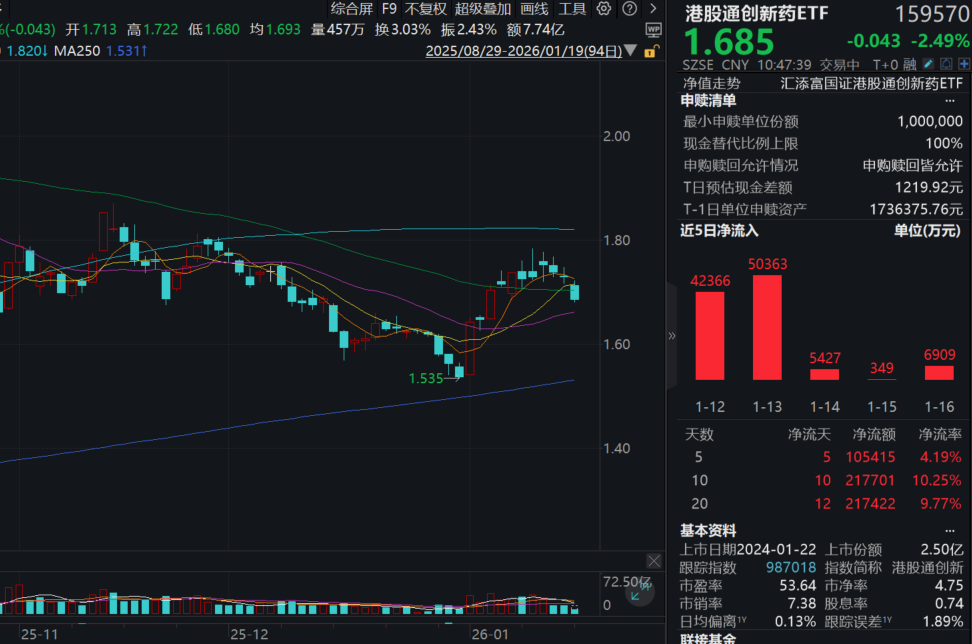
Group 1 - The Hong Kong Innovation Drug ETF (159570) has experienced a 2.5% decline for three consecutive days, with a trading volume exceeding 800 million yuan, and has attracted over 1 billion yuan in the last five days [1][3] - As of January 16, the latest scale of the Hong Kong Innovation Drug ETF (159570) has surpassed 26.2 billion yuan, leading its peers in the same category [1] - The majority of the weighted stocks in the ETF's index have shown negative performance, with notable declines including Kelun-Bio down over 5%, Innovent Biologics and Hansoh Pharmaceutical down over 4%, and others down over 3% [3][4] Group 2 - The 44th JPMorgan Healthcare Conference took place from January 12 to 15, featuring several Chinese innovative pharmaceutical companies, including WuXi AppTec and BeiGene, among others [5] - Huatai Securities noted that the JPM conference and the upcoming annual report cycle in February could serve as catalysts for the market, which is currently at a relative bottom, with expectations for new highs in the innovative drug sector [5] - Zhongtai Securities highlighted multiple catalysts in the pharmaceutical sector, including significant data disclosures from multinational corporations and various business development deals, indicating a positive outlook for the innovative drug industry [5][6] Group 3 - The 2026 JPMorgan Conference is expected to showcase Chinese innovative drugs as a global highlight, with over 20 Chinese pharmaceutical companies participating [7] - Companies like HengRui are projected to see a 25%+ growth in innovative drug revenue by 2026, with several key drugs and indications expected to be approved in the next two years [7] - Notable developments include RC148's licensing deal worth up to 5.6 billion USD between Rongchang Bio and AbbVie, and various clinical trial advancements from companies like Summit Therapeutics and Eifang Bio [8]
渤海证券研究所晨会纪要(2026.01.19)-20260119
BOHAI SECURITIES· 2026-01-19 00:26
晨会纪要(2026/01/19) 编辑人 崔健 022-28451618 SAC NO:S1150511010016 cuijian@bhzq.com 渤海证券研究所晨会纪要(2026.01.19) 宏观及策略研究 海外降息趋弱,国内定调积极——宏观经济周报 固定收益研究 结构化降息落地——利率债周报 行业研究 荣昌生物与艾伯维签署授权许可协议,关注创新药产业链机遇——医药生物 行业周报 证 券 研 究 报 告 晨 会 纪 要 请务必阅读正文之后的声明 渤海证券股份有限公司具备证券投资咨询业务资格 1 of 6 晨会纪要(2026/01/19) 宏观及策略研究 海外降息趋弱,国内定调积极——宏观经济周报 周 喜(证券分析师,SAC NO:S1150511010017) 宋亦威(证券分析师,SAC NO:S1150514080001) 严佩佩(证券分析师,SAC NO:S1150520110001) 靳沛芃(研究助理,SAC NO:S1150124030005) 1、外围环境而言 美国方面,2025 年 12 月非农就业数据低于预期,其中以休闲酒店和教育健康为代表的服务业保持韧性,而 对利率更为敏感的传统周期性 ...
中信建投:主动降温下A股跨年行情或生变化 关注特高压、可控核聚变等
智通财经网· 2026-01-19 00:24
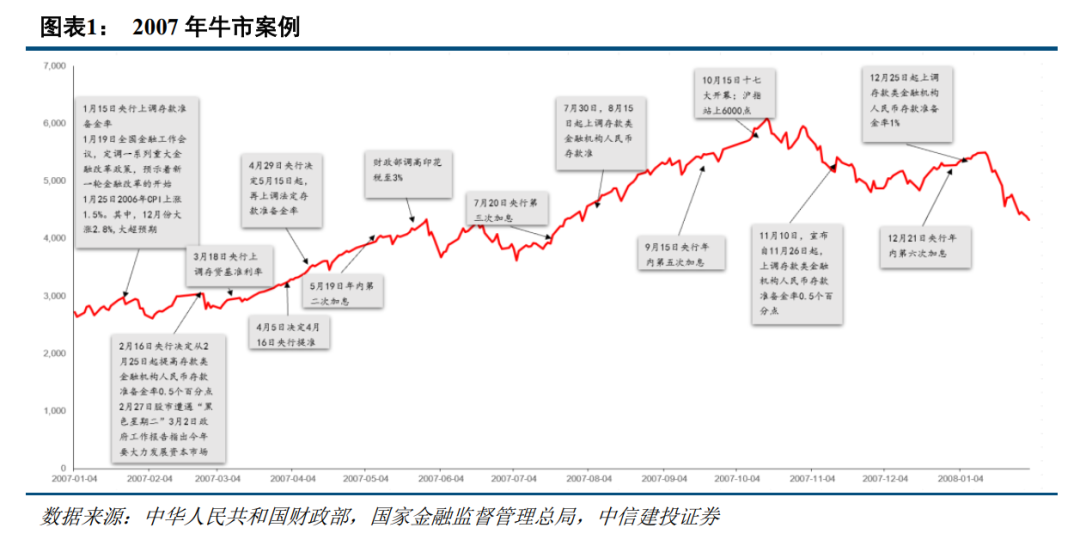
Core Viewpoint - The report from CITIC Securities indicates that the A-share market has seen an intensified year-end rally since the beginning of the year, with recent adjustments following a proactive cooling measure aimed at preventing potential short-term severe consequences of a "crazy bull" market. The long-term outlook remains positive, and the implementation of this policy is seen as more mature and forward-looking [1][4]. Industry Configuration - Key sectors showing significant economic catalysts include AI computing power, non-ferrous metals, innovative pharmaceuticals, and automobiles. Previous hot sectors like commercial aerospace and AI applications may undergo phase adjustments, while other themes such as ultra-high voltage, brain-computer interfaces, and controllable nuclear fusion are worth monitoring [2][12][24]. - In terms of investment, AI computing-related capital expenditures are accelerating, with the precious metals sector seeing a rise in trading and safe-haven attributes. The innovative pharmaceutical sector has seen significant business development (BD) transactions, and negotiations related to European and Chinese new energy vehicles are ongoing [2][19][20]. Impact of Proactive Cooling on Year-End Rally - The proactive cooling measure is intended to mitigate the risks associated with overheated trading, which has led to concerns among investors about a potential reversal of the year-end rally. Historical cases suggest that such interventions are necessary to prevent severe market consequences, and the current policy is viewed as a means to maintain a rational investment environment [4][8]. - The overall market structure of the year-end rally remains intact despite the cooling measures, which may lead to changes in trading direction and alleviate previously overheated conditions [1][4]. Focused Sectors - Key sectors to watch include semiconductors, AI, non-ferrous metals, automobiles, humanoid robots, nuclear power, innovative pharmaceuticals, non-bank financials, commercial aerospace, and ultra-high voltage [3][12]. - The ultra-high voltage sector is expected to see total investment during the 14th Five-Year Plan period increase by 40% compared to the previous plan, while significant breakthroughs in controllable nuclear fusion technology and accelerated clinical applications of brain-computer interfaces are noted [2][24]. Market Dynamics - The precious metals sector has shown strong performance, with gold prices reaching historical highs and silver exhibiting higher volatility. The industrial and non-ferrous metals sectors have experienced price increases driven by supply disruptions and demand improvements, although short-term volatility remains a concern [17][19]. - The innovative pharmaceutical sector has been boosted by major BD transactions, such as the collaboration between Rongchang Bio and AbbVie, which is expected to enhance market sentiment and attention towards domestic innovative pharmaceutical assets [19][20].

创新药“出海”进入新阶段的三点启示
Zheng Quan Ri Bao· 2026-01-18 17:10
Core Insights - In 2025, China's innovative pharmaceuticals are expected to experience explosive growth in overseas licensing, with total overseas licensing exceeding $130 billion. This trend continues into 2026, with companies like Rongchang Biologics achieving significant overseas licensing deals [1] Group 1: Transition in Business Model - The "going global" strategy for innovative drugs has shifted from selling individual products to selling capabilities. Chinese pharmaceutical companies are now recognized for their comprehensive R&D platforms and validated clinical development capabilities, rather than just individual drug rights [2] - This transition necessitates that Chinese companies build a complete innovation capability chain, distinguishing industry leaders from ordinary participants based on their systematic pharmaceutical innovation capabilities [2] Group 2: Shift to Source Innovation - Sustainable "going global" requires a fundamental shift in R&D logic from incremental improvements to providing "first-in-class" or "best-in-class" solutions for unmet clinical needs. Recent high-value transactions indicate that capital is increasingly concentrating on companies with genuine differentiated innovation capabilities [3] - Companies that successfully navigate challenging fields, such as Alzheimer's disease, are gaining international recognition, highlighting the importance of investing in complex biological mechanisms and unclear development paths [3] Group 3: Strategic Global Positioning - The strategy of Chinese innovative pharmaceutical companies has evolved from merely exporting products to establishing a global ecosystem. More transactions are adopting risk-sharing models, indicating a proactive approach to R&D and commercialization for long-term value distribution [4] - "Going global" also represents a strategic move to secure future technological influence. Chinese companies are demonstrating competitive R&D efficiency in emerging technology areas, such as antibody-drug conjugates and cell therapies, positioning themselves favorably in the global pharmaceutical landscape [4] - The total overseas licensing amount exceeding $130 billion signifies that the Chinese innovative pharmaceutical industry is now qualified to participate in top-tier global competition, with the real challenge lying in subsequent global clinical advancement and commercialization capabilities [4]