速腾聚创

Search documents
“激光雷达芯片第一案”战火升级,速腾聚创与灵明光子针锋相对
3 6 Ke· 2025-12-23 09:37
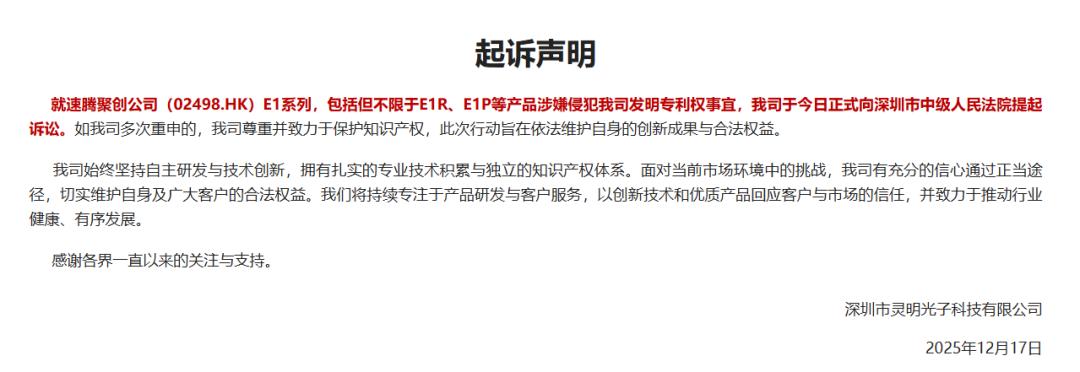
Core Viewpoint - The legal battle between Suoteng Juchuang and Lingming Photon over intellectual property rights has intensified, focusing on the SPAD-SoC chip technology, which is considered the "digital heart" of LiDAR systems [1][2][3]. Group 1: Legal Dispute Overview - Suoteng Juchuang filed a lawsuit against Lingming Photon for alleged unfair competition and infringement of its self-developed SPAD chip technology [4][5]. - Lingming Photon countered by claiming that Suoteng Juchuang's E1 series products infringe on its invention patents, leading to a series of legal actions from both parties [1][6]. - The dispute highlights the competitive landscape of the LiDAR industry, where chip technology is recognized as a core competitive advantage [3][20]. Group 2: Background of the Companies - Suoteng Juchuang and Lingming Photon previously had a collaborative relationship, with Suoteng providing support to Lingming during its early stages [13][14]. - The partnership aimed to develop SPAD-SoC technology, but it ended due to unsatisfactory results from joint development efforts [14][17]. - Following the termination of their collaboration, both companies quickly announced their respective technological advancements, raising suspicions about potential knowledge transfer [3][17]. Group 3: Market Context and Implications - The Chinese LiDAR market is projected to grow significantly, with estimates of approximately 75.9 billion yuan in 2023 and expected to reach 431.8 billion yuan by 2026 [20][21]. - The competition in the LiDAR industry emphasizes the importance of chip technology, with companies needing to enhance their technological capabilities and maintain control over core technologies [22][24]. - SPAD technology, particularly in the SPAD-SoC domain, is critical for LiDAR applications, with significant market growth anticipated in the coming years [22][23].

格隆汇“科技赋能·资本破局”线上分享会暨“金格奖”——“年度卓越高端制造企业”奖项揭晓:奇瑞汽车(09973.HK)、赛力斯(601127.SH/09927.HK)、浦林成山(01809.HK)等6家企业上榜


Ge Long Hui· 2025-12-22 08:45
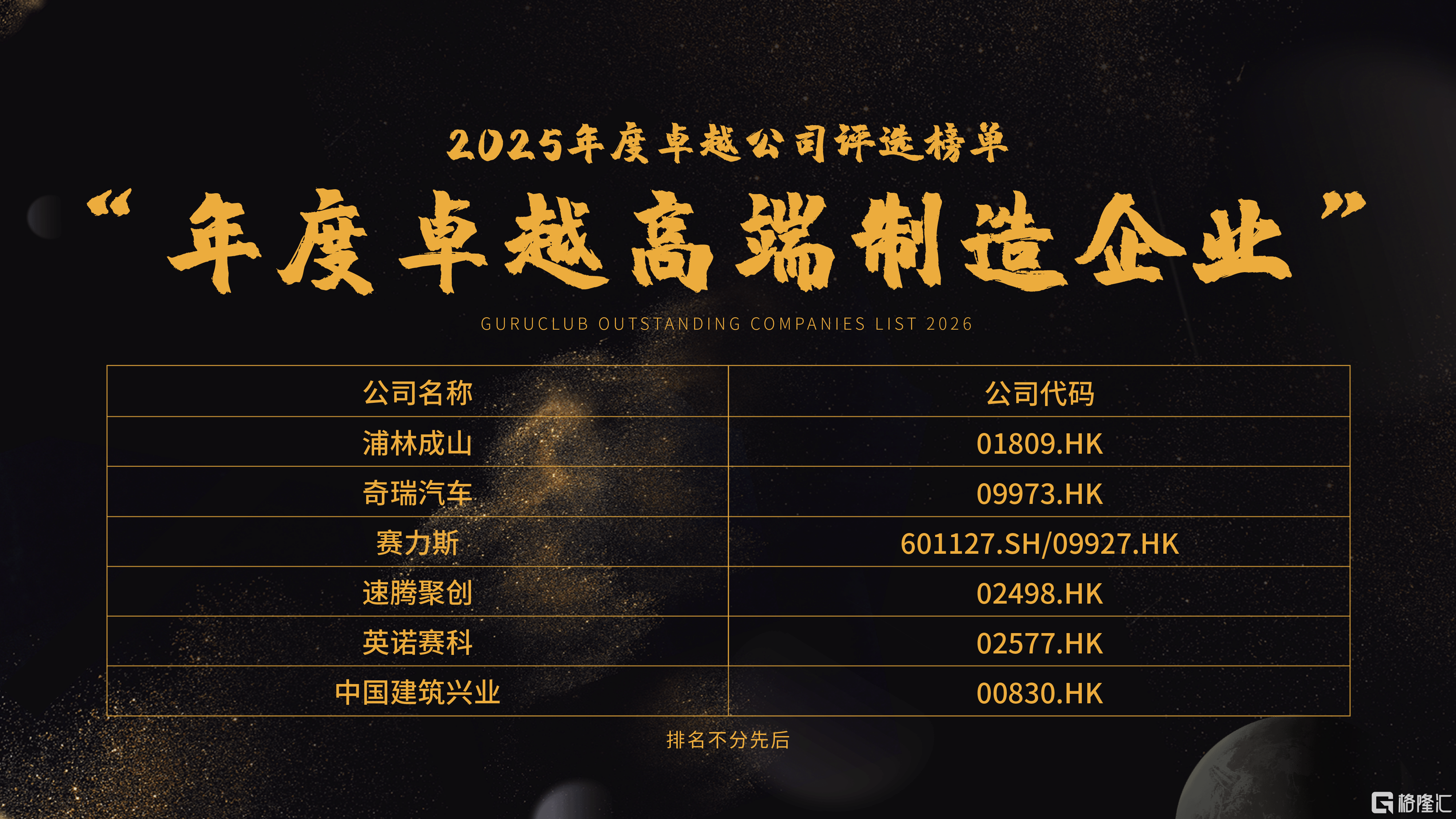
Group 1 - The "Annual Outstanding High-end Manufacturing Enterprises" award recognizes companies that have made significant achievements in intelligent, green, and service-oriented development within the high-end manufacturing sector [4] - The award selection process involved comprehensive analysis from technical, value, and industrial perspectives, utilizing quantitative data analysis and expert review [4] - Six companies, including Pulinhengshan (01809.HK), Chery Automobile (09973.HK), Seres (601127.SH/09927.HK), Sutech (02498.HK), Innolux (02577.HK), and China Construction Industry (00830.HK), were honored with the award [1][4] Group 2 - The "Golden Grid Award" aims to create a reference list of the most valuable listed companies and unicorns in the investment community, covering all listed companies on major exchanges including Hong Kong, Shanghai, Shenzhen, New York, and NASDAQ [4] - The initiative is driven by the vision of "global perspective, betting on China" [4]
日银加息不太可能剧烈干扰全球流动性:环球市场动态
citic securities· 2025-12-22 05:44
Market Overview - U.S. inflation data better than expected alleviated global market concerns, leading to a rise in global stock markets, with the S&P 500 up 0.9% and the Nasdaq up 1.3%[3] - The Japanese central bank raised interest rates by 25 basis points to 0.75%, marking a 30-year high, but the yen weakened by 1.4% against the dollar[3][4] Fixed Income - U.S. Treasury yields rose by 2-3 basis points across the board, with the 10-year Japanese government bond yield surpassing 2%[4][29] - The market anticipates a cautious stance from the Federal Reserve, with expectations for rate cuts diminishing[4] Commodity Prices - Oil prices increased for three consecutive days, with WTI crude oil closing at $56.66 per barrel, up 0.91%[25] - Gold prices rose to $4,361.4 per ounce, reflecting market expectations of future rate cuts by the Federal Reserve[25] Asian Markets - Asian markets generally rose, with Vietnam's index up 1.6% and Japan's Nikkei 225 up 1.0% following the Bank of Japan's rate hike[18][19] - Hong Kong's Hang Seng Index increased by 0.75%, driven by strong performances in technology and automotive sectors[10] Sector Performance - In the U.S., the technology sector led gains, with the information technology index rising by 2.03%[8] - In China, the aerospace sector performed well, with stocks like Aerospace Development rising by 4%[14] Economic Indicators - The U.S. housing market showed stable performance, with existing home sales meeting expectations, while consumer confidence dipped to 52.9[29] - Japan's central bank indicated a positive outlook for the economy, suggesting potential for further rate hikes in the future[5][29]
市值蒸发超540亿,明星上市公司Luminar破产了
Xin Lang Cai Jing· 2025-12-22 02:53
Core Viewpoint - Luminar, once valued at $7.8 billion, filed for Chapter 11 bankruptcy on December 15, 2025, marking a significant decline in the U.S. lidar industry, as it was seen as a leading hope for the sector [1][16][30] Group 1: Company Overview - Luminar was founded in 2012 by Austin Russell with the vision of providing precise environmental perception for vehicles [3][18] - The company became a unicorn in 2017 after raising $36 million in Series B funding, reaching a valuation of over $1 billion [19] - Luminar went public via a SPAC merger in December 2020, raising approximately $600 million and achieving a market cap of $7.8 billion [19][20] Group 2: Business Challenges - Despite initial success, Luminar faced significant challenges, including reliance on a few major clients, particularly Volvo, which led to vulnerability [20][21] - In 2024, Volvo cut its annual order expectations by 75%, exacerbating Luminar's cash flow issues and leading to layoffs and restructuring [5][21] - By the end of 2024, Luminar's cash reserves fell below $100 million, with debts reaching $380 million [5][21] Group 3: Market Dynamics - The global lidar market is shifting, with Chinese manufacturers capturing approximately 92% of the market share by 2024, contrasting with the decline of U.S. players [2][11] - Chinese firms like Hesai and RoboSense have adopted a more diversified approach, focusing on various applications beyond passenger vehicles, which has contributed to their growth [26][27] - Luminar's reliance on a high-cost 1550nm lidar technology limited its competitiveness against the more cost-effective 905nm solutions favored by Chinese manufacturers [7][26] Group 4: Technological Debate - The debate over the necessity of lidar in autonomous driving continues, with figures like Elon Musk arguing that lidar is unnecessary and costly [8][23] - In contrast, companies like WeRide advocate for a multi-sensor fusion approach, emphasizing the importance of lidar for safety in complex driving environments [24][25] - The divergence in technology strategies reflects broader commercial model differences, with Tesla targeting mass-market vehicles and WeRide focusing on commercial applications [10][25] Group 5: Future Outlook - Luminar's bankruptcy signifies a pivotal moment in the lidar industry, indicating a potential restructuring of market leadership towards Chinese firms [28][29] - The future of lidar technology may see continued innovation and competition, with potential disruptions from companies like Apple and Google entering the space [29][30] - Despite current advantages, Chinese manufacturers must remain vigilant against technological disruptions and market fluctuations to maintain their lead [30]
港股概念追踪 L3级自动驾驶获批上路 机构看好智驾行业进入高速发展期(附概念股)
Jin Rong Jie· 2025-12-22 02:20
Group 1: L3 Autonomous Driving Approval - The Ministry of Industry and Information Technology of China officially announced the first batch of L3 conditional autonomous driving vehicle approvals, marking a significant step towards commercial application [1] - Longcheng Securities noted that the approval indicates a shift from testing to commercial application for L3 autonomous driving, with the industry entering a high-growth phase [1] - Changjiang Securities highlighted that China becomes the second country after Germany to approve L3 vehicles, with the potential for large-scale deployment [1] Group 2: Investment Opportunities - Longcheng Securities suggests focusing on intelligent driving algorithm providers, hardware suppliers, and Robotaxi operation platforms as investment opportunities [1] - Huatai Securities emphasized that the approval will accelerate the restructuring of the intelligent driving industry chain, with significant investment opportunities in core areas such as intelligent vehicles, control chassis, domain control chips, and LiDAR [1] - Companies like Junsheng Electronics and CAOCAO are actively engaging in strategic partnerships and launching new autonomous driving platforms, indicating a robust market presence [2][3] Group 3: Technological Developments - Zero Run's Lafa5 has commenced nationwide delivery, featuring dual AI models and a LiDAR perception system [3] - Horizon Robotics and ZF Group announced a collaboration to develop an L3 intelligent driving system, expected to be mass-produced in China by 2026 [3] - Black Sesame Intelligence has introduced high-performance computing chips and is collaborating with major automotive OEMs, enhancing its product offerings in the autonomous driving sector [4] Group 4: Market Position and Performance - TuDatong is recognized as a leading supplier of automotive-grade LiDAR solutions, with a projected delivery of approximately 230,000 units in 2024, ranking fourth globally in market share [5] - Nexperia is investing 1 billion yuan in a new intelligent manufacturing headquarters in Suzhou, focusing on electric power steering and steering-by-wire technologies for various levels of driving assistance [6]
智驾概念股走强,浙江世宝大涨超10% 海内外自动驾驶产业迎催化
Zhi Tong Cai Jing· 2025-12-22 01:54
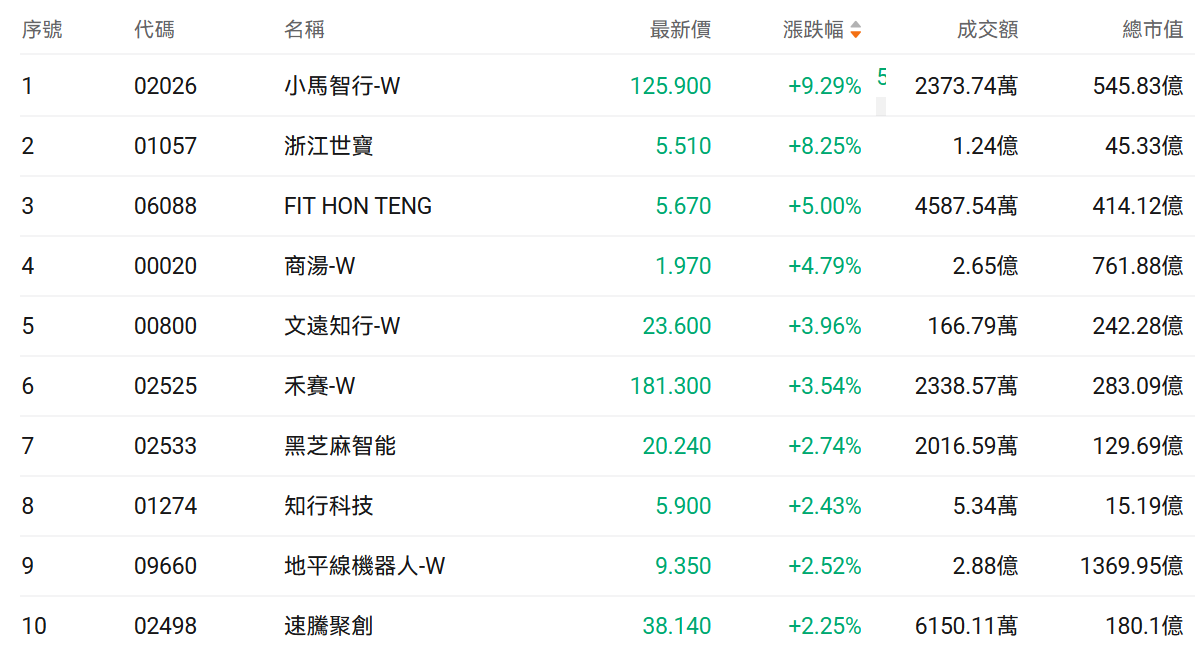
Core Viewpoint - The smart driving sector is experiencing significant growth, with stocks rising sharply due to recent advancements in autonomous driving technology and regulatory approvals [1][3]. Group 1: Stock Performance - Smart driving concept stocks saw substantial gains, with increases of over 9%, 8%, 3%, and 2% in early trading [1]. - Notable stock performances include: - Xiaoma Zhixing-W (02026) at +9.29% with a trading volume of 23.74 million [2]. - Zhejiang Shibao (01057) at +8.25% with a trading volume of 124 million [2]. - FIT HON TENG (06088) at +5.00% with a trading volume of 45.88 million [2]. - SenseTime-W (00020) at +4.79% with a trading volume of 265 million [2]. Group 2: Industry Developments - The Ministry of Industry and Information Technology (MIIT) has issued the first batch of L3-level conditional autonomous driving vehicle licenses, with Changan Deep Blue SL03 and BAIC Arcfox Alpha S6 among the first approved models [3]. - Noteworthy advancements include the issuance of the first L3-level autonomous driving dedicated license plate "渝AD0001Z" in Chongqing, marking the start of the L3 autonomous driving era for Changan Automobile [3]. - Internationally, Tesla has commenced full autonomous Robotaxi testing in Austin, Texas, without safety supervisors or passengers in the vehicle [3]. Group 3: Market Outlook - Dongfang Securities anticipates that with regulatory support and increasing market demand, the industrialization of L3-level autonomous driving is expected to accelerate by 2026, benefiting related hardware and software suppliers [3]. - Changcheng Securities highlights that leading companies are making continuous breakthroughs in smart driving, indicating that the industry is entering a high-speed development phase [3]. - The gradual reduction of high-level autonomous driving technology to vehicles priced between 100,000 to 200,000 will promote equity in smart driving technology, leading to positive investment opportunities in the smart driving supply chain [3].

L3级自动驾驶获批上路 机构看好智驾行业进入高速发展期(附概念股)
Zhi Tong Cai Jing· 2025-12-22 00:55
Group 1 - The Ministry of Industry and Information Technology officially announced the first batch of L3 conditional autonomous driving vehicle permits in China, marking a significant step towards commercial application of L3 autonomous driving [1][2] - Longhua Securities noted that the approval of L3 autonomous driving vehicles indicates that China is the second country after Germany to allow L3 vehicles on the road, with the potential for large-scale deployment [1][2] - The approval is expected to accelerate the commercialization of autonomous driving technology, benefiting the entire industry chain [1][2] Group 2 - Investment opportunities are suggested in sectors such as intelligent driving algorithms, related hardware providers, and Robotaxi operation platforms, as the approval of L3 vehicles transitions the industry from testing to product entry and road trials [2] - Companies like Junsen Electronics and Sailyus are actively engaging in strategic partnerships and product launches to enhance their positions in the autonomous driving market [3][4] - The development of L3 intelligent driving systems is being pursued by companies like ZF and Horizon Robotics, with expectations for mass production in 2026 [4][5] Group 3 - TuDatong is recognized as the first global supplier to achieve mass production of automotive-grade high-performance LiDAR solutions, with a projected delivery of approximately 230,000 units in 2024 [5][6] - The establishment of a new manufacturing headquarters by Nexperia in Suzhou, with an investment of 1 billion yuan, aims to focus on electric power steering and steering-by-wire technologies to meet various levels of assisted and autonomous driving needs [7]
港股概念追踪|L3级自动驾驶获批上路 机构看好智驾行业进入高速发展期(附概念股)
智通财经网· 2025-12-22 00:50
Group 1 - The Ministry of Industry and Information Technology of China has officially announced the first batch of L3 conditional autonomous driving vehicle permits, marking a significant step towards commercial application of L3 autonomous driving in China [1] - Longyuan Securities reports that the approval of L3 autonomous driving vehicles indicates a transition from testing to commercial application, with the industry moving towards higher levels of intelligent driving [1] - Changjiang Securities states that China becomes the second country after Germany to officially permit L3 vehicles, with the approval of two models indicating a new phase for intelligent connected vehicles in mass production [1] Group 2 - The approval of L3 vehicles is expected to accelerate the development of the intelligent driving industry chain, with recommendations to focus on intelligent driving algorithm providers, hardware suppliers, and Robotaxi operation platforms [1] - Huatai Securities emphasizes that the approval will lead to a restructuring of the value chain in the intelligent driving industry, with significant investment opportunities in core areas such as intelligent vehicles, control chassis, domain control chips, and lidar [1] - Companies like Junsheng Electronics and CAOCAO Mobility are actively engaging in strategic partnerships and launching new autonomous driving platforms, indicating a competitive landscape in the autonomous driving sector [2][3] Group 3 - Leap Motor has officially started nationwide deliveries of its Lafa5 model, which supports dual AI models and a lidar perception system [3] - Horizon Robotics and ZF have announced a joint development of an L3 intelligent driving system, expected to be mass-produced in China by 2026 [3] - Companies like Black Sesame Intelligence and TuDatong are advancing in the autonomous driving field with innovative products and significant market presence, including high-performance lidar solutions [4][5]
行业周报:国内L3级准入试点许可,百融云硅基员工+AnthropicSkill范式发布,关注Agent产业机会-20251221
KAIYUAN SECURITIES· 2025-12-21 11:53
Investment Rating - The industry investment rating is "Positive" (maintained) [1] Core Insights - The report highlights the sustained high demand in the storage sector, with expectations for H200 to be approved for export to China [3] - AI demand continues to validate and enhance computing power requirements, with significant growth in domestic AI chip production [5][8] - The approval of L3 level autonomous driving vehicles marks a critical step towards commercialization in China, with Robotaxi services expected to accelerate [6][30] Summary by Sections Internet - The daily usage of tokens for Doubao has surpassed 50 trillion, indicating deep penetration of large models [17] - The release of the "Internet Platform Pricing Behavior Rules" aims to regulate price competition and protect consumer rights, shifting focus from low prices to ensuring merchant profits and promoting consumption upgrades [20][21] - Recommended stocks include Alibaba-W, Pinduoduo, and Baidu Group-SW, with Tencent Holdings as a beneficiary [58] AI - Google TPU's commercial potential is further confirmed with Anthropic's significant orders, totaling $21 billion, indicating strong demand for AI products [21] - The launch of the Skill paradigm by Anthropic aims to enhance the capabilities of AI agents, facilitating easier development and deployment of complex AI applications [22][26] - The market for Agentic AI is projected to grow significantly, with a potential market size of 1.8 trillion yuan by 2030 [22] Intelligent Driving - The first L3 level autonomous driving models have received approval for trial operation, indicating a shift from testing to commercial application [30] - Robotaxi services are expected to accelerate due to technological advancements, cost reductions, and supportive policies [35] - Key players in the Robotaxi market include Baidu, Xiaopeng Motors, and WeRide, with ongoing trials and commercial operations in various cities [43][44]


Luminar破产与激光雷达“战争”:当“机器之眼”成为大国博弈新前线
机器人大讲堂· 2025-12-21 08:04
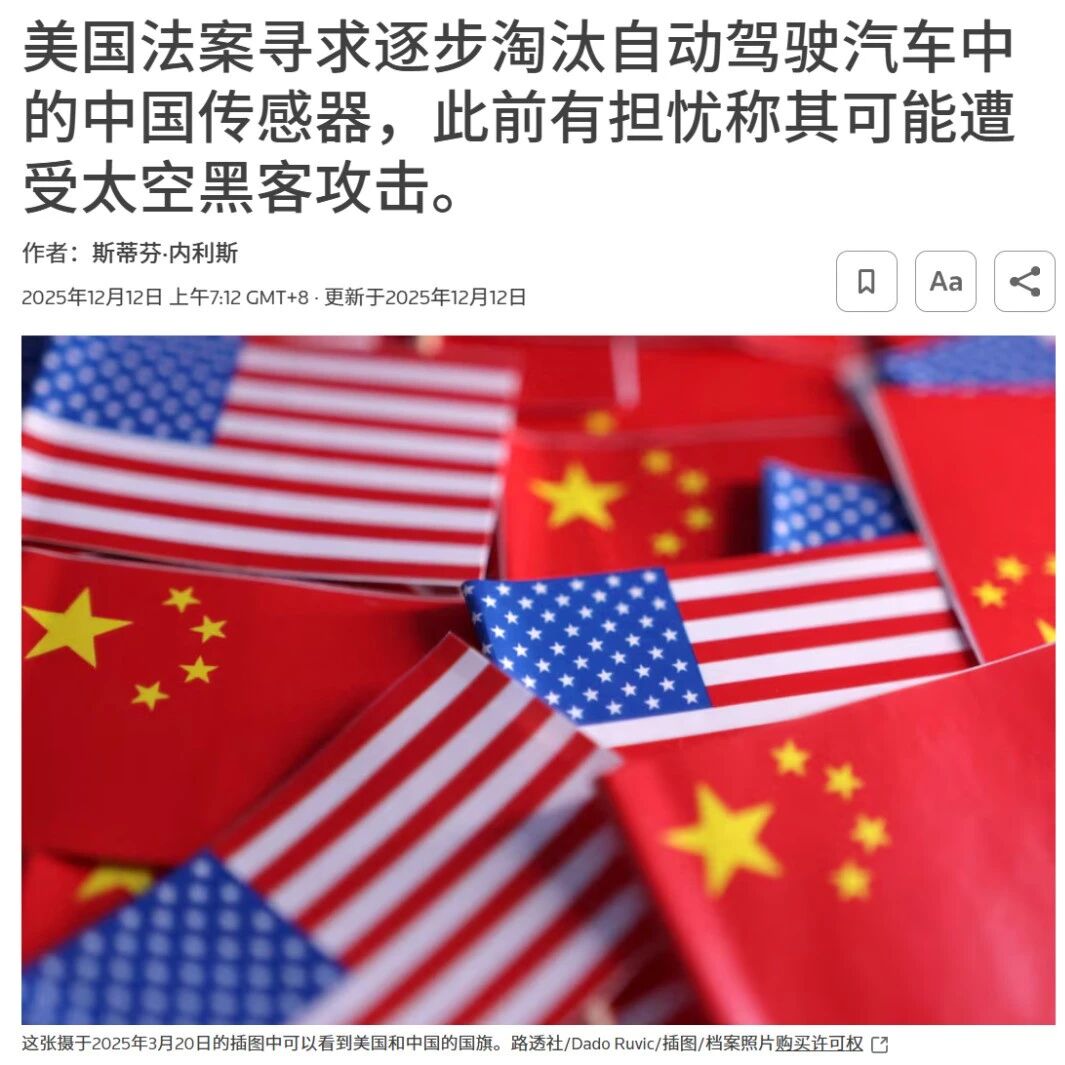
Core Viewpoint - The collapse of Luminar, a leading American lidar company, coincides with a legislative push in the U.S. to exclude Chinese sensors from critical infrastructure, highlighting the shift of lidar technology from a commercial competition to a geopolitical battleground [1][3]. Group 1: Legislative Actions and Market Impact - A new bill proposed by U.S. Congressman Raja Krishnamoorthi aims to phase out Chinese-made lidar sensors in autonomous vehicles and critical infrastructure under the guise of national security [3][4]. - The bill sets a timeline for banning new purchases within three years and replacing existing equipment within five years, citing concerns over potential cyberattacks during conflicts [4]. - Concurrently, Luminar Technologies filed for bankruptcy, reporting assets between $100 million and $500 million against liabilities of $500 million to $1 billion, marking a significant downturn for a company once partnered with major automakers [7]. Group 2: Luminar's Business Model and Challenges - Luminar's strategy focused on a superior 1550 nm lidar technology, which was initially seen as a path to advanced autonomous driving, leading to a peak market valuation of nearly $10 billion in 2020 [8][11]. - However, the high costs associated with 1550 nm technology, reliant on expensive materials, resulted in unsustainable pricing, with sales failing to cover manufacturing costs [11]. - In contrast, Chinese competitors like Hesai and RoboSense successfully reduced costs to around $200, integrating into major automotive supply chains, which Luminar could not match [11][13]. Group 3: Market Dynamics and Competitive Landscape - The global lidar market is dominated by Chinese firms, holding 93% of the passenger vehicle lidar market and 89% of the overall lidar market, with the "Big Four" Chinese companies capturing 88% of the market [13][15]. - The rapid decline in lidar costs and improvements in reliability have transformed lidar from a high-tech product to a mass-market component, driven by demand in robotics and industrial automation [16][18]. - The U.S. legislative response reflects a growing anxiety over supply chain security, as evidenced by the inclusion of Hesai in a list of entities linked to the Chinese military [19][20]. Group 4: Future Outlook and Competitive Strategies - The future of lidar technology will depend on the ability to provide comprehensive perception solutions that integrate hardware and software, rather than just competing on technical specifications [21]. - Companies that can navigate specific application scenarios and build strong ecosystem partnerships will likely establish a competitive edge in the evolving market landscape [21].