良品铺子

Search documents
休闲零食赛道:从渠道变革到10亿级大单品之路
Di Yi Cai Jing· 2025-10-27 06:49
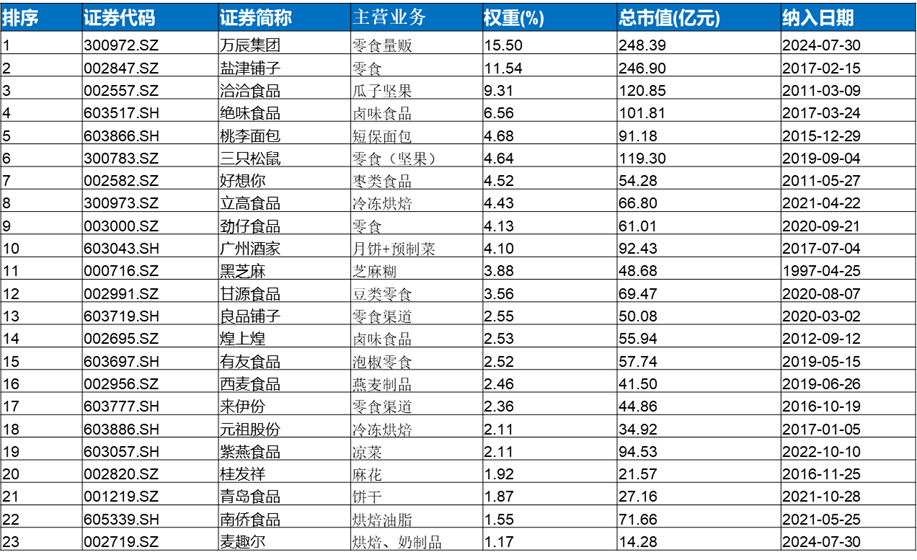
Overview of the Snack Food Sector - The A-share snack food sector has 23 companies, with Wancheng Group leading at a weight of 15.5% and a total market value of 24.8 billion [1][2] - The top 20 companies in the snack food sector have a combined market value of approximately 150 billion, significantly lower than the liquor sector, where Kweichow Moutai alone exceeds 2 trillion [2] Industry Characteristics - Snack foods are inherently less addictive compared to alcoholic beverages, and brands are still in the early stages of consumer recognition [3][5] - The snack food industry is characterized by high dependence on distribution channels, with traditional supermarkets shrinking at an annual rate of 8% [6][9] - The snack food sector has a market size exceeding 1 trillion, but the top ten companies only hold about 20% market share, much lower than the liquor and dairy sectors [7] Market Challenges - The snack food index has underperformed the overall consumer index from 2021 to 2024 due to three main pressures: shrinking traditional retail channels, low margins in bulk sales, and a price war leading to reduced profits [9][13] - The average price drop in the snack food industry reached 12% in 2023, with a corresponding 5% increase in sales volume, resulting in a profit squeeze [13] - Online price transparency has intensified competition, with leading companies experiencing a decline in online gross margins by 8-10 percentage points [13] Company Types and Performance - Domestic snack companies can be categorized into channel-based and product-based companies, with the former relying heavily on distribution channels and the latter focusing on product differentiation [14][16] - Product-based companies like Salted Fish and Jin Zai Food have shown faster growth, while channel-based companies like Liangpin Shop and Lai Yi Fen have faced significant declines [17] Case Studies - Three squirrels have seen a revenue rebound starting in Q4 2023, with Douyin channel revenue reaching 2.188 billion in 2024, a year-on-year increase of 81.7% [21] - However, they face challenges such as high traffic costs and low offline distribution margins, with a gross margin of only 15-18% [24] - Salted Fish's "Big Demon King" single product achieved over 100 million in monthly sales in March 2025, indicating successful product differentiation [42] Future Outlook - Channel-based companies should focus on cost-effective branding, while product-based companies should aim for super single products in niche categories [49] - The competition will increasingly involve both comprehensive snack brands and channel brands, necessitating a strong brand identity to withstand competition from private label products [49]

回本周期拉长,闭店加剧,量贩零食争抢上岸
3 6 Ke· 2025-10-23 12:20
Core Insights - The snack retail industry is witnessing a competitive race for the title of the first snack stock, with two major brands, Wancheng Group and Mingming Hen Mang, filing for IPOs within a short span of time [1] - Both companies have shown significant revenue growth, with Wancheng Group projecting revenues of 5.49 billion, 9.29 billion, and 32.33 billion CNY from 2022 to 2024, while Mingming Hen Mang expects revenues of 4.29 billion, 10.30 billion, and 39.34 billion CNY in the same period [1] - The rapid expansion of these brands is marked by a high number of franchise stores, with Wancheng Group aiming for 15,365 stores and Mingming Hen Mang claiming over 20,000 stores by mid-2025 [1] Expansion Strategies - Wancheng Group and Mingming Hen Mang have adopted aggressive expansion strategies, with Wancheng adding nearly 10,000 stores in just one year, averaging 26 new stores per day [3][4] - The companies rely heavily on franchise models, with Wancheng stating that 99.4% of its stores are franchises, indicating a high dependency on franchisee performance for revenue [4] Financial Performance - Both companies exhibit low profit margins compared to other sectors, with Mingming Hen Mang's gross margins ranging from 7.45% to 7.62% from 2022 to 2024, while Wancheng's gross margin is projected to be around 10.9% in 2024 [5] - The average payback period for franchisees has extended to about 29 months, indicating increasing challenges in achieving profitability [7] Market Challenges - The snack retail market is becoming saturated, leading to increased competition and a decline in profitability for franchisees, with many reporting losses and closures [9][10] - Franchisees are facing difficulties in maintaining sales, with many unable to achieve the necessary monthly revenue to break even, leading to a rise in store closures [8][9] Industry Trends - The industry is experiencing a shift as brands explore new growth avenues, such as diversifying product offerings to include trendy items like blind boxes and collectibles [11] - There are indications that brands like Wancheng Group are considering transforming into comprehensive supermarket formats to adapt to changing market dynamics [11][12]
休闲食品板块10月23日跌0.16%,好想你领跌,主力资金净流出9289.15万元
Zheng Xing Xing Ye Ri Bao· 2025-10-23 08:20
Core Viewpoint - The leisure food sector experienced a slight decline of 0.16% on October 23, with "Hao Xiang Ni" leading the losses, while the overall market indices showed minor gains [1][2]. Market Performance - The Shanghai Composite Index closed at 3922.41, up 0.22% - The Shenzhen Component Index closed at 13025.45, also up 0.22% [1]. Individual Stock Performance - "Gui Fa Xiang" (002820) led the gainers with a closing price of 13.11, up 3.23% with a trading volume of 225,200 shares and a turnover of 294 million yuan - "Hao Xiang Ni" (002582) was the biggest loser, closing at 9.56, down 4.02% with a trading volume of 178,400 shares and a turnover of 171 million yuan [1][2]. Capital Flow Analysis - The leisure food sector saw a net outflow of 92.89 million yuan from institutional investors, while retail investors contributed a net inflow of 80.48 million yuan [2][3]. - "Gui Fa Xiang" had a net inflow of 25.32 million yuan from institutional investors, representing 8.61% of its trading volume [3].

零售周报|LVMH三季度亚洲增2%;遇见小面、自然堂等拟港股上市
Sou Hu Cai Jing· 2025-10-23 02:03
Group 1 - The Ministry of Finance, General Administration of Customs, and State Taxation Administration announced adjustments to Hainan's duty-free shopping policy, effective November 1 [2] - The range of duty-free goods will expand from 45 to 47 categories, including pet supplies, portable musical instruments, drones, and small appliances [2] - Domestic products such as clothing, ceramics, and tea will be allowed for sale in duty-free shops, with VAT and consumption tax exemptions [2] - The age limit for duty-free shopping will be raised from 16 to 18 years [2] - Travelers leaving the island can enjoy duty-free shopping, with purchases counting towards an annual limit of 100,000 RMB [2] - Local residents with island departure records can purchase duty-free items without limit within the same calendar year [2] Group 2 - Michelin Guide will include Shenzhen and Ningde for the first time, with the Shenzhen guide set to launch in 2026 [3] - The 2026 Michelin Guide for Shenzhen will be published alongside the Guangzhou guide [3] - A Michelin food festival will be held in Shenzhen from October 24 to 26, featuring chefs from Michelin-starred restaurants [3] Group 3 - ZARA plans to open a large flagship store in Shanghai on Huaihai Road, featuring five retail floors and innovative technology for consumer experience [6] - The flagship store is scheduled to open in the first half of 2026, following ZARA's global store optimization strategy [6] Group 4 - The brand PhiiB opened its first store in mainland China at Qingdao's Aeon Mall, focusing on high-quality wool fabric [8] - PhiiB promotes a philosophy of luxury based on comfort and structure rather than external symbols [8] Group 5 - The ancient gold brand Baowangfu plans to open its second store in Shanghai's IFC by the end of 2025 [9] - The new store will be the seventh luxury store for Baowangfu nationwide [9] Group 6 - Liverpool FC's official store opened its first location in Guangdong at K11, featuring a wide range of club merchandise [11] - The store design integrates Liverpool's club culture with Shenzhen's innovative spirit [11] Group 7 - LVMH reported a 1% increase in Q3 organic revenue to €18.28 billion, ending two consecutive quarters of decline [11] - The fashion and leather goods segment saw a 2% decline, while perfumes and cosmetics grew by 2% [11] - Revenue in the Asia region, including China, grew by 2% in Q3 [11] Group 8 - The beauty store JIANG TUN BEAUTY by Wushang Group achieved over 1,000 transactions within ten days of opening [15] - The store focuses on high-end cosmetics and aims to create an integrated shopping and experience space [15] Group 9 - Jiu Mao Jiu Group announced plans to exceed 200 new model restaurants by the end of the year, with positive sales trends [16] - The new model restaurants have received favorable responses since their launch [16] Group 10 - The tea brand Bawang Chaji opened its eighth store in Hong Kong within a year, continuing its expansion in the region [17] - The brand aims to cover more areas in Hong Kong with additional store openings planned [17] Group 11 - The bakery brand 85°C is closing over 40 stores in mainland China this year, marking its largest adjustment in five years [20] - The current number of operational stores stands at 659, with approximately 440 in mainland China [20] Group 12 - The Chinese beauty brand Natureroad submitted its IPO application to the Hong Kong Stock Exchange, aiming for a public listing [22] - Natureroad is the third-largest domestic cosmetics group in China based on projected 2024 retail revenue [22] Group 13 - Hailan Home announced plans to issue H-shares and list on the Hong Kong Stock Exchange to enhance its global strategy [25] - The company aims to accelerate overseas business development and improve its international brand image [25] Group 14 - Meili Tianyuan announced a strategic acquisition of 100% of Shanghai Siyuanli for 1.25 billion RMB, expanding its beauty service network [27] - After the acquisition, the total number of stores will reach 734, enhancing the company's market presence [27]
ESG解读|治理失序引发股权冻结,良品铺子自断国资救援路
Sou Hu Cai Jing· 2025-10-22 08:46
Core Viewpoint - The termination of the control transfer of Liangpinpuzi has raised concerns about the company's governance and operational challenges, particularly due to unresolved equity disputes and the failure to secure state-owned capital investment [2][12]. Group 1: Control Transfer Termination - The control transfer agreement initiated on July 17 involved the transfer of 21% of shares to Wuhan Changjiang International Trade Group for approximately 1.046 billion yuan [3][4]. - The termination was due to the failure to meet the condition that the transferred shares must be free of rights defects, as a court froze 19.89% of shares held by the controlling shareholder due to a dispute with Guangzhou Light Industry [5][6]. - The dispute arose from a prior agreement granting Guangzhou Light Industry a right of first refusal, which was not honored by the controlling shareholder, leading to legal action [9][11]. Group 2: Governance Issues - The "one share, two sales" incident highlights significant governance shortcomings within Liangpinpuzi, as the board failed to intervene in the controlling shareholder's breach of contract [8][11]. - The company did not disclose the key agreement with Guangzhou Light Industry in a timely manner, leading to market information asymmetry and raising questions about compliance with disclosure obligations [11][12]. - The failure to manage the risks associated with the controlling shareholder's actions indicates a breakdown in the company's risk management framework [11][12]. Group 3: Operational Challenges - Liangpinpuzi has faced deeper operational challenges, including a significant decline in net profit since 2020, attributed to aggressive pricing strategies and a reduction in store numbers [13][15]. - The failed introduction of state-owned capital was seen as a critical opportunity for the company to enhance its supply chain and financial support, which is now lost [15][16]. - The company has experienced frequent share reductions by major shareholders, indicating instability in its ownership structure [15][16].

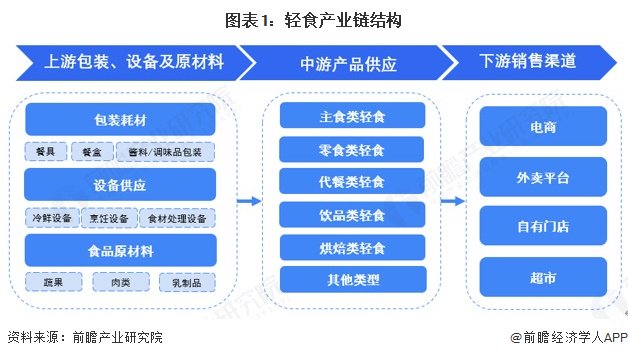
【干货】轻食产业链全景梳理及区域热力地图
Qian Zhan Wang· 2025-10-22 07:38
Core Insights - The light food industry is characterized by a well-defined supply chain, with upstream suppliers focusing on packaging, equipment, and raw materials, while the midstream includes various light food products, and downstream sales channels encompass e-commerce, delivery platforms, and physical stores [1][2]. Industry Overview - The upstream of the light food industry includes suppliers such as 富岭股份, 南王科技, 海容冷链, and others, providing packaging, equipment, and raw materials [2]. - The midstream features key players like 奈雪的茶, 三只松鼠, and 良品铺子, which supply a range of light food products [2]. - The industry is concentrated in economically developed regions of China, where consumer markets are active and the supply chain is well-supported [4]. Company Performance - In 2024, 奈雪的茶 is expected to have significant sales of light food products with a strong cost-performance ratio, while 三只松鼠's sub-brand is seeing impressive single product sales [7]. - 康比特's sports nutrition packages are performing well in terms of sales and repurchase rates, and 西麦食品 leads in market share for instant oatmeal on Douyin [7]. Recent Developments - In 2025, 奈雪的茶 launched the "No Sugar Natural Nutrition+" initiative, introducing new light food products and establishing over 30 "奈雪 Green" light food stores in major cities [9]. - 三只松鼠 introduced a low-fat, high-protein meal replacement snack, while 良品铺子 launched a non-fried, reduced-fat crispy biscuit [9]. - 百合股份 targeted women with new product lines, and KEEP initiated collaborations to promote a "food and exercise" approach [9].

靠奥特曼、小马宝莉年入8亿,毛利超3成,零食界泡泡玛特冲刺港股
21世纪经济报道· 2025-10-21 12:46
Core Viewpoint - The article discusses the upcoming IPO of Guangdong Jintian Animation Co., Ltd., which is positioned as a leading player in the children's snack market, integrating popular IPs into its products, similar to the model of Pop Mart [1][10]. Group 1: Company Overview - Guangdong Jintian Animation Co., Ltd. has submitted its IPO application to the Hong Kong Stock Exchange, with joint sponsors being China Merchants Securities International and China Galaxy International [1]. - The company specializes in "IP fun food," which incorporates anime elements into traditional snacks, offering products like juice gummies featuring Ultraman and toys associated with popular IPs [5][6]. Group 2: Financial Performance - The revenue from the top five licensed IPs (Ultraman, My Little Pony, Crayon Shin-chan, Pleasant Goat and Big Big Wolf, and Peppa Pig) is projected to be RMB 5.36 billion, RMB 5.88 billion, and RMB 7.54 billion for the years 2022, 2023, and 2024 respectively, accounting for 90.0%, 88.7%, and 85.9% of total revenue [7]. - The company has shown consistent revenue growth, with figures of RMB 5.96 billion, RMB 6.64 billion, RMB 8.77 billion, and RMB 4.44 billion for the years 2022, 2023, 2024, and the first half of 2025 respectively, alongside increasing gross margins [10][11]. Group 3: Market Position and Strategy - The IP food market in China is expected to grow from RMB 354 billion in 2024 to RMB 849 billion by 2029, with a compound annual growth rate of 18.5% [10]. - Jintian Animation is positioned as the largest IP fun food company in China with a market share of 7.6% and the fourth largest IP food company with a market share of 2.5% [10]. - The company plans to enhance its IP portfolio and develop proprietary IPs to mitigate risks associated with reliance on external IP licenses [7][12]. Group 4: Sales Channels - The company has established strong sales channels, particularly in third- and fourth-tier cities, collaborating with various retail outlets including supermarkets and specialty snack stores [8].

靠奥特曼、小马宝莉年入8亿,毛利超3成,零食界泡泡玛特冲刺港股
2 1 Shi Ji Jing Ji Bao Dao· 2025-10-21 12:44
Core Viewpoint - The company, Guangdong Jintian Animation Co., Ltd., is preparing for an IPO on the Hong Kong Stock Exchange, aiming to become a significant player in the IP food market, similar to brands like Pop Mart and Miniso [1][12]. Company Overview - Jintian Animation specializes in children's snacks that incorporate popular IP elements, such as toys and badges, targeting a young audience [3][6]. - The company's revenue heavily relies on key IPs like Ultraman, My Little Pony, and Crayon Shin-chan, with the top five IPs contributing 90% of total revenue in 2022 [5][12]. Market Position - By 2024, Jintian Animation is projected to be the largest IP fun food company in China, holding a market share of 7.6% [13]. - The overall IP food market in China is expected to grow from RMB 354 billion in 2024 to RMB 849 billion by 2029, with a compound annual growth rate of 18.5% [12]. Financial Performance - The company has shown consistent revenue growth, with revenues of RMB 5.96 billion in 2022, RMB 6.64 billion in 2023, and projected RMB 8.77 billion in 2024 [14]. - Jintian Animation's gross margin is notably higher than other snack brands, reaching 33.7% in 2024, compared to 24.3% for Three Squirrels and 26.1% for Bestore [14][15]. Strategic Initiatives - The company plans to diversify its IP portfolio and enhance its product development capabilities through the IPO proceeds, which will also be used to expand sales networks and improve supply chain infrastructure [17]. - Jintian Animation aims to mitigate risks associated with reliance on external IPs by developing its own IPs and enhancing its design capabilities [9][8]. Sales Channels - The company has established a strong sales network, particularly in lower-tier cities, collaborating with various retail outlets, including supermarkets and convenience stores [10].


IP食品半年卖了4.4亿,“零食界的泡泡玛特”冲击港股IPO
2 1 Shi Ji Jing Ji Bao Dao· 2025-10-21 11:45
Core Viewpoint - The company, Guangdong Jintian Animation Co., Ltd., is preparing for an IPO on the Hong Kong Stock Exchange, positioning itself as a leader in the Chinese IP play food industry, focusing on the production and sale of IP-themed snacks [1][7]. Group 1: Company Overview - Jintian Animation is recognized as a pioneer in the IP play food sector in China, with a business model that integrates animated elements into traditional snacks, appealing to young children [2][3]. - The company has established five production bases across the country and holds 26 licensed IPs with over 600 active SKUs, including categories like candy, biscuits, and chocolate [1][3]. Group 2: Revenue and IP Dependency - The majority of the company's revenue is derived from key IPs such as Ultraman and My Little Pony, contributing significantly to total income, with projections showing a decrease in reliance from 90% in 2022 to 85.7% in the first half of 2025 [3][5]. - Jintian Animation acknowledges the risks associated with heavy reliance on external IP licenses, as non-exclusive agreements allow competitors to produce similar products, potentially impacting pricing and profitability [5]. Group 3: Market Position and Growth - The IP food market in China is projected to grow from RMB 354 billion in 2024 to RMB 849 billion by 2029, with a compound annual growth rate of 18.5% [7]. - Jintian Animation is positioned as the largest IP play food company and the fourth largest in the overall IP food market in China, holding market shares of 7.6% and 2.5%, respectively [8]. Group 4: Financial Performance - The company has shown consistent revenue growth, with figures of RMB 5.96 billion in 2022, RMB 6.64 billion in 2023, and projected RMB 8.77 billion in 2024, alongside improving gross margins [9]. - Jintian Animation's gross margin is notably higher than that of other snack brands, reaching 34.7% in the first half of 2025, compared to competitors like Three Squirrels and Bestore [9]. Group 5: Future Plans - The proceeds from the IPO will be allocated to enhance product development, brand awareness, sales network expansion, capacity upgrades, and the enrichment of the company's IP portfolio [10].
休闲食品板块10月21日涨1.1%,西麦食品领涨,主力资金净流入7573.52万元
Zheng Xing Xing Ye Ri Bao· 2025-10-21 08:21
Market Overview - The leisure food sector increased by 1.1% on October 21, with Ximai Food leading the gains [1] - The Shanghai Composite Index closed at 3916.33, up 1.36%, while the Shenzhen Component Index closed at 13077.32, up 2.06% [1] Individual Stock Performance - Ximai Food (002956) closed at 21.40, up 10.03% with a trading volume of 100,500 shares and a transaction value of 208 million yuan [1] - Haoxiangni (002582) closed at 9.62, up 4.45% with a trading volume of 218,300 shares [1] - Wancheng Group (300972) closed at 198.95, up 3.02% with a trading volume of 28,100 shares and a transaction value of 550 million yuan [1] - Other notable performers include Liangpin Shop (603719) up 1.94%, Maiqu'er (002719) up 1.73%, and Qingdao Food (001219) up 1.56% [1] Capital Flow Analysis - The leisure food sector saw a net inflow of 75.7352 million yuan from institutional investors, while retail investors experienced a net outflow of 7.4904 million yuan [2] - The main capital inflow was concentrated in stocks like Wancheng Group and Haoxiangni, with significant outflows from retail investors [3] Detailed Capital Flow for Key Stocks - Wancheng Group had a net inflow of 64.8357 million yuan from institutional investors, while retail investors saw a net outflow of 61.3825 million yuan [3] - Haoxiangni experienced a net inflow of 43.1288 million yuan from institutional investors, with a net outflow of 35.6105 million yuan from retail investors [3] - Ximai Food had a net inflow of 35.9082 million yuan from institutional investors, with retail investors also experiencing a net outflow [3]