Waymo

Search documents
Waymo launches robotaxi service in Miami, extending U.S. lead
CNBC· 2026-01-22 14:00
Core Viewpoint - Waymo has launched its robotaxi service for paying riders in Miami, marking a significant step in its 2026 market expansion strategy, positioning itself ahead of competitors like Tesla and Zoox [1] Group 1: Service Launch and Expansion - Waymo's robotaxi service is now available in a 60-square-mile area of Miami, including key neighborhoods such as the Design District, Wynwood, Brickell, and Coral Gables [2] - The company began testing its vehicles in Miami in early 2025 and plans to extend services to Miami International Airport in the future [2] Group 2: User Engagement and Partnerships - Nearly 10,000 Miami residents have signed up to try the robotaxi service, with new riders being invited on a rolling basis [3] - Waymo is collaborating with mobility company Moove for fleet management services, which include vehicle charging, cleaning, and repairs [3] Group 3: Safety and Operational Challenges - Waymo has faced public concerns regarding the safety and driving behavior of its vehicles, particularly highlighted by incidents of gridlock during storms and power outages in San Francisco [4] - The company is actively refining its systems to improve navigation during adverse weather conditions [4]



人均64万元年终奖!这家供应商是如何实现逆势上扬的?
Zhong Guo Qi Che Bao Wang· 2026-01-21 02:11
Core Viewpoint - SK Hynix announced a record year-end bonus of over 136 million KRW (approximately 640,000 RMB) per employee, attributed to a historic labor agreement and strong company performance, with projected operating profits nearing 45 trillion KRW (approximately 212.7 billion RMB) by 2025 [2][3]. Group 1: Record Bonuses and Labor Agreements - The significant bonuses are a result of a historic labor agreement that removed the previous cap on profit-sharing, allowing 10% of annual operating profits to be allocated to the bonus pool [3]. - The total bonus pool is expected to reach 4.5 trillion KRW (approximately 21.3 billion RMB), with an average of 136 million KRW per employee based on the company's workforce of 33,000 [3]. Group 2: Market Dynamics and Stock Performance - The memory market is reportedly in a "super bull market," surpassing previous highs due to increased demand from sectors like smart cars and AI, with prices for DDR5 memory rising over 300% since July 2025 [4]. - SK Hynix's stock price surged from approximately 204,000 KRW at the end of 2024 to about 760,000 KRW by the end of 2025, marking a 275% increase, making it one of the best-performing chip stocks globally [4]. Group 3: Automotive Memory Business Growth - The automotive memory segment has seen significant growth, driven by the rapid development of smart vehicles and the increasing demand for high-performance memory to support advanced features like autonomous driving [5][6]. - SK Hynix has strategically positioned itself in the automotive memory market, leveraging its technological advancements and securing ASIL-D certification, which is crucial for automotive safety standards [6]. Group 4: Technological Innovations and Collaborations - SK Hynix is focusing on both traditional memory technology and innovative AI-driven memory solutions for automotive applications, enhancing performance and reliability [6][7]. - Collaborations with major players in the autonomous driving sector, such as Waymo, are expanding, indicating a growing market for HBM technology in automotive applications [7]. Group 5: Future Market Outlook - The demand for memory is expected to continue rising, particularly in the context of AI and smart automotive technologies, with significant implications for market competition and pricing strategies [8]. - The memory market is dominated by three major players—Samsung, SK Hynix, and Micron—who collectively hold over 90% market share, indicating a highly concentrated competitive landscape [8][9].

A股指数集体低开:沪指跌0.25%,商业航天、AI应用等板块跌幅居前
Feng Huang Wang Cai Jing· 2026-01-21 01:32
Market Overview - Major indices opened lower with Shanghai Composite Index down 0.25%, Shenzhen Component down 0.38%, and ChiNext down 0.24% [1] - The trading volume for Shanghai Composite was 577 million with a turnover of 8.73 billion, while Shenzhen Component had 846 million with a turnover of 12.89 billion [2] External Market Impact - Concerns over global trade tensions reignited by U.S. President Trump's insistence on controlling Greenland led to significant declines in U.S. indices, with the Dow Jones down 1.76%, S&P 500 down 2.06%, and Nasdaq down 2.39% [3] - Notable declines in popular Chinese stocks, with Alibaba down 1.82%, JD.com down 1.80%, and NIO down 3.18% [3] Industry Insights - Huatai Securities highlighted 2026 as a critical year for global L4 autonomous driving commercialization, driven by legislative changes in the U.S. and advancements in China [4] - CITIC Securities noted the acceleration of AI glasses development, predicting a product explosion by 2025, with significant consumer demand expected due to policy support [5] - Guojin Securities reported that the domestic PVC industry is nearing the end of its expansion cycle, with potential improvements in supply-demand dynamics as high-cost capacities exit the market [6] - CICC observed positive changes in real estate policies and supply-side dynamics, suggesting increased attention to the real estate sector in the short term [7][8]

华泰证券:2026年是全球L4级自动驾驶产业化关键一年
Xin Lang Cai Jing· 2026-01-21 00:25
Core Viewpoint - The U.S. House of Representatives is set to review the "SELF DRIVE Act of 2026" on January 13, 2026, which proposes to increase the FMVSS exemption limit from 2,500 vehicles to 90,000 and establish federal priority, indicating a rare bipartisan consensus that may break a decade-long legislative deadlock [1] Group 1: Legislative Developments - The proposed legislation aims to enhance the framework for autonomous driving, potentially accelerating the commercialization of Level 4 (L4) autonomous driving technology [1] - The bipartisan agreement in Congress is seen as a significant step towards resolving long-standing legislative issues in the autonomous vehicle sector [1] Group 2: Industry Trends - Waymo has reached a weekly order volume of 450,000, while Tesla's Cybercab is expected to begin mass production in April, marking a period of scale expansion for Robotaxi commercialization in the U.S. [1] - 2026 is identified as a critical year for the global L4 autonomous driving industry, with the clarification of the federal legislative framework in the U.S. and the rollout of Level 3 (L3) pilot programs in China [1] Group 3: Investment Recommendations - The report suggests focusing on key players within the autonomous driving industry chain, given the anticipated acceleration in commercialization and legislative support [1]

谁来啃下全球汽车制造业“最后15%难题”
虎嗅APP· 2026-01-20 13:20
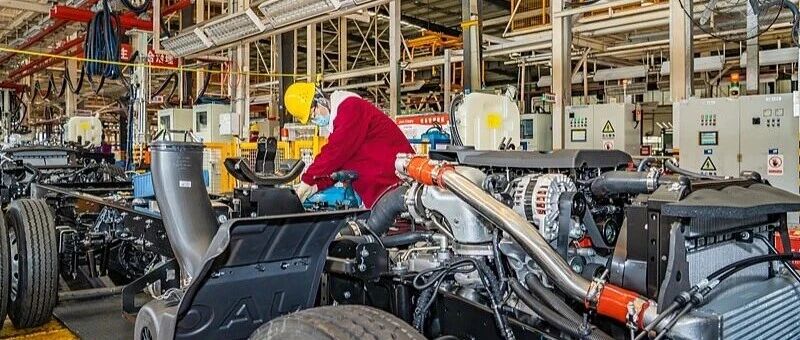
Core Viewpoint - The article discusses the challenges and opportunities in the automotive manufacturing sector, particularly focusing on the "last 15% problem" where automation rates drop significantly in assembly lines compared to other manufacturing processes. The company, Guangxiang Technology, aims to address this gap by developing embodied intelligence solutions tailored for complex tasks in automotive manufacturing [3][4][10]. Group 1: Industry Challenges - The automotive manufacturing industry faces a significant automation gap, with assembly line automation rates plummeting from nearly 99% in other processes to below 15% [3][4]. - Traditional industrial robots struggle with flexible tasks that require hand-eye coordination, such as connecting wiring harnesses and installing components, which are essential in the assembly process [4][6]. - The complexity of tasks in assembly lines presents a barrier to automation, as existing robots are not equipped to handle the variability and intricacies of these operations [10][11]. Group 2: Company Strategy - Guangxiang Technology adopts a gradual approach to embodied intelligence, similar to Tesla's strategy in autonomous driving, by focusing on specific, complex tasks within the automotive manufacturing sector rather than pursuing general-purpose humanoid robots [4][9]. - The company has developed a four-quadrant analysis framework to identify suitable environments and tasks for their robots, aiming to transition from standard environments with simple tasks to more complex operations in standard environments [6][15]. - The core of Guangxiang's strategy is the GOPS platform, which serves as a model-building system for embodied robots, enabling rapid skill acquisition and deployment across different manufacturing sites [6][10][40]. Group 3: Market Insights - The automotive manufacturing sector is deemed a more viable entry point for embodied intelligence due to its structured processes and the potential for significant automation improvements, unlike other sectors like chip manufacturing where automation is already prevalent [19][20]. - The company emphasizes the importance of understanding the specific needs and workflows within automotive manufacturing to develop effective robotic solutions, which involves extensive on-site research and collaboration with industry professionals [21][23]. - Guangxiang Technology identifies that the core skills required for assembly tasks can be distilled into a limited number of common operations, significantly reducing the complexity of developing robotic solutions [23][24]. Group 4: Technological Development - The company recognizes the necessity of integrating advanced data solutions, including synthetic data generation and real-time operational data collection, to overcome the data scarcity in industrial settings [29][31]. - Guangxiang Technology plans to leverage simulation data as a primary source for training models, given the high precision of industrial 3D models and the consistency of objects in manufacturing environments [31][32]. - The company aims to differentiate itself by combining advanced modeling capabilities with deep industry knowledge, ensuring that their robotic solutions are tailored to the specific demands of automotive manufacturing [36][34].
突破千辆,单车盈利,自动驾驶开始“自己赚钱”了?
3 6 Ke· 2026-01-20 12:50
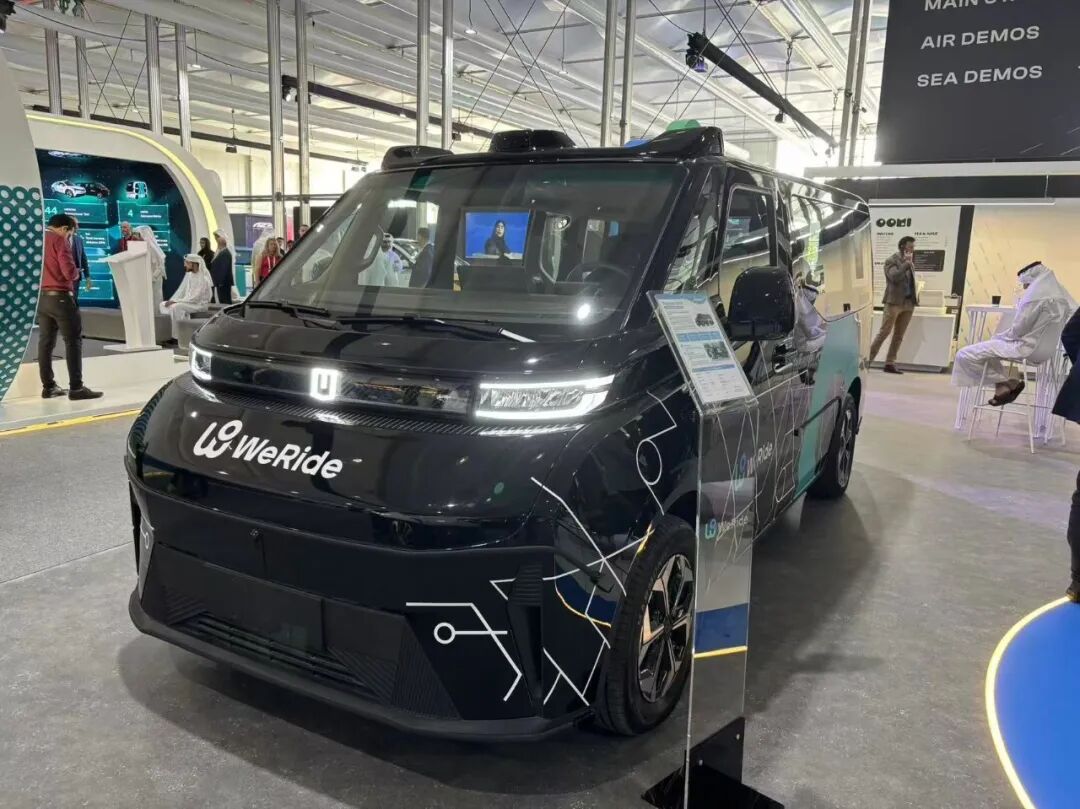
Core Insights - The Chinese autonomous driving industry is experiencing significant breakthroughs in large-scale operations, with companies like Pony.ai and WeRide achieving fleet sizes exceeding 1000 vehicles, marking a transition from "technical validation" to "scaled service operations" [1][7] Company Developments - Pony.ai announced a fleet size of 1159 vehicles as of December 2025, while WeRide reached 1023 vehicles by January 2026, both entering the "thousand-vehicle era" [1][3] - Pony.ai's CEO emphasized the importance of vehicle density in urban areas for profitability, stating that reaching a fleet size of 1000 vehicles allows for a shift from loss-making to at least break-even operations per vehicle [3] - WeRide reported that its fleet in Abu Dhabi is approaching single-vehicle break-even, while Pony.ai achieved single-vehicle profitability in Guangzhou by optimizing its asset-light model [3][4] Market Positioning - Pony.ai is the only company authorized to operate autonomous ride-hailing services in all four first-tier cities in China, while WeRide has expanded its operations to 11 countries and over 30 cities [4] - The Abu Dhabi market is seen as an ideal environment for Robotaxi commercialization, with WeRide's daily ride volume nearing half that of traditional taxis [6] Industry Trends - The global Robotaxi market is projected to reach $66.6 billion by 2030, with China expected to account for over half of this market [7] - Major players like Waymo and Tesla are also in the Robotaxi space, with Waymo operating over 1500 vehicles and achieving significant ride volumes [7][8] Financial Performance - In Q3 2025, Pony.ai reported total revenue of 181 million yuan, a 72% year-over-year increase, while WeRide achieved 171 million yuan with a 144% growth rate [9] - Both companies are still in the investment phase, with Pony.ai's net loss increasing to 616 million yuan and WeRide's loss narrowing by 70.5% to 307 million yuan [9] - The companies have demonstrated the potential for positive marginal contributions from their Robotaxi businesses, but achieving overall profitability remains a challenge [9] Capital Market Activity - Both Pony.ai and WeRide went public in November 2025, establishing a dual listing in Hong Kong and the U.S. [10] - Pony.ai anticipates needing to deploy tens of thousands of Robotaxi vehicles to reach overall break-even, projecting a fleet size of 100,000 by 2030 [10]
美联邦自驾法案破冰,Robotaxi提速
HTSC· 2026-01-20 09:35
Investment Rating - The report maintains a "Buy" rating for key companies in the autonomous driving sector, including Horizon Robotics, Hesai Technology, Pony.ai, WeRide, Xiaopeng Motors, and Suda Technology [6][8]. Core Insights - The U.S. House of Representatives is reviewing the "SELF DRIVE Act of 2026," which proposes to increase the exemption limit for manufacturers from 2,500 vehicles to 90,000 vehicles, significantly enhancing the potential for Robotaxi mass production [1][2]. - The legislation aims to resolve core obstacles to the scaling of Robotaxi deployment, including the introduction of a "deemed approval" mechanism for exemption applications and establishing federal regulations as a priority over state laws [2][3]. - 2026 is projected to be a pivotal year for the global L4 autonomous driving industry, with the U.S. federal legislative framework becoming clearer and China accelerating its L3 pilot projects and L4 commercialization [1][4]. Summary by Sections Legislative Developments - The "SELF DRIVE Act of 2026" is expected to break a decade-long legislative deadlock, with bipartisan support leading to a clearer timeline for implementation [3]. - Key milestones include committee markup meetings in Q1 2026 and potential integration with the 2026 Surface Transportation Reauthorization Act [3]. Market Expansion - The U.S. Robotaxi market is transitioning from technology validation to large-scale expansion, with companies like Waymo and Tesla ramping up operations [4]. - Waymo's weekly paid orders reached 450,000 by December 2025, with plans to expand operations from 10 to 30 cities [4]. - Tesla's Cybercab is expected to begin mass production in April 2026, further contributing to market growth [4]. Investment Recommendations - The report emphasizes the synchronized development of L4 autonomous driving in both the U.S. and China, suggesting that this convergence will drive significant industry growth [5]. - Companies such as WeRide and Pony.ai are highlighted for their international expansion efforts, while other L4 applications like Robovan and Robotruck are also gaining traction [5].


未知机构:美国自动驾驶法案允许无方向盘车辆上路美国众议院1月13日关于SE-20260120
未知机构· 2026-01-20 02:15
Summary of Key Points from the Document Industry Involved - The document discusses the **autonomous driving industry** in the United States, specifically focusing on the implications of new legislation for self-driving vehicles. Core Insights and Arguments - The **SELF DRIVE Act** hearing held by the U.S. House of Representatives on January 13 has received bipartisan support for significantly increasing the exemption cap for autonomous vehicles to **90,000 units per year** [1] - This legislative progress is viewed as a critical step in removing regulatory barriers for the large-scale commercial deployment of **Robotaxi services** [1] - The new regulations are expected to directly accelerate the production process of vehicles without steering wheels, such as **Tesla's Cybercab**, and significantly shorten the timeline for commercialization across the industry [1] Other Important but Potentially Overlooked Content - The establishment of **federal priority** in the legislation indicates a shift towards a more unified regulatory framework for autonomous vehicles, which could enhance investor confidence and attract more capital into the sector [1]
英伟达-特斯拉FSD深度体验交流
2026-01-20 01:50
Summary of Conference Call on Robotaxi Developments Industry Overview - The conference discusses the developments in the Robotaxi industry, focusing on key players such as Waymo, Tesla, and Nvidia, along with their respective technologies and market strategies [1][2][3][4][5][6][7][8][9][10][11][12][13][14][15][16][17][18][19][20][21][22][23][24][25][26]. Key Players and Their Developments Waymo - Waymo is currently the largest Robotaxi operator globally with a fleet of 2,500 vehicles, although this number is significantly lower than expected [2]. - The company excels in software application, response speed, and supply matching, providing a comprehensive user experience [2]. - Waymo's system is based on rules and high-definition maps, which limits its scalability outside designated areas [1][5]. - The transition to an end-to-end model poses challenges, including regulatory pressures and the complexity of changing its existing technology stack [10]. Tesla - Tesla's Robotaxi does not rely on high-definition maps but uses open-source map data, allowing it to cover more routes and provide a more complete end-user experience [4][5]. - Currently, Tesla operates a limited number of vehicles (150) in Texas and has begun testing fully autonomous operations [4][11][12]. - The cost of Tesla's Robotaxi service is significantly lower than competitors like Uber, with fares from San Francisco to Nvidia headquarters costing under $30 compared to Uber's $50-$60 [4]. - Tesla faces challenges with software stability and low failure rates, which are critical for the success of its Robotaxi operations [13][14]. Nvidia - Nvidia showcased an end-to-end autonomous driving model using the Mercedes CLA, which exceeded expectations during testing [9]. - The company plans to cover all of California by Q1 2026 and gradually expand across North America, although it has decided not to enter the Chinese market for autonomous driving [3][9][23]. - Nvidia continues to offer lidar technology options to clients but has not released a formal Robotaxi solution [3][20]. Competitive Landscape - Other notable competitors in the North American market include Amazon's Zoox, which, despite being a significant player, is lagging in progress compared to Waymo and Tesla [6]. - The performance of competitors like Lucid and Pony.ai is also mentioned, with Waymo being favored due to its strong AI integration and operational experience [8]. Regulatory and Market Challenges - The regulatory environment in the U.S. and China is described as aggressive, with both countries making significant strides in autonomous driving regulations [3][26]. - Local government support varies, with some regions in China showing superficial support for Robotaxi initiatives, while the U.S. faces challenges due to the autonomy of individual states [24]. User Experience and Technology Differences - Waymo offers a more polished user experience, including features like music integration and user onboarding, while Tesla leverages its existing ecosystem for a familiar experience [15]. - Differences in remote takeover capabilities between Waymo and Tesla are noted, with Waymo allowing remote monitoring and control of vehicles [16]. Conclusion - The Robotaxi industry is rapidly evolving, with key players like Waymo and Tesla leading the charge. However, challenges related to scalability, regulatory compliance, and technology integration remain significant hurdles for all companies involved in this space [1][2][3][4][5][6][7][8][9][10][11][12][13][14][15][16][17][18][19][20][21][22][23][24][25][26].


一个自驾算法工程师的具身智能思考
自动驾驶之心· 2026-01-19 03:15
Core Viewpoint - The relationship between autonomous driving and embodied intelligence is explored, highlighting that while they share technical similarities, their mass production challenges and development cycles differ significantly [1]. Generalization - Autonomous driving focuses on scene generalization, requiring a comprehensive understanding of current scenarios to make decisions, such as knowing when to brake or not based on the presence of obstacles [2]. - The current challenges in autonomous driving stem from insufficient scene recognition capabilities, leading to corner cases that complicate L2 assisted driving, as evidenced by incidents like Waymo's vehicle entering a gunfight scene [2]. Embodied Intelligence - Embodied intelligence emphasizes behavior generalization rather than being a generalist or social expert, focusing on robustly completing specific tasks under various disturbances [3]. - The commercial application of autonomous driving represents a terminal point, while embodied intelligence's application is more diverse, akin to branches growing from a tree [4][5]. Commercial Viability - The commercial rollout of autonomous driving is fraught with challenges, as it aims to replace a single scenario (from point A to B) with high safety requirements, resulting in high R&D barriers and strong reusability [5]. - The commercial landscape for autonomous driving has seen ups and downs, with companies like Cruise halting operations due to frequent accidents, while others like Waymo and Baidu are gradually expanding their services [5]. - Tesla's L2 assisted driving has reignited interest in commercial applications, benefiting from the safety net provided by human drivers [5]. Application Scenarios - Embodied intelligence can find various commercial applications across different development stages, with existing industrial robots already operating on assembly lines and service robots showing promise in specific tasks [6]. - The safety constraints for embodied intelligence applications are relatively relaxed compared to autonomous driving, allowing companies to pursue application scenarios more aggressively [6].