
赛富时

Search documents
“软件股末日论”点燃大变革! 恐慌抛售之后,市场将捧起AI时代的“软件基石”
美股IPO· 2026-02-07 00:35
Core Viewpoint - A portion of institutional funds is beginning to enter the market for "bottom-fishing" in software stocks that have recently experienced significant declines, agreeing with Jensen Huang's positive outlook on software stocks, suggesting that the market has misjudged strong software giants focused on "AI + core operational processes" [1][4] Group 1: Market Dynamics - The narrative of a "Software-mageddon" is gaining traction, with significant sell-offs in the software sector following the launch of new AI tools by Anthropic, leading to a notable drop in the S&P 500 Software & Services Index, which has fallen approximately 30% since its recent peak at the end of October [3][9] - The software sector faced its most severe sell-off since 2022, with the S&P 500 Software & Services Index experiencing a decline of over 5% in a single day, extending its losing streak to eight consecutive trading days [3][9] - Concerns about AI's impact on traditional SaaS business models have intensified, particularly following the introduction of Anthropic's AI tools, which are designed to handle complex workflows traditionally managed by SaaS providers [7][8] Group 2: Institutional Perspectives - Some institutional investors are starting to view the recent sell-off as an opportunity, believing that high-quality software companies embracing AI may soon experience a technical rebound [4][10] - Analysts from major financial institutions, including Goldman Sachs and Wedbush Securities, suggest that the selling pressure may have peaked, indicating potential for a market bottom and a return of institutional capital to the software sector [16][18] - Rick Sherlund, a prominent analyst, emphasizes that the software industry undergoes significant transformations every 10 to 15 years, and the current AI-driven changes may lead to a new bull market rather than a decline [20] Group 3: Long-term Outlook - Despite fears that AI could completely replace enterprise software, many analysts believe that AI will instead reshape the profitability trajectories of software companies, with a focus on enhancing existing platforms rather than replacing them [12][14] - The market's panic over AI's potential to disrupt software is viewed as exaggerated, with many analysts asserting that established companies with robust platforms, like SAP, will likely benefit from AI advancements [5][19] - The ongoing transition from consumer-facing AI applications to enterprise applications is expected to drive explosive growth in demand for reasoning and computational capabilities [20]



软件股末日论”点燃大变革! 恐慌抛售之后,市场将捧起AI时代的“软件基石
Zhi Tong Cai Jing· 2026-02-06 11:49
Core Viewpoint - The recent narrative of "Software-mageddon" has led to a significant sell-off in the software sector, particularly affecting SaaS stocks, following the launch of new AI tools by Anthropic, which are perceived as threats to traditional software business models [1][4][5]. Group 1: Market Reaction - The S&P 500 Software & Services Index has experienced a decline of approximately 30% since its recent peak at the end of October, marking the most severe sell-off since 2022 [1][6]. - Major software companies, including Thomson Reuters and Salesforce, have seen their stock prices drop significantly, with some experiencing declines of up to 10% in a single day [5][6]. - The sell-off has been exacerbated by disappointing earnings guidance from major companies, including Microsoft, and heightened expectations for AI infrastructure spending [5][6]. Group 2: Institutional Response - Some institutional investors are beginning to enter the market to buy undervalued software stocks, believing that the market has overreacted to the AI threat [2][12]. - Analysts express a divided view on the long-term impact of AI on software companies, with some believing that AI will reshape profit trajectories rather than eliminate the need for existing software [9][14]. Group 3: Expert Opinions - Rick Sherlund, a prominent analyst, argues that the software industry undergoes significant transformations every 10 to 15 years, and companies with strong fundamentals, like SAP, will likely benefit from AI rather than be threatened by it [3][16]. - Nvidia's CEO Jensen Huang emphasizes that the notion of AI completely replacing software is illogical, suggesting that AI will enhance existing software rather than replace it [7][8]. - The current market panic is described as "micro-hysteria," with experts suggesting that the fears surrounding AI's impact on software are exaggerated [8][12]. Group 4: Future Outlook - The software sector is expected to experience a technical rebound as investors reassess the long-term value of companies that integrate AI into their operations [2][11]. - High-quality software companies that embrace AI are likely to emerge stronger from the current turmoil, as the market begins to differentiate between those with robust business models and those that are more vulnerable [11][15].
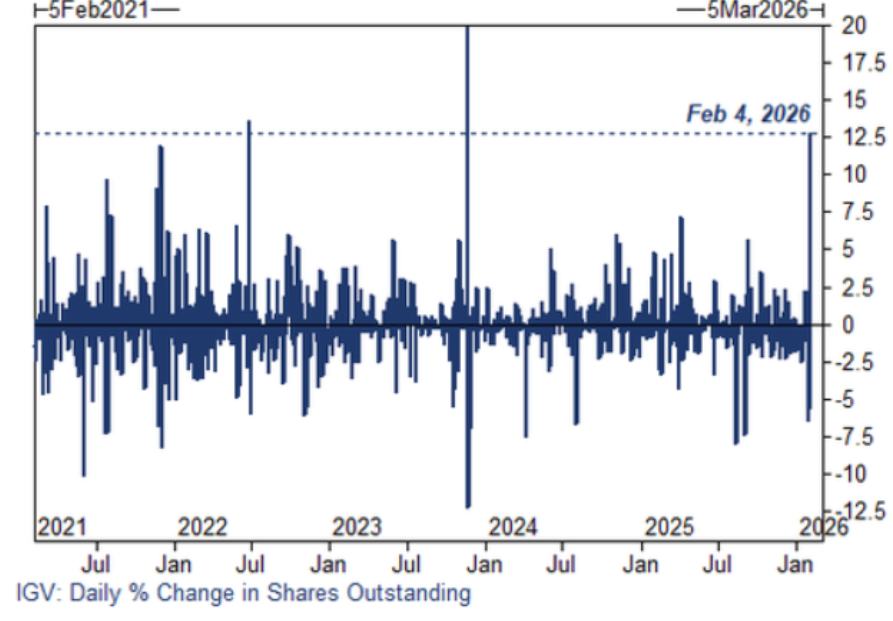
“软件股末日论”点燃大变革! 恐慌抛售之后,市场将捧起AI时代的“软件基石”
智通财经网· 2026-02-06 09:13
Core Viewpoint - The recent narrative of "Software-mageddon" has led to a significant sell-off in the software sector, particularly affecting SaaS stocks, following the launch of new AI tools by Anthropic, which are perceived as threats to traditional software business models [1][4][5]. Group 1: Market Reaction - The S&P 500 Software & Services Index has experienced a decline of approximately 30% since its recent peak at the end of October, marking the most severe sell-off since 2022 [1][6]. - Major software companies, including Thomson Reuters and Salesforce, have seen significant stock price drops, with some experiencing declines of up to 10% in a single day [5][6]. - The sell-off has been exacerbated by disappointing earnings guidance from major companies, including Microsoft, and heightened expectations for AI infrastructure spending [5][6]. Group 2: Institutional Response - Some institutional investors are beginning to enter the market to buy undervalued software stocks, believing that the market has overreacted to the AI threat [2][12]. - Analysts from firms like Goldman Sachs and Wedbush Securities suggest that the sell-off reflects an exaggerated "Armageddon scenario" and that companies will not abandon their existing software investments for new AI solutions [12][14]. Group 3: Expert Opinions - Rick Sherlund, a prominent technology analyst, argues that the software industry undergoes significant transformations every 10 to 15 years, and companies with strong fundamentals, like SAP, will likely benefit from AI rather than be replaced by it [3][16]. - Nvidia's CEO, Jensen Huang, emphasizes that AI will enhance existing software infrastructure rather than replace it entirely, countering the prevailing panic in the market [7][8]. Group 4: Long-term Outlook - Analysts believe that while AI may disrupt certain aspects of the software industry, it will also create new growth narratives, particularly for companies that can integrate AI into their existing platforms [9][10]. - The market is expected to see a bifurcation, where companies with strong data assets and integration capabilities, such as Microsoft and SAP, are likely to rebound more strongly than those with weaker competitive positions [11][15].
黄金直线跳水,白银暴跌!降息,突变!
Sou Hu Cai Jing· 2026-02-06 00:13
更早一天,美国1月私人部门就业增长不及预期,美国1月ADP就业人数增加2.2万人,预估为增加4.5 万,前值为增加4.1万。 随着美国劳动力市场数据显露疲态,交易员将美联储下一次降息的时间预期从7月提前至6月,并预计10 月前将进行第二次降息。而在上一次议息会议后,他们原本预计第二次降息要等到2027年1月底。 据CME"美联储观察"最新数据,美联储降息概率直线上升,其中到3月降息25个基点的概率为22.7%, 维持利率不变的概率为77.3%。美联储到4月累计降息25个基点的概率为36.2%,维持利率不变的概率为 58.1%,累计降息50个基点的概率为5.6%。到6月累计降息25个基点的概率为50.2%。 中概股方面,纳斯达克中国金龙指数涨0.9%,蔚来涨超6%,亚朵涨逾5%。 值得注意的是,现货黄金与白银开盘再度直线跳水,特别是白银,截至发稿已跌至67美元/盎司附近, 此前白银曾最高涨至120美元/盎司以上。 消息面上,美国总统特朗普一再喊话美联储降息,而现实的就业数据也不及预期,导致降息概率大幅增 加。 据美国劳工部当地时间2月5日发布的数据,截至1月31日的一周,美国首次申请失业救济金的人数为 23.1 ...
AI高支出疑虑加剧道指跌近600点,微软重挫近5%,白银暴跌逾一成
第一财经· 2026-02-05 23:25
Market Overview - The U.S. stock market experienced a broad decline, with major technology stocks under pressure, including Microsoft and Amazon, which fell over 4% due to ongoing concerns about massive capital expenditures related to artificial intelligence [2][4] - The Dow Jones Industrial Average dropped by 1.20% to 48,908.72 points, the S&P 500 fell by 1.23% to 6,798.40 points, and the Nasdaq Composite decreased by 1.59% to 22,540.59 points, marking a nearly 4% decline for the Nasdaq this week [4] Technology Sector Performance - Major tech stocks faced significant losses, with Microsoft down 4.95%, Amazon down 4.4%, and Nvidia down 1.33%. In contrast, Broadcom saw a slight increase of 0.80% [6][8] - The S&P 500 Software and Services Index has seen a seven-day consecutive decline, with a cumulative drop of 17.4%, the largest since March 2020 [9] Amazon's Financial Results - Amazon reported a significant drop of over 10% in after-hours trading following its earnings report, which showed Q4 2025 revenue at $213.4 billion, exceeding market expectations. However, the company projected Q1 operating profit between $16.5 billion and $21.5 billion, below prior expectations [8] - Amazon anticipates capital expenditures of approximately $200 billion for 2026, significantly higher than previous market forecasts, contributing to concerns about the long-term return on investment in AI [8] Labor Market Data - Recent labor market data indicated that initial jobless claims rose to 231,000, exceeding market expectations, while job openings fell to 6,542,000, the lowest in over five years [10][12] Precious Metals Market - The precious metals market experienced significant volatility, with gold prices falling by 1.8% to $4,872.83 per ounce, and silver prices plummeting by 12.1% to $77.36 per ounce, driven by margin pressure from investors facing stock market losses [14][15] - Analysts suggest that the extreme fluctuations in precious metals prices may take time to stabilize, with silver currently overvalued and likely to face corrections [16] Oil Market Dynamics - International oil prices fell nearly 3%, with Brent crude at $67.55 per barrel and West Texas Intermediate at $63.29 per barrel, as talks between the U.S. and Iran eased concerns over potential supply disruptions [17]


全球SaaS概念股遭抛售,港股5大百亿巨头跌超5%,标普相关指数蒸发近3000亿美元
2 1 Shi Ji Jing Ji Bao Dao· 2026-02-04 14:04
Core Viewpoint - The global capital markets are experiencing significant turbulence due to fears that AI may disrupt the SaaS industry, leading to a sell-off in SaaS stocks following the release of an AI tool by Anthropic aimed at legal services [1][5]. Market Impact - On February 3, the combined market value of two S&P indices tracking software and financial data stocks dropped by approximately $300 billion [1]. - The Hong Kong SaaS index fell by 6.39% on February 4, resulting in a total market value loss of nearly HKD 150 billion [1]. - Major SaaS stocks in Hong Kong, such as Kingdee International and Kingsoft, saw declines of 12.64% and 5.14%, respectively [3][4]. Stock Performance - The performance of major SaaS stocks on February 4 included: - Kingdee International: -12.64% - Kingsoft: -5.14% - Huya Technology: -5.88% - China Software International: -6.72% - Fubo Group: -5.16% [3][4]. - In the U.S., SaaS stocks also faced declines, with the Wind U.S. SaaS index dropping by 4.12% on February 3, including significant losses from Microsoft (-2.87%) and Salesforce (-6.84%) [4][8]. Market Sentiment - The term "SaaSpocalypse" has emerged among traders to describe the current market sentiment regarding SaaS stocks [5]. - Concerns were exacerbated by a question raised at an investor forum about whether "software is dead," further fueling market anxiety [5]. SaaS Business Model Challenges - The SaaS model, which typically involves subscription-based revenue, is facing challenges as AI tools may offer more personalized solutions, potentially undermining the traditional SaaS value proposition [10][11]. - The market is expected to differentiate between traditional SaaS providers and those that integrate AI capabilities, with the latter likely to gain a competitive edge [11][12]. Future Outlook - Deloitte predicts that the SaaS business model may evolve, with a shift towards hybrid pricing models based on usage and outcomes rather than solely on subscriptions [12]. - Gartner forecasts that by 2030, at least 40% of enterprise SaaS spending will transition to usage-based or outcome-based pricing models [12].

股指期货将震荡整理黄金、白银、锡、碳酸锂、玻璃期货将震荡偏强铜、铝期货将偏强震荡
Guo Tai Jun An Qi Huo· 2026-02-04 09:51
Report Industry Investment Rating No relevant information provided. Core Viewpoints of the Report - Through macro - fundamental and technical analysis, the report predicts the trend, resistance, and support levels of various futures contracts on February 4, 2026, and the trend of the main continuous contracts in January 2026. It is expected that stock index futures will fluctuate and consolidate, while gold, silver, tin, lithium carbonate, and glass futures will fluctuate strongly, and copper, aluminum, and other futures will fluctuate strongly [1][2]. Summary by Relevant Contents 1. Macro - Information and Trading Tips - The first central document of the 14th Five - Year Plan was released on February 3, aiming to promote rural revitalization and modernize agriculture [5]. - The central bank will conduct an 800 - billion - yuan 3 - month repurchase operation on February 4, with an additional 100 billion yuan, and the net investment in Treasury bond trading in the open market in January was 100 billion yuan [5]. - The State - owned Assets Supervision and Administration Commission emphasized the development of strategic emerging and future industries and the transformation of traditional industries [5]. - 30 provinces have set their GDP growth targets for 2026, with some major economic provinces aiming for over 5%. Shanghai aims for about 5% growth and will develop key industries [6]. - In January, the sales volume of 6 types of household appliances and 4 types of digital and smart products exceeded 15 million units, with sales approaching 59 billion yuan, and offline sales increased by about 20% [6]. - Talks between the US and Iran are still scheduled, and the US ended a partial government shutdown [6][7]. - A Fed official called for a rate cut of over 100 basis points this year, while another emphasized caution on inflation. The Reserve Bank of Australia raised interest rates by 25 basis points [7]. - NASA postponed the "Artemis 2" mission due to a hydrogen leak [7]. 2. Commodity Futures - Related Information - Most domestic commodity futures closed down during the day, with precious metals showing mixed trends. However, they rebounded at night. International precious metals, oil, and most London base metals closed up [8][9][10]. - Multiple exchanges adjusted margin ratios and price limits for various futures contracts [8][9]. 3. Futures Market Analysis and Forecast Stock Index Futures - On February 3, major stock index futures contracts showed a trend of opening higher, fluctuating, and rising. The A - share market also rose, and new A - share accounts in January reached a 15 - month high. It is expected that in February, the main continuous contracts will fluctuate widely, and on February 4, they will fluctuate and consolidate [11][12][13][14][16]. Gold Futures - On February 3, the gold futures main contract AU2604 opened higher, fluctuated, and rose. It is expected to fluctuate widely in February and strongly on February 4 [34][35]. Silver Futures - On February 3, the silver futures main contract AG2604 opened lower, fluctuated, and declined. It is expected to fluctuate weakly in February and strongly on February 4 [38]. Copper Futures - On February 3, the copper futures main contract CU2603 opened higher, fluctuated, and rose. It is expected to have a strongly - wide fluctuation in February and a strong fluctuation on February 4 [43][44]. Aluminum Futures - On February 3, the aluminum futures main contract AL2603 opened higher, fluctuated, and rose. It is expected to fluctuate widely in February and strongly on February 4 [47]. Nickel Futures - On February 3, the nickel futures main contract NI2603 opened higher, fluctuated, and rose. It is expected to fluctuate widely in February and strongly on February 4 [52][53]. Tin Futures - On February 3, the tin futures main contract SN2603 opened slightly higher, fluctuated, and declined. It is expected to fluctuate weakly in February and strongly on February 4 [57]. Lithium Carbonate Futures - On February 3, the lithium carbonate futures main contract LC2605 opened higher, fluctuated, and rose. It is expected to fluctuate widely in February and strongly on February 4 [62][63]. Coking Coal Futures - On February 3, the coking coal futures main contract JM2605 opened slightly higher, fluctuated, and rose. It is expected to have a strongly - wide fluctuation in February and a strong fluctuation on February 4 [67]. Glass Futures - On February 3, the glass futures main contract FG605 opened slightly higher, fluctuated, and rose. It is expected to have a strongly - wide fluctuation in February and a strong fluctuation on February 4 [73][74].
黄金、白银巨震
Sou Hu Cai Jing· 2026-01-30 02:15
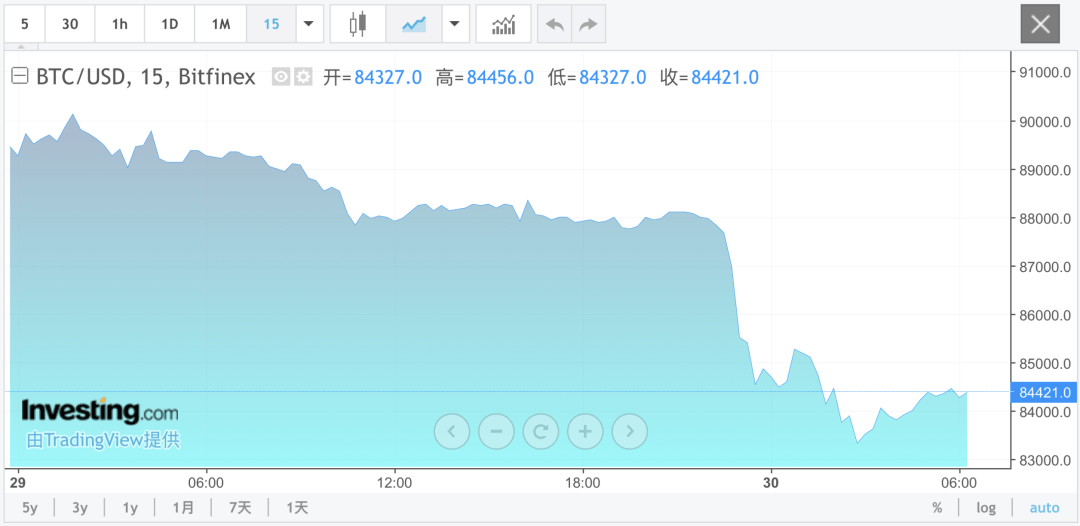
Market Overview - The global financial markets experienced significant volatility, with gold and silver prices dropping sharply after reaching historical highs, with maximum intraday declines of over 5% and 8% respectively [1][9][10] - The U.S. stock market also faced turbulence, with the Nasdaq index plunging 2.6% at one point before closing down 0.72% [2][11] Cryptocurrency Market - The cryptocurrency market saw a major sell-off, with Bitcoin dropping over 5% to below $85,000, while Ethereum and other altcoins experienced declines exceeding 6% [3][6] - Cryptocurrency-related stocks also suffered, with Strategy stock falling over 9% and Coinbase Global down more than 4% [5] Gold and Silver Market - Gold prices experienced a sharp decline, falling from a peak of $5,600 per ounce to $5,105.83, marking a maximum drop of 5.7% before rebounding [9] - Silver prices also fell from a historical high of $121.67 per ounce to $106.80, with a maximum intraday decline of 8.5% [9] Investor Sentiment - There is a growing skepticism regarding Bitcoin's status as a macro hedge, as it has underperformed compared to gold and silver despite rising geopolitical tensions [6][7] - Recent data indicates that Bitcoin holders have entered a loss realization phase for the first time in 2023, suggesting a decline in investor confidence [6] Corporate Earnings Impact - Microsoft shares plummeted nearly 12% during trading after reporting a slowdown in cloud business growth, impacting the software sector significantly [11][12] - Other tech stocks reacted variably, with Meta seeing a 10.4% increase after announcing substantial capital expenditure plans, while other companies like ServiceNow and SAP faced declines [12][13]

美股收盘:业绩引爆微软Meta冰火两极 存储股闪迪盘后狂飙
Xin Lang Cai Jing· 2026-01-29 22:41
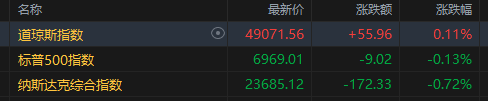
智通财经1月30日讯(编辑 赵昊)周四(1月29日),微软暴跌拖累美股早盘走低,但三大指数盘中持续缩小跌幅,最终道指收盘转涨。 截至收盘,标普500指数跌0.13%,报6969.01点;纳斯达克综合指数跌0.72%,报23685.12点。盘中,两只指数分别一度跌1.5%和2.6%。 | 名称 | | 最新价 | 涨跌额 | 涨跌幅 | | --- | --- | --- | --- | --- | | 道琼斯指数 | 0 | 49071.56 | +55.96 | 0.11% | | 标普500指数 | | 6969.01 | -9.02 | -0.13% | | 纳斯达克综合指数 | | 23685.12 | -172.33 | -0.72% | 道琼斯指数涨0.11%,报49071.56点,盘中一度跌0.85%。30只成分股中,22家上涨8家下跌,IBM、霍尼韦尔涨近5%,弥补了微软跌约10%的拖累。 前一交易日,微软发布的业绩报告显示,公司云业务增速从40%放缓至39%;毛利率约为68%,降至三年来最低。微软周四收跌9.99%,盘中一度跌逾12%。 微软的暴跌重创软件板块,季度盈利和营收均好于预期的Se ...
股指期货震荡整理,黄金、白银、锡期货再创上市以来新高白银、锡、燃料油、碳酸锂期货将震荡偏强
Guo Tai Jun An Qi Huo· 2026-01-14 09:42
Report Industry Investment Rating No relevant content provided. Core Viewpoints of the Report - Through macro - fundamental and technical analysis, the report predicts the trend, resistance levels, and support levels of various futures contracts on January 14, 2026, and the trend of the main (continuous) contracts in January 2026 [2][3]. Summary by Relevant Catalogs 1. Futures Market Overview - On January 13, 2026, the domestic commodity futures market showed a mixed trend. Precious metals led the gains with Shanghai silver up 5.9%, while shipping futures led the losses with the container shipping index (European line) down 5.45%. New energy materials also had a mixed performance, with polycrystalline silicon down 4.45% and lithium carbonate up 7.44% [9]. 2. Macro - economic Information - The World Bank raised its global economic growth forecast for 2026 to 2.6%, 0.2 percentage points higher than the previous forecast. It is expected that the US GDP growth rate will reach 2.2% in 2026, the Eurozone's economic growth rate will slow to 0.9%, and Japan's economic growth rate will slow to 0.8% [7]. - The US 2025 December budget deficit was $145 billion, a record high for the month. The US 2026 fiscal year - to - date deficit was $602 billion, compared with $711 billion in the same period of the 2025 fiscal year [8]. - The US CPI in December 2025 increased by 2.7% year - on - year, and the core CPI increased by 2.6%, both remaining flat compared with the previous value. The market expects the Fed to keep interest rates unchanged in January 2026, with a probability as high as 95% [8]. 3. Stock Index Futures - On January 13, 2026, the main stock index futures contracts such as IF2603, IH2603, IC2603, and IM2603 all showed a trend of rising and then falling. The short - term upward momentum weakened, and the downward pressure increased to some extent [12][13][14]. - It is expected that in January 2026, the main continuous contracts of stock index futures (IF, IH, IC, IM) will probably fluctuate strongly. On January 14, 2026, the stock index futures will fluctuate and consolidate [16][17]. 4. Precious Metal Futures - **Gold Futures**: On January 13, 2026, the main gold futures contract AU2602 rose slightly. It is expected that in January 2026, the main continuous contract will probably fluctuate strongly and will hit a record high. On January 14, 2026, the main contract AU2602 will probably fluctuate strongly and may hit a record high again [36][37]. - **Silver Futures**: On January 13, 2026, the main silver futures contract AG2604 rose slightly. It is expected that in January 2026, the main continuous contract will probably fluctuate strongly and will hit a record high. On January 14, 2026, the main contract AG2604 will probably fluctuate strongly and may hit a record high again [39][40]. - **Platinum Futures**: On January 13, 2026, the main platinum futures contract PT2606 fell. It is expected that in January 2026, the main continuous contract will probably fluctuate strongly. On January 14, 2026, the main contract PT2606 will probably fluctuate strongly [46][47]. - **Palladium Futures**: On January 13, 2026, the main palladium futures contract PD2606 fell. It is expected that in January 2026, the main continuous contract will probably fluctuate strongly. On January 14, 2026, the main contract PD2606 will probably fluctuate strongly [51]. 5. Base Metal Futures - **Copper Futures**: On January 13, 2026, the main copper futures contract CU2603 fell. It is expected that in January 2026, the main continuous contract will probably fluctuate strongly and will hit a record high. On January 14, 2026, the main contract CU2603 will probably fluctuate strongly [56]. - **Aluminum Futures**: On January 13, 2026, the main aluminum futures contract AL2603 fell. It is expected that in January 2026, the main continuous contract will probably fluctuate strongly and will hit a record high. On January 14, 2026, the main contract AL2603 will probably fluctuate strongly and may hit a record high again [59][60]. - **Nickel Futures**: On January 13, 2026, the main nickel futures contract NI2602 fell. It is expected that in January 2026, the main continuous contract will probably have a wide - range strong fluctuation. On January 14, 2026, the main contract NI2602 will probably fluctuate strongly [66]. - **Tin Futures**: On January 13, 2026, the main tin futures contract SN2602 rose. It is expected that in January 2026, the main continuous contract will probably fluctuate strongly and will hit a record high. On January 14, 2026, the main contract SN2602 will probably fluctuate strongly and may hit a record high again [69]. 6. Other Futures - **Lithium Carbonate Futures**: On January 13, 2026, the main lithium carbonate futures contract LC2605 rose sharply. It is expected that in January 2026, the main continuous contract will probably fluctuate strongly. On January 14, 2026, the main contract LC2605 will probably fluctuate strongly [75][76]. - **Rebar Futures**: On January 13, 2026, the main rebar futures contract RB2605 showed a slight decline. It is expected that in January 2026, the main contract RB2605 will probably fluctuate strongly. On January 14, 2026, the main contract RB2605 will probably fluctuate strongly [79]. - **Fuel Oil Futures**: On January 13, 2026, the main fuel oil futures contract FU2603 showed a slight increase. It is expected that on January 14, 2026, the main contract FU2603 will probably fluctuate strongly and will attack the resistance level and the daily limit [84].