
GEV

Search documents
西子洁能:燃气轮机需求爆发,公司余热锅炉订单加速-20260209
SINOLINK SECURITIES· 2026-02-09 14:24
Investment Rating - The report assigns a "Buy" rating for the company with a target price of 22.22 CNY per share based on a PE of 37x for 2026 [5]. Core Insights - The global demand for gas turbines is on the rise, which is expected to accelerate the revenue growth of the company's waste heat boilers. The AIDC catalytic gas turbine industry is projected to see significant growth, with demand in the U.S. expected to increase from 4.1 GW to 57.9 GW between 2025 and 2028, with growth rates of 219%, 135%, and 88% for 2026-2028 respectively [2]. - The company is a leading domestic player in waste heat boilers, holding over 50% market share in China and has expanded its presence in overseas markets, targeting regions along the Belt and Road Initiative [2]. - The company has a strong foothold in the solar thermal power sector, with a market share of 58% in total design capacity and 55% in project numbers for significant solar thermal projects in China from 2021 to 2024 [3]. - The nuclear power sector is also seeing a revival, with the company planning to expand its nuclear power business and has already supplied numerous components to major nuclear power groups [4]. Summary by Sections Section 1: Company Overview - The company has evolved from a traditional waste heat boiler leader to a comprehensive supplier of clean energy equipment, with a history of nearly 50 years in the industry [15]. - It has diversified its offerings to include nuclear power and molten salt energy storage systems, participating in significant projects in these areas [15][16]. Section 2: Waste Heat Boilers - Waste heat boilers are critical components in gas-steam combined cycle systems, which enhance energy efficiency and reduce emissions [46]. - The demand for waste heat boilers is expected to rise in tandem with the growth of the gas turbine industry, particularly as global gas turbine manufacturers expand their production capacity [2][50]. Section 3: Solar Thermal Power - The company is positioned well in the solar thermal power market, benefiting from government policies that promote renewable energy integration [3]. - It has established long-term partnerships with leading clients in the solar thermal sector, which is expected to drive future order growth [3]. Section 4: Nuclear Power - The approval of nuclear power units in China is on the rise, which is anticipated to boost demand for nuclear equipment [4]. - The company has been a reliable supplier for major nuclear power projects and is expanding its capabilities in advanced nuclear technologies [4]. Section 5: Financial Projections - Revenue forecasts for the company are projected to be 6.31 billion CNY in 2025, 7.316 billion CNY in 2026, and 8.525 billion CNY in 2027, with corresponding net profits of 431 million CNY, 502 million CNY, and 571 million CNY [5][8].

西子洁能(002534):公司深度:燃气轮机需求爆发,公司余热锅炉订单加速
SINOLINK SECURITIES· 2026-02-09 11:22
Investment Rating - The report assigns a "Buy" rating for the company with a target price of 22.22 CNY per share based on a PE of 37x for 2026 [5]. Core Views - The global demand for gas turbines is on the rise, which is expected to accelerate the revenue growth of the company's waste heat boilers. The AIDC catalytic gas turbine industry is projected to see significant growth, with demand in the U.S. expected to increase from 4.1 GW to 57.9 GW between 2025 and 2028, with growth rates of 219%, 135%, and 88% in 2026, 2027, and 2028 respectively [2]. - The company is a leader in the domestic waste heat boiler market, holding over 50% market share, and is expanding its presence in overseas markets, particularly in regions along the Belt and Road Initiative [2]. - The company has a strong foothold in the solar thermal power sector, with a market share of 58% in total design capacity and 55% in project numbers for significant solar thermal projects in China from 2021 to 2024 [3]. - The nuclear power sector is also seeing a revival, with the company planning to expand its nuclear power business and has already supplied numerous components to major nuclear power groups [4]. Summary by Sections Section 1: Company Overview - The company has evolved from a traditional waste heat boiler leader to a comprehensive supplier of clean energy equipment, with a history of nearly 50 years in the industry [15]. - It has diversified its business into nuclear power and molten salt energy storage, participating in significant projects and partnerships [15][16]. Section 2: Waste Heat Boilers - The demand for waste heat boilers is expected to rise alongside the gas turbine industry, with the company positioned to benefit from this trend [2]. - The company has seen a 16.81% year-on-year increase in new waste heat boiler orders, amounting to 1.967 billion CNY in 2025 [2][19]. Section 3: Molten Salt Energy Storage - The company is well-positioned to benefit from the growing solar thermal power market in China, with significant policy support and projected capacity growth [3]. - The company has established deep collaborations with leading clients in the solar thermal sector, enhancing its order prospects [3]. Section 4: Nuclear Power - The approval of nuclear power units in China is on the rise, which is expected to drive demand for nuclear equipment [4]. - The company has a long-standing partnership with major nuclear power groups and is expanding its capabilities in advanced nuclear technologies [4]. Section 5: Financial Forecast and Valuation - The company is projected to achieve revenues of 6.3 billion CNY in 2025, 7.3 billion CNY in 2026, and 8.5 billion CNY in 2027, with corresponding net profits of 431 million CNY, 502 million CNY, and 571 million CNY [5][8]. - The company’s PE ratios are expected to decrease from 35x in 2025 to 26x in 2027, reflecting its growth potential and market positioning [5].
东吴证券:北美缺电逻辑持续演绎 重视各类技术路径的相关投资机会
智通财经网· 2026-02-09 08:54
Core Insights - The report from Dongwu Securities highlights the contradiction between the non-linear growth of AI electricity demand and the aging infrastructure of the power grid in North America [2] Demand Side - The surge in AIDC projects in the U.S. has led to a non-linear increase in electricity demand [2] - By 2025, total supply is expected to meet short-term demand, but long-term projections indicate a decline in stable supply and regional electricity shortages [2] Supply Side - The decline in stable supply is attributed to aging power grids, frequent outages, and the upcoming retirement peak of coal power plants [2] - Renewable energy sources like wind and solar are unstable, while nuclear and geothermal projects have long construction cycles, necessitating reliance on natural gas for current gaps [2] - Regional electricity shortages are exacerbated by over 50% of data centers being built in Texas, California, and Virginia, leading to significant supply pressure in these areas [2] - The North American Electric Reliability Corporation (NERC) projects an average peak gap of over 20 GW from 2027 to 2030, with Texas, the Mid-Atlantic, the Midwest, and California facing high risks [2] - The Department of Energy (DOE) forecasts an average peak gap of 20-40 GW by 2030 [2] Investment Opportunities - Considering cost, construction time, and environmental factors, gas turbines are identified as the optimal solution for AIDC self-built power [2] - Gas turbines can achieve over 60% efficiency, with the lowest cost per kilowatt-hour, and are seeing accelerated installation trends [2] - The global new installation scale of gas turbines is expected to approach the previous cycle's peak by 2025, with leading manufacturers like GE, Siemens, and Mitsubishi Heavy Industries having orders scheduled until 2029 [2] - Gas internal combustion engines, while slightly less efficient, offer rapid delivery and deployment, with Wärtsilä's new equipment orders increasing by 111% year-on-year for Q1-Q3 2025 [2] - Solid Oxide Fuel Cells (SOFC) have high efficiency but are still in early stages of commercialization and cost control, making them less viable in the short term [2] - Diesel generators provide quick start-stop advantages and are optimal for backup power, with Cummins reporting a revenue growth of about 20% year-on-year for Q1-Q3 2025 [2]

AIDC发电专题报告:北美缺电逻辑持续演绎,相关投资线索再梳理
Soochow Securities· 2026-02-09 08:24
Investment Rating - The report suggests a positive investment outlook for the North American electricity sector, particularly focusing on gas turbines and related technologies due to the ongoing electricity shortage driven by AI data center demands [2][6][30]. Core Insights - The North American electricity shortage is characterized by a contradiction between the non-linear growth of AI electricity demand and the aging infrastructure of the power grid. The demand side sees a surge in AIDC projects, while the supply side faces challenges with declining stable supply and regional electricity shortages [2][6][24]. - The report highlights that gas turbines are currently the optimal solution for AIDC self-built power generation, with gas internal combustion engines, SOFC, and diesel generation serving as effective supplements [2][37]. - The North American Electric Reliability Corporation (NERC) predicts an average peak electricity gap of over 20GW from 2027 to 2030, with significant risks in Texas, the Mid-Atlantic, the Midwest, and California [2][32]. Summary by Sections Section 1: Current Electricity Shortage in North America - The electricity shortage is driven by the non-linear growth of AI demand and the aging power grid infrastructure. The electricity consumption in the U.S. is expected to reach historical highs in 2025-2026, with data centers' planned installed capacity increasing from 5GW in early 2023 to over 245GW by October 2025 [6][19]. - The average lifespan of power infrastructure in the U.S. is around 35-40 years, leading to frequent outages and an inability to meet the reliability demands of AIDC [15][19]. Section 2: Power Source Selection - Gas turbines are identified as the primary power source, with gas internal combustion engines, SOFC, and diesel generation as supplementary options. The report emphasizes the efficiency and cost-effectiveness of gas turbines, which can achieve over 60% efficiency and have the lowest cost per kilowatt-hour [2][37]. - The report also discusses the expected increase in gas turbine installations, with global new installations projected to approach previous cycle peaks by 2025, driven by the surge in AIDC electricity demand [48][52]. Section 3: Investment Recommendations - The report recommends focusing on various technologies due to the ongoing electricity shortage, suggesting investments in gas turbines, gas internal combustion engines, SOFC, and diesel generation. Specific companies are highlighted for potential investment opportunities, including Jerry Holdings, Yingliu Co., Dongfang Electric, and others [2][37][39].




AIDC发电专题报告:北美缺电逻辑持续演绎,相关投资线索再梳理-20260209
Soochow Securities· 2026-02-09 08:04
Investment Rating - The report suggests a focus on investment opportunities in the North American electricity sector, particularly in gas turbines and complementary technologies like gas internal combustion engines, SOFC, and diesel generators [2][6]. Core Insights - The North American electricity shortage is driven by the non-linear growth of AI power demand and the aging of the power grid. The demand side sees a surge in AIDC projects, while the supply side faces challenges with declining stable supply and regional shortages [2][6][24]. - The report highlights that the total electricity supply in the short term can meet demand, but long-term projections indicate a significant peak gap of over 20GW annually from 2027 to 2030, particularly in Texas, the Mid-Atlantic, the Midwest, and California [2][30]. - Gas turbines are identified as the optimal solution for AIDC self-built power generation, with gas internal combustion engines, SOFC, and diesel generators serving as effective supplements [2][37]. Summary by Sections Section 1: North American Electricity Shortage - The current electricity shortage in North America stems from the contradiction between the non-linear growth of AI electricity demand and the aging infrastructure of the power grid. The electricity consumption in the U.S. is expected to reach historical highs in 2025-2026, driven by a significant increase in data center projects [6][15]. - The report notes that the share of electricity consumption from data centers will rise from 2% in 2018 to over 10% by 2028 [6][19]. Section 2: Power Source Selection - Gas turbines are recommended as the primary power source due to their efficiency and cost-effectiveness. The report outlines the advantages of various technologies, including gas internal combustion engines and SOFC, while emphasizing the need for a diversified approach to meet the growing electricity demand [2][37][39]. - The report provides a comparative analysis of different power generation technologies, highlighting gas turbines' high reliability and low emissions as key factors for their selection in AIDC projects [38][39]. Section 3: Investment Recommendations - The report suggests that investment opportunities in North America are expanding from gas turbines to include gas internal combustion engines and SOFC, as the current electricity shortage exceeds the total capacity of various technologies [2][6]. - Specific companies are recommended for investment based on their involvement in gas turbine production and related technologies, including Jerry Holdings, Yingliu Co., Dongfang Electric, and others [2][6].
2月6日早餐 | 海外市场连续下挫;OpenAI推出新产品
Xuan Gu Bao· 2026-02-06 00:13
Market Overview - US employment data shows weakness, leading to a decline in the stock market, with the S&P 500 down 1.23%, Dow Jones down 1.20%, and Nasdaq down 1.59% [1] - Software stocks ETF fell by 5%, with Oracle down nearly 7% and Microsoft down nearly 5% [2] - Gold prices dropped by 4%, silver plummeted by 19%, and cryptocurrencies faced significant losses, with Bitcoin down 12% and Ethereum down 11% [4] AI and Technology Developments - Amazon unexpectedly raised its spending guidance for AI to $200 billion, causing a post-market drop of over 10% [3] - Anthropic launched a new AI model, Claude Opus4.6, focused on financial research, while OpenAI introduced GPT-5.3-Codex, touted as the strongest programming agent to date [5] - Nvidia announced a delay in the release of new gaming chips due to a shortage of storage chips [6] - Apple plans to launch a "budget version" MacBook using iPhone chips, priced below $799 [7] Chinese Market Movements - Chinese concept stocks index rose against the market trend, with Baidu up 0.73% and Meituan acquiring Dingdong Maicai, which saw Meituan rise over 2% while Dingdong Maicai fell 15% [8] Sector Insights - Semiconductor sector: Infineon announced a price increase for power switches and related chips starting April 1, 2026, due to ongoing supply shortages and rising costs [11] - Huawei's HarmonyOS version of WeChat app surpassed 40 million installations, marking significant growth in its ecosystem [12] - Gas turbine manufacturers like GE, Siemens Energy, and Mitsubishi Heavy Industries are seeing increased orders due to a surge in natural gas power generation capacity in the US [13] Company Announcements - Jiangfeng Electronics plans to acquire 15.6424% of Kaide Quartz, with stock resuming trading [17] - Guoxuan High-Tech intends to raise no more than 5 billion yuan for a 20GWh power battery project [17] - Lixun Precision is set to engage in foreign exchange derivatives trading for up to one year, with a total not exceeding $4.9 billion [17] - Southeast Network Engineering won a joint bid for a 9.94 billion yuan EPC project [18]

周末盘点:光进内存、燃机、存储
傅里叶的猫· 2026-02-01 15:52
Group 1: Optical Memory - The concept of optical memory is introduced, where Google attempts to remove HBM due to limited production capacity and set up a DRAM memory cabinet with pooling technology for dynamic memory allocation [2] - The advantages of this solution include releasing physical space and capacity limitations of TPU CoWoS, increasing the flexibility of DRAM allocation per TPU chip, and potentially doubling the allocation from 192GB to 1TB [3] - This approach challenges the long-standing "near-memory computing" principle in the semiconductor industry, which could lead to issues like memory walls and idle computing units if latency is too high [3][4] Group 2: Gas Turbines - GEV's financial report indicates strong demand in the gas turbine sector, with 41 new heavy-duty gas turbine orders, including 15 HA units, leading to a backlog increase of 7GW to 40GW [6] - The current booking prices for slot agreements are 10-20% higher than existing backlog orders, providing certainty for profit margin expansion in 2026 [6] - The industry logic for gas turbines and HRSG remains positive, indicating continued growth potential [8] Group 3: Memory Market - JP Morgan's analysis has raised expectations for Hynix and Samsung, noting that the demand for server memory driven by AI workloads is surging, offsetting weak demand from PCs and smartphones [9] - The memory price is entering a stronger and longer upward cycle, with HBM becoming a growth highlight, and HBM4 production is on track, capturing a significant share of orders from key clients like Nvidia [9][11] - Hynix plans to significantly increase capital expenditure in 2026 to address current memory supply shortages and lay the groundwork for long-term growth, while maintaining disciplined spending [9][11]

未知机构:中泰军工燃气轮机GEV业绩超预期上调2628年业绩展望事-20260129
未知机构· 2026-01-29 02:05
【中泰军工 | 燃气轮机】GEV业绩超预期,上调26-28年业绩展望 【事件】GEV披露2025年及Q4财报,业绩超预期同时上调26-28年业绩指引;电力板块新签订单再创新高,Q4资 本开支+92%。 一、公司整体:25年总订单增长34%,上调26-28年收入/利润率。 # 25年收入/净利润增长9%/215%、量价齐升。 2025年营收381亿美元(+9 【中泰军工 | 燃气轮机】GEV业绩超预期,上调26-28年业绩展望 【事件】GEV披露2025年及Q4财报,业绩超预期同时上调26-28年业绩指引;电力板块新签订单再创新高,Q4资 本开支+92%。 一、公司整体:25年总订单增长34%,上调26-28年收入/利润率。 # 25年收入/净利润增长9%/215%、量价齐升。 二、电力板块:单机新签订单创新高,Q4资本开支+92%。 # 电力板块25年收入/净利润增长9%/28%。 25年电力板块收入198亿美元(+9%),其中Q4收入57亿美元(+6%)。 2025年营收381亿美元(+9%);净利润49亿美元(+215%,含29亿美元税收优惠)。 量、价、生产效率三重提升,利润率显著扩大。 # 总订单增长 ...
潍柴动力午后涨逾5% 燃气轮机行业景气度持续上行趋势
Xin Lang Cai Jing· 2026-01-23 06:07
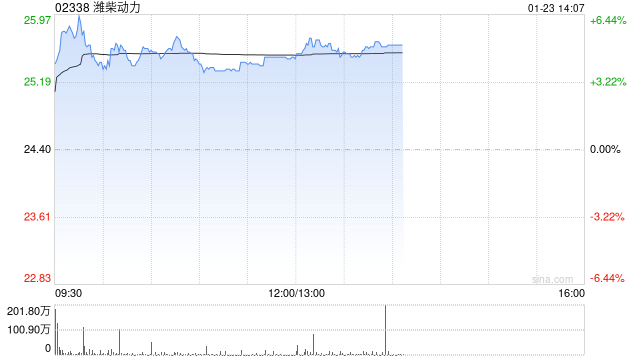
潍柴动力(02338)午后股价上涨4.92%,现报25.60港元,成交额6.16亿港元。 热点栏目 自选股 数据中心 行情中心 资金流向 模拟交易 客户端 热点栏目 自选股 数据中心 行情中心 资金流向 模拟交易 客户端 东吴证券认为,由于燃机供应链高度复杂,并与航空、军工产业深度共享上游资源,整体产能扩张节奏 受限,难以快速匹配订单的爆发式增长,在此背景下,GEV此次上调扩产目标进一步明确燃气轮机行 业景气度持续上行趋势。 责任编辑:卢昱君 受益于订单强劲增长,GEV原计划于2026Q3实现燃机年产能20GW,公司现已前移至2026H1完成目 标,并进一步上调扩产计划至2028年24GW。为支撑产能上调,GEV预计于2025-2028年持续投入100亿 美元资本开支。 潍柴动力(02338)午后股价上涨4.92%,现报25.60港元,成交额6.16亿港元。 东吴证券认为,由于燃机供应链高度复杂,并与航空、军工产业深度共享上游资源,整体产能扩张节奏 受限,难以快速匹配订单的爆发式增长,在此背景下,GEV此次上调扩产目标进一步明确燃气轮机行 业景气度持续上行趋势。 受益于订单强劲增长,GEV原计划于2026Q3 ...
潍柴动力午后涨超5% GEV此前上修燃气轮机产能指引 行业景气度受益AIDC发展上行
Zhi Tong Cai Jing· 2026-01-23 05:55
潍柴动力(000338)(02338)午后涨超5%,截至发稿,涨5.08%,报25.6港元,成交额5.45亿港元。 消息面上,受益于订单强劲增长,GEV原计划于2026Q3实现燃机年产能20GW,公司现已前移至 2026H1完成目标,并进一步上调扩产计划至2028年24GW。为支撑产能上调,GEV预计于2025-2028年 持续投入100亿美元资本开支。东吴证券认为,由于燃机供应链高度复杂,并与航空、军工产业深度共 享上游资源,整体产能扩张节奏受限,难以快速匹配订单的爆发式增长,在此背景下,GEV此次上调 扩产目标进一步明确燃气轮机行业景气度持续上行趋势。 东吴证券表示,在AIDC建设加速背景下,电力供需缺口持续放大,燃气轮机行业有望开启新一轮上行 周期。AI数据中心建设带来大量用电需求,且对电力的可靠性、稳定性提出较高要求,燃机市场替代 空间大,看好国内设备商受益机会。长江证券指出,公司积极布局数据中心备用电源柴油发动机(大缸 径)和主用电源SOFC;其中大缸径业务已迎来快速放量周期,业绩持续兑现;SOFC海外需求旺盛,目 前公司已达成意向订单,随着项目2027年迎来规模量产,未来成长空间巨大。 ...