米哈游

Search documents
叠纸腾讯稳健、网易触底反弹,2025乙游市场格局变了吗?
3 6 Ke· 2025-12-23 00:28
Core Insights - The female-oriented gaming market in China has shown significant growth, with a market size reaching 8 billion yuan in 2024, representing a year-on-year increase of 124.1%, indicating strong commercial potential and cultural influence [1][10] - Despite the growth, the market faced challenges in 2025, including content controversies, public relations crises, and industry changes that impacted development and growth [1][9] Market Performance - The top female-oriented games in 2025 include "Light and Night of Love" by Tencent, which has shown stable performance and even surpassed "Love and Deep Space" in revenue in November 2025, with an estimated income of 49.09 million yuan, reflecting a 125.42% increase [4][5] - "Love and Deep Space" faced multiple controversies, including player dissatisfaction and security issues, leading to a significant revenue drop of 39.40% to 48.36 million yuan in November 2025 [2][5] - "World Beyond" experienced a public relations crisis due to price increases and a loss of player trust, resulting in a significant decline in its market position, although it showed signs of recovery with a strong update in December 2025 [6][7] Industry Dynamics - The competitive landscape of the female-oriented gaming market has shifted, with previous leaders like "Code Kite" and "World Beyond" falling behind, while "Love and Deep Space" remains resilient despite controversies [9] - The market still has growth potential, as there is a significant demand for emotional engagement among young, educated female players, with over 60% of players being single and seeking emotional support through gaming [10] - Upcoming titles like "Under the Night" and "Code Sol" are generating interest, with "Under the Night" already in its second testing phase and receiving positive feedback, indicating potential for future success in the market [11][12]




谷子大逃杀?“一折清仓”成风,市场洗牌新生
3 6 Ke· 2025-12-23 00:22
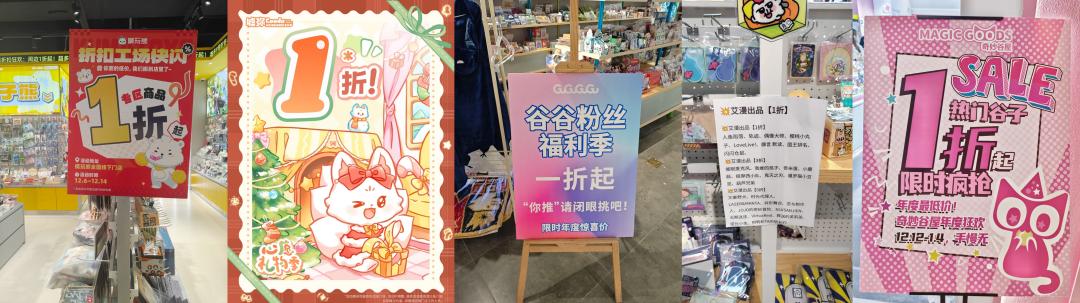
Core Insights - The "millet market" is experiencing a significant downturn, with many stores reporting sales insufficient to cover basic expenses like electricity bills [1][2] - A trend of deep discounts has emerged, with products being sold at prices as low as one yuan, indicating a market collapse [2][21] - Major brands and stores are participating in clearance sales, leading to a saturation of discounted products in the market [1][4] Group 1: Market Dynamics - The phenomenon of "one yuan millet" is becoming common, with some stores advertising prices as low as 9.9 yuan per kilogram [2] - The market has seen a shift where even well-known brands are struggling, leading to a reduction in store numbers and a pivot towards different product lines [14][15] - The initial boom in the millet economy was driven by the popularity of blind box products, which has now led to overproduction and subsequent market saturation [12][22] Group 2: Consumer Behavior - Consumers are increasingly aware of the declining value of previously sought-after products, leading to a decrease in purchasing willingness [21][22] - The market is witnessing a shift in consumer focus, with some stores moving away from millet products to other categories like K-pop and accessories [7][10] - The perception of value has changed, with consumers now viewing early purchases as mistakes due to the drastic price drops [1][2] Group 3: Brand Strategies - Some brands are adapting by recruiting franchisees and slowing down the expansion of self-operated stores [14][19] - The market is seeing a consolidation phase where only brands with strong product offerings and IP management will survive [35][45] - The trend of "one yuan millet" reflects a broader issue of overproduction and the need for brands to focus on quality and scarcity to regain consumer trust [32][33]
「AI新世代」直面OpenAI竞争!MiniMax通过港交所聆讯,海外收入占比超七成
Hua Xia Shi Bao· 2025-12-22 15:14
Core Insights - MiniMax, part of the "AI Six Tigers," has reported impressive revenue growth, achieving over $53 million in revenue in the first three quarters of 2025, which is approximately 376 million RMB, despite ongoing losses typical for AI companies [2][3] - The company has a significant global presence, with 73% of its revenue coming from international markets, operating in over 200 countries and regions [2][7] - MiniMax's user base has grown to over 212 million, with approximately 1.77 million paying users, indicating successful commercialization of its AI products [3] Revenue and Financial Performance - MiniMax's revenue for 2023, 2024, and the first three quarters of 2025 was $346 million, $30.52 million, and $53.44 million respectively [3] - The company's gross margins have improved, with figures of -24.7%, 12.2%, and 23.3% for the same periods, although they remain lower compared to competitors like Zhizhu [3][4] - The sales costs as a percentage of total revenue have decreased from 124.7% in 2023 to 76.7% in 2025, reflecting improved cost efficiency [5] Losses and Investment - MiniMax reported losses of $269 million, $465 million, and $512 million for 2023, 2024, and the first three quarters of 2025, attributed to significant investments in R&D and AI infrastructure [6] - The company has raised approximately $1.5 billion since its inception, maintaining a cash balance of over $1 billion as of September 2025, indicating a strong financial position relative to its expenditures [8] Market Position and Competition - MiniMax ranks as the tenth largest model technology company globally, with a market share of 0.3%, while OpenAI leads with a 30.1% share [8] - The company faces intense competition from industry giants like OpenAI and Google, which presents both challenges and opportunities for growth [7][8] - Analysts suggest that MiniMax's upcoming IPO could provide a valuation premium in a market eager for AI model companies, but long-term success will depend on technological advancements and product effectiveness [9]
估值近300亿!“大模型六小龙”之MiniMax冲刺IPO
Sou Hu Cai Jing· 2025-12-22 10:18
Core Viewpoint - MiniMax Group Inc. is preparing for an IPO in Hong Kong, aiming to be one of the first companies in the "big model" AI sector to go public, alongside another company, Zhiyu [2] Company Overview - MiniMax was established in June 2021 and began operations in January 2022, focusing on research and development [2] - The company has a young workforce, with an average employee age of 29 and an average board age of 32 [2] - MiniMax has raised a total of $390.4 million in its latest funding round, achieving a post-money valuation of approximately $4.24 billion (about 29.84 billion yuan) [2] Funding History - MiniMax has completed seven funding rounds since its inception, including a $31 million angel round in December 2021 and a $50 million Pre-A round in April 2022 [2] - The company has consistently raised funds in 2023 and 2024, with two rounds of financing each year [2] Share Structure - MiniMax employs a dual-class share structure, where Class B shares carry ten votes per share, while Class A shares carry one vote [3] - Key shareholders include Dr. Yan Junjie, who holds approximately 28.25% of shares and 74.91% of voting rights, and Ms. Ren Yeyi, who holds 2.50% of shares and 6.65% of voting rights [3] Product Focus - MiniMax specializes in developing advanced large models and AI-native products, targeting both consumer and enterprise markets [4] - The company has adopted a mixture of expert (MoE) architecture and mixed attention mechanisms to enhance performance while reducing computational resource consumption [4] Revenue Generation - MiniMax's revenue primarily comes from AI-native products, an open platform, and other AI-based enterprise services [7] - The company has reported significant user engagement, with over 200 million individual users and more than 100,000 enterprise clients globally [7] Financial Performance - Revenue from AI-native products has shown substantial growth, with figures of approximately $0, $758,000, $2.18 million, and $3.80 million for the years 2022 to 2024 [8] - The company reported a total revenue of approximately $3.46 million in 2022, $30.52 million in 2023, and projected $53.44 million in 2024 [10] Future Plans - MiniMax plans to use the proceeds from its IPO to fund research and development over the next five years, focusing on large model development and scaling AI-native products globally [12]

AI大模型独角兽招股书深度拆解:MiniMax to C,智谱 to B
硬AI· 2025-12-22 08:57
Core Insights - MiniMax and Zhiyu AI are two unicorns in China's large model sector that recently submitted their IPO applications to the Hong Kong Stock Exchange, showcasing distinct commercialization paths for ToC (consumer) and ToB (business) models [3][4] - MiniMax focuses on consumer-driven "super applications" with significant growth in paid users and revenue, while Zhiyu AI emphasizes enterprise-level services with a strong focus on local deployment [4][11] Group 1: MiniMax Overview - MiniMax's core product, the AI native application, is projected to grow from $758,000 in 2023 to $21.8 million in 2024, and reach $38 million by the first nine months of 2025, constituting 71.1% of total revenue [6][8] - The average monthly active users (MAU) for MiniMax's products surged from 3.1 million in 2023 to 27.6 million by September 2025, with paid users reaching 1.77 million and average revenue per paid user (ARPPU) increasing from $6 to $15 [7][9] - MiniMax's overall gross margin improved from -24.7% in 2023 to 23.3% in the first nine months of 2025, with its B2B services maintaining a high gross margin of 69.4% [21][22] Group 2: Zhiyu AI Overview - Zhiyu AI's revenue from localized deployment reached 162 million RMB by June 2025, accounting for 84.8% of total revenue, with a gross margin of 50% [11][24] - The company has served over 8,000 institutional clients, focusing on sectors with strict data security needs, such as technology and finance [12][13] - Zhiyu AI's revenue growth from 2022 to 2024 exceeded 130%, but its cloud deployment business has faced challenges, with gross margins declining to -0.4% by mid-2025 [24][29] Group 3: Research and Development - Both companies are heavily investing in R&D, with Zhiyu AI's R&D expenditure reaching 1.595 billion RMB in the first half of 2025, resulting in a staggering R&D expense ratio of 835.4% [29][30] - MiniMax's R&D expense ratio decreased from over 2000% in 2023 to 337.4% by September 2025, indicating improved operational efficiency as revenue grows [31] Group 4: Market Positioning and Strategy - MiniMax is highly globalized, with only 26.9% of its revenue coming from mainland China, while Zhiyu AI primarily focuses on the domestic market, serving government and enterprise clients [35][41] - Both companies have strong backing from major tech investors, with MiniMax supported by Alibaba and Tencent, while Zhiyu AI has a diverse shareholder structure including Ant Group and various state-owned funds [43][44]

AI大模型独角兽招股书深度拆解:MiniMax to C,智谱 to B
美股IPO· 2025-12-22 08:30
Core Insights - MiniMax and Zhiyu AI are two "unicorns" in China's large model sector, showcasing distinct commercialization paths in ToC and ToB markets [3] - MiniMax focuses on consumer-driven "super applications" with significant user growth, while Zhiyu AI emphasizes enterprise-level services with a strong local deployment strategy [11][36] Group 1: MiniMax Overview - MiniMax's core product, the "AI Native App," is projected to see revenue growth from $758,000 in 2023 to $21.8 million in 2024, and $38.02 million in the first nine months of 2025, accounting for 71.1% of total revenue [6][7] - The average monthly active users (MAU) for MiniMax's products surged from 3.1 million in 2023 to 27.6 million by September 2025, with paid users reaching 1.77 million and average revenue per paid user (ARPPU) increasing from $6 to $15 [8][9] - MiniMax's overall gross margin improved from -24.7% in 2023 to 23.3% in the first nine months of 2025, with its B2B services achieving a gross margin of 69.4% [20][21] Group 2: Zhiyu AI Overview - Zhiyu AI's revenue from local deployment reached 162 million RMB in the first half of 2025, constituting 84.8% of total revenue, with a gross margin of 59.1% [11][12] - The company reported a compound annual growth rate (CAGR) of over 130% from 2022 to 2024, with revenues of 57.41 million RMB in 2022, 125 million RMB in 2023, and 312 million RMB in 2024 [23] - Despite strong overall gross margins, Zhiyu AI's cloud deployment business has faced challenges, with gross margins declining from 76.1% in 2022 to -0.4% in the first half of 2025 [23] Group 3: R&D Investments - Both companies are heavily investing in R&D, with Zhiyu AI's R&D expenditure reaching 1.595 billion RMB in the first half of 2025, resulting in a staggering R&D expense ratio of 835.4% [27] - MiniMax's R&D expense ratio decreased from over 2000% in 2023 to 337.4% in the first nine months of 2025, indicating improved efficiency as revenue grows [29] Group 4: Market Positioning and Strategy - MiniMax is highly globalized, with only 26.9% of its revenue coming from mainland China in the first nine months of 2025, while Zhiyu AI primarily focuses on domestic markets [32] - The shareholder structure of both companies includes major tech players, with MiniMax backed by Alibaba and Tencent, while Zhiyu AI has a more diversified investor base including state-owned enterprises [36] Group 5: Future Outlook - MiniMax's narrative revolves around sustaining high user retention and efficient model inference, while Zhiyu AI's focus is on building a strong moat in the B2B market with high-margin local deployments [37][38]
网易在25年年底,要开干大DAU赛道了
3 6 Ke· 2025-12-22 08:13
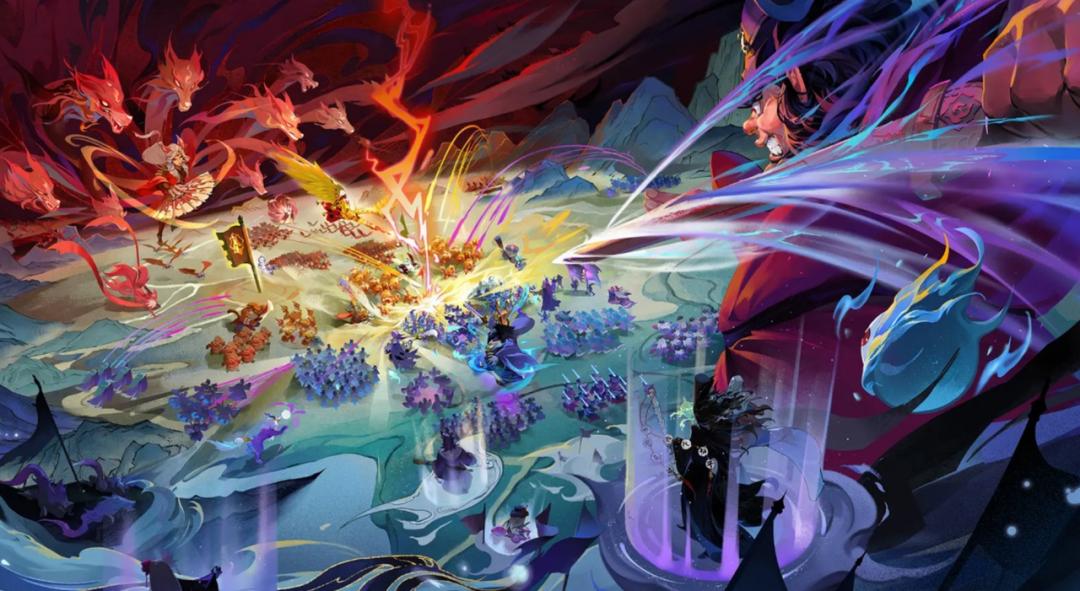
Core Insights - The competitive landscape of the auto-chess genre is intensifying as of Q4 2025, reminiscent of the surge in early 2019 when "Dota 2 Auto Chess" was launched, prompting major companies like Tencent and NetEase to innovate and release new titles [2][3] - The current phase of the auto-chess market is characterized by a shift from an incremental to a stock market, with major players focusing on strategic positioning rather than just gameplay mechanics [3][5] Industry Trends - The core user base for auto-chess games is identified as two groups: casual university students and 30+ players who are returning to gaming, indicating a strategic focus on both younger and veteran gamers [5] - The current competition can be viewed as a continuation of the "Roblox" narrative, with a significant emphasis on strategic depth and product iteration over the past six years [5] Product Innovations - NetEase's "Project: Yao Gui" has introduced a novel "battlefield" design that moves away from traditional chessboard constraints, emphasizing unit growth and strategic deployment [6][10] - The game features a unique unit classification system (warriors, assassins, archers, and leaders) that enhances strategic gameplay through a clear counter system [8][10] Gameplay Mechanics - The game removes traditional equipment synthesis, lowering entry barriers and allowing players to focus on core strategy and unit management [10][12] - Players can accumulate resources through unique mechanics tied to different factions, enhancing the strategic depth and operational growth of their units [12][21] Cultural Differentiation - "Project: Yao Gui" leverages a "Chinese demon" theme, filling a gap in the genre and capitalizing on NetEase's established expertise in this cultural space [19][21] - The game incorporates a systematic cultural translation approach, creating unique resource cycles for different factions, which enhances player engagement and strategy [21][23] Market Positioning - The game aims to differentiate itself from established titles like "Teamfight Tactics" by focusing on unique gameplay experiences and appealing to players seeking fresh cultural narratives [24][25] - The target audience includes players fatigued by traditional fantasy themes, those desiring more dynamic battlefield experiences, and players looking for reduced randomness in gameplay [26][28]
MiniMax披露聆讯后资料集 2025年前三季度实现营收5343.7万美元
Zhong Zheng Wang· 2025-12-22 06:29
Group 1 - MiniMax has successfully passed the Hong Kong Stock Exchange hearing, becoming the second large model company to do so after Zhipu [1] - The company was founded in 2022 and took nearly four years to reach this milestone [1] - Projected revenues for MiniMax are $3.46 million in 2023, $30.52 million in 2024, and $53.44 million in the first three quarters of 2025 [1] Group 2 - MiniMax has over 212 million individual users across more than 200 countries and regions, and 130,000 enterprise clients in over 100 countries as of September 30, 2025 [2] - The company has received investments from notable firms such as MiHoYo, Alibaba, Tencent, Hillhouse, IDG, and Sequoia [2] - MiniMax is recognized as one of the few companies globally that excels in text, video, and audio modalities [2] Group 3 - Cumulatively, MiniMax has spent $500 million since its establishment, which is lower than its international peers [3] - As of September 30, 2025, MiniMax holds a cash balance of $1.046 billion [3] - The company aims to achieve long-term commercialization by leveraging the rapid development of the large model industry and enhancing the accessibility of AI technology [3]
MiniMax通过港交所聆讯 前三季度营收增逾170%
Zhong Guo Jin Rong Xin Xi Wang· 2025-12-22 05:40
转自:新华财经 新华财经上海12月22日电(记者杜康)记者获悉,通用人工智能(AGI)公司MiniMax(稀宇科技)已 于21日正式在港交所刊发聆讯后资料集(PHIP),这意味着公司已通过港交所聆讯,距离正式上市仅 一步之遥。 业务规模方面,截至2025年9月底,MiniMax已拥有逾2.12亿名个人用户,覆盖超过200个国家和地区; 企业客户数超13万家。目前,公司已构建起覆盖文本、语音、视频的全模态产品矩阵,旗下产品包括海 螺AI(Hailuo AI)、Talkie和星野等。 在技术研发上,公司披露了多项模型进展。其2025年10月发布的文本大模型MiniMax M2,在第三方评 测机构Artificial Analysis榜单中位列全球前五。在视频生成领域,其Hailuo-02模型在同类评测中位列全 球第二。 招股书还披露了公司的人员构成与资本效率。截至今年9月底,MiniMax员工总数为385人,其中研发人 员占比近74%,平均年龄29岁。据统计,公司成立至今累计投入约5亿美元。 目前,MiniMax已获得包括米哈游、阿里巴巴、腾讯、高瓴、红杉中国等多家机构投资。 编辑:葛佳明 招股书数据显示,Min ...
AI大模型独角兽招股书深度拆解:MiniMax to C,智谱 to B
Hua Er Jie Jian Wen· 2025-12-22 03:57
Core Insights - Two Chinese AI unicorns, Zhiyu and MiniMax, submitted their IPO applications to the Hong Kong Stock Exchange within 48 hours, showcasing different commercialization paths in the AI large model sector [1] - The IPO documents reveal distinct business models: MiniMax focuses on consumer-driven applications, while Zhiyu emphasizes enterprise-level services [8][9] Group 1: Business Models - MiniMax's business model is centered around "AI Native Apps," with significant revenue growth projected from $758,000 in 2023 to $21.8 million in 2024, and reaching $38 million in the first nine months of 2025, accounting for 71.1% of total revenue [3][4] - MiniMax's average monthly active users (MAU) are expected to surge from 3.1 million in 2023 to 27.6 million by September 2025, with paid user numbers reaching 1.77 million and average revenue per paid user (ARPPU) increasing from $6 to $15 [4][5] - Zhiyu AI focuses on enterprise services, with local deployment revenue reaching 162 million RMB by June 2025, constituting 84.8% of total revenue [10][11] Group 2: Financial Performance - MiniMax's gross margin improved from -24.7% in 2023 to 12.2% in 2024, and further to 23.3% in the first nine months of 2025, indicating effective cost control and revenue growth [18][27] - Zhiyu AI reported a gross margin of 50%, with local deployment services achieving a high margin of 59.1% in the first half of 2025, although its cloud deployment business faced declining margins [20][25] Group 3: R&D Investments - Both companies are heavily investing in R&D, with Zhiyu AI's R&D expenses reaching 1.595 billion RMB in the first half of 2025, resulting in a staggering R&D expense ratio of 835.4% [25][26] - MiniMax's R&D expense ratio decreased from over 2000% in 2023 to 337.4% in the first nine months of 2025, reflecting improved operational efficiency as revenue grows [27] Group 4: Market Focus - MiniMax is highly globalized, with only 26.9% of its revenue coming from mainland China in 2025, while Zhiyu AI primarily targets the domestic market, focusing on state-owned enterprises and large institutions [30][32] - The shareholder structures of both companies include major tech players, with MiniMax backed by Alibaba and Tencent, while Zhiyu AI has a more diversified investor base including state-owned funds [32][33] Group 5: Future Outlook - Both companies have sufficient cash reserves to continue their technological advancements, with MiniMax holding approximately $1 billion and Zhiyu AI having 2.55 billion RMB in cash equivalents [34] - The IPO submissions signal a shift in the Chinese AI industry from a focus on technology to a more commercialized approach, with both companies vying to become leaders in the large model sector [34]