英飞凌

Search documents
碳化硅功率半导体革命的加速器:国产烧结银崛起
半导体行业观察· 2025-06-13 00:46
Core Viewpoint - The article emphasizes the revolutionary impact of silicon carbide (SiC) and sintered silver technology in enhancing the performance of power semiconductors, particularly in electric vehicles (EVs) and renewable energy applications. The combination of these technologies is crucial for overcoming key challenges such as range and fast charging in EVs, thereby accelerating their market adoption [1][10]. Group 1: Sintered Silver Technology Overview - Sintered silver technology is a new lead-free chip interconnection method that utilizes micron-sized silver particles sintered below 300°C to achieve high-temperature resistance and thermal conductivity [4]. - The technology has evolved since the late 1980s, transitioning from laboratory research to widespread industrial application, driven by advancements in process optimization and material performance [5]. - The core mechanism of sintered silver technology is atomic diffusion, which allows for strong connections at relatively low temperatures, ensuring good electrical and thermal conductivity while maintaining mechanical strength [6]. Group 2: Advantages of Sintered Silver in Power Semiconductors - Sintered silver technology supports high operating temperatures, making it suitable for high-frequency, high-voltage, and high-temperature power modules, effectively transferring heat and maintaining stability in harsh environments [8]. - It offers significantly higher thermal conductivity (over 200 W/m·K) compared to traditional lead-based solders (30-50 W/m·K), enhancing power density in compact applications [8]. - The high melting point of silver (961°C) prevents common fatigue effects seen in solder connections, thus improving reliability in demanding applications such as aerospace and automotive electronics [8]. Group 3: Application in Electric Vehicles - Sintered silver is primarily used in main drive inverters of electric vehicles, with three packaging types: TPAK, HPD, and DCM [11]. - The application of sintered silver technology can enhance overall system efficiency by 8%-12%, allowing vehicles to travel further on the same amount of energy or consume less energy over the same distance [13]. - It significantly improves the reliability and stability of components under extreme conditions, reducing the likelihood of failures in critical systems like battery management and motor controllers [13]. Group 4: Market Potential and Industry Dynamics - The global market for sintered silver in electric vehicles is projected to reach approximately 20 billion yuan by 2030, with the value per vehicle estimated between 300 to 1000 yuan [22]. - Currently, the sintered silver market is dominated by foreign companies, highlighting a gap in domestic production capabilities that could hinder the development of SiC and other power semiconductors [22]. - Wuxi Dike Electronic Materials Co., Ltd. (DKEM®) is positioned as a leading supplier of high-performance electronic pastes, focusing on the development of automotive-grade sintered silver products to meet diverse application needs [22][43].

半导体巨头,重塑供应链
半导体行业观察· 2025-06-13 00:46
Core Viewpoint - The article discusses the increasing importance of Southeast Asia in the global semiconductor supply chain, particularly in the context of capital investment uncertainties stemming from the Trump administration's policies. It highlights the region's advantages such as low labor costs, strategic location, and government support, which are attracting major semiconductor companies to invest in manufacturing and assembly operations [1][2]. Group 1: Southeast Asia's Role in Semiconductor Industry - Southeast Asia is becoming a key region for semiconductor supply chain restructuring post-Trump era, with companies planning to relocate or build new facilities in response to trade uncertainties [1]. - The region is gaining traction in assembly, testing, and packaging (ATP) due to favorable government policies and low production costs, making it a competitive player in semiconductor investments [1]. - Malaysia is emerging as a global supply chain hub, accounting for 13% of the global semiconductor backend processes, with significant investments from companies like Intel, Broadcom, and Micron [1][2]. Group 2: Major Investments and Developments - Intel is expanding its backend assembly lines in Malaysia, while Micron is establishing its second packaging and testing facility in Penang [2]. - Texas Instruments is investing $3.1 billion (approximately 4 trillion KRW) in Malaysia for production facilities, and Infineon is setting up a silicon carbide power semiconductor manufacturing plant [2]. - ARM has chosen Malaysia as its first production base, with the Malaysian government agreeing to pay $250 million in patent fees over ten years to support ARM's semiconductor production [2]. Group 3: Growth in Vietnam's Semiconductor Sector - Vietnam's semiconductor market has grown by 41%, increasing from $10.62 billion in 2016 to $15.01 billion in 2023, with a focus on packaging and testing [3]. - The Vietnamese government is investing in talent development, implementing a $1 billion project to train approximately 50,000 semiconductor engineers [3]. - Industry experts suggest that due to the long-term nature of semiconductor investments, Southeast Asia is viewed as a safer choice for companies looking to relocate production away from China amid ongoing U.S. semiconductor regulations [3].


半导体巨头,重塑供应链
半导体行业观察· 2025-06-13 00:40
Core Viewpoint - The article discusses the increasing importance of Southeast Asia in the global semiconductor supply chain, particularly in the context of capital investment uncertainties stemming from the Trump administration's tariffs. It highlights the region's advantages such as low labor costs, strategic location, and government support, which are attracting major semiconductor companies to invest in manufacturing and assembly operations [1][2]. Group 1: Southeast Asia's Role in Semiconductor Industry - Southeast Asia is becoming a key region for semiconductor supply chain restructuring post-Trump era, with companies planning to relocate or build new facilities in response to tariff uncertainties [1]. - The region is gaining prominence in assembly, testing, and packaging (ATP) due to favorable conditions such as government-led strategies and tax incentives [1]. - Malaysia is emerging as a global supply chain hub, accounting for 13% of the global semiconductor backend processes, with significant investments from companies like Intel, Broadcom, and Micron [1][2]. Group 2: Major Investments and Developments - Intel has established backend assembly lines in Malaysia and is expanding its advanced packaging facilities, while Micron is building its second packaging and testing plant in Penang [2]. - Texas Instruments is investing $3.1 billion (approximately 4 trillion KRW) in production facilities in Malaysia, and Infineon is setting up a silicon carbide (SiC) power semiconductor manufacturing and packaging plant in Penang [2]. - ARM has chosen Malaysia as its first production base for direct manufacturing and semiconductor design, with the Malaysian government agreeing to pay $250 million in patent fees over ten years [2]. Group 3: Growth in Vietnam's Semiconductor Market - Vietnam is emerging as a new stronghold in semiconductor packaging and testing, with the market size growing by 41% from $10.62 billion in 2016 to $15.01 billion in 2023 [3]. - Emcore, a leader in backend processes, aims for $10 billion in semiconductor exports, while the Vietnamese government is investing $1 billion to train approximately 50,000 semiconductor engineers [3]. Group 4: Industry Perspectives - Industry experts note that relocating production facilities or building new factories in response to tariffs is not practical due to the long-term nature of semiconductor investments [4]. - Southeast Asian countries are viewed as safer options for semiconductor production due to their low labor costs and developed ecosystems, especially in light of ongoing U.S. semiconductor regulations targeting China [4].

求购普冉、NXP、TOSHIBA等芯片
芯世相· 2025-06-11 06:54
Core Insights - The company "Chip Superman" operates a 1,600 square meter smart warehouse for chips, with over 1,000 stock models and a total inventory of 50 million chips valued at over 100 million [1] Group 1: Inventory and Services - The current stock includes 50 million chips with a total weight of 10 tons, showcasing a diverse range of over 100 brands [1] - The company has served 18,000 users and can complete transactions in as fast as half a day for discounted inventory [4] Group 2: Procurement and Sales - The company is actively seeking to purchase specific chip models, including 100,000 units of PUYA's P25Q80H-SSH-IR and 240,000 units of TOSHIBA's TPH2R608NH [2] - There are special offers on surplus materials, including 100 units of Altera's 1SX280HN1F43E2VG and 24,00 units of Infineon's IRFS31N20DTRLP [3] Group 3: Online Presence - The company provides a platform for users to browse and purchase surplus materials through a mini-program and a web portal [5][6]

瑞银:全球智能手机市场就要停止增长了
Zhi Tong Cai Jing· 2025-06-11 03:52
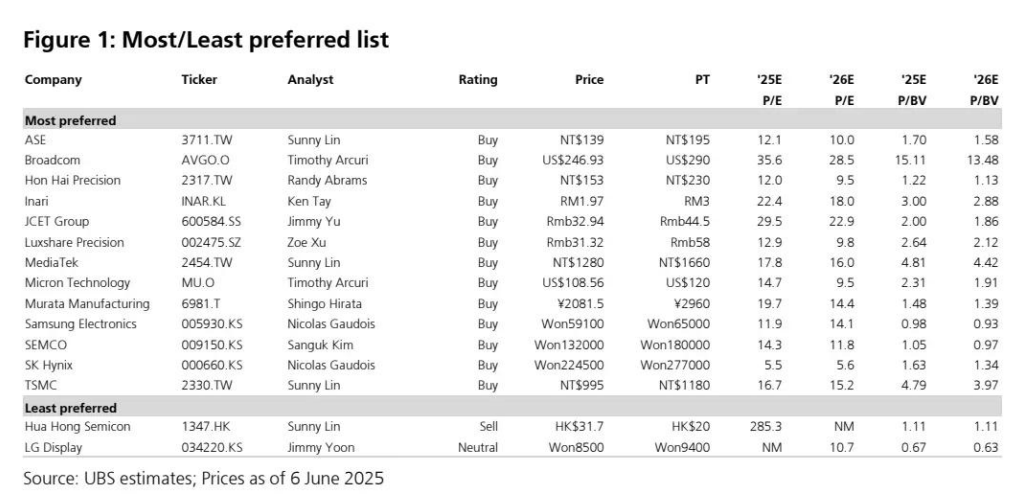
Core Viewpoint - The smartphone purchasing intention is weakening, particularly in the U.S. market, with a future 12-month purchasing intention of 36%, showing a month-on-month decline and year-on-year stability [1][12]. Group 1: Market Trends - The ideal replacement cycle for smartphones has extended to 31.1 months, indicating a slowdown in replacement behavior [2][13]. - U.S. purchasing intention has significantly dropped to 37%, down from 50% and 44% in the previous quarters [2][12]. - Despite a 3.2% year-to-date increase in smartphone sales as of April, the overall forecast for global smartphone sales remains conservative, with only a 1% year-on-year growth expected in 2025 and flat growth in 2026 [2][9]. Group 2: Impact of Tariffs - Tariffs are affecting global smartphone buyer sentiment, with 19% of respondents citing concerns over tariffs impacting prices as a reason for not purchasing [3][10]. - Among those likely to purchase a smartphone in the next 12 months, 82% are willing to accept some price increase due to tariffs, but 62% would seek cheaper alternatives if the increase is deemed excessive [3][13]. - The potential for OEMs to raise prices to offset tariff impacts could lead to a broader price increase across the market, affecting demand [3][10]. Group 3: Consumer Interest in AI Features - Interest in generative AI features in smartphones is slowly increasing, but it has not yet translated into significant changes in purchasing behavior [4][14]. - Only 34% of respondents indicated they would purchase a smartphone earlier or pay extra for generative AI features, suggesting that interest has not yet driven substantial demand [4][14]. Group 4: Stock Recommendations - UBS maintains a positive outlook on several smartphone-related stocks, including ASE, Broadcom, Hon Hai, and MediaTek, among others, with buy ratings [5][8]. - Caution is advised for Hua Hong Semiconductor, rated as a sell, and LG Display, rated neutrally [6][7].


【太平洋科技-每日观点&资讯】(2025-06-10)
远峰电子· 2025-06-09 12:00
行情速递 ① 主 板 领 涨 , 粤 传 媒 (+10.07%)/ 旭 光 电 子 (+10.05%)/ 引 力 传 媒 (+10.03%)/ 元 隆 雅 图 (+10.03%)/楚天龙(+10.01%) / ②创业板领涨, 旗天科技(+16.86%)/润欣科技(+15.67%)/苏州天脉(+9.37%) / ③科创板领涨, 光云科技 (+9.89%)/卓易信息(+8.93%)/海天瑞声 (+7.79%)/ ④活跃子行业, SW营销代理(+4.00%)/SW品牌消费电子(+2.80%)/ 国内新闻 ③赛意信息,发布关于投资建设赛意信息全球研发中心的公告/公司拟投资约 3.3亿元人民币建设全球研发中心/预计建设周期30个月/资金来源为自筹资 金/ ④ 莱尔科技,发布2024年年度权益分派实施公告/公司2024年年度拟向全 体股东每10股派发现金红利0.66元(含税)/合计拟派发现金红利为 10,142,271.48元(含税) / 海外新闻 ① 半导体产业纵横,美国芯片制造商高通周一同意以约24 亿美元的价 格收购英国半导体公司 Alphawave/该公司还推出了首款"硅产品"/可帮 助实现大型数据中心的高速连接 ...
2025年中期策略会速递:半导体:需求分化,关注AI、先进制造演进
HTSC· 2025-06-09 01:35
Group 1: Semiconductor Manufacturing Trends - Manufacturing utilization rates continue to improve year-on-year, with downstream manufacturers focusing on Chiplet and advanced packaging technologies[1] - The storage market is showing signs of a price turning point, with an upward trend expected to continue until Q3 2025, driven by AI-related demand[1] - Design companies are experiencing differentiated downstream demand, with power and analog companies reporting a recovery in industrial and automotive sectors[1] Group 2: Equipment and Domestic Production - Global WFE is projected to reach $100 billion in 2025, with a year-on-year growth of 4%-5%[3] - Domestic equipment manufacturers are seeing significant growth in new orders, benefiting from downstream expansion and increased localization rates[3] - The verification speed of core new equipment by domestic companies is accelerating, indicating a positive trend for advanced node domestic equipment breakthroughs[3] Group 3: Storage Market Dynamics - The storage market is expected to see price increases, with predictions of 18-23% and 13-18% growth for Server and PC DDR4 modules respectively in Q2 2025[4] - The enterprise storage market is projected to grow from $23.4 billion in 2024 to $49 billion by 2028, reflecting a compound annual growth rate (CAGR) of 16%[25] - Domestic manufacturers are positioned to benefit from the increasing demand for enterprise-level storage driven by AI infrastructure investments[25] Group 4: Design Sector Insights - The power semiconductor sector in China is entering a mild upward cycle, with a 14.5% year-on-year increase in domestic passenger car production from January to April 2025[38] - The demand for SoC and MCU products is significantly driven by national subsidies and export opportunities, with performance expected to vary across companies in Q2 2025[26] - The analog chip sector is recovering, with industrial and communication sectors seeing a return to inventory restocking[29]
汽车行业周报(20250602-20250608):整车、机器人催化频出,全年销量展望乐观-20250608
Huachuang Securities· 2025-06-08 12:18
Investment Rating - The report maintains a "Buy" recommendation for the automotive sector, particularly for complete vehicles and robotics, with an optimistic outlook for annual sales [2][3]. Core Insights - The automotive sector continues to show weak performance, influenced by previous news regarding price cuts and competition, alongside investor concerns about sales post-subsidy reductions in 2026. However, the report maintains that the risk of a severe price war this year is low and that sales expectations remain optimistic [2][3]. - Positive industry developments include Tesla's robot factory audit, Changan's management upgrade, and Li Auto's weekly sales exceeding 10,000 units, which support better stock performance for related companies [2][3]. Data Tracking - In April, wholesale passenger car sales reached 2.22 million units, a year-on-year increase of 11% but a month-on-month decrease of 10%. Retail sales were 1.59 million units, up 6% year-on-year but down 14% month-on-month [4][21]. - New energy vehicle manufacturers showed significant growth in May, with BYD delivering 382,476 units (up 15% year-on-year), and Li Auto achieving 40,856 units (up 16.7% year-on-year) [4][20]. - The average discount rate in late May rose to 7.8%, an increase of 0.6 percentage points from the previous period and 2.9 percentage points year-on-year [4][22]. Industry Research - Recommended stocks include Li Auto and Jianghuai Automobile, with a focus on companies like BAIC Blue Valley, SAIC Motor, Xpeng Motors, and Xiaomi Group. Li Auto is expected to see sales improvements and new model launches, while Xpeng is preparing for the launch of the G7 [6]. - In the components sector, the report recommends Top Group, Haoneng Co., and others, highlighting the growth potential in high-level autonomous driving technologies [6]. - The heavy truck segment is expected to continue its strong performance, with recommendations for Weichai Power and Sinotruk [6]. Market Performance - The automotive sector index decreased by 0.09% this week, ranking 23rd out of 29 sectors. In comparison, the Shanghai Composite Index rose by 1.13% [8][29].





有些MCU,开始一个月降本一次了
芯世相· 2025-06-06 07:15
Core Viewpoint - The MCU market is experiencing intense competition and price wars, leading to a significant decline in prices and profit margins for domestic manufacturers, with a shift from "import MCU to domestic replacement" to "domestic replacement of domestic" becoming prevalent [3][4][5]. Group 1: Changes in MCU Market - The MCU market has seen a drastic price drop, with 8-bit MCUs now available for just a few cents, and 32-bit MCUs also entering aggressive price competition [3][4]. - Domestic manufacturers initially adopted a "price for volume" strategy, but now end customers are pushing prices down further due to their own cost-cutting pressures [4][5]. - The market is characterized by oversupply, with many companies competing fiercely, leading to a situation where even minimal profits are considered a relief [4][11]. Group 2: Market Demand and Recovery - Despite a slight decrease in inventory levels, the overall demand for MCUs has not shown significant signs of recovery, with many companies still facing declining revenues [14][15]. - The first quarter of 2025 saw many domestic MCU companies report negative growth, indicating that the market is still far from a full recovery [11][13]. - Analysts suggest that the recovery of the MCU market may be delayed until the second half of the year, depending on broader economic conditions [15][16]. Group 3: Competitive Landscape - The competition is not only based on price but also on service and payment terms, with companies extending payment periods to attract customers [8][11]. - New entrants in the MCU market are rapidly increasing competition, with some companies achieving significant technological advancements and cost reductions [5][10]. - Major domestic players like Zhaoyi Innovation are launching new products aimed at redefining the entry-level MCU market, emphasizing high cost-performance ratios [10][11]. Group 4: Financial Performance of Companies - A report indicated that 18 out of 19 domestic MCU companies experienced revenue growth, but many still faced net losses, highlighting a divide in performance within the industry [11][12]. - Companies like Guoxin Technology and Unisoc reported significant revenue declines, with some experiencing over 50% drops in revenue [11][12]. - The overall profitability of many MCU companies is under pressure, with several reporting return on equity (ROE) below the industry average [11][12].



裁员5000!ST出了啥问题?
是说芯语· 2025-06-05 10:55
Core Viewpoint - The semiconductor company STMicroelectronics (ST) is facing significant challenges due to declining automotive demand, increased market competition, and strategic shifts, leading to substantial layoffs and potential restructuring [3][7]. Group 1: Company Restructuring - ST's CEO announced plans for 5,000 employee departures over the next three years, including 2,800 positions previously announced [3][4]. - The company is implementing cost-cutting measures, including natural attrition and early retirement [4]. - There are discussions among stakeholders in France and Italy regarding a potential split of ST [5][6]. Group 2: Automotive Sector Performance - In Q1 2025, ST's automotive revenue reached $980 million, accounting for 39% of total revenue, making it a core market [8]. - From 2018 to 2023, ST's market share in the automotive semiconductor sector grew by 34.2%, outperforming competitors like Infineon [9]. - However, ST's revenue and profit are projected to decline by 23.24% and 63.03% respectively in 2024, with Q1 2025 net profit growth at -89.08%, marking a ten-year low [11][14]. Group 3: Market Competition and Challenges - ST's market share in automotive semiconductors dropped from 10.2% in 2023 to 8.8% in 2025, a year-on-year decline of 13.7%, the largest among the top five manufacturers [13]. - The company faces intense competition in the MCU market from domestic Chinese manufacturers, leading to a continuous decline in market share [17]. - In the analog segment, ST's performance is hindered by increasing competition from local firms, with ST holding less than 4% market share in China [19][23]. Group 4: Future Outlook - The automotive market's downturn and tariff fluctuations are expected to continue impacting ST's performance, necessitating further cost-cutting and strategic adjustments [16][22]. - Despite challenges, ST is focusing on the growing Chinese market and accelerating its SiC strategic transformation, which may present future growth opportunities [22].