
华西证券

Search documents
华西证券(002926) - 华西证券股份有限公司2026年面向专业投资者公开发行公司债券(第一期)募集说明书
2026-01-09 11:38
华西证券股份有限公司 (住所:中国(四川)自由贸易试验区成都市高新区天府二街 198 号) 2026 年面向专业投资者公开发行公司债券 (第一期) 募集说明书 | 注册金额: | 不超过 亿元(含) 100 | | --- | --- | | 发行金额: | 不超过 亿元(含) 20 | | 担保情况: | 本期债券无增信措施 | | 信用评级结果: | AAA/AAA | | 发行人: | 华西证券股份有限公司 | | 主承销商/受托管理人/簿记管理人: | 西南证券股份有限公司 | | 信用评级机构: | 联合资信评估股份有限公司 | 签署日期:2026 年 月 日 华西证券股份有限公司 2026 年面向专业投资者公开发行公司债券(第一期)募集说明书 声明 发行人将及时、公平地履行信息披露义务。 发行人及其全体董事、高级管理人员或履行同等职责的人员保证募集说明 书信息披露的真实、准确、完整,不存在虚假记载、误导性陈述或重大遗漏。 主承销商已对募集说明书及其摘要进行了核查,确认不存在虚假记载、误 导性陈述和重大遗漏,并对其真实性、准确性和完整性承担相应的法律责任。 发行人承诺在本期债券发行环节,不直接或者间 ...

华西证券(002926) - 华西证券股份有限公司2026年面向专业投资者公开发行公司债券(第一期)发行公告
2026-01-09 11:38
华西证券股份有限公司 2026 年面向专业投资者公开发行公司债券 (第一期) 发行公告 发行人 华西证券股份有限公司 (住所:成都市高新区天府二街 198 号) 主承销商 西南证券股份有限公司 (住所:重庆市江北区金沙门路 32 号) 2026 年 1 月 9 日 本公司及其董事及高级管理人员保证公告内容真实、准确和完整,并对公 告中的虚假记载、误导性陈述或者重大遗漏承担责任。 重要事项提示 1、华西证券股份有限公司(以下简称"发行人"或"公司")已于 2025 年 2 月 27 日获得中国证券监督管理委员会"证监许可〔2025〕366 号"文注册公开发行 面值不超过 100.00 亿元的公司债券(以下简称"本次债券")。 本次债券采取分期发行的方式,截至本公告披露日,本次债券已发行 49.00 亿元,本期债券为第四期发行,发行规模为不超过 20.00 亿元。 2、本期债券发行规模为不超过人民币 20.00 亿元,每张面值为 100 元,发 行数量为 2,000.00 万张,发行价格为人民币 100 元/张。 3、根据《证券法》等相关规定,本期债券仅面向专业投资者中的机构投资 者发行,普通投资者和专业投资者中 ...
央行投放“精耕细作”,2026年流动性充裕格局已明确
Zhong Guo Zheng Quan Bao· 2026-01-09 09:48
Core Viewpoint - The People's Bank of China (PBOC) is expected to maintain liquidity through various policy tools, including government bond transactions and Medium-term Lending Facility (MLF), to ensure a continued loose monetary environment in January [1][5]. Group 1: Liquidity Factors - Multiple factors, including fiscal deposits and credit issuance, are anticipated to impact liquidity in January, with a net increase in fiscal deposits estimated at approximately 620 billion yuan, potentially widening the liquidity gap [3][5]. - The total liquidity gap for January 2026 is projected to be around 1.9 trillion yuan, influenced by fiscal deposits, cash withdrawals, and bank reserve requirements [3][5]. Group 2: Policy Tools Utilization - The PBOC is expected to actively utilize policy tools such as reverse repos and MLF to inject medium-term liquidity into the market, reflecting a continuation of the "moderately loose" monetary policy stance [5][7]. - The central bank's approach may include a combination of reverse repos, MLF, and government bond transactions, with a cautious stance on tools like reserve requirement ratio (RRR) cuts and interest rate reductions [7][6]. Group 3: Market Expectations - Market expectations indicate that the PBOC will increase the use of policy tools to stabilize the funding environment, with anticipated lower fluctuations in funding rates compared to seasonal patterns [5][6]. - The average overnight funding rate is expected to remain below the policy rate, with a low probability of the one-day bond repurchase rate returning to 1.35%-1.4% throughout January [5][6].
模拟真实业务周期性造假,金通灵赔付投资者7.7亿元
Bei Jing Ri Bao Ke Hu Duan· 2026-01-09 09:38
Core Viewpoint - The case of Jintongling highlights significant issues in corporate governance and regulatory oversight within China's capital markets, particularly regarding long-term financial fraud and the effectiveness of intermediary institutions [1][2][3]. Group 1: Financial Fraud Details - Jintongling engaged in financial fraud for six years, utilizing complex methods such as fictitious contracts and premature revenue recognition, resulting in over 1.1 billion yuan in inflated revenue and over 400 million yuan in inflated profits [2]. - The company also employed reverse tactics in 2019 and 2020, significantly reducing reported profits by 5774.38% in 2019 through large impairment provisions and delayed revenue recognition [2]. - The fraudulent activities were linked to multiple business units and subsidiaries, with a complete chain of deception that coincided with various capital operations, including private placements and bond issuances based on falsified financial reports [2]. Group 2: Role of Intermediaries - The failure of multiple brokerage firms and accounting firms to detect Jintongling's long-term financial fraud raises questions about the effectiveness of the "gatekeeper" system in the capital markets [3][4]. - Despite ongoing audits and financing rounds, the involved intermediaries did not identify the systemic fraud, indicating a lack of substantive scrutiny and a focus on maintaining client relationships over risk management [4]. - The collective failure of these intermediaries reflects deeper systemic issues, including insufficient independence and a lack of professional skepticism, leading to a breakdown of the "gatekeeper" function [4]. Group 3: Legal and Regulatory Implications - The Jintongling case exemplifies the impact of the new securities law and the special representative litigation system, which facilitates collective action for investor rights protection [5][6]. - This legal framework has lowered the barriers for small investors to seek compensation, shifting the burden of legal costs from investors to professional institutions and the offending parties [6]. - The implementation of this system is expected to reshape market dynamics, increasing the costs of financial misconduct for companies and enhancing the accountability of intermediaries [6].

华西证券2026年资本市场投资与产业年会在成都召开
Zhong Zheng Wang· 2026-01-09 03:11
Core Viewpoint - The conference held by Huaxi Securities emphasizes the need for a strong belief in "buying China" amidst a reshaping global landscape, focusing on long-term asset value and high-quality capital market development [1] Group 1: Company Strategy and Operations - Huaxi Securities is committed to a differentiated development strategy, providing customized and comprehensive financial support to clients, aiming to seize regional integration opportunities for deeper development [1] - The company has established a strong sell-side research team focused on five key sectors: new information technology, new materials, new consumption, equipment manufacturing, and healthcare [2] - Huaxi Securities employs a dual-manager service model, enhancing its one-stop service system to better meet the demands of nearly 500 government and enterprise clients [2] Group 2: Economic Outlook and Asset Trends - The chief economist of Huaxi Securities predicts that various asset classes will rise in 2026, with a combination of loose monetary and stable fiscal policies leading to a moderate recovery in inflation [2] - The year 2026 is expected to be a significant year for corporate profits, driven by the "new growth" and "anti-involution" themes, with industries like AI and high-end manufacturing entering clearer stages of commercialization [3] - The outlook for the RMB is positive, with its share in cross-border trade finance increasing, and the market risk appetite is expected to rise, favoring equity assets [3] Group 3: Sector-Specific Insights - The media industry is undergoing transformation with AI technology, shifting focus towards "AI attention" and full-process automation, with key players being those who control smart entry points and exclusive data [4] - The insurance sector is anticipated to see synchronized improvements in assets and liabilities, with potential for sustained valuation recovery [4] - In the securities industry, attention is drawn to firms with expected peer mergers, robust overseas business layouts, and effective wealth management transformations [4]
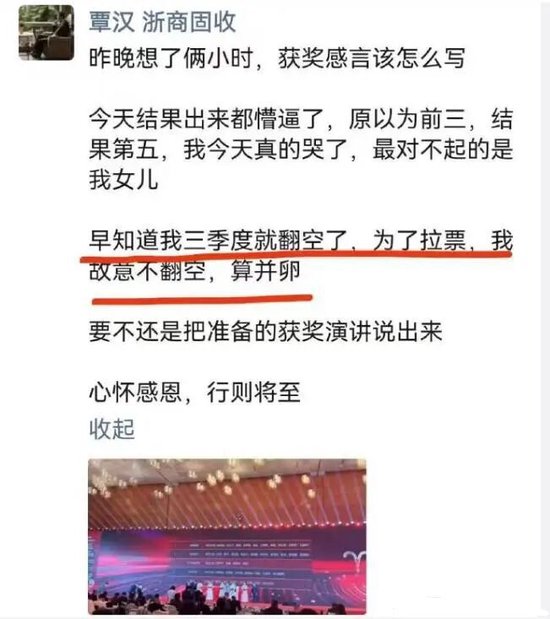
浙商证券固收首席覃汉因“为新财富评选拉票故意不翻空”被停职,浙江证监局重拳介入
Xin Lang Cai Jing· 2026-01-09 02:39
接近浙商证券的人士向记者透露,"监管对此事高度重视,甚至动用了经侦手段,要求浙商董办、研究 所等部门配合提供材料。前段时间,浙商证券上上下下都在为这件事忙碌,调查结果估计还要等一段时 间才能出来。" 此言迅速引爆市场,因其承认为争取投票扭曲研究立场,严重违背卖方分析师独立性原则。 "翻空"指将债市观点由看多转为看空。2025年三季度,债市已现调整迹象,但覃汉维持乐观判断。事后 其言论被广泛解读为牺牲专业客观性换取评选排名,引发买方机构强烈不满,多家公募、保险客户投诉 称或因此蒙受投资损失。 来源:资管洞察 2025年12月新财富最佳分析师榜单公布后,浙商证券固收首席覃汉在朋友圈公开抱怨团队仅获第五名, 并直言:"早知道这结果,三季度就该翻空——当初是为了拉票才故意没这么做。" 21世纪经济报道记者最新获悉,浙江证监局目前正就此事开展调查,浙江省金融监管部门亦对该事件高 度关注。浙商证券研究所也已启动内部核查程序,并已暂停覃汉对外展业1个月,责令其进行深刻内部 检查,并依据内部规章制度对其处以相应经济处罚。 来源:资管洞察 2025年12月新财富最佳分析师榜单公布后,浙商证券固收首席覃汉在朋友圈公开抱怨团队仅获 ...


东方电气涨超4% 数据中心加速布局电源方案 国内燃气轮机企业出海迎新机遇
Zhi Tong Cai Jing· 2026-01-09 02:12
Core Viewpoint - The stock of Dongfang Electric (600875) has risen over 4%, currently at 26.56 HKD, driven by a report from Huaxi Securities highlighting a favorable cycle in power equipment demand due to rapid global AIDC development and ongoing investment in grid construction [1] Group 1: Industry Outlook - The demand for power equipment is entering a prosperous cycle, supported by the rapid development of AIDC and sustained growth in grid construction investment [1] - Companies with strong channel resources, leading technology, and proactive capacity layout are expected to benefit significantly from this trend [1] Group 2: Company Performance - Dongfang Electric's gas turbine business employs a dual approach of "joint venture technology accumulation + self-developed product breakthroughs," resulting in a complete product matrix ranging from 15MW to 500MW [1] - The company is a core leader in the domestic gas turbine sector, with rapid growth in overseas business, aiming for a breakthrough in F-class heavy-duty gas turbine exports by 2025 [1] - Dongfang Electric is making significant inroads in emerging markets such as the Middle East and Central Asia, with key project contracts signed in the Middle East by 2025 [1]
最猛资产突发跳水
Ge Long Hui· 2026-01-09 00:33
Group 1: Precious Metals Market - The prices of precious metals have sharply declined, with international gold prices dropping nearly $70 in a single day, and silver, platinum, and palladium experiencing declines of over 4% [2] - Following the largest annual increase since 1979, investors are opting to take profits, as indicated by a reduction in net long positions for gold and silver by 10,668 contracts to 126,873 and by 7,270 contracts to 16,595, respectively [3] - The upcoming rebalancing of the Bloomberg Commodity Index is expected to trigger panic selling in the market, with significant weight reductions for gold and silver [4][6] Group 2: Index Rebalancing Impact - The Bloomberg Commodity Index will undergo annual weight adjustments starting January 8, with gold's weight decreasing from 19.6% to 14.9% and silver's from 7.7% to 3.9% [5][6] - This weight reduction implies substantial passive selling, with Citigroup estimating that the sell-off for both gold and silver could reach around $7 billion each [7] Group 3: Insurance Capital and Stock Market - Insurance capital is increasingly engaging in stock purchases, with a notable example being Ping An Life's announcement of a 20% stake in Agricultural Bank of China H-shares, marking its fourth stake increase [8][9] - In 2025, insurance capital made 35 stake increases, the highest since 2016, with the allocation to stocks reaching 3.6 trillion yuan, accounting for 10% of total insurance funds [10] Group 4: Motivations Behind Insurance Capital Activity - Three core motivations for the concentrated stake increases by insurance capital include the need to enhance returns amid low interest rates, accounting changes that stabilize profit reporting, and policy support for long-term capital market investments [11] Group 5: Foreign Investment in Chinese Assets - Foreign investment giants are also increasing their positions in Chinese assets, with BlackRock raising stakes in several Hong Kong stocks on the first trading day of 2026 [12][13] - Goldman Sachs forecasts a 20% increase in the MSCI China Index and a 12% increase in the CSI 300 Index for 2026, predicting a net inflow of $200 billion from southbound funds [14] Group 6: Retail Investor Trends - The number of new retail investors in the A-share market reached 27.44 million in 2025, a 9.75% increase from 2024, marking the highest annual figure since 2022 [14] - Personal investors remain the primary source of new accounts, while institutional investor accounts saw a significant increase, with a 35% year-on-year growth [15]
央行投放“精耕细作” 资金面料延续宽松态势
Zhong Guo Zheng Quan Bao· 2026-01-08 22:14
Core Viewpoint - The People's Bank of China (PBOC) is expected to maintain liquidity through various monetary policy tools, indicating a continued loose monetary stance in January 2026 [1][3][4] Group 1: Liquidity Operations - On January 8, the PBOC conducted a 99 billion yuan reverse repo operation with a fixed rate of 1.4%, resulting in a net injection of 99 billion yuan due to the maturity of other repos [1] - The PBOC is likely to continue using tools such as government bond transactions and Medium-term Lending Facility (MLF) to ensure ample liquidity in the market [1][3] Group 2: Factors Affecting Liquidity - Multiple factors are expected to disturb liquidity in January, including fiscal deposits and credit issuance, with a projected net increase in fiscal deposits of approximately 620 billion yuan [2] - The liquidity gap for January 2026 is estimated to be around 1.9 trillion yuan, influenced by cash withdrawals and bank reserve requirements [2] Group 3: Policy Tool Utilization - The market anticipates that the PBOC will intensify the use of policy tools to stabilize the funding environment, with expectations of a more proactive approach [3] - The PBOC is expected to employ a combination of reverse repos, MLF, and government bond transactions to inject medium-term liquidity, reflecting a continued "moderately loose" monetary policy [3][4] Group 4: Long-term Monetary Policy Signals - The PBOC's recent work meeting emphasized the importance of maintaining ample liquidity to support high-quality economic development and reasonable price recovery [4] - The overall monetary policy for 2026 is expected to exhibit characteristics of "quantity expansion and price stability," with a cautious approach towards tools like reserve requirement ratio (RRR) cuts and interest rate reductions [4][5]
资金面料延续宽松态势
Zhong Guo Zheng Quan Bao· 2026-01-08 20:50
Core Viewpoint - The People's Bank of China (PBOC) is expected to maintain liquidity through various monetary policy tools, including reverse repos and medium-term lending facilities (MLF), amid multiple factors affecting January's liquidity [1][2][3][4] Group 1: Liquidity Operations - On January 8, the PBOC conducted a 99 billion yuan 7-day reverse repo operation at a rate of 1.4%, resulting in a net injection of 99 billion yuan due to the maturity of other repos [1] - The PBOC is likely to continue using tools like government bond transactions and MLF to ensure ample liquidity, with expectations of a sustained loose monetary environment [1][3] Group 2: Factors Affecting Liquidity - January's liquidity is influenced by multiple factors, including fiscal deposits and credit issuance, with a projected net increase in fiscal deposits of approximately 620 billion yuan, potentially widening the liquidity gap [2] - Credit issuance is expected to have an above-seasonal performance in January, driven by banks' early lending strategies, which may further increase the liquidity gap [2] Group 3: Policy Tool Utilization - The market anticipates that the PBOC will intensify the use of policy tools to stabilize liquidity, with expectations of less volatility in funding rates compared to seasonal patterns [2][3] - The PBOC's monetary policy is expected to remain "moderately loose," utilizing a combination of reverse repos, MLF, and government bond transactions to inject medium-term liquidity [4] Group 4: Long-term Monetary Policy Outlook - The PBOC's 2026 monetary policy is characterized by "quantity expansion and price stability," with a focus on maintaining liquidity while being cautious with tools like reserve requirement ratio (RRR) cuts and interest rate reductions [4] - The overall liquidity environment is projected to remain ample, with low volatility in funding rates becoming the norm, supported by the PBOC's targeted operations [4]